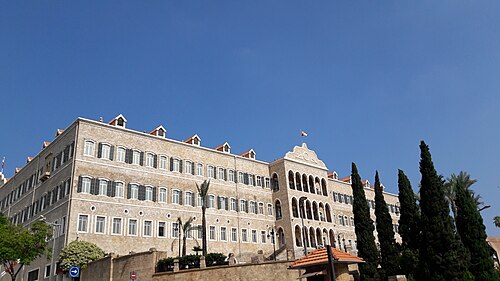
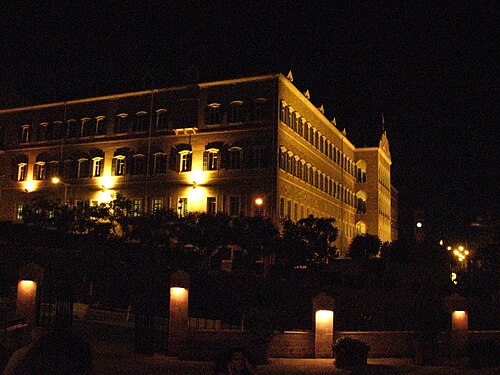
On a hill in the heart of Beirut, commanding the center of the city, stands the Grand Serail, the great palace that is the seat of the government of Lebanon, the office of the prime minister and the symbol of the state. The Serail, a mighty Ottoman building of the nineteenth century, raised as a barracks and transformed into the palace of government, is one of the chief monuments of Beirut, the Grand Serail the seat of power, the palace that has watched over the history of modern Lebanon from the Ottoman age to the present.
The Grand Serail is the heart of the Lebanese state. Built by the Ottomans in the mid-nineteenth century as a military barracks, the building became under the French Mandate and the republic the seat of the government, the palace of the prime minister and the council of ministers, the Grand Serail the symbol of the authority of Lebanon, the building the seat of the state, the palace the center of the government on its hill in the heart of Beirut.
This article continues the Lebanese palace series, turning to the Grand Serail of Beirut, the great Ottoman palace that is the seat of the government of Lebanon, the office of the prime minister, the mighty building of the nineteenth century on its hill in the heart of the capital, the Grand Serail the symbol of the state, the palace of power, the monument that has watched over the history of modern Lebanon.
- The Hill of Beirut
- The Ottoman Barracks
- The Building of the Serail
- The Military Origins
- The French Mandate
- The Seat of Government
- The Clock Tower
- The Architecture of the Serail
- The Courtyards and Halls
- The Council of Ministers
- The Civil War and Damage
- The Restoration by Hariri
- The Grand Serail Today
- Watch on Film
- Visiting Today
- Palaces Nearby
The Hill of Beirut
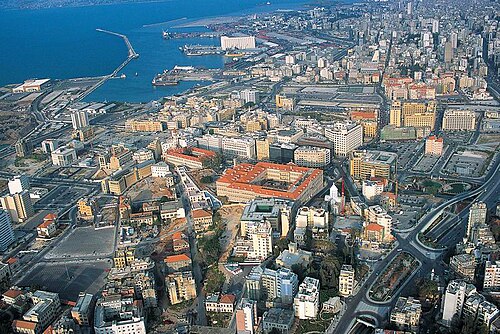
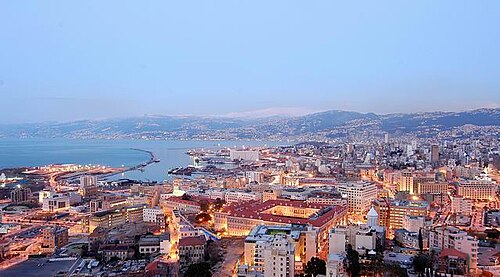
The Grand Serail crowns a hill in the heart of Beirut. The building stands on a rise in the center of the city, a hill that has long been a place of power, commanding the heart of Beirut and the view to the sea, the hill the seat of the Serail, the rise the commanding place of the government, the hill the center of the authority of Lebanon, the height crowned by the Grand Serail in the heart of the capital.
The hill was long a place of power: the rise in the center of Beirut a natural place of authority, commanding the city, the hill the site chosen for the great Ottoman buildings, the height the seat of the barracks and the government, the hill the place of power, the rise the commanding site of the Serail, the height the natural seat of authority in the heart of Beirut.
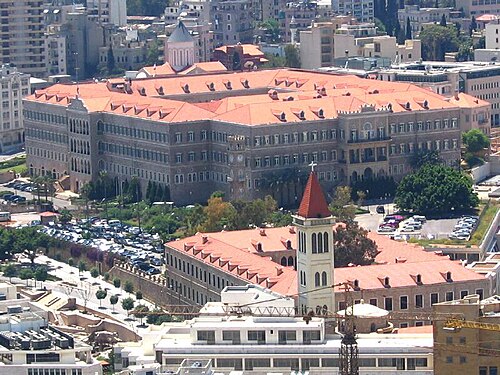
The Serail commands the city: the Grand Serail, on its hill, commanding the center of Beirut, the building visible across the city, the palace the dominant monument of the center, the Serail the crown of the hill, the building the commanding presence over the capital, the Grand Serail the dominant seat of power in the heart of Beirut, the palace that watches over the city.
The Ottoman Barracks
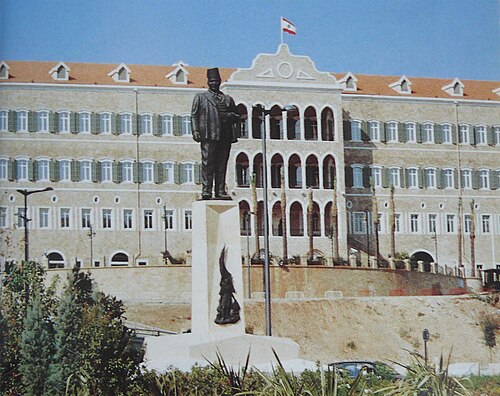
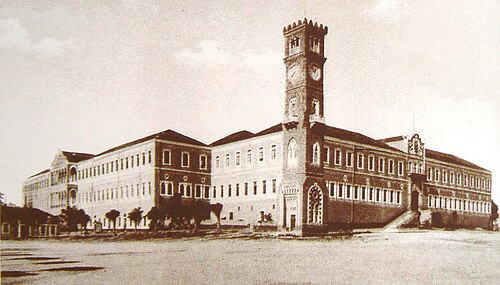
The Serail began as an Ottoman barracks. The building was raised by the Ottomans in the mid-nineteenth century as a military barracks, a great fortified complex to house the imperial troops in Beirut, the barracks the origin of the Grand Serail, the military building the first function of the palace, the Ottoman barracks the foundation of the later seat of government in the heart of Beirut.
The barracks housed the imperial troops: the great Ottoman barracks built to garrison the soldiers of the empire in the rising city of Beirut, the complex the military seat of the Ottoman authority, the barracks the stronghold of the imperial power, the building the garrison of the city, the Ottoman barracks the military origin of the Grand Serail, the complex the seat of the imperial troops in Beirut.
The barracks expressed the Ottoman power: the great military complex on the hill the expression of the authority of the Ottoman empire in Beirut, the barracks the symbol of the imperial rule, the building the seat of the military power, the complex the statement of the Ottoman authority, the barracks the monument of the empire, the Grand Serail in its origin the military expression of the Ottoman power in the city.
The Building of the Serail
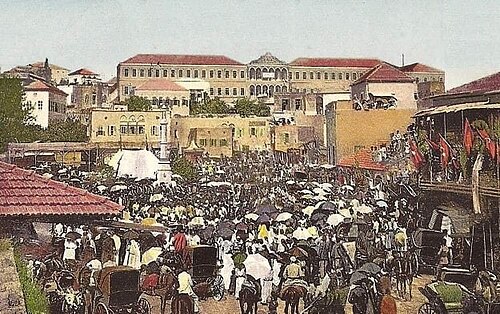
The Serail was built in the mid-nineteenth century. The great complex was raised around 1853, in the age of the Ottoman reforms, as part of the imperial building that marked the rise of Beirut, the building a work of the Tanzimat era, the Grand Serail the monument of the mid-nineteenth century, the complex the expression of the Ottoman building in the rising city, the Serail the great work of the imperial age in Beirut.
The building belonged to the age of reform: the Grand Serail raised in the era of the Tanzimat, the Ottoman reforms that modernized the empire, the building the expression of the reforming age, the complex the monument of the modernizing empire, the Serail the work of the Tanzimat, the building the symbol of the Ottoman reform in Beirut, the complex the monument of the age of change.
The building marked the rise of Beirut: the Grand Serail, with the other great Ottoman buildings of the hill, marking the emergence of Beirut as a chief city of the empire, the building the monument of the rising city, the complex the expression of the growth of Beirut, the Serail the symbol of the city’s importance, the building the mark of the rise of Beirut in the Ottoman age.
The Military Origins
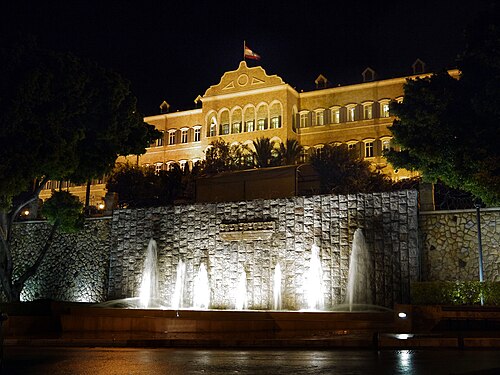
The Serail was long a military complex. For its first decades, the Grand Serail served as a barracks and a military headquarters, the building the seat of the Ottoman troops and the military administration of Beirut, the complex the military heart of the city, the barracks the stronghold of the imperial power, the Serail in its origin a military building, the complex the seat of the army in Ottoman Beirut.
The complex was a fortified stronghold: the Grand Serail built as a strong military complex, its walls and its layout those of a fortified barracks, the building the stronghold of the troops, the complex the fortress of the imperial power, the Serail the military stronghold on the hill, the building the fortified seat of the army, the complex the military fortress in the heart of Beirut.
The military origin shaped the building: the Grand Serail, in its plan and its scale, bearing the stamp of its origin as a military barracks, the great courtyards, the ranges of rooms, and the solid construction those of a military complex, the building the barracks turned palace, the complex the military building transformed, the Serail the fortress that became the seat of government in Beirut.
The French Mandate
Under the French Mandate the Serail became the seat of government. After the First World War and the fall of the Ottoman empire, Lebanon came under the French Mandate, and the Grand Serail was transformed from a barracks into the seat of the government, the building the center of the Mandate administration, the Serail the palace of government under the French, the complex the seat of power in the new Lebanon.
The French transformed the barracks into a palace: the Grand Serail, under the French Mandate, converted from a military complex into the seat of the civil government, the building adapted for the administration, the barracks transformed into the palace of government, the Serail the center of the Mandate rule, the complex the seat of the French administration in Beirut, the building the palace of the new age.
The Serail became the heart of the state: the Grand Serail, under the Mandate and then the independent republic, becoming the heart of the government of Lebanon, the building the seat of the state, the complex the center of the administration, the Serail the palace of power, the building the heart of the Lebanese state from the Mandate through the independence, the seat of the government in Beirut.
The Seat of Government
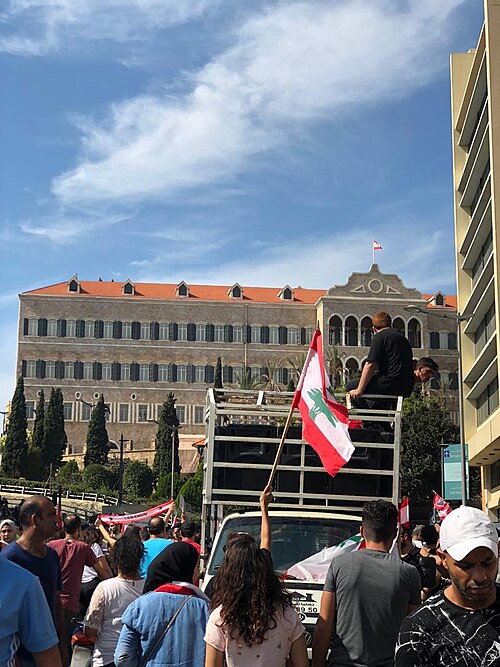
The Grand Serail is the seat of the government of Lebanon. The building is the office of the prime minister and the seat of the council of ministers, the center of the executive power of the republic, the Serail the heart of the government, the palace the seat of the prime minister, the building the center of the state, the Grand Serail the symbol and the seat of the authority of Lebanon in the heart of Beirut.
The prime minister works in the Serail: the Grand Serail the office and the working seat of the prime minister of Lebanon, the building the center of the executive, the palace the workplace of the head of government, the Serail the seat of the premier, the building the heart of the administration, the Grand Serail the office of the prime minister and the center of the government of the republic.
The building is the symbol of the state: the Grand Serail the architectural symbol of the government and the authority of Lebanon, the building the seat of power that represents the state, the palace the symbol of the republic, the Serail the monument of the government, the building the symbol of the authority, the Grand Serail the architectural embodiment of the Lebanese state in the heart of Beirut.
The Clock Tower
The Serail is marked by its clock tower. Within the Grand Serail stands the Hamidiyyeh clock tower, a fine Ottoman tower built in 1897 to mark the jubilee of the sultan Abdul Hamid II, the clock tower the landmark of the Serail, the tower the ornament of the complex, the Hamidiyyeh clock tower the jewel of the hill, the monument the symbol of the Ottoman age within the seat of government in Beirut.
The tower honored the Ottoman sultan: the Hamidiyyeh clock tower built to mark the silver jubilee of the sultan Abdul Hamid II, the tower a monument of the Ottoman loyalty, the clock the ornament of the sultan’s reign, the Hamidiyyeh the jewel of the jubilee, the tower the monument of the Ottoman age, the clock tower the symbol of the empire within the Grand Serail.
The tower is a landmark of Beirut: the Hamidiyyeh clock tower, with its fine stonework and its clock, one of the landmarks of the center of Beirut, the tower the ornament of the Serail hill, the clock the familiar sight of the city, the Hamidiyyeh the jewel of the complex, the tower the landmark of Beirut, the clock tower the familiar monument of the heart of the capital.
The Architecture of the Serail
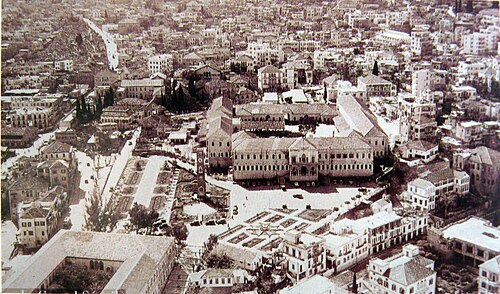
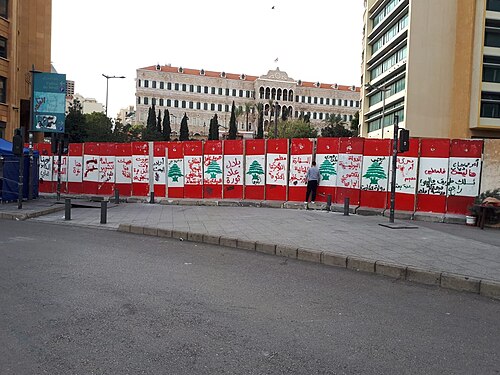
The Grand Serail is a monument of Ottoman architecture. The building, with its great ranges of rooms, its arcaded courtyards, its arched windows, and its solid stone construction, is one of the chief examples of the Ottoman public architecture in Lebanon, the Serail the showcase of the imperial building, the complex the jewel of the Ottoman architecture, the building the monument of the nineteenth-century imperial style in Beirut.
The building is grand and austere: the Grand Serail, with its scale, its symmetry, and its solid stone, a building of grand and austere character, the architecture the expression of the authority and the order of the state, the Serail the monument of the dignified imperial style, the complex the showcase of the grand architecture, the building the austere and majestic seat of power in Beirut.
The architecture expresses authority: the Grand Serail, in its grandeur and its solidity, the architectural expression of the authority of the state, the building the monument of power, the complex the embodiment of the government in stone, the Serail the architecture of authority, the building the seat whose very form proclaims the power of the state, the Grand Serail the monument of government in Beirut.
The Courtyards and Halls
The Serail is arranged around courtyards. The Grand Serail, in the manner of the great Ottoman public buildings, is arranged around courtyards, the ranges of rooms and halls surrounding the open courts, the courtyards the organizing centers of the complex, the halls the working and the ceremonial spaces, the courts the heart of the Serail, the courtyards the jewels of the building, the halls the setting of the government in Beirut.
The courtyards order the building: the courts of the Grand Serail the centers around which the ranges of the building are arranged, the courtyards the organizing heart of the complex, the open courts the light and the order of the building, the courtyards the centers of the Serail, the courts the jewels of the architecture, the courtyards the ordering heart of the seat of government in Beirut.
The halls serve the government: the halls and rooms of the Grand Serail the working and the ceremonial spaces of the government, the offices of the prime minister, the hall of the council of ministers, and the reception rooms of the state, the halls the setting of the government, the rooms the working heart of the state, the halls the jewels of the Serail, the rooms the setting of the power of Lebanon.
The Council of Ministers
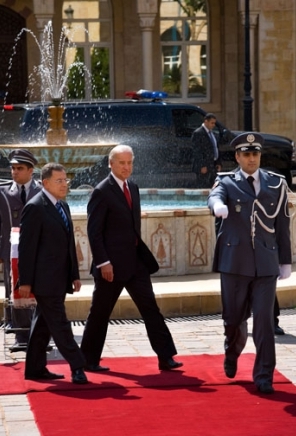
The Serail houses the Council of Ministers. The Grand Serail is the seat of the Council of Ministers of Lebanon, the cabinet of the government, the hall where the ministers meet under the prime minister to govern the republic, the council the heart of the executive, the Serail the seat of the cabinet, the building the setting of the government of Lebanon, the hall of the Council of Ministers the center of the power of the state in Beirut.
The cabinet governs from the Serail: the Council of Ministers meeting in the Grand Serail to decide the affairs of the republic, the cabinet the executive of the state, the council the body of the government, the Serail the seat of the cabinet, the building the setting of the decisions of the state, the hall of the council the heart of the government, the Grand Serail the seat of the executive of Lebanon.
The building is the stage of the nation’s politics: the Grand Serail the setting of the formation of governments, the meetings of the cabinet, and the great decisions of the republic, the building the stage of the Lebanese politics, the Serail the seat where the fate of the government is decided, the building the center of the political life, the Grand Serail the stage of the affairs of the state in Beirut.
The Civil War and Damage
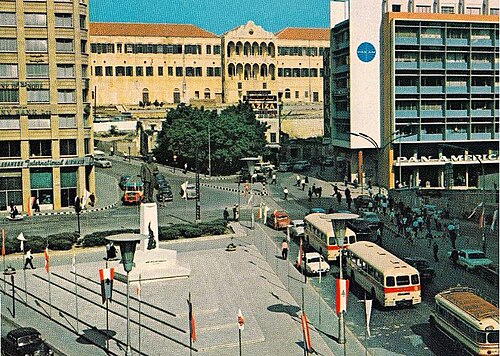
The Serail was damaged in the civil war. During the long Lebanese civil war, from 1975 to 1990, the Grand Serail, standing near the front lines in the heart of divided Beirut, was damaged and left derelict, the building a casualty of the conflict that tore the city apart, the Serail the victim of the war, the palace the ruin of the divided capital, the building the casualty of the long conflict in Beirut.
The war left the building derelict: the Grand Serail, caught in the fighting and the division of Beirut, left damaged, abandoned, and derelict through the years of the war, the building the ruin of the conflict, the Serail the casualty of the division, the palace the derelict monument of the war, the building the victim of the long conflict that devastated the center of Beirut.
The war devastated the city center: the Lebanese civil war devastating the heart of Beirut, the center of the city, around the Grand Serail, reduced to a ruined no-man’s-land, the war the catastrophe for the city, the center the battleground of the conflict, the Serail the monument amid the ruin, the war the devastation of the heart of Beirut around the seat of government.
The Restoration by Hariri
The Serail was restored after the war. After the end of the civil war, the Grand Serail was magnificently restored as part of the reconstruction of the center of Beirut led by the government of the prime minister Rafic Hariri, the building brought back to its splendor and returned to its role as the seat of government, the restoration the recovery of the Serail, the building the jewel of the rebuilt Beirut.
The restoration was part of the rebuilding of Beirut: the recovery of the Grand Serail a centerpiece of the great reconstruction of the devastated center of Beirut after the war, the restoration the symbol of the rebuilding, the building the jewel of the recovered city, the Serail the centerpiece of the reconstruction, the restoration the recovery of the heart of Beirut, the building the symbol of the rebirth of the capital.
The restored Serail returned as the seat of power: the Grand Serail, magnificently restored, returned to its role as the seat of the government and the office of the prime minister, the building the recovered heart of the state, the Serail the restored seat of power, the palace the jewel of the rebuilt center, the Grand Serail the recovered symbol of the government of Lebanon in Beirut.
The Grand Serail Today
The Grand Serail today stands as the seat of the government of Lebanon, the great Ottoman palace on its hill in the heart of Beirut, the office of the prime minister, the seat of the Council of Ministers, the symbol of the state, the building that has passed from barracks to palace of government, the Grand Serail the heart of the Lebanese state, the monument that has watched over the history of modern Lebanon.
The palace endures as the symbol of the state: the Grand Serail, restored after the war, standing as the seat of power and the symbol of the government of Lebanon, the building the heart of the state, the Serail the monument of the authority, the palace the symbol of the republic, the Grand Serail the enduring seat of the government, the building the heart of the Lebanese state in the center of Beirut.
The Grand Serail continues the Lebanese palace series, the great Ottoman palace that is the seat of the government of Lebanon, the building raised as a barracks and transformed into the palace of power, the office of the prime minister on its hill in the heart of Beirut, the Grand Serail the symbol of the state, the monument of the government, the enduring seat of the authority of the Lebanese republic.
Watch the Grand Serail on Film
Visiting the Grand Serail Today
The Grand Serail stands on a hill in the central district of Beirut, the capital of Lebanon, commanding the city center near the other Ottoman buildings of the hill; the building is the working seat of the government, the office of the prime minister and the Council of Ministers, so it is a guarded government palace not generally open to visitors, though it is admired from the surrounding streets with its Hamidiyyeh clock tower. Travel in Lebanon and access to the area depend on the current conditions, which should be checked before any visit; the Grand Serail is among the chief monuments of Beirut. You can find the building on the map here: Grand Serail of Beirut on Google Maps.


