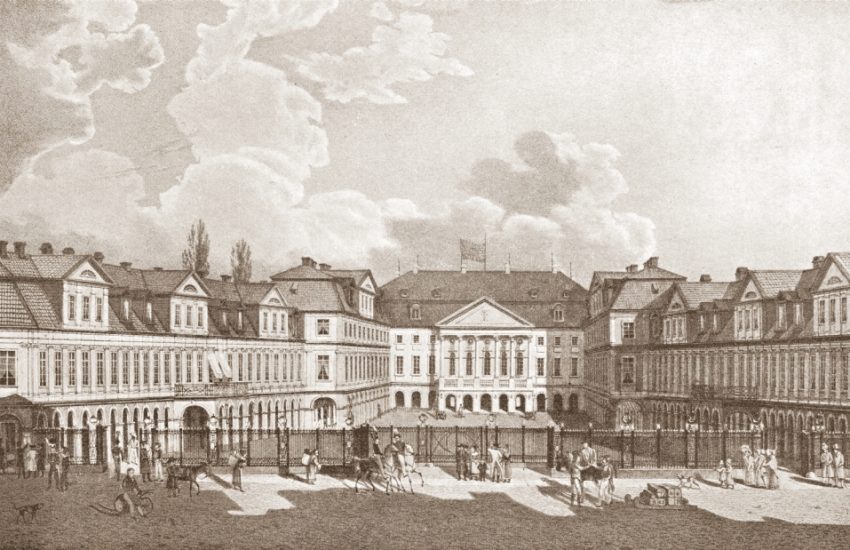
On the western edge of Dessau, in a quiet village surrounded by gardens, stands one of the most charming rococo palaces in central Germany. Mosigkau Palace was built in the 1750s for Princess Anna Wilhelmine of Anhalt Dessau, and its intimate rooms and splendid picture gallery make it a hidden treasure of the region.
Part of the Dessau Worlitz Garden Realm, a UNESCO World Heritage Site, the palace is surrounded by a park with a maze, a Japanese garden house and orangeries. For more than a century and a half it was also a foundation for unmarried noblewomen, a unique chapter in its history.
In this article we will explore Mosigkau from the princess who built it to its gallery, its park and its later life, and we will finish with practical tips for your visit.
In This Article
- A Rococo Jewel Near Dessau
- Princess Anna Wilhelmine
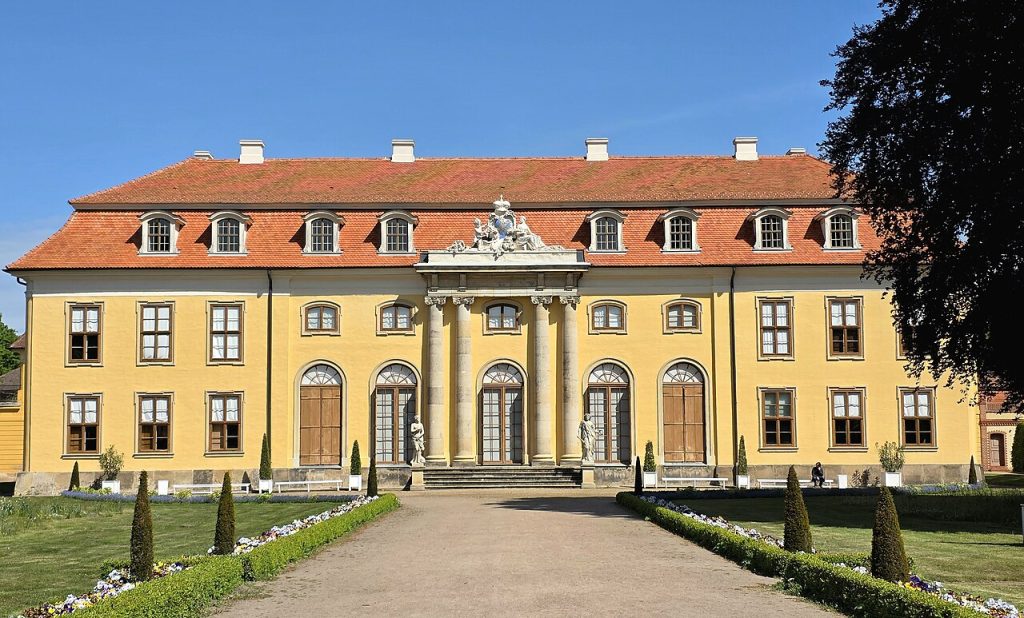
- The Palace Front
- The Palace Seen From the Courtyard
- Mosigkau in Summer
- The Gallery Hall
- The Rococo Rooms
- The Wings and Their History
- The Park and the Maze
- The North Gate and the Grounds
- Mosigkau From Above
- Mosigkau on Video
- Visiting Mosigkau Today
A Rococo Jewel Near Dessau
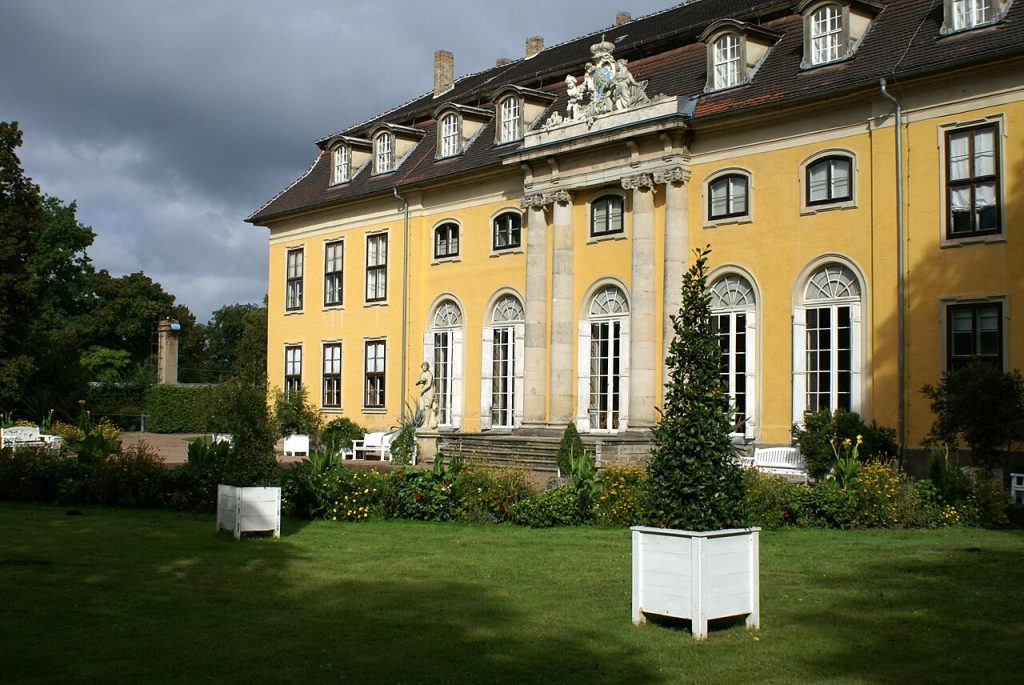
Approaching Mosigkau, you see a graceful palace with a central block and two wings framing a courtyard. Its pale facades and curved roofs give it a light and elegant appearance.
The palace is small compared with the great residences of Germany, but its harmony and decoration make it a perfect example of rococo architecture.
The village of Mosigkau lies a few kilometres from the centre of Dessau, in a peaceful rural setting.
What makes Mosigkau special is its intimacy, the quality of its interiors and its remarkable collection of paintings.
Princess Anna Wilhelmine
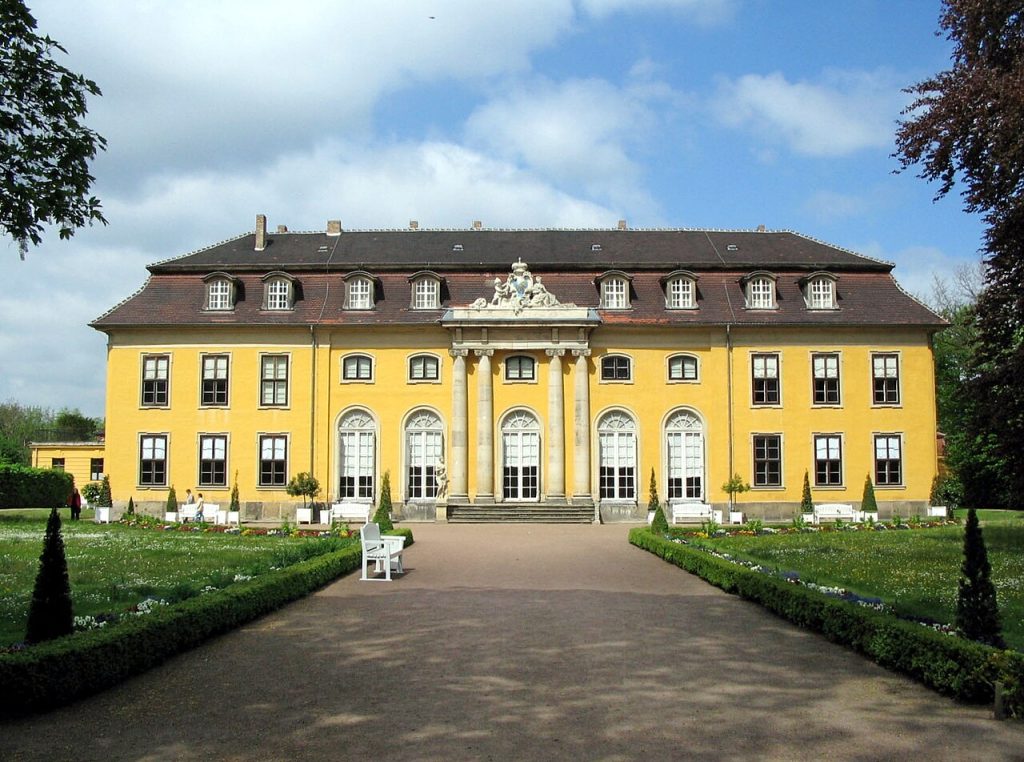
The palace was built for Anna Wilhelmine of Anhalt Dessau, a daughter of Prince Leopold I, the famous military reformer known as the Old Dessauer.
Anna Wilhelmine never married, and she received the estate of Mosigkau as her own property, where she built a summer residence to suit her taste.
She was a cultivated woman with a love of art, and she filled her palace with paintings, porcelain and fine furniture.
Her independent life and her role as patron make her one of the most interesting women of the Anhalt dynasty.
The Palace Front
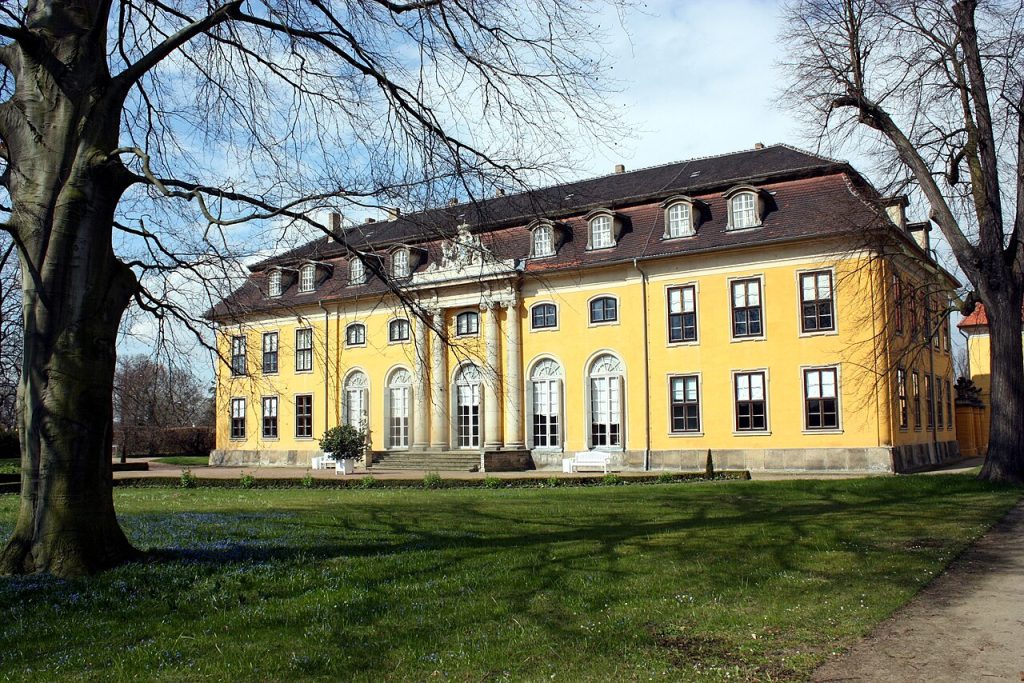
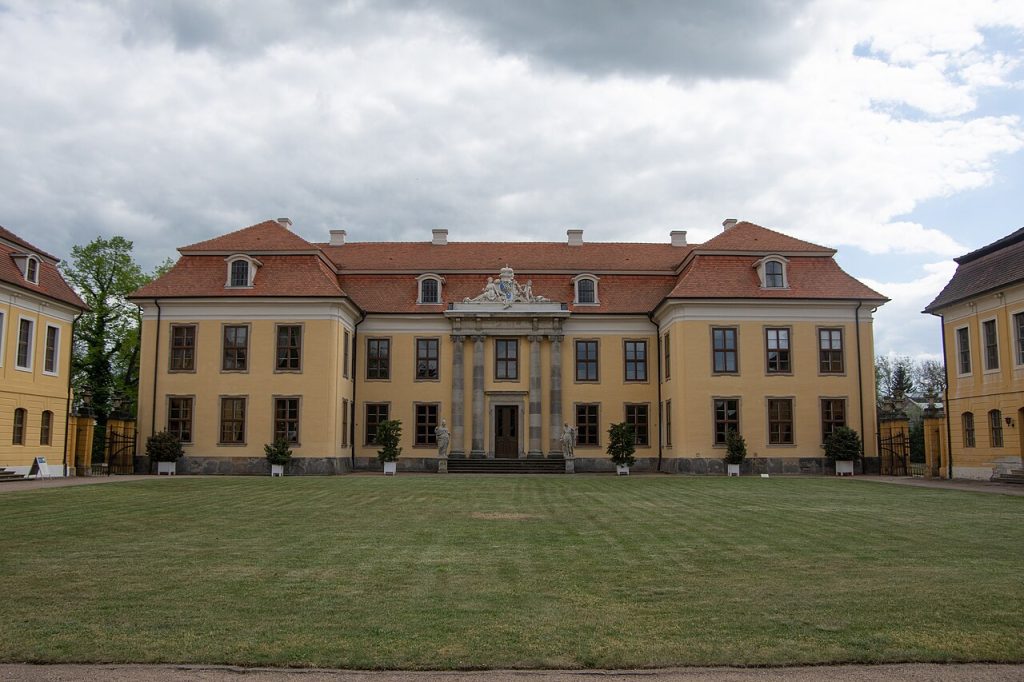
The front of the palace faces a courtyard framed by side wings, creating a welcoming forecourt for arriving guests.
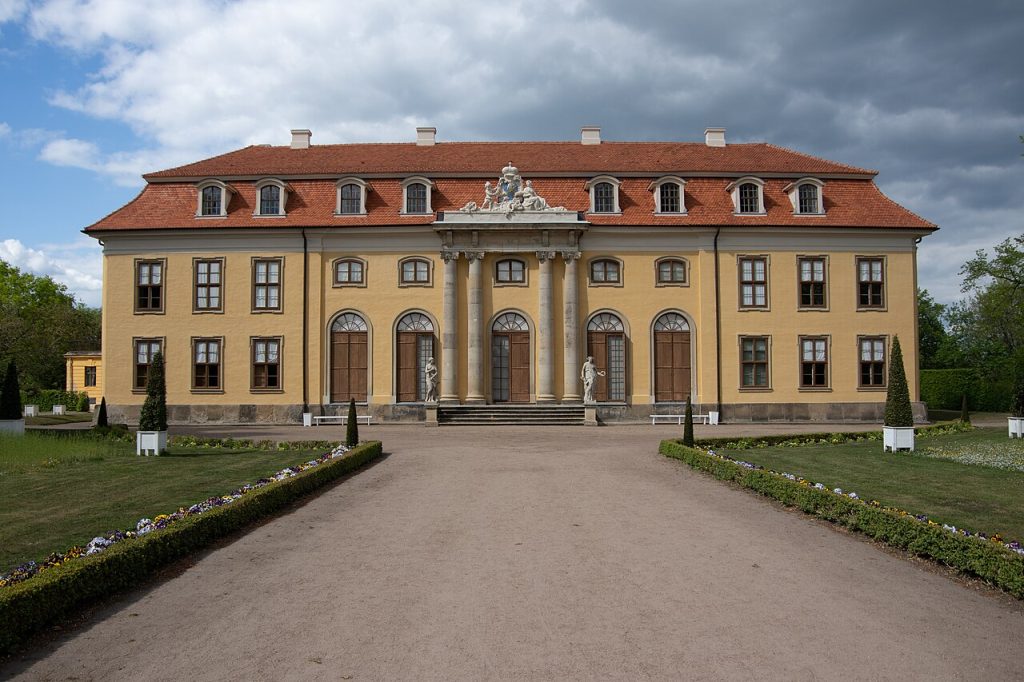
The central block is decorated with a projecting section and graceful ornament, typical of the Prussian rococo style that influenced Anhalt.
The design is said to reflect plans by Georg Wenzeslaus von Knobelsdorff, the architect of Sanssouci in Potsdam.
The result is a building that recalls Sanssouci in its elegance and human scale.
The Palace Seen From the Courtyard
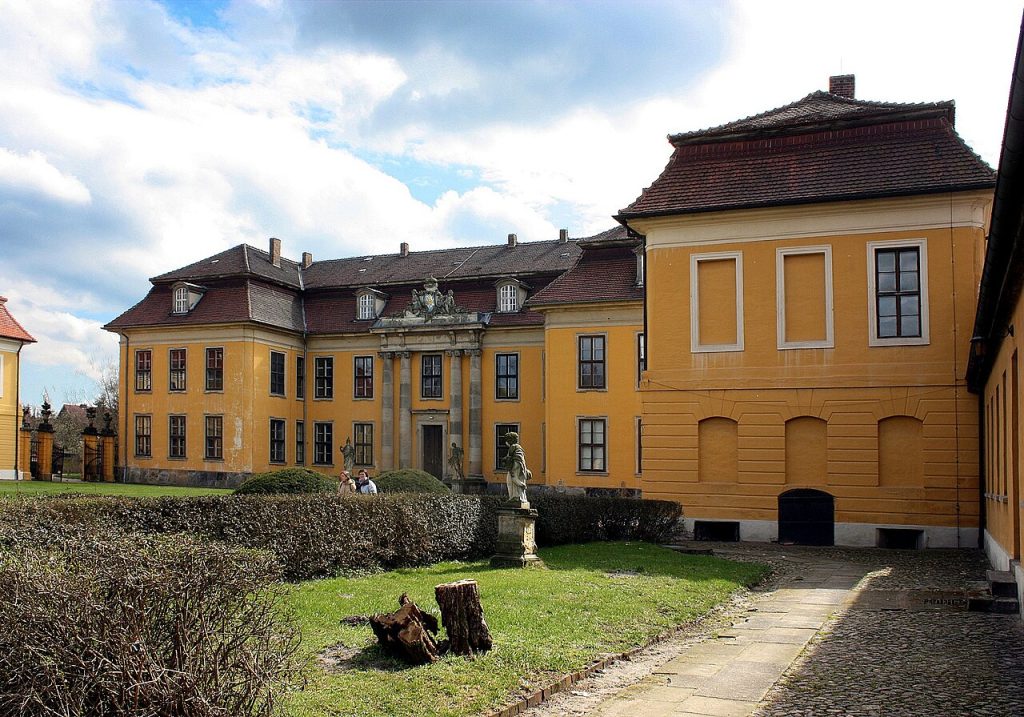
From the courtyard, the palace appears as a harmonious composition of central block and wings.
The pale colours of the facades and the soft lines of the roofs create a gentle, inviting atmosphere.
The courtyard is often used for concerts and events in summer.
Its enclosed space gives a sense of intimacy that suits the character of the palace.
Mosigkau in Summer
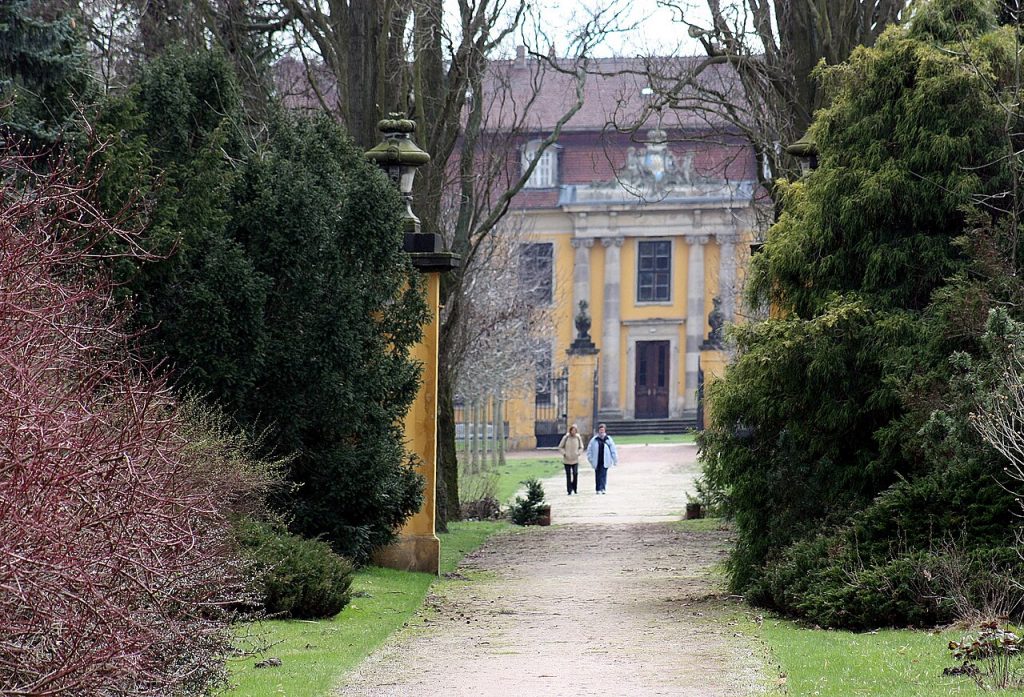
In summer, the palace and its gardens are at their most beautiful, with flowers in bloom and trees in full leaf.
Visitors can stroll through the park, explore the maze and enjoy the peaceful atmosphere.
Concerts and festivals bring life to the courtyard and gardens on warm evenings.
The palace is a perfect destination for a relaxed summer day out from Dessau.
The Gallery Hall
The heart of the palace is the Gallery Hall, a richly decorated room whose walls are hung with paintings from floor to ceiling in the baroque manner.
The collection includes works by Flemish and Dutch masters such as Rubens, Van Dyck and Jordaens, as well as paintings by German and Italian artists.
The dense hanging of the pictures creates a dazzling effect, and the hall is one of the best preserved baroque picture galleries in Germany.
Standing in the Gallery Hall, you can see the princess’s collection exactly as she arranged it more than two centuries ago.
The Rococo Rooms
Around the Gallery Hall lie a series of smaller rooms decorated in the rococo style, with stucco, painted panels, silk wall coverings and fine furniture.
Each room has its own colour and character, from cabinets for private study to bedrooms and salons.
Porcelain, clocks and decorative objects complete the interiors, many of them belonging to the princess’s original collection.
The rooms give a vivid impression of the comfort and elegance of aristocratic life in the eighteenth century.
The Wings and Their History
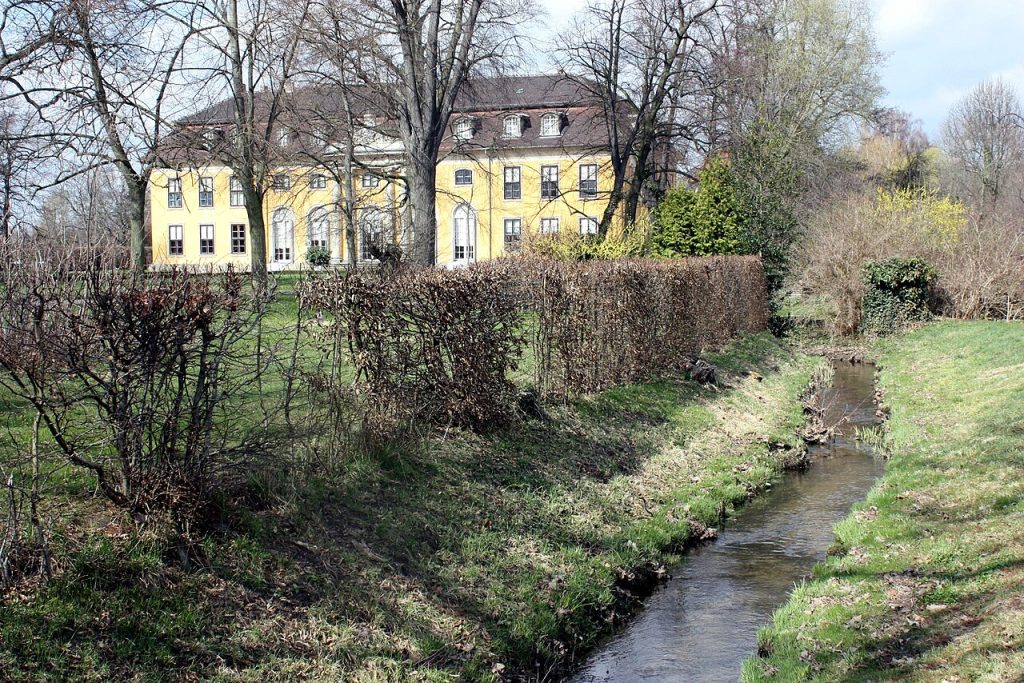
The side wings of the palace once housed staff, kitchens and service rooms, supporting the household of the princess.
After her death in 1780, Mosigkau became a foundation for unmarried noblewomen, who lived in the palace under the direction of an abbess.
This foundation lasted until 1945, giving the palace a unique history as a community of women for more than a century and a half.
Today the wings house exhibitions and facilities for visitors.
The Park and the Maze
Around the palace stretches a park that combines formal baroque elements with later landscape design.
One of its most popular features is the maze, a labyrinth of hedges that delights children and adults alike.
The park also contains a Japanese garden house, reflecting the eighteenth century fascination with East Asia, and orangeries where citrus trees were kept in winter.
Walking through the park, you can enjoy changing views of the palace and the peaceful atmosphere of the countryside.
The North Gate and the Grounds
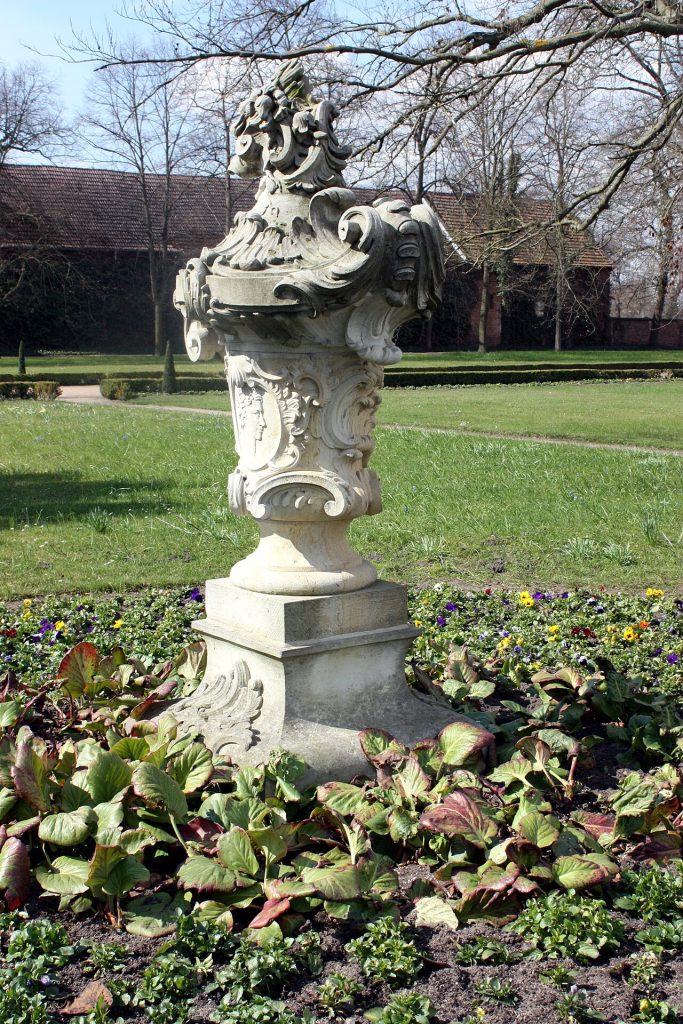
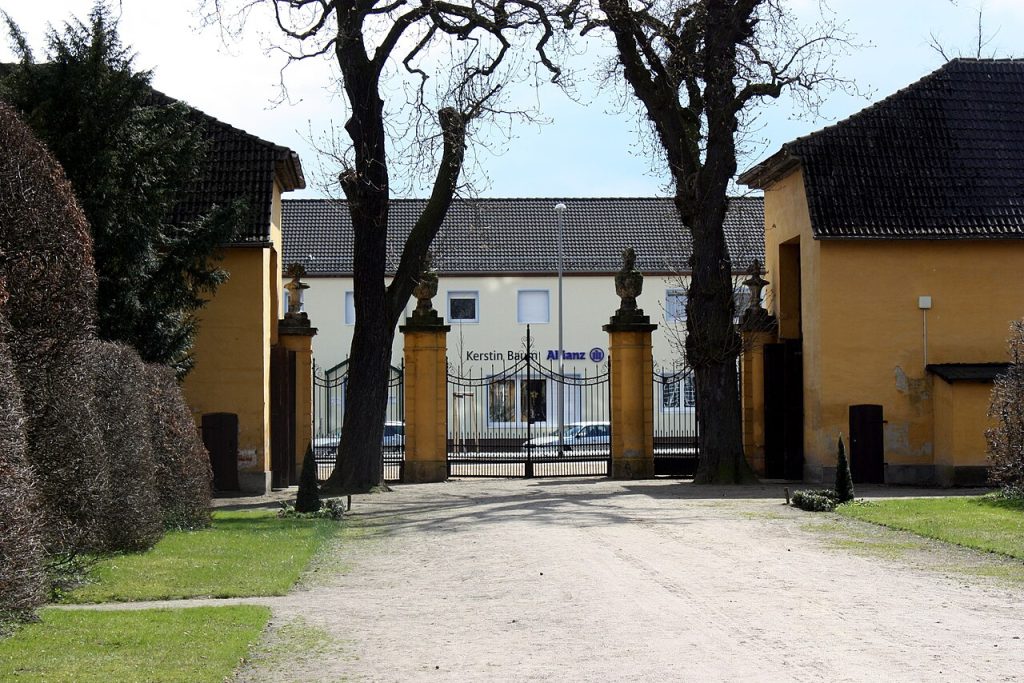
The north gate marks one of the entrances to the palace grounds, its baroque design adding a sense of ceremony to the approach.
From here, paths lead through the park and around the palace.
The grounds include outbuildings and gardens that once supported the life of the princely household.
Today they are part of a peaceful landscape open to all visitors.
Mosigkau From Above
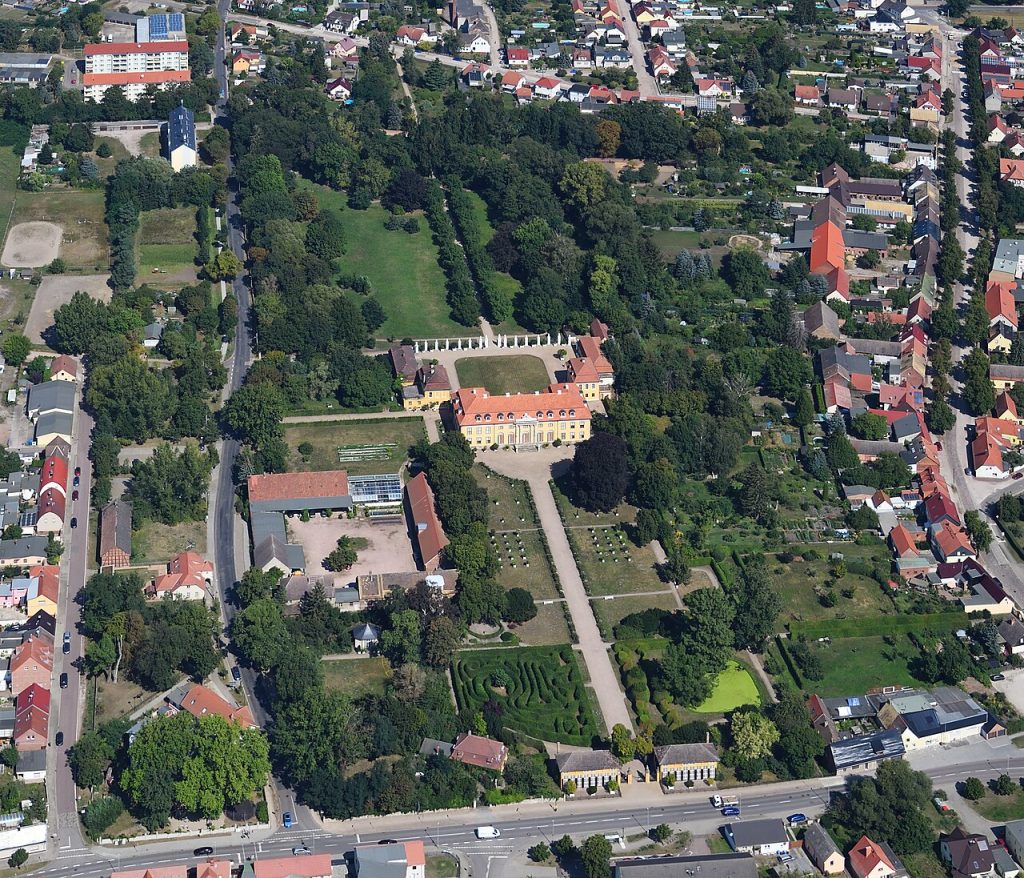
From the air, the layout of Mosigkau becomes clear, with the palace, its wings, the courtyard and the park arranged in a harmonious composition.
The geometric patterns of the gardens and the maze stand out against the surrounding fields.
Aerial views also show how the palace fits into the wider landscape of the Dessau Worlitz Garden Realm.
This landscape of parks and palaces is one of the most important cultural landscapes in Europe.
Mosigkau on Video
For a look at the palace and park, the video below presents Mosigkau, the rococo jewel of Dessau.
Watch for the Gallery Hall and the gardens.
If the video inspires you, read on for practical tips.
Visiting Mosigkau Today
Mosigkau Palace is open from spring to autumn, with guided tours of the rooms and the Gallery Hall. The park can be visited freely.
The palace lies in Mosigkau, a district of Dessau Rosslau, easily reached by car, bus or bicycle from the centre of Dessau.
Plan to combine your visit with the other gardens and palaces of the Dessau Worlitz Garden Realm, including Oranienbaum, Worlitz and Luisium.
Dessau is also famous for the Bauhaus, so a visit can combine baroque and modern architecture in a single trip.
View the location on Google Maps
Palaces Nearby
If you have enjoyed this palace, central Germany holds more remarkable residences. Here are two more well worth adding to your journey:
- Blankenburg Palace – the ducal residence of the Brunswick family in the Harz mountains.
- Wolfenbuttel Palace – the timber fronted residence of the dukes of Brunswick Wolfenbuttel.
You May Like
Blankenburg Palace and the Ducal Residence in the Harz Mountains