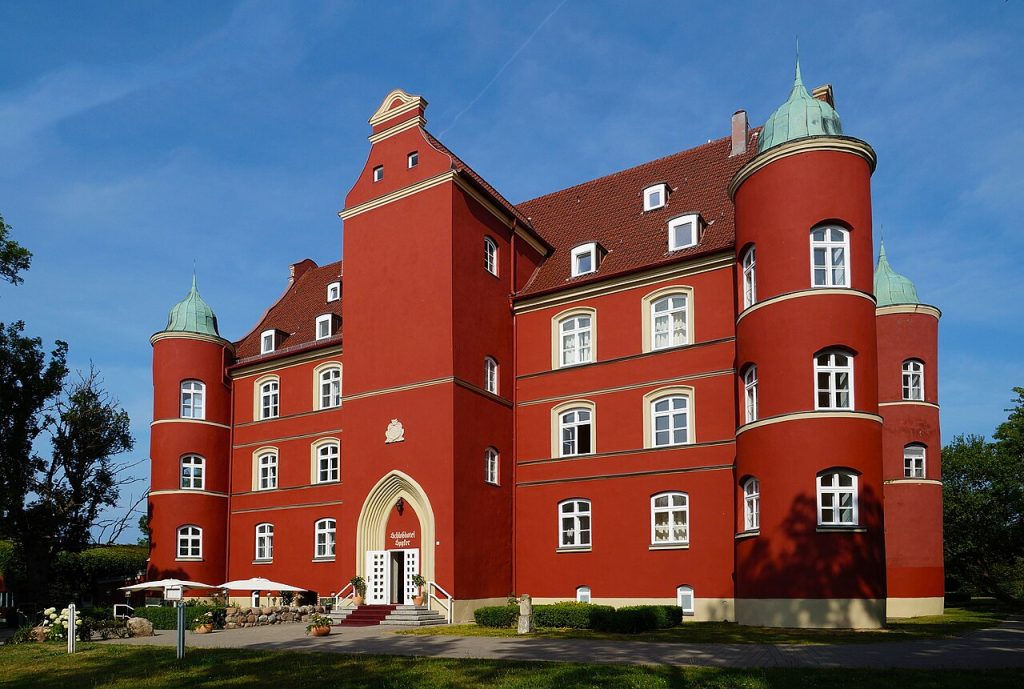
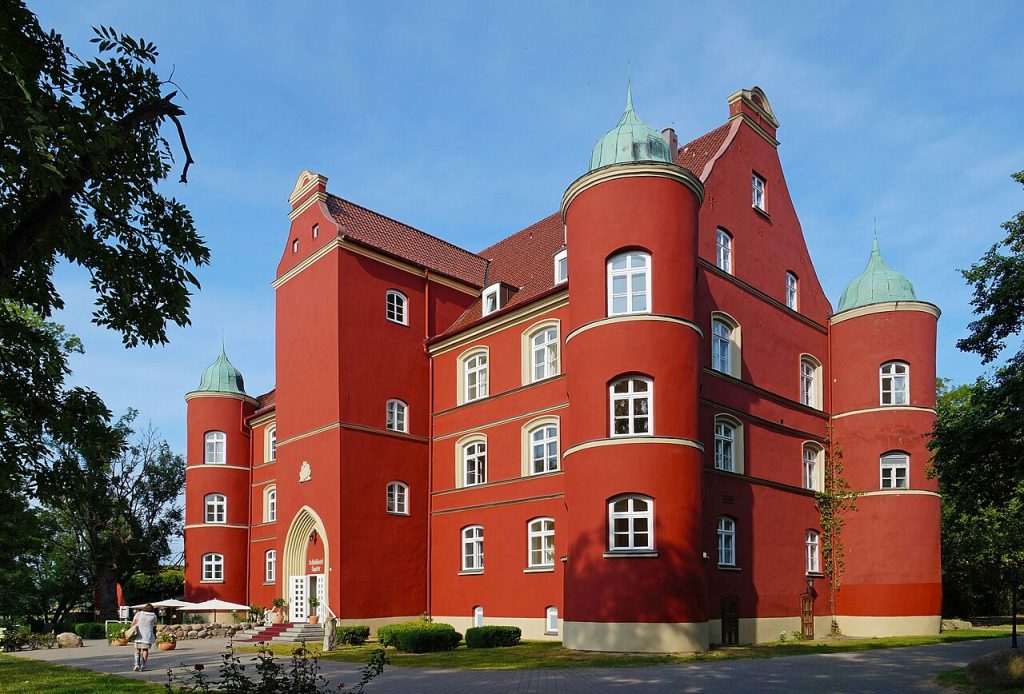
On the island of Rugen, not far from the famous chalk cliffs of Jasmund, stands a bright red castle with four round corner towers, sitting by a lake like a toy in a picture book. Spyker Castle is the oldest secular building on Rugen, and for a while it belonged to one of the most famous soldiers of the Thirty Years War, the Swedish field marshal Carl Gustav Wrangel.
Come along and I will tell you how a Swedish general ended up owning a Pomeranian manor, show you stucco ceilings full of mythological figures, and share the ghost story that every local seems to know.
Today the castle is a hotel and restaurant, so you can do something few palaces allow: sleep in it.
In This Article
- A Red Castle by the Lake
- From Medieval Manor to Renaissance Castle
- Carl Gustav Wrangel Arrives
- Italian Stucco on Rugen
- The Ghost of the Field Marshal
- Rugen Under the Swedish Crown
- Later Owners and Changing Times
- Sleeping in a Castle
- The Park and the Lake
- The Chalk Cliffs of Jasmund
- Spyker on Video
- Visiting Spyker Today
A Red Castle by the Lake
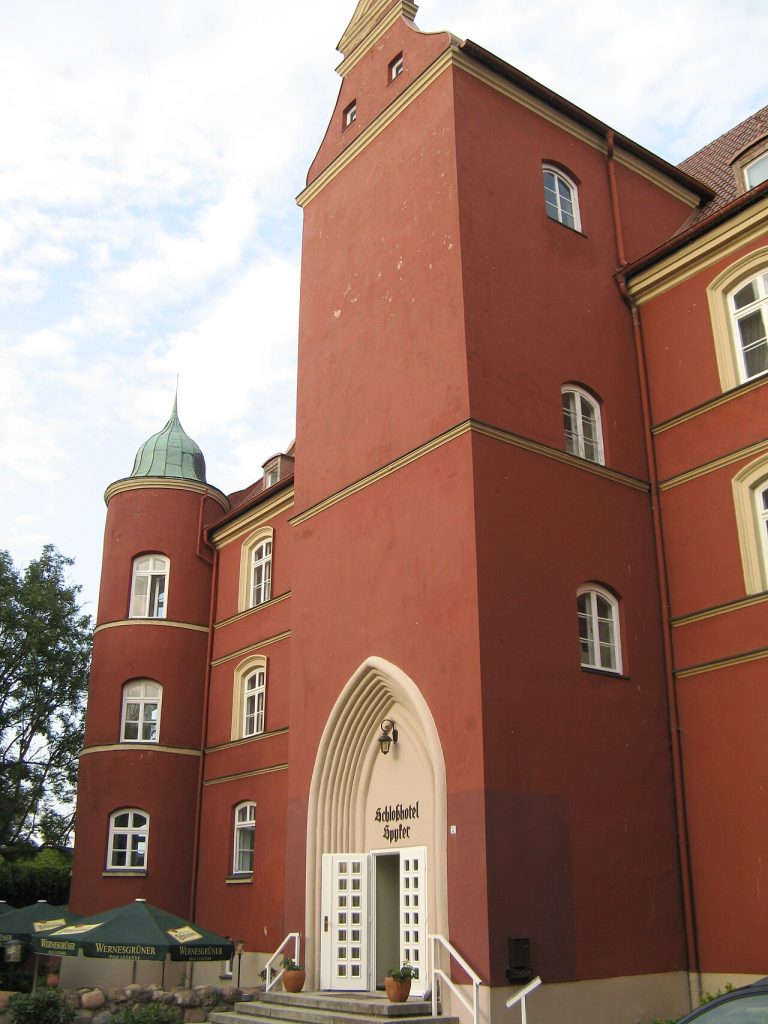
Driving along the quiet country roads of northern Rugen, you suddenly see it between the trees: a bright red building with white trim, four plump round towers at the corners and steep roofs.
It looks almost too cheerful to be a castle. There are no battlements or grim walls, just a warm, friendly face looking out over a small lake.
Behind it lies a park with old trees, and beyond that the fields and woods of the Jasmund peninsula.
Many visitors stop just to take a photograph, and then discover there is a fascinating story behind those red walls.
From Medieval Manor to Renaissance Castle
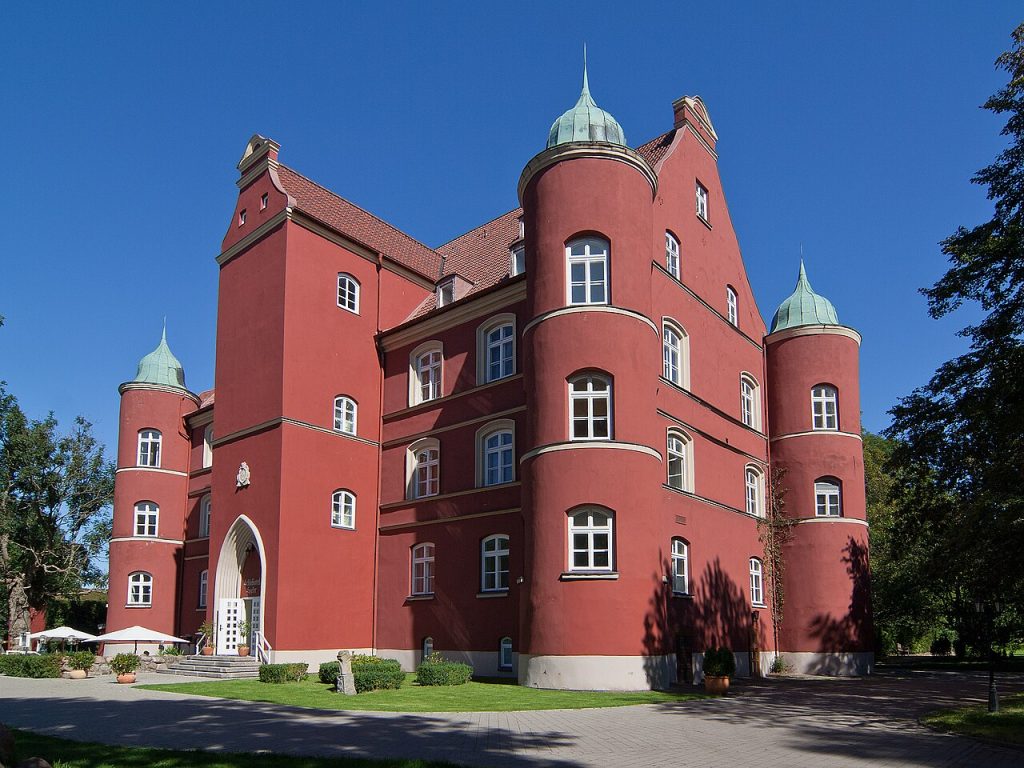
The site of Spyker was home to a manor house as early as the Middle Ages, owned by the local noble family of von der Osten.
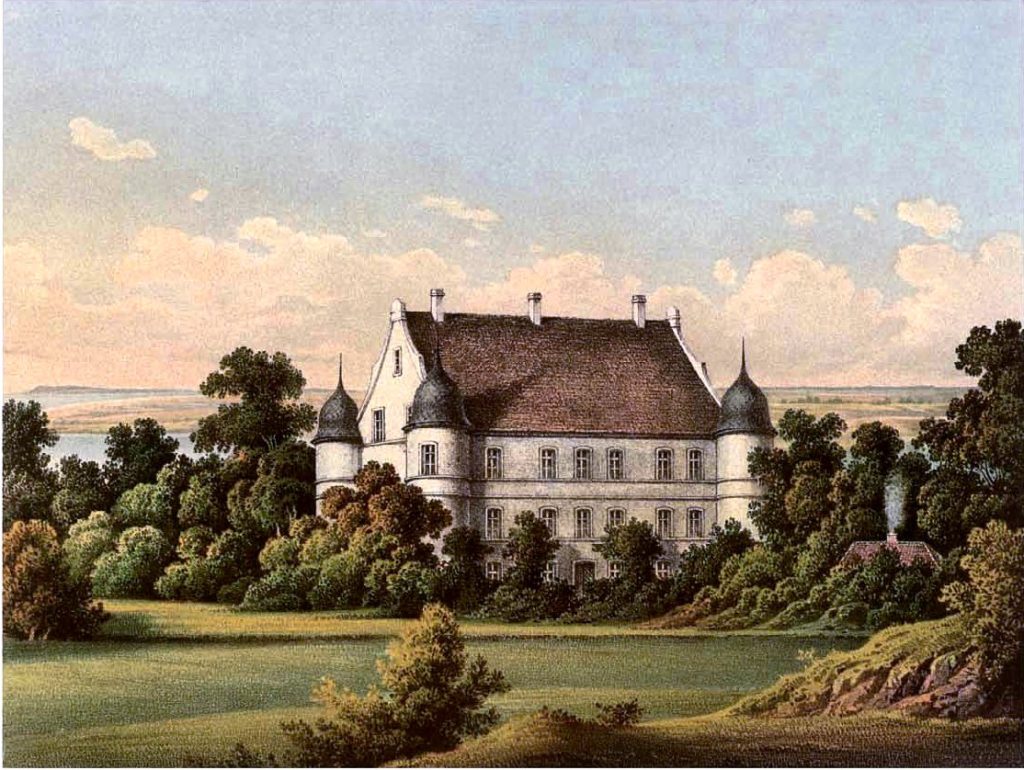
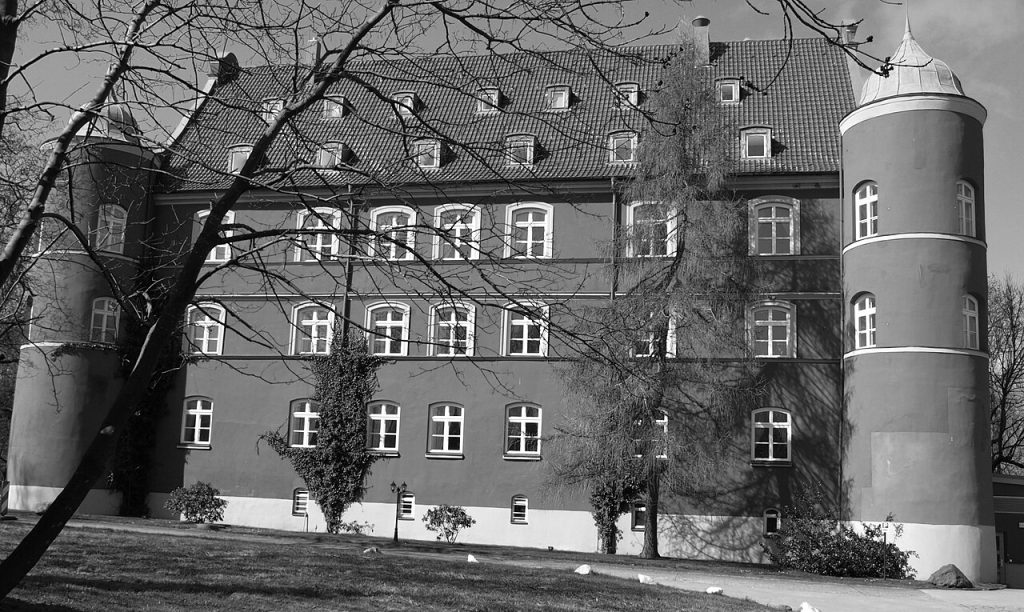
In the sixteenth century, the family rebuilt the manor as a Renaissance castle, with the four corner towers that give it its character today.
That makes Spyker one of the oldest surviving secular buildings on the whole island, older than most of the elegant villas of the seaside resorts.
Carl Gustav Wrangel Arrives
Here is where the story gets exciting. During the Thirty Years War, Swedish armies occupied Pomerania, and after the war Rugen became part of Swedish Pomerania.
In 1649, Queen Christina of Sweden gave Spyker to Carl Gustav Wrangel, one of her most successful generals, as a reward for his service.
Wrangel was a soldier, statesman and a passionate builder, famous for his palaces in Sweden, including Skokloster Castle near Stockholm.
He had Spyker remodelled in the baroque style and brought in skilled craftsmen to decorate the interiors.
Italian Stucco on Rugen
The greatest treasures inside Spyker are the stucco ceilings commissioned by Wrangel. Italian stuccoworkers, who also worked on his Swedish palaces, created ceilings full of figures, garlands and scenes from mythology.
Look up and you will see gods, goddesses, cherubs, fruit and flowers, all modelled by hand in plaster more than three hundred and fifty years ago.
These ceilings are among the finest baroque stucco work in northern Germany, and finding them in a country manor on Rugen is a real surprise.
The Ghost of the Field Marshal
Now for the story locals love to tell. Wrangel died in 1676, but according to legend he never quite left Spyker.
It is said that on stormy nights a ghostly rider gallops around the lake, and that the old field marshal can sometimes be heard pacing the corridors, his boots echoing on the floorboards.
Another tale claims that Wrangel made a pact with the devil to win his battles, and that the devil came to collect his soul at Spyker.
Hotel guests sometimes joke about meeting him at breakfast. Nobody has, as far as we know, but the stories add a delicious shiver to an evening by the fire.
Rugen Under the Swedish Crown
For almost two centuries, from 1648 to 1815, Rugen and much of Pomerania belonged to Sweden. Swedish governors ruled from Stralsund, and Swedish nobles owned many estates on the island.
You can still find traces of this period in place names, churches and manor houses across Rugen, and Spyker is one of the most important.
In 1815 the island passed to Prussia, but the Swedish chapter remains a proud part of local history.
Later Owners and Changing Times
After the Wrangel family, Spyker passed through the hands of several noble families, including the Brahe family of Sweden, who kept it for many years.
In the twentieth century, after the Second World War, the castle was expropriated and used for various purposes, including as a holiday home.
After reunification it was restored and converted into a hotel, preserving its historic rooms and stucco ceilings.
Sleeping in a Castle
Today Spyker Castle is a hotel with a restaurant, and guests can sleep in rooms in the historic building and the outbuildings.
Even if you are not staying, you can visit the restaurant and admire some of the historic rooms, including those with stucco ceilings.
Dining under a baroque ceiling, with the lake outside the window, is a lovely way to experience the castle.
The Park and the Lake
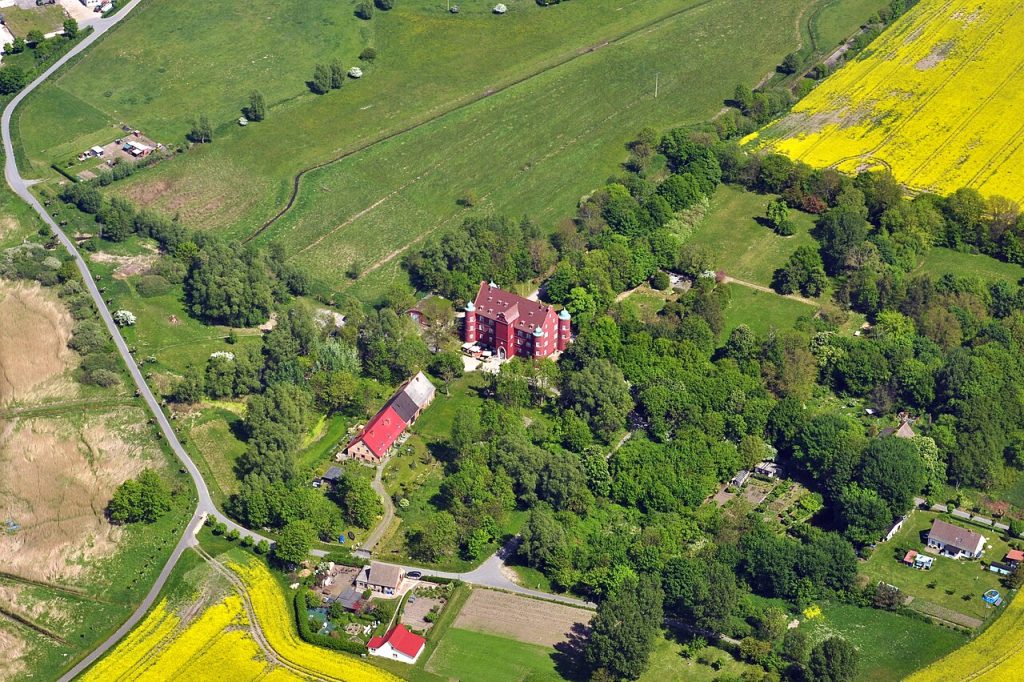
Around the castle lies a peaceful park with old trees and a small lake, the Spyker See, where the red walls are reflected on calm days.
A walk around the lake gives you the best views of the castle, and in summer the park is a quiet retreat from the busy beaches.
The Chalk Cliffs of Jasmund
Spyker lies close to the Jasmund National Park, home of the famous white chalk cliffs and ancient beech forests, a UNESCO World Heritage Site.
The Konigsstuhl, the most famous cliff, rises more than one hundred metres above the sea, and the views inspired the painter Caspar David Friedrich.
Combining a visit to Spyker with a walk along the cliffs makes a perfect Rugen day.
Spyker on Video
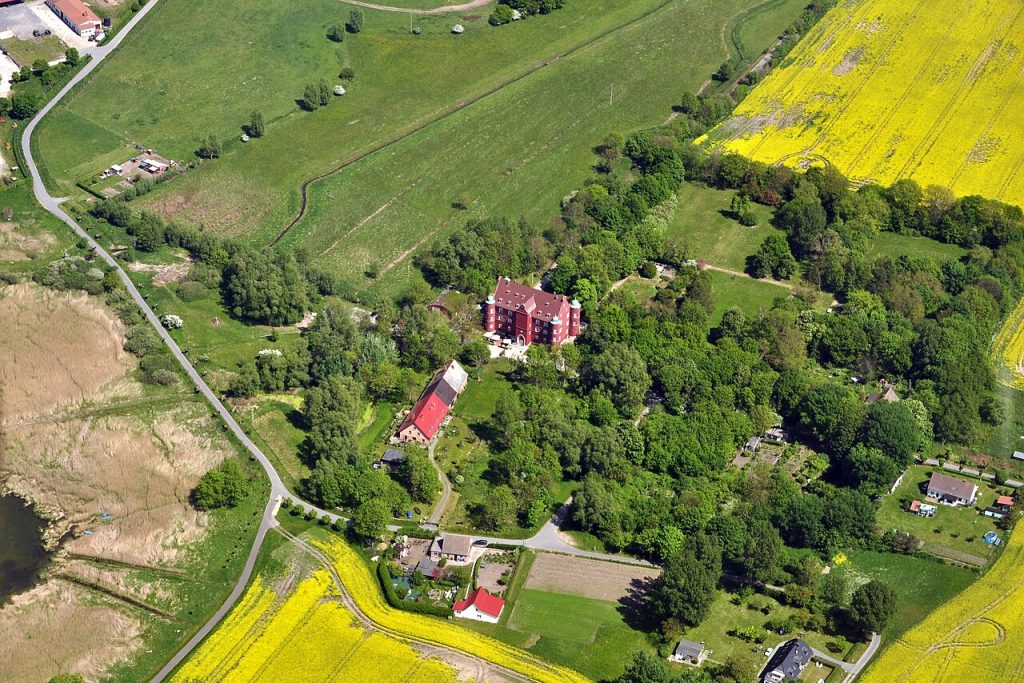
Here is a short video to show you the castle and its surroundings.
If the video makes you want to visit, here are some practical tips.
Visiting Spyker Today
Spyker Castle is a hotel and restaurant, open throughout the year. The exterior and the park can be viewed freely, and the restaurant is open to visitors.
The castle lies in the north of Rugen near the village of Glowe, about twenty kilometres from the seaside resort of Sassnitz, and is best reached by car or bicycle.
Plan an hour or so for the castle and park, and combine your visit with the chalk cliffs of Jasmund, the beaches of Glowe and the Granitz Hunting Lodge further south.
A local tip: stay for dinner and ask the staff about the ghost. Every one of them seems to have a slightly different version of the story.
View the location on Google Maps
Palaces Nearby
If you have enjoyed this palace, the region holds more remarkable residences. Here are two more well worth adding to your journey:
You May Like