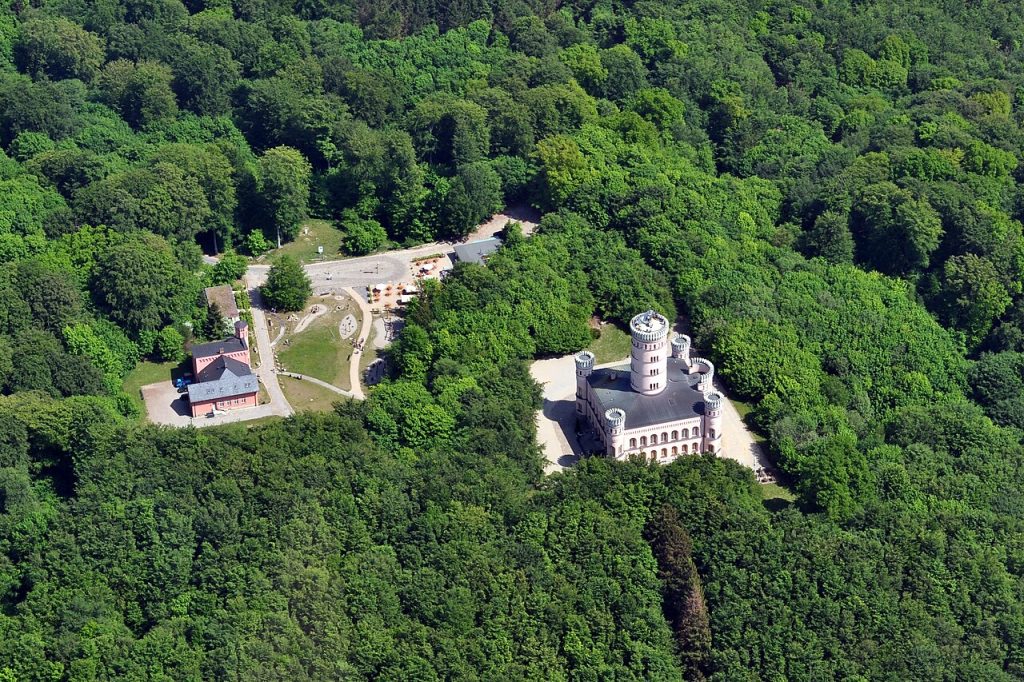
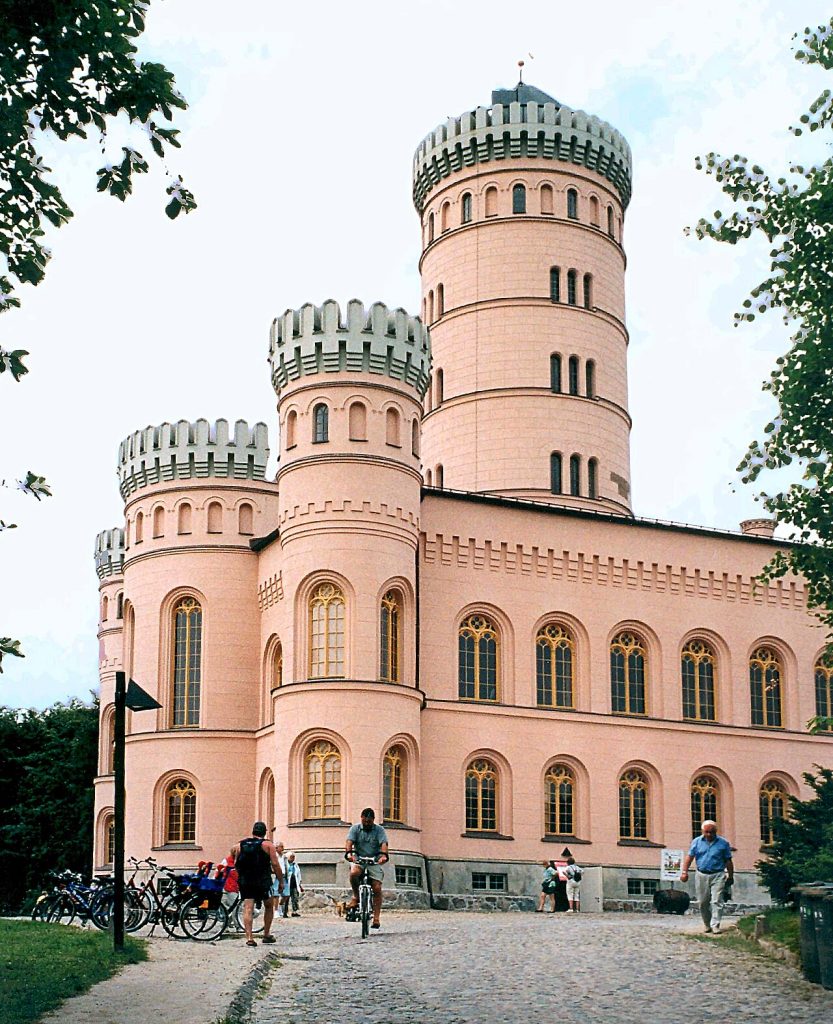
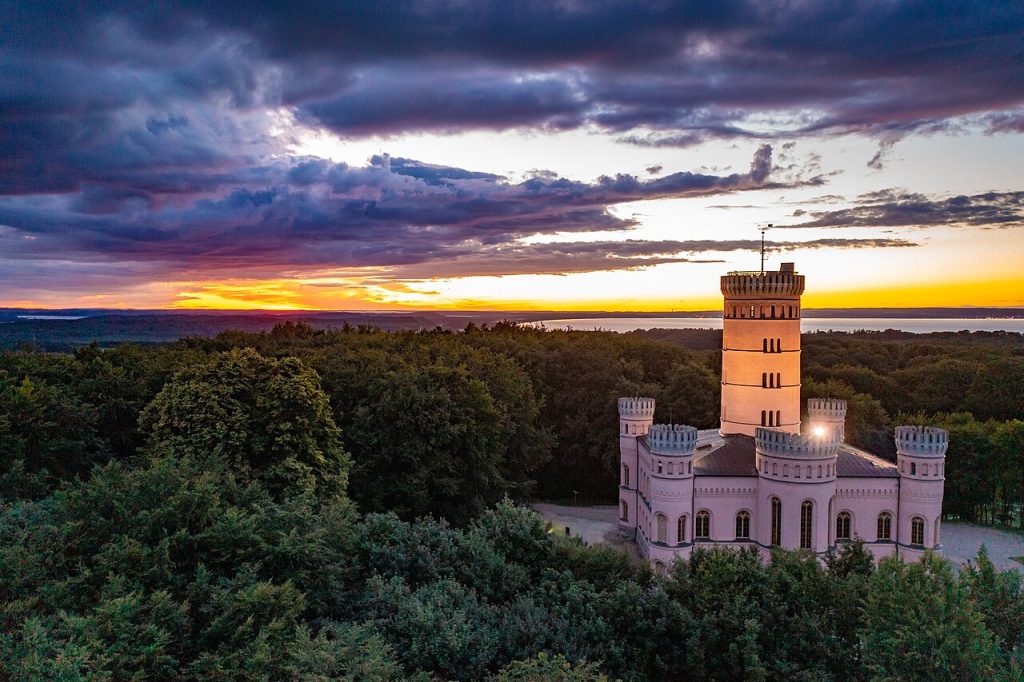
Deep in the beech forests of the island of Rugen, on the highest hill of the Granitz woods, stands a castle that looks as if it had stepped out of a fairy tale. Granitz Hunting Lodge was built in the nineteenth century for Prince Wilhelm Malte of Putbus, and its four corner towers surround a slender central tower with one of the most beautiful iron staircases in Germany. Climb its 154 steps and the whole island lies at your feet, with the Baltic Sea glittering all around.
I am going to take you up that staircase in a moment, but first let us walk through the forest, meet the prince who built this romantic castle, and step into the halls where his hunting guests gathered.
Along the way you will hear a few stories the locals still like to tell, and at the end I will give you tips for your visit, including how to arrive the old fashioned way, by steam train.
In This Article
- A Castle in the Forest
- Prince Malte of Putbus
- Building a Romantic Castle
- The Schinkel Tower
- The 154 Steps of the Iron Staircase
- The View Over Rugen
- The Halls of the Hunt
- Antlers, Weapons and Hunting Art
- The Prince’s Apartments
- From Princes to the People
- Arriving by Steam Train
- Putbus, the White Town
- Granitz on Video
- Visiting Granitz Today
A Castle in the Forest
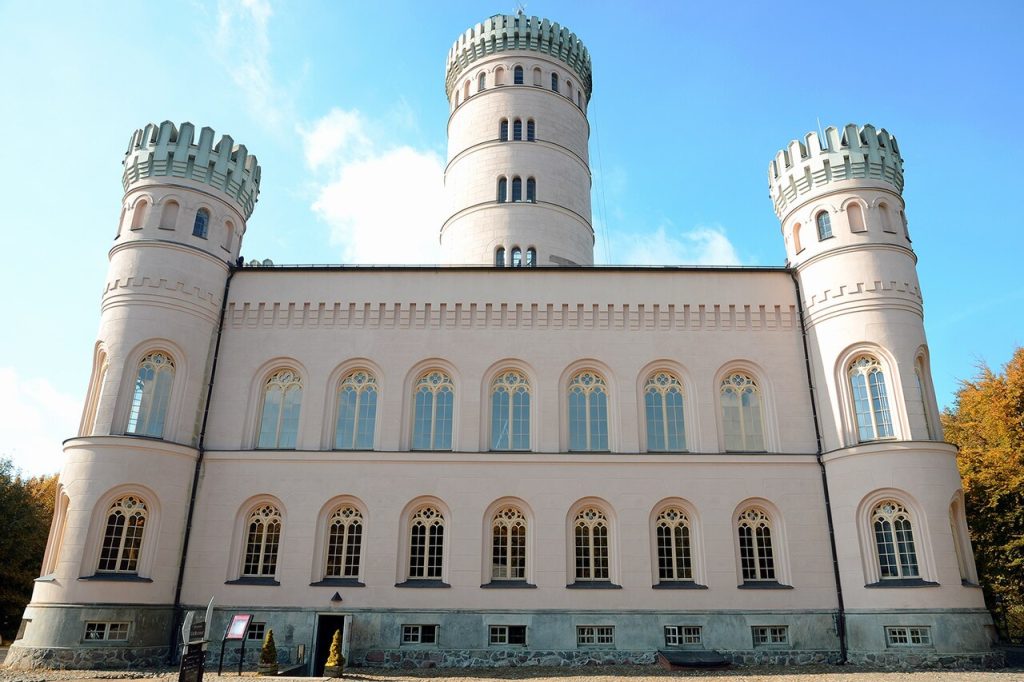
Imagine walking up a gentle path through tall beech trees, with sunlight flickering through the leaves. The forest is quiet, apart from birdsong and the crunch of your footsteps.
Then, as you reach the top of the hill, the castle suddenly appears in a clearing. Pale walls, battlements, four sturdy corner towers and, rising from the middle, a tall slim tower that seems to touch the sky.
It is one of those sights that makes people stop and say “oh” out loud. Children usually think a knight or a princess must live inside.
The castle stands on the Tempelberg, the highest point of the Granitz forest, about one hundred and seven metres above the sea. That does not sound like much, but on Rugen it is a mountain.
Many visitors come here by mistake, on a forest walk, and end up staying for hours. Others plan their whole Rugen holiday around it. Either way, it rarely disappoints.
Prince Malte of Putbus
Let me introduce the man behind the castle. Wilhelm Malte I, Prince of Putbus, was one of the most powerful landowners on Rugen in the early nineteenth century, and he had big ideas.
He founded the elegant white town of Putbus as a model residence town, built the seaside resort of Lauterbach and loved hunting in the forests of his estates.
In the 1830s he decided he needed a hunting lodge worthy of his guests, a place where the hunt could end in comfort and style, with a view over his whole domain.
Malte had travelled widely and admired the castles of Italy and the romantic Gothic revival of England, and he wanted something that would combine both.
The locals called him the prince with the stone dreams, because whatever he imagined, he seemed to build.
Building a Romantic Castle
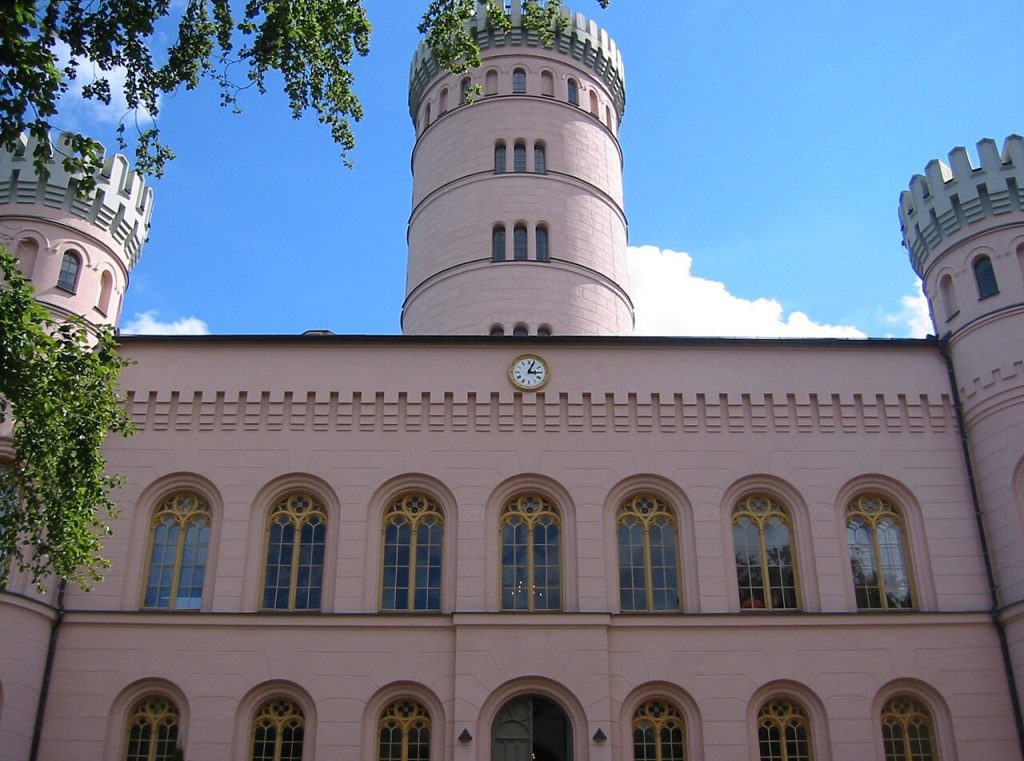
Construction began in 1837 to designs by the architect Johann Gottfried Steinmeyer, who drew inspiration from Italian Renaissance castles, especially the Palazzo Caprarola near Rome.
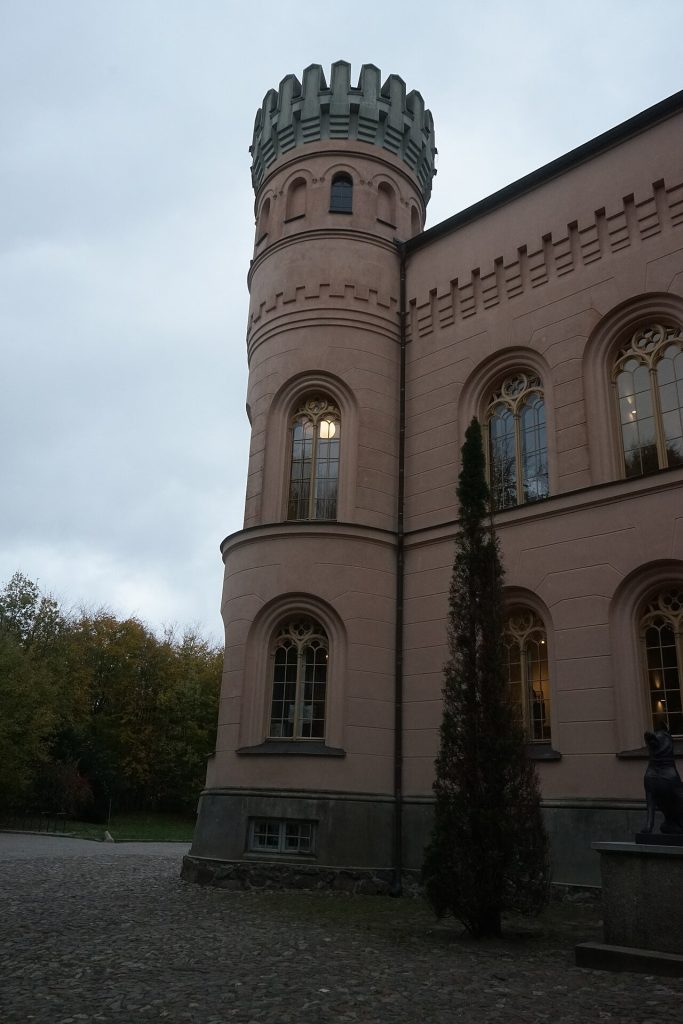
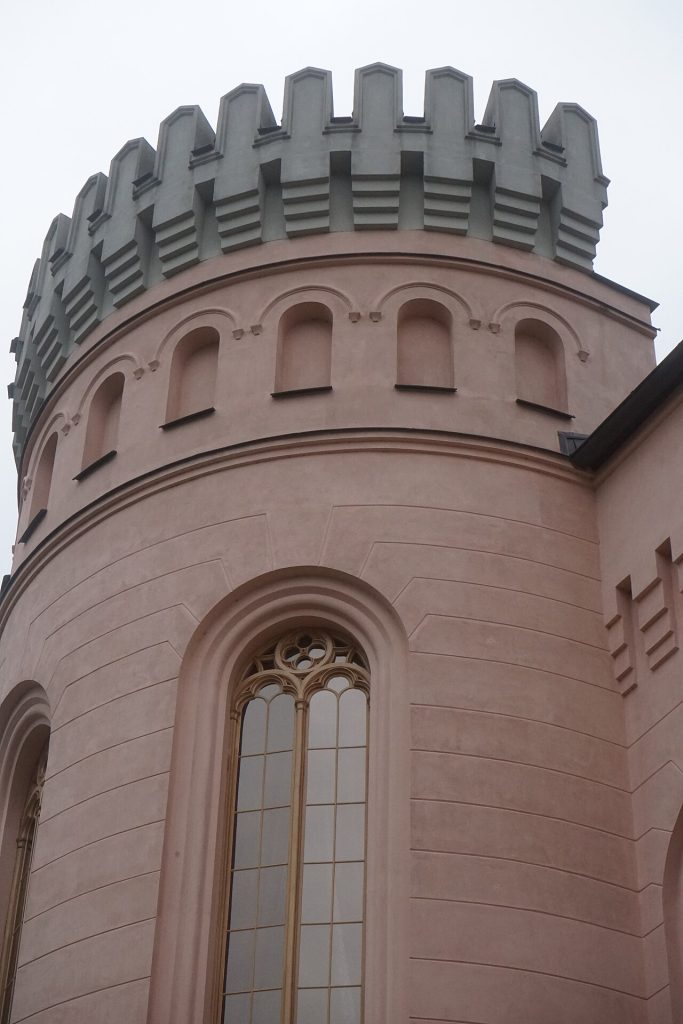
The result was a square building with four corner towers, built in the romantic historicist style that was fashionable in the nineteenth century.
But the prince wanted something more, a tower that would rise above the forest canopy and offer views of the entire island.
For this, he turned to none other than Karl Friedrich Schinkel, the most famous Prussian architect of the age, who designed the central tower that gives the castle its unmistakable silhouette.
The lodge was completed in 1846, and it immediately became a landmark visible from far across Rugen and even from ships at sea.
The Schinkel Tower
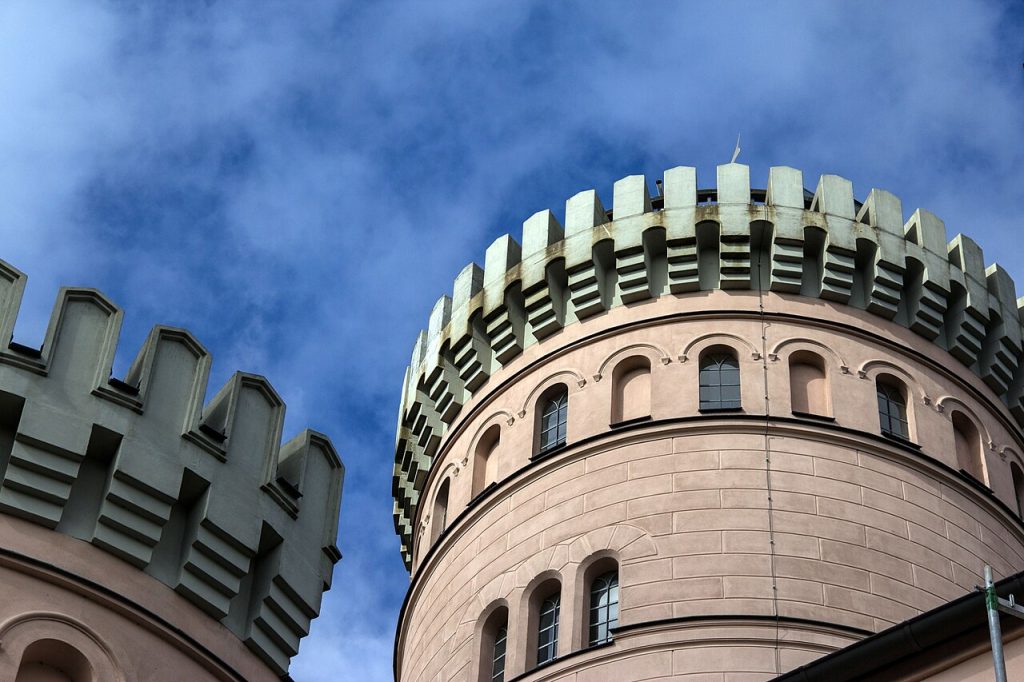
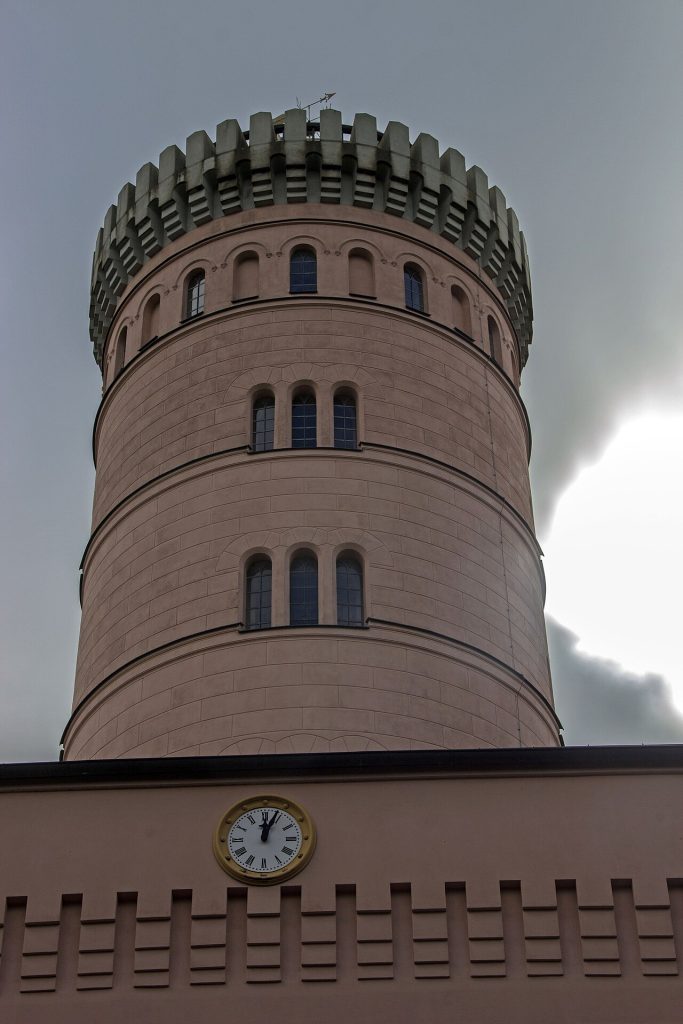
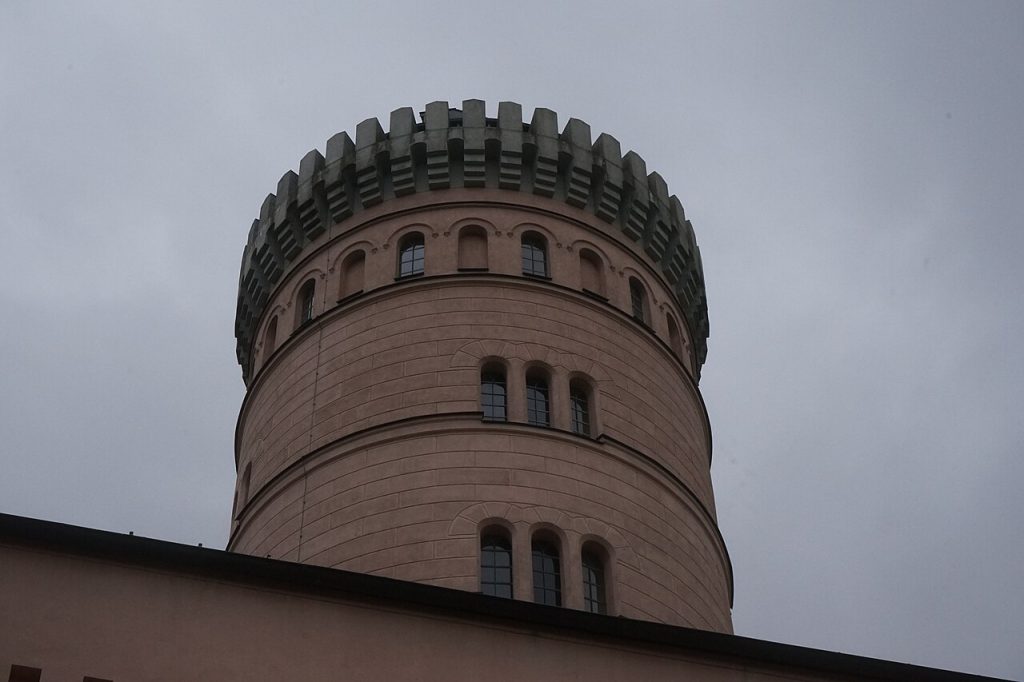
The central tower rises about thirty eight metres from the courtyard, slender and elegant, crowned with a viewing platform.
It was built within the existing courtyard of the castle, a clever solution that made the tower appear to grow out of the heart of the building.
From outside, it looks almost too delicate for its height, and that is part of its magic.
Locals like to say that on a clear day, sailors used the tower as a navigation mark, and fishermen knew they were almost home when they could see it above the trees.
The 154 Steps of the Iron Staircase
Now, are you ready to climb? Inside the tower is a cast iron spiral staircase of 154 steps, winding up and up in a perfect open spiral.
Here is the trick: do not look down too often if you get dizzy. The staircase is open in the middle, and looking down from the top is quite an experience.
The staircase was made in the 1840s in a Berlin foundry, and it is considered a masterpiece of early industrial ironwork, as beautiful as it is practical.
Each step is decorated with delicate openwork patterns, and the light falling through the tower windows makes them glow.
When you finally reach the top, catch your breath and step out onto the platform. You have earned the view.
The View Over Rugen
From the top of the tower, the whole of Rugen spreads out below you. To the east you see the Baltic Sea and the seaside resorts of Binz and Sellin. To the west lie lagoons, fields and villages.
On a clear day you can see the chalk cliffs of Jasmund in the north and, some say, even the coast of the mainland.
The forest of the Granitz rolls away beneath you like a green sea, broken only by the occasional red roof or church tower.
Take your time up here. Many people find this the most memorable moment of their whole trip to the island.
The Halls of the Hunt
Back down on solid ground, let us explore the rooms. The castle interior was designed for hunting parties, with grand halls for feasting and smaller rooms for the prince’s guests.
The Marble Hall, the most splendid room, is decorated with columns, stucco and elegant furniture, and it was here that the prince received his visitors after a day in the forest.
Other rooms show the prince’s love of the chase, with hunting trophies, antlers, weapons and paintings of hunting scenes on the walls.
Some visitors find the many antlers a bit much, but they are a true reflection of the world of nineteenth century aristocracy, where hunting was the great passion of the upper classes.
Antlers, Weapons and Hunting Art
Look closely at the antlers on the walls. Each one tells a story of a hunt in the Rugen forests, and some were trophies the prince was especially proud of.
The collection also includes historic hunting weapons, from crossbows to beautifully decorated rifles, as well as hunting horns and equipment.
Paintings and prints show stag hunts, wild boar and the dogs that accompanied the hunters, giving you a vivid picture of how the hunt worked.
Guides like to point out the fine carved furniture with hunting motifs, made by craftsmen who loved to include little animals hidden among the decoration.
The Prince’s Apartments
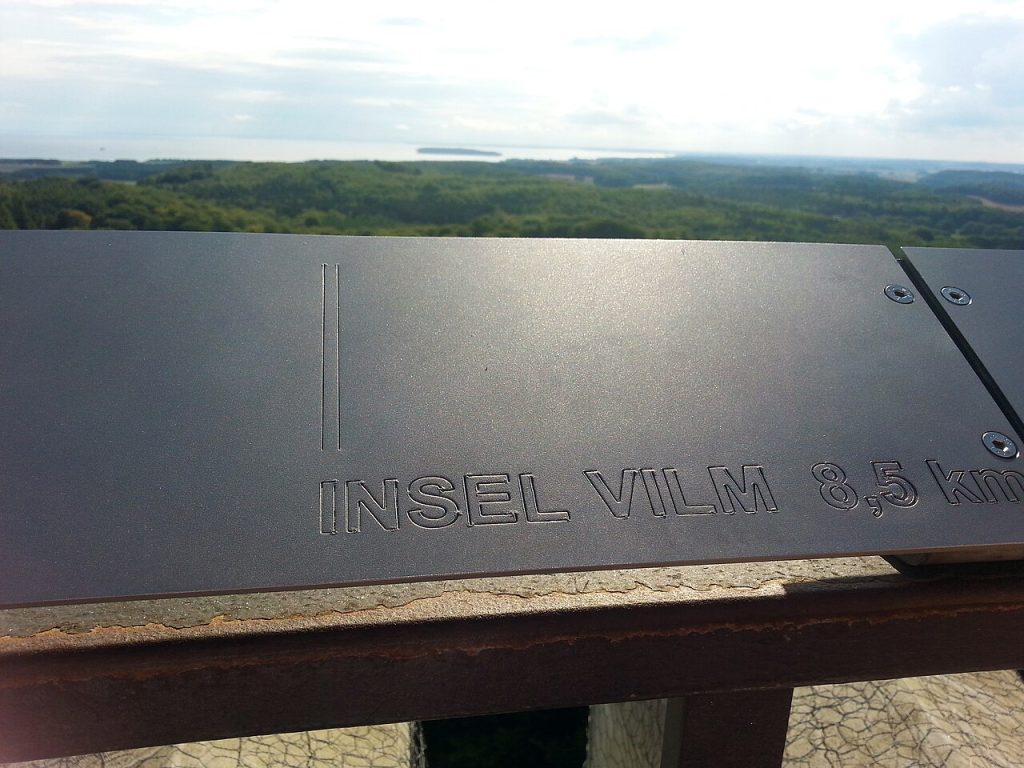
Beyond the halls lie the private apartments of the prince and his family, furnished in the elegant style of the mid nineteenth century.
You will see wood panelling, painted ceilings, tiled stoves and windows framing views into the forest.
The rooms feel cosy rather than grand, a reminder that the lodge was a place for relaxation as well as representation.
Some rooms were restored in recent years with the help of historic photographs, bringing back their original colours and furnishings.
From Princes to the People
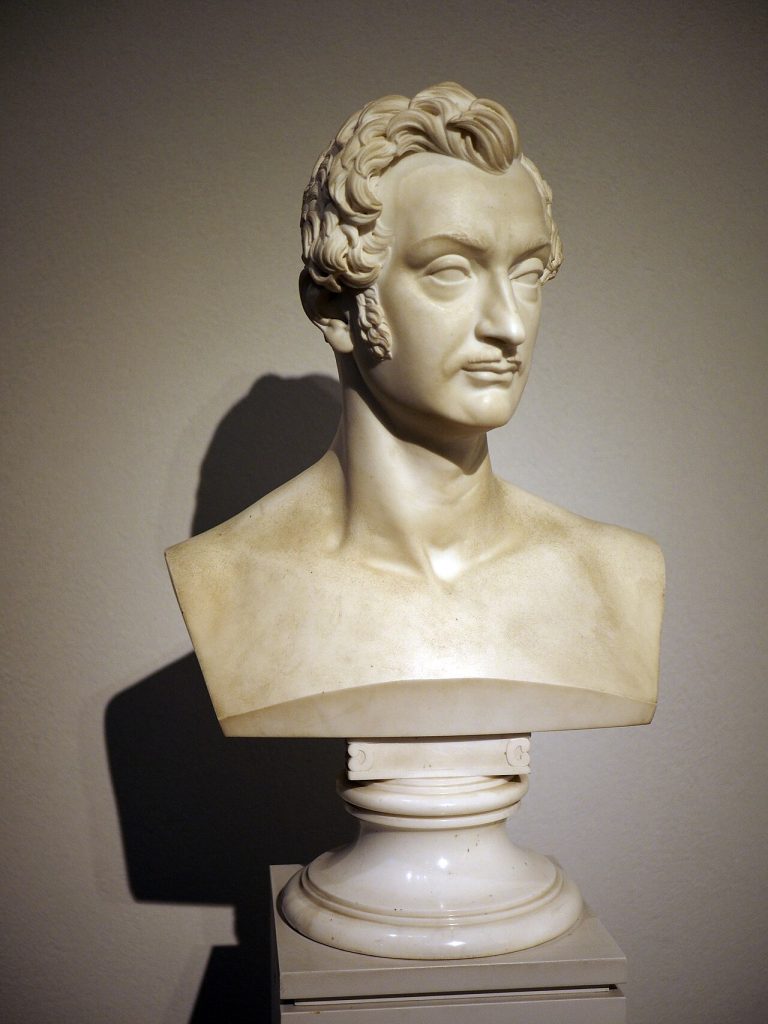
The Putbus family owned the lodge until the end of the Second World War, when it was expropriated.
During the time of the German Democratic Republic, the castle was used as a museum and a popular destination for holidaymakers, and many East Germans have fond memories of climbing the tower.
After reunification, the lodge was carefully restored and is today managed by the state palaces of Mecklenburg Western Pomerania. It is one of the most visited sights on Rugen.
Arriving by Steam Train
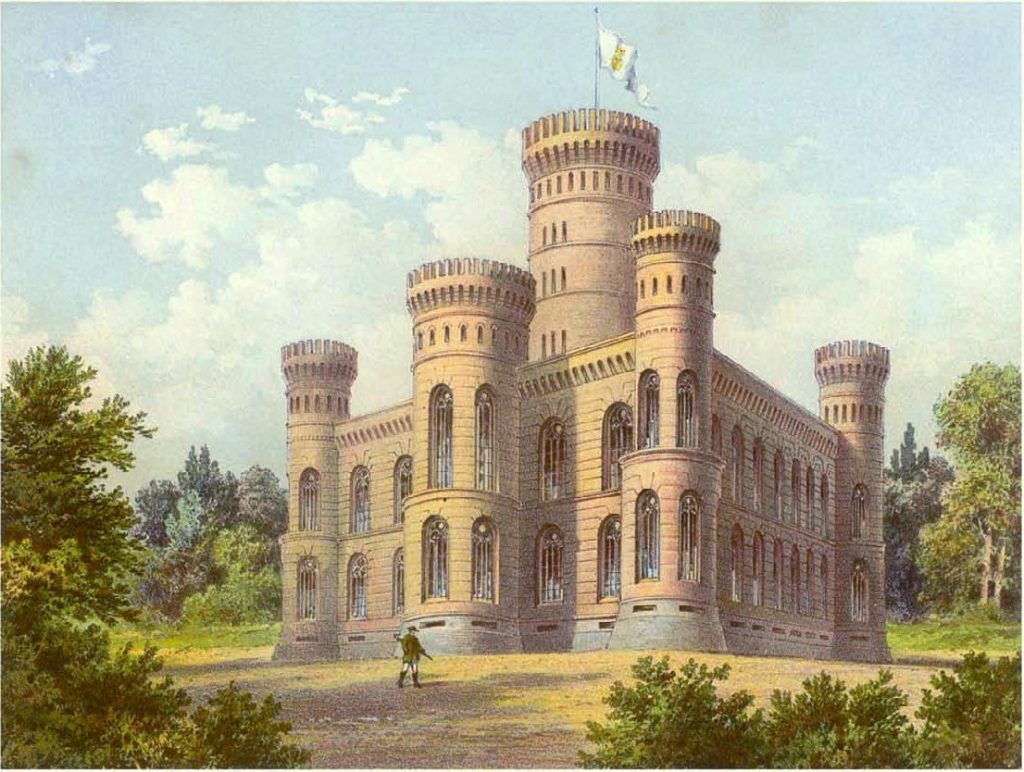
Here is my favourite tip. The best way to reach the hunting lodge is by the Rasender Roland, the narrow gauge steam railway that puffs through the Rugen countryside between Putbus and Gohren.
Get off at the Jagdschloss station and walk up through the forest, or take the little tourist train that runs up the hill in summer.
The whistle of the steam engine echoing through the beech woods is part of the experience, and it makes the journey feel like a trip back in time.
Putbus, the White Town
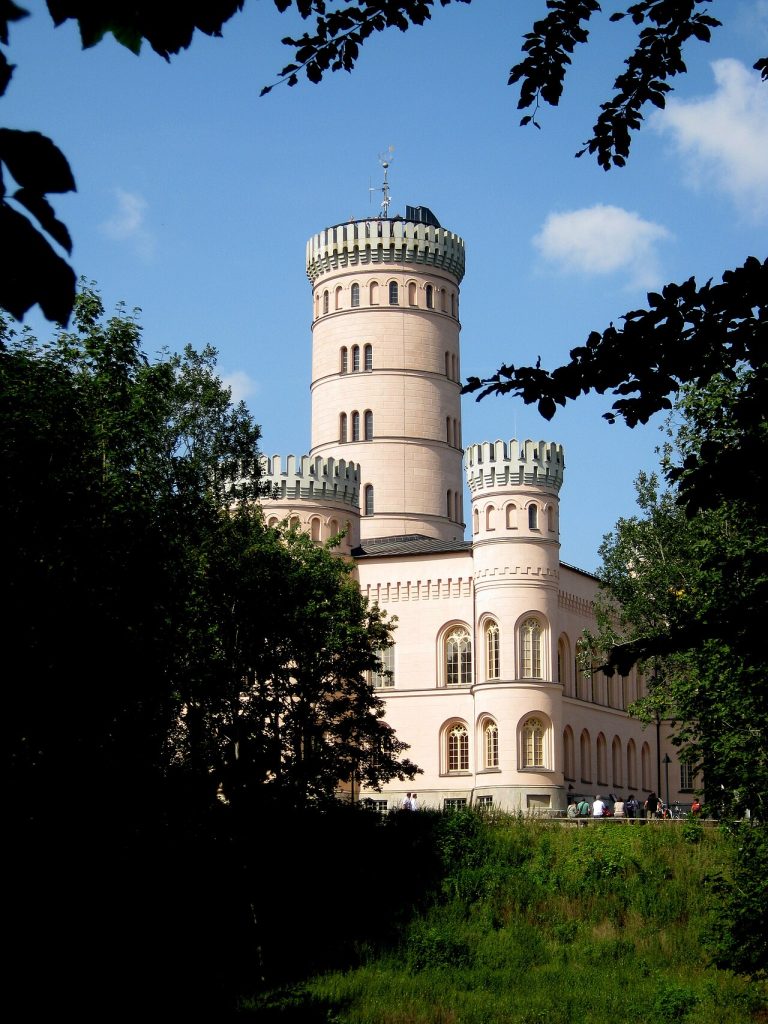
After your visit, head to Putbus, the town the same prince built as his residence. Its white classical houses, round circus square and large park make it one of the most elegant small towns in northern Germany.
The palace of Putbus itself was demolished in the 1960s, but the park, the orangery and the theatre survive, and the whole town still reflects the prince’s dreams.
Granitz on Video
Here is a short film about Prince Malte and his hunting lodge to set the mood before your visit.
If the video makes you want to visit, here are some practical tips.
Visiting Granitz Today
Granitz Hunting Lodge is open throughout the year, with longer hours in summer. The tower can be climbed during opening hours, but it may close in bad weather.
The lodge lies in the Granitz forest between Binz and Sellin on the island of Rugen. You can reach it on foot, by bicycle, by the Rasender Roland steam train or by the small road train that runs from Binz in summer. Cars must be left in a car park below the forest.
Plan about two hours for the lodge and the tower, and longer if you want to walk in the forest.
A local tip: go early in the morning or late in the afternoon in summer, when the tour groups have gone and the light from the tower is at its most beautiful.
View the location on Google Maps
Palaces Nearby
If you have enjoyed this palace, the region holds more remarkable residences. Here are two more well worth adding to your journey:
You May Like
Spyker Castle and the Ghost of the Swedish Field Marshal


One thought on “Granitz Hunting Lodge and the Iron Staircase Above the Baltic Sea”