Few human lives have bent the course of history as sharply as that of Napoleon Bonaparte. In the space of barely twenty years, an obscure young officer from the island of Corsica rose to become master of France, conqueror of much of Europe, and a self-crowned emperor whose name still echoes as a byword for ambition itself. He ended his days a prisoner on a tiny, windswept rock in the middle of the Atlantic. Between those two points lies one of the most astonishing stories in all of history — a story of genius, ego, glory and catastrophe.
Napoleon was a child of the Revolution in every sense. Born in 1769 into a family of minor Corsican nobility, he trained as an artillery officer and might, in an ordinary age, have lived an ordinary military life. But the French Revolution was anything but ordinary. It swept away the old order in which high command was reserved for the aristocracy and threw open a path for talent and audacity. Napoleon possessed both in extraordinary measure, and in the chaos of revolutionary France a brilliant young soldier could rise with dizzying speed.
Rise he did. A string of dazzling victories, particularly in a daring campaign in Italy, made his reputation and turned him into a national hero. By 1799, with France’s revolutionary government weak, corrupt and unpopular, Napoleon seized his moment and took power in a coup, installing himself as the effective ruler of France. Five years later, in a ceremony of breathtaking audacity in the cathedral of Notre-Dame, he crowned himself Emperor of the French — famously taking the crown from the Pope’s hands and placing it on his own head, a gesture that announced he owed his power to no one but himself.
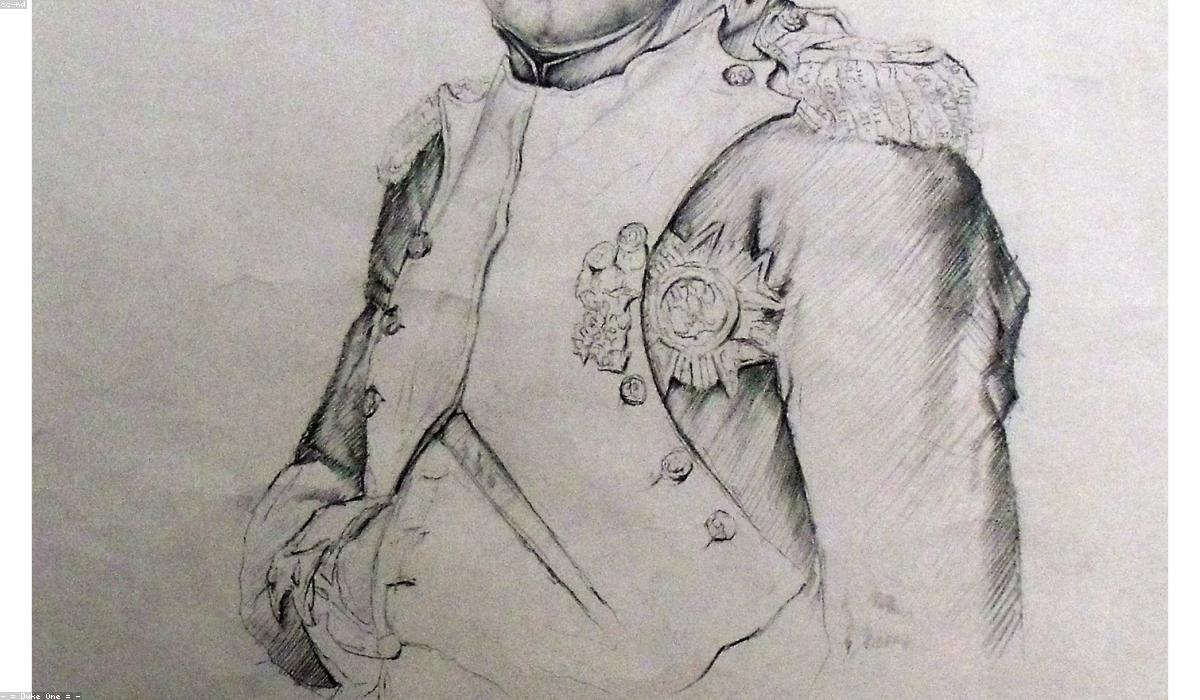
As a military commander, Napoleon was simply one of the greatest who ever lived. He combined a profound grasp of strategy with the speed, energy and ability to inspire devotion in his soldiers, who followed him with near-fanatical loyalty. In a series of campaigns he smashed the armies of the great European powers one after another. His victory at Austerlitz in 1805, often considered his masterpiece, shattered a combined Austrian and Russian army and left him the dominant power on the continent. For a time it seemed that no coalition of his enemies could withstand him.
But Napoleon was far more than a general, and this is something often forgotten amid the drama of his battles. He was also a formidable administrator and lawgiver whose civilian legacy outlasted all his conquests. He reorganised the chaotic French state, reformed its finances, education and administration, and above all he commissioned a sweeping new legal code — the Napoleonic Code — that swept away the tangle of old feudal laws and enshrined principles of legal equality and clear, rational rules. That code spread across the lands he conquered and remains, to this day, a foundation of the legal systems of France and many other countries around the world.
For all his genius, though, Napoleon’s ambition ultimately knew no limit, and that proved his undoing. In 1812 he made the fateful decision to invade Russia with an enormous army, the largest Europe had ever seen. He reached Moscow, but the Russians refused to surrender, burning their own city rather than yield it, and the brutal Russian winter destroyed his army on the long, nightmarish retreat. Of the vast force that had marched east, only a shattered remnant straggled back. It was one of the greatest military catastrophes in history, and it broke the spell of his invincibility.
Sensing weakness, the powers of Europe united against him at last, and the tide turned decisively. Napoleon was defeated, forced to abdicate, and exiled to the small Mediterranean island of Elba in 1814. But the story was not quite over. In one final, audacious gamble, he escaped, returned to France, and rallied his old soldiers to his banner once more for the dramatic period known as the Hundred Days. It ended in June 1815 on a field in Belgium called Waterloo, where a coalition led by Britain and Prussia finally defeated him for good. This time there would be no comeback; he was exiled to the remote island of Saint Helena, far out in the South Atlantic, where he died in 1821.
Napoleon left France smaller than he had found it and drenched in the blood of two decades of war, and yet his legend only grew after his death. His reforms reshaped the continent, his code endures, and his career became the template against which ambitious leaders measured themselves for generations. He embodied both the highest promise and the deepest peril of the revolutionary age — the idea that talent and will could remake the world, for good and for ill.
After the storm of Napoleon, France entered a turbulent century of restored monarchies, fresh revolutions and new republics. In the next instalment we’ll look at one of the most extraordinary and tragic episodes of that age, when the people of Paris rose up to govern themselves in a brief, doomed experiment that has fascinated and divided people ever since: the Paris Commune of 1871.
A few other articles on France’s past you might like:
- 732 and the Hammer: The Battle That Made Frankish Power
- Charlemagne: The Warrior King Who Reinvented Europe
- Bouvines, 1214: The Forgotten Battle Where France Was Born
- Joan of Arc: The Teenage Girl Who Turned the Tide of a War
- The French Wars of Religion and the Peace That Followed
- Louis XIV: The Sun King and the Palace That Tamed a Nation
- 1789: The Revolution That Tried to Remake the World
- The Paris Commune: The 72 Days When a City Ruled Itself
- The Belle Époque and the War That Ended It
You May Like
The Belle Époque and the War That Ended It