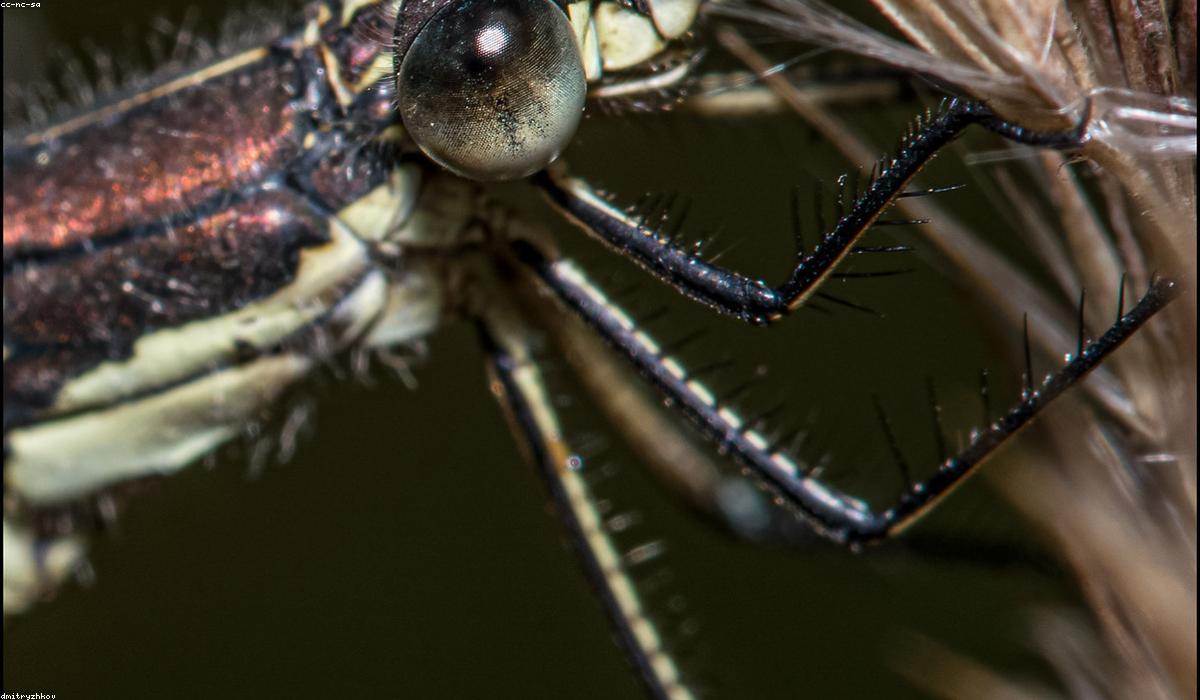
The mosquito is the deadliest animal on Earth, and it is not a close contest. Not the shark, not the snake, not any of the big predators that fill our nightmares. A creature you can crush between two fingers kills hundreds of thousands of people every year, mostly children, mostly in the poorest parts of the world, by ferrying parasites and viruses from one human bloodstream to the next. Malaria alone accounts for the bulk of that toll, and despite a century of bed nets, insecticides, and drugs, the disease has proven maddeningly difficult to defeat.
So it is no surprise that scientists have long fantasized about a more radical solution. What if, instead of fighting the mosquito one bite at a time, we could reach into the species itself and rewrite it? What if we could release a handful of engineered insects into the wild and let them spread a genetic change through an entire wild population—a change that makes the mosquitoes unable to carry malaria, or unable to reproduce at all? This is the promise, and the peril, of a technology called the gene drive.
Breaking the rules of inheritance
To understand why a gene drive is such a big deal, you have to start with a basic fact of biology that most of us half-remember from school. Ordinarily, a gene has a fifty-fifty chance of being passed from a parent to any given offspring. You carry two copies of most genes, one from each parent, and you pass along only one of them. A new mutation, even a beneficial one, spreads slowly through a population because it is constantly being diluted by this coin-flip of inheritance. Over many generations it might take hold, or it might simply vanish.
A gene drive cheats that coin flip. It is a genetic element engineered so that it copies itself onto the matching chromosome, ensuring that nearly every offspring inherits it rather than just half. Instead of fifty percent, the odds of passing it on jump toward one hundred. The consequence is dramatic: a trait that would normally fade away can instead sweep through an entire population in a relatively small number of generations, even if it offers the organism no survival advantage—or, remarkably, even if it is harmful to the organism itself.
How CRISPR lit the fuse
The idea of a self-propagating genetic element is decades old, but for a long time it remained mostly theoretical. The breakthrough that turned it into a practical prospect was the same one that has reshaped so much of biology: CRISPR, the precise and inexpensive gene-editing tool that lets researchers cut DNA at a chosen location. CRISPR gave scientists a reliable way to build the self-copying machinery a gene drive requires.

The mechanism is elegant, if a little unnerving. An engineered mosquito carries the drive on one chromosome. When that chromosome pairs up with its normal partner during reproduction, the CRISPR machinery springs into action, cuts the partner chromosome at the matching spot, and prompts the cell’s own repair system to paste in a copy of the drive. The cell, in effect, is tricked into duplicating the engineered element. Where there was one copy, now there are two—and the offspring will pass the drive on with the same near-certainty. The change becomes self-perpetuating, generation after generation, with no further human intervention.
Two ways to beat the mosquito
Researchers have explored two broad strategies for putting gene drives to work against malaria. The first is population suppression: engineering a drive that crashes the mosquito population itself, for instance by spreading a gene that renders female mosquitoes infertile. Fewer biting females means fewer eggs, and in laboratory cage experiments such drives have driven contained populations to collapse. If the malaria-carrying mosquitoes are gone, the reasoning goes, the disease has no way to spread.
The second strategy is more surgical. Rather than wiping out the insect, a population-modification drive aims to leave the mosquitoes alive but change them so they can no longer transmit the parasite. The mosquito keeps buzzing and biting, but it becomes a dead end for malaria. Supporters of this approach argue it is ecologically gentler—the mosquito continues to play whatever role it has in the food web—while still breaking the chain of human infection.

The thing that makes everyone nervous
Here is where the story turns from triumphant to genuinely fraught. The very feature that makes a gene drive powerful—its ability to spread on its own through a wild population—is also what makes it frightening. A traditional genetically modified organism, like a lab mouse or an engineered crop, stays put. If something goes wrong, you can in principle contain it. A gene drive is designed to do the opposite. Release it, and it is built to spread, potentially across borders, oceans, and ecosystems, in ways that may be impossible to recall.
That raises a cascade of hard questions. What happens to an ecosystem if a mosquito species is suppressed or eliminated? Some scientists argue certain malaria-carrying species are ecologically minor and could be removed without much consequence; others warn that we understand food webs poorly enough that we cannot be sure. There is also the worry that the drive could mutate, jump to a related species, or be evaded by mosquitoes that evolve resistance—a real possibility, since natural selection is relentless and any mosquito immune to the drive would have an enormous reproductive advantage.
Who gets to decide?
Beyond the biology lies a thicket of ethics and governance that may be even harder to navigate. A gene drive released in one country will not respect that country’s borders. A decision made by one government, one company, or even one well-funded laboratory could affect ecosystems and populations across an entire continent. That forces an uncomfortable question with no clean answer: who has the right to consent to a deliberate, irreversible change to the shared natural world?
The communities most affected by malaria—and therefore most likely to benefit from a successful drive—are often the ones with the least say in the global scientific enterprises developing the technology. Researchers working in this space have increasingly recognized that the social and political work of engaging local communities, securing genuine consent, and building international agreement is not a footnote to the science. It may be the harder half of the problem. Releasing a self-spreading genetic change without that groundwork would be a profound breach of trust, however noble the intention.
Caution as a design principle
Because of these stakes, the field has, to its credit, moved with unusual restraint. Much of the most striking work has happened in secure laboratory cages, never in the open air. Scientists have proposed an array of safeguards: drives engineered to peter out after a set number of generations, “daisy-chain” designs meant to limit how far a change can spread, and reversal drives intended to undo an earlier release. Whether these brakes would hold up in the messy reality of the wild is itself an open research question, and many in the field insist that no open release should happen until far more is understood.
What makes gene drives such a revealing case is that they strip away the comforting distance between a laboratory result and the real world. Most biotechnology gives us a product to accept or refuse; a gene drive offers a permanent edit to a shared ecosystem, made on everyone’s behalf whether they agreed or not. The science is genuinely dazzling, and the prospect of ending one of humanity’s oldest killers is hard to dismiss. But the same power that could save hundreds of thousands of lives a year demands a level of wisdom, humility, and global cooperation that we are only beginning to develop. The mosquito has had millions of years to perfect its lethal craft. Before we rewrite it, we owe it to ourselves to be very sure of what we are doing.