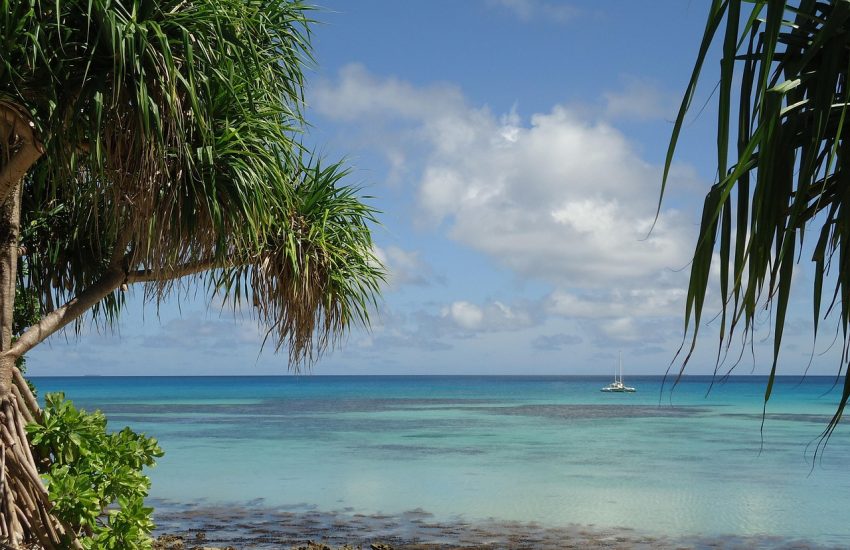
Midway between Tahiti and Tonga lies the archipelago whose harbors, tradition says, launched the canoes that settled New Zealand. The Cook Islands Maori built chieftaincies whose ariki still sit in a house of parliament, stitched their women’s diplomacy into great flowered quilts, drum the fastest dance in Polynesia, and in 1965 invented the free-association statehood half the Pacific now uses.
This portrait follows the people of the fifteen islands: the voyaging hub of Rarotonga and the atolls of the north, a language kin to New Zealand’s Maori and pressed by its own diaspora, the coral churches and their thunderous hymnody, ika mata and the Sunday umukai, Te Maeva Nui’s drumming week, and a nation whose largest city lies across the sea in Auckland.
Contents
- Harbors on the Road to Aotearoa
- Fifteen Islands Under a Captain’s Name
- Cook Islands Maori and Its Island Voices
- Two Chains Across a Private Ocean
- Ariki Courts, Motu Gardens, and the Voyaging Hub
- Chiefs in Parliament and Land That Never Sells
- The Gospel Ships and the Coral Churches
- Ura Drums, Tivaevae, and the Investiture of Chiefs
- Quilts of the Sisterhood and Carvers of the Gods
- Ika Mata, Umu Sundays, and the Motu Picnic
- Te Maeva Nui and the Dancer of the Year
- Missionaries, Protectorate, and Free Association First
- A Nation of Twenty Thousand with a City Abroad
Harbors on the Road to Aotearoa
The southern Cook Islands were settled around 1000 AD from the Society Islands heartland, and Rarotonga became one of Polynesia’s great junctions: tradition holds that the canoes of the Aotearoa migration staged from its harbors, and Rarotongan and New Zealand Maori remain close kin in language and lineage.
The northern atolls, Pukapuka especially, look west as much as east, with Samoan-shaded speech and custom, the twin chains recording two currents of the Polynesian expansion meeting in one archipelago.
Marae courts of standing stones ordered the old islands, and Rarotonga’s inland road, Te Ara Nui o Toi, paved with coral a thousand years ago, still circles the island’s old districts, one of Polynesia’s oldest engineered works.
Genealogies from the founding canoes, Takitumu and its fellows, remain the charter of the ariki chiefly houses, recited at investitures with the same authority they carried when the harbors were full of departing sails.
Archaeology backs the junction story: Rarotonga’s paved road and marae sequence, Aitutaki’s early dates, and the linguistic closeness of Rarotongan to New Zealand Maori all point to the southern Cooks as a staging ground of the last great migrations, and Maori delegations from Aotearoa still visit Takitumu’s marae as descendants calling at the old port.
Fifteen Islands Under a Captain’s Name
The archipelago wears James Cook’s name at second hand: the captain sighted several islands in the 1770s and named none for himself; Russian chart-makers later labeled the group for him, and the label stuck through protectorate and state.
The islands’ own names never yielded: Rarotonga, Aitutaki, Atiu, Mangaia, each with its founding story, and the modern nation debates from time to time whether to take an indigenous name, Avaiki Nui among the candidates, a conversation still open.
The people are Cook Islands Maori, Maori without qualification at home, kuki airani in the language’s own affectionate shorthand, and their passports are New Zealand’s, a dual belonging written into the constitution.
Fifteen islands, two chains, one name borrowed from a visitor: the arrangement is very Cook Islands, practical, provisional, and worn with humor until something better is agreed.
Cook Islands Maori and Its Island Voices
Cook Islands Maori, Rarotongan at its center, is an Eastern Polynesian language so close to New Zealand Maori that speakers manage across the gap, and its island dialects, Aitutaki’s softness, Mangaia’s archaisms, Atiu’s clipped vowels, are local pride; Pukapukan in the north is a distinct Samoic language altogether.
The missionaries printed early, and the Rarotongan Bible of 1851 standardized a written form the churches still sing; the language is official beside English and required in schools.
Its pressure is demographic: with most Cook Islanders living in New Zealand and Australia, English childhoods outnumber Maori ones, and UNESCO lists the language as vulnerable; language weeks in Auckland, radio from Avarua, and grandmother-run classes are the counterforce.
The drum and the hymn are its strongholds: ura chant, the imene tuki’s grunted harmonies, and the oratory of the investitures keep the language performing even where dinner tables have gone English.
Pukapuka’s distinctiveness earns it special protection in the schools, and the language commission’s word-coining sessions, broadcast and argued over, treat vocabulary as public works; a new Maori term for a cabinet portfolio can occupy talk radio for a week.

Two Chains Across a Private Ocean
The fifteen islands split into two chains across two million square kilometers of sea: the southern group’s high islands, Rarotonga’s peaks, Aitutaki’s lagoon, the raised coral makatea islands of Atiu, Mangaia, and Mauke, and the northern group’s remote atolls, Manihiki, Rakahanga, Penrhyn, Pukapuka.
Rarotonga is the hub: a volcanic island ringed by reef and by the nation’s one circling road, holding the capital Avarua, the airport, and most of the resident population.
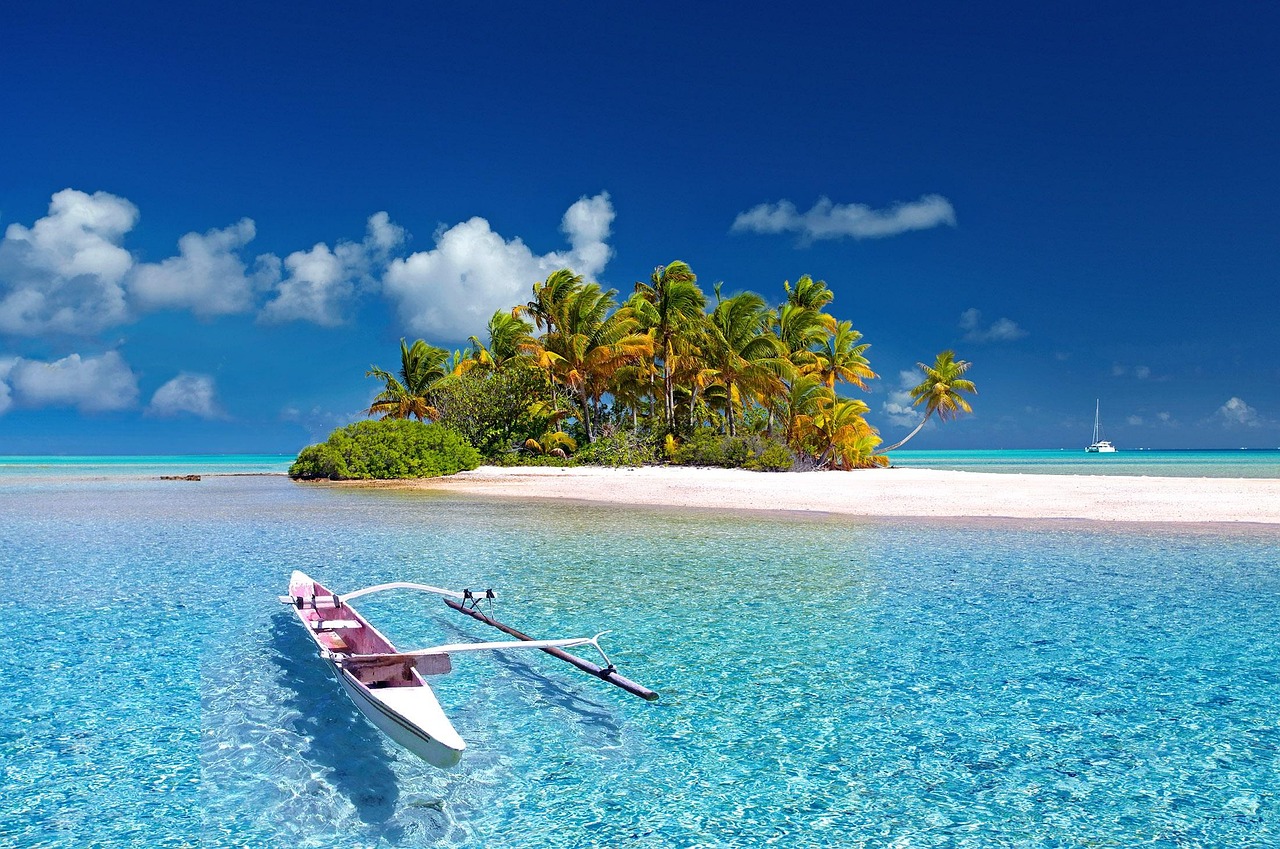
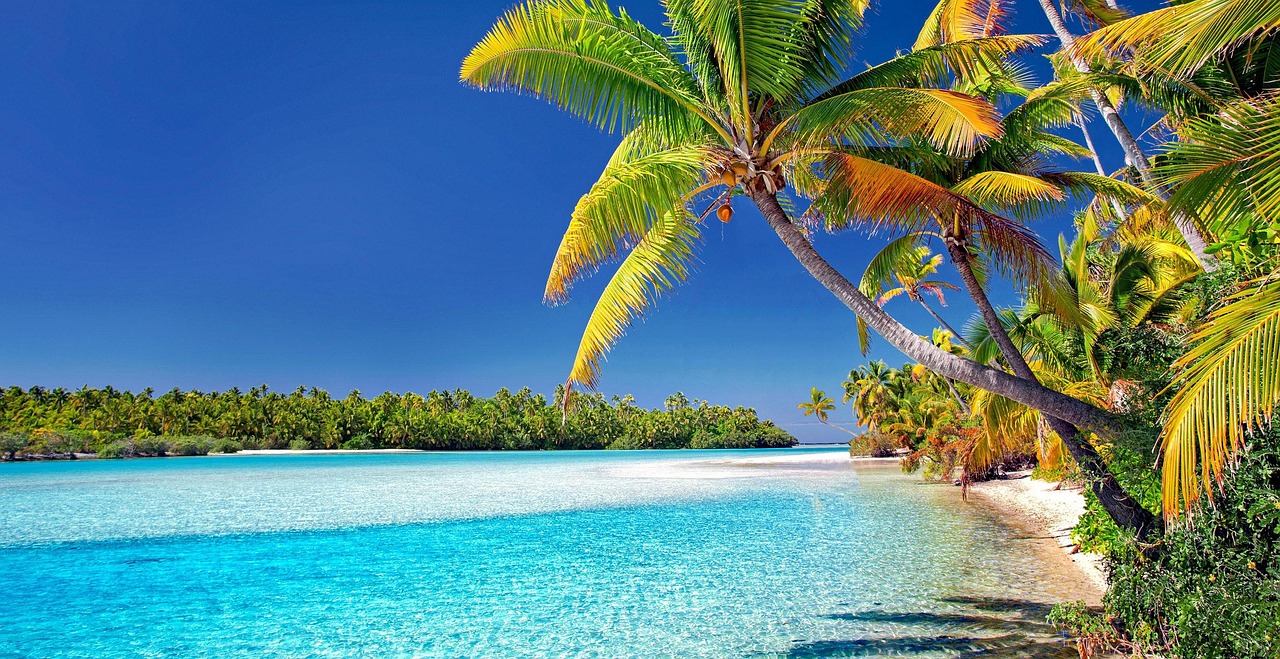
Aitutaki’s lagoon, a triangle of impossible blue, is the tourism economy’s poster; the makatea islands hide caves and taro valleys behind their fossil-coral ramparts; the northern atolls farm black pearls and live by ship and solar freezer.
The nation’s waters, the Marae Moana marine park, span the whole EEZ, one of the largest managed ocean spaces on earth, seabed minerals and conservation now debating within it.
The makatea islands are the group’s secret geology: fossil reefs lifted into fortress rings around volcanic cores, their caves holding burial chambers, freshwater pools, and the swiftlets whose clicking navigation echoes in the dark, landscapes found in few other places on earth.
Ariki Courts, Motu Gardens, and the Voyaging Hub
The old islands were chieftaincies of the classic Eastern Polynesian stamp: ariki at the head of districts, mataiapo and rangatira ranks beneath, marae courts where investitures and first fruits were staged, and land running from ridge to reef in family strips.
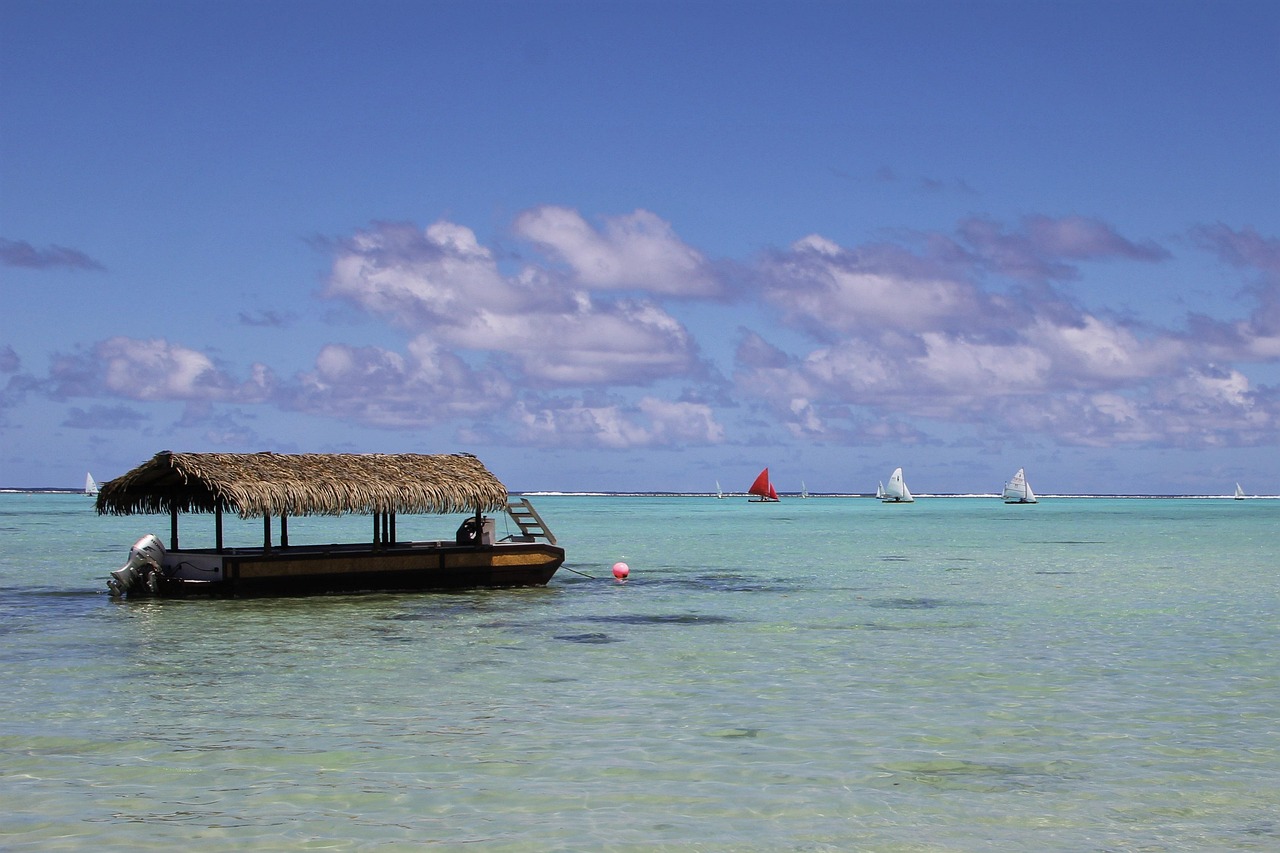
Rarotonga’s harbors made it a voyaging hub, provisioning and launching canoes along the routes to and from the Societies, the Australs, and, tradition holds, Aotearoa; Aitutaki’s lagoon and the atolls fed on fish, coconut, and the taro of the motu gardens.
The makatea islands organized ingenuity vertically: taro in the volcanic center’s swamps, gardens on the terraces, and the fossil reef’s caves for water, refuge, and the bones of the honored dead.
War was district politics by other means, fought and settled between ariki lines, and Mangaia’s drum-signaled battles and Rarotonga’s koutu courts fill the missionary-era histories that, for once, were written down by islanders themselves within a generation of conversion.
Mangaia’s mission-era historians, converts writing their island’s wars and genealogies in exercise books within living memory of the events, left the Cooks one of Polynesia’s richest indigenous archives, still quarried by the Land Court and by novelists alike.

Chiefs in Parliament and Land That Never Sells
The ariki survived everything: the mission century made them church patrons, the protectorate ruled through them, and the modern state seats them in the House of Ariki, an upper chamber of chiefs advising parliament on custom and land.
Land cannot be sold, only inherited and leased: every Cook Islander descends into rights in family land administered by the Land Court, and the genealogical hearings that establish them are the nation’s true national archive.
The village order runs on the triad of mayor, pastor, and chief, with the women’s committees and the church deaconates carrying daily governance; the investiture of a new ariki, with its feast mountains and drummed processions, remains the most complete display of the old society working.
Kinship is transnational as a matter of course: an Avarua funeral waits for Auckland flights, and the family land meeting spans three countries by video, chaired from the veranda of the homestead.
The haircutting and investiture feasts also settle accounts: contributions ledgered aloud, tivaevae counted, and the family’s standing recalibrated in public, the gift economy running on exactly the transparency modern auditors recommend.
The Gospel Ships and the Coral Churches
The old gods, Tangaroa first among them, ruled sea, harvest, and the marae until 1821, when the missionary John Williams landed Tahitian teachers on Aitutaki; conversion swept the group within a generation, island by island, often led by the ariki themselves.
The Cook Islands Christian Church, the LMS’s daughter, remains the establishment: its white coral-lime churches anchor every village, its imene tuki hymnody, chanted, grunted, and soaring, is the islands’ signature sound, and its takurua feast days structure the year.
Tangaroa had the last laugh in bronze and paper: the god’s squat carved figure, suppressed by the missions, returned as the national symbol on the dollar coin and the tourist’s souvenir, sacred to secular in one century.
White Sunday, the children’s takeover of the pulpits each October, and the pastors’ farewells and installations, with their assessed feasts, remain the calendar’s emotional peaks, church and custom long since one fabric.
The gospel arrived in island hands: Tahitian teachers, then Cook Islands pastors carried the mission west to Samoa and Papua, and the church’s missionary graves scattered across Melanesia are recited in sermons as the islands’ own age of voyaging, redirected.

Ura Drums, Tivaevae, and the Investiture of Chiefs
Cook Islands drumming is Polynesia’s most explosive: batteries of pate log drums and skin drums driving the ura, the dance whose hip-speed and knee-work make even Tahitian troupes concede the islands’ primacy; the Dancer of the Year contest is a national institution.
Tivaevae, the great appliqued quilts, are the women’s high art: flowers and ferns scissored and stitched in circles of aunties, given at weddings, haircuttings, and funerals, wrapped around honored guests, and never priced to strangers.
The boy’s first haircutting, pakoti rauru, gathers the clan around a chair heaped with tivaevae and money, the mother’s line presiding, a rite carried intact to every Auckland suburb.
Investitures, drum processions, and the oratory of the marae complete the repertoire, and the islands’ tattoo and carving revival borrows confidently from cousins across the Polynesian triangle.
Drum apprenticeship is boyhood’s parallel school: patterns learned by syllable chant before sticks touch skin, and a lead drummer’s improvised breaks at festival are discussed with the seriousness other nations give to fly-halves.

Quilts of the Sisterhood and Carvers of the Gods
The tivaevae sisterhoods are the craft economy’s heart: patterns named and inherited, stitching circles that double as the village’s senate of women, and a finished quilt reckoned in months of shared afternoons; museums collect them now, but their true market remains the gift.
Carving serves gods and paddles alike: Tangaroa figures, ceremonial adzes of Mangaia whose intricate lashings once signified chiefly authority across the Pacific trade, and the drums themselves, hollowed and tuned by ear.
Weaving and shellwork dress the nation: rito hats of bleached young coconut leaf, Penrhyn’s famed fine plaiting, ei garlands of frangipani and shell pressed on every arrival and departure, and the black pearls of Manihiki strung as the north’s signature wealth.
The Punanga Nui market on Saturday mornings is the whole craft world on trestles: quilts, hats, pearls, carved gods, and the ukulele makers tuning against the drum practice across the road.
Penrhyn’s rito weaving is fine enough to pass for lace, hats worn to church as pedigrees, and a northern bride’s trousseau of plaiting and pearls carries her atoll’s whole craft tradition south in one chest.

Ika Mata, Umu Sundays, and the Motu Picnic
The national dish is ika mata, raw tuna or reef fish silvered in lime and folded in coconut cream, beside rukau, taro leaves cooked soft in the same cream, and the roots and fruits of the high islands, taro, breadfruit, banana, and Mangaia’s famous pineapple seasons.
Sunday runs on the umukai: the earth oven packed after church with pork, chicken, fish parcels, and taro, opened for the long family lunch that anchors the week; the motu picnic, boats out to a lagoon islet with the umu food packed in baskets, is the feast’s holiday form.
The atolls add their register: coconut crab, pearl-shell meat, and the preserved fish of the solar freezers, shipped south as the taste of home.
Cafes and resorts have taught Avarua a fusion menu, but the assessed church feast, tables groaning by household allotment, remains the cuisine’s true stage, generosity audited as always.
Atiu’s coffee, grown since the mission century and revived by island growers, gives the makatea islands a cash crop with a story, and the tumunu, the banana-beer bush school descended from whalers’ brews, remains Atiu’s men’s club, complete with its own etiquette and elected barman.

Te Maeva Nui and the Dancer of the Year
Te Maeva Nui, the constitution celebrations around August 4, is the nation’s great week: island delegations ship to Rarotonga months ahead to rehearse, and the national auditorium shakes nightly with drum and ura as island competes with island in composed pageants of history and pride.
The festival’s categories, drum dance, action song, chant, costume, are contested like championships, and an outer island’s win over mighty Rarotonga is celebrated at home for a year.
Around it turn the Dancer of the Year seasons, the Vaka Eiva canoe racing week each November that fills the lagoon with outriggers, Tiare floral festival days, and each island’s own gospel and constitution days.
Every festival ends the same way, in an assessed feast and an airport farewell of ei and song, the nation’s two permanent ceremonies.
Vaka Eiva’s crews now include diaspora clubs from Auckland and Sydney racing home waters, and the week’s church service for the paddlers fills Avarua’s CICC with racing singlets and imene tuki in equal measure.
Missionaries, Protectorate, and Free Association First
After Williams’s teachers came the mission state: the islands’ first written codes, the Blue Laws, were drafted with the ariki, and the group entered the imperial age church-first, Britain declaring a protectorate in 1888 largely to forestall France.
New Zealand annexed the islands in 1901, and the half-century that followed ran on copra, citrus, and neglect leavened by schooling; the soldiers and nurses the islands sent to two world wars began the migration chain that now defines the nation.
In 1965 the Cook Islands wrote the Pacific’s template: self-government in free association with New Zealand, the first such arrangement anywhere, keeping citizenship and defense links while taking the government home; Albert Henry’s premiership, its achievements and its 1978 electoral downfall, dominates the founding political memory.
The model the islands pioneered now frames half the region’s constitutional map, and Avarua conducts its own foreign policy, joining international bodies at its own pace, the small print of 1965 still being productively argued.
The 1965 settlement’s genius was reversibility: the islands may take full independence by simple act whenever they choose, and the fact that sixty years of parliaments have chosen not to is cited by both sides of every constitutional debate in the territory’s neighbors.

A Nation of Twenty Thousand with a City Abroad
About 15,000 people live in the Cook Islands, while some 80,000 Cook Islands Maori live in New Zealand and 20,000 more in Australia, the most emigrated nation in the Pacific; Auckland is, in every practical sense, the largest Cook Islands city.
Tourism drives the home economy, well over a hundred thousand visitors a year against the resident few thousand, with black pearls, fisheries, and a growing offshore registry beside it; the seabed-minerals question divides parliament and pulpits alike.
Depopulation is the standing worry, outer islands counting their school rolls, and the answer so far is circulation rather than return: remittances, charter flights at festival time, and land law that keeps every emigrant an owner with a reason to come home.
The culture shows no such shrinkage: Te Maeva Nui fills the auditorium, the drum schools turn away no child, tivaevae circles stitch from Mangaia to Manurewa, and a nation of twenty thousand at home and a hundred thousand abroad keeps deciding, year by year, to remain one people.
Climate policy is oceanic here too: Marae Moana’s rules, cyclone-proofed building codes, and the northern atolls’ solar conversions are the practical file, while the seabed-nodule debate asks the old question, what the sea may be asked to pay, in new vocabulary.

Related Peoples of the Region
- Tongan People of the Friendly Islands and Their Kingdom That Was Never Conquered
- Native Hawaiians of the Polynesian Triangle’s Northern Star and Their Great Recovery
- Tahitians of Ma’ohi Nui and Their Islands at the Center of the Eastern Sea
- Rapa Nui People of Easter Island and Their Ancestors Carved in Stone
- Marshallese Wave Pilots of the Coral Atolls and Their Two Meters Above the Sea
- I-Kiribati of the Equatorial Atolls and Their Republic of the Maneaba
- Palauans of the Rock Islands and Their Republic Ruled by Clans and the Sea
- Chuukese People of the Great Lagoon and Their World of Breadfruit and Ghost Ships