Between Kiribati and Fiji lies one of the smallest nations on earth: nine coral islands, twenty-six square kilometers, none of it five meters above the sea. The Tuvaluans, Polynesians who engineered survival on bare atolls with pit-grown taro and communal discipline, separated peacefully from a colonial pairing, banked their future in trust funds and internet royalties, and now conduct the world’s most closely watched negotiation with the rising ocean.
This portrait follows the people of Tuvalu, eight standing together: the Samoan-rooted language and its singing newspapers, the falekaupule assemblies of elders, the church that claims a whole nation, the pulaka pits and toddy mornings, the fatele nights that outlast midnight, and a state writing constitutional and digital guarantees that Tuvalu continues, whatever the tide.
Contents
- Polynesian Outliers on the Coral Fringe
- Eight Standing Together, the Meaning of Tuvalu
- Te Ggana Tuvalu, a Samoan Cousin on the Atolls
- Nine Islands and Twenty-Six Square Kilometers
- Pulaka Pits and the Atoll’s Old Discipline
- Falekaupule, Elders, and the Island Commonwealth
- From Island Gods to the Church of Tuvalu
- Fatele Nights and the Art of Outlasting
- Weavers, Canoe Wrights, and the Dancing Skirt
- Pulaka, Toddy, and the Fish of the Home Reef
- Independence Day and Each Island’s Own Feast
- Ellice Islands, a Referendum, and a Quiet Exit
- A Nation Planning Its Own Digital Eternity
Polynesian Outliers on the Coral Fringe
Tuvalu’s people are Polynesians on Micronesia’s doorstep: their ancestors sailed north and west out of the Samoa-Tonga cradle roughly two thousand years ago, planting the language and custom of the Polynesian heartland on a scatter of low atolls. Tradition names Samoa most often as the source, with Tonga and Uvea contributing chiefs and quarrels.
Each island keeps its own founding story, of navigators, banished chiefs, and guardian spirits who raised the reefs, and the genealogies from those founders still order precedence in the island meeting halls.
Nui island adds the exception that proves the sea’s rules: settled from Kiribati, it speaks a Gilbertese tongue to this day, a Micronesian island inside a Polynesian nation, married into the family for centuries.
Atoll life pared the Samoan inheritance to essentials, chiefs became councils of elders, marae became the meeting house, and the great Polynesian arts bent themselves to pandanus, coconut, and the pit-grown taro that made bare coral habitable.
Radiocarbon and genealogy agree on a layered settlement: first landfalls near two thousand years ago, later chiefly arrivals from Samoa remembered by name, and steady traffic with Tonga, Uvea, and the Gilberts; the atolls were small but never sealed, and every island’s founding story doubles as a map of its old alliances.
Eight Standing Together, the Meaning of Tuvalu
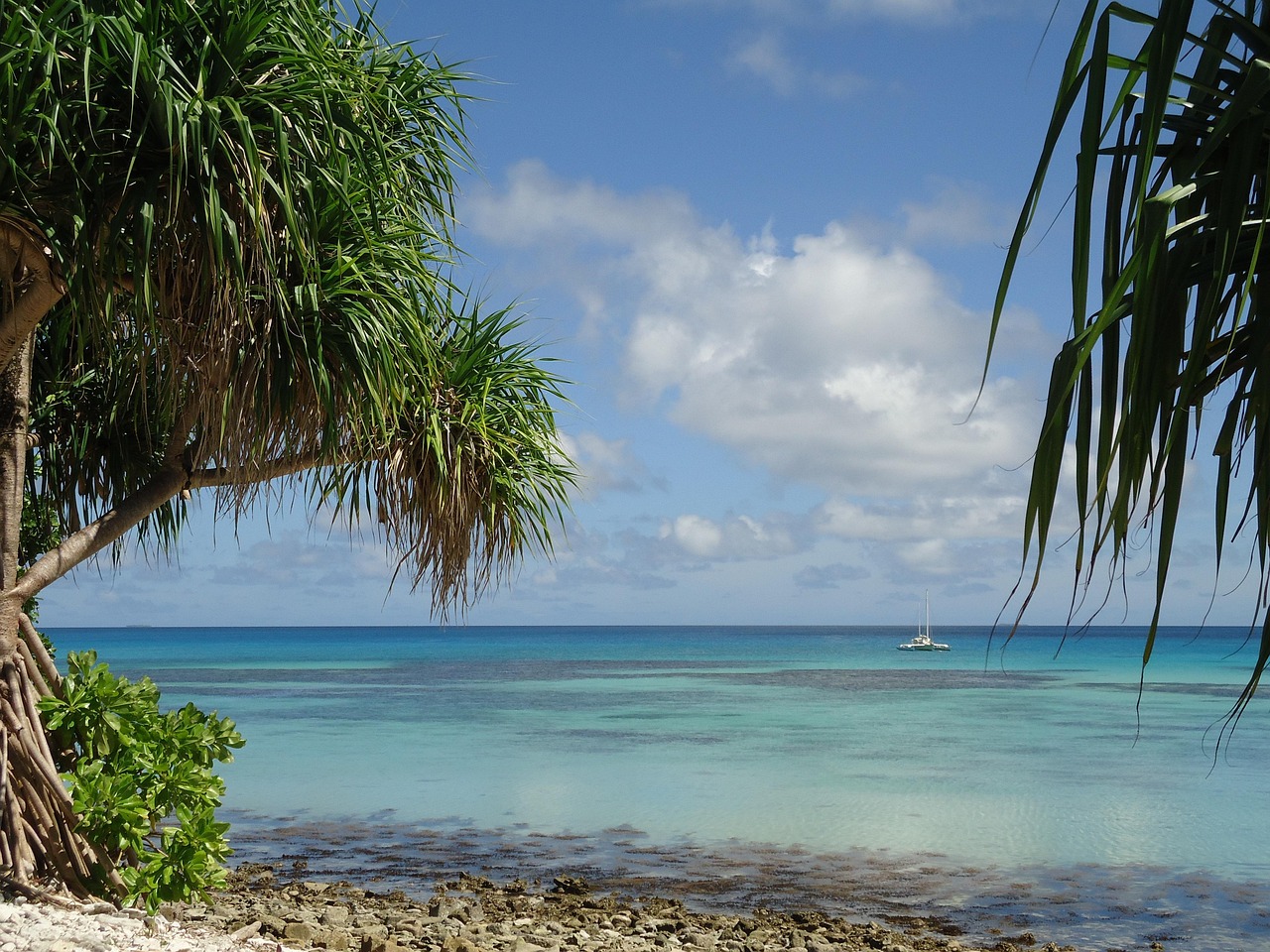
Tuvalu means eight standing together: eight of the nine islands carried people when the name was chosen, and the ninth, tiny Niulakita, was settled later. The name replaced a captain’s, the Ellice Islands having been labeled for an English politician by the ships that charted them.
The name was a declaration of independence in itself, adopted when the Polynesian Ellice Islands voted in 1974 to separate from the Micronesian Gilberts before independence, one of decolonization’s politest divorces.
The flag says the rest: nine yellow stars on Pacific blue, arranged as the islands lie on the map, with the Union Jack kept in the corner by a nation that debated and chose to keep its constitutional monarchy.
Tuvaluans call themselves by island first, Funafuti, Vaitupu, Nanumea, and the national name for occasions; on eight islets of a warming sea, standing together was never a metaphor.

Te Ggana Tuvalu, a Samoan Cousin on the Atolls
Te ggana Tuvalu is a Polynesian language of the Samoic family, close enough to Samoan that church Samoan served for a century as Tuvalu’s scripture and school tongue, and island dialects shade the vowels from Nanumea south to Nukulaelae.
Nui’s Gilbertese keeps its place in the national quilt, and English handles government paper, but Tuvaluan is the language of home, radio, and the meeting house, spoken by effectively the whole population.
The language’s poetry lives in song: the fatele’s verses, composed for occasions and argued over afterward, are the nation’s newspapers of record, and old song cycles preserve voyages and land claims the courts still consult.
The diaspora in New Zealand and Fiji now carries the language’s future; community schools in Auckland teach it beside te reo and Samoan, and the government’s digital nation project archives it, sound and script, against every contingency the tide may bring.
The Samoan pastors’ century left its stratum in the language, scriptural loanwords and preaching cadences Tuvaluan orators still deploy, and the national dictionary project records island variants side by side rather than choosing among them, philology conducted with meeting-house manners.

Nine Islands and Twenty-Six Square Kilometers
Tuvalu is one of the smallest countries on earth: nine islands, three of them true reef islands and six atolls, totaling about twenty-six square kilometers, spread along a six-hundred-kilometer line of ocean between Kiribati and Fiji.
No point rises five meters above the sea, and most land is a ribbon a few hundred meters wide between lagoon and ocean; Funafuti, the capital atoll, holds more than half the population along a strip that narrows in places to a road’s width.
The freshwater lens is thin and rain-fed, pulaka pits reach down to it, and the drought years, like 2011’s emergency, are remembered as sharply as the cyclones; Tuvalu’s environment has always been an exercise in margins.
The sea gives what the land cannot: a vast exclusive economic zone whose tuna licenses, with the famous .tv internet domain, fund much of the state, an economy of invisible exports from a country the plane overflies in a minute.
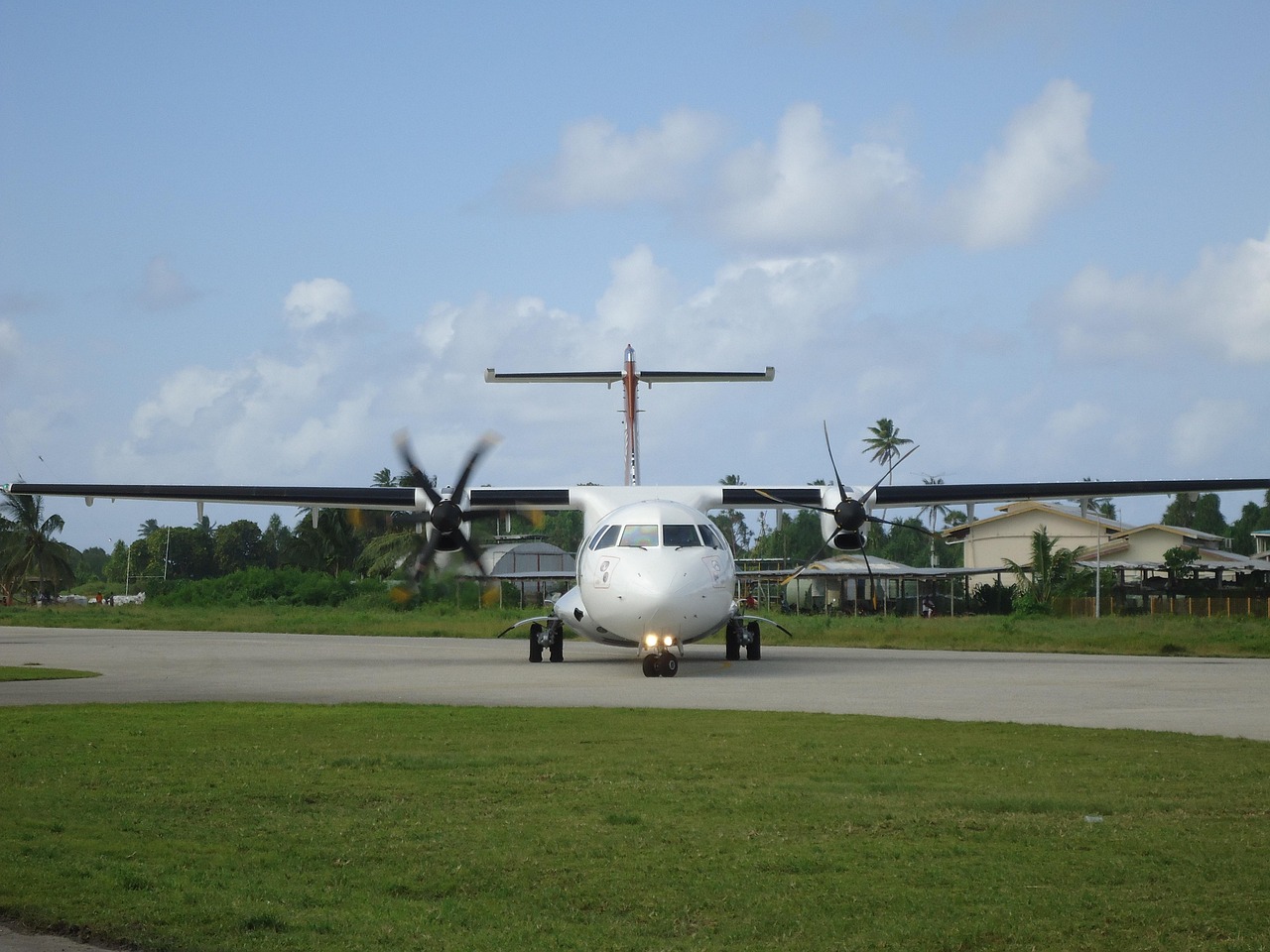
Funafuti’s lagoon, Te Namo, is the nation’s plaza: church picnics on its islets, the conservation area guarding its western reefs, and the evening hour when the airstrip fills with volleyball and strolling families while the day’s one or two flights are safely elsewhere.
Pulaka Pits and the Atoll’s Old Discipline
Atoll survival was engineered underground: the pulaka pits, great excavations down to the freshwater lens, composted for generations with leaves and husk, grew the giant swamp taro that anchored feasts and famine reserves alike. A family’s pits, like its land strips, were its patrimony.
The coconut did the rest, food, drink, toddy sugar, oil, cordage, timber, with pandanus for weaving and the breadfruit of the wetter islands in season; pigs and fowl waited for feasts.
The reef and lagoon were the protein commons, worked by canoe, net, and trap under island rules that closed and opened grounds; the deep sea’s tuna were chased with lures of pearl shell whose making was an art in itself.
Community labor was the atolls’ machine: house-raising, canoe-hauling, and pit-digging ran on village-wide work parties fed by the beneficiary families, a rhythm of obligation the islands never dropped.
Navigation here was practical coasting between known reefs rather than the Carolines’ deep-water science, but the sailing canoe carried tribute, brides, and famine relief along the chain, and a Nanumean crew’s arrival at Vaitupu is still reenacted in festival landings.

Falekaupule, Elders, and the Island Commonwealth
Each island governs itself through the falekaupule, the traditional assembly of elders in the maneapa meeting hall, a Samoan-style gerontocracy softened by atoll scale: everyone is kin, and consensus is both method and necessity.
Chiefs, aliki, survive as honored first families and ceremonial heads, but the working authority is the assembly and, since 1997, the falekaupule’s legal recognition as each island’s local government beside the elected national parliament.
Land descends through families in slivers counted by tree and pit, and the island community holds residual rights; disputes are talked out at length, the meeting house’s patience being the atoll’s true court.
The ethic is communal to a degree visitors find startling: catches divided on the beach, feasts assessed by household, and the national provident fund and seafarers’ remittances folded into the same arithmetic of shares.
The islands’ seafarers, trained at the Amatuku maritime school and shipped on the world’s freighters, are the falekaupule’s global arm: their remittances build the maneapa roofs, and their retirements return experienced men to the elders’ mat in an unbroken circuit.

From Island Gods to the Church of Tuvalu
The old islands kept ancestor spirits, island guardians, and priest-mediums whose shrines stood by the meeting houses; omens, taboo, and the spirits of pandanus and sea ordered fishing and planting as everywhere on the atolls.
Samoan pastors of the London Missionary Society converted the group in the 1860s with astonishing speed, and their legacy is total: the Church of Tuvalu, Congregational and Tuvaluan-led, claims nearly the whole nation, one of the most religiously uniform countries on earth.
The pastor sits beside the elders in every island’s order of precedence, Sunday empties the lanes twice, and the church’s year, White Sundays, choir exchanges, pastoral installations, is the island calendar’s spine.
The old spirits survive as story and caution, in night fishing manners and haunted islets, and the church itself has taken up the tide as theology: Tuvalu’s pastors preach Noah with a specificity no other pulpit needs.
Nukulaelae’s conversion story is told with pride: the islanders asked passing ships for a teacher, and the atoll that lost most to the slavers became the church’s most fervent stronghold, grief transmuted into institution within a generation.

Fatele Nights and the Art of Outlasting
The fatele is Tuvalu’s living art: the village splits into sides in the maneapa, each singing composed verses to accelerating claps and a beaten box or tin, dancers in pandanus skirts rising as the tempo climbs, each side striving to outlast and outshine the other past midnight. Every wedding, welcome, and national day ends in fatele.
Composition is competitive scholarship: verse-makers weave genealogy, scripture, and current events, and a sharp new fatele about a politician or a tide travels the islands faster than the radio.
Life passages keep their feasts, first birthdays, weddings, the pastor’s farewells, run by the falekaupule’s assessments, and the courtesies of the meeting house, seating, speech order, the sharing of the first kava-less cup of toddy, order every gathering.
Games of the old calendar survive on holidays, te ano, the flying-ball game played in facing lines, canoe races, and the wrestling of island against island, village rivalry kept fit for use.
A fatele between visiting islands is diplomacy scored for claps and tin drum: hosts and guests alternate escalating verses, honor is measured in stamina, and the night’s compositions are quoted for years; ethnomusicologists call it competitive antiphony, Tuvaluans call it Tuesday.

Weavers, Canoe Wrights, and the Dancing Skirt
Tuvaluan hands work pandanus and coconut into the atolls’ whole material culture: sleeping and presentation mats, fans, baskets, and the titi, the dancing skirt whose dyed strips flare with the fatele’s tempo, made fresh for great occasions and packed by every dance group that travels.
Shell and fiber jewelry, crowns of flowers and shells for guests, and the crocheted and appliqued pillows and wall cloths of the church women fill homes and gift baskets; a Tuvaluan welcome buries the visitor in made things.
Men’s craft ran to the sea: paopao outrigger canoes adzed from imported or drift logs, pearl-shell bonito lures whose making was lineage knowledge, and the great communal net hauls’ cordage, all maintained now beside outboards and monofilament.
The handicraft centers on Funafuti and the outer islands’ women’s committees sell to the few visitors and the many departing relatives; a rolled mat in an Auckland closet is Tuvalu kept within reach.
Mat currency still moves at weddings and pastoral farewells, graded by fineness and border work, and a bride’s family’s presentation stack is appraised by every eye in the maneapa with the frankness of an auction house.

Pulaka, Toddy, and the Fish of the Home Reef
The Tuvaluan table stands on pulaka and fish: the swamp taro boiled or baked in coconut cream, reef fish and tuna raw, grilled, or salted, with breadfruit and banana in their seasons and rice now beside them all.
Toddy, kaleve, is the morning’s sweetness, cut twice daily from the coconut spathe; boiled to syrup it keeps, fermented it consoles, and the toddy-cutter’s dawn climb remains the atoll’s alarm clock.
Feasts are the falekaupule’s logistics: households assessed by the basket, earth ovens smoking behind the maneapa, and the division after speeches sending every family home provisioned, abundance organized precisely because the ordinary margin is thin.
Imports and their diseases pressed hard here as everywhere; the response, backyard gardens, fish-first campaigns, and pride in the pulaka pit, is the old food security dressed in health ministry language.
The flying-fish drives of the outer islands remain communal theater, torches, shouting lines of canoes, and the beach division afterward, and salt-fish parcels travel to Funafuti and Auckland as the taste of each home island.

Independence Day and Each Island’s Own Feast
Independence Day, October 1, is the national high feast: parades and police band on Funafuti, church services, sports, and fatele into the night, with the outer islands holding their own celebrations around the returning boats.
Each island keeps its own great day besides, the anniversaries of church founding or cyclone deliverance, Nanumea’s and Nanumaga’s famous rivalries in song and te ano, and the pastor-centered White Sunday when children lead the service in new clothes.
Hurricane and drought anniversaries carry the graver calendar: Cyclone Bebe’s 1972 devastation of Funafuti and the 2011 water emergency are preached and retold, the atoll’s history of survival kept in working memory.
Any arriving dignitary, church delegation, or returning student cohort triggers the full sequence, garlands, speeches in order, feast, fatele, an island practicing the hospitality that is also its diplomacy.
Cyclone deliverance days carry the atolls’ theology of survival: Nanumea’s church, famously spared, fills on its anniversary, and the hymns composed in the storm years are the islands’ most requested.

Ellice Islands, a Referendum, and a Quiet Exit
Whalers and slavers found the Ellice Islands before empires did: Peruvian blackbirders took hundreds from Funafuti and Nukulaelae in 1863, a wound the mission era healed into the group’s fierce church loyalty. Britain declared a protectorate in 1892 and yoked the Polynesian Ellice group administratively to the Micronesian Gilberts.
The Second World War landed on Funafuti with American airfields and bombardments, the atoll serving as a step in the Gilberts campaign; the airstrip that is now the national runway, doubling as the capital’s playing field and evening promenade, is the war’s most used monument.
As independence approached, the Ellice Islanders, wary of minority status beside the more numerous Gilbertese, voted in 1974 by huge majority to separate; Tuvalu became independent in 1978, among the smallest members the United Nations would ever admit.
The quiet exit spared Tuvalu the region’s later turbulence, and its politics since, parliamentary, chiefly consensus in a Westminster shell, has been stable to the point of statistical anomaly.
The separation referendum’s arithmetic, over ninety percent for going alone, is still cited in constitutional debates across the Pacific as proof that self-determination can be exercised with a pencil and no casualties; Kiribati and Tuvalu remain close, their quarrel having lasted exactly one ballot.
A Nation Planning Its Own Digital Eternity
About 11,000 people live in Tuvalu, and thousands more in New Zealand and Fiji; the 2023 Falepili Union treaty with Australia opened a yearly migration pathway and a security guarantee, the first treaty anywhere to plan for a nation’s climate mobility by name.
The economy runs on tuna licenses, the .tv domain’s royalties, seafarers’ remittances, and the trust fund the nation banked at independence, prudence at national scale from a people who always kept famine reserves.
Climate is the national portfolio: land reclamation is raising parts of Funafuti, the constitution now declares the state perpetual whatever the sea does, and the Digital Nation project is scanning land, culture, and archives so that Tuvalu can exist, governed and remembering, even in the worst case its diplomats describe with such calm.
The fatele meanwhile accelerates in the maneapa as it always has: eight islands standing together, singing composed verses about exactly what is happening to them, and refusing, in perfect rhythm, to disappear quietly.
Tuvalu’s diplomats have made smallness a lever: the first digital-nation statehood declarations, the Falepili treaty’s text, and the constitutional permanence clause are studied in every international law faculty, a country of eleven thousand drafting precedents for the century’s largest problem.

Related Peoples of the Region
- Tongan People of the Friendly Islands and Their Kingdom That Was Never Conquered
- Native Hawaiians of the Polynesian Triangle’s Northern Star and Their Great Recovery
- Tahitians of Ma’ohi Nui and Their Islands at the Center of the Eastern Sea
- Rapa Nui People of Easter Island and Their Ancestors Carved in Stone
- Marshallese Wave Pilots of the Coral Atolls and Their Two Meters Above the Sea
- I-Kiribati of the Equatorial Atolls and Their Republic of the Maneaba
- Palauans of the Rock Islands and Their Republic Ruled by Clans and the Sea
- Chuukese People of the Great Lagoon and Their World of Breadfruit and Ghost Ships
You May Like
The Damara, an Ancient People of Namibia