Along the equator, strung across four hemispheres, lies a nation of thirty-three coral islands whose people have practiced the art of enough for more than two thousand years. The I-Kiribati built their civilization around the maneaba meeting house, the coconut palm, and the divided knowledge of the sea, fought their wars in coconut-fiber armor with shark-tooth swords, and now negotiate with the rising ocean itself over the ground beneath their feet.
This portrait follows the people of Kiribati, the old Tungaru of the Gilbert chain: the spider god’s world-making, a language healthy in every household, the boti seats that map society onto a roofline, the sitting dances judged by stillness, the toddy cutter’s morning climb, Tarawa’s terrible beaches, and a republic writing the world’s textbook on facing the sea.
Contents
- Millennia on the Equator’s Coral Line
- How the Gilberts Became Kiribati
- Te Taetae ni Kiribati, a Language of the Atolls
- Thirty-Three Islands Across Four Hemispheres
- Maneaba Rafters and the Skills of Scarcity
- Seats in the Meeting House, Rank in the Village
- Nareau the Spider and the Coming of the Missions
- Sitting Dances, Warrior Armor, and the Rules of the Maneaba
- Coconut Fiber, Shark Teeth, and Pandanus Sails
- Babai Pits, Toddy Cutters, and the Fish of Two Waters
- Independence Games and the Church’s Great Days
- Traders, Tarawa’s Beaches, and a Stolen Ocean’s Return
- A Nation Bargaining with the Ocean Itself
Millennia on the Equator’s Coral Line
The ancestors of the I-Kiribati settled the Gilbert chain well over two thousand years ago, Micronesian voyagers spreading along a line of atolls straddling the equator. Later centuries brought Samoan and other Polynesian arrivals into the southern islands, invaders and in-laws whose strands the genealogies keep distinct, and the culture that resulted is Micronesian with a Polynesian accent.
Atoll life pared the inheritance to essentials: land measured in house plots and pandanus trees, navigation by stars and swells along the chain, and a social architecture, the maneaba meeting house, sturdy enough to organize scarcity without kings.
Oral tradition starts the world with Nareau the spider and counts the generations from the tree of Samoa; archaeology counts pits, adzes, and fishhooks. Both agree the people have been exactly where they are for most of recorded human time.
It is a deep history with almost no monuments, coral and thatch do not accumulate, and its archive is therefore living practice: the way a maneaba is raised, a canoe lashed, a seat inherited, unchanged in grammar for centuries.
Linguistics maps the settlement’s direction, out of the Carolines and Marshalls southeastward, and the southern islands’ Samoan strand is written in chiefly genealogies that still carry weight in Beru and Onotoa; the chain was a crossroads, not a cul-de-sac, and its people traded, raided, and married along it for a hundred generations before any chart recorded them.
Linguistics maps the settlement’s direction, out of the Carolines and Marshalls southeastward, and the southern islands’ Samoan strand is written in chiefly genealogies that still carry weight in Beru and Onotoa; the chain was a crossroads, not a cul-de-sac, and its people traded, raided, and married along it for a hundred generations before any chart recorded them.
How the Gilberts Became Kiribati
Kiribati is the islanders’ own pronunciation of Gilberts, the name a Russian hydrographer attached to the chain after a British captain, Thomas Gilbert, crossed it in 1788. Rendered in a thirteen-letter alphabet with no soft g, Gilberts became Kiribati, said kiribas, and at independence in 1979 the borrowed name, fully naturalized, became the republic’s.
The people are I-Kiribati, the language te taetae ni Kiribati, and the older self-name Tungaru still names the chain in song and ceremony; a person may be Tungaru in the maneaba and I-Kiribati at the United Nations without contradiction.
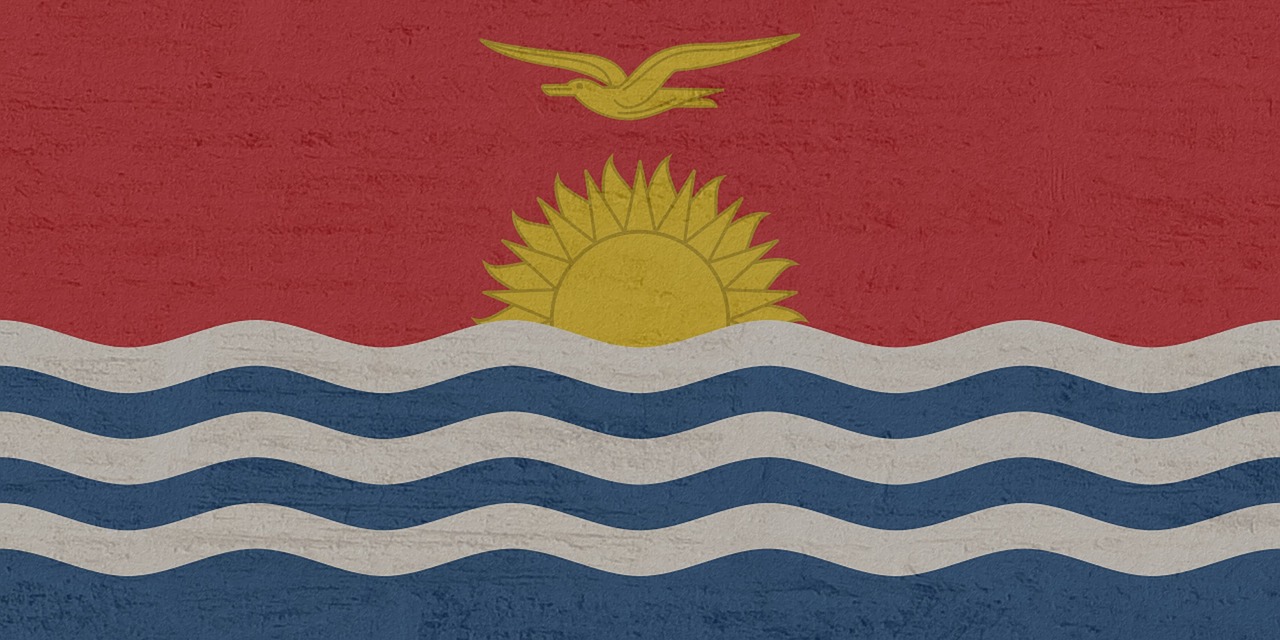
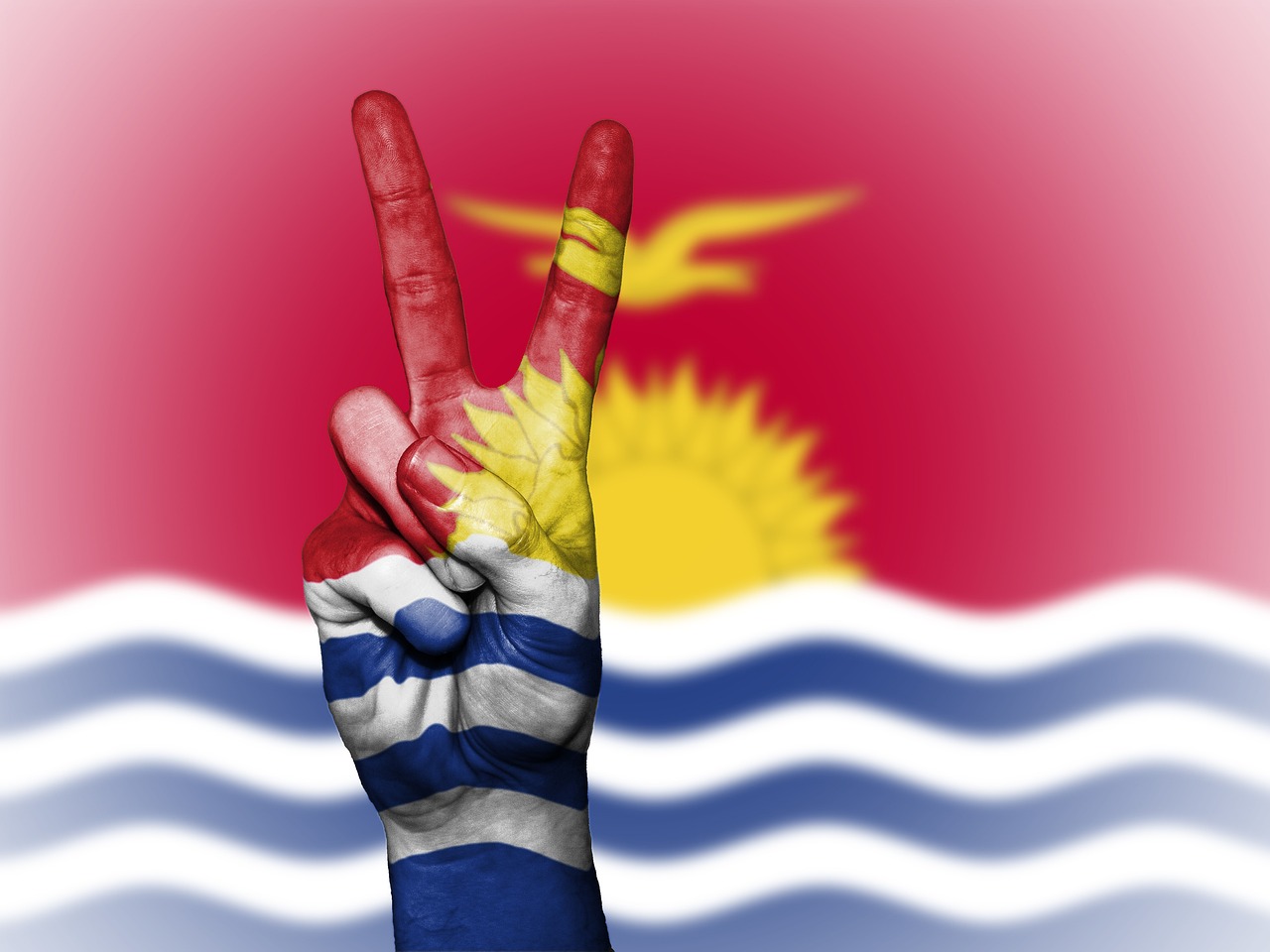
The flag says the rest: a golden frigatebird over a rising sun and ocean waves, power, light, and the sea, the three constants of the equatorial atolls.
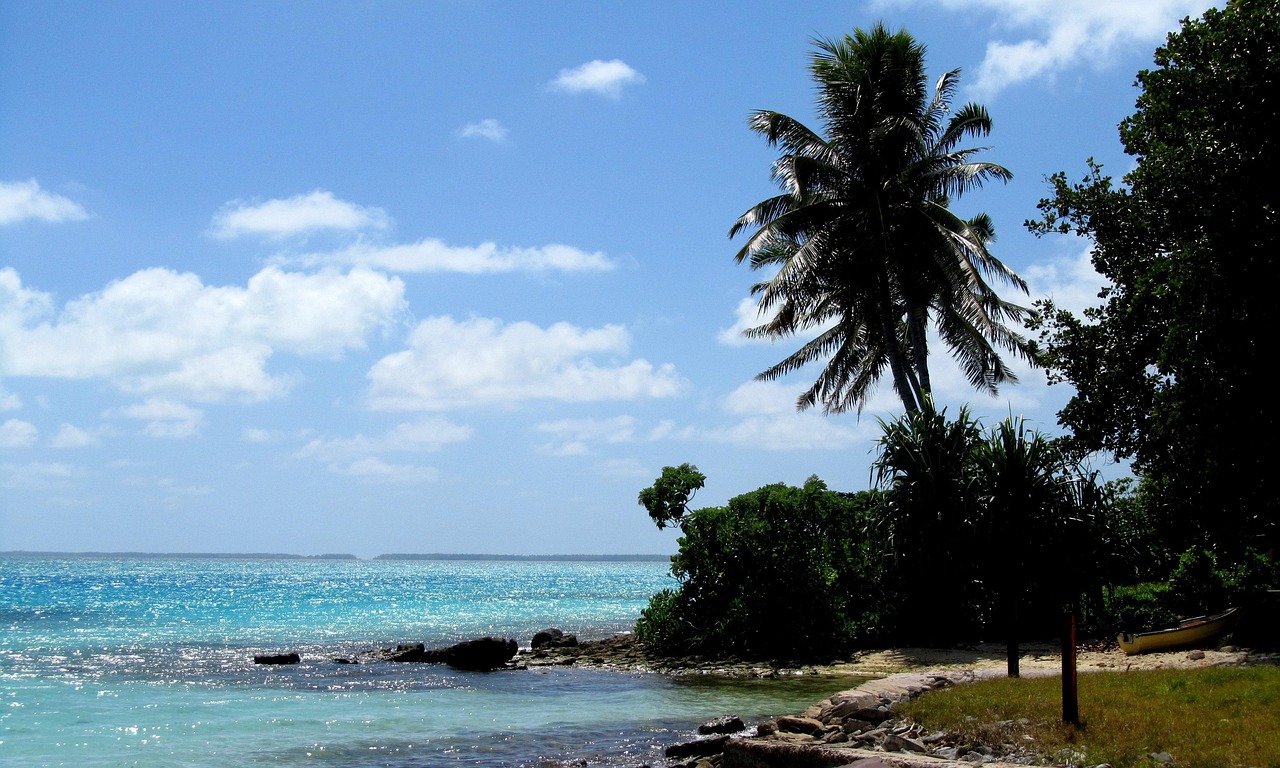
The republic’s full reach outruns its old name: with the Phoenix and Line groups it spans islands the Gilberts’ people barely knew, including Kiritimati, Christmas Island, the largest coral atoll on earth, and the name Kiribati now covers an ocean domain wider than the continental United States.
Te Taetae ni Kiribati, a Language of the Atolls
Te taetae ni Kiribati is a Micronesian language of the Oceanic family, spoken by essentially every I-Kiribati at home and abroad, one of the healthiest indigenous languages in the Pacific. Its thirteen-letter alphabet, mission-built in the 1850s, made the islands literate early, and the Kiribati Bible remains the most-read book on every atoll.
The language runs on courtesy: speech in the maneaba follows seating, elders are addressed in set forms, and the unimane, the old men, deliver judgment in a proverb-heavy oratory that young speakers train years to answer.
Dialect splits the chain gently, the northern and southern islands tease each other’s vowels, and Banaban speakers carry their own history within the language, but all of it is one tongue, and radio from Tarawa reaches it all.
English is the school and government partner, yet daily life, church, and song remain resolutely Kiribati; the language’s real frontier is the diaspora in Fiji, New Zealand, and Australia, where community schools now teach children the speech of atolls some may never live on.
The language guards the culture’s precision instruments: dozens of words for stages of the coconut, named winds and currents, and the vocabulary of maneaba procedure that no English translation carries; losing a word here means losing a technique, which is why the elders correct the young so firmly.
The language guards the culture’s precision instruments: dozens of words for stages of the coconut, named winds and currents, and the vocabulary of maneaba procedure that no English translation carries; losing a word here means losing a technique, which is why the elders correct the young so firmly.
Thirty-Three Islands Across Four Hemispheres
Kiribati is the only country on earth in all four hemispheres: thirty-two atolls and one raised island scattered across three groups, the Gilberts in the west, the Phoenix group in the center, the Line Islands far east, spanning nearly four thousand kilometers of ocean along the equator.
The land is a rounding error on the sea: about eight hundred square kilometers in total, most of it a few hundred meters wide and rarely three meters high. South Tarawa, the capital strip, packs half the nation onto a ribbon between lagoon and ocean at densities rivaling Hong Kong’s.
Banaba, the one raised island, was mined hollow for phosphate in the colonial century, its people resettled to Rabi in Fiji, a displacement whose grievance still sits in the constitution’s protections.
The waters are the true territory: an exclusive economic zone of three and a half million square kilometers, among the world’s great tuna grounds, and the Phoenix Islands Protected Area was for years one of the largest marine reserves on the planet, an atoll nation administering an ocean the size of an empire.
Distances defeat intuition: from Tarawa to Kiritimati is farther than London to Moscow, all of it water, and a southern Line island like Flint sees years between visits; the republic’s map is best read as a constellation, dim, far apart, and navigated rather than traversed.
Distances defeat intuition: from Tarawa to Kiritimati is farther than London to Moscow, all of it water, and a southern Line island like Flint sees years between visits; the republic’s map is best read as a constellation, dim, far apart, and navigated rather than traversed.
Maneaba Rafters and the Skills of Scarcity
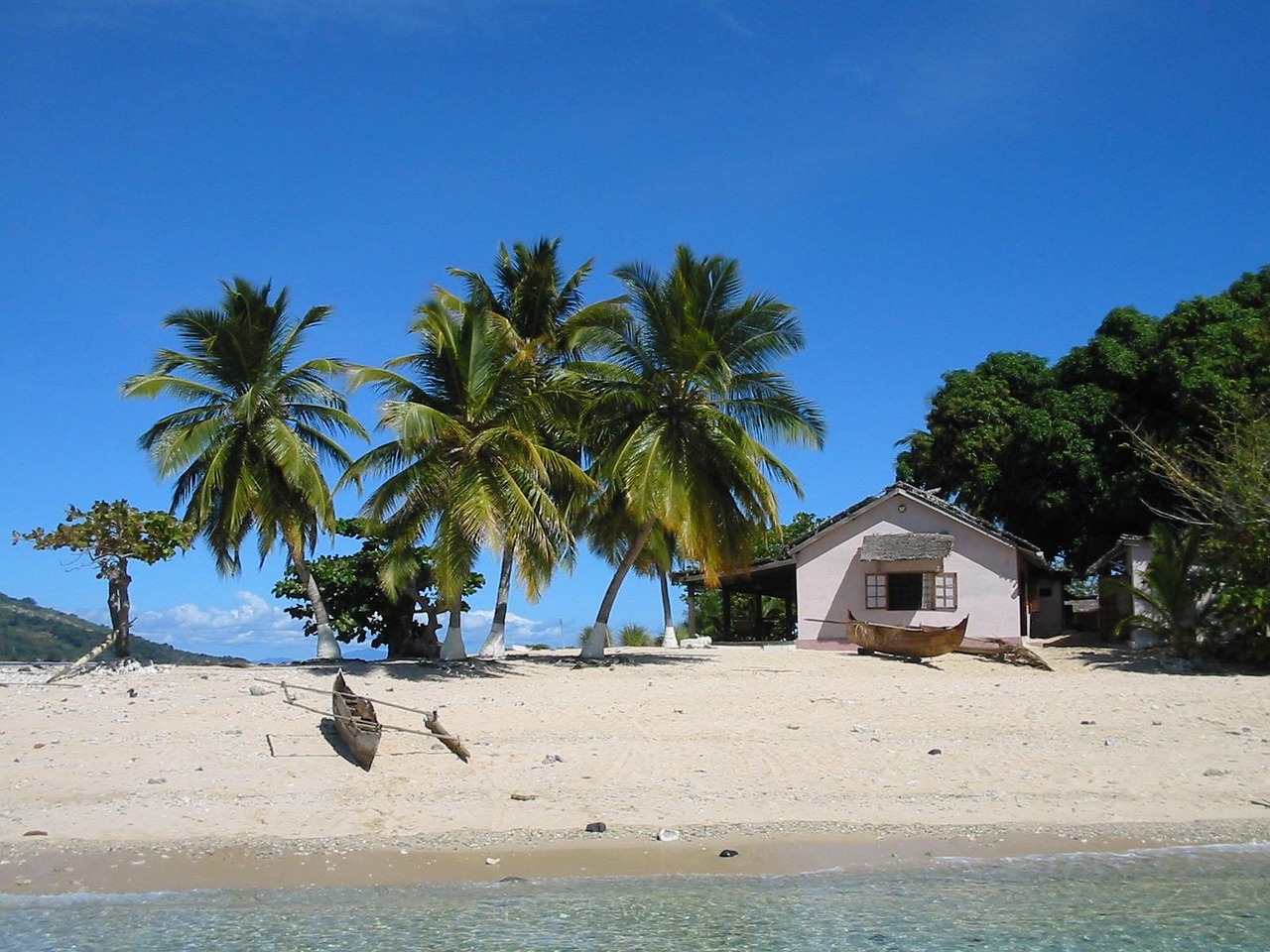
The center of every Kiribati village was and is the maneaba, the great meeting house whose thatched roof sweeps nearly to the ground on posts of coconut wood and coral. Raised by the whole community under exacting ritual rules, it is parliament, court, theater, and guest house at once, and its architecture is sacred law: every clan holds an inherited boti, a named sitting place along its sides.
Subsistence was engineering under constraint: babai, the giant swamp taro, grown in pits dug to the freshwater lens and composted leaf by leaf for years; pandanus and breadfruit dried and preserved; and the coconut worked into everything, with the twice-daily cutting of toddy, the sweet sap of the flower spathe, the atoll’s sugar, yeast, and vitamin C.
The sea was divided knowledge: fish traps of coral stone, netting rights, and the deep-water arts of shark calling and tuna luring were family property, taught with genealogies attached.
War was armored theater: fighters in coconut-fiber cuirasses and porcupine-fish helmets dueled with shark-tooth swords and lances, armor now prized by the world’s museums as some of Oceania’s most extraordinary material culture.
Navigation had its own schools: the northern islands’ star knowledge was taught on stone and coconut-leaf diagrams laid on the maneaba floor, and a graduating pilot was examined by sailing a course blind; fragments of that curriculum survive in family lines and in the notebooks of the last colonial officers who thought to ask.
Navigation had its own schools: the northern islands’ star knowledge was taught on stone and coconut-leaf diagrams laid on the maneaba floor, and a graduating pilot was examined by sailing a course blind; fragments of that curriculum survive in family lines and in the notebooks of the last colonial officers who thought to ask.
Seats in the Meeting House, Rank in the Village
Kiribati society is village republicanism grown old: in the southern Gilberts especially, no chiefs ruled, and authority belonged to the unimane, the assembled old men of the maneaba, whose consensus bound the village. Northern islands knew chiefly lines, but the maneaba’s floor leveled even them.
The boti seat is the social address: inherited through the father, it fixes a family’s duties, its share of feasts, and where its members sit for every decision; to lose one’s seat is to be socially stateless.
Land, scarce as water, descends in named plots through both lines with a precision that fills the courts to this day; an I-Kiribati may own a dozen slivers on three islets and know each tree on them.
The ethic is te aomata raoi, the proper person: unhurried, generous, deferential to age, and able to endure, the atoll’s oldest curriculum, taught by scarcity and enforced by the village’s long memory.
The system’s modern test is South Tarawa, where wage work, courts, and crowding press on village law; yet the maneaba form replicated itself into the capital, every island community there maintains one, and the unimane still speak first, even under corrugated iron.
The system’s modern test is South Tarawa, where wage work, courts, and crowding press on village law; yet the maneaba form replicated itself into the capital, every island community there maintains one, and the unimane still speak first, even under corrugated iron.
Nareau the Spider and the Coming of the Missions
In the beginning, tradition says, Nareau the spider moved on the primal darkness, waking the sleepers whose stirring split sky from earth; the ancestors’ spirits traveled to the islands from the tree of Samoa, and each clan kept its anti, its spirit, served at stone shrines with offerings and divination.
Ancestor skulls were honored in the houses, navigators consulted dream and omen, and the northern islands’ sun-and-moon cults crossed with the chiefly lines; it was a religion of household scale, fitted to islands without temples’ stone.
The missions arrived in the 1850s and 60s, Protestant from Boston and Hawai’i in the north, Catholic from France in the south, and converted the chain within two generations; the rivalry mapped itself onto island lines that still shade Kiribati politics.
The churches inherited the maneaba’s gravity: Sunday fills them twice, church feast days empty the villages, and the great denominational youth rallies are the islands’ festivals in all but name. The anti linger at the edges, in medicine, in navigation lore, and in the caution any I-Kiribati shows a night reef, but the pews long ago won the center.
Bahai communities, unusually strong here, and newer churches have joined the old rivals, and the ecumenical truce of small islands holds: everyone is someone’s cousin, and the botaki tables are shared whatever the steeple.
Bahai communities, unusually strong here, and newer churches have joined the old rivals, and the ecumenical truce of small islands holds: everyone is someone’s cousin, and the botaki tables are shared whatever the steeple.
Sitting Dances, Warrior Armor, and the Rules of the Maneaba
Kiribati dance is unlike anything else in the Pacific: te mwaie, performed in pandanus skirts and shell ornaments, values stillness over spectacle, the dancers’ arms extended in slow, birdlike precision while the head snaps on the beat, eyes fixed in the frigatebird’s stare. Behind them the village sits as a living drum, clapping and chanting in massed harmony.
The sitting dances, te bino, move only the arms and face above crossed legs, and a performance’s power is judged by containment: emotion compressed until the room prickles. Composers of dance songs once fasted and worked magic for their art, and a new composition remains a village event.
Maneaba protocol is itself a tradition: speeches in seating order, the presentation and division of feasts by boti, and the botaki, the celebration-with-obligations that marks every birthday, departure, and homecoming.
The old skills parade at cultural days, coconut husking, weaving, toddy cutting against the clock, and the shark-tooth swords come out of museum cases in replica, carried by dancers whose great-grandfathers wore the fiber armor in earnest.
Dance training is village pedagogy at its strictest: children drilled in lines by aunts with canes of pandanus rib, the honor of the island riding on a festival entry, and the composers’ old rivalries remembered like sporting records.
Dance training is village pedagogy at its strictest: children drilled in lines by aunts with canes of pandanus rib, the honor of the island riding on a festival entry, and the composers’ old rivalries remembered like sporting records.

Coconut Fiber, Shark Teeth, and Pandanus Sails
Kiribati craft is the coconut palm taught discipline: sennit cord rolled on thighs from husk fiber once rigged canoes and bound maneaba rafters, and its finest weaves became the armor that stopped shark-tooth blades; pandanus leaf, cured and split, becomes sails, mats, hats, and the dancing skirts whose rustle is part of the music.
Women’s plaiting remains the daily art, sleeping mats and fans in every household, presentation mats for botaki gifts, and the te bou garlands of shell and flower that crown any guest of honor.
Men’s work ran to the sea: canoe hulls sewn from salvaged planks and breadfruit wood, faster in the lagoon regattas than anything their size, and hooks, lures, and traps fitted to each named fish.
The shark-tooth weaponry, swords, tridents, and daggers edged with dozens of drilled teeth, has become the culture’s museum signature, and modern carvers supply replicas while the originals, collected in the 1800s, testify from London and Berlin to the atolls’ martial century.
A maneaba raising remains the master class: hundreds of lashings in patterns owned by particular clans, thatch panels counted in thousands, and the roofline’s proportions fixed by rules the unimane recite; when a new one rises, the whole curriculum walks again.
A maneaba raising remains the master class: hundreds of lashings in patterns owned by particular clans, thatch panels counted in thousands, and the roofline’s proportions fixed by rules the unimane recite; when a new one rises, the whole curriculum walks again.

Babai Pits, Toddy Cutters, and the Fish of Two Waters
The Kiribati table is the atoll’s short list made generous: fish from lagoon and ocean, rice now beside them, breadfruit in season, babai for feasts, pandanus fruit chewed or pressed into dried te tuae, and the coconut at every meal in flesh, cream, or toddy.
Toddy is the national drink: cut morning and evening from the bound flower spathe, drunk fresh and sweet by children, fermented into sour toddy by their uncles, and boiled to kamaimai syrup, the atolls’ molasses.
Feasts are the maneaba’s stomach: botaki tables run the building’s length with fish, pork, babai, and rice by the basin, divided by seat and sent home in portions, abundance performed precisely because the ordinary days are lean.
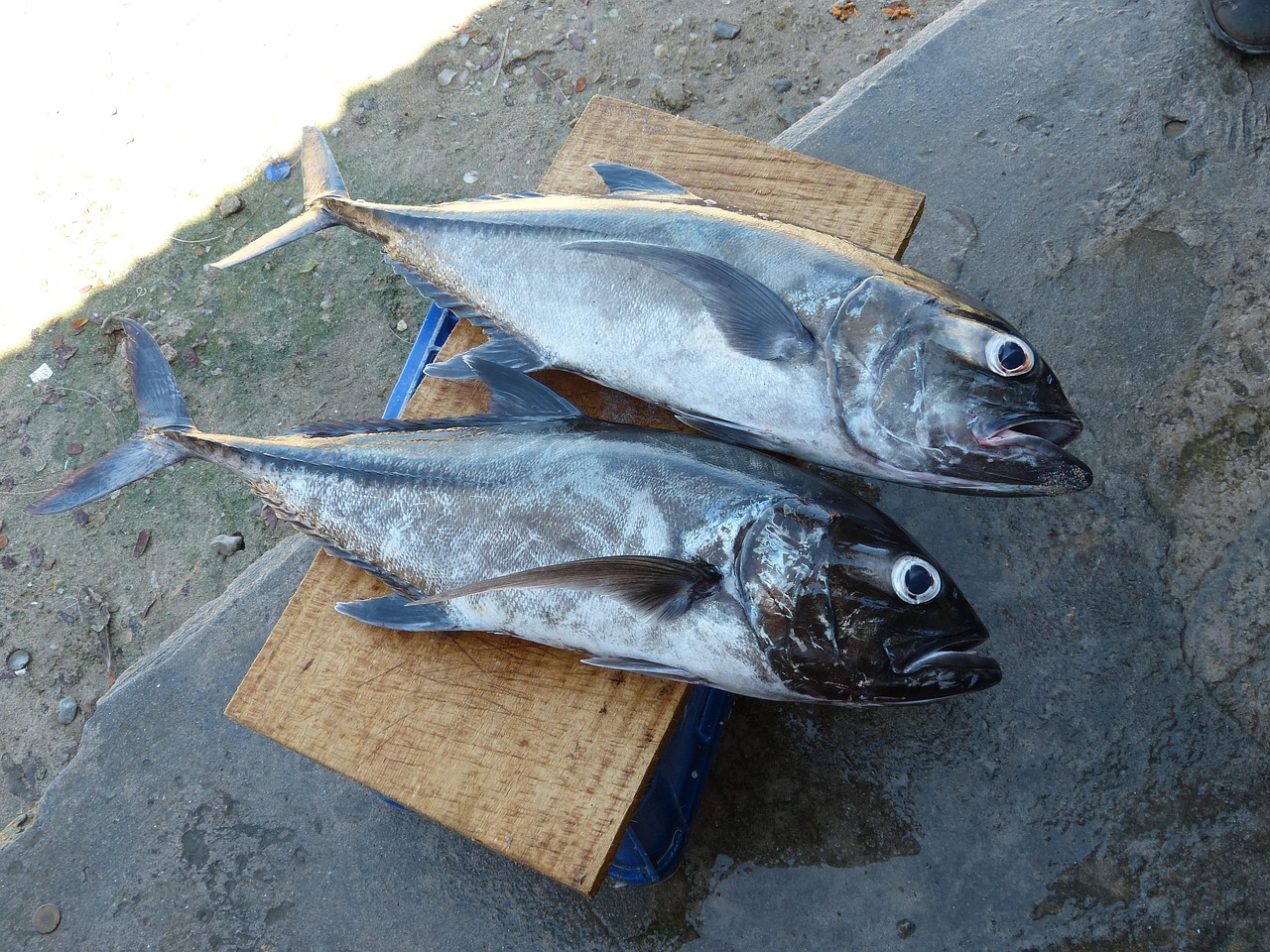
The ocean’s wealth mostly swims past to foreign fleets under license; at home, the fisher on the reef at dawn with a throw net remains the truest picture of the economy, and imported rice and tinned meat write the same health story here as across the region.
The babai pit is the atolls’ patience made visible: dug to the water lens, walled, and fed with leaves for years before the first corm is lifted for a feast, it is agriculture as heirloom, each pit named and inherited.
The babai pit is the atolls’ patience made visible: dug to the water lens, walled, and fed with leaves for years before the first corm is lifted for a feast, it is agriculture as heirloom, each pit named and inherited.
Independence Games and the Church’s Great Days
The national high season surrounds Independence Day, July 12: a week of parades on Tarawa, canoe races across the lagoon, te mwaie competitions between island delegations, and the wrestling, weightlifting with coral stones, and coconut-husking contests that make the holiday a rolling village games.
Church calendars carry the rest of the year: Easter and Christmas empty and fill the islands in botaki after botaki, denominational youth rallies rotate between atolls with flotillas of escorting canoes, and a new church’s opening can draw half an island group.
Every life passage gets its botaki, the first birthday, the twenty-first, the departure for seaman’s school or seasonal work abroad, and the homecoming feast that closes the circle, each with its dances rehearsed for months.
August’s Youth Day and the island councils’ cultural days keep the old skills in annual examination, and on Kiritimati the dateline’s shift means Kiribati greets each new year first of all the world, a small national pleasure taken seriously.
A botaki’s accounts are public art: contributions announced, portions divided by seat, and the surplus dispatched to absent kin by the next ship, generosity audited by the whole roomful of witnesses.
A botaki’s accounts are public art: contributions announced, portions divided by seat, and the surplus dispatched to absent kin by the next ship, generosity audited by the whole roomful of witnesses.

Traders, Tarawa’s Beaches, and a Stolen Ocean’s Return
The nineteenth century arrived as whalers, blackbirders, and traders in coconut oil, then copra; Britain declared a protectorate in 1892 and folded the Gilberts into a colony with the Ellice Islands, run thriftily from afar while the missions ran the schools.
Banaba’s phosphate paid the colony’s way and cost its people the island: mined from 1900, fought over in war, and exhausted by 1979, it left the Banabans resettled in Fiji and a lesson in extraction the republic never forgot.
The Second World War made Tarawa a byword: Japan fortified Betio, and in November 1943 the American assault across the reef at low tide killed some six thousand men in seventy-six hours on an islet of one square mile; rusting guns and amtracs still sit in the lagoon the islanders fish.
The road out ran through separation from the Ellice Islands, self-government, and independence in 1979, with the Americans renouncing their Line and Phoenix claims by treaty; the new republic inherited one road, one hospital, and an ocean, and set about governing all three.
The colonial ledger had entries both ways: a written language and literacy came early, but the phosphate accounts, the wartime abandonment, and the emptied island of Banaba taught the islands what empires cost; independence day speeches still balance the books aloud.
The colonial ledger had entries both ways: a written language and literacy came early, but the phosphate accounts, the wartime abandonment, and the emptied island of Banaba taught the islands what empires cost; independence day speeches still balance the books aloud.
A Nation Bargaining with the Ocean Itself
About 130,000 people live in Kiribati, over half crowded onto South Tarawa’s strip, with growing communities in Fiji, New Zealand, and Australia; thousands of I-Kiribati men crew the world’s merchant and fishing fleets, a remittance tradition now generations old.
The economy stands on tuna licenses, the Australian-managed trust fund built from Banaba’s phosphate, remittances, and aid; the government’s development plans read like logistics for a nation of distances, one supply chain per horizon.
Climate change is the national question stated plainly: king tides cross the road on Tarawa, wells turn brackish, and governments have bought land in Fiji, studied raising islands, and coined the doctrine the world now quotes, migration with dignity, preparing citizens to move as skilled people if the sea insists, while investing as if it can be held.
The culture’s answer is continuity itself: the maneaba still seats every argument, the frigatebird still tops the flag, te mwaie still teaches stillness under pressure, and a people who mastered scarcity for two thousand years regard the coming century as one more long season to be endured properly, together.
Kiribati’s diplomats, like their Marshallese cousins, have made low islands a moral standpoint: the Phoenix reserve traded fishing revenue for the world’s attention, and when Kiribati speaks at climate summits it speaks with the authority of a nation whose entire territory is the case study.
Kiribati’s diplomats, like their Marshallese cousins, have made low islands a moral standpoint: the Phoenix reserve traded fishing revenue for the world’s attention, and when Kiribati speaks at climate summits it speaks with the authority of a nation whose entire territory is the case study.

Related Peoples of the Region
- Native Hawaiians of the Polynesian Triangle’s Northern Star and Their Great Recovery
- Native Hawaiians of the Polynesian Triangle’s Northern Star and Their Great Recovery
- Tahitians of Ma’ohi Nui and Their Islands at the Center of the Eastern Sea
- Tahitians of Ma’ohi Nui and Their Islands at the Center of the Eastern Sea
- Rapa Nui People of Easter Island and Their Ancestors Carved in Stone
- Rapa Nui People of Easter Island and Their Ancestors Carved in Stone
- Marshallese Wave Pilots of the Coral Atolls and Their Two Meters Above the Sea
- Marshallese Wave Pilots of the Coral Atolls and Their Two Meters Above the Sea
You May Like
The Damara, an Ancient People of Namibia