In the middle of the eastern Pacific lies the island Europe mistook for paradise and Polynesia knew as a capital. From Tahiti and its sister archipelagos the voyaging canoes organized the settlement of Hawai’i, Rapa Nui, and Aotearoa; on Ra’iatea’s great marae the eastern sea had its sacred center. The Ma’ohi people absorbed missionaries, a French protectorate, and thirty years of nuclear testing, and kept their drums, their language, and their claim to the name of their own ocean country.
This portrait follows the Tahitians and their kin across the five archipelagos of Ma’ohi Nui: the hub of the voyaging world, a language kept alive by choirs and festival stages, the marae courts and the ‘arioi players, the Sunday earth oven and the raw-fish dish of the lagoons, the Heiva that outlasted its colonial cradle, and the long argument with Paris that is not yet finished.
Contents
- Hub of the Eastern Voyaging World
- Ma’ohi Identity Behind a Colonial Map Name
- Reo Tahiti and the Speech of the Archipelagos
- Five Archipelagos Under One Wind
- Marae Courts, Breadfruit, and the ‘Arioi
- Chiefs, Districts, and the Web of Feti’i
- ‘Oro’s Priests and the Gospel Ships
- ‘Ori Tahiti and the Art of the Drum
- Tifaifai, Tattoo, and Mother-of-Pearl
- Ma’a Tahiti from the Earth Oven
- Heiva, the Festival That Kept the Fire
- From Pomare’s Kingdom to the Nuclear Decades
- Ma’ohi Nui Between Paris and the Pacific
Hub of the Eastern Voyaging World
Around the middle of the first millennium AD, voyagers pushing east from Samoa and Tonga reached the Society Islands, and Tahiti and its neighbors became the hub from which eastern Polynesia was peopled: the Marquesas, Hawai’i to the north, Rapa Nui to the east, and Aotearoa to the southwest all trace canoe traditions and language back through Tahitian waters.
The sacred center of that world was Taputapuatea marae on Ra’iatea, the great stone court of the god ‘Oro, now a UNESCO World Heritage site. Canoes from as far as the Cooks and Aotearoa came to its ceremonies, and departing colonists carried its stones to found daughter marae across the eastern ocean.
Tahiti itself, fertile and sheltered, grew dense with districts of chiefly houses, breadfruit groves, and terraced valleys; when Europeans arrived in the eighteenth century, its combination of abundance and ceremony convinced them, briefly and consequentially, that they had found paradise.
For the peoples of eastern Polynesia the relationship was memory, not myth: Hawaiian chants name Kahiki, Maori tradition names Hawaiki and Rangiatea, and modern voyaging canoes making landfall at Taputapuatea are greeted as descendants returning to the courtyard their ancestors left.
Archaeology keeps tightening the picture: redated sites now place the Society Islands’ settlement near 1000 AD, with the great eastward dispersals following within a few generations, one of the fastest maritime expansions in human history, and the wind-shift theories that once explained it as drift have given way to models of deliberate, returnable exploration that Tahitian navigators would have found unremarkable.
Archaeology keeps tightening the picture: redated sites now place the Society Islands’ settlement near 1000 AD, with the great eastward dispersals following within a few generations, one of the fastest maritime expansions in human history, and the wind-shift theories that once explained it as drift have given way to models of deliberate, returnable exploration that Tahitian navigators would have found unremarkable.

Ma’ohi Identity Behind a Colonial Map Name
Tahiti names one island; the people of the five archipelagos governed from it call themselves Ma’ohi, the indigenous, the true, cousin-word to Hawai’i’s maoli and New Zealand’s Maori. The colonial container, French Polynesia, is a map-maker’s phrase the independence movement answers with Ma’ohi Nui, great Ma’ohi land.
Eighteenth-century Europe made Tahiti a word for paradise, Bougainville’s New Cythera, the noble savage of the philosophers, the backdrop of the Bounty story, and the islands have negotiated with that projection ever since, profiting from it in tourism and resisting it in politics.
Within the islands, identity is archipelagic: a Tahitian, a Marquesan, a Paumotu of the atolls, and an Austral islander are distinct peoples under the Ma’ohi umbrella, each with dialect and custom, joined by language kinship and a shared administrative fate.
French citizenship overlays it all: the Ma’ohi are French nationals who vote for Paris parliaments, and the name question, Tahiti, French Polynesia, Ma’ohi Nui, is the sovereignty question in miniature, argued on ballots as much as in linguistics.

Reo Tahiti and the Speech of the Archipelagos
Reo Tahiti is the great lingua franca of eastern Polynesia’s French islands, an Eastern Polynesian language whose closest kin are Rarotongan, Maori, and Hawaiian. It was the first Polynesian language missionaries reduced to print at scale, and the Tahitian Bible of the 1830s standardized a written form that church and song have carried ever since.
Around it live its relatives: Marquesan in the north with its own proud difference, the Tuamotuan dialects of the atolls, Austral and Mangarevan in the south, a family whose speakers historically understood each other across a sea area the size of Europe.
French rule made French the language of school and administration, and by the late twentieth century urban childhoods were increasingly French-speaking; today perhaps a quarter of the population speaks Tahitian at home, and UNESCO lists it as vulnerable. The reply has been institutional and cultural at once: Tahitian is taught in schools and universities, required in the territorial assembly’s ceremonies, and defended by an academy, Te Fare Vana’a, that coins its modern vocabulary.
Its true stronghold is performance: the himene tarava choirs whose layered part-singing fills churches and festival stands, the orero oratory revived in schools, and the song and drum-chant of the Heiva keep reo Ma’ohi in the islands’ ears even where French rules the classroom.
Radio and social media have become the language’s new marae: Tahitian-language news bulletins, church services streamed to soldiers in Toulon, and the year’s Heiva songs shared and argued over online give reo Ma’ohi daily work that no classroom hour can match.
Radio and social media have become the language’s new marae: Tahitian-language news bulletins, church services streamed to soldiers in Toulon, and the year’s Heiva songs shared and argued over online give reo Ma’ohi daily work that no classroom hour can match.

Five Archipelagos Under One Wind
Ma’ohi Nui spreads across an ocean the size of Western Europe: one hundred eighteen islands in five archipelagos. The Society Islands hold Tahiti, Mo’orea, and the leeward jewels Bora Bora, Huahine, and Ra’iatea; the Tuamotus scatter seventy-odd coral atolls; the Marquesas rise sheer and harborless in the north; the Australs and the Gambiers close the south and east.
Tahiti itself is two volcanic domes joined at an isthmus, its interior a green vertical wilderness of spires and waterfalls no road crosses; Papeete on its northwest coast holds most of the territory’s people and nearly all its administration.
The atolls are the other homeland: ribbons of coral a few meters high around lagoons that farm the black pearls of the Tuamotus and remember, at Moruroa and Fangataufa, three decades of nuclear tests whose legacies are still being counted.
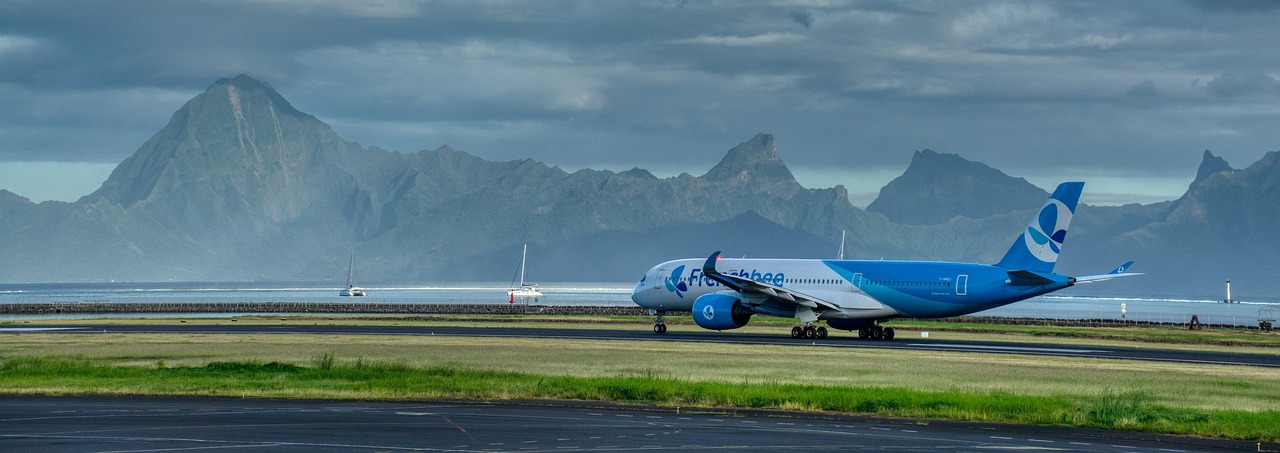
Distance is the geography’s other name: the Marquesas lie as far from Papeete as Ireland from Rome, and the schooner, the inter-island freighter, and now the daily Air Tahiti turboprops are the roads of a nation whose provinces are horizons apart.

Marae Courts, Breadfruit, and the ‘Arioi
Old Tahiti was ordered around the marae, the open stone courts that served as temple, courthouse, and title-registry at once. Every family had its marae as proof of land and lineage; district marae crowned the chiefly houses, and the international court of Taputapuatea bound the voyaging world. To move a marae stone was to move a right.
The breadfruit tree fed the system: a staple that grows on trees, harvested in seasons of glut, fermented in leaf-lined pits as mahi against scarcity, and supplemented by taro, banana, the lagoon, and pigs kept for feasts. Abundance underwrote ceremony, and ceremony organized abundance.
Through it moved the ‘arioi, Polynesia’s most extraordinary institution: a society of performers sacred to ‘Oro, ranked by tattoo, who sailed in decorated fleets from island to island staging dance, satire, and rites, licensed to mock chiefs whom no one else dared mock. Missionaries saw their privileges and their infanticide rule with horror, and the society dissolved early in the mission era.
War was chiefly and naval: fleets of great double canoes, their fighting stages crowded with warriors in plaited armor, contested districts and dynastic claims, and the drums that once launched them speak now from the Heiva’s dance stands.
Fragments of that world are everywhere underfoot: house platforms in the fern above every valley road, fishtraps in the lagoons, and the restored courts of ‘Arahurahu and Marae Ta’ata where the communes now stage reconstructions each July, archaeology and festival sharing the same stones.
Fragments of that world are everywhere underfoot: house platforms in the fern above every valley road, fishtraps in the lagoons, and the restored courts of ‘Arahurahu and Marae Ta’ata where the communes now stage reconstructions each July, archaeology and festival sharing the same stones.

Chiefs, Districts, and the Web of Feti’i
Tahitian society ranked from the ari’i rahi, the sacred high chiefs wrapped in the red-feather girdle that was Polynesia’s crown, through district ari’i and the ra’atira gentry to the manahune commoners. Rank descended through the firstborn with a strictness that could set a newborn above its own father, and the great houses traced themselves to the gods through marae after marae.
Beneath the chiefly drama, life ran and still runs on the feti’i, the extended family whose obligations of housing, feeding, and celebrating stretch across islands and now across to Paris and Noumea. Land remains overwhelmingly family land, held in indivision by descendants who must agree, a French legal shell around a Polynesian institution.
The fa’a’amu custom of freely giving and receiving children in adoption within the feti’i endures as one of the society’s most distinctive marks, a circulation of children that knits households together and scandalized every missionary who met it.
Modern civic life layers French communes and a territorial assembly over the old districts, and the mayor, the pastor or priest, and the heads of the big feti’i are the working trinity of every rural commune, arguing land, church, and festival in two languages.
Rank has softened into honor rather than law, but the old houses are remembered: descendants of the Pomare and the district ari’i are pointed out at funerals, and when a chiefly title is revived for a cultural occasion the genealogists argue its line as seriously as any court.
Rank has softened into honor rather than law, but the old houses are remembered: descendants of the Pomare and the district ari’i are pointed out at funerals, and when a chiefly title is revived for a cultural occasion the genealogists argue its line as seriously as any court.

‘Oro’s Priests and the Gospel Ships
The Tahitian cosmos rose from Ta’aroa, the self-created, who shook the world from his shell, and by the eighteenth century its rising power was ‘Oro, god of war and fertility, whose red-feathered image traveled from Taputapuatea in state. Priests read omens, human sacrifice sealed the greatest rites, and the tapu system fenced the sacred as it did across Polynesia.
The London Missionary Society’s Duff dropped anchor in Matavai Bay in 1797, and after a generation of struggle King Pomare II converted, won a decisive battle in 1815, and made the gospel royal law. The Leeward Islands’ mission code, the Pomare code, became Polynesia’s first written law, and Tahitian teachers then carried Christianity west to the Cooks and Samoa in the mission’s own canoes and ships.
Protestantism became a Ma’ohi institution: the parish and its deacons organize much of rural life, the himene choirs are the villages’ pride, and the Maohi Protestant Church has been the most consistent institutional voice for the language and against the nuclear tests. Catholic missions took the Marquesas and Gambiers; Mormon and Adventist chapels join them on every large island.
The old sacred did not vanish; it moved into the land. Marae are restored and honored rather than worshipped, mountains and passes keep their guardian stories, and the ceremonies that reopen Taputapuatea to returning canoes braid pastoral prayer with ‘orero oratory and offerings the old priests would recognize.
The parish calendar still structures the rural week, and the May collections, when districts announce their church offerings aloud to song, are the old redistribution feasts in Protestant dress, competitive generosity that missionaries channeled rather than invented.
The parish calendar still structures the rural week, and the May collections, when districts announce their church offerings aloud to song, are the old redistribution feasts in Protestant dress, competitive generosity that missionaries channeled rather than invented.

‘Ori Tahiti and the Art of the Drum
‘Ori Tahiti, Tahitian dance, is the culture’s beating heart: the driving hip-work of the otea over to’ere log-drum batteries, the fluid storytelling of the aparima to guitar and song, group choreographies that reenact legends with a cast of hundreds. Suppressed by missionary and administrative disapproval into near-secrecy, it revived through the twentieth century into schools that now count tens of thousands of students, in Papeete and in Paris, Tokyo, and Mexico City.
The drum orchestra is a tradition in itself: to’ere, faatete, and the bass pahu in interlocking patterns that name each figure the dancers strike, a percussion language apprenticed by ear.
Tattoo, whose very word tatau entered the world’s languages from these islands, marked rank and passage until the missions banned it; its late-twentieth-century revival, fed by Marquesan pattern and modern pride, has put the wrap-around motifs back on Ma’ohi shoulders and calves as a plain statement of identity.
Around dance and ink run the gentler arts: the crowns and garlands of Tahitian gardenia tied for any occasion, the monoi oil pressed from copra and tiare that scents the islands, and stone-lifting, fruit-carrier racing, and va’a outrigger regattas keeping the old strength sports alive.
The va’a deserves its own line: the outrigger canoe never stopped being transport and became sport, and a Tahitian crew at the world sprints or a solo paddler crossing to Mo’orea at dawn carries the voyaging inheritance in the most literal way the modern calendar allows.
The va’a deserves its own line: the outrigger canoe never stopped being transport and became sport, and a Tahitian crew at the world sprints or a solo paddler crossing to Mo’orea at dawn carries the voyaging inheritance in the most literal way the modern calendar allows.

Tifaifai, Tattoo, and Mother-of-Pearl
The craft the visitor meets first is the pareu, the printed wrap that is French Polynesia’s daily dress, hand-painted or block-printed in hibiscus and breadfruit-leaf patterns; tied forty ways, it serves as skirt, dress, and flag of belonging.
Indoors hangs the tifaifai, the appliqued quilt adapted from missionary sewing circles into a fully Ma’ohi art: great two-color compositions of breadfruit, taro, and frangipani given at weddings, wrapped around honored guests, and laid over the dead. A family’s tifaifai chest is its soft treasury.
The lagoons yield the luxury line: the black pearls of the Tuamotus, farmed on grafted oysters in atoll lagoons, made Tahiti the world’s dark-pearl capital, and shell and mother-of-pearl work descends directly from the fishhook and breastplate crafts of the old economy.
Wood and stone keep the older grammar, umete bowls, to’ere drums, replica canoes, and the Marquesan carvers remain the archipelagos’ acknowledged masters, their tiki, bowls, and war clubs dense with the patterns that once covered warriors head to foot.
The Papeete market’s two floors map the craft economy at a glance, fish and crowns of flowers below, pareu, monoi, pearls, and carvings above, and behind each stall stands a family workshop on some named motu or valley.
The Papeete market’s two floors map the craft economy at a glance, fish and crowns of flowers below, pareu, monoi, pearls, and carvings above, and behind each stall stands a family workshop on some named motu or valley.

Ma’a Tahiti from the Earth Oven
The national dish announces the geography: poisson cru, ia ota, cubes of lagoon tuna cured in lime and drowned in fresh coconut milk, eaten everywhere from roadside trucks to presidential tables. It is the Sunday starter before the ahima’a earth oven yields its parcels.
Ma’a Tahiti, the Sunday feast, is the old cuisine intact: suckling pig, breadfruit, taro, fafa greens with chicken, po’e fruit puddings in banana leaf, and firi firi coconut doughnuts after church, cooked slow under stones and eaten with the fingers among the feti’i.
The baguette arrived with the flag and stayed: subsidized loaves ride every truck’s dashboard, chao men noodles from the Hakka Chinese community share the table with raw fish, and the roulottes, the waterfront food trucks of Papeete, serve steak-frites beside grilled mahi mahi in the same sitting.
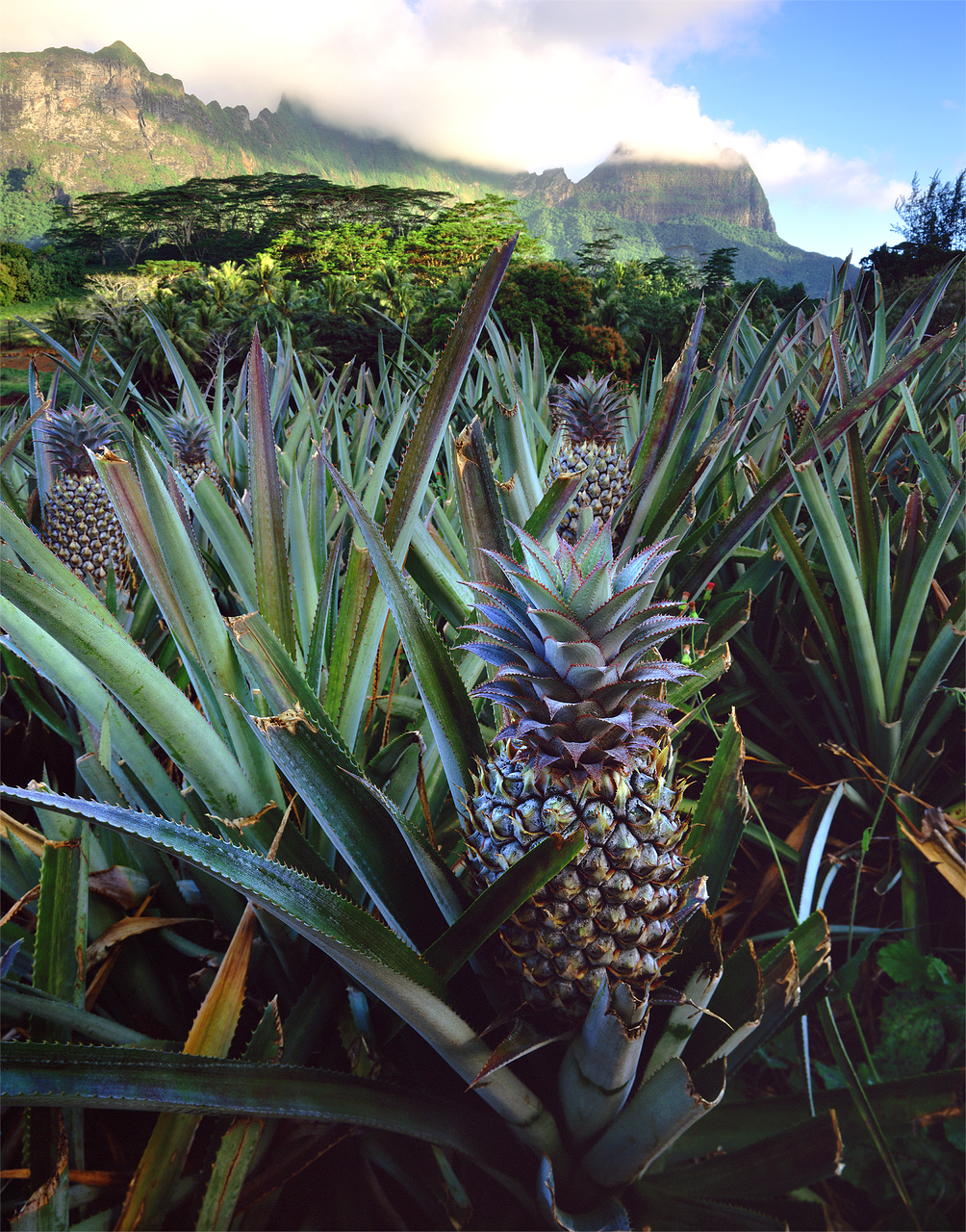
Between reef and garden the subsistence base holds, especially on the atolls, fish, coconut, breadfruit, and the pandanus and taro of the cooler Australs, and the territory’s chefs now plate that inheritance in a self-confident island cuisine that no longer asks Paris for permission.
Food remains the diaspora’s compass: coconut milk pressed in a Paris suburb for a Sunday ma’a Tahiti, taro flown in for a wedding, and the first stop from the airport, for every returning student, a roulotte plate of raw fish that tastes of the lagoon.
Food remains the diaspora’s compass: coconut milk pressed in a Paris suburb for a Sunday ma’a Tahiti, taro flown in for a wedding, and the first stop from the airport, for every returning student, a roulotte plate of raw fish that tastes of the lagoon.
Heiva, the Festival That Kept the Fire
The Heiva i Tahiti each July is the Pacific’s oldest continuous festival, born in 1881 as the colonial Tiurai around Bastille Day and captured, decade by decade, by the culture it was meant to decorate. For weeks Papeete’s waterfront stands fill for dance and choir competitions judged with championship gravity, while stone-lifting, copra-splitting, fruit-carrier races, and the great va’a canoe regattas run beside them.
A troupe’s Heiva entry is a year of work: an original theme from legend or history, costumes of plant fiber and shell built by the dancers’ families, drum compositions and ‘orero orations written for the night. Victory makes careers and villages proud; the festival is the language and dance’s great engine of transmission.
October belongs to the sea: the Hawaiki Nui Va’a, three days of open-ocean outrigger racing between Huahine, Ra’iatea, Taha’a, and Bora Bora, the world’s toughest paddling event, followed island to island by ferries of supporters.
Around the year turn the Marquesan arts festival that gathers the northern islands’ dancers and carvers, Missionary Day each March marking the gospel’s arrival, the Chinese community’s New Year in Papeete, and each commune’s church and school fetes, the small wheels of the festival machine.
Even the smallest atoll keeps the pattern: a July of sports and dance on the airstrip apron, the whole population as cast and audience, the Heiva’s great machinery reproduced at village scale a thousand kilometers from the judges.
Even the smallest atoll keeps the pattern: a July of sports and dance on the airstrip apron, the whole population as cast and audience, the Heiva’s great machinery reproduced at village scale a thousand kilometers from the judges.

From Pomare’s Kingdom to the Nuclear Decades
Wallis anchored in 1767, Bougainville a year later, Cook the year after that, and Tahiti became Europe’s laboratory of the Pacific: the transit of Venus observed from Point Venus, the Bounty’s men deserting for its shore, the philosophers arguing over its meaning. The visitors’ diseases did their invisible work, and the population fell disastrously within two generations.
Backed by mission and musket, the Pomare line unified the islands as a Christian kingdom; French gunboats then forced a protectorate on Queen Pomare IV in 1842 against her letters to London, and in 1880 her son Pomare V ceded the kingdom entire. France annexed archipelago after archipelago, the Leewards by outright war in the 1890s.
The twentieth century’s pivot was nuclear: from 1966 to 1996 France fired 193 tests at Moruroa and Fangataufa, atmospheric until 1974, and the CEP’s wages remade the economy while its fallout, officially minimized for decades, seeded cancers whose compensation files are still being argued. The tests’ end left both a dependency and a debt Paris has only partly acknowledged.
Political evolution followed protest: autonomy statutes from 1984 widened self-government, the pro-independence Tavini party has since won the presidency and France’s own parliament seats, and in 2013 the UN relisted the territory for decolonization over French objection, a case pressed in Tahitian by its own elected leaders.
Papeete’s memorial to the tests stands on reclaimed waterfront the CEP built, an irony no islander misses, and the association of veterans and downwinders keeps the dossiers moving through French courts one recognized illness at a time.
Papeete’s memorial to the tests stands on reclaimed waterfront the CEP built, an irony no islander misses, and the association of veterans and downwinders keeps the dossiers moving through French courts one recognized illness at a time.

Ma’ohi Nui Between Paris and the Pacific
Some 280,000 people live in French Polynesia, about eighty percent of them Ma’ohi by descent, two thirds of them on Tahiti; tens of thousands more live in metropolitan France and New Caledonia, a diaspora of students, soldiers, and nurses whose remittances and returns knit Papeete to Paris eighteen flight-hours away.
The economy stands on tourism’s overwater bungalows, black pearls, tuna, and heavy French transfers, and its debates are the Pacific’s usual ones sharpened by distance: housing on family land, imported food prices, the young leaving Bora Bora hotels for Papeete offices and Papeete for France.
Politics cycles between autonomist and independence majorities, with the nuclear legacy and the decolonization listing as standing questions; whatever the ballot returns, each government defends the language, funds the Heiva, and negotiates with Paris over the meaning of autonomy.
The culture’s trajectory, though, is no longer in doubt: ‘ori Tahiti fills gymnasiums from Santiago to Osaka, va’a is an international sport with its world center in the islands, tattooed shoulders carry the old patterns through every airport, and at Taputapuatea the voyaging canoes of the whole Polynesian triangle tie up, as they did a thousand years ago, at the courtyard where the eastern sea was organized.
Climate now writes the agenda the tests once wrote: the atolls measure their futures in centimeters of reef growth against sea rise, the pearl lagoons track warming water, and Ma’ohi delegations speak at climate summits with the particular authority of people whose entire provinces are a meter above the tide.
Climate now writes the agenda the tests once wrote: the atolls measure their futures in centimeters of reef growth against sea rise, the pearl lagoons track warming water, and Ma’ohi delegations speak at climate summits with the particular authority of people whose entire provinces are a meter above the tide.
Related Peoples of the Region
- Chamorro People of the Mariana Islands and Their Four Thousand Years Between Empires
- Chamorro People of the Mariana Islands and Their Four Thousand Years Between Empires
- Samoan People of the Sacred Center and Their Unbroken Fa’a Samoa
- Samoan People of the Sacred Center and Their Unbroken Fa’a Samoa
- Tongan People of the Friendly Islands and Their Kingdom That Was Never Conquered
- Tongan People of the Friendly Islands and Their Kingdom That Was Never Conquered
- Native Hawaiians of the Polynesian Triangle’s Northern Star and Their Great Recovery
- Native Hawaiians of the Polynesian Triangle’s Northern Star and Their Great Recovery
You May Like
The Damara, an Ancient People of Namibia


4 thoughts on “Tahitians of Ma’ohi Nui and Their Islands at the Center of the Eastern Sea”