The Spanish are a people forged at the crossroads of Europe and Africa, of Christianity and Islam, of the Old World and the New. For nearly eight centuries Muslims and Christians shared and contested the Iberian Peninsula, leaving a culture layered with influences found nowhere else in Europe. Then, in a single extraordinary generation around 1492, Spain expelled the last Muslim ruler, unified its crowns, and launched the voyages that would carry its language, its faith, and its empire across an ocean to two continents. The result is a people whose reach has been global, whose history holds both dazzling achievement and profound cruelty, and whose intense regional identities make the very idea of a single Spanish nation a matter of ongoing debate within Spain itself.
Who the Spanish Are
The Spanish are the people of the Kingdom of Spain, numbering roughly forty-seven million, who share the Spanish language, known to its speakers as Castilian, and a common state, while differing enormously by region. Spain is one of the most decentralized countries in Europe, divided into autonomous communities with strong identities of their own, and several, above all Catalonia, the Basque Country, and Galicia, possess their own languages and a powerful sense of being distinct nations within or alongside Spain. To speak of the Spanish, then, is to speak of Castilians and Andalusians, Catalans and Basques, Galicians and Valencians and Aragonese, bound by a shared state and history but proud of differences that run deep.
In This Article
- Who the Spanish Are
- Ancient Iberia
- Al-Andalus and the Long Coexistence
- The Reconquest and the Year 1492
- The Empire on Which the Sun Never Set
- Language, Catalonia, and the Many Tongues of Spain
- Faith, Flamenco, and the Spanish Soul
- Civil War and the Return of Democracy
- A People Who Remade the New World
- Artists, Writers, and the Spanish Imagination
- Spain and the Spanish Today

This diversity is geographic as much as cultural. Spain is a land of high central plateaus, green northern coasts that resemble Ireland more than the Mediterranean, sun-baked southern plains, and snow-capped mountain ranges. The contrast between the rainy, Atlantic north and the hot, dry south has shaped two very different ways of life, and the great cities, Madrid at the geographic center, Barcelona on the Mediterranean, Seville in the south, each carry a distinct character. Beyond Spain itself, the influence of Spanish culture is vast, for the language the Spanish carried across the Atlantic is now spoken by more than four hundred million people across Latin America, making Spanish one of the most widely spoken languages on earth.
Ancient Iberia
The peninsula the Spanish inhabit has been a magnet for Mediterranean peoples since deep antiquity. The original inhabitants, known broadly as Iberians in the east and south and Celts in the north and west, were joined over the centuries by Phoenician traders who founded Cadiz, by Greeks who established colonies along the coast, and by Carthaginians who made Spain a base of power. It was here that Rome and Carthage fought some of the bitterest campaigns of the Punic Wars, and after Rome victory the peninsula, which the Romans called Hispania, became one of the most thoroughly Romanized provinces of the empire.
Roman Hispania was no backwater. It produced emperors, including Trajan and Hadrian, as well as writers and philosophers such as the two Senecas and the poet Martial, and it gave the peninsula its enduring foundation of Latin language, Roman law, and eventually Christianity. When the Western Empire collapsed, Germanic Visigoths established a kingdom across most of the peninsula, ruling a Romanized Christian population and setting the stage for the dramatic transformation that would arrive from across the strait of Gibraltar in the early eighth century.
Al-Andalus and the Long Coexistence
In 711 a Muslim army crossed from North Africa and within a few years had conquered nearly the entire peninsula, beginning one of the most remarkable periods in European history. For centuries much of Iberia was al-Andalus, a Muslim-ruled land where, at its height, the city of Cordoba was among the largest and most cultured in the world, home to vast libraries, advanced medicine, philosophy, and architecture of breathtaking beauty. Under Muslim rule, Christians and Jews generally lived as protected if subordinate communities, and the long interaction of the three faiths, sometimes peaceful and creative, sometimes violent, gave medieval Spain a cultural richness without parallel in Christian Europe.
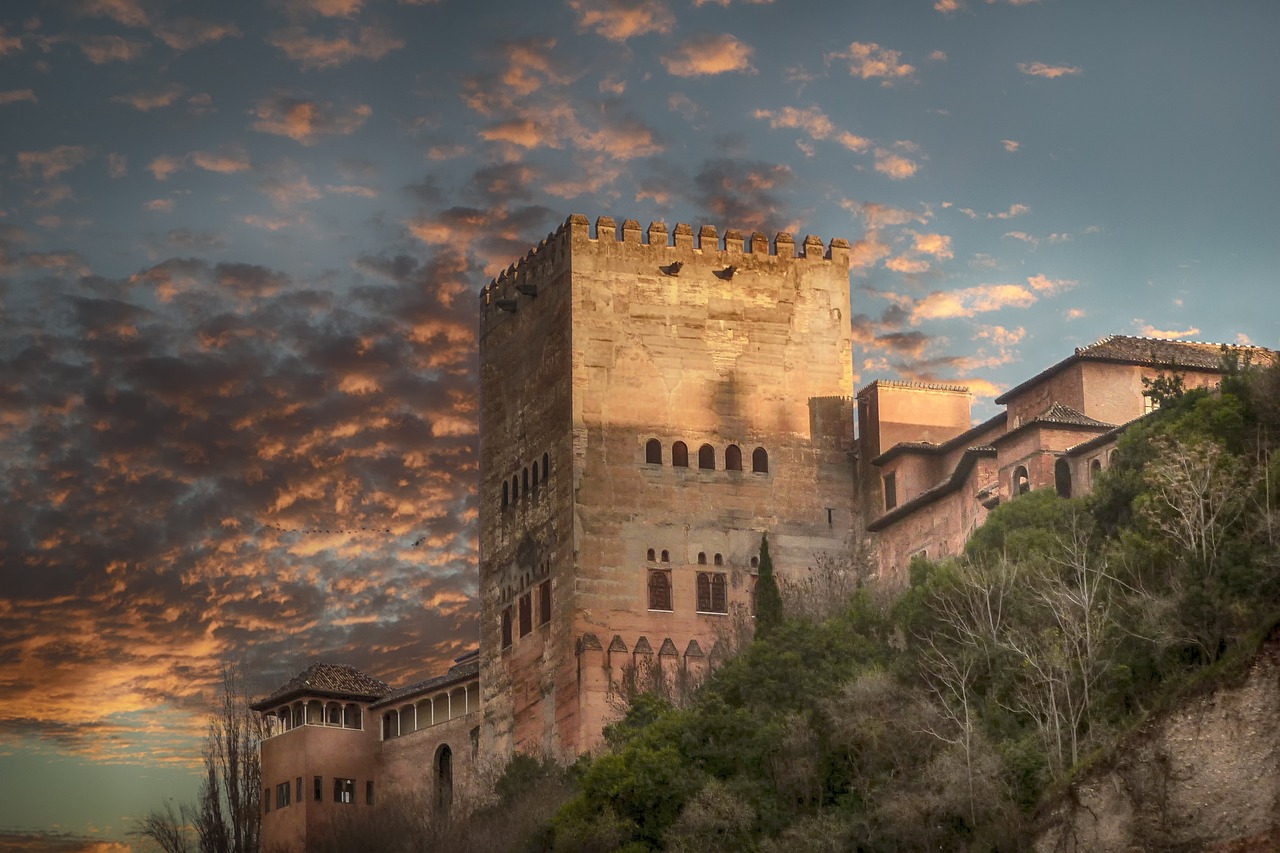
The greatest physical monument of this world is the Alhambra in Granada, a palace and fortress of such refinement that it remains one of the most visited sites in Spain. Al-Andalus also served as a crucial bridge through which the learning of the ancient Greeks, preserved and expanded by Arab scholars, flowed back into a Europe that had largely forgotten it, helping to spark the later flowering of Western thought. Jewish culture, too, reached a golden age in medieval Spain, producing philosophers and poets whose work shaped both Jewish and broader Mediterranean civilization. This many-layered inheritance is why the architecture, music, cuisine, and even the vocabulary of Spain still carry an Arabic and North African imprint found nowhere else in western Europe.
The Reconquest and the Year 1492
From the small Christian kingdoms that survived in the north, a long, intermittent process of conquest known as the Reconquista gradually pushed the frontier of Muslim rule southward over several centuries. This was less a single crusade than a slow, complex affair of shifting alliances, in which Christian and Muslim rulers sometimes fought one another and sometimes made common cause across the religious divide. The decisive moment came in 1492, when the combined crowns of Castile and Aragon, united by the marriage of Isabella and Ferdinand, conquered Granada, the last Muslim state on the peninsula.
The same year saw two other epochal events, and honesty requires holding all three together. In 1492 the monarchs also expelled the Jews of Spain, ordering tens of thousands who refused conversion to leave the only homeland they had known, an act of religious persecution whose human cost was immense and whose memory endures. And in the same year Christopher Columbus, sailing under the Castilian crown, reached the Caribbean, opening the way to a Spanish empire in the Americas. Within a few decades the Spanish Inquisition, established to enforce religious conformity, would cast a long shadow over the country, and the Muslims who remained would in time also be expelled. The Spain that emerged from 1492 was a unified, militantly Catholic power poised to become the first truly global empire, but it had purchased that unity at a terrible cost in human freedom.
The Empire on Which the Sun Never Set
For more than a century after 1492 Spain was the most powerful state in the world. Its conquistadors, among them Hernan Cortes and Francisco Pizarro, overthrew the Aztec and Inca empires, and silver from the mines of the Americas, above all the great mountain of Potosi, flowed into Spanish coffers and financed wars across Europe. At its height the Spanish Empire stretched across the Americas from California to the tip of South America, took in the Philippines in Asia, and dominated much of Europe under the Habsburg monarchy of Charles the Fifth and his son Philip the Second.
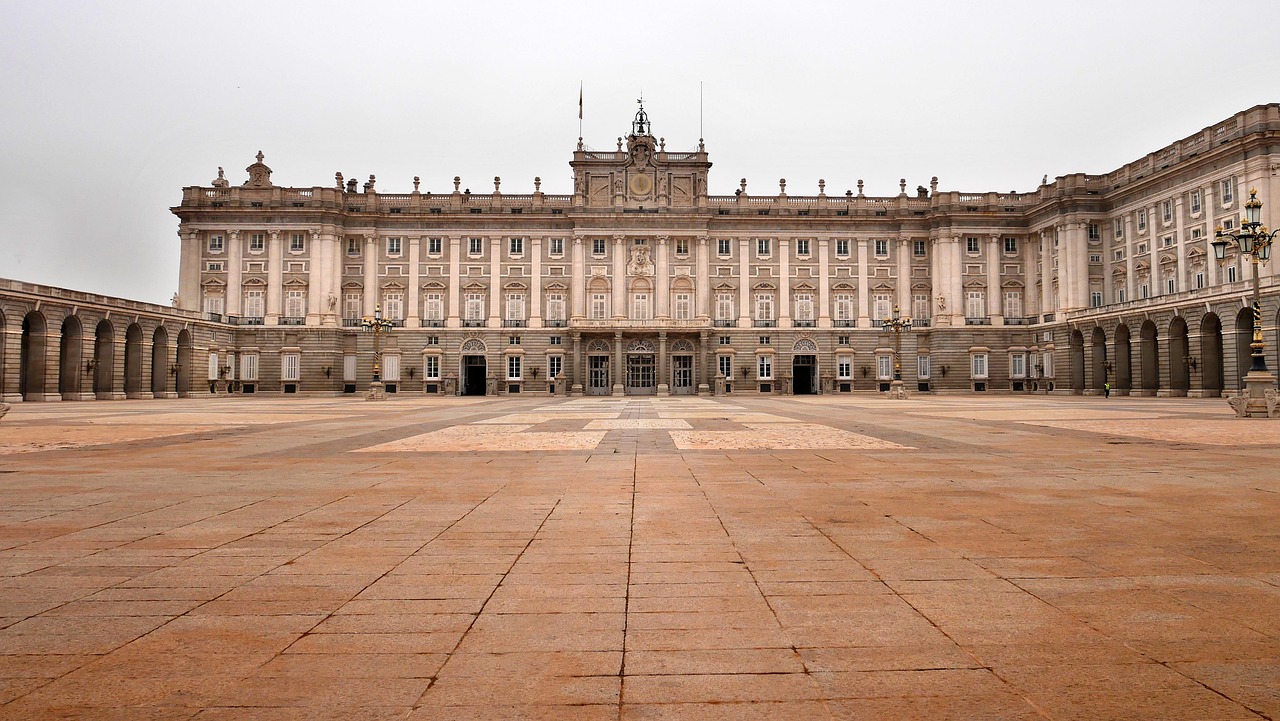
This was also Spain cultural golden age, the Siglo de Oro, which produced the novelist Miguel de Cervantes, whose Don Quixote is often called the first modern novel, the playwrights Lope de Vega and Calderon, and painters such as El Greco and Velazquez. Yet the empire was built on conquest and on the catastrophic suffering of indigenous peoples, who died in enormous numbers from violence, forced labor, and the diseases the Europeans carried, and on the brutal transatlantic enslavement of Africans. The wealth of empire also masked deep weaknesses, and over the seventeenth and eighteenth centuries Spain gradually lost ground to rising rivals, its power slowly draining away even as its language and faith took permanent root across half the world.
Language, Catalonia, and the Many Tongues of Spain
The Spanish language, Castilian, is the great export of the Spanish people and one of the world dominant languages, yet within Spain it shares the peninsula with several others. Catalan, spoken in Catalonia, Valencia in a regional form, and the Balearic Islands, is a full Romance language with a rich literature of its own. Galician, in the northwest, is closely related to Portuguese. And Basque, spoken in the Basque Country and Navarre, is the great enigma of European linguistics, a language unrelated to any other on earth and almost certainly descended from a tongue spoken in the region before the Indo-European languages ever arrived.
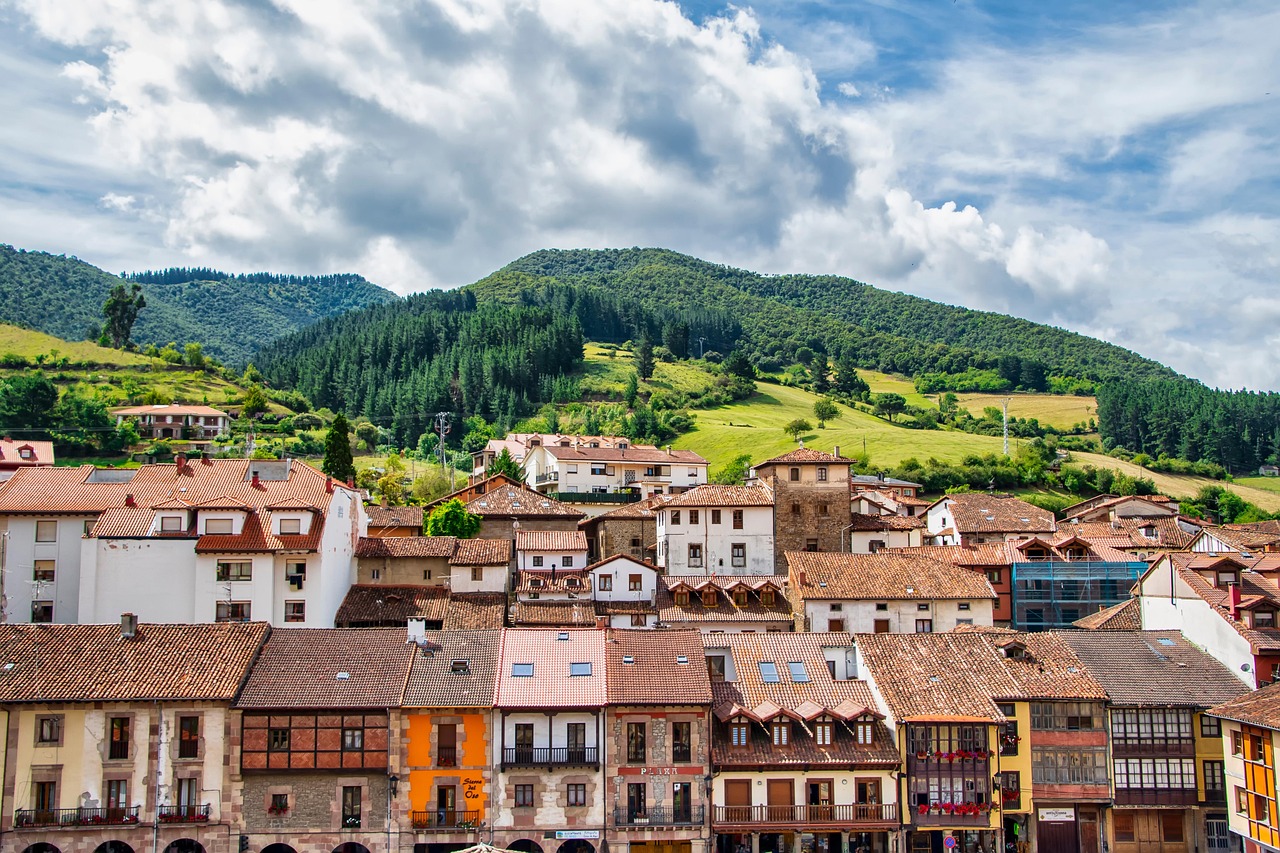
These languages are not mere curiosities but the heart of living national movements. In Catalonia and the Basque Country, language is bound up with strong demands for autonomy and, among many, for outright independence, and the tension between these regional nationalisms and the Spanish state has been one of the defining political issues of modern Spain. The country answer, embodied in its post-dictatorship constitution, has been a system of broad regional self-government, but the balance between Spanish unity and regional identity remains delicate, and the Catalan independence movement in particular has repeatedly brought the question to a crisis.
Faith, Flamenco, and the Spanish Soul
Catholicism shaped Spanish identity for centuries with extraordinary intensity, expressed in the soaring cathedrals, the dramatic Holy Week processions of Andalusia, and a tradition of mysticism that produced saints such as Teresa of Avila and John of the Cross. Even as modern Spain has secularized rapidly, becoming one of the more socially liberal countries in Europe, the rhythms of the Catholic calendar still organize festivals and community life across the country.
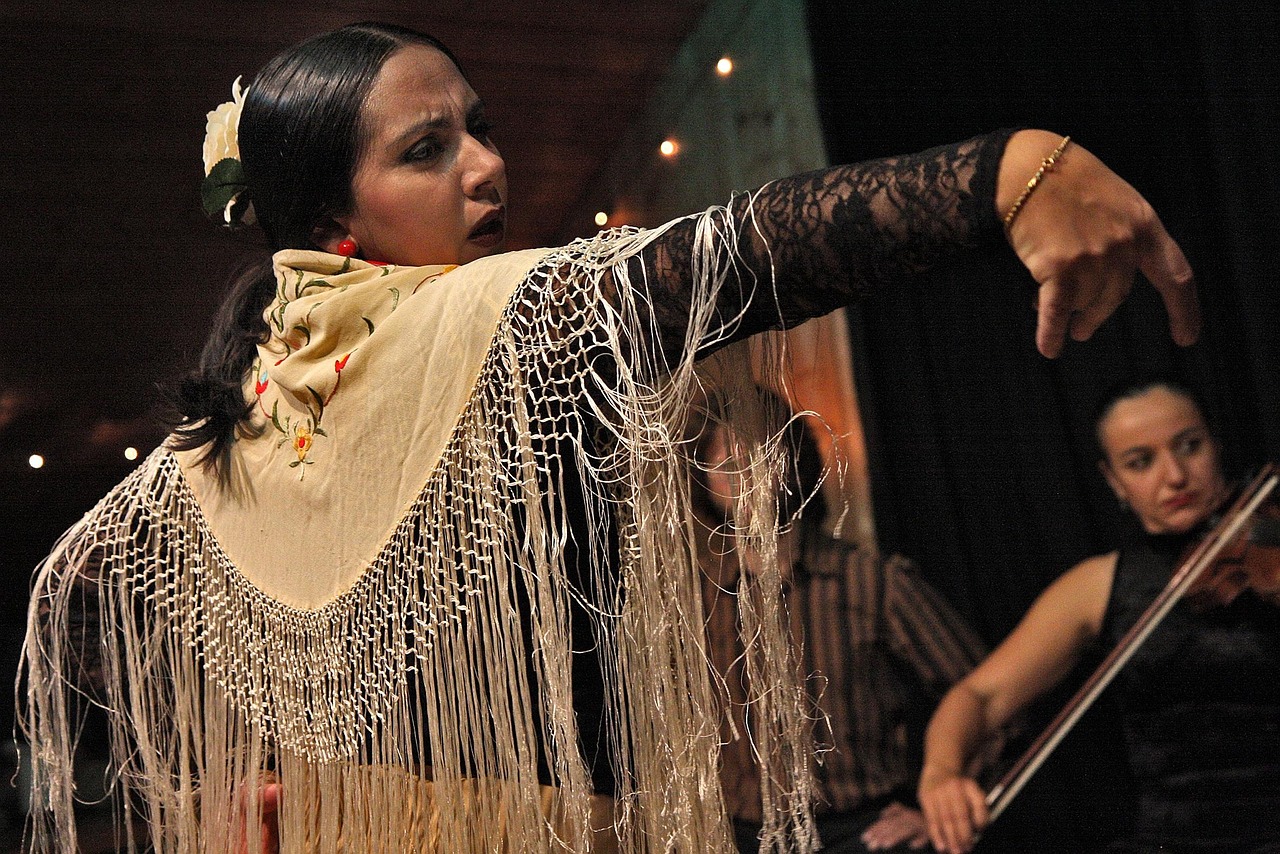
Alongside faith stands a vivid popular culture in which flamenco holds a special place. Born among the Roma and the poor of Andalusia out of a fusion of influences, flamenco, with its anguished song, driving guitar, and passionate dance, has become an emblem of Spain to the world, though it remains rooted in the south. Spanish culture is also famous for the social warmth of its public life, the late dinners and lively conversation, the institution of the evening stroll, and a calendar full of festivals, from the running of the bulls in Pamplona to the tomato-throwing of La Tomatina. The bullfight, once central to the national image, has become deeply contested within Spain itself, defended by some as art and tradition and rejected by many others as cruelty, a sign of how Spanish culture continues to argue over its own inheritance.
Civil War and the Return of Democracy
The twentieth century brought Spain one of its darkest trials. In 1936 the country collapsed into a brutal civil war between the elected Republic and a nationalist rebellion led by General Francisco Franco, a conflict that drew in foreign powers, inspired writers and idealists from around the world, and killed hundreds of thousands. Franco victory in 1939 ushered in a long dictatorship that lasted until his death in 1975, decades marked by repression, the suppression of regional languages and identities, and Spain isolation from much of Europe. The wounds of the war and the dictatorship, including the question of how to remember its victims, remain sensitive in Spain to this day.
What followed, however, was one of the most admired political transformations of the modern era. After Franco death, Spain made a remarkably peaceful transition to democracy, restoring a constitutional monarchy under King Juan Carlos, adopting a democratic constitution in 1978, and joining what would become the European Union. Within a single generation the country moved from dictatorship to a vibrant, open democracy, and the success of that transition became a model studied around the world, even as Spaniards continued to debate how fully the legacy of the Franco years had truly been confronted.
A People Who Remade the New World
No account of the Spanish can ignore the immense and double-edged consequence of their expansion into the Americas. The Spanish did not merely conquer territory; they planted their language, religion, legal traditions, and social institutions so deeply that the modern identities of nearly twenty nations from Mexico to Argentina are inconceivable without them. Spanish became the mother tongue of hundreds of millions, the Catholic faith took permanent root, and a vast process of cultural and biological mixing between Europeans, indigenous Americans, and enslaved Africans created the mestizo societies that define much of Latin America today.
This legacy must be told with honesty about its origins. The Spanish empire in the Americas was built on conquest, forced conversion, the encomienda system that bound indigenous people to brutal labor, and the catastrophic population collapse caused by introduced diseases and violence, alongside the enslavement of Africans transported across the Atlantic. At the same time, the encounter produced figures such as the friar Bartolome de las Casas, who became a fierce advocate for indigenous rights and an early voice against the cruelties of colonization, reminding us that protest against empire arose within Spanish society itself. The Latin American world that resulted is neither simply Spanish nor simply indigenous, but a new civilization born of that violent meeting, and the cultural bond between Spain and the Spanish-speaking Americas remains one of the largest shared linguistic and cultural communities on earth.
Artists, Writers, and the Spanish Imagination
The contribution of the Spanish to world art is staggering. In painting, the line runs from El Greco and the supreme realism of Velazquez through the dark, unflinching vision of Goya, who chronicled the horrors of war as few artists ever have, to the twentieth-century revolutionaries Pablo Picasso, whose Guernica became the most famous antiwar painting of the modern age, the surrealist Salvador Dali, and Joan Miro. In architecture, the visionary Antoni Gaudi gave Barcelona a skyline unlike any other, his still-unfinished Sagrada Familia drawing millions of visitors.
In literature, Cervantes and the dramatists of the golden age were followed in the modern era by poets such as Federico Garcia Lorca, murdered in the Civil War and mourned ever since, and by a Spanish-language literary tradition that, together with Latin America, produced some of the most influential writing of the twentieth century. Spanish cinema gave the world the bold imagination of Luis Bunuel and later Pedro Almodovar, and Spanish music, from classical guitar to flamenco to contemporary pop, carries the culture across borders. It is a body of creative achievement that, like Spanish history itself, mixes beauty and darkness, passion and tragedy, into something unmistakably its own.
Spain and the Spanish Today
Modern Spain is a prosperous European democracy, a major destination for travelers drawn by its art, food, climate, and cities, and a country that has reinvented itself dramatically since the 1970s. Its cuisine, from the tapas culture of small shared plates to the rice dishes of Valencia and the innovative chefs who made Spain a world capital of gastronomy, has won admirers everywhere. Spanish design, film, sport, and fashion carry the country culture far beyond its borders, and the global community of Spanish speakers gives the nation an outsized cultural reach.
Spain faces real challenges, among them high unemployment in difficult years, an aging population, the unresolved tensions of regional nationalism, and the social strains that come with immigration and rapid change. Yet through all of it the Spanish remain a people defined by a singular history, heirs to Romans and Visigoths, to the Muslims and Jews of al-Andalus, and to a Catholic empire that spanned the globe, who carry that layered inheritance into the modern world. Few peoples have given so much to so many other lands, in language and faith and culture, and few have a history so rich in both glory and tragedy, held together by a fierce attachment to place and a gift for living life in public, in the open air, among others.
You May Like

Three Thousand Years Unbroken, the Story of the Greeks


