Few peoples have shaped the mind of the Western world as profoundly as the Greeks. Democracy, philosophy, drama, history, the very idea of rational inquiry into nature, the foundations of mathematics and medicine, the epic and the Olympic games, all of these were born or transformed among the Greeks of antiquity, and their influence runs so deep that the modern world still thinks in concepts they invented. Yet the Greeks are not merely a glorious memory. They are a living people who have endured conquest by Romans, Byzantines reborn as Greeks, centuries under Ottoman rule, and a hard modern struggle for independence and survival, carrying their ancient name and language across three thousand years of continuous history.
Who the Greeks Are
The Greeks are the people of Greece and Cyprus and of an ancient, far-flung diaspora, numbering perhaps eleven million in Greece itself and millions more around the world, with major communities in the United States, Australia, and across Europe. They speak Greek, a language with a documented history of more than three thousand years, making it one of the oldest recorded living languages on earth, and they are overwhelmingly Greek Orthodox in faith, a tradition that has been central to their identity since late antiquity. To be Greek is to feel oneself an heir to an extraordinarily long and continuous cultural story.
In This Article
- Who the Greeks Are
- The World of Ancient Greece
- Conquest, Hellenism, and Rome
- Byzantium and the Orthodox Faith
- Under the Ottomans
- The War of Independence and the Modern Nation
- Language, Faith, and the Greek Way of Life
- A Seafaring People and a Global Diaspora
- The Inventors of Inquiry
- The Greeks Today

Geography has shaped the Greeks as profoundly as history. Greece is a land of mountains and islands, its rugged terrain dividing the people for most of their history into fiercely independent communities, and its endless coastline and scattered islands turning them into a nation of seafarers, traders, and emigrants. The sea is everywhere in Greek life and imagination, and the Greek relationship to the bright Mediterranean light, the rocky hills, and the blue water has remained constant from Homer to the present day.
The World of Ancient Greece
The achievements of ancient Greece form one of the foundations of human civilization. From the Bronze Age Minoan and Mycenaean cultures, through the Greek dark ages and the rise of the city-states, the Greeks developed by the classical period a constellation of independent poleis, above all Athens and Sparta, whose rivalry, creativity, and conflict drove an unparalleled flowering of culture. It was in democratic Athens in the fifth century before the common era that citizens governed themselves directly, inventing a form of politics whose name and ideals still echo through the modern world.
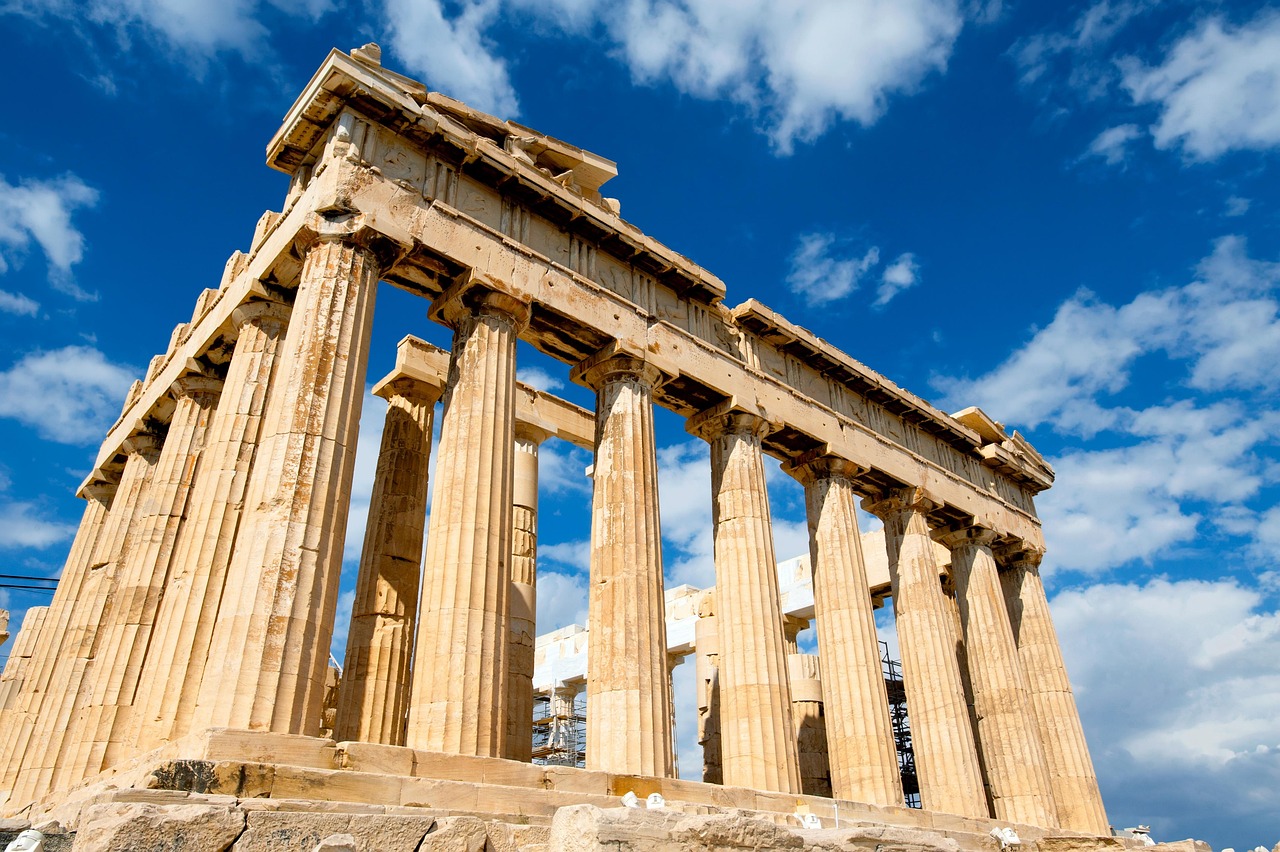
The roll of Greek achievement is staggering. In philosophy, Socrates, Plato, and Aristotle posed the questions and built the frameworks that still structure Western thought. In drama, the tragedies of Aeschylus, Sophocles, and Euripides and the comedies of Aristophanes created the theater. Herodotus and Thucydides invented the writing of history; Hippocrates founded a rational tradition of medicine; mathematicians such as Pythagoras, Euclid, and Archimedes laid the foundations of geometry and physics. Greek sculpture and architecture set ideals of harmony and proportion that the West has returned to again and again, and the epics attributed to Homer stand at the head of the entire European literary tradition.
Conquest, Hellenism, and Rome
The independent city-states eventually fell under the sway of Macedon to the north, and it was a Macedonian king, Alexander the Great, who in the fourth century before the common era carried Greek arms and culture across the Persian Empire all the way to the borders of India in one of the most astonishing campaigns in history. Though Alexander empire fragmented after his early death, it spread Greek language and culture across the eastern Mediterranean and the Near East in the long era known as the Hellenistic age, making Greek the common tongue of learning and trade across a vast region.
When Rome conquered the Greek world, the Greeks in a sense conquered their conquerors culturally, for the Romans absorbed Greek philosophy, art, religion, and literature wholesale, and educated Romans spoke Greek as the language of culture. The famous observation that captive Greece took captive her fierce conqueror captures this deep truth. Through Rome, and especially through the Greek-speaking eastern half of the empire, the Greek inheritance would be carried forward into the medieval world and ultimately handed on to the European Renaissance.
Byzantium and the Orthodox Faith
When the western Roman Empire fell, the eastern half lived on for another thousand years as what we now call the Byzantine Empire, centered on Constantinople, a state that was Roman in name, Greek in language and culture, and Orthodox Christian in faith. For the Greeks this Byzantine millennium is not a foreign chapter but a central part of their own story, the era in which they became a Christian people and in which the Greek Orthodox Church took the form it holds to this day.
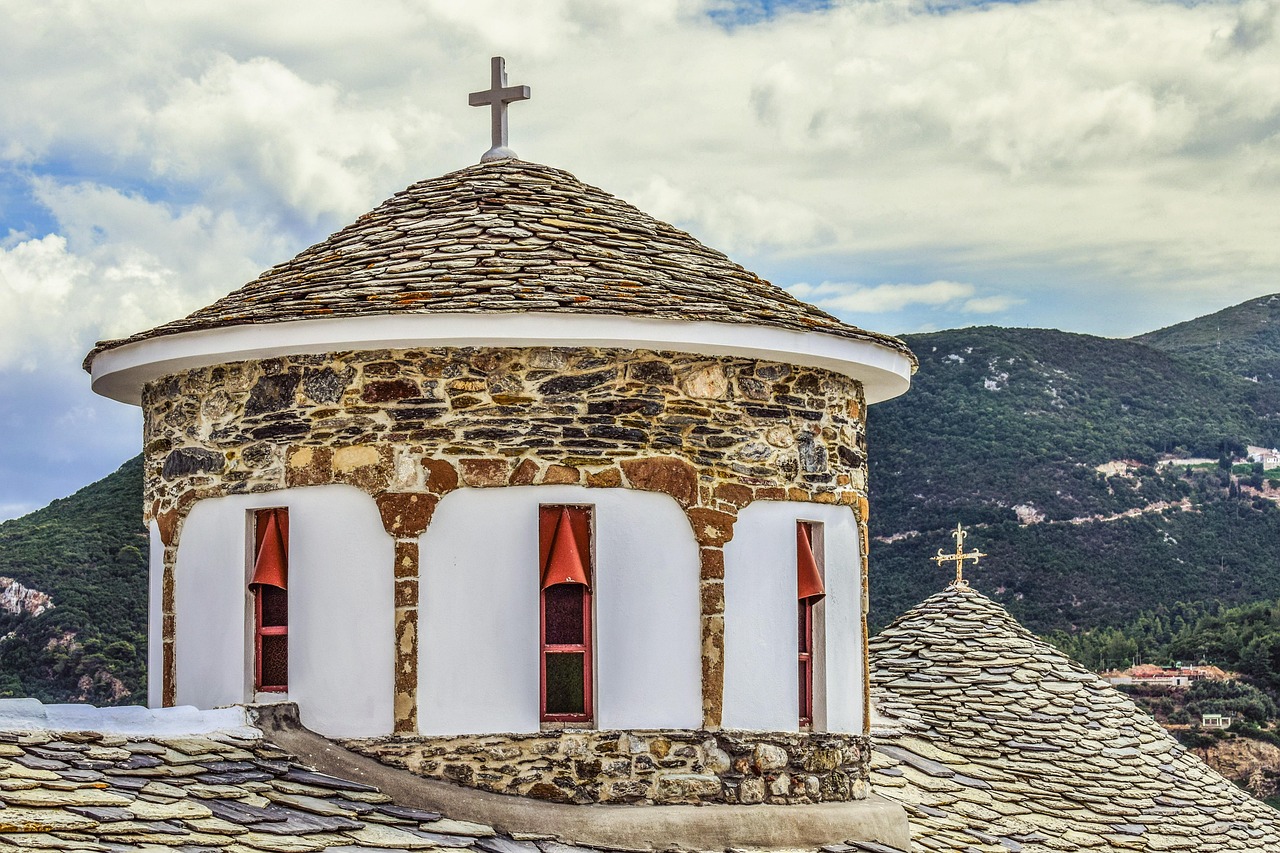
Byzantium was for centuries the richest and most cultured state in the Christian world, preserving the texts of ancient Greece, developing a magnificent tradition of art, architecture, and theology, and standing as the great bulwark of Christendom against successive invasions from the east. Its capital, Constantinople, with the great church of Hagia Sophia, was the wonder of the medieval world. The Orthodox faith forged in this era, with its icons, its liturgy, and its profound spirituality, became inseparable from Greek identity, and it would be the faith, above all, that held the Greeks together through the long centuries of foreign rule that lay ahead.
Under the Ottomans
In 1453 Constantinople fell to the Ottoman Turks, ending the Byzantine Empire and beginning nearly four centuries during which most Greeks lived as subjects of the Ottoman state. This long period, which the Greeks remember as the Tourkokratia, was an age of subjection but also of survival. The Orthodox Church was permitted to administer the affairs of the Christian population and became the great guardian of Greek language, faith, and identity, keeping the nation alive when it had no state of its own.
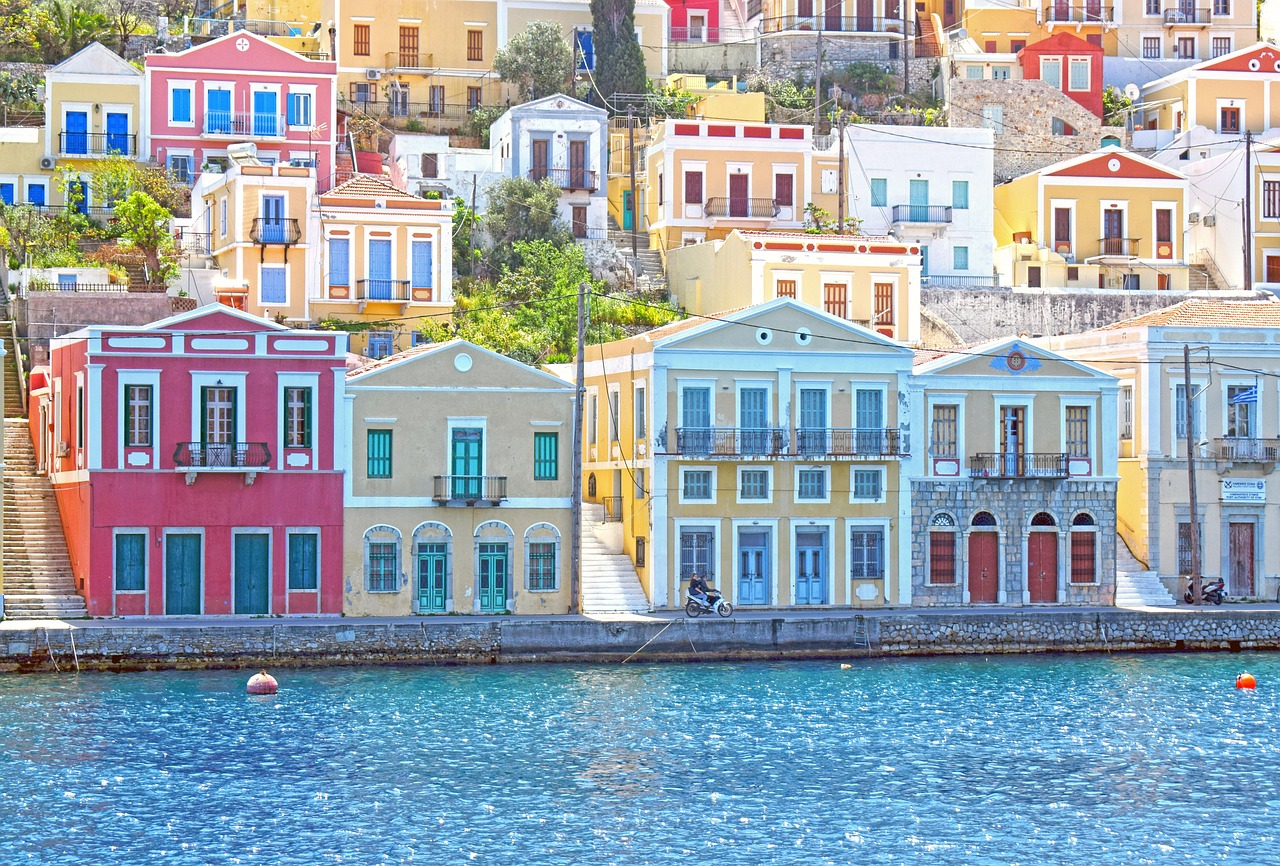
Greek merchants and sailors prospered across the Ottoman world and the wider Mediterranean, and Greek communities spread through the trading cities of Europe, where they absorbed the ideas of the Enlightenment and began to dream of national rebirth. The memory of ancient glory and Byzantine grandeur, kept alive in the Church and in folk tradition, combined with these new currents to kindle a longing for freedom. By the early nineteenth century, the Greeks were ready to rise against their rulers and reclaim a place among the nations.
The War of Independence and the Modern Nation
The Greek War of Independence, which broke out in 1821, was a long and brutal struggle that captured the imagination of Europe. The cause of the Greeks, seen as the heirs of the ancient civilization the educated classes of Europe revered, drew passionate sympathy and the support of philhellenes from many countries, among them the English poet Lord Byron, who died in Greece supporting the revolution. With eventual intervention by the great powers, the Greeks won their independence, and a Greek state, small and impoverished at first, was established in the 1830s.
The new nation faced enormous challenges, building a state from scratch, defining its borders, and reconciling its glorious ancient image with its hard modern reality. Over the following century Greece gradually expanded to include more of the lands where Greeks lived, but the era of expansion ended in catastrophe in the early 1920s with a disastrous war against Turkey and the great population exchange that uprooted well over a million Greeks from their ancient homes in Anatolia, a trauma known as the Asia Minor Catastrophe that reshaped the modern nation and remains a deep wound in Greek memory.
Language, Faith, and the Greek Way of Life
The Greek language is the great thread of continuity in Greek history, spoken and written without interruption for over three millennia and connecting the modern Greek directly to Homer, Plato, and the Gospels, which were written in Greek. This extraordinary linguistic continuity is a profound source of national pride and identity. Alongside the language stands the Orthodox faith, whose calendar of feasts, fasts, and saints days, whose Easter celebrations above all, structure the rhythm of the year and bind families and communities together.
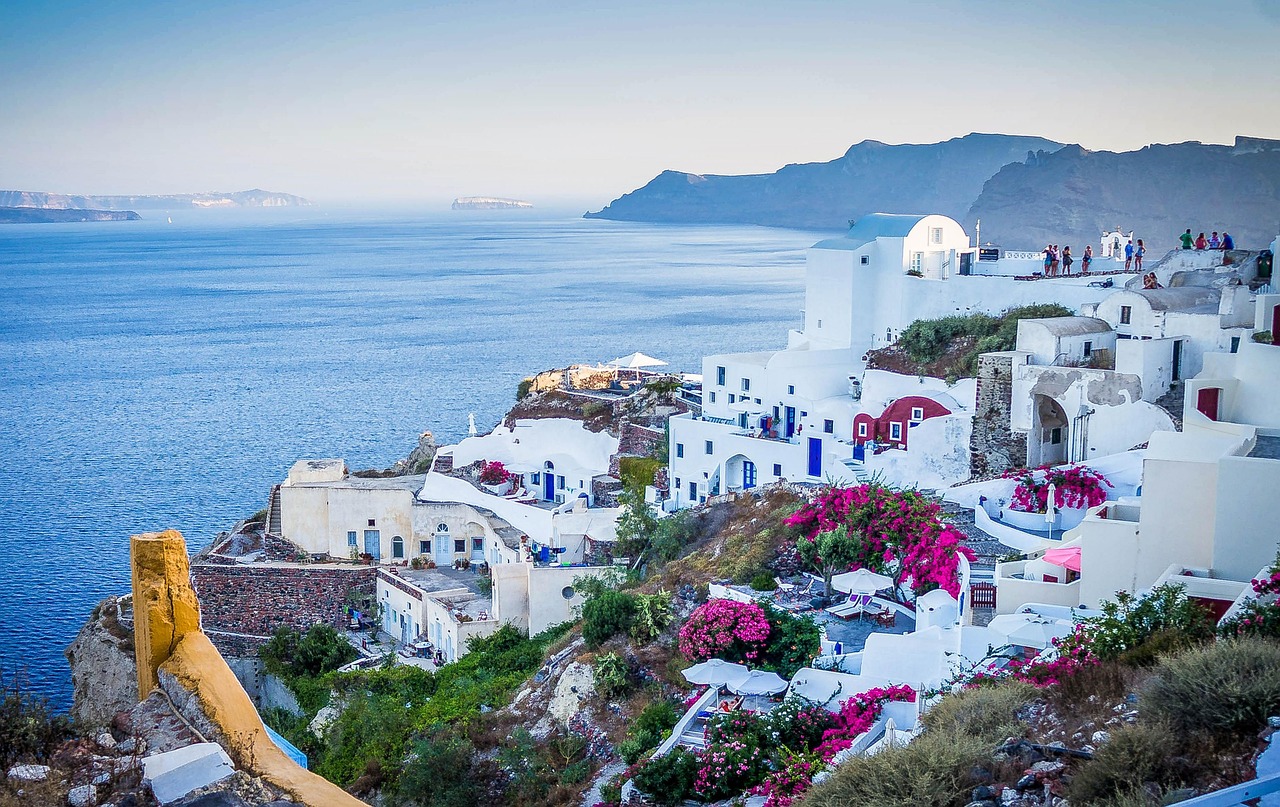
Greek daily life is famous for its warmth, sociability, and intensity of feeling. The concepts of philotimo, a deep sense of honor and duty toward others, and philoxenia, the love of hospitality toward strangers, are cherished as defining Greek virtues. Life is lived outdoors and in company, in the cafe, the taverna, and the village square, over long meals of simple, superb food, olive oil, fish, vegetables, lamb, cheese, and wine, that form part of the celebrated Mediterranean diet. Music and dance, the bouzouki and the circle dances of village festivals, remain woven into communal life, and the Greek capacity for joy, argument, and passionate engagement with life is legendary.
A Seafaring People and a Global Diaspora
The sea has carried the Greeks across the world for as long as they have existed. In antiquity Greek colonists planted cities around the entire Mediterranean and Black Sea, from the coast of Spain to the shores of what is now Ukraine, so that the ancient philosopher could speak of the Greeks as living around the sea like frogs around a pond. This seafaring genius never faded, and modern Greece, despite its small size, became one of the greatest shipping nations on earth, its merchant fleet among the largest in the world and its shipowners a force in global trade.
Emigration, too, has scattered the Greeks far and wide, especially in the difficult decades of the late nineteenth and twentieth centuries, when poverty and upheaval drove hundreds of thousands to seek new lives abroad. The great Greek communities of cities such as New York, Melbourne, and many others have preserved the language, the Orthodox faith, and the traditions of the homeland while contributing enormously to their adopted countries. This worldwide Greek family, bound by Church, language, and a fierce attachment to their roots, keeps the culture vibrant far beyond the borders of Greece and renews the ancient pattern of a people at home upon the sea and across the world.
The Inventors of Inquiry
Perhaps the deepest legacy of the Greeks is not any single achievement but a way of thinking. It was the Greeks who first insisted that the world could be understood through reason and observation rather than only through myth, that nature followed laws the human mind could discover, and that claims should be tested by argument and evidence. This revolutionary idea, born among the philosophers of the Greek world, lies at the root of all later science and rational inquiry, and the West has returned to the Greeks again and again, in the Renaissance and the Enlightenment and beyond, to rediscover it.
The Greeks also gave the world enduring institutions and ideals that go far beyond the academic. The Olympic Games, revived in the modern era and now the greatest gathering of nations on earth, trace their origin to the ancient festivals held at Olympia. The forms of Western literature, the epic, the lyric, the tragedy, the comedy, the dialogue, were largely invented or shaped by the Greeks. Even the vocabulary of modern life is saturated with Greek, from democracy and philosophy to physics, biology, and technology. To use these words is to speak, without knowing it, in the language of a people whose ideas still structure how the world understands itself.
The Greeks Today
Modern Greece is a European democracy, a member of the European Union, and one of the great destinations of world tourism, drawing millions to its ancient sites, its islands, and its incomparable light. The country has lived through turbulent decades, including a military dictatorship in the later twentieth century, the return of democracy in 1974, and a severe debt crisis in the years after 2009 that brought painful austerity and tested the resilience of Greek society. Through it all the Greeks have shown the endurance that has carried them across millennia.
The Greeks today carry an inheritance unlike any other, heirs at once to the inventors of democracy and philosophy, to the Christian empire of Byzantium, and to the long survival under Ottoman rule, bound together by a language and a faith of extraordinary antiquity. Their ancient ancestors gave the world ideas and institutions, the rational pursuit of truth, the dramatic stage, the democratic assembly, the Olympic ideal, that remain foundations of civilization, while the living Greeks carry that legacy forward with the warmth, pride, and passionate vitality that have always marked them. To stand among the ruins of Athens or Delphi and hear modern Greek spoken in the streets is to feel the unbroken thread of one of humanity longest and greatest stories.


2 thoughts on “Three Thousand Years Unbroken, the Story of the Greeks”