Cradled among volcanoes on the shores of one of the most beautiful lakes on earth lives a small Maya nation whose culture is unlike any other. The Tz’utujil are a people of Lake Atitlán, dwellers on its southern and western shores, and where most highland Maya are people of the mountains, the Tz’utujil are people of the water. Their fishing, their farming, their trade, and their imagination have all been shaped by the deep blue expanse at the center of their world.
Closely related to the K’iche’ and Kaqchikel yet distinctly themselves, the Tz’utujil built a wealthy kingdom above the lake and developed a religious life so singular that it has drawn the fascination of the wider world. This is an account of who they are: their lakeshore homeland, their language and history, their famous brotherhoods and festivals, their renowned weaving and painting, and the way they sustain a small and singular culture in a homeland now filled with visitors.
Contents
- A Nation Born on the Lakeshore
- The Name and the People of the Lake
- A Close Cousin Among the Highland Tongues
- Life Around the Deepest Lake
- The Kingdom Above the Water
- Towns, Bonds, and the Round of Duty
- Saints, Ancestors, and a Singular Figure
- Woven Color and Lakeside Custom
- Looms, Brushes, and Lakeshore Skill
- Fish, Maize, and the Bounty of the Shore
- Processions, Brotherhoods, and Holy Week
- Conquest, Colony, and Recent Sorrows
- The Tz’utujil in a World of Visitors
A Nation Born on the Lakeshore
The Tz’utujil are a Maya people whose entire world has been shaped by a single extraordinary body of water: Lake Atitlán, a deep blue expanse ringed by volcanoes in the Guatemalan highlands. Along the lake’s southern and western shores, in the shadow of towering peaks, the Tz’utujil built their towns and their identity, becoming a people of the water in a region where most Maya are people of the mountains. Their history cannot be separated from the lake that defines their homeland.
Their name is generally understood to carry a meaning connected to flowers or to a place associated with them, and the Tz’utujil emerged as a distinct nation during the same turbulent centuries that produced their K’iche’ and Kaqchikel neighbors. Sharing the shores and the surrounding highlands with these larger and more powerful peoples, the Tz’utujil carved out and defended their own territory, a compact but fiercely held domain centered on the lake.
Though smaller than some of their neighbors, the Tz’utujil developed a rich and distinctive culture rooted in the lake and its resources. They fished its waters, farmed its fertile shores, and traded across it by canoe, creating a way of life unlike that of the purely mountain-dwelling Maya. This lakeside character, combining farming, fishing, and trade, set the Tz’utujil apart and gave their communities a particular flavor that persists to this day.
The Name and the People of the Lake
The name Tz’utujil has been spelled in many ways over the centuries, including “Tzutuhil” and “Zutuhil” in older sources, before the modern orthography developed with Maya linguists settled on the form used today. As with other Maya peoples, the spelling reform reflects an effort to represent the language accurately, capturing sounds that colonial writing systems could not, and to reclaim the name from the distortions of the past.
The word is often linked to flowers, and various traditions connect it to the idea of a place of many blossoms or to the notion of the people themselves as a flowering nation. Whatever its precise origin, the name marks a specific and self-aware identity, distinct from the neighboring K’iche’ and Kaqchikel with whom the Tz’utujil share so much and yet remain separate.
To be Tz’utujil is above all to belong to the lakeshore communities and to speak the Tz’utujil language, which remains the clearest badge of membership. Concentrated in a handful of towns clustered around the southern and western edges of Lake Atitlán, the Tz’utujil form a compact nation whose identity is bound up with particular places on the water’s edge, each with its own patron saint, its own dress, and its own local character.
A Close Cousin Among the Highland Tongues
The Tz’utujil language belongs to the K’ichean branch of the Maya family, making it a close relative of both K’iche’ and Kaqchikel, the languages of the peoples who share the highlands and the shores of Lake Atitlán. The three are so closely related that they share much vocabulary and structure, yet each remains a distinct language, and their speakers form separate nations. Tz’utujil and Kaqchikel are especially close, a reflection of the long, intertwined history of the peoples around the lake.
Spoken by roughly a hundred thousand people or so, Tz’utujil is one of the smaller of the major Maya languages, concentrated in the compact cluster of lakeshore towns that make up the Tz’utujil homeland. Despite its relatively modest number of speakers, the language remains vigorous in these communities, where it is still learned by children and used in the daily life of the home, the market, and the ceremony.
The concentration of Tz’utujil speakers in a small, well-defined area has helped the language endure, even as Spanish presses in through schooling, tourism, and migration. Efforts to teach Tz’utujil, to standardize its writing, and to produce materials in it form part of the broader movement to sustain Guatemala’s Maya languages. For a people so tied to a particular stretch of lakeshore, the language remains a vital thread binding the community to its place and its past.
Life Around the Deepest Lake
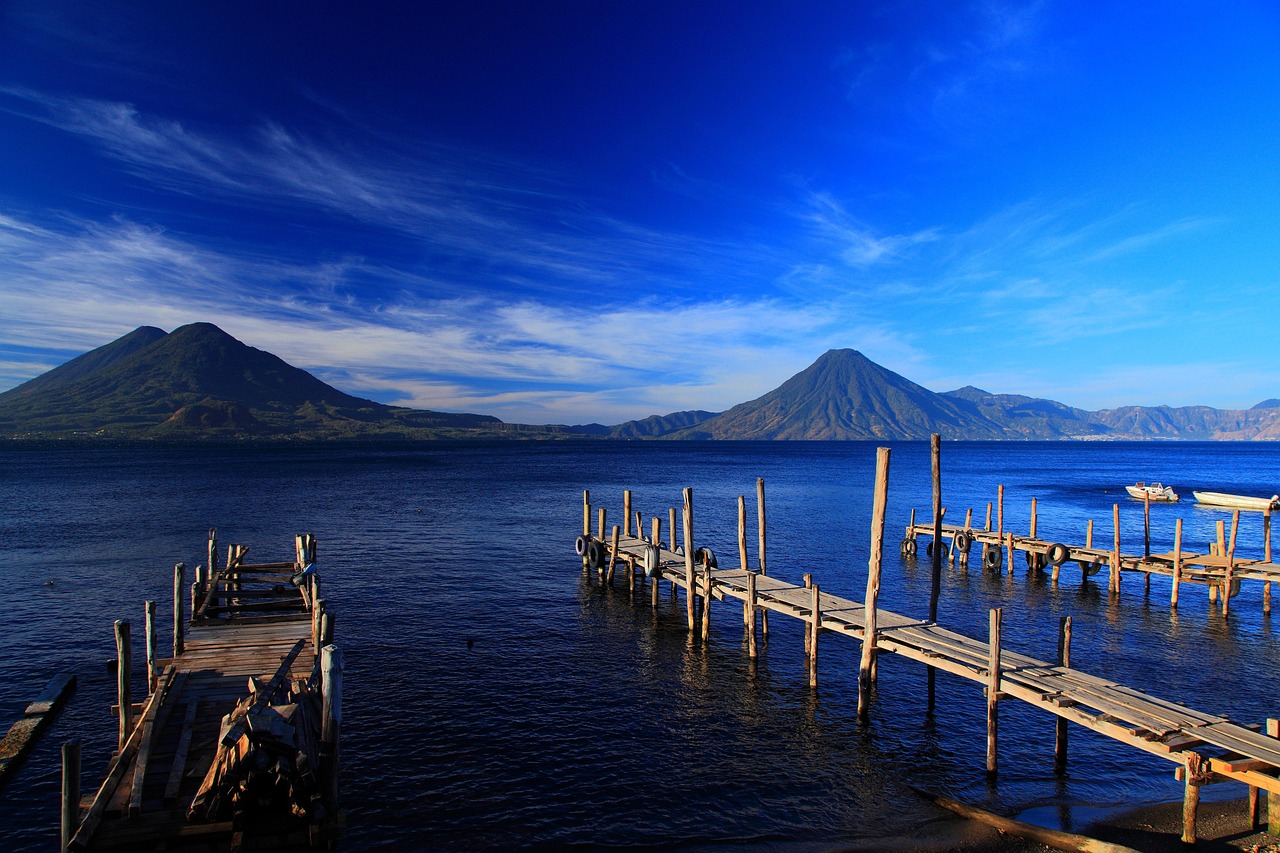
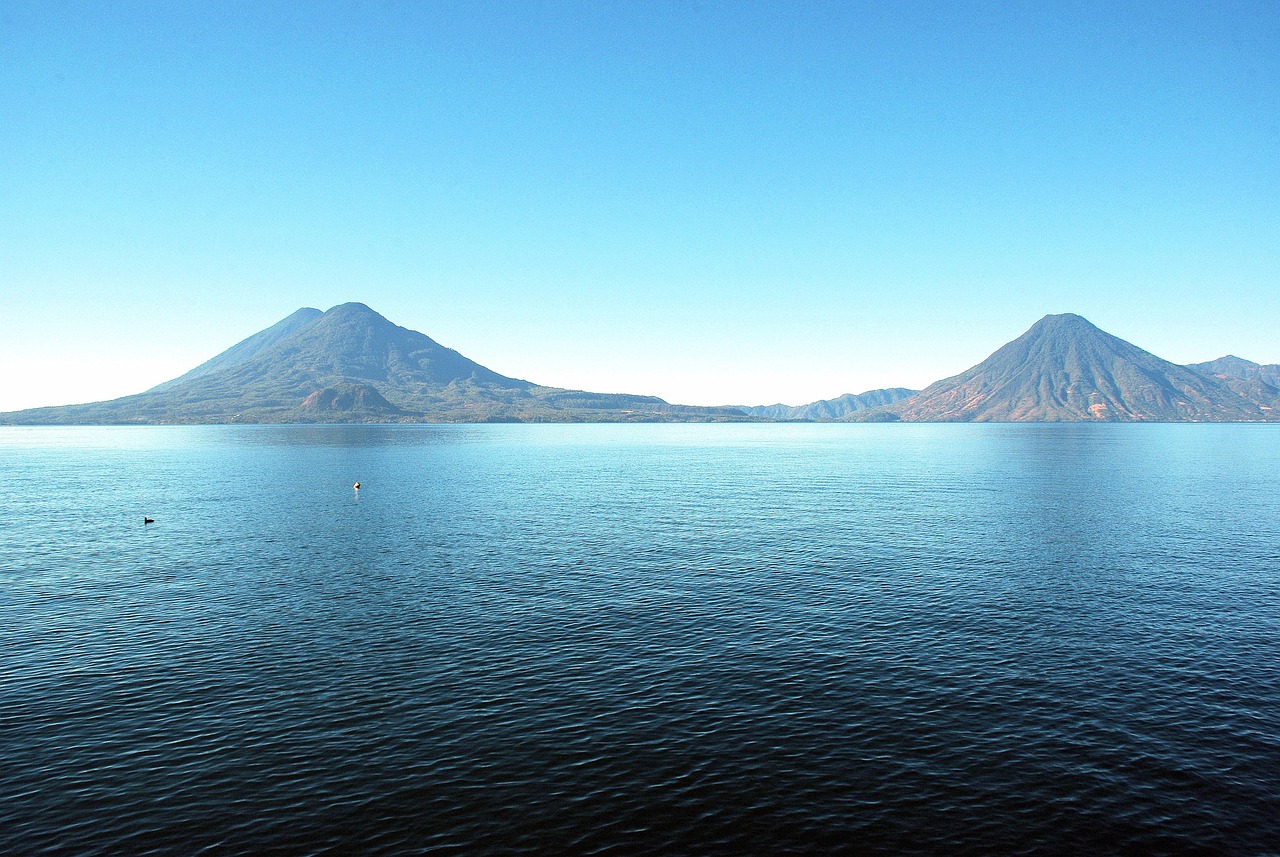
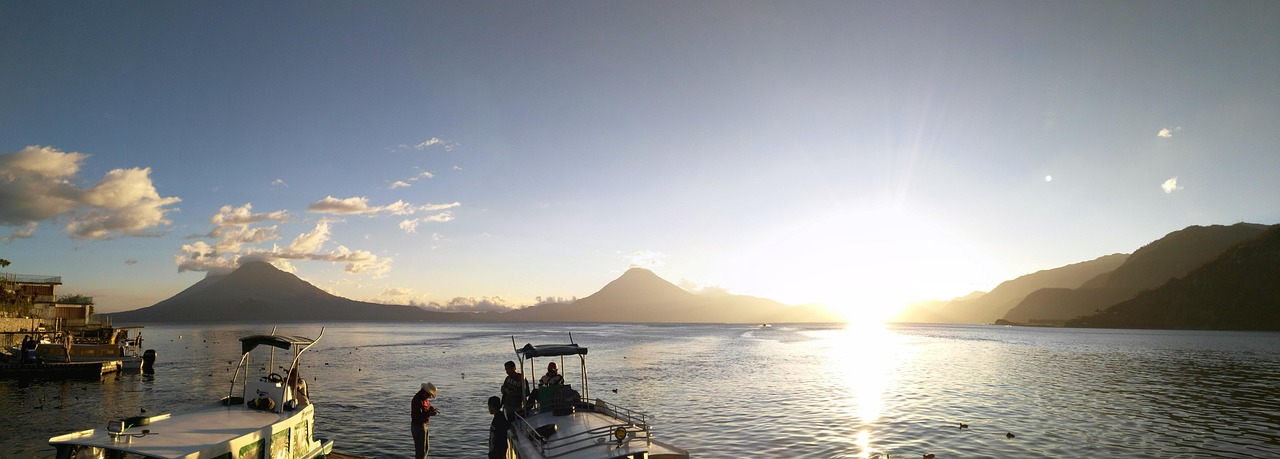
The Tz’utujil homeland is one of the most striking landscapes in all of the Americas: the shores of Lake Atitlán, a vast crater lake of great depth, cradled among volcanoes that rise steeply from the water’s edge. The Tz’utujil towns occupy the southern and western shores, tucked between the lake and the volcanic slopes, in a setting of extraordinary beauty that has drawn admiration from travelers for centuries. The lake is the center of their world in every sense.
The volcanoes that loom over the lake are sacred presences in Tz’utujil thought, and the lake itself holds deep meaning as a source of life, food, and spiritual power. Offerings and reverence attach to these features of the landscape, which are understood not as mere scenery but as living forces that must be respected. The interplay of water, mountain, and sky gives the Tz’utujil homeland a sense of the sacred that pervades daily life.
The lake shapes the economy and the rhythm of the day. Its waters have long provided fish and crabs, its fertile shores support gardens and orchards, and canoes and boats link the scattered towns and carry goods to market. This dependence on the water makes the Tz’utujil unusual among the highland Maya, a lakeside people whose livelihoods, movements, and imagination are bound to the deep blue expanse at the heart of their country.
Few homelands in the Maya world are so sharply defined by a single natural feature. Where other peoples spread across broad ranges of mountains and valleys, the Tz’utujil cluster tightly along the edge of the water, their towns strung like beads around one arc of the shore. This compactness has bred an intense attachment to place and a culture in which the lake is not merely where the Tz’utujil live but a central character in how they understand the world.

The Kingdom Above the Water
Before the Spanish conquest, the Tz’utujil governed a compact but wealthy kingdom from a fortified capital set on a height above the lake, a stronghold protected by its steep and defensible position. From here their rulers controlled the southern shore and its rich resources, including access to the fertile lowlands beyond the volcanoes where prized crops such as cacao were grown. This access to lowland wealth made the small kingdom a target for its larger neighbors.
Tz’utujil society, like that of the surrounding peoples, was led by noble lineages who claimed descent from founding ancestors and ruled over commoner farmers, fishers, and artisans. The kingdom’s control of trade routes and cacao-growing lands brought it wealth and influence out of proportion to its size, but it also drew the envy and hostility of the powerful K’iche’ and, especially, the Kaqchikel, with whom the Tz’utujil fought bitterly over the lake and its riches.
These conflicts among the lakeshore and highland nations were fierce in the generations before the Spanish arrived. The Tz’utujil, though smaller, held their own from their defensible capital, defending their independence against repeated pressure. Yet the same rivalries that divided the region would prove fatal when the invaders came, for the Tz’utujil, like their neighbors, would be drawn into the deadly game of alliance and betrayal that allowed a few outsiders to master them all.
Towns, Bonds, and the Round of Duty
Tz’utujil society is built on the lakeshore community, organized around extended families bound by kinship, marriage, and mutual obligation. In the closely packed towns along the water, networks of shared labor and reciprocal aid link households, so that neighbors help one another in farming, fishing, building, and the sponsorship of festivals. The compactness of the Tz’utujil homeland gives these communities a particularly dense and intimate social fabric.
Leadership traditionally combined civil and religious roles, with respected elders and those who had served through cycles of ceremonial and civic duty holding influence in collective decisions. The religious brotherhoods that care for the images of the saints, and for older sacred figures unique to the region, form a central institution of Tz’utujil life, and to serve in them is to gain honor and standing. This ladder of service orders social life and rewards contribution to the common good.
Each Tz’utujil town has its own strong sense of identity, expressed through dress, patron saint, and local custom, even within so small a nation. Santiago Atitlán, the largest of the Tz’utujil towns, is especially renowned for the vitality of its traditions and for the fame of its distinctive religious life. The attachment to particular places on the lakeshore, each with its own character, runs deep in the Tz’utujil sense of who they are.
This intensity of local feeling means that the Tz’utujil, though few in number and packed into a small territory, are far from uniform. A person from one lakeshore town can be distinguished from a neighbor a short boat ride away by dress, by turns of speech, and by the particular saints and customs of home. Within the compact Tz’utujil world, each community guards its own character with pride, and belonging is felt first of all as belonging to a specific town on the water.
Saints, Ancestors, and a Singular Figure
Tz’utujil religious life is among the most distinctive in the Maya world, famous above all for the veneration of a singular figure known by several names, a folk deity blending Maya, Catholic, and colonial elements into a being at once revered and mischievous. Housed and cared for by a religious brotherhood, this figure is offered tobacco, alcohol, and candles, and is paraded during the great festivals, embodying a fusion of traditions found nowhere else in quite the same form.
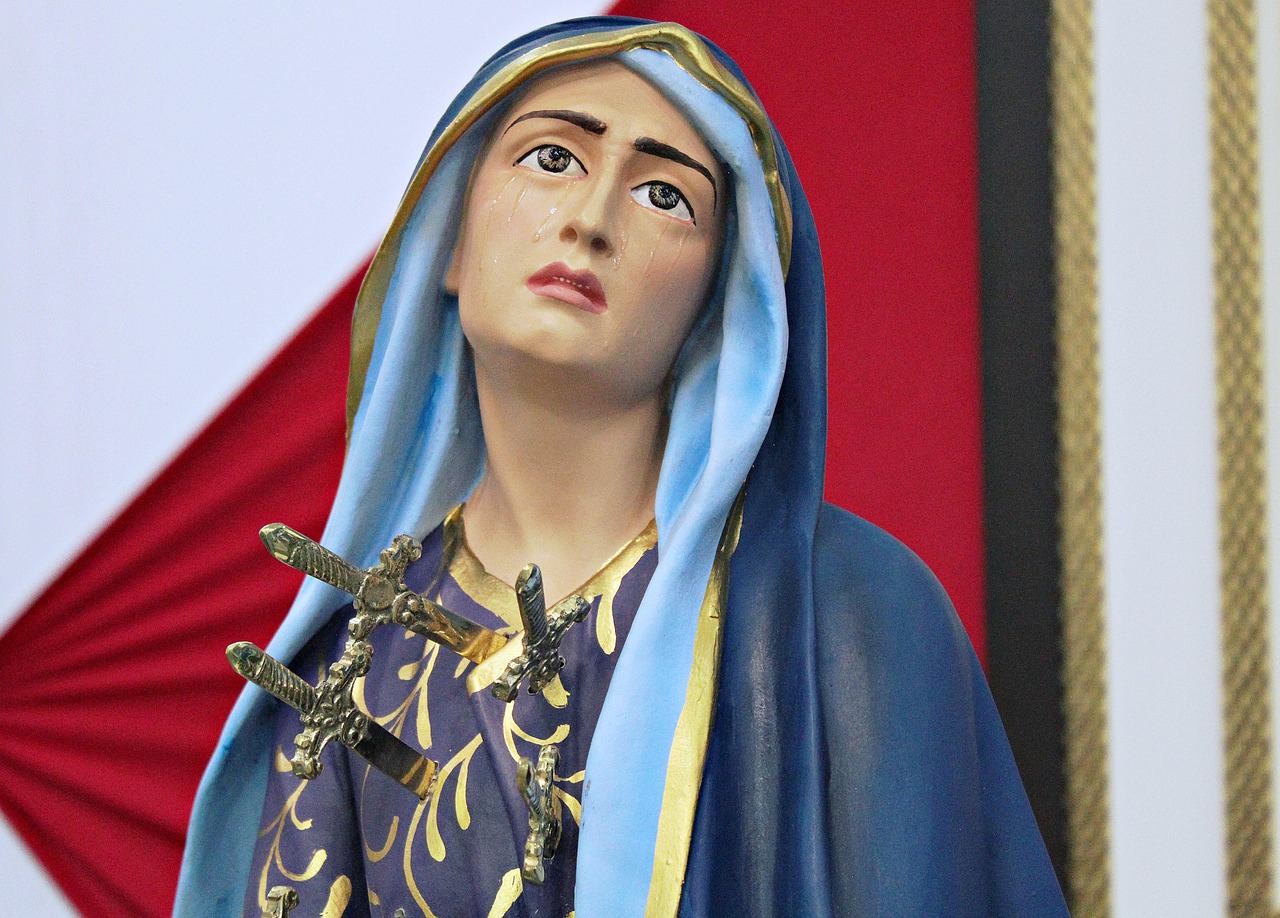
Alongside this famous figure, Tz’utujil religion weaves together the Catholicism introduced in the colonial period with older Maya beliefs that reach back to before the conquest. Reverence for the volcanoes, the lake, and the ancestors coexists with the worship of the saints, and the religious brotherhoods that care for sacred images play a central role in community life. Offerings, candles, incense, and prayer accompany the turning of the ceremonial year.
This layered spirituality has drawn the attention of scholars and visitors, but for the Tz’utujil it is simply the fabric of everyday devotion, a way of relating to the sacred forces that govern the lake, the land, and human fortune. In recent decades evangelical churches have grown here as elsewhere in Guatemala, adding new strands and sometimes new tensions to religious life. Yet the older traditions, centered on the brotherhoods and their sacred charges, endure with remarkable vitality.
Anthropologists have long been drawn to the religious life of the lakeshore towns precisely because it preserves, in living form, a fusion of Maya and Christian elements that elsewhere has faded or gone underground. The brotherhoods, their sacred charges, and the ceremonies that surround them offer a rare window onto how the Maya reconciled their ancient worldview with the faith imposed upon them, not by abandoning one for the other but by weaving the two into something new.
Woven Color and Lakeside Custom
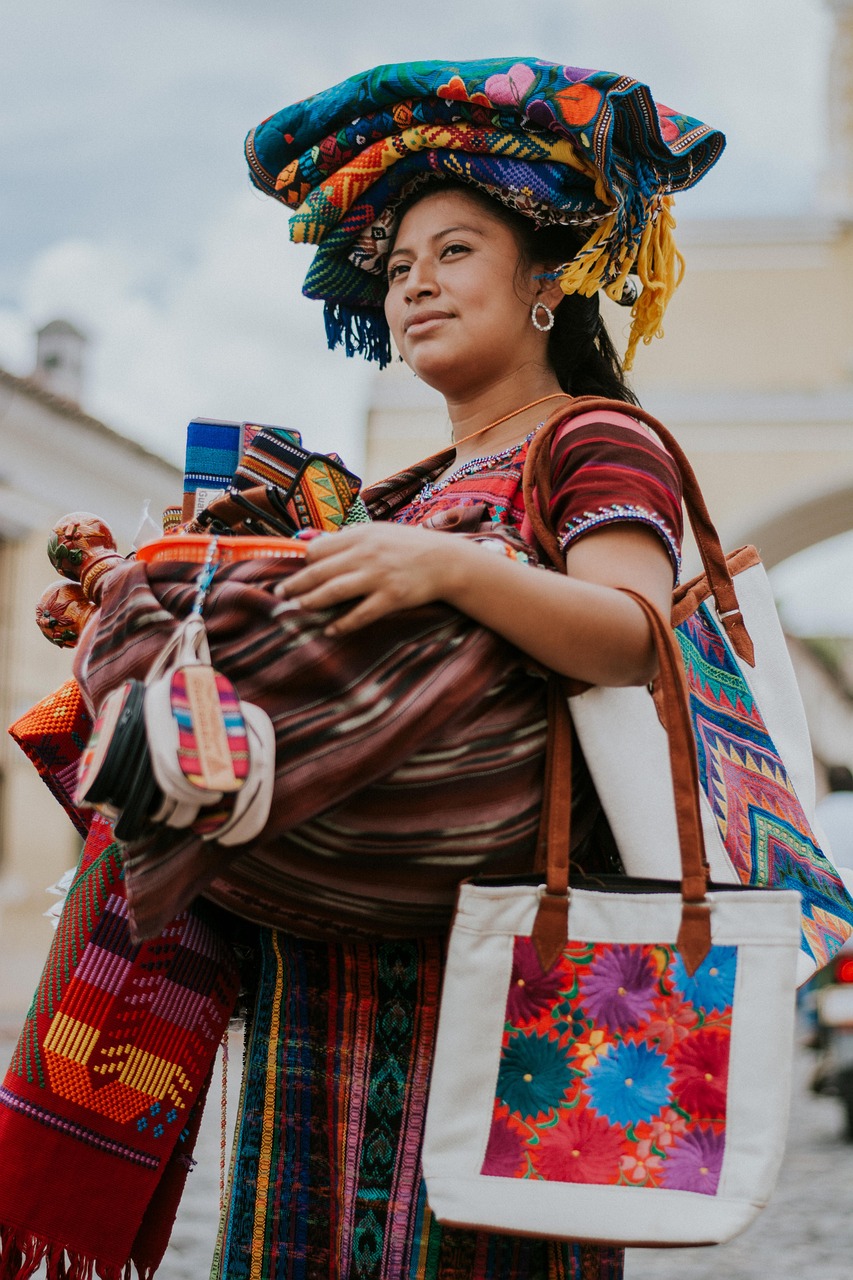
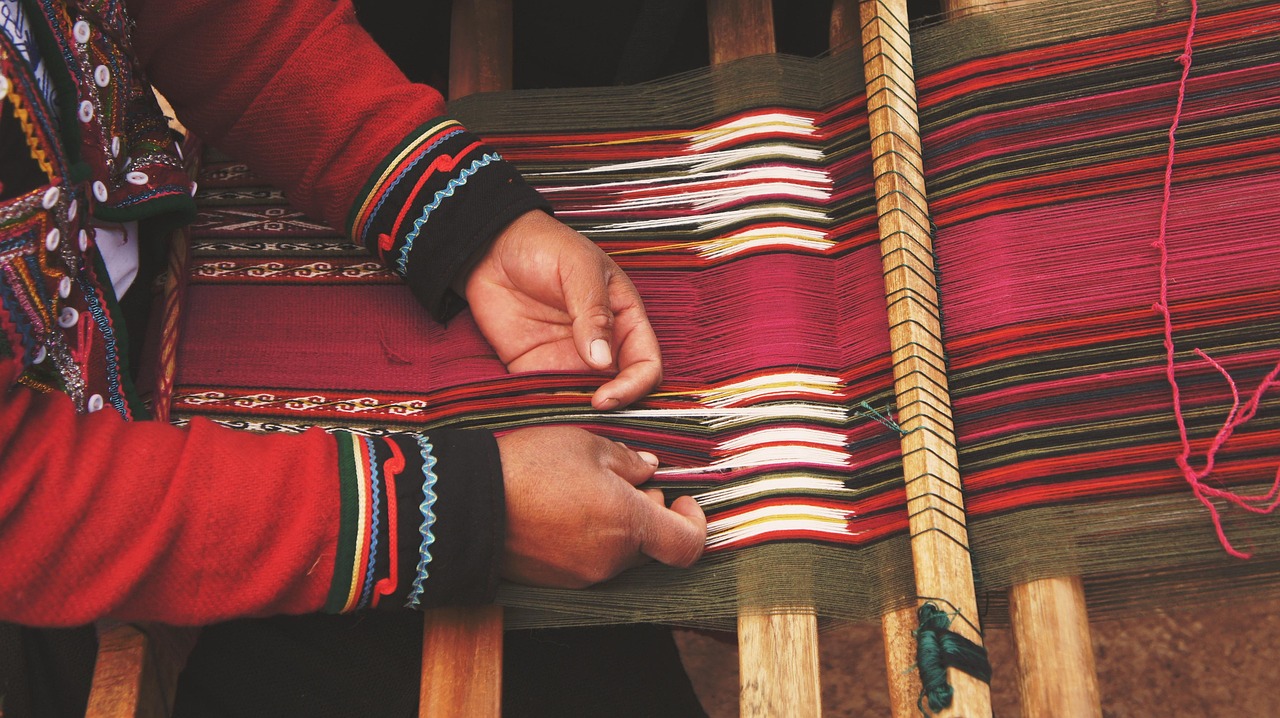
Handwoven clothing is among the clearest expressions of Tz’utujil identity, and the towns of the lakeshore are renowned for the beauty and distinctiveness of their dress. Each community has its own patterns, colors, and motifs, so that a knowledgeable eye can read a person’s home town from the design of a blouse or the striping of trousers. Made on the backstrap loom, these textiles carry symbols drawn from nature, the lake, and local cosmology.
The dress of the Tz’utujil towns includes some especially striking forms, with richly embroidered blouses and, in some places, distinctive men’s garments patterned with birds and other motifs. In certain towns men continue to wear traditional dress, a rarer sight in modern Guatemala, and the persistence of these forms is a source of local pride. Weaving remains an art transmitted from mother to daughter, dense with meaning as well as beauty.
Beyond dress, Tz’utujil custom lives in the ceremonies that mark birth, marriage, and death, in the etiquette of respect and the honoring of elders, and in the music and dance that accompany community celebration. The religious brotherhoods and their observances structure much of ceremonial life. These transmitted customs, more than any single symbol, give the Tz’utujil towns their distinctive texture and carry forward a shared sense of how to live well on the shores of the lake.
Looms, Brushes, and Lakeshore Skill
Craft flourishes among the Tz’utujil, both as a livelihood and as a form of artistic expression. Weaving is the most celebrated skill, with women producing textiles of great beauty on the backstrap loom, but the lakeshore towns are also known for other arts. In recent generations, the town of Santiago Atitlán and its neighbors have become famous for a distinctive school of painting, in which local artists depict the life, landscape, and ceremony of the lake in vivid color.
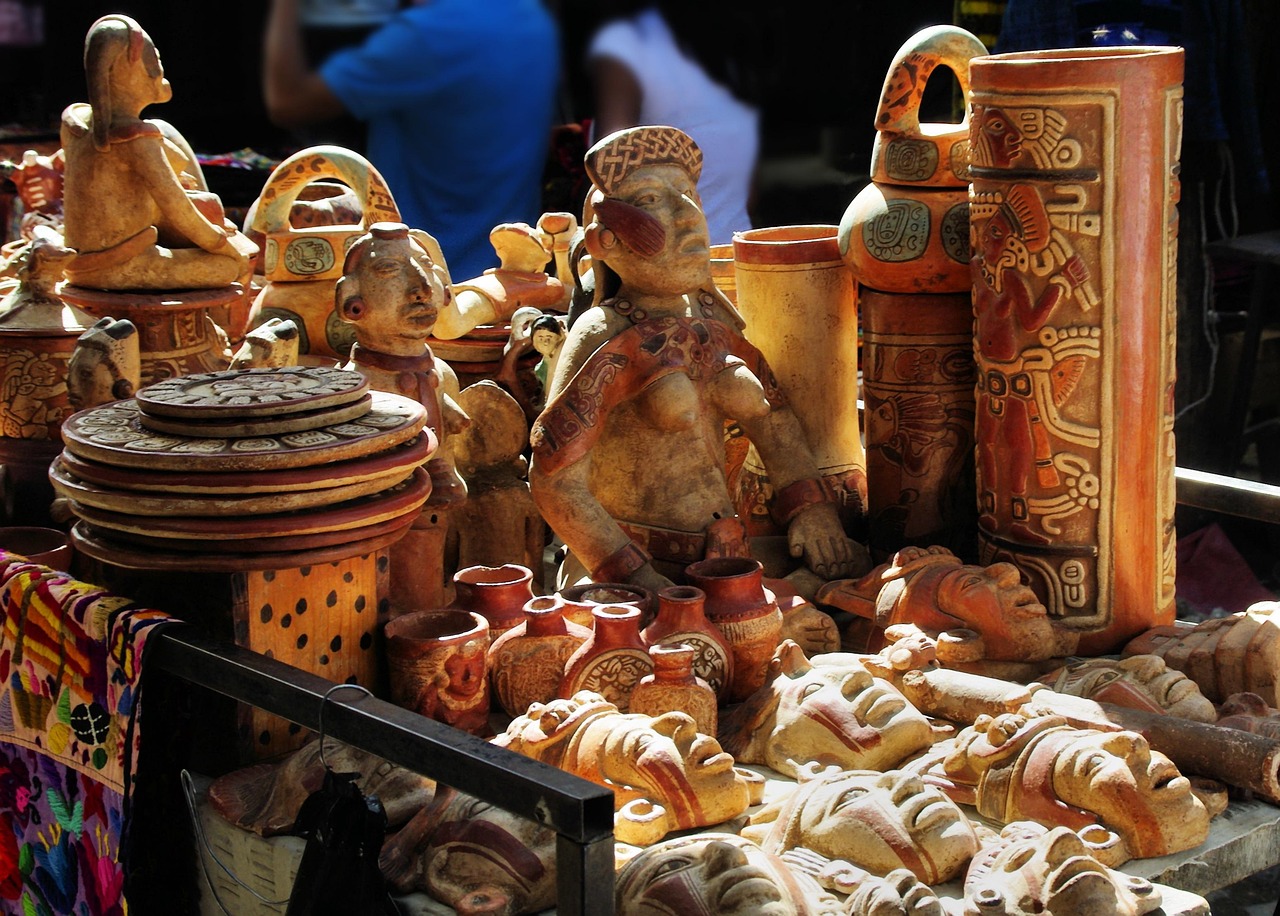
This tradition of painting, often produced by self-taught artists working in a bold and colorful style, has given the Tz’utujil a reputation as a nation of visual artists, and their canvases are sought by collectors and visitors alike. Alongside painting, woodcarving, the making of the ceremonial objects used in religious life, and the crafting of everyday tools and containers form part of a rich material culture rooted in the resources of the lake and its shores.
As with weaving and painting, craft connects the Tz’utujil to wider markets, bringing income to families in the lakeshore towns. Tourism to the beautiful and accessible Lake Atitlán has created strong demand for textiles and art, offering opportunity while raising familiar questions about fair payment, authenticity, and the pressures that outside interest can place on a small community. Navigating these currents is part of modern Tz’utujil life.
That a small lakeside nation should have produced both renowned weavers and a celebrated school of painters says much about the creative energy of the Tz’utujil towns. Art here is not a rarefied pursuit but woven into ordinary life, from the cloth on people’s backs to the vivid canvases that hang in galleries and homes alike. The lake, its volcanoes, its boats, and its ceremonies appear again and again, as if the Tz’utujil could not help but return to the landscape that made them.
Fish, Maize, and the Bounty of the Shore
Maize lies at the foundation of the Tz’utujil diet, as it does throughout the Maya world, with tortillas and tamales made from lime-treated corn accompanying nearly every meal. Yet the lake gives Tz’utujil food a character distinct from that of the purely mountain-dwelling Maya, adding fish, crabs, and other freshwater foods to a diet otherwise built on maize, beans, chiles, and squash. The shore’s fertile gardens supply vegetables and fruit to round out the table.
The fertile volcanic soils around the lake, combined with a mild climate and access to water, make the Tz’utujil homeland unusually productive. Coffee grows on the lower volcanic slopes, and the lowlands beyond the volcanoes once supplied the prized cacao that made the old kingdom wealthy. This abundance gives Tz’utujil cuisine a variety and richness rooted in the diverse resources of lake, shore, and slope.
As throughout the region, food carries meaning beyond nourishment. Special dishes mark weddings, funerals, and religious festivals, and preparing them is often shared labor among the women of an extended family. Offerings of food to the saints, to the sacred figures of the brotherhoods, and to the powers of the lake and mountains express respect and reciprocity, and the sharing of maize retains the deep resonance it holds across the Maya world.

Processions, Brotherhoods, and Holy Week
The Tz’utujil festival calendar interweaves Catholic feast days with older cycles of observance, and each town celebrates its patron saint with an annual fiesta filled with music, dance, processions, and shared meals. These celebrations draw home those who have moved away and renew the bonds that hold the compact lakeshore communities together, filling the streets with color and devotion.
Holy Week is observed with particular intensity in the Tz’utujil towns, above all in Santiago Atitlán, where the celebrations bring together Catholic ritual and the veneration of the singular folk figure cared for by the religious brotherhoods. The processions of this season, with their images, incense, and crowds, are among the most striking religious events in Guatemala, blending solemn Christian observance with older Maya elements in a way found nowhere else.
The religious brotherhoods stand at the center of this ceremonial life, taking on the honor and the burden of caring for the sacred images and organizing the great festivities. Their processions carry holy figures through the towns, and their observances mark the turning of the year. Through this round of fiestas and Holy Week rites, the Tz’utujil keep time by both the Christian calendar and older reckonings, renewing faith, community, and identity year after year.

Conquest, Colony, and Recent Sorrows
The Spanish reached Lake Atitlán in the 1520s, and the Tz’utujil, like their neighbors, were drawn into the violent reshuffling of the conquest. Allied against by the Kaqchikel and confronted by the invaders, the Tz’utujil kingdom was defeated, its fortified capital taken, and its people brought under colonial rule. The wealth that had made the small kingdom a prize now passed into the hands of new masters.
Colonial rule reshaped Tz’utujil life through epidemics, forced labor, tribute, and the reorganization of communities under the supervision of the Church. The town of Santiago Atitlán became an important colonial center, and Catholicism was grafted onto the older religious life, producing the layered spirituality for which the Tz’utujil later became famous. Through these upheavals the people preserved their language, their lakeshore communities, and much of their ceremonial tradition.
The Tz’utujil towns also endured great suffering during Guatemala’s twentieth-century armed conflict, when the highlands became a zone of violence and Santiago Atitlán in particular experienced tragedy and loss. The memory of these recent sorrows remains raw in the lakeshore communities. Yet through conquest, colonial domination, and modern violence, the Tz’utujil endured, holding to their language, their brotherhoods, and their attachment to the lake that has always defined them.
The Tz’utujil in a World of Visitors
Today the Tz’utujil number somewhere around a hundred thousand and remain concentrated in their cluster of towns along the southern and western shores of Lake Atitlán, with Santiago Atitlán the largest and best known. Their homeland, one of the most beautiful and accessible in Guatemala, has become a major destination for tourists and foreign residents, bringing the Tz’utujil into close and constant contact with the outside world in ways few other Maya peoples experience.
Tourism has reshaped the lakeshore economy, creating opportunities in crafts, art, hospitality, and guiding, while also raising the cost of land and exposing communities to the pressures and distortions that visitors bring. The Tz’utujil navigate this world with a mixture of engagement and caution, selling their famous textiles and paintings while striving to protect the traditions and the sacred character of the lake from being reduced to mere spectacle.
The challenges are real, from the pressures of tourism and rising land prices to the pull of Spanish and the difficulty of sustaining a small language in a globalizing world. Yet the Tz’utujil also show striking vitality: their language endures in the towns, their brotherhoods and festivals continue, their artists win renown, and a strong sense of local identity persists. A small lakeside nation with a singular culture, the Tz’utujil carry their distinctive heritage into a future lived on the shores of their extraordinary lake.
In this the Tz’utujil face a peculiarly modern dilemma. The very beauty and accessibility that make their homeland a magnet for outsiders also expose their culture and their sacred places to commodification, and the money that tourism brings arrives tangled with new pressures and temptations. How the lakeshore communities balance openness to the world with the protection of what makes them distinctive is among the central questions of their present.
Related Peoples of the Region
- Meꞌphaa Speakers of the Guerrero Mountains and a Language That Stands Alone
- Garifuna Drummers and Cassava Bakers of the Central American Caribbean Coast
- Lenca Potters and River Defenders of the Honduran and Salvadoran Highlands
- K’icheʼ Maya, Guatemala’s Highland Nation of Maize and Memory
- Q’eqchiʼ Maya, a Rainforest People of Guatemala’s Land of True Peace
- Kaqchikel Maya, Guatemala’s Highland Rivals Who Reclaimed Their Freedom
- Mam Maya, a Mountain People of Guatemala’s Highest Frontier
You May Like
The Damara, an Ancient People of Namibia