Along the Caribbean coast of Central America lives a people whose very existence is a story of survival. The Garífuna are the descendants of Africans and Indigenous Caribbean peoples who came together on a small island, forged a new identity, and were then exiled across the sea to a foreign shore. From that displacement they built a nation with its own language, music, and religion, distinct from every neighbor around them.
This is a portrait of the Garífuna: their origins in the Caribbean, the Arawakan language that crossed an ocean, the ancestor-centered faith of the dügü, the drumming and punta that carried their name around the world, and the ongoing struggle to hold onto their coast and their culture. It is the story of a people born of two continents who remain, above all, themselves.
Contents
- A People Born of the Caribbean Sea
- The Meaning Behind Garífuna and Garinagu
- A Language That Crossed an Ocean
- Villages Between Forest and Sea
- Fishing, Farming, and the Sea’s Bounty
- Family, Women, and the Bonds of Community
- Ancestors, Drums, and the Dügü
- Punta, Song, and the World Heritage of Sound
- Cassava Bread and the Skills of the Coast
- A Cuisine of Cassava, Coconut, and Fish
- Days of Drumming and Remembrance
- Exile, Arrival, and Two Centuries on the Coast
- The Garífuna in a Changing World
A People Born of the Caribbean Sea
Along the warm Caribbean shore of Central America, from the coast of Belize down through Honduras and into Guatemala and Nicaragua, lives a people unlike any other in the Americas. The Garífuna, sometimes called the Garinagu in their own plural, are the descendants of a remarkable union between shipwrecked and escaped Africans and the Indigenous Carib and Arawak peoples of the eastern Caribbean. From that meeting emerged a wholly new nation, with its own language, religion, music, and way of life.
Their story is one of survival against extraordinary odds. Forged on the island of St. Vincent, exiled across the sea by a colonial empire, and settled on a foreign shore, the Garífuna held together as a people through displacement that might have scattered any other community. Today they number in the hundreds of thousands, with communities strung along the Central American coast and a large diaspora reaching into cities of the United States.
What makes the Garífuna extraordinary is that they are at once African and American, carrying a heritage that spans two continents joined by the ocean. Their culture is neither a transplanted African tradition nor a purely Indigenous one, but something genuinely new, born in the Caribbean and rooted now in the mainland coast they have called home for more than two centuries.

The Meaning Behind Garífuna and Garinagu
The name Garífuna refers both to the people and to their language, while Garinagu is the term many prefer for the people as a collective. Both words descend from Kalinago, the name of the Island Carib people from whom the Garífuna partly descend, reflecting the deep Indigenous root of their identity that sits alongside their African ancestry.
For much of their history outsiders called them by other names, including Black Carib, a colonial label that emphasized their African appearance while acknowledging their Carib heritage. Like many peoples, the Garífuna have increasingly asserted their own name, and the shift toward Garífuna and Garinagu reflects a pride in a distinct identity that refuses to be reduced to either half of its origin.
To call oneself Garífuna is to claim a specific history and a specific belonging. It sets the community apart from the surrounding Spanish-speaking and English-speaking populations of the coast, and it affirms a continuity that reaches back through exile to the islands where the people first came into being.
The name is spoken with pride in songs and ceremonies, and its use in schools, media, and cultural organizations has become part of a wider effort to keep the identity strong for generations who may grow up far from the coastal villages of their grandparents.
A Language That Crossed an Ocean
The Garífuna language is one of the most fascinating in the Americas, a living record of the people’s mixed origins. At its core it belongs to the Arawakan family, inherited from the Indigenous peoples of the Caribbean, making it fundamentally distinct from the Spanish that surrounds it and from every Mesoamerican tongue to the north and west.
Yet the language carries layers from the whole of Garífuna history. It preserves a striking feature by which men and women historically used somewhat different vocabulary, a trace of the encounter between Carib-speaking men and Arawak-speaking women in the islands. Over the centuries it also absorbed words from French, English, and Spanish, the colonial languages the people met along their journey, without losing its Arawakan foundation.
Because it belongs to no family shared by its neighbors, Garífuna stands as a unique linguistic island on the Central American coast. Its survival is remarkable given the pressures of the dominant national languages, and it has been recognized internationally as a treasure worth protecting.
The language remains central to identity and to ceremony, for many of the most important rituals must be conducted in Garífuna. Yet like minority languages everywhere it faces the challenge of younger generations shifting to Spanish or English, and its future depends on the community’s determination to keep speaking it at home.
The dual-vocabulary feature of Garífuna, in which certain words differed between men and women, is one of the rarest linguistic phenomena to survive into modern times. It preserves in living speech the very moment of the people’s origin, when Carib-speaking men joined Arawak-speaking women in the islands. To hear it is to hear history itself, a spoken fossil of an encounter that took place centuries ago and gave rise to an entirely new nation on the edge of the Caribbean.

Villages Between Forest and Sea
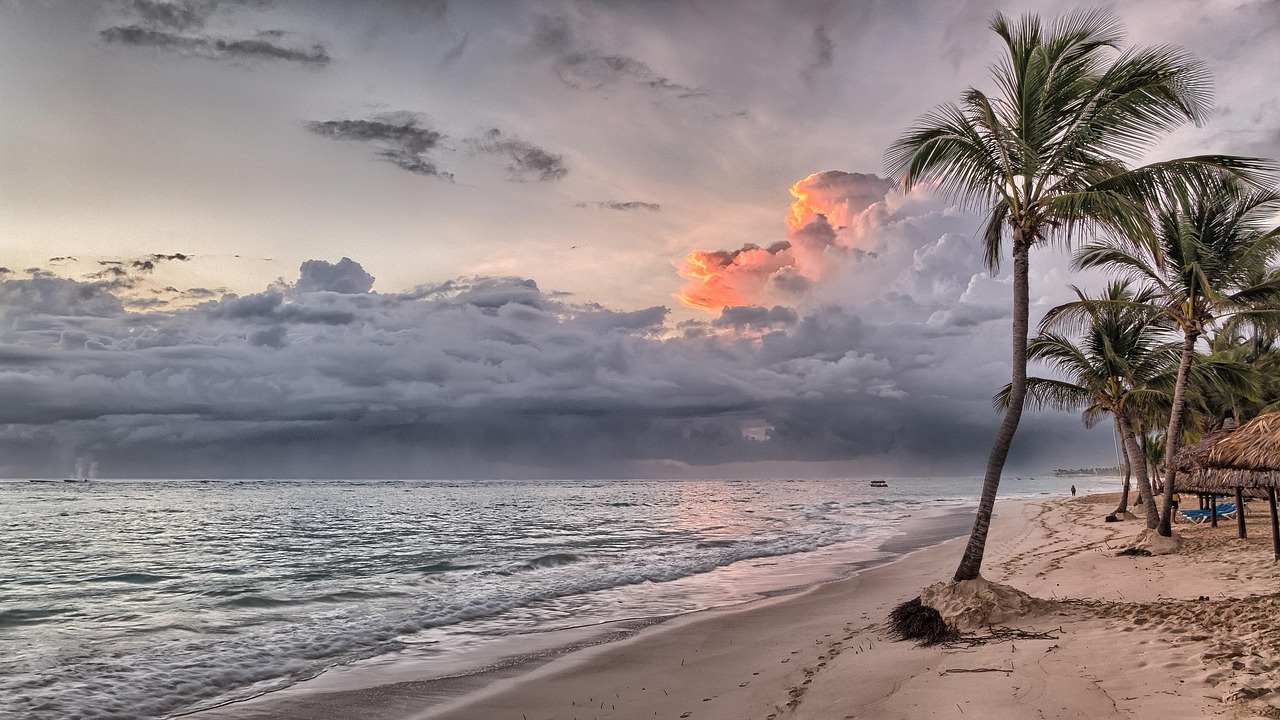
The Garífuna homeland is the coast itself, a narrow band where the land meets the Caribbean. Their villages sit close to the water, often between the sea in front and forest, river, or plantation behind. This is a world oriented toward the ocean, from which much of life’s sustenance has always come, and the rhythm of the tides and the fishing has long shaped daily existence.
From Belize in the north the Garífuna settlements run south through the Honduran coast, where the largest concentration of communities lies, and on into Guatemala and Nicaragua. Each village has its own character, but all share the coastal setting and the connection to the sea that defines Garífuna life.
The coast is beautiful but not always kind. Hurricanes sweep in from the Caribbean, and the low-lying land is vulnerable to storms and rising waters. The Garífuna have learned to live with these dangers, rebuilding when necessary and holding to their places along the shore through generations of change.
In recent decades the coast has also drawn tourism and development, bringing both opportunity and pressure. The land the Garífuna have held since their arrival has become valuable, and defending it has become one of the community’s central struggles.
The relationship between the Garífuna and the surrounding populations has never been simple. On the coast they lived alongside Spanish speakers, English-speaking Creoles, and other Indigenous groups, sometimes cooperating and sometimes competing, always maintaining the boundary that marked them as a distinct people. Their coastal enclaves became islands of Garífuna language and culture within nations that often ignored or marginalized them, and holding that boundary has been essential to their endurance.

Fishing, Farming, and the Sea’s Bounty
Traditional Garífuna life combined fishing with farming in a way suited to the coast. The men went to sea in dugout canoes to fish, while women worked the plots inland, growing above all the cassava that became the foundation of the diet. This division of labor sustained the villages for generations and shaped the roles of men and women in the community.
Cassava, also called manioc or yuca, is the great staple, inherited from the Indigenous peoples of the Caribbean. Its cultivation and processing form a whole complex of knowledge and labor, and the flat cassava bread known as ereba remains an emblem of Garífuna identity. Alongside it grow plantains, coconuts, and other crops of the warm coast.
The sea provides fish and shellfish, and coconut palms supply food and oil. This combination of ocean and garden gave the Garífuna a measure of self-sufficiency and a cuisine rooted firmly in their environment. The knowledge of how to read the sea and work the land passed from parent to child as part of growing up Garífuna.
Though wage labor, migration, and store-bought food have changed these patterns, the old economy of fishing and cassava farming remains a touchstone of identity, remembered and to some degree still practiced in the coastal villages.
The dugout canoe, carved from a single great tree, was for generations the essential tool of Garífuna life at sea. To make one required skill, patience, and knowledge of the right wood, and a good canoe was a valued possession that could serve a fisherman for many years. In these vessels the men went out beyond the surf to fish the Caribbean waters, returning to feed their families and to supply the villages strung along the shore.

Family, Women, and the Bonds of Community
Garífuna society has long been organized around strong family networks in which women play a central role. With men often away fishing or, in later times, working as sailors and migrant laborers, women became the anchors of village life, managing households, farming, and the transmission of culture across generations.
Extended families and the ties of kinship bind the community, and reciprocity among relatives and neighbors provides support in a region where formal institutions have often been weak. Elders command respect, and the knowledge they carry, from language to ritual to healing, gives them a special place in community life.
The community as a whole holds a powerful sense of shared identity that reaches beyond any single village. Garífuna from different countries recognize one another as one people, united by language, history, and culture across the borders that colonial and national powers drew through their coast.
This solidarity has proven essential to survival. In the face of discrimination, land pressure, and the pull of migration, the strength of family and community has allowed the Garífuna to maintain themselves as a distinct people rather than dissolving into the surrounding societies.
The prominence of women in Garífuna culture is unusual and deeply rooted. As composers and lead singers, as keepers of the cassava tradition, as heads of households in the frequent absence of men, and as central figures in ceremony, women have carried much of the weight of cultural continuity. This matriarchal strength is one of the reasons the culture survived exile and dispersal, for wherever Garífuna women went, the language, the food, and the songs went with them.

Ancestors, Drums, and the Dügü
The spiritual life of the Garífuna is one of the most distinctive aspects of their culture, blending African, Indigenous, and Catholic elements into a religion focused above all on the ancestors. The dead are believed to remain present and involved in the lives of their descendants, and much of Garífuna ritual is devoted to honoring and communicating with them.
The most important ceremony is the dügü, a gathering held to satisfy ancestral spirits who are believed to require attention from the living. Conducted over several days with drumming, dancing, singing, and offerings of food, and led by a spiritual specialist, the dügü brings together families from near and far in an intense communal act of devotion that reaffirms the bonds between the living and the dead.
Drumming and song are inseparable from this spiritual world. The rhythms carry meaning, and certain songs and dances belong to the sacred realm, calling the ancestors and expressing the community’s relationship with them. Many Garífuna are also Catholic, and the two traditions coexist within a single lived faith.
This ancestor-centered religion, carried across the ocean and reshaped on the coast, is among the strongest markers of Garífuna distinctiveness, and its ceremonies remain vital occasions for the gathering and renewal of the community.
The role of the spiritual specialist, known as the buyei, is one of great responsibility within Garífuna religion. This figure, who may be a man or a woman, mediates between the living and the ancestors, diagnoses the causes of misfortune and illness, and directs the great ceremonies. Becoming a buyei is understood as a calling rather than a choice, and those who hold the role command deep respect as the guardians of the community’s relationship with its dead.

Punta, Song, and the World Heritage of Sound
If any single thing announces Garífuna culture to the world, it is music. The drum-driven rhythms and call-and-response singing of the Garífuna are among their most powerful traditions, so distinctive that the wider culture of Garífuna music, dance, and language has been recognized by international bodies as a masterpiece of humanity’s intangible heritage.
The best known of the dance forms is punta, an energetic style performed to fast drumming at celebrations and gatherings. But the musical world runs far deeper than a single dance, encompassing songs for work, for mourning, for satire, and for ritual, many composed and led by women who hold a central place in the tradition of song.
Music here is not entertainment set apart from life but woven through it, marking every important occasion and carrying the language and memory of the people. Songs preserve history, comment on events, and pass emotion and knowledge from one generation to the next.
In recent decades Garífuna music has reached international audiences, with performers carrying the sound of the coast to concert stages around the world. This visibility has brought pride and a measure of recognition, helping to affirm the value of a tradition that the community has always treasured.

Cassava Bread and the Skills of the Coast
The processing of cassava into ereba is itself a craft passed down through generations, and one central to Garífuna identity. The bitter cassava must be grated, its toxic juice pressed out through a long woven tube, and the flour baked into thin round breads on a griddle. Each step requires knowledge and specialized tools, and the work has traditionally brought women together in a shared task.
Beyond food, the Garífuna craft the objects of coastal life. Dugout canoes, once the essential vehicles of fishing, were carved from single trees by skilled hands. Fishing gear, household implements, and the drums so central to music and ceremony all reflect craft traditions rooted in the materials and needs of the coast.
The drums themselves are objects of great importance, made and maintained with care, for they are the voice of the ancestors in ceremony and the heartbeat of celebration. To build a good drum is a respected skill within the community.
These crafts, like the language and the music, carry the culture in tangible form. In making ereba or carving a canoe, the Garífuna reproduce not only useful things but the knowledge and identity handed down from the founders of their people.

A Cuisine of Cassava, Coconut, and Fish
Garífuna cooking is a distinctive coastal cuisine built on the trinity of cassava, coconut, and seafood. The flat cassava bread ereba accompanies meals as a staple, while coconut milk gives many dishes their characteristic richness. Fish and shellfish, drawn from the sea, complete a diet shaped entirely by the coastal environment.
Among the most beloved dishes is hudut, a hearty preparation of fish cooked in coconut broth and served with mashed plantain, a meal that brings families together and appears at gatherings and celebrations. Soups and stews rich with coconut, root vegetables, and seafood form the heart of everyday cooking.
The cuisine reflects the same blend that marks the whole culture, combining Indigenous Caribbean staples like cassava with African techniques and the ingredients of the tropical coast. It is a food tradition unmistakably its own, different from the Spanish-influenced cooking of the surrounding regions.
Food carries social meaning, and to share a Garífuna meal is to participate in the community. Special dishes mark ceremonies and holidays, and the preparation of food, especially the labor-intensive making of ereba, remains an occasion for the gathering of family and the passing on of tradition.
The making of hudut is a small ritual in itself, the plantain pounded in a tall wooden mortar with steady, rhythmic strokes until it forms a smooth mass, the fish simmered gently in coconut milk fragrant with herbs. To prepare it well is a point of pride, and to be served it is to be welcomed into a Garífuna home. Dishes like this, unchanged in their essentials for generations, carry the taste of the coast and the memory of the ancestors who first combined these ingredients of two worlds.

Days of Drumming and Remembrance
The Garífuna calendar is marked by celebrations that draw the community together and reaffirm its identity. The most significant is Garífuna Settlement Day, especially important in Belize and Honduras, which commemorates the arrival of the people on the Central American coast with reenactments, processions, drumming, and dance that recall the founding journey.
These celebrations blend solemn remembrance with joyful festivity. The arrival by sea is dramatized, ancestors are honored, and the community affirms its endurance through the generations since exile. For Garífuna living far away in the diaspora, such days are powerful occasions to return home or to gather and reconnect with their roots.
Religious ceremonies like the dügü, though not fixed to the calendar, are among the great gatherings of Garífuna life, summoning families across distances for days of ritual and communion with the ancestors. Catholic holidays too are observed, often infused with Garífuna music and style.
Through all these occasions runs the drum. Its rhythms call the people together, mark the moments of celebration and devotion, and carry the unmistakable sound of Garífuna identity across the coast and into the cities where the people have carried their traditions.

Exile, Arrival, and Two Centuries on the Coast
The Garífuna story begins on the island of St. Vincent in the eastern Caribbean, where over the seventeenth and eighteenth centuries Africans who had escaped or survived shipwreck mingled with the Indigenous Carib population. From this union a new people emerged, fiercely independent and resistant to European control of their island.
That independence brought conflict with the British Empire, and after prolonged struggle the British defeated the Garífuna and, in 1797, deported thousands of them across the sea. Many died in the ordeal, but the survivors were landed on the island of Roatán off the Honduran coast, and from there they spread onto the mainland, establishing the coastal communities that endure today.
On the Central American coast the Garífuna built new lives, working as farmers, fishers, and laborers, and maintaining their language and culture even as they engaged with the surrounding societies. For more than two centuries they have held their place along the shore, weathering discrimination, economic hardship, and the pressures of the modern nations that formed around them.
This history of exile and survival is central to Garífuna consciousness. The journey from St. Vincent is remembered and reenacted, a founding story of loss and endurance that binds the community and explains how an African-Indigenous people came to make its home on the Caribbean coast of Central America.

The Garífuna in a Changing World
Today the Garífuna face the familiar challenges of an Indigenous and minority people in the modern world, along with some that are distinctly their own. Migration has drawn many from the coastal villages to the cities of Central America and, in great numbers, to the United States, where large Garífuna communities now live in places like New York. This diaspora sustains the homeland with remittances but strains the transmission of language and tradition.
Along the coast, the Garífuna struggle to hold onto their ancestral land in the face of tourism, development, and outside interests that covet the beautiful shore. Defending their territory and their rights has become a central cause, pursued through organization and activism at home and abroad.
The language and culture, though recognized internationally as treasures, remain vulnerable. Younger generations, especially in the diaspora, may grow up with only partial command of the language, and sustaining the ceremonies and knowledge requires conscious effort. Cultural organizations, festivals, and education programs work to keep the heritage alive.
Yet the Garífuna have survived exile, dispersal, and centuries of pressure, and their determination to remain a distinct people is undiminished. In their music heard around the world, in the drums of the dügü, and in the language that crossed an ocean, the Garífuna continue to assert an identity born of two continents and belonging fully to neither but wholly to themselves.

Related Peoples of Mexico and Central America
- Totonac Builders of El Tajin and the Dance of the Flyers
- Why the Rarámuri of Copper Canyon Never Stopped Running
- How the Wixárika of Mexico Keep Walking to the Birthplace of the Sun
- Nahua, the People Behind Mexico’s Name
- Otomi, the Original Neighbors of the Aztec Capital
- Purépecha, the People Who Kept the Aztec Empire Out of Michoacán
- Mixtec, the Cloud People Who Wrote Their Own History
- Zapotec, a People Older Than the Aztec Empire
- The People Who Never Vanished, the Story of the Maya
- Yaqui Deer Dancers and the Eight Towns of Sonora
- Seri Comcaac Sea Hunters and Ironwood Carvers of the Sonoran Coast
- Mixe Ayuujk Speakers and the Mountain They Never Surrendered
- Huave Fishers of the Isthmus Lagoons and the Language Called Ombeayiuts
- Chontal of Oaxaca and Their Tequistlatecan Tongue Between Mountain and Sea
- Huastec Teenek Music, Embroidery, and the Rivers of the Green Huasteca
- Meꞌphaa Speakers of the Guerrero Mountains and a Language That Stands Alone
You May Like
The Damara, an Ancient People of Namibia


One thought on “Garifuna Drummers and Cassava Bakers of the Central American Caribbean Coast”