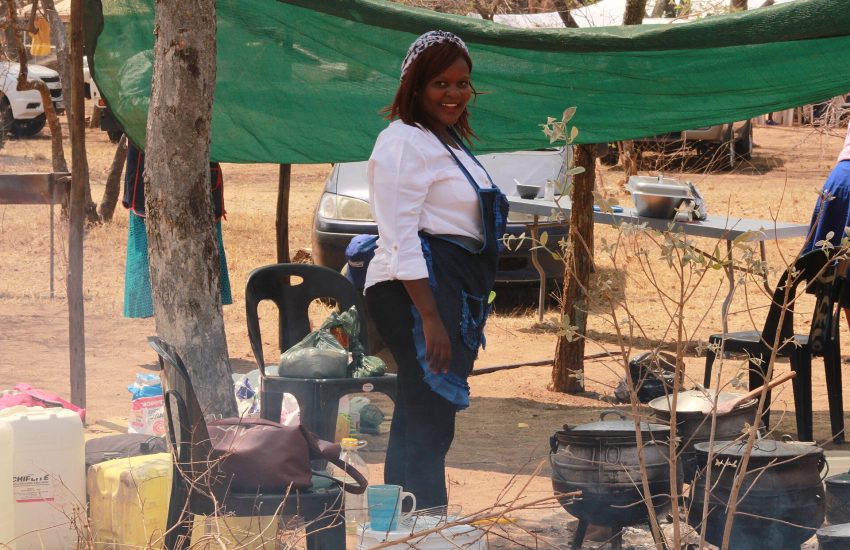
High in Mexico’s Sierra Madre Occidental, the Wixárika people, often called Huichol, have kept an unusually complete ceremonial world alive: an annual desert pilgrimage that reenacts the birth of the sun, a religion built around the sacred peyote cactus, and an art tradition of beadwork and yarn painting that has carried their symbols far beyond the mountains that sheltered them for centuries.
Contents
- Origins
- Name
- Language
- Homeland
- The Old Way of Life
- Society
- Religion
- Traditions
- Crafts
- Food
- Festivals
- History
- Today
Origins
In the western sierra of Mexico, a people called the Wixárika trace their origin to a time before the sun existed, when the world lay in darkness and the first ancestors were animals and forces of nature rather than ordinary men and women. Deer, eagles, corn, and fire all appear as living relatives in this account, not as symbols borrowed from somewhere else.
According to Wixárika tradition, the sun was born only after a long journey by the first shaman-priests to a desert far to the east, where they fasted, prayed, and eventually coaxed daylight into the sky. That desert, known as Wirikuta, is still treated as the literal birthplace of the sun, and pilgrims travel there every year to renew the act that keeps the world lit.
This is not a story kept in books. Origin accounts are sung and re-enacted at ceremonies throughout the year, with each retelling adding local detail while keeping the core journey intact.
Because the Wixárika have no single sacred book, variations in the origin account are normal from one ceremonial center to another. What stays constant across every version is the idea that the world had to be actively built and lit through the effort and sacrifice of specific ancestors, rather than simply appearing complete. That emphasis on ongoing effort, rather than a finished creation, carries directly into how present-day Wixárika understand their own religious obligations: the world is not maintained automatically, and neglecting the proper ceremonies is believed to put the sun, the rains, and the harvest genuinely at risk.
Outsiders sometimes try to fit this account into a simple metaphor, treating the sun’s birth as a poetic stand-in for something else entirely. Wixárika elders who have spoken with researchers tend to push back on that framing, insisting the events described actually happened in a real place that can still be visited, to real ancestors whose names and roles are remembered, rather than serving as an abstract allegory detached from geography and genealogy.
Name
The people call themselves Wixárika (plural Wixaritari), a name rooted in their own language rather than in Spanish or Nahuatl. Its exact translation is debated among linguists, but it is often connected to ideas of healing, prophecy, or the act of interpreting dreams, all functions tied to the shaman-priests who lead ceremonial life.
Outsiders have long known this people by a different name: Huichol. The word likely comes from a Nahuatl term used by the Aztecs and later adopted by Spanish colonizers, and its meaning is uncertain, ranging from possible references to appearance or dress to a simple mispronunciation that stuck. Huichol remains the name most common in Spanish-language records, tourism, and art markets.
Increasingly, community organizations, schools, and cultural centers prefer Wixárika in public life, treating Huichol as a colonial-era label rather than a self-description. Both names appear side by side in most contemporary writing.
Confusion between Wixárika and Huichol occasionally extends to confusion with entirely separate peoples, since Spanish colonial records often lumped together several distinct mountain communities of western Mexico under loose regional labels. Modern anthropology has worked to untangle these groupings, distinguishing the Wixárika clearly from neighboring Cora, Tepehuán, and Náyeri communities, even though all four share a broadly similar mountain environment and some overlapping ceremonial themes, including their own regional pilgrimages to significant sacred sites.
Government documents in Mexico still default to Huichol in many official contexts, from municipal records to museum labels, even as academic and activist usage shifts toward Wixárika, creating a visible gap between official and community-preferred terminology that mirrors similar naming debates among indigenous peoples elsewhere in the Americas.
Language
Wixárika belongs to the Uto-Aztecan language family, making it a distant relative of Nahuatl, Comanche, and the Hopi language spoken far to the north in Arizona. Within Mexico, it is most closely related to the Cora language spoken by neighboring communities in Nayarit.
The language is tonal and rich in verb complexity, encoding information about direction, plurality, and evidentiality directly into verb stems. Ritual speech used in ceremonies is often more archaic and metaphor-dense than everyday conversation, and learning to compose it properly is part of a shaman-priest’s long training.
UNESCO classifies Wixárika as vulnerable, though it remains actively spoken by tens of thousands of people across four Mexican states. Bilingual education programs now teach children to read and write in Wixárika alongside Spanish, and community radio stations broadcast in the language to reach scattered mountain settlements.
Linguists studying Wixárika have noted its unusually rich system of evidential markers, small grammatical elements that indicate whether a speaker witnessed an event directly, heard about it secondhand, or is inferring it from other evidence. This feature matters practically in a culture where dreams, visions, and secondhand ceremonial reports carry real social weight, since the language itself forces a speaker to signal how reliable their information is. Missionary linguists produced the first extensive written descriptions of Wixárika in the twentieth century, and their materials, alongside more recent work by Mexican and Wixárika linguists themselves, now underpin the bilingual textbooks used in sierra schools.
Comparative linguists place Wixárika in the same broad Uto-Aztecan branch as several languages spoken far to the north, a connection that supports theories of a very old, gradual southward migration of related peoples across what is now the western United States and Mexico over several thousand years. Exactly how and when Wixárika speakers settled specifically in the Sierra Madre Occidental, rather than elsewhere along that broad migratory range, remains a subject of ongoing archaeological and linguistic research rather than settled fact.
Homeland
The Wixárika homeland sits in the Sierra Madre Occidental, a rugged mountain range spanning parts of Jalisco, Nayarit, Zacatecas, and Durango. Steep canyons, thin soil, and a lack of roads kept much of this territory isolated well into the twentieth century, which is precisely why Wixárika ceremonial life survived largely intact while lowland peoples faced heavier colonial pressure.
Communities are organized around ceremonial centers rather than single towns, with families often living in scattered homesteads and gathering seasonally at a central site for major rites. This dispersed pattern makes population figures hard to pin down, but current estimates place the Wixárika population at roughly fifty thousand people.
The desert of Wirikuta, several hundred kilometers to the east in San Luis Potosí, functions as a second homeland in religious terms: not a place people live day to day, but a place every serious member of the community is expected to visit at least once.
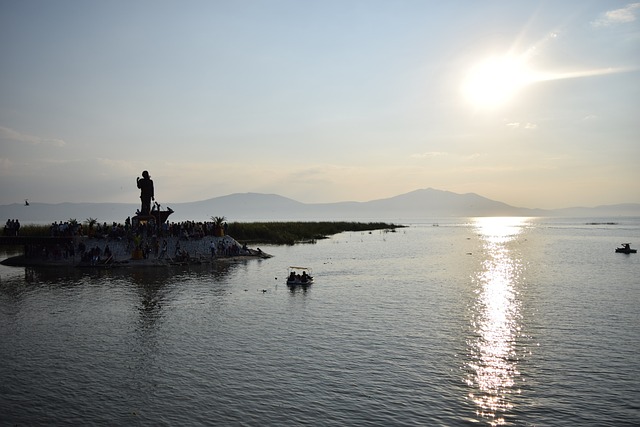
Travel within the homeland remains genuinely difficult even today, with many settlements reachable only by unpaved roads that can wash out completely during the summer rainy season. This isolation has been a mixed blessing: it slowed the spread of outside religious and economic pressure for generations, but it has also limited access to schools, clinics, and markets, pushing many families toward at least partial migration even while they retain strong ties to their home settlements and continue to return for major ceremonies whenever possible.
Boundary disputes between Wixárika communities and neighboring mestizo ranchers over exact land titles have periodically flared into serious conflict, occasionally involving violence, over the past several decades. Mexican federal agencies have been drawn into mediating several of the largest disputes, with mixed results, since formal land titles issued under different historical land-reform programs sometimes conflict directly with older Wixárika understandings of ancestral territorial boundaries.
The Old Way of Life
Subsistence in the sierra has long depended on terraced fields of maize, beans, and squash worked with hand tools on slopes too steep for animal-drawn plows. Rainfall is unreliable, so planting is timed to ceremonies meant to call the rains rather than to a fixed calendar date alone.
Agave and other wild plants supplement cultivated crops, and cattle and goats, introduced after contact with Spanish settlers, now graze alongside older subsistence practices. Deer hunting, once central to both diet and ritual, has become rare as deer populations declined, so the deer’s ceremonial role is now often filled by symbolic offerings rather than an actual hunt.
Households traditionally functioned as semi-independent units, each maintaining its own small shrine and set of ritual obligations, while still answering to the wider ceremonial center during major festivals.
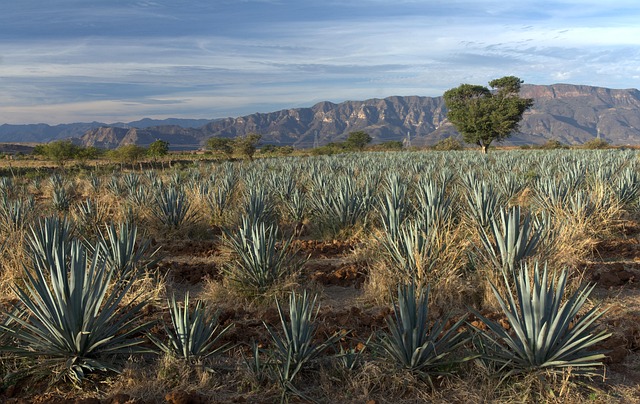
Seasonal labor migration has reshaped this old subsistence pattern without fully replacing it. Many Wixárika families now spend part of the year working as hired hands on commercial tobacco and tomato farms in coastal Nayarit, sending wages home while older relatives maintain the family’s own mountain plots. This dual life, part subsistence farmer and part migrant wage laborer, has become the ordinary experience for a large share of the population rather than an exception, even as ceremonial obligations continue to pull working family members back to the sierra at set points in the year.
Traditional ecological knowledge built up over centuries still guides decisions about when to plant, which slopes to favor in a wet year versus a dry one, and which wild plants are safe to gather as backup food. Younger generations who spend part of the year away for wage labor sometimes miss out on absorbing this knowledge the way earlier generations did simply by growing up full time in the fields, a quiet but real loss that elders in several communities have specifically flagged as a long-term concern.
Society
Wixárika communities recognize five main ceremonial centers, each governing a cluster of surrounding settlements. Authority is shared between a civil governor, who handles secular disputes and outside relations, and a set of religious officials who oversee the ceremonial calendar; the two systems overlap but are kept conceptually distinct.
Service in either system is unpaid and rotates through the community, meaning most adults will hold some civil or religious office at least once in their lives. This rotation spreads both the burden and the prestige of leadership widely rather than concentrating it in a permanent elite.
Extended families form the basic economic unit, often working shared plots and pooling resources for ceremonial expenses, which can be substantial given the cost of candles, feathers, tobacco, and other ritual materials required for a proper festival.
Disputes are typically handled first within the community itself, through elders and the civil governor, with outside courts treated as a last resort reserved for conflicts that cannot be settled internally, particularly serious land disputes involving non-Wixárika ranchers or companies. This preference for internal resolution has helped preserve a degree of real self-governance even though Wixárika communities remain formally subject to Mexican federal and state law like any other citizens.
Women’s roles within this governance system have traditionally centered on household and ceremonial responsibilities rather than formal civil office, though this is gradually shifting as Wixárika women take on more visible public roles in education, health work, and even land-rights activism, sometimes traveling to Mexico City or abroad to represent community concerns in ways that would have been unusual a few generations ago.
Religion
Wixárika religion centers on a pantheon that includes Tatewarí (Grandfather Fire), Tayaupá (Father Sun), and Nakawé (Grandmother Growth), among many other deified forces of nature. Rather than a fixed dogma, religious practice is built around an annual cycle of pilgrimages and ceremonies that keep these forces properly fed and honored.
The most distinctive element is the sacred use of peyote, a small spineless cactus that grows wild in the Chihuahuan Desert. Once a year, designated pilgrims travel to Wirikuta to gather peyote in a rite that reenacts the mythic hunt for the deer that first led ancestors to the sun. The peyote itself is treated as a deer transformed, and consuming it during ceremony is understood as a form of communion rather than recreation.
Shaman-priests, called mara’akate, train for years to lead these rites, memorize the associated songs, and interpret the visions peyote produces. Their role blends healer, historian, and religious authority in a single office.
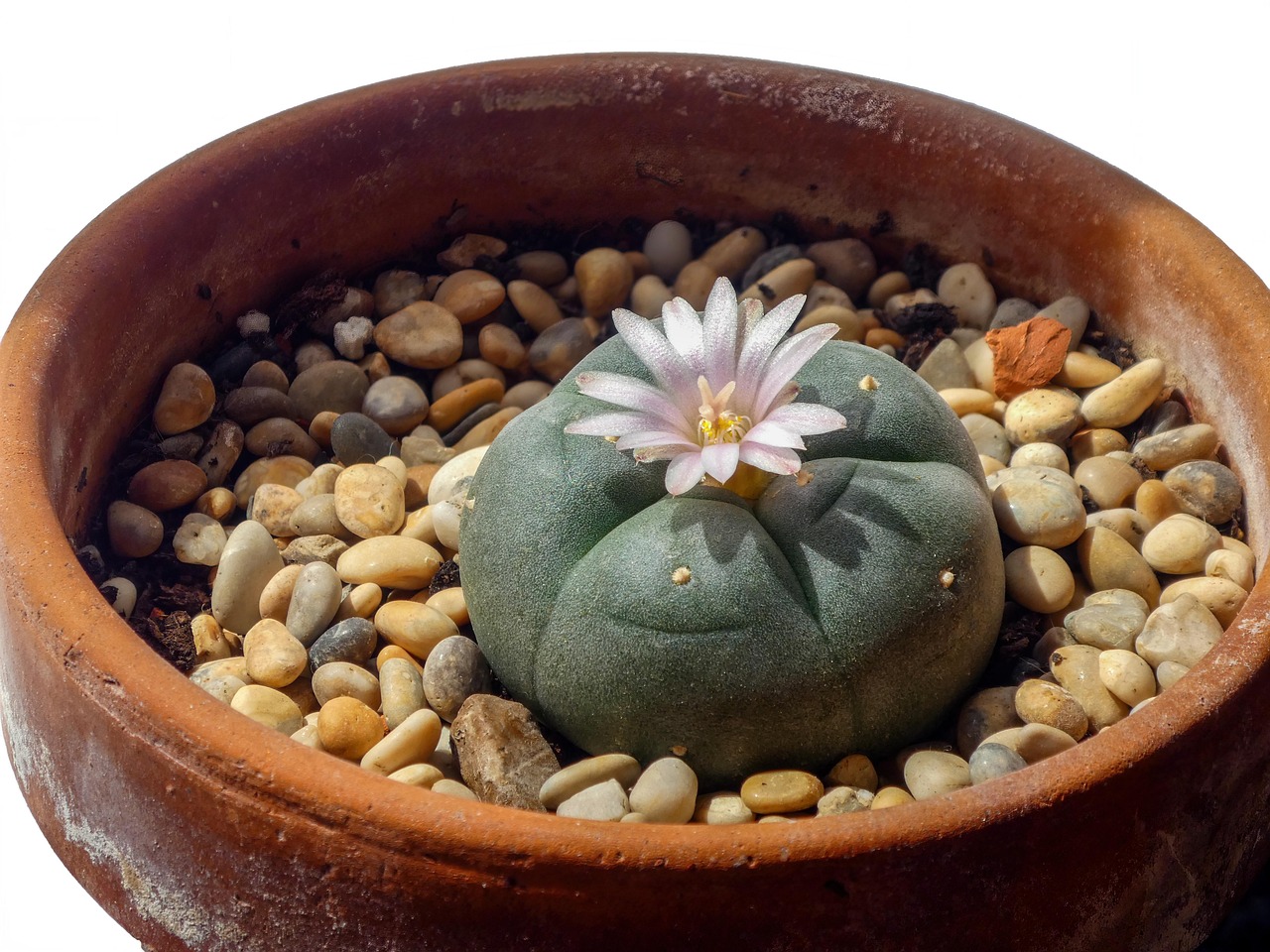
The Wirikuta pilgrimage itself is a physically demanding undertaking, historically made on foot over hundreds of kilometers of desert, though most pilgrims today travel part of the distance by vehicle before completing the final approach on foot as ritual requires. Pilgrims fast, confess past transgressions, and are given new ceremonial names during the journey, treating the trip as a genuine spiritual reset rather than a simple errand to collect a plant. Non-Wixárika researchers who have been permitted to observe portions of the pilgrimage consistently describe it as one of the most tightly structured and demanding religious practices documented anywhere in Mexico.
Interest from foreign researchers and, at times, tourists seeking a peyote experience of their own has created friction over the years, since the plant’s ceremonial context is central to Wixárika practice while outside interest often treats it purely as a substance to be consumed. Wixárika organizations have generally opposed unrestricted outside access to Wirikuta for exactly this reason, arguing that the site’s protection depends on limiting it to its proper ceremonial use rather than opening it to casual visitors.
Traditions
Much of Wixárika ceremonial life follows an agricultural calendar built around five major festivals tied to planting, the first rains, the early corn harvest, the full harvest, and the peyote pilgrimage itself. Each festival involves specific songs, offerings, and roles assigned well in advance to particular families.
Dance and all-night vigils around the ceremonial fire are common features, often accompanied by a violin and small guitar whose music, though borrowed from Spanish instruments, has been reworked into something distinctly Wixárika over centuries of use.
Dreaming is treated as a meaningful form of communication with ancestors and deities, and recounting dreams to a mara’akame is a routine part of religious practice rather than an unusual event.
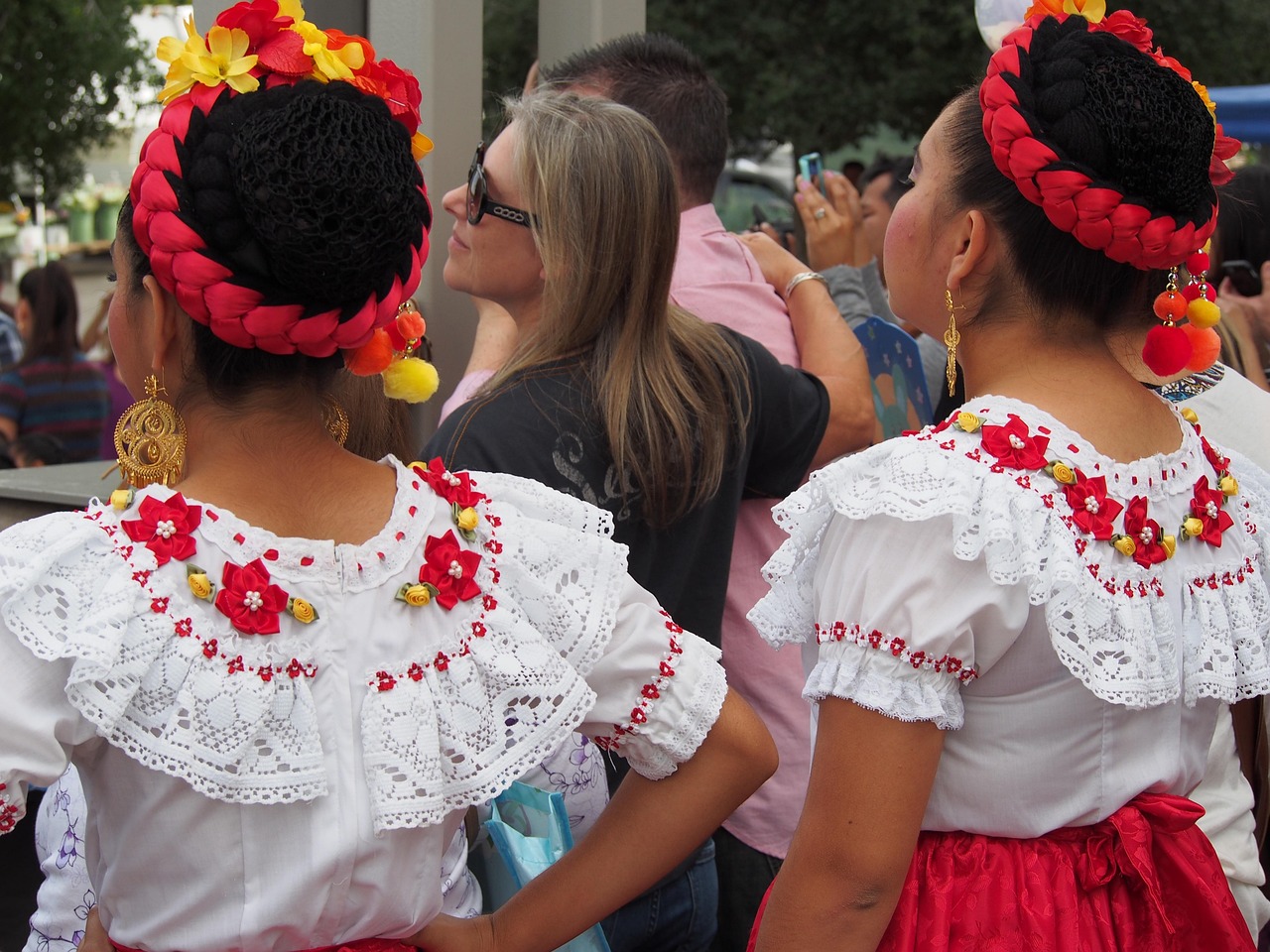
Music accompanying these festivals is passed down informally from experienced musicians to younger apprentices rather than through written notation, and a good ceremonial violinist or guitarist is a respected community figure in his own right. Songs performed during all-night vigils can run for hours without repetition, requiring genuine memorization skill built up over years of participation rather than casual performance.
Crafts
Wixárika visual art is built almost entirely from symbols drawn straight out of religious life: the deer, the peyote flower, the eagle, and geometric patterns representing corn fields or prayers. The two techniques that have made this art internationally known are yarn painting, in which colored yarn is pressed into wax-coated boards to build intricate pictures, and bead art, in which tiny glass beads are set one by one into wax over carved wood or resin forms.
Both techniques originated in smaller-scale ritual objects, such as votive bowls and ceremonial arrows, before expanding into larger decorative pieces made partly for sale. The beaded skulls and animal figures now sold in Mexican craft markets and abroad descend directly from these ritual antecedents, even when the buyer has no idea of the symbolism involved.
Embroidery is equally significant closer to home: women embroider clothing with the same visual vocabulary, and a finished garment can take months of work between farming and household duties.
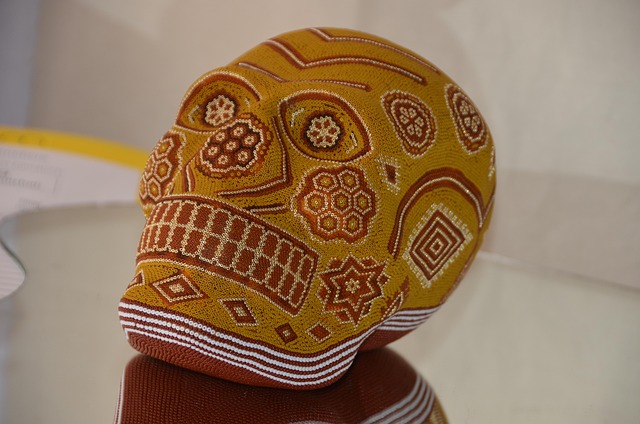
A single large yarn painting or beaded piece can take a skilled artist weeks or months to finish, since the beads or yarn strands must be placed one at a time with no room for correction once the wax has set. Some of the most respected artists are also practicing mara’akate, meaning the images they produce are understood locally as something closer to a recorded vision than a decorative design, even when the same piece is later sold to a gallery in Guadalajara, Mexico City, or abroad with no such context attached.
Government cultural agencies in Mexico have at times promoted Wixárika bead art and yarn painting as a symbol of national indigenous heritage in tourism campaigns, a form of recognition that brings both benefits and tension: it provides a reliable market and validates the art form’s importance, while also raising uncomfortable questions about who profits most when sacred imagery becomes a marketable national brand rather than a strictly community-controlled tradition.
Food
Maize forms the backbone of the Wixárika diet, prepared as tortillas, tamales, and a variety of corn-based drinks and gruels. Beans and squash round out the core of daily meals, following a farming pattern common across much of indigenous Mesoamerica but adapted to the poorer soils of the sierra.
Wild foods still matter more here than in many other parts of Mexico: greens, mushrooms, and small game supplement the harvest, especially in years when rainfall is poor and the corn crop falls short.
Food is never entirely separate from ritual. The first ears of corn from a harvest are formally offered before anyone eats them, and specific ceremonial foods, prepared only for particular festivals, mark the calendar as clearly as any written date would.
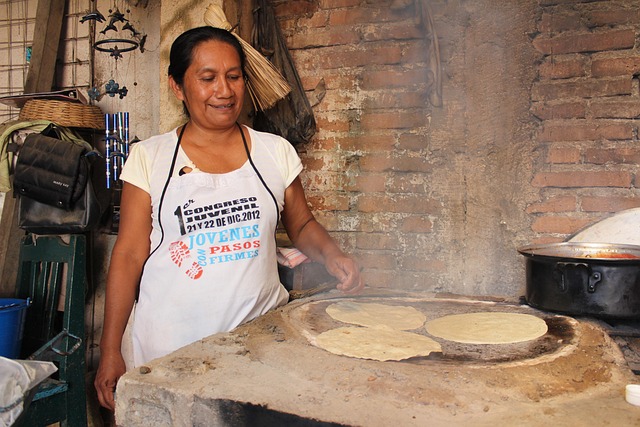
Alcohol made from fermented agave or sugarcane appears at many festivals in carefully limited, ceremonially sanctioned quantities, distinguishing sanctioned ritual drinking from ordinary social drinking, which is generally frowned upon. Nutritionists studying dietary change in the sierra have noted growing reliance on store-bought processed foods in communities closest to roads and towns, a shift that worries some health workers even as it reflects genuinely improved access to markets compared to a generation ago.
Festivals
The Hikuri Neixa, or Dance of the Peyote, marks the return of the pilgrims from Wirikuta and is among the most important public festivals in the Wixárika calendar, combining the sharing of peyote with all-night dancing around the ceremonial fire.
The Drum Festival, held around the time of the first corn harvest, gives thanks for a successful growing season and formally passes ceremonial responsibilities to a new set of officeholders for the year ahead. Children are often presented and given ritual names during this festival, tying the youngest generation into the ceremonial cycle from an early age.
Public festivals mix serious ritual with genuine celebration: feasting, music, and dance sit comfortably alongside prayers and offerings, and outsiders who witness these events often note how little separation there is between solemnity and joy.
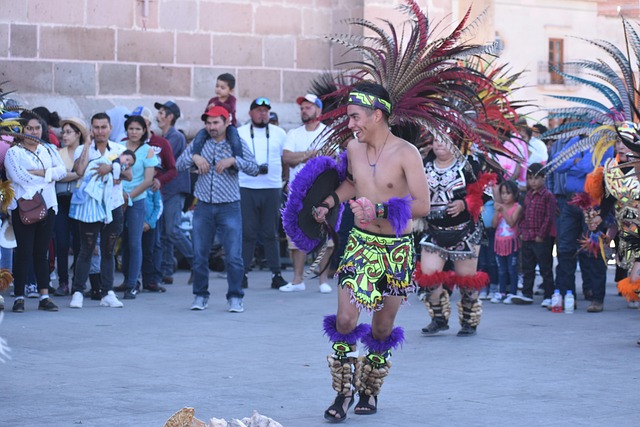
Smaller, more local festivals mark planting and early growth stages throughout the year, and attendance at these tends to be limited mostly to the immediate ceremonial center rather than drawing visitors from further afield the way the Peyote Dance sometimes does. Anthropologists and tourists have occasionally been permitted to observe portions of the larger public festivals, though photography and recording are often restricted, particularly around the most sacred portions of a rite, out of respect for boundaries the community itself sets.
History
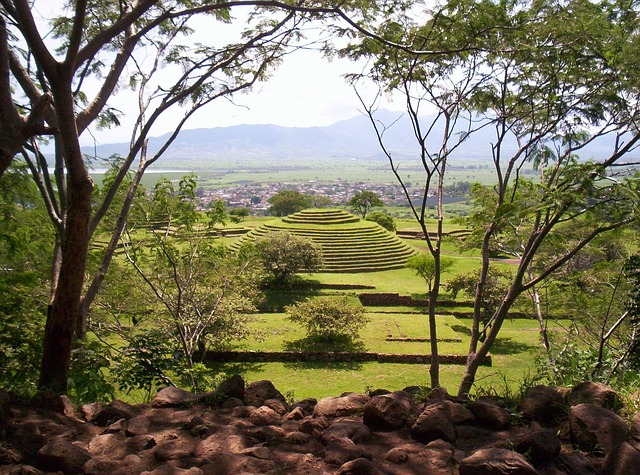
Archaeological sites like Guachimontones, with its distinctive circular step-pyramids, show that organized societies existed in what is now Jalisco long before the Aztec Empire rose in central Mexico. The direct link between these ancient builders and today’s Wixárika is debated, but the sites confirm that the region was never an empty frontier.
Spanish colonization reached the sierra later and less completely than it reached central Mexico, in part because the terrain offered little of immediate value to colonizers and in part because Wixárika communities actively resisted missionary settlement. Jesuit and later Franciscan missions were established at the edges of Wixárika territory, but many communities in the deep sierra maintained their ceremonial system largely outside colonial and later Mexican state control well into the twentieth century.
The mid-twentieth century brought new pressures: land disputes with cattle ranchers, logging concessions, and road-building projects all encroached on Wixárika territory, prompting decades of legal battles over land titles that continue in various forms today.
The 1990s and 2000s saw Wixárika activists gain a higher public profile in Mexico, campaigning successfully in several instances to block or delay mining projects near Wirikuta and drawing national media attention to the desert’s status as sacred ground rather than simply unclaimed federal land. These campaigns connected Wixárika communities with broader Mexican and international indigenous rights networks in ways that would have been unthinkable during the more isolated mid-twentieth century.
Government-run boarding schools established in the mid-twentieth century, intended to integrate Wixárika children into mainstream Mexican society, produced deeply mixed results: many students gained literacy and Spanish fluency useful for later dealings with outside institutions, while others reported pressure to abandon language and dress associated with their home communities, a pattern echoed in indigenous education programs across much of the Americas during the same period.
Today
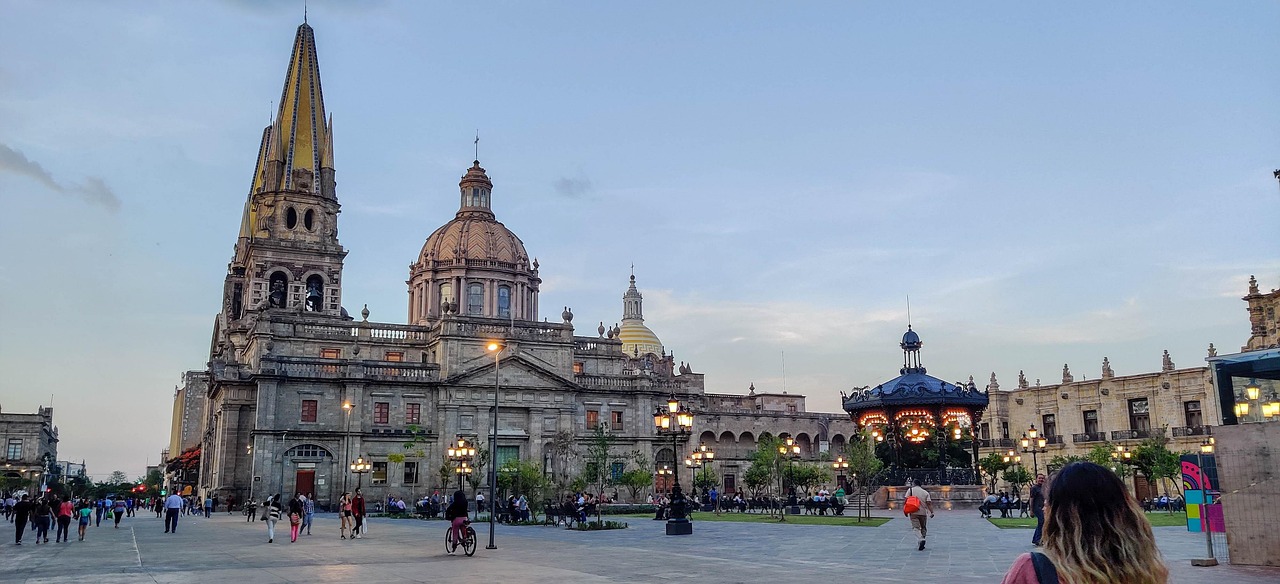
An estimated fifty thousand Wixárika people live today across Jalisco, Nayarit, Zacatecas, and Durango, with growing numbers also settled in cities like Guadalajara and Tepic for work, education, or healthcare unavailable in the sierra. Migration for seasonal agricultural labor, including trips to tomato and tobacco fields in northern Mexico, has long supplemented subsistence farming and remains common.
Mining and agribusiness expansion near Wirikuta have become flashpoints in recent decades, since any industrial disturbance of the desert threatens both the physical peyote habitat and its standing as sacred ground. Wixárika organizations have pursued legal challenges against mining concessions with mixed but occasionally significant success.
Bead art and yarn painting now support a real export market, giving some families a cash income that reduces dependence on migrant labor, though this same market has raised concerns about ceremonial imagery being stripped of meaning when sold purely as decoration. Bilingual schools, community radio, and a growing number of Wixárika professionals are helping the language and its associated knowledge move into the next generation on the community’s own terms.
A small but growing number of young Wixárika now attend Mexican universities, some returning to the sierra as teachers, health workers, or legal advocates equipped to navigate Mexican institutions on the community’s behalf, while others remain in cities and maintain their identity through periodic visits home and continued participation in family ceremonial obligations. Whether this generation manages to keep the deep sierra communities economically viable, or whether migration gradually hollows them out, is arguably the central open question facing the Wixárika in the decades ahead.
Environmental change adds a further layer of pressure on top of land and mining disputes: shifting rainfall patterns linked to broader climate trends have made the already unpredictable sierra growing season even harder to plan around, pushing some families to rely more heavily on wage labor simply to cover years when the maize harvest falls short. Wixárika organizations have begun raising this issue alongside their long-running land and mining campaigns, framing climate adaptation as another front in the same basic struggle to keep the sierra livable on the community’s own terms.
Nearby Peoples of Mexico
- The People Who Never Vanished, the Story of the Maya
- Zapotec: A People Older Than the Aztec Empire
- Mixtec: The Cloud People Who Wrote Their Own History
- Purépecha: The People Who Kept the Aztec Empire Out of Michoacán
- Otomi: The Original Neighbors of the Aztec Capital
- Nahua: The People Behind Mexico’s Name
You May Like
The Damara, an Ancient People of Namibia