High in the pine-covered mountains of northwestern Guatemala, near the Mexican border and among the loftiest ranges in Central America, lives a Maya people whose story bridges two worlds. The Q’anjob’al inhabit the cold, remote towns of the northern Cuchumatanes, speaking a language of their own branch of the Maya family, yet in recent decades they have also become one of the most migratory of all Maya peoples, carrying their language and traditions to distant cities in the United States.
Long isolated in their high valleys, the Q’anjob’al preserved their tongue, their sacred calendar, and their reverence for the mountains through centuries of remoteness. Then poverty, war, and the search for a better life set in motion a great migration that now defines much of their experience. This is an account of who they are: their mountain homeland, their distinct language, their beliefs and customs, the hardships of their history, and the extraordinary journey that links the high Cuchumatanes to America.
Contents
- A People of the Northern Cuchumatanes
- The Name and Its Written Forms
- A Branch Shared by Mountain Neighbors
- High Pine Forests and Cold Valleys
- Life in the Mountains Before the Conquest
- Kinship, Town, and Shared Obligation
- Keepers of the Days and the Sacred Peaks
- Cloth, Custom, and the Cold-Country Way
- Weaving and Work in a Hard Land
- Maize, Potatoes, and Highland Fare
- Patron Saints and the Turning Year
- Conquest, Isolation, and the Road North
- A People Between the Mountains and America
A People of the Northern Cuchumatanes
The Q’anjob’al are a Maya people who make their home in the high, cold country of northwestern Guatemala, in the folds of the Cuchumatanes mountains near the border with Mexico. Their towns sit at great altitude, among pine forests and steep valleys where the climate is harsh and the mist frequent. This remote and demanding landscape shaped a people well adapted to the heights, farming the slopes and building tight-knit communities in one of the most isolated regions of the country.
Set apart from the larger Maya nations of the central highlands, the Q’anjob’al speak a language belonging to a distinct branch of the Maya family, shared with a handful of neighboring peoples in the same mountainous corner. This linguistic distinctiveness, combined with the isolation of their homeland, gave the Q’anjob’al a strong and self-contained identity, rooted in their particular towns and the sacred mountains that surround them.
For centuries the Q’anjob’al lived largely apart from the currents of national life, their remote valleys shielding them from many outside pressures while also leaving them poor and marginalized. In recent decades, however, they have become known for something unexpected in so isolated a people: a vast migration to the United States that has carried Q’anjob’al communities and their language far from the mountains, linking the high Cuchumatanes to distant American cities.

The Name and Its Written Forms
The name Q’anjob’al, like those of other Maya peoples, refers both to the nation and to its language. In older Spanish sources it was commonly written as “Kanjobal,” a spelling still sometimes seen, before the modern orthography developed with Maya linguists settled on the form used today. The newer spelling, with its apostrophes marking glottalized sounds, reflects the effort to represent the language accurately and to reclaim it from the approximations of colonial writing.
To be Q’anjob’al is above all to belong to the cluster of highland towns where the language is spoken and to descend from those who spoke it before. The homeland centers on a group of municipalities in the northern Cuchumatanes, each with its own character and local identity, yet bound together by a shared tongue and a common attachment to the mountainous country they inhabit.
Because they are relatively few and live in so remote a region, the Q’anjob’al are less widely known than the great Maya nations of the central highlands. Yet they form a distinct people with their own language branch, their own customs, and their own history. Their recent prominence in stories of migration has brought them to wider attention, but the heart of Q’anjob’al identity remains where it has always been, in the high towns of the northwestern mountains.
A Branch Shared by Mountain Neighbors
The Q’anjob’al language belongs to its own branch of the Maya family, the Q’anjob’alan group, which it shares with a small number of neighboring languages spoken in the same northwestern highlands, including those of the closely related peoples nearby. This branch is distinct from the K’ichean languages of the central highlands and from the Mamean group, marking the Q’anjob’al as the bearers of yet another separate current within the diverse Maya world.
Spoken by well over a hundred thousand people, Q’anjob’al remains a strong first language in the highland towns, where children learn it at home and use it in daily life. The language has a rich sound system and complex grammar typical of the Maya family, and it carries an oral tradition of stories, prayers, and knowledge tied to the sacred calendar and the mountains. Its vigor in the home has helped it endure despite the pressures of Spanish and migration.
Migration has, remarkably, extended the reach of the language rather than simply eroding it. Q’anjob’al is now spoken in immigrant communities in the United States, where it is heard in workplaces, churches, and even courtrooms far from the mountains, and where the need for interpreters in the language has become a recognized concern. Efforts to teach and sustain Q’anjob’al continue both in the highland towns and, increasingly, among the diaspora that carries it abroad.
The presence of Q’anjob’al in American courtrooms and hospitals is one of the more surprising chapters in the life of the language. Speakers who know little Spanish, let alone English, have carried their mother tongue to places their ancestors could never have imagined, and institutions far from Guatemala have had to reckon with the reality of a Maya language spoken in their midst. In this way the very isolation that once defined Q’anjob’al has given way to an unexpected reach across the continent.
High Pine Forests and Cold Valleys
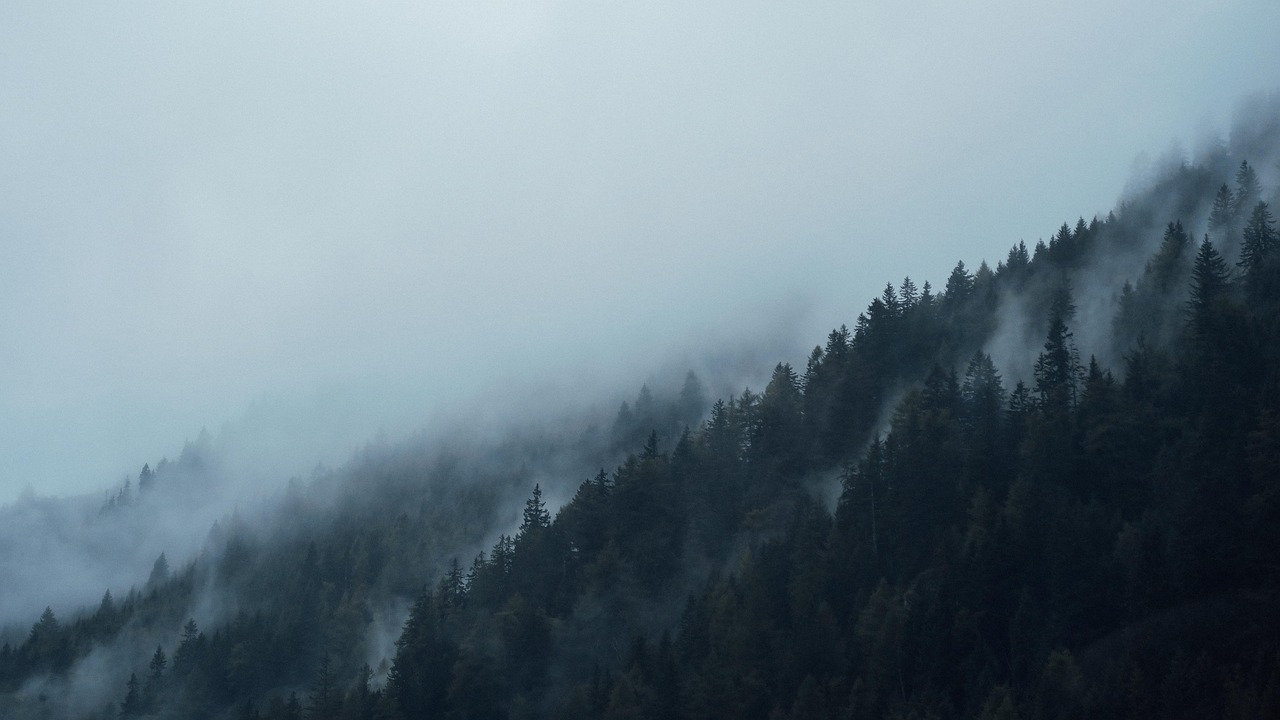
The Q’anjob’al homeland lies among the highest reaches of the Cuchumatanes, in a country of pine-clad ridges, deep valleys, and cold, misty plateaus. The towns sit at elevations where frost is a constant threat and the nights are bitter even in the tropics, and the surrounding forests of pine and cypress give the landscape a character quite different from the drier valleys further south. This is some of the most rugged and elevated inhabited country in Central America.
The altitude and the cold shape every aspect of life, from the crops that can be grown to the heavy clothing that people wear. Maize is cultivated on the slopes alongside potatoes, wheat, and other cool-climate plants, and the forests provide wood, game, and materials for daily use. The mountains themselves are sacred in Q’anjob’al thought, understood as powerful living presences that must be honored with offerings at shrines and high places.
The remoteness of the northern Cuchumatanes long kept the Q’anjob’al apart from the wider country, preserving their language and customs but also leaving the region poor and underserved. Difficult terrain made travel and trade hard, and the towns turned inward upon their own life. In modern times this same poverty and isolation, combined with the pressures of violence and economic hardship, would drive the great migrations that now define so much of Q’anjob’al experience.
There is a particular beauty to this cold, forested country, where clouds drift through stands of pine and the ridges fall away into deep valleys. But beauty has never made the land easy to live in. The thin air, the frost, and the steep slopes demand constant effort from those who farm here, and the same isolation that preserved the Q’anjob’al way of life also cut the towns off from schools, clinics, and markets, leaving a legacy of poverty that migration would later seek to escape.
Life in the Mountains Before the Conquest
Before the Spanish conquest, the Q’anjob’al lived in the northern Cuchumatanes as a distinct people, organized around their highland towns and the farming of the steep, cold slopes. Their remote position kept them somewhat apart from the great highland kingdoms to the south, though they shared the broad cultural patterns of the Maya world and were connected to it through trade and the movement of goods across the mountains.
Theirs was a society of farmers and local leaders rather than a large centralized state, with communities organized around kinship and the demands of high-altitude agriculture. Religion, farming, and the sacred calendar structured life, and offerings to the powers of the mountains and the sky accompanied the agricultural year. Ritual specialists tracked the count of days and guided the ceremonies on which the community’s wellbeing was thought to depend.
The isolation of the northern Cuchumatanes meant that, once established, the pre-conquest way of life changed only slowly, adapted over generations to the particular demands of the cold, forested heights. This deep-rooted stability wove the community’s customs and beliefs tightly into the landscape. Much of this ancient foundation, especially the reverence for the sacred calendar and the mountains, would survive the conquest and persist among the Q’anjob’al into modern times.
Kinship, Town, and Shared Obligation
Q’anjob’al society is built on the town and the extended family, bound together by kinship, marriage, and mutual obligation. In the highland towns and their scattered hamlets, networks of shared labor and reciprocal aid link households, so that neighbors help one another in farming, building, and the sponsorship of festivals. In a poor and isolated region, this dense web of cooperation has long been essential to survival.
Leadership traditionally combined civil and religious authority, with respected elders and those who had served the community through cycles of ceremonial and civic duty holding influence. The keepers of the sacred calendar and the religious brotherhoods that care for the images of the saints form central institutions of Q’anjob’al life. To serve the community through these roles earns honor and standing, creating a ladder of duty that structures social relations.
Migration has placed new strains on this social fabric, as men and sometimes whole families leave for work in the United States, sending money home but also stretching the bonds of community across vast distances. Remittances have reshaped the highland economy, funding houses and businesses, while the absence of so many has altered family life. Yet the ties of kinship and town endure, now stretched between the mountains and distant American cities but still central to what it means to be Q’anjob’al.
The strain that migration places on families is real and often painful. Children may grow up with a parent working thousands of kilometers away, seen only through phone screens and known chiefly through the money that arrives each month. Yet the same remittances that testify to separation also express enduring commitment, as those who have left continue to sustain households, sponsor festivals, and invest in the towns they still call home. The Q’anjob’al community, though stretched across borders, has not come apart.
Keepers of the Days and the Sacred Peaks
Q’anjob’al religious life is notable for the strength with which it has preserved the older Maya reverence for the sacred calendar and the mountains beneath its Catholic surface. The keepers of the days, ritual specialists who track the ancient count, hold a central place, guiding ceremonies tied to planting, healing, birth, and the resolution of misfortune. Their knowledge connects the community to the deep Mesoamerican science of time, and their practice has endured with striking vitality in the remote highlands.
The mountains and high places of the Cuchumatanes are understood as living, sacred presences, and offerings of candles, incense, and prayer are made at shrines to seek rain, health, and protection. The sense that the land itself must be honored and reciprocated runs deep in Q’anjob’al spirituality, giving it a profoundly place-based character that reaches back to before the conquest and persists in the ceremonies of the present.
Over this ancient foundation lies the Catholicism introduced in the colonial period, and in the Q’anjob’al towns people move between veneration of the saints and reverence for the mountains and the sacred days. In recent decades evangelical churches have grown here as elsewhere in Guatemala, and religious life has traveled with the migrants, so that Q’anjob’al devotion is now practiced both in the highland towns and in immigrant congregations abroad. Yet the bond with the sacred calendar and the peaks endures.
Cloth, Custom, and the Cold-Country Way
Handwoven clothing remains an important marker of Q’anjob’al identity, and the cold of the high Cuchumatanes gives their dress a distinctive character. Heavier fabrics suit the frigid climate, and the women’s traditional garments, with their woven and embroidered designs, vary from one town to another, so that dress can announce a person’s home community. Made on the backstrap loom, these textiles carry patterns and meanings passed down through generations.
Beyond dress, Q’anjob’al custom lives in the ceremonies that mark birth, marriage, and death, in the etiquette of respect and the honoring of elders, and in the observances guided by the keepers of the sacred days. The religious brotherhoods and the ritual calendar structure much of ceremonial life. These transmitted customs give the Q’anjob’al towns their distinctive texture and carry forward a shared understanding of how to live rightly in the demanding world of the heights.
Migration has tested these traditions, as young people raised abroad grow up at a distance from the highland customs of their parents. Yet in a striking development, elements of Q’anjob’al culture have also traveled with the diaspora, kept alive in immigrant communities through language, music, food, and religious practice. The tension between preserving tradition in the homeland and sustaining it abroad has become a defining feature of Q’anjob’al cultural life in the present century.
Weaving and Work in a Hard Land
Craft among the Q’anjob’al is dominated by weaving, the art through which women produce the clothing that marks community identity. Working on the backstrap loom, Q’anjob’al weavers build up patterned cloth suited to the cold highland climate, transmitting the knowledge from mother to daughter. This demanding skill is at once practical, artistic, and a vehicle of identity, woven into the very garments people wear each day.
The isolation of the northern Cuchumatanes fostered a largely self-sufficient material culture, in which families produced much of what they needed from the resources of the mountains. Alongside weaving, Q’anjob’al artisans make the tools, containers, and household goods that farming life at altitude requires, working with wood, fiber, and other local materials. These practical crafts form part of a way of life shaped by remoteness and necessity.
In modern times, the economy of the Q’anjob’al towns has been transformed less by craft markets than by migration and the remittances it brings. Money sent home from the United States funds construction, small businesses, and consumption, reshaping local life in ways that traditional crafts alone never could. Weaving endures as a cultural practice and a modest source of income, but the defining economic story of the contemporary Q’anjob’al is the flow of remittances from abroad.
Maize, Potatoes, and Highland Fare
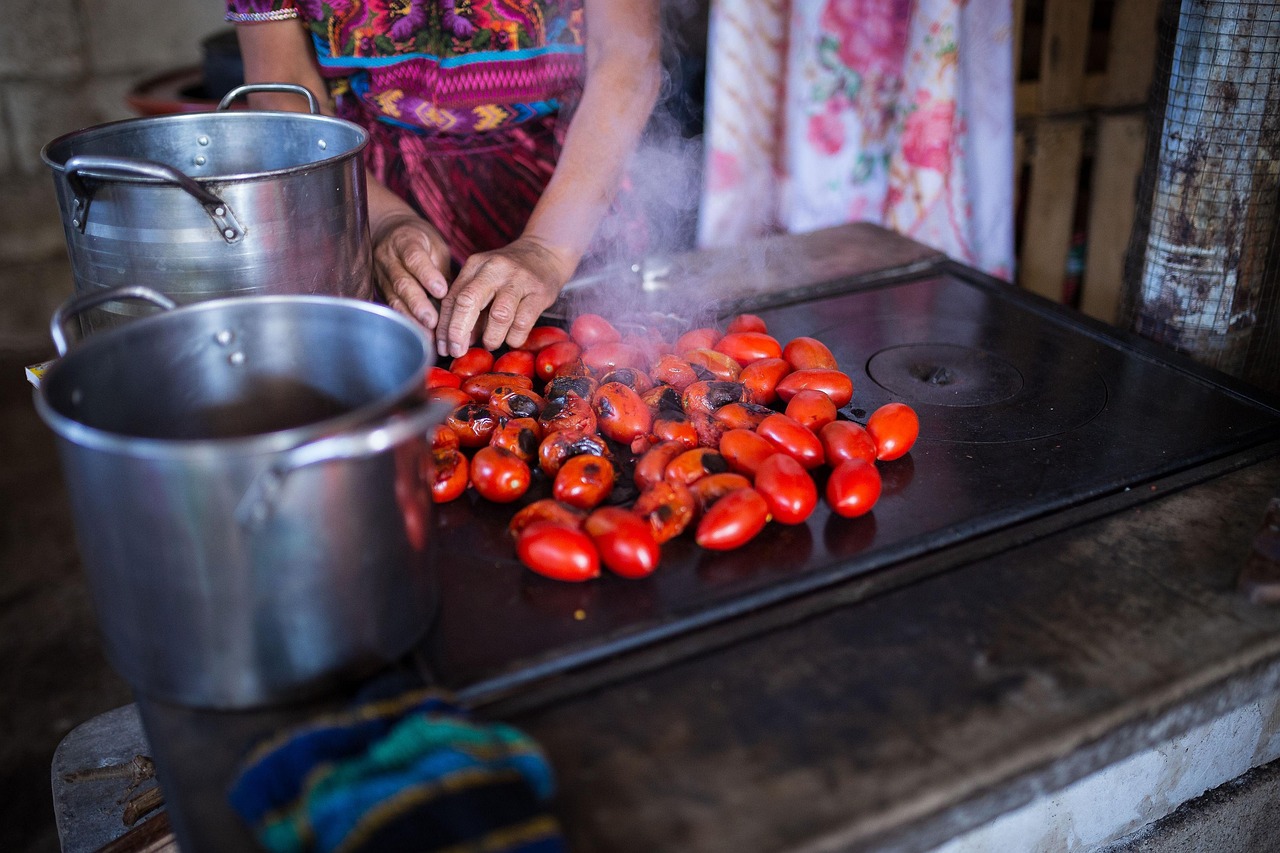
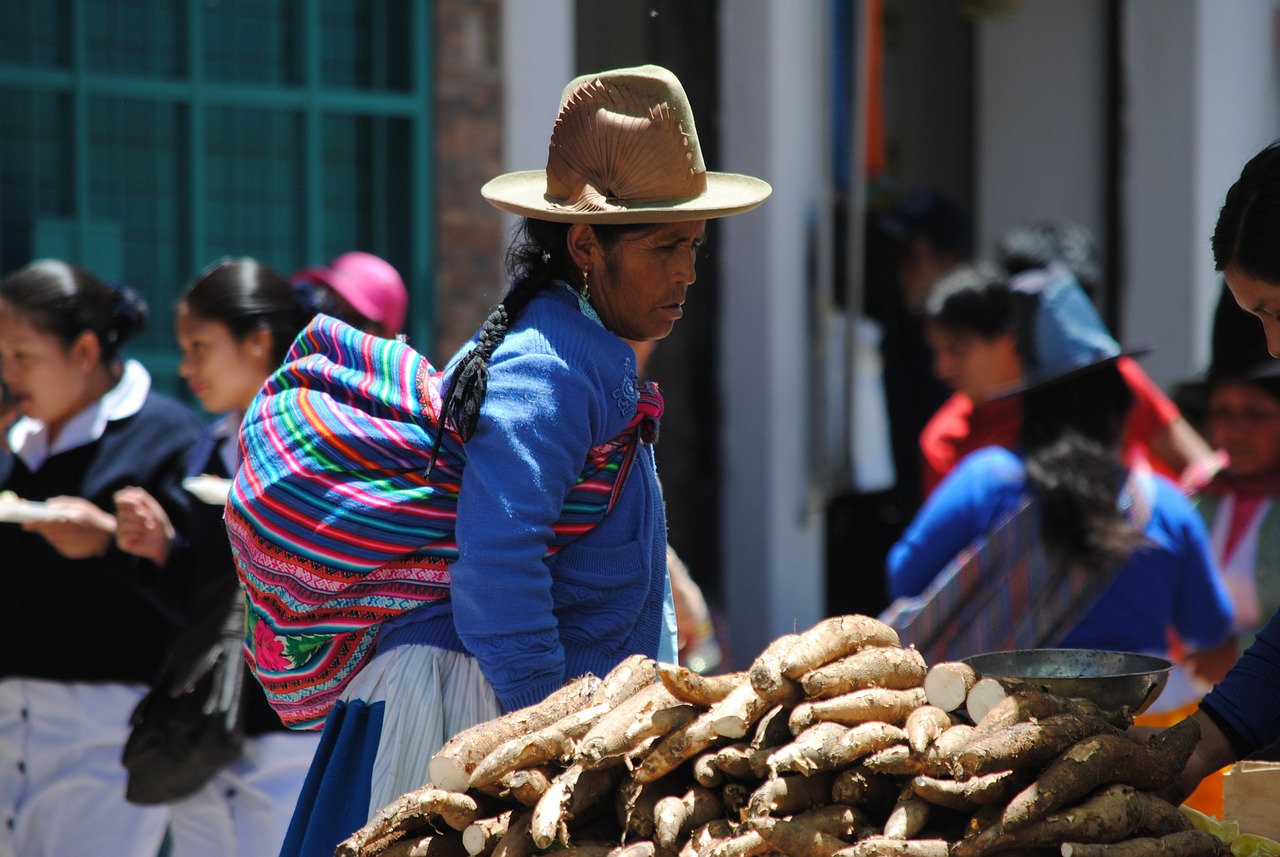
Maize lies at the foundation of the Q’anjob’al diet, as it does across the Maya world, with tortillas and tamales made from lime-treated corn accompanying nearly every meal. Yet the extreme altitude of the northern Cuchumatanes gives their food a distinctive character, for the cold high country supports crops that thrive where lowland staples cannot. Potatoes, wheat, fava beans, and other cool-climate plants join maize on the Q’anjob’al table.
Farming at such heights, on steep and often difficult terrain, demands great effort and constant care, and the risk of frost hangs over the harvest. Meals are hearty and warming, built around maize and beans and supplemented by highland vegetables, with warming drinks and stews providing sustenance in the cold, misty climate. The labor of preparing food is often shared among the women of an extended family.
As throughout the region, food carries meaning beyond nourishment. Special dishes mark weddings, funerals, and religious festivals, and offerings of food to the saints, the ancestors, and the sacred mountains express respect and reciprocity. The sharing of maize retains the deep resonance it holds across the Maya world. In migrant communities abroad, familiar highland dishes have become a way of sustaining identity and connection to the distant homeland.
Patron Saints and the Turning Year
The Q’anjob’al festival calendar interweaves Catholic feast days with older cycles of observance, and each town honors its patron saint with an annual celebration filled with music, dance, processions, and shared meals. These fiestas are among the high points of the year, drawing home those who have moved away, sometimes even from abroad, and renewing the bonds that hold the highland communities together across great distances.
Religious brotherhoods and the keepers of the sacred calendar organize much of this ceremonial life, taking on the honor and the burden of caring for the images of the saints and guiding the observances of the year. Processions carry sacred images through the towns, and offerings of candles, incense, and flowers accompany the celebrations, blending Catholic devotion with older gestures of respect toward the mountains and the sacred days.
Migration has given the festival year a new dimension, as those working abroad send money home to fund celebrations and sometimes return for the patron-saint fiestas of their towns. In this way the great gatherings of the highland calendar have become moments when the scattered Q’anjob’al world briefly reassembles, linking the mountains to the diaspora. Through the round of fiestas, the Q’anjob’al keep time by both the Christian calendar and the ancient reckoning of days, renewing identity and community.
Conquest, Isolation, and the Road North
The Q’anjob’al came under Spanish control in the wake of the conquest of the highlands, and colonial rule brought epidemics, tribute, forced labor, and the reorganization of communities under the Church. Yet the remoteness of the northern Cuchumatanes limited the depth of colonial penetration, and the isolation that made the region poor also helped preserve its language and traditions through the long colonial centuries. For generations the Q’anjob’al lived apart, largely overlooked by the wider country.
The centuries after independence brought new hardships, as coffee estates expanded and demanded labor, drawing highland workers into seasonal migration to distant plantations. The twentieth-century armed conflict reached the northern highlands with violence and displacement, and the combination of war, poverty, and land pressure set in motion a movement that would transform the Q’anjob’al world: mass migration, first within Guatemala and Mexico, and then far to the north.
From the late twentieth century onward, Q’anjob’al migrants traveled in growing numbers to the United States, drawn by the search for work and safety and establishing communities in cities and agricultural regions, with a particularly strong presence in parts of California and Florida. This migration, born of hardship, has become one of the defining features of modern Q’anjob’al history, reshaping the homeland through remittances and creating a diaspora that carries the language and culture far beyond the mountains.
A People Between the Mountains and America
Today the Q’anjob’al number well over a hundred thousand, concentrated in their highland towns in the northern Cuchumatanes but also forming substantial and growing communities in the United States. Few Maya peoples have been so profoundly shaped by migration: the flow of people northward and of money southward has become central to Q’anjob’al life, linking the remote mountains to American cities in a constant exchange of people, remittances, and culture.
This migration has brought both opportunity and dislocation. Remittances have lifted families out of the deepest poverty, funding houses, education, and businesses in the highland towns, while the absence of so many workers has reshaped family and community life. In the United States, Q’anjob’al speakers have become a recognized presence, to the point that their language is now among those for which interpreters are sought in immigration and legal settings, a striking marker of how far the community has traveled.
The challenges are real, from the dangers and hardships of migration to the difficulty of sustaining language and tradition across such distances and among children raised abroad. Yet the Q’anjob’al show striking resilience and adaptability: their language endures in the towns and travels with the diaspora, their sacred calendar and festivals continue, and a strong sense of identity persists across borders. A once-isolated mountain people, the Q’anjob’al now live between two worlds, carrying their heritage from the high Cuchumatanes into the cities of the north.
In this the Q’anjob’al embody a paradox of the modern Maya world. A people once so remote that the nation barely noticed them has become, through migration, one of the most visible Guatemalan communities abroad, its language and presence felt in American schools, farms, and courts. Whether this dispersal ultimately strengthens or erodes Q’anjob’al identity is a question still being answered, town by town and family by family, on both sides of the long road that now binds the Cuchumatanes to the north.

Related Peoples of the Region
- Meꞌphaa Speakers of the Guerrero Mountains and a Language That Stands Alone
- Garifuna Drummers and Cassava Bakers of the Central American Caribbean Coast
- Lenca Potters and River Defenders of the Honduran and Salvadoran Highlands
- K’icheʼ Maya, Guatemala’s Highland Nation of Maize and Memory
- Q’eqchiʼ Maya, a Rainforest People of Guatemala’s Land of True Peace
- Kaqchikel Maya, Guatemala’s Highland Rivals Who Reclaimed Their Freedom
- Mam Maya, a Mountain People of Guatemala’s Highest Frontier
- Tz’utujil Maya, a Lakeside People of Atitlán and Its Volcanoes
- Ixil Maya, Weavers and Survivors of Guatemala’s Mountain Triangle
You May Like
The Damara, an Ancient People of Namibia