The Russians are a people of immense scale, shaped by the largest country on earth, a land so vast that it spans eleven time zones and stretches from the borders of Europe to the shores of the Pacific. Their history is one of endurance against the harshest of climates, of expansion across a continent, of soaring cultural achievement and profound suffering, of autocracy and revolution. From the medieval principalities of Kiev and Moscow to the empire of the tsars, from the upheaval of the Soviet experiment to the uncertain present, the Russians have repeatedly reinvented themselves while clinging to a deep sense of their own distinctiveness, caught perpetually between Europe and Asia and belonging fully to neither.
Who the Russians Are
The Russians are an East Slavic people, the largest ethnic group in Europe, numbering well over a hundred million within the Russian Federation and tens of millions more across the former Soviet republics and a worldwide diaspora. They are bound together by the Russian language, by the Orthodox Christian tradition that shaped their culture for a thousand years, and by a shared historical experience of empire and hardship. Yet Russia itself is a multiethnic state of extraordinary diversity, home to scores of other peoples, many with their own languages and faiths, so that being Russian as a citizen and being Russian as an ethnicity are two distinct things, captured by two different words in the Russian language itself.
In This Article
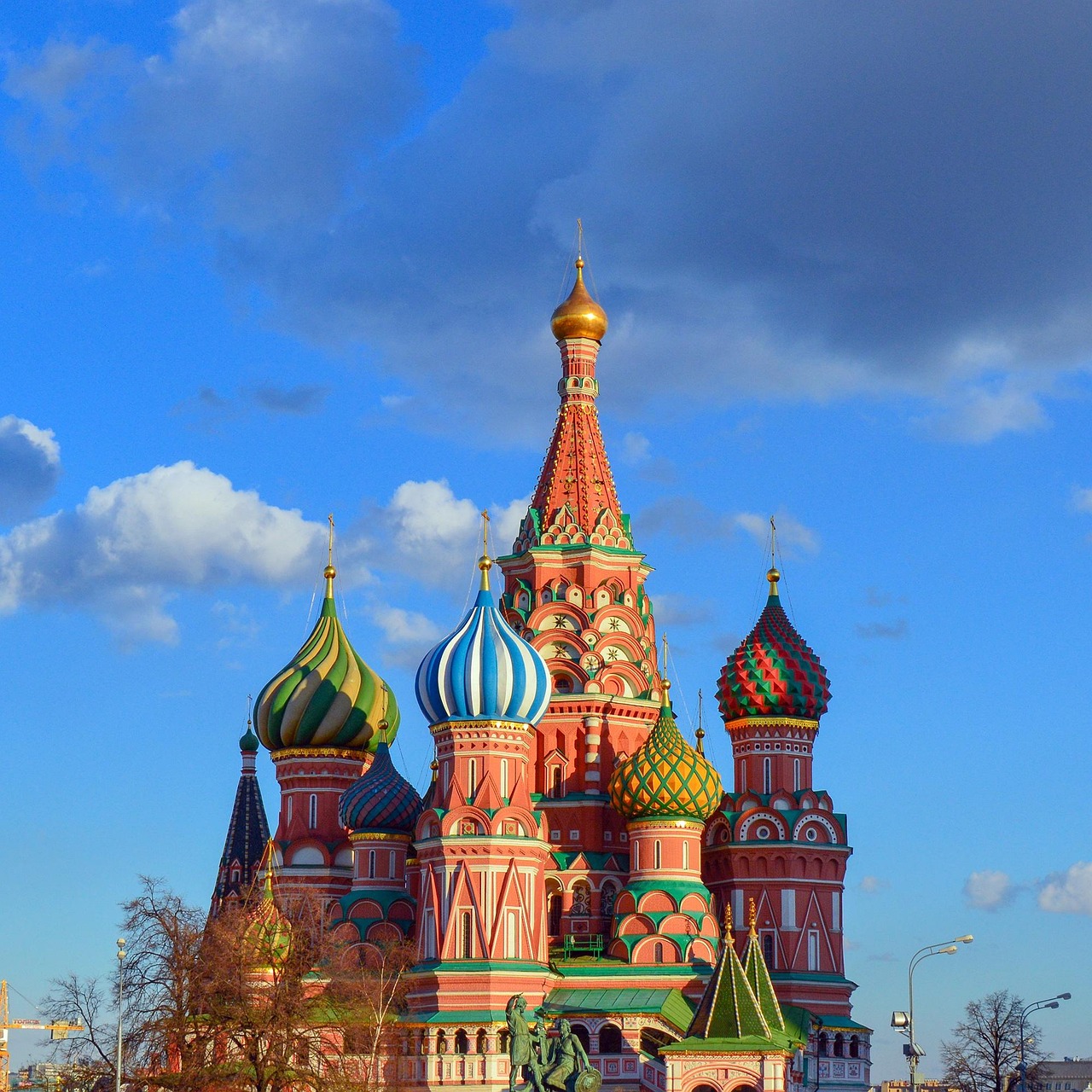
The land has shaped the people profoundly. Much of Russia is cold, flat, and immense, a country of endless plains, vast forests known as the taiga, and the frozen expanse of Siberia, where winters are long and severe. This environment bred a culture that prizes endurance, patience, and a certain fatalism, and it made the warmth of the home, the gathering around the table, and the bonds of family and friendship all the more precious against the cold outside. The Russians have long seen their relationship to this hard, beautiful land as central to who they are.
The Origins of the Rus
The story of the Russians begins among the East Slavic tribes who settled the forests and rivers of eastern Europe in the early medieval period. According to most historians, the first major state, known as Kievan Rus, emerged in the ninth and tenth centuries, centered on Kiev and drawing on trade routes that ran from the Baltic to the Black Sea. The name Rus is itself debated, often connected to Scandinavian Varangians who, the traditional account holds, were invited or came to rule among the Slavs, though the question of their exact role remains a subject of scholarly argument.
The decisive event of this early period was the conversion of Kievan Rus to Orthodox Christianity around the year 988 under Prince Vladimir, who according to tradition chose the faith of Byzantine Constantinople. This single decision bound the emerging Russian culture to the Eastern Christian world rather than the Latin West, bringing with it the Cyrillic alphabet, Byzantine art and architecture, and a religious tradition that would become inseparable from Russian identity. Kievan Rus flourished as a cultured and prosperous realm, but it was fragmented among rival princes when catastrophe arrived from the east.
The Mongol Yoke and the Rise of Moscow
In the thirteenth century the Mongol armies swept across the Russian lands, sacking Kiev and reducing the principalities to tributary subjection under what later Russians called the Mongol or Tatar yoke. For some two and a half centuries the Russian princes paid tribute to the Mongol khans, and historians have long debated how deeply this experience shaped Russian political culture, with many arguing that it contributed to traditions of centralized, autocratic rule. Whatever its precise effect, the period of Mongol domination decisively shifted the center of Russian life away from Kiev.

It was the once-minor principality of Moscow that gradually rose to leadership, its princes accumulating power, gathering the Russian lands, and eventually throwing off Mongol overlordship. By the late fifteenth century, under Ivan the Third, Moscow had become the center of an independent and expanding Russian state, and its rulers began to see themselves as heirs to the fallen Byzantine Empire, casting Moscow as a Third Rome and the protector of Orthodox Christianity. The grand princes took the title of tsar, derived from the Roman Caesar, and the foundations of the Russian empire were laid.
The Empire of the Tsars
Over the following centuries the Russian state expanded relentlessly in every direction, absorbing the Tatar khanates, pushing across the whole of Siberia to the Pacific in a remarkable surge of exploration and conquest, and contesting the western borderlands with Poland, Sweden, and the Ottomans. Ivan the Fourth, remembered as Ivan the Terrible, vastly expanded the realm while ruling with a violence and paranoia that became legendary. After a period of chaos known as the Time of Troubles, the Romanov dynasty took the throne in 1613 and would rule until the revolution three centuries later.

The most transformative of the Romanovs was Peter the Great, who at the turn of the eighteenth century forced Russia to modernize along Western European lines, building a new capital, Saint Petersburg, as a window onto Europe and dragging a reluctant nobility into new ways. Later in the century Catherine the Great, an enlightened and ruthless empress, extended Russia borders and cultural prestige. Yet beneath the glittering court culture lay the brutal institution of serfdom, which bound the great mass of Russian peasants to the land and to their landlords in conditions close to slavery, a system not abolished until 1861. The empire was simultaneously one of Europe great powers and a deeply unequal society straining under enormous internal tensions.
The Golden Age of Russian Culture
The nineteenth century, for all its political repression, was a golden age of Russian culture whose influence on the world is impossible to overstate. In literature, Russia produced a constellation of writers of the very first rank: Alexander Pushkin, regarded as the founder of modern Russian literature; Nikolai Gogol with his dark comedy; and above all the towering novelists Fyodor Dostoevsky, whose explorations of faith, guilt, and the human soul reshaped the novel, and Leo Tolstoy, whose War and Peace and Anna Karenina are among the supreme achievements of world fiction. Anton Chekhov transformed the short story and the theater.

Russian music reached comparable heights, from Tchaikovsky symphonies and ballets to the works of Mussorgsky, Rimsky-Korsakov, and later Rachmaninoff, Stravinsky, and Shostakovich. Russian ballet, centered on the great companies of Saint Petersburg and Moscow, set the world standard for the art. In science, Russians made fundamental contributions, among them Dmitri Mendeleev, who devised the periodic table of the elements. This extraordinary flowering, achieved under an autocratic regime and often by artists in tension with it, gave the world a body of work that defines Russian identity as much as any tsar or battle, and it remains the nation proudest legacy.
Revolution and the Soviet Century
The strains of empire, war, and inequality finally shattered the old order. The catastrophic losses of the First World War, on top of generations of repression and poverty, brought down the monarchy in 1917, and within months the Bolsheviks led by Vladimir Lenin seized power in the October Revolution, founding the world first communist state. After a brutal civil war the Soviet Union was established, an attempt to build a wholly new kind of society that would dominate Russian life for the rest of the century and reshape the politics of the entire world.
Honesty about Russian history demands a clear reckoning with what followed. Under Joseph Stalin, the Soviet state forced through rapid industrialization and the collectivization of agriculture at a staggering human cost, including famines that killed millions, and unleashed waves of political terror, the purges and the vast network of labor camps known as the Gulag, in which millions more perished or suffered. At the same time, the Soviet Union bore the heaviest burden of the Second World War, suffering some twenty-seven million dead in the struggle against Nazi Germany, a sacrifice central to how Russians remember themselves, and emerged as one of two global superpowers. The Soviet era brought mass literacy, industrial power, and the first human spaceflight under Yuri Gagarin, alongside repression, scarcity, and the suffocation of freedom, a contradiction that still shapes how Russians view their past.
Faith, Family, and Russian Life
Orthodox Christianity has been at the heart of Russian culture for over a thousand years, expressed in the golden onion domes, the haunting choral music, the veneration of icons, and the great church calendar of fasts and feasts. The Soviet state waged a long campaign against religion, closing churches and persecuting believers, yet faith survived, and after the collapse of communism the Orthodox Church experienced a powerful revival and reasserted its place at the center of Russian national identity.

Beyond formal religion, Russian life is marked by a distinctive social warmth that contrasts with a reserve toward strangers. Russians are famous for the depth of their friendships, the importance of family, and the rituals of hospitality, the long meals, the tea from the samovar, the toasts at the table. The country traditions, the bathhouse or banya, the celebration of the New Year, the dacha or country cottage where city families retreat in summer, and a rich heritage of folk tales and proverbs all express a culture that finds meaning in endurance, depth of feeling, and the bonds between people, qualities Russians often contrast proudly with what they see as the shallower individualism of the West.
A Land Beyond Imagining
To grasp the Russians, one must first grasp the sheer scale of the land that made them. Russia is by far the largest country on earth, nearly twice the size of the next largest, sprawling across the whole of northern Asia and a large part of eastern Europe. The conquest and settlement of Siberia, beginning in the sixteenth century, was an epic comparable to the European settlement of the Americas, as Cossacks, traders, and adventurers pushed across rivers and mountains in pursuit of fur until they reached the Pacific, and later the colossal mineral and energy wealth beneath the frozen ground.
This vastness has been both Russia greatest asset and a perennial challenge. The endless space gave the country strategic depth that defeated would-be conquerors from Napoleon to Hitler, who found their armies swallowed by distance and winter. It provided immense natural resources, the oil, gas, timber, and minerals that have underpinned the modern economy. But it also created enormous problems of governance, communication, and development, vast regions thinly populated and hard to reach, and it reinforced a tradition of strong central authority seen as necessary to hold so immense a territory together. The Russian relationship to space and distance, to the long road and the open plain, runs deep in the literature and the folk imagination alike.
The Russian Language and Word
The Russian language, written in the Cyrillic alphabet adapted from Greek by missionaries to the Slavs, is one of the world major languages, the most widely spoken of the Slavic tongues and long a lingua franca across the enormous space of the former Soviet Union. Rich, flexible, and famously expressive, it became in the nineteenth century the vehicle of one of the supreme literary traditions in human history, and Russians have long regarded their language and its literature with a reverence that approaches the sacred. The figure of the writer as the conscience of the nation, telling truths the state would suppress, is a deeply Russian idea, embodied later in the twentieth century by figures such as Alexander Solzhenitsyn, who chronicled the horrors of the labor camps, and the poets who paid for their honesty with their freedom or their lives.
Russian achievement in science and exploration is equally striking. Beyond Mendeleev periodic table, Russians and Soviets pioneered fields from mathematics to space science, and it was the Soviet Union that launched the first artificial satellite, Sputnik, and sent the first human, Yuri Gagarin, into orbit, opening the space age. Russian mathematicians, physicists, and chemists have stood at the forefront of their disciplines, and the tradition of rigorous education in the sciences remains one of the country enduring strengths. This combination of literary depth and scientific power is a defining feature of what the Russians have given the world.
The Russians Today
The Soviet Union collapsed in 1991, and the Russians entered a turbulent new era marked first by economic chaos and the painful transition away from a planned economy, and then by a reassertion of strong central authority. Modern Russia remains a country of enormous resources, scientific and cultural talent, and great power ambitions, while wrestling with deep questions about its political direction, its relationship with the wider world, and the legacy of its Soviet and imperial past. The Russians continue to debate, as they have for centuries, whether their destiny lies with Europe, with Asia, or on a path uniquely their own.
Through all the upheavals of their history, the Russians have remained a people defined by endurance, by an attachment to their vast and demanding land, and by a cultural inheritance, the novels, the music, the faith, the language, that ranks among humanity greatest. Their story holds extraordinary achievement and terrible suffering in the same frame, often inseparably, and it resists easy summary. To understand the Russians is to grapple with a people who have given the world Tolstoy and Tchaikovsky and the conquest of space, and who have also lived through serfdom, terror, and war on a scale few nations have known, and who have carried both into a sense of themselves as a people apart, profound, suffering, and unbowed.
You May Like
The Zaza, a Mountain People of Eastern Anatolia


One thought on “A People Forged by Endless Land and Hard Russian Winters”