The Portuguese are a small people who once mapped the world. From a narrow strip of land on the western edge of Europe, facing nothing but the open Atlantic, they launched the great age of seaborne discovery, pioneering the ocean routes that first linked Europe to Africa, Asia, and the Americas and binding the planet together in a way it had never been before. Their language is spoken today by more than two hundred and fifty million people on four continents. Yet alongside the pride of exploration lies the weight of empire, of conquest and the slave trade, and a national temperament marked by a wistful longing the Portuguese capture in a single untranslatable word, saudade. To understand the Portuguese is to understand how a tiny kingdom on the Atlantic became, for a time, the center of a global world.
Who the Portuguese Are
The Portuguese are the people of Portugal, the westernmost country of mainland Europe, numbering around ten million at home with a vast diaspora spread across the world, from Brazil and the United States to France, Switzerland, and the former colonies in Africa and Asia. They speak Portuguese, a Romance language descended from Latin and closely related to the language of the neighboring Spanish, and they are bound by a strong sense of national identity that is among the oldest in Europe, for Portugal borders have remained remarkably stable since the thirteenth century, making it one of the oldest continuously existing nation-states on the continent.
In This Article
- Who the Portuguese Are
- The Birth of Portugal
- The Age of Discovery
- Empire, Riches, and the Slave Trade
- Decline, Earthquake, and Endurance
- Language, Fado, and the Portuguese Soul
- The Revolution and the Return to Europe
- Writers, Poets, and the Portuguese Mind
- A Bridge Between Continents
- The Portuguese Today
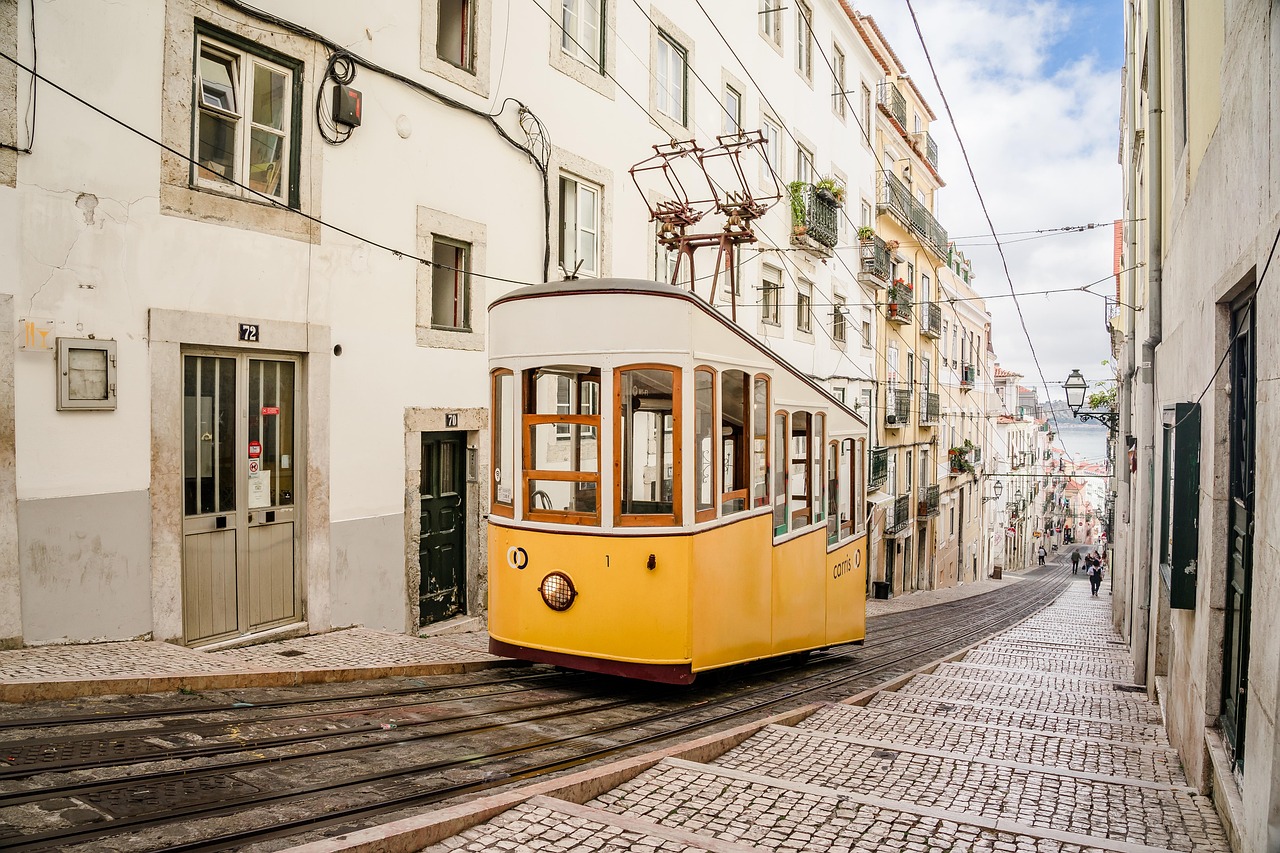
The Portuguese character is often described as gentle, melancholic, and warm, shaped by the sea that surrounds them and the long history of departure and return that seafaring and emigration have woven into national life. Theirs is a culture of hospitality and close family bonds, of a deep attachment to tradition and place, and of that famous saudade, a bittersweet yearning for something or someone absent, distant, or lost, which suffuses Portuguese music, poetry, and the national sensibility. It is the emotional signature of a people long accustomed to watching loved ones sail over the horizon.
The Birth of Portugal
Like its neighbor Spain, the land that became Portugal was shaped by successive waves of peoples, Celts, Romans, Germanic Suebi and Visigoths, and then the Muslims who conquered most of the Iberian Peninsula in the eighth century. The Romans left the deep foundation of Latin language and culture in the province they called Lusitania, a name the Portuguese still use poetically for themselves. Centuries of Muslim rule left their own mark on the south, in agriculture, architecture, and vocabulary, before the long Christian reconquest pushed the frontier southward.
Portugal emerged as a distinct kingdom in the twelfth century, when a county on the northwestern edge of the peninsula won its independence under its first king, Afonso Henriques. Over the following century the young kingdom expanded southward, completing its reconquest of the Algarve by the mid-thirteenth century and establishing the borders it has largely kept ever since. This early consolidation gave Portugal a head start in forging a unified national identity, and by the late Middle Ages it was a stable, seafaring kingdom poised, almost uniquely in Europe, to look outward across the unknown ocean.

The Age of Discovery
The single most consequential thing the Portuguese ever did was to open the sea roads of the world. In the fifteenth century, under the patronage of figures such as Prince Henry, called the Navigator, the Portuguese began systematically exploring the Atlantic coast of Africa, developing new ships, navigational techniques, and charts that pushed ever farther into waters Europeans had never sailed. Step by step they rounded the bulge of Africa, and in 1488 Bartolomeu Dias rounded the Cape of Good Hope at the continent southern tip.

Then came the voyages that changed history. In 1498 Vasco da Gama reached India by sea, opening a direct ocean route to the spice markets of Asia and breaking the old overland monopolies. In 1500 a Portuguese fleet reached Brazil. And in the service of Spain, the Portuguese navigator Ferdinand Magellan launched the first expedition to circumnavigate the globe. Within a generation the Portuguese had built a maritime empire of trading posts and fortresses stretching from Brazil across Africa to India, the East Indies, and the coast of China at Macau. For a small kingdom of perhaps a million people, it was an astonishing feat of daring, organization, and seamanship that quite literally redrew the map of the world.
Empire, Riches, and the Slave Trade
The Portuguese seaborne empire brought immense wealth, flooding Lisbon with the spices, gold, and goods of distant lands and making it one of the great cities of Renaissance Europe. The monuments of this golden age, the great monastery and tower at Belem in Lisbon, built in the ornate style named Manueline after the king of the era, still stand as expressions of the confidence and riches of the discoveries.
Honesty requires placing the darker side of this empire squarely alongside its achievements. The Portuguese were pioneers not only of exploration but of the Atlantic slave trade, beginning the European trafficking of enslaved Africans in the fifteenth century and continuing it on a vast scale for centuries, above all to feed the plantations of Brazil. Millions of human beings were enslaved and transported in conditions of appalling cruelty, and the wealth of the empire was built in large part on their suffering and on the conquest and exploitation of colonized peoples across the globe. This legacy is inseparable from the story of Portuguese expansion, and modern Portugal has increasingly come to confront it as part of an honest reckoning with its past.
Decline, Earthquake, and Endurance
Portugal could not long sustain a global empire on so small a population, and over the following centuries it was overtaken by larger rivals, the Dutch, English, and French, who seized parts of its trading network. A devastating blow came in 1755, when a catastrophic earthquake, followed by a tsunami and fire, destroyed much of Lisbon and killed tens of thousands, an event that shook the confidence of Enlightenment Europe and prompted profound reflection on the nature of suffering and divine justice. The capable minister known as the Marquis of Pombal rebuilt the city on rational, modern lines, giving Lisbon its elegant downtown grid.

The nineteenth century brought further upheaval, including the flight of the Portuguese court to Brazil during the Napoleonic Wars and the eventual independence of Brazil, the jewel of the empire, in 1822. Portugal entered the modern era diminished and often impoverished, clinging to its remaining African colonies, and in the twentieth century it fell under a long authoritarian dictatorship, the Estado Novo, led for decades by Antonio de Oliveira Salazar, which kept the country poor, isolated, and mired in brutal colonial wars in Africa.
Language, Fado, and the Portuguese Soul
The Portuguese language is the great living legacy of the discoveries, carried by sailors, settlers, and missionaries to every continent and now one of the most widely spoken languages on earth, the mother tongue of Brazil and the official language of nations across Africa and in Asia. This global community of Portuguese speakers, known as the Lusophone world, gives a small European country a vast cultural reach and a deep bond with distant lands, above all with Brazil, its giant former colony and partner in language and culture.

At the heart of Portuguese culture stands fado, the haunting musical genre born in the streets of Lisbon, whose mournful songs of longing, the sea, fate, and love lost give voice to the national feeling of saudade more perfectly than anything else. Sung to the accompaniment of the Portuguese guitar, fado has been recognized as part of the cultural heritage of humanity and remains the emotional soul of the nation. Portuguese culture also expresses itself in the beautiful blue-and-white azulejo tiles that adorn churches, palaces, and ordinary houses alike, in a rich Catholic tradition of festivals and pilgrimages, and in a cuisine built on the bounty of the sea, above all the salted cod, bacalhau, said to have a thousand different preparations.
The Revolution and the Return to Europe
The turning point of modern Portugal came in 1974 with the Carnation Revolution, a remarkable and almost bloodless military coup that overthrew the long dictatorship and was met by crowds placing carnations in the barrels of soldiers rifles. The revolution brought democracy to Portugal and ended its colonial wars, leading to the rapid independence of its African colonies, Angola, Mozambique, and the others, and to the return of hundreds of thousands of Portuguese settlers to a homeland many had never known.

Freed from dictatorship and empire, Portugal turned decisively toward Europe, joining the European Community in 1986 and embracing democracy and modernization. The decades since have transformed the country, bringing prosperity, investment, and a place in the European mainstream after centuries on its margins. The Carnation Revolution is remembered with pride as the moment Portugal reclaimed its freedom, and its anniversary remains a cherished national celebration.
Writers, Poets, and the Portuguese Mind
For a small nation, Portugal has produced a literature of remarkable depth, much of it bound up with the sea and the experience of empire. The supreme figure is Luis de Camoes, the sixteenth-century poet whose epic The Lusiads celebrated the voyages of Vasco da Gama and the discoveries, and who became to Portugal what Dante is to Italy, the national poet whose work helped define the language and the self-image of the people. The day of his death is marked as Portugal national day, a sign of how completely literature and nationhood are intertwined.
In the modern era Portugal gave the world Fernando Pessoa, one of the most original poets of the twentieth century, who wrote under a series of distinct invented personalities, and Jose Saramago, whose novels won him the Nobel Prize in Literature. This literary tradition, contemplative, melancholic, and preoccupied with memory, identity, and the sea, expresses the same sensibility that animates fado and the national feeling of saudade. The Portuguese have long been a people who turn their longing into art, finding in poetry and song a way to hold together pride and sorrow, presence and loss.
A Bridge Between Continents
Perhaps the most enduring achievement of the Portuguese is the web of human connections their expansion created, a Lusophone world that today links Europe, South America, Africa, and Asia through a shared language and tangled common history. Brazil, with its more than two hundred million people, is by far the largest Portuguese-speaking nation, a giant whose music, football, and culture flow back to enrich the mother country as much as the reverse. In Africa, nations such as Angola, Mozambique, Cape Verde, and Guinea-Bissau carry the language forward, while in Asia traces of the Portuguese presence linger from Goa in India to Macau in China and East Timor.
This far-flung family of nations, bound by language if not always by easy memory, gives Portugal a cultural and diplomatic reach far beyond its size, and the Portuguese themselves remain among the most widely emigrated peoples of Europe, with large communities that have carried their food, festivals, and traditions across the globe. The story of the Portuguese is, in the end, a story of connection, of a small people on the Atlantic shore who first stitched the continents together, for good and for ill, and whose language and culture still span the oceans they were the first to cross.
The Portuguese Today
Modern Portugal is a stable, prosperous European democracy that has reinvented itself as one of the most welcoming countries on the continent, drawing travelers and new residents with its mild climate, beautiful coastlines, historic cities, food, and famously safe and friendly society. Lisbon and Porto have become vibrant, cosmopolitan cities, and the country has won admiration for its quality of life, its tolerance, and its gentle pace.
Portugal faces the challenges common to small European nations, an aging population, the long history of emigration that has scattered its people across the world, and the task of honestly remembering both the glories and the crimes of its imperial past. Yet the enduring character of the Portuguese remains clear: a seafaring people of warmth and melancholy, of deep roots and far horizons, who from a small corner of Europe once connected the whole world, and who carry that history, with all its pride and its sorrow, in the language they gave to hundreds of millions and in the saudade that colors their songs. Few peoples so small have left so large a mark upon the earth.
You May Like
The Zaza, a Mountain People of Eastern Anatolia