The Romanians are one of the great puzzles and survivors of European history, a Latin people stranded among Slavs, a nation that speaks a tongue descended from the language of Rome in a corner of Europe far from Italy and surrounded by peoples of entirely different origins. Their very name proclaims their identity, for they call themselves the people of Rome, the heirs, they believe, of the Roman colonists who settled the ancient land of Dacia nearly two thousand years ago. How a Latin-speaking people came to survive and flourish in the lower Danube, encircled by Slavic, Hungarian, and Turkic neighbors, through centuries of invasion and domination, is one of the most remarkable stories in the history of the continent.
Romania is a country of dramatic landscapes and dramatic history, of the great arc of the Carpathian mountains, the legends of Transylvania, the wide plains of the Danube, and the marshes of the delta where the great river meets the sea. It is a land that was fought over by empires, the Romans, the Ottomans, the Habsburgs, the Russians, and that only came together as a single nation in the modern age. The Romanians endured centuries as principalities under foreign suzerainty, found unity and independence at last, suffered one of the cruelest of the communist dictatorships, and overthrew it in the bloodiest of the revolutions that ended the Cold War. To understand the Romanians is to understand a people who held on to a Latin soul in a Slavic sea, and who have shown, across two thousand years, an extraordinary gift for survival.
In This Article
- A land of mountains, plains, and a great river
- The Roman inheritance
- The medieval principalities
- Transylvania, the contested heart
- The birth of modern Romania
- War, dictatorship, and the communist seizure
- The Ceausescu years
- The violent fall of communism
- The Latin people of the east
- Folklore, faith, and a living peasant world
- The Romanians today
- What the Romanian story tells us
A land of mountains, plains, and a great river
Romania is a large country in southeastern Europe, shaped by three great geographical features. Curving through its centre is the great arc of the Carpathian mountains, dividing the country into distinct regions and giving it some of the most beautiful and least-spoiled wilderness in Europe, home to forests, bears, wolves, and remote mountain villages. Within the embrace of the Carpathians lies the plateau of Transylvania, a region whose very name conjures images of mist-shrouded castles and ancient legend. Beyond the mountains spread the wide, fertile plains of Wallachia and Moldavia, the historic Romanian lands along the Danube, which forms much of the country’s southern border before turning north and east to reach the Black Sea.
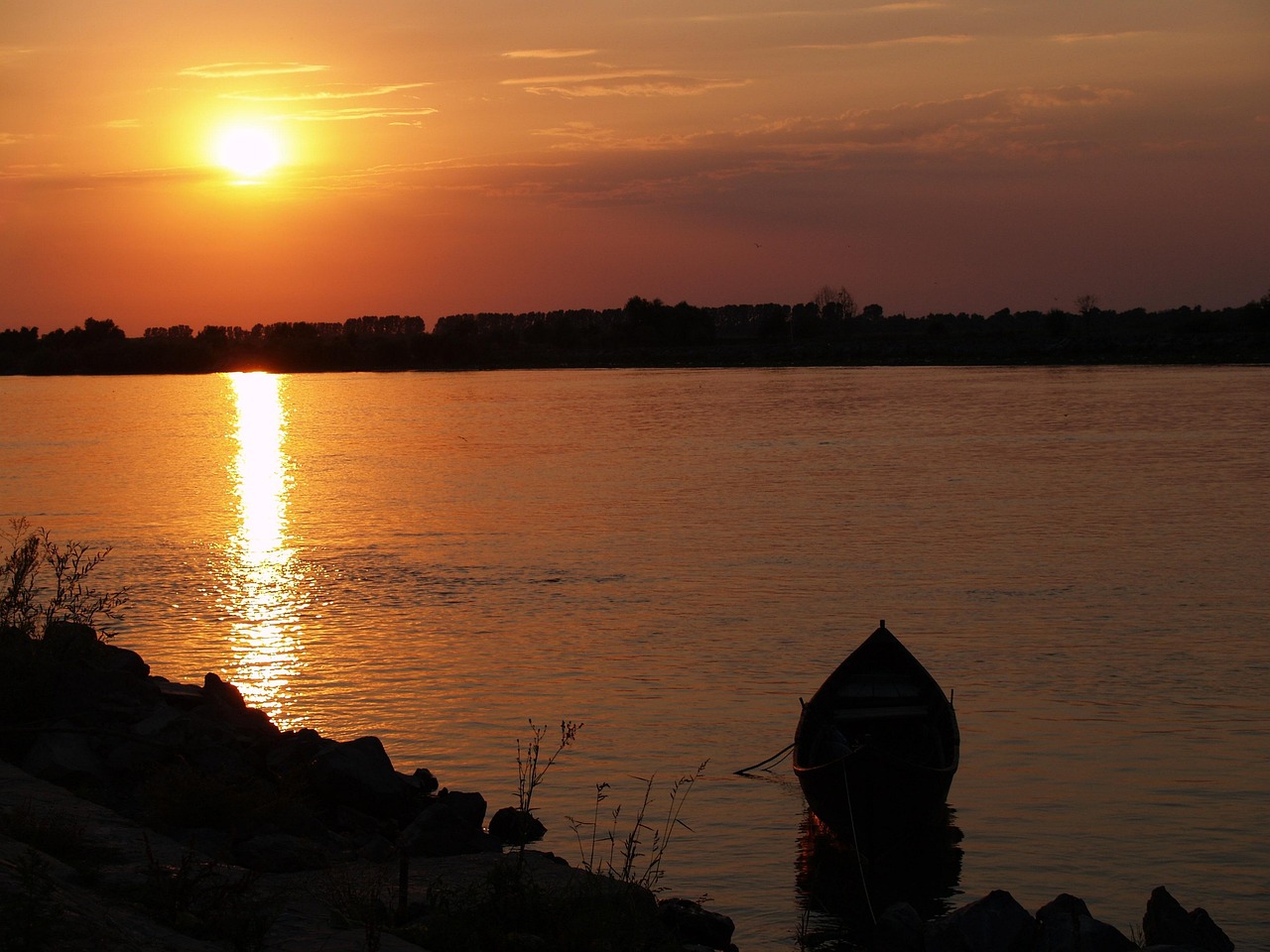
At the river’s end lies the Danube Delta, one of the great wetlands of Europe, a vast labyrinth of channels, reeds, and lakes teeming with birds and wildlife, where the mighty Danube finally empties into the sea. This varied geography, mountain and plain and river and coast, made Romania a rich and desirable land, but it also lay open to invasion and on the great routes between Europe and Asia. The mountains offered refuge and the plains offered plenty, and the Romanian people took shape in the interplay between the sheltering highlands, where they could preserve their identity, and the exposed lowlands, where empires marched and fought. The Carpathians in particular, running through the heart of the country, became both a fortress and a symbol of the Romanian homeland.
The Roman inheritance
The Romanians trace their origins to the ancient meeting of Rome and Dacia. In antiquity this land was home to the Dacians, a people whom the Roman Empire conquered in the early second century after fierce wars, turning the region into the Roman province of Dacia. Roman colonists, soldiers, and settlers came to the new province, and the Latin language took root among the population. When the Roman legions withdrew less than two centuries later, under pressure from invading peoples, they left behind, according to the traditional Romanian account, a Latinized population that survived the long centuries of upheaval that followed, preserving its Latin speech even as wave after wave of Goths, Huns, Slavs, and others swept across the land.
This is the foundation of Romanian identity, the conviction that they are a Latin island, descendants of Rome, who held on to their Roman heritage through the darkest of times. The Romanian language is the living proof, a Romance language clearly descended from Latin, the eastern cousin of Italian, French, Spanish, and Portuguese, though enriched over the centuries with many Slavic and other words absorbed from the surrounding peoples. The exact details of how this Latin population survived are debated by historians, and the long centuries between the Roman withdrawal and the clear emergence of the Romanians in the medieval record are obscure. But the result is beyond dispute, a Romance-speaking people in the lower Danube, a fragment of the Roman world that endured where all expectation might have said it should have vanished.
The medieval principalities
The Romanians emerge clearly into history in the Middle Ages, organized into two principalities, Wallachia on the plains south of the Carpathians and Moldavia to the east, while the third great Romanian region, Transylvania, lay under Hungarian rule. These principalities were Orthodox Christian in faith, looking culturally toward the Byzantine world and later toward the wider Orthodox community, and they developed their own princes, traditions, and identity. They were small powers caught between the great forces of the region, the kingdom of Hungary, the kingdom of Poland, and, increasingly, the rising might of the Ottoman Empire.
The most famous figures of this medieval age are warrior princes who fought to defend their lands against the Ottomans, among them Stephen the Great of Moldavia, revered as a national hero and a defender of Christendom, and the Wallachian prince Vlad the Impaler, whose ferocious resistance to the Turks and whose gruesome reputation for cruelty later inspired, at a great distance and with much invention, the legend of Dracula. These princes won famous victories and inflicted heavy defeats on far larger Ottoman armies, but in the end the principalities could not withstand the Ottoman tide. Rather than being conquered and occupied outright like the Balkan lands to the south, however, Wallachia and Moldavia became tributary states, retaining their own princes and a measure of autonomy while acknowledging the sultan’s overlordship and paying tribute. This semi-independent status preserved the Romanian principalities and their Orthodox identity through the long Ottoman centuries.
Transylvania, the contested heart
No part of the Romanian story is more storied or more contested than Transylvania. This mountain-ringed plateau, with its Saxon towns, its Hungarian nobles, and its Romanian peasantry, was for centuries ruled not by the Romanian principalities but by the kingdom of Hungary and later the Habsburg Empire. Yet it was home to a large Romanian population, and Romanians have always regarded it as an integral part of their national homeland, the very region where, they hold, their Roman ancestors first took root. Transylvania thus became the focus of a long and bitter rivalry between Romanians and Hungarians, both of whom claimed it as their own.
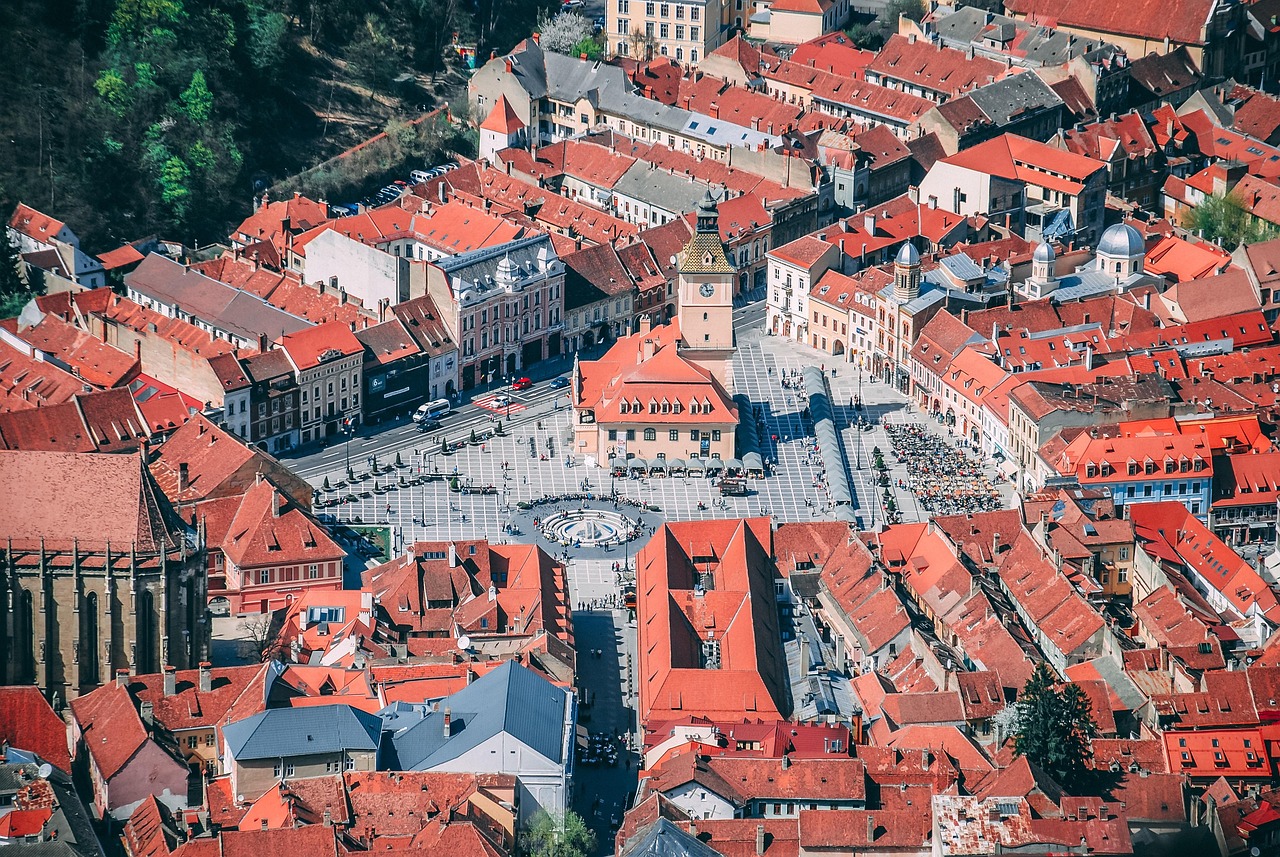
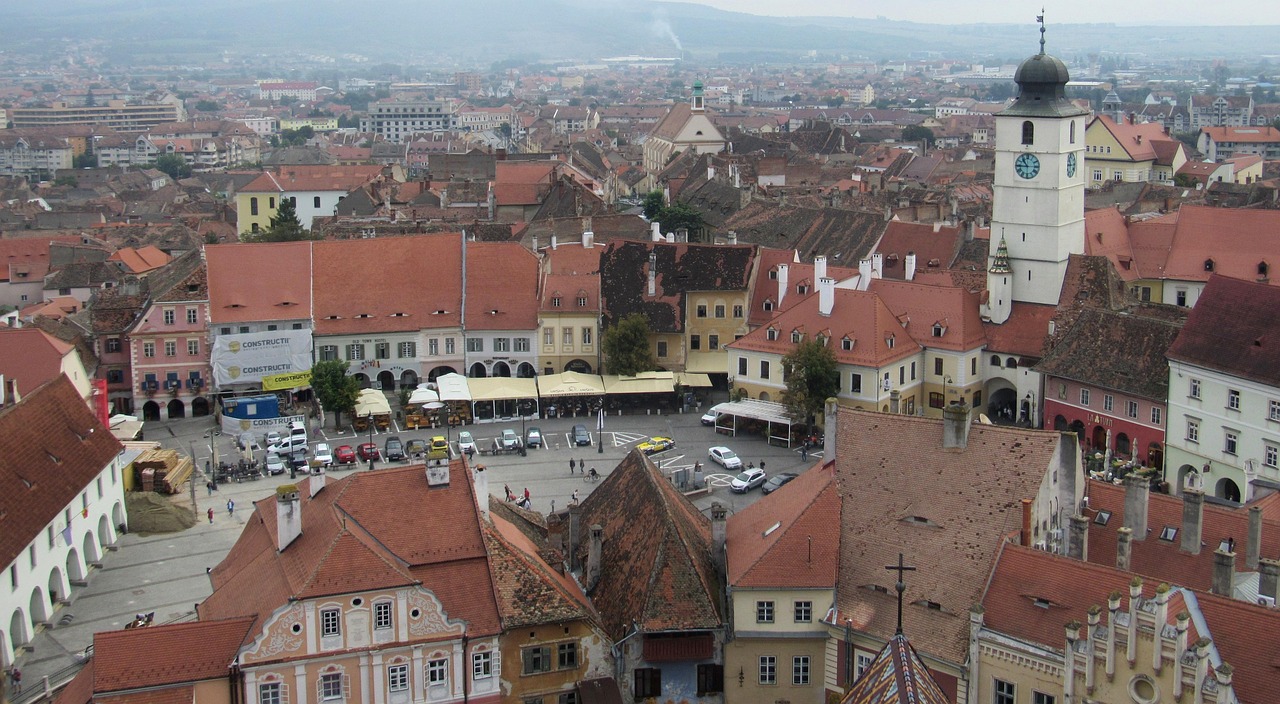
The region developed a fascinating multicultural character over the centuries. German settlers, the Transylvanian Saxons, built fortified towns and churches whose distinctive architecture still defines cities like Sibiu and Brasov, leaving a legacy of orderly, central European urbanism. Hungarian nobles dominated the land and its politics. And the Romanian majority, largely peasant and Orthodox, formed the base of the population while long being excluded from power. This layering of peoples and faiths made Transylvania one of the most culturally rich regions of Europe, but also one of its most contested, and the question of who should rule it would become central to Romanian national aspirations and a lasting source of tension with Hungary.
The birth of modern Romania
Modern Romania was built in the nineteenth and early twentieth centuries through the gradual unification of the Romanian lands. In 1859 the two Danubian principalities of Wallachia and Moldavia united under a single prince, creating the core of a Romanian state, which won full independence from the Ottoman Empire in the following decades and became a kingdom. The new nation, inspired by the romantic nationalism sweeping Europe and by pride in its Latin and Roman heritage, set about modernizing, building Bucharest into an elegant capital sometimes called the Paris of the East, and dreaming of uniting all Romanians in a single state.
That dream was largely realized in the aftermath of the First World War. Romania, which had fought on the winning side, was rewarded with vast territorial gains, above all the acquisition of Transylvania from the collapsing Austro-Hungarian Empire, along with other regions with Romanian populations. This Greater Romania, roughly doubling the country in size, brought together for the first time most of the Romanian people in one state and fulfilled the long national aspiration. But it also created a large country with significant minorities, including the Hungarians of Transylvania, who bitterly resented being transferred from Hungarian to Romanian rule, planting tensions that would persist. For the Romanians, however, the interwar period was a time of fulfillment, the moment when the scattered Romanian lands were at last united in a single nation.
War, dictatorship, and the communist seizure
The Second World War was a catastrophe for Romania, as it was for so much of the region. The country lost territory to its neighbors, fell under a wartime dictatorship, and entered the war allied with Nazi Germany, drawn in partly by the hope of recovering lost lands and by hostility to the Soviet Union. Romania participated in the war on the eastern front and, in one of the darkest chapters of its history, in the persecution and murder of large numbers of Jews and Roma, a crime for which the wartime Romanian state bore heavy responsibility and which honesty requires be remembered clearly. As the tide of war turned, Romania switched sides in 1944, joining the Allies, but it could not escape its fate.
With Soviet armies occupying the country, a communist regime was imposed on Romania in the years after the war, as it was across eastern Europe. The monarchy was abolished, the king forced to abdicate, and a one-party communist state established under Soviet domination. The early years of communist rule were especially brutal, marked by mass arrests, forced labour, the destruction of the old elites, and the terror of the secret police. Private property was seized, agriculture collectivized, and society remade by force. Romania, which had so recently achieved its national unity and dreamed of a bright future, was plunged into a long night of dictatorship that would prove among the harshest in the entire communist world.
The Ceausescu years
The Romanian experience of communism is forever associated with the name of Nicolae Ceausescu, who ruled the country from the mid-1960s until 1989 and made it one of the most repressive and bizarre dictatorships in the world. At first Ceausescu won some admiration abroad for a degree of independence from Moscow, pursuing his own foreign policy and refusing to fully toe the Soviet line. But at home his rule grew steadily more tyrannical and his personality cult ever more grotesque, as he and his wife elevated themselves to the status of near-deities, their images and praises everywhere, their power absolute.
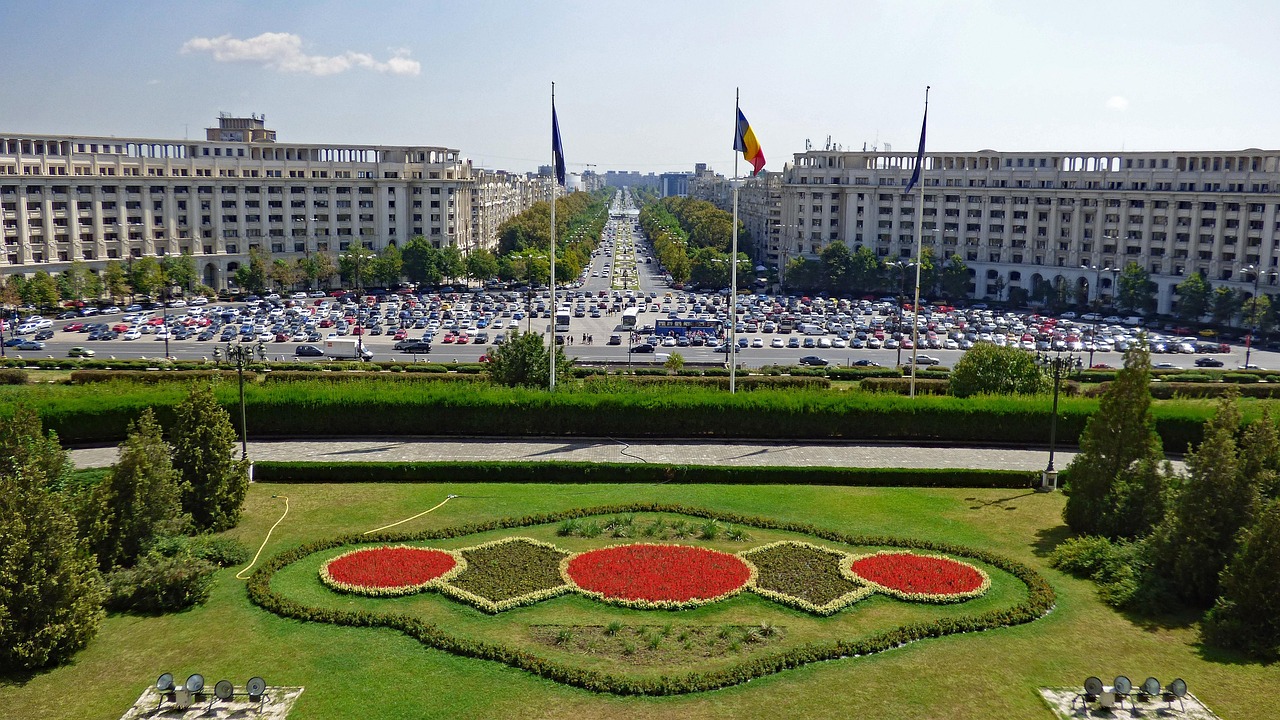
The later Ceausescu years brought terrible suffering to the Romanian people. Determined to pay off the national debt and to fund grandiose projects, including the demolition of much of historic Bucharest to build a colossal palace and the forced relocation of villagers, the regime imposed brutal austerity, leaving the population short of food, heat, and light while the dictator lived in luxury. The secret police, the dreaded Securitate, watched and informed on the population in one of the most thoroughly surveilled societies on earth, breeding fear and mistrust that penetrated every corner of life. By the late 1980s Romania was a country of cold, hungry, frightened people ruled by a megalomaniac, ripe for an explosion.
The violent fall of communism
When the explosion came in December 1989, it was the bloodiest of all the revolutions that ended communism in eastern Europe. Beginning with protests in the city of Timisoara and spreading to Bucharest, the uprising against Ceausescu turned violent as the regime ordered its forces to fire on demonstrators. But the army turned against the dictator, the crowds surged, and within days the regime collapsed. Ceausescu and his wife fled the capital, were captured, and after a hasty trial were executed by firing squad on Christmas Day, the only leaders of the eastern European revolutions to meet such an end. Hundreds of people died in the violence and confusion of those December days.
The revolution freed Romania from the Ceausescu nightmare, but the transition that followed was difficult and murky. The new leadership included many former communists, and the early post-communist years were turbulent, marked by economic hardship, political instability, and the slow, painful work of building democracy and a market economy from the ruins of one of the most extreme dictatorships in the bloc. Romania faced a longer and harder road than some of its central European neighbors, burdened by the depth of the repression it had endured and the poverty it inherited. Yet the Romanians had won their freedom, at a high price in blood, and they set about the long task of rejoining the free nations of Europe.
The Latin people of the east
What sets the Romanians apart, more than anything, is their identity as a Latin people in a part of Europe where everyone around them is something else. To the north and east are Slavs, the Ukrainians and the closely related Moldovans, who are essentially Romanians by another name; to the west are the Hungarians, with their unrelated Finno-Ugric tongue; to the south, across the Danube, are the Slavic Bulgarians and Serbs. In the midst of all these stands the Romanian, speaking a Romance language and proudly conscious of a heritage that reaches back to Rome itself. This sense of being a Latin island, an outpost of the Roman world in the Slavic and Magyar east, is fundamental to how Romanians understand themselves.
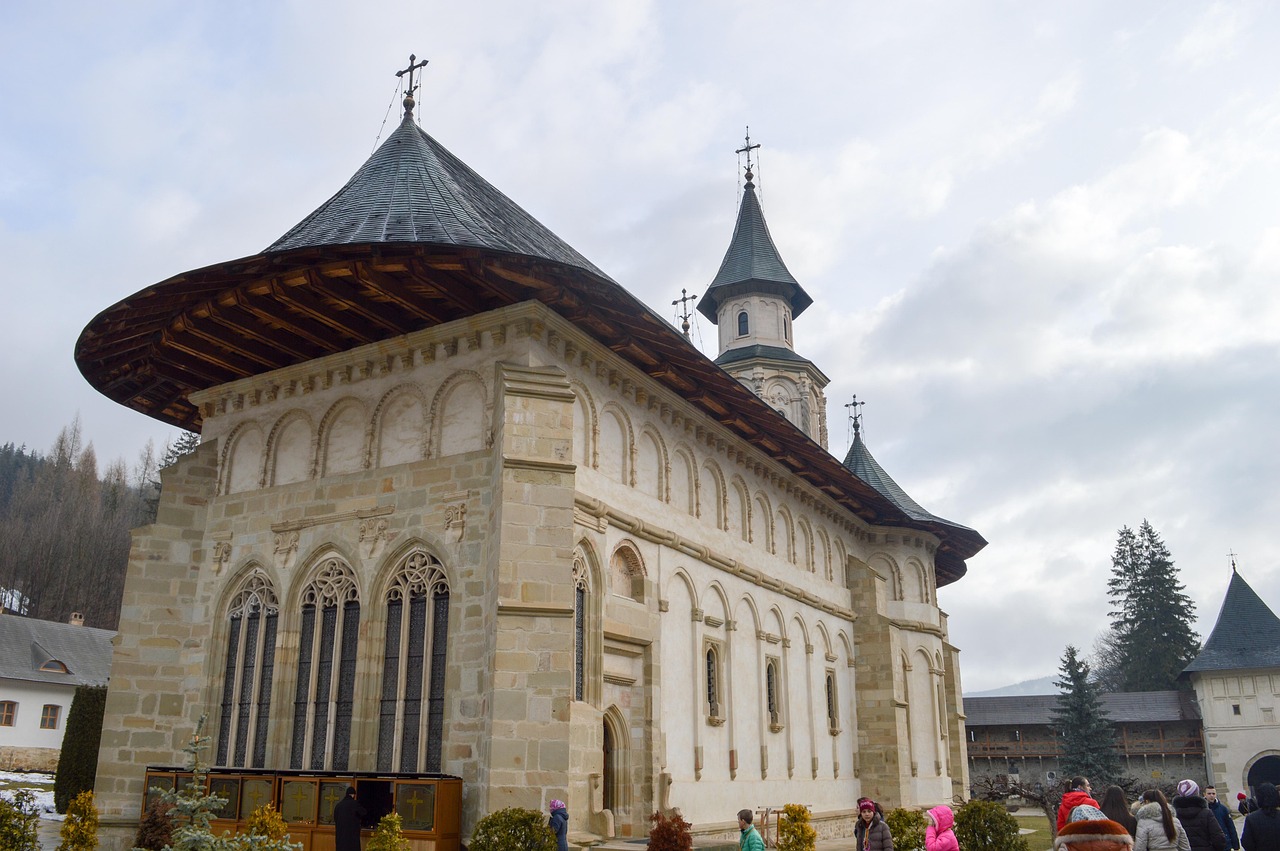
This Latin identity shapes Romanian culture in countless ways, from the structure of the language to a certain Mediterranean warmth and expressiveness in the temperament, often noted as distinct from the cooler manner of their neighbors. At the same time the Romanians are deeply marked by their Orthodox Christian faith, which connects them to the Byzantine and Slavic Orthodox world rather than to Catholic Latin Europe, creating a fascinating cultural blend, a Latin people with an Eastern Christian soul. The painted monasteries of the north, with their glorious frescoes covering the outer walls, are among the treasures of Orthodox art and express this distinctive Romanian synthesis of Latin and Byzantine. The Romanians thus occupy a unique cultural position, bridging the Latin west and the Orthodox east, belonging fully to neither and forming a world of their own. Their Hungarian neighbors, with whom they share the contested land of Transylvania, are the subject of our companion piece on the Hungarians.
Folklore, faith, and a living peasant world
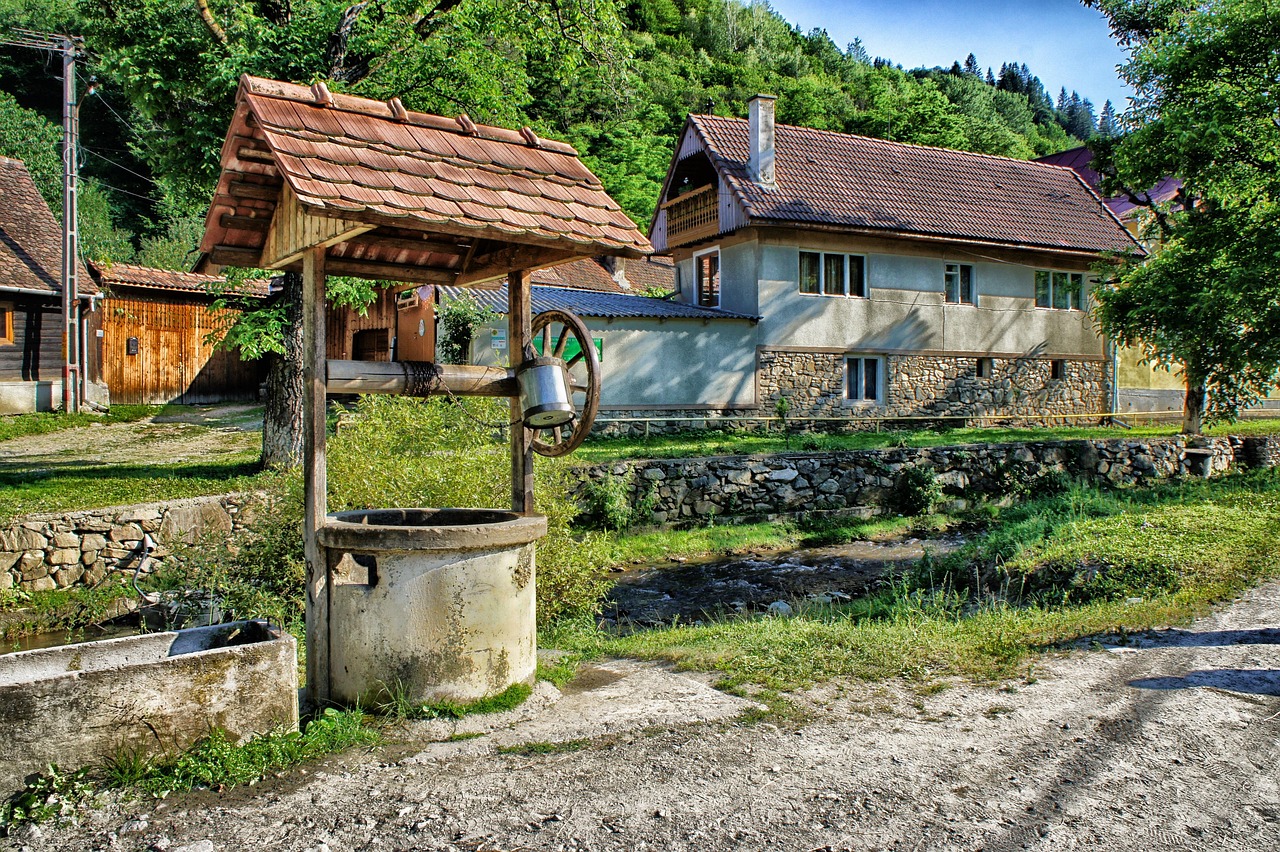
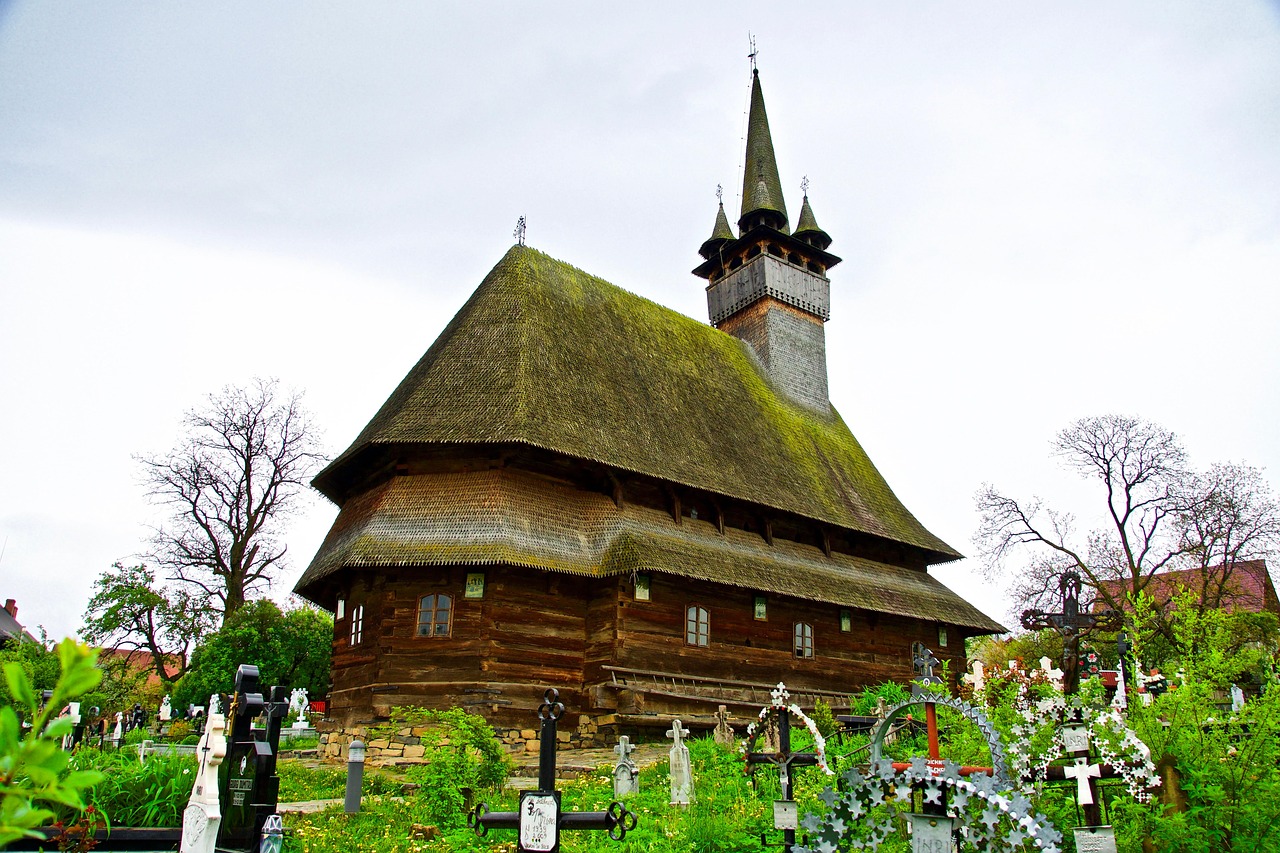
Romania has preserved, more than almost any other country in Europe, a living traditional rural culture. In regions like Maramures in the north, villages still maintain old ways of life, with their famous wooden churches and elaborately carved wooden gates, their traditional crafts, their seasonal festivals, and their rhythms of farming and faith little changed for generations. This survival of an authentic peasant world, with its hand-built haystacks, horse-drawn carts, and ancient customs, gives Romania a depth of folk tradition that draws visitors and scholars seeking a way of life that has vanished elsewhere.
Romanian folklore is rich and distinctive, full of legends, supernatural beings, and customs reaching back into pre-Christian times, woven together with the deep Orthodox faith that structures rural life through its calendar of feasts and fasts and saints. The country has a vibrant tradition of folk music and dance, of intricate costumes that vary from region to region, of painted eggs and woven textiles and carved wood. This folk heritage nourished Romania’s modern culture as well, inspiring artists like the great sculptor Constantin Brancusi, who drew on the forms of Romanian peasant craft to help create modern abstract sculpture, and the playwright Eugene Ionesco and other figures who carried Romanian creativity to the wider world. Beneath the surface of modern life, the old Romania of village, faith, and folklore remains powerfully alive.
The Romanians today
Modern Romania has come a long way from the dark days of the Ceausescu dictatorship. It is now a member of the European Union and the NATO alliance, a democracy with a growing economy, and an increasingly confident nation rejoining the European mainstream. Its cities have been revitalized, its historic towns and monasteries and the wild beauty of its mountains and delta draw growing numbers of visitors, and a young, well-educated generation, particularly skilled in technology, is helping to build a more prosperous future. Bucharest has regained some of its old elegance, and the Saxon towns of Transylvania have become jewels of restored heritage.
Challenges remain real and serious. Romania has struggled with corruption, with the legacy of poverty and institutional weakness inherited from communism, and with the emigration of millions of its people, who have left to seek work and opportunity abroad, draining the country of talent even as they send back remittances and connections. The relationship with the large Hungarian minority in Transylvania, while much improved, still carries echoes of old tensions. But the broad direction is one of progress and integration, and the Romanians, having survived Roman withdrawal, barbarian invasion, Ottoman overlordship, and communist tyranny, face the future with the resilience of a people who have endured everything history could throw at them and remained, through it all, themselves.
What the Romanian story tells us
The story of the Romanians is, above all, a story of survival and continuity against extraordinary odds. Here is a Latin people who held on to their Roman language and identity in a far corner of Europe, surrounded by peoples of entirely different origins, through nearly two thousand years of invasion, fragmentation, and foreign domination. They survived the withdrawal of Rome, the storms of the great migrations, the long centuries under Ottoman overlordship, the rivalries of empires over their land, and one of the cruelest dictatorships of the modern age, and through all of it they remained recognizably and proudly Romanian.
What the Romanians teach is the deep tenacity of identity rooted in language and faith. Their Latin tongue and their Orthodox religion together carried them through the centuries, preserving a sense of who they were even when they had no state of their own and were ruled by others. They are a bridge between worlds, the Latin west and the Orthodox east, belonging fully to neither, and that very in-betweenness is the source of their distinctive richness. To stand before a painted monastery in the northern hills, its walls glowing with centuries-old frescoes, or to wander a Maramures village where the old wooden church still stands and the old ways still live, is to witness the survival of a people who turned the unlikely fact of their existence, a fragment of Rome in the Slavic east, into one of the most remarkable continuities in the history of Europe.