- A Village That Still Speaks an Ancient Tongue
- Where Maaloula Sits, and Why That Matters
- The Language People Say Jesus Spoke
- Saint Thecla and the Cleft in the Mountain
- The Convent of Mar Takla
- Mar Sarkis and Its Very Old Altars
- Two Soldier-Saints Behind the Name
- Which Christians Call This Home
- Feasts, Processions and a Living Faith
- What Pilgrims Come Here to Feel
- The Hard Years and the Long Repair
- The Rock, the Caves and the Icons
- How a Language Survives When Empires Do Not
- Why Thecla Mattered So Much Across the East
- The Sound of Worship in the Mountains
- A Crossroads Where Old Faiths Met
- Why a Small Village Carries So Much
- If You Go: Practical Notes
There are places in the Christian world that feel less like monuments and more like survivors. Maaloula is one of them. It is a small village folded into the limestone mountains north of Damascus, and it has held onto something almost everywhere else has lost: a daily, ordinary use of the language that scholars connect to the world Jesus walked through. People here still greet each other, argue, pray and tease their children in Western Aramaic, a tongue that has been fading from the earth for well over a thousand years.
To stand in Maaloula is to stand in two times at once. The houses, painted in soft blues and ochres, climb the rock face as though they grew out of it. Two ancient monasteries watch over the village from above and below. And underneath all of it runs a thread of memory so old that it predates almost every famous cathedral in Europe. This is not a place that performs its antiquity for visitors. It simply continues, quietly, the way it always has.
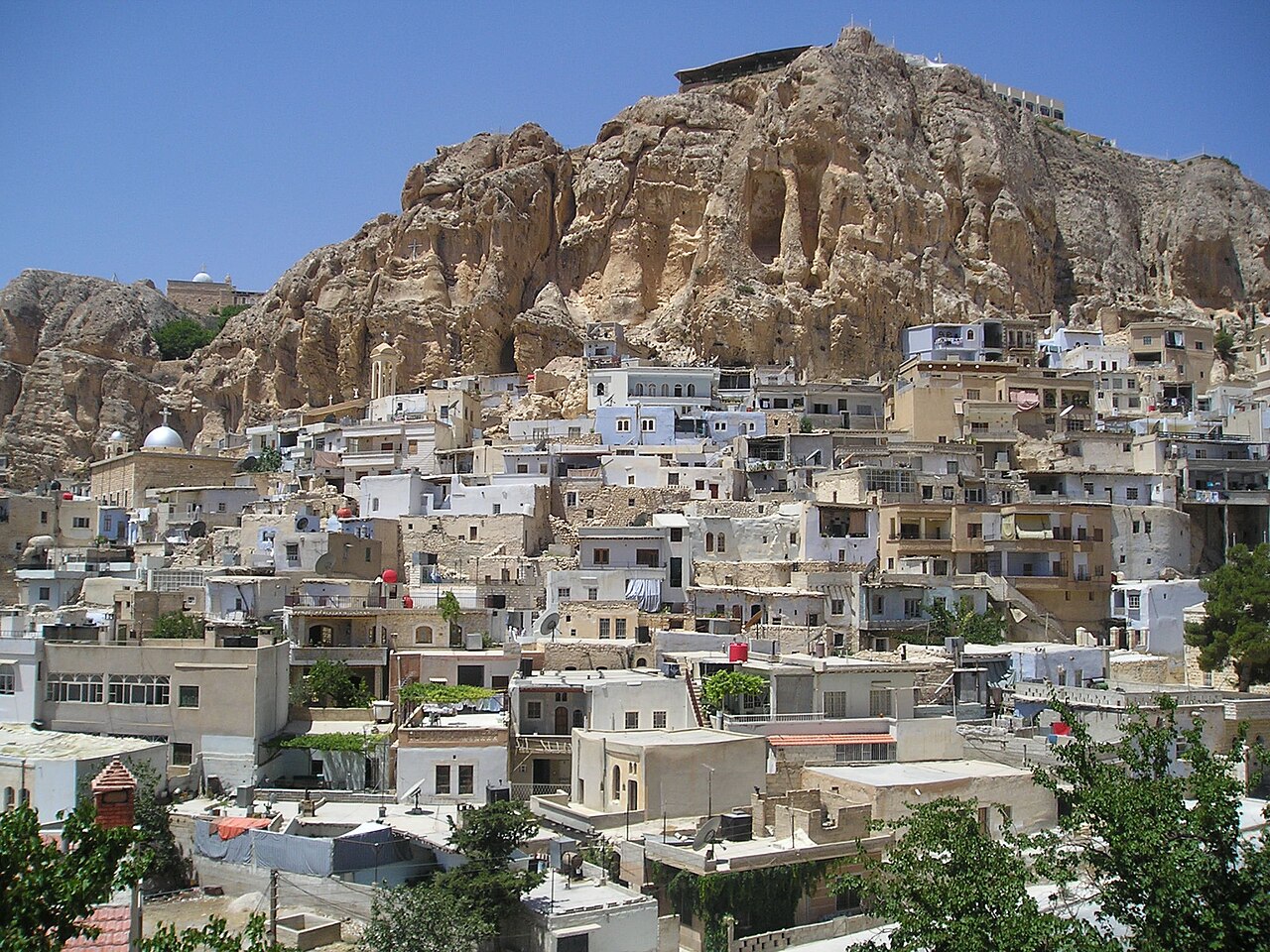
Photo: Heretiq, Wikimedia Commons (CC BY-SA 3.0)
A Village That Still Speaks an Ancient Tongue
The first thing most people learn about Maaloula is the language, and it is genuinely remarkable. Western Aramaic was once spoken across a wide stretch of the ancient Near East. Over centuries it gave way to Arabic almost everywhere, the way Latin gave way to the Romance languages across Europe. By the modern era only a tiny cluster of villages in the Qalamoun mountains kept it alive in daily speech, and Maaloula was the best known of them.
What makes this survival so moving is that it was never deliberate. Nobody preserved the language in a museum case. It simply passed from grandmother to grandchild around kitchen tables, in lullabies, in the words used to call a goat or bless a meal. Linguists who visit describe sitting with elderly residents who slip between Aramaic and Arabic without thinking, and who are sometimes surprised that anyone finds it extraordinary at all. To them it is just how home sounds.
The very name Maaloula is usually explained as coming from an Aramaic word for an opening or entrance, a reference to the dramatic gorge that splits the cliffs above the village. Even the place name, in other words, is a small fossil of the old speech.
Where Maaloula Sits, and Why That Matters
Maaloula lies roughly fifty kilometres northeast of Damascus, high in the rugged Qalamoun range at well over fifteen hundred metres of altitude. The setting is half the story. The village does not spread comfortably across a plain. It clings to a near-vertical wall of pale rock, and the houses seem to be stacked one on top of the next, connected by stairs and narrow lanes rather than proper streets.
Above the village a deep, narrow canyon cuts through the mountain. Walking through it, with the rock rising sheer on either side and only a ribbon of sky overhead, is one of the things visitors remember most. Local tradition links this very cleft to the legend of Saint Thecla, and you do not need to believe the story to feel why people attached a miracle to such a place. It looks like somewhere the earth itself was torn open.
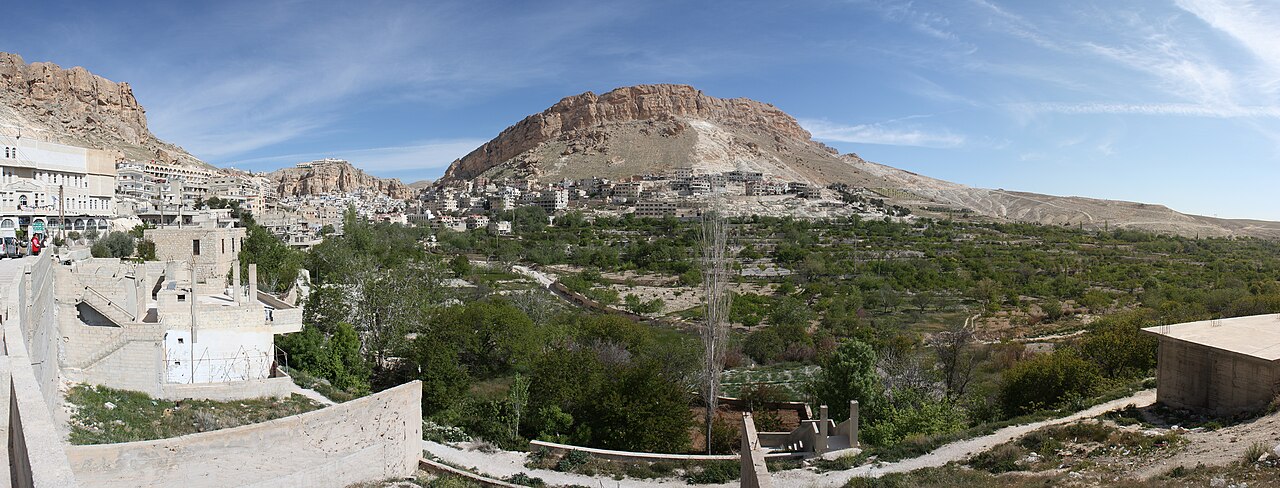
Photo: Eusebius, Wikimedia Commons (CC BY 3.0)
Because it sat on old routes between Damascus and the interior, Maaloula was never entirely cut off. But its height and its rock walls gave it a kind of natural protection, and that isolation is part of why an ancient language and ancient forms of worship could persist here long after they vanished elsewhere.
The Language People Say Jesus Spoke
It is worth being careful here, because the popular shorthand can mislead. Aramaic was the everyday language of much of the Levant in the first century, and most scholars agree that Jesus and his first followers spoke a form of it. The Aramaic of Maaloula is not identical to that ancient speech; languages drift over two thousand years. But it belongs to the same broad family and descends from that world, which is why people so often describe Maaloula as a place where you can still hear, in living voices, an echo of the language of the Gospels.
For Christian pilgrims this is part of the pull. To pray the Our Father in Aramaic in one of these mountain chapels, led by someone for whom the language is mother tongue rather than performance, is an experience that collapses the distance between the modern visitor and the earliest church. It is one thing to read about the first century. It is another to hear it spoken by a neighbour.
The village has also become, almost by accident, a guardian of this heritage for the wider world. Recordings, prayers and even a small effort to teach the script have all grown up around the simple fact that here the old words never fully died.
Saint Thecla and the Cleft in the Mountain
The deepest layer of Maaloula belongs to Saint Thecla, one of the most beloved figures of the early Christian centuries. According to the tradition she was a young woman from Iconia who heard the preaching of the Apostle Paul, broke off a planned marriage to follow the new faith, and afterwards lived a life of remarkable courage and devotion. Stories of her survival against threats of fire and wild beasts made her one of the great heroines of the early church across the eastern Mediterranean.
The Maaloula legend says that Thecla, fleeing those who pursued her, came to this wall of rock and found herself trapped. She prayed, and the mountain split open before her, creating the gorge that visitors walk through today and allowing her to escape. She is said to have then settled here in a cave above the village, living out her days in prayer and healing those who came to her. A spring associated with her is still treated as holy.
Whatever one makes of the details, the cult of Thecla in this place is genuinely ancient, and it gives Maaloula a tie to the very first generation of Christians, the world of Paul and his companions, that very few living communities can claim.
The Convent of Mar Takla
The shrine built around this memory is the Convent of Mar Takla, the Aramaic form of Saint Thecla, set against the cliff at the foot of the gorge. It is a working community of nuns rather than a museum, and for centuries it has cared for the saint cave, the holy spring and the pilgrims who arrive hoping for healing or simply for a quiet moment in a place soaked in prayer.
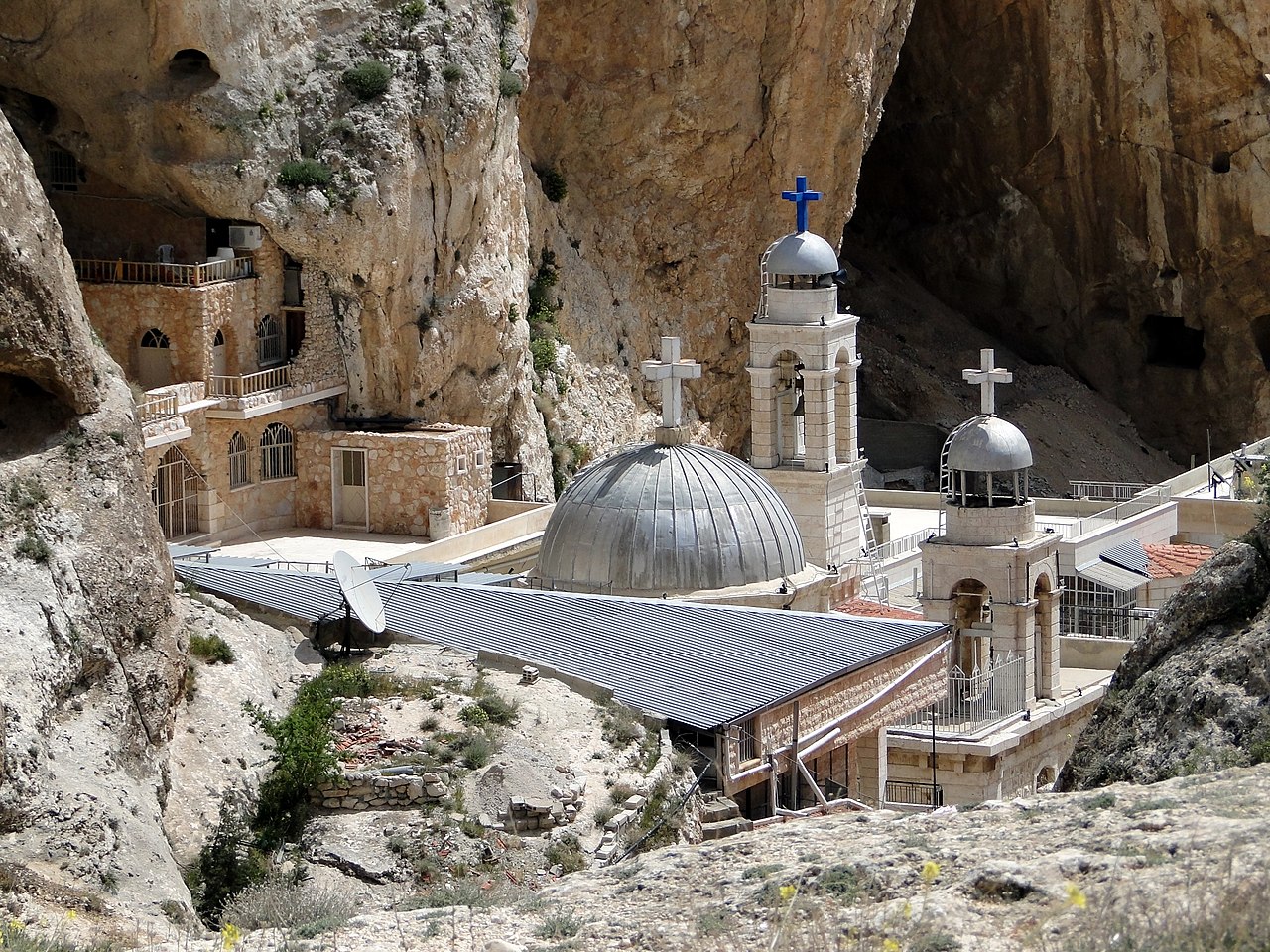
Photo: Bernard Gagnon, Wikimedia Commons (CC BY-SA 3.0)
Pilgrims climb to the cave where the saint is said to have lived, light candles, and collect water from the spring that trickles from the rock. Mothers have long brought sick children here; couples hoping for a child have come to ask Thecla intercession. The convent does not advertise miracles, but the worn stone and the smoke-darkened ceiling of the cave testify to centuries of people who came expecting something.
Part of what makes Mar Takla special is its ordinariness within the village. This is not a distant pilgrimage site reached after a long journey. It is woven into daily life, a few steps from homes where the same families have lived for generations, and the nuns are part of the community rather than guardians of a relic apart from it.
Mar Sarkis and Its Very Old Altars
Above the village, reached by a climbing road, stands the other great shrine of Maaloula: the monastery of Mar Sarkis. It is one of the oldest surviving Christian sites in the region, and tradition dates its origins to the fourth century, not long after Christianity became a permitted faith in the Roman world. Some accounts say it rose on the foundations of an even older pagan temple, which would fit a pattern seen across the early Christian Mediterranean.
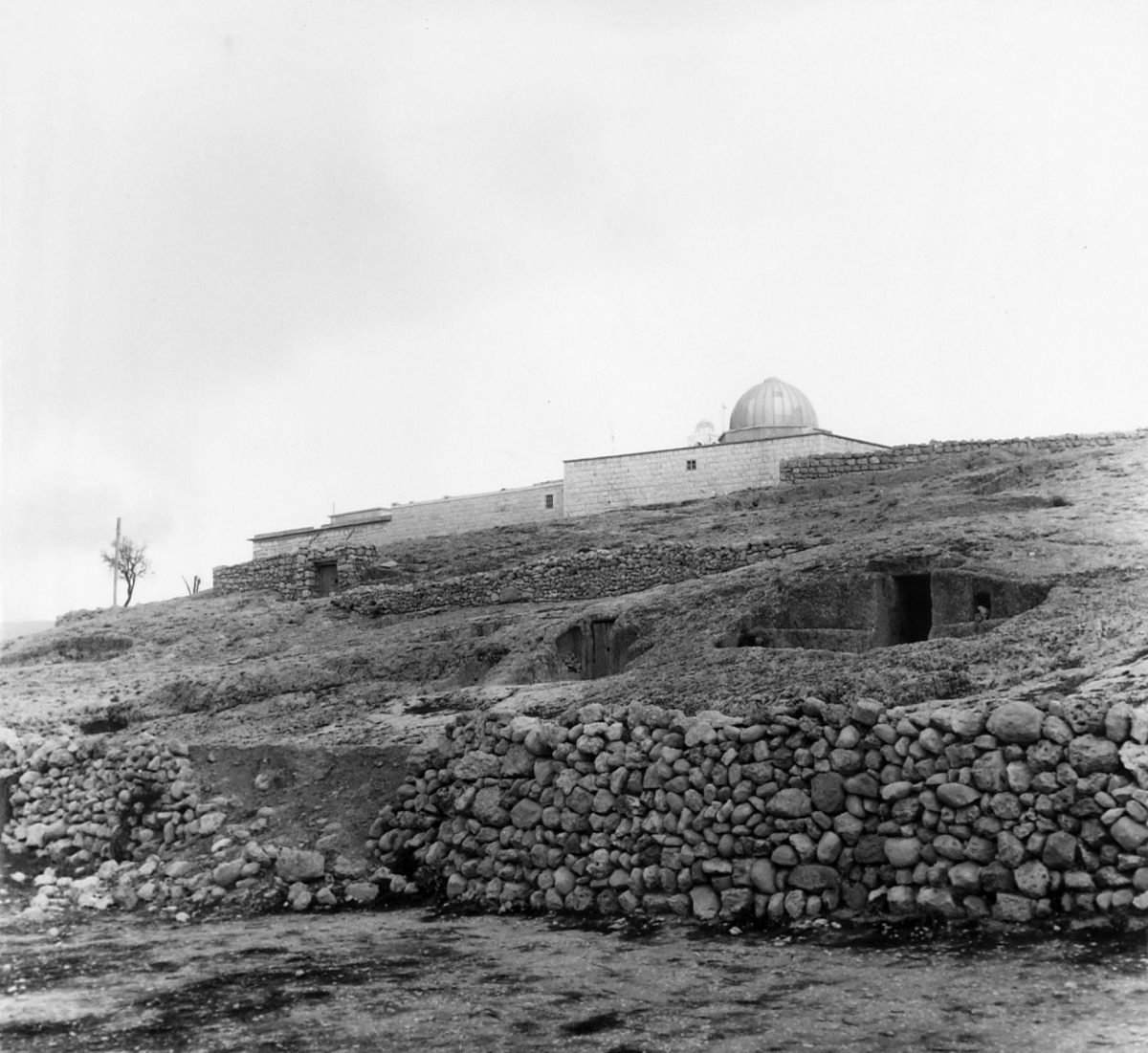
Photo: Jan-Henk Kleijn, Wikimedia Commons (CC BY-SA 3.0)
The treasure of Mar Sarkis is hidden inside: ancient altars whose shape, with a small raised rim around the surface, is thought to reflect an extremely early Christian form, possibly echoing older sacrificial usage. Liturgical scholars regard these altars as rare physical survivals from the church first centuries, and for many visitors they are the single most striking thing in Maaloula, more so even than the views.
The little church is modest in scale but dense with age. Old icons, some of them very old indeed, line the walls, and the whole space feels less designed than accumulated, layer upon layer of devotion settling into the rock over sixteen centuries.
Two Soldier-Saints Behind the Name
The name Mar Sarkis honours Saint Sergius, who together with Saint Bacchus belongs to one of the most venerated pairs of military martyrs in the eastern Christian world. The tradition holds that they were Roman soldiers and close companions who refused to take part in pagan sacrifice and were executed for their faith in the early fourth century. Their devotion to each other and their shared martyrdom made them enormously popular across Syria and the wider East.
Sergius in particular became a patron of soldiers and travellers, and shrines to him spread widely through the late antique Near East. That Maaloula dedicated its hilltop monastery to him places the village firmly within this deep regional current of devotion, where soldier-saints were honoured as protectors in a frequently dangerous land.
For the visitor, knowing the story adds a layer to the climb up to the monastery. The plain little church at the top is not just old stone. It carries the memory of two young men who, the tradition says, chose their faith over their lives, and whose names have been spoken in prayer in these mountains for well over a thousand years.
Which Christians Call This Home
Maaloula is, importantly, a shared Christian place. Its population has historically included both Greek Catholics, often called Melkites, who are in communion with Rome while keeping the Byzantine rite, and Greek Orthodox faithful who belong to the ancient Patriarchate of Antioch. The two great shrines reflect this: Mar Sarkis has been associated with the Greek Catholic Melkite tradition, while Mar Takla is a Greek Orthodox convent.
This matters for understanding what Maaloula means. It is not a monument to a single denomination but a living example of the older Christianity of the East, where Byzantine liturgy, Aramaic prayer and a deep veneration of early saints all flow together. The differences between Catholic Melkite and Orthodox here are real, but they sit within a shared world of icons, incense and ancient feast days that long predates the divisions familiar in the West.
For Western Christians, Catholic or Protestant, visiting Maaloula can be quietly instructive. It is a reminder that the church was Eastern long before it was Roman or Reformed, and that some of its oldest living forms survive not in grand capitals but in small mountain villages like this one.
Feasts, Processions and a Living Faith
The rhythm of the year in Maaloula has long been marked by its great feasts. The feast of Saint Thecla draws pilgrims to the convent, and the celebrations around the Holy Cross have historically been among the most vivid, with bonfires lit on the heights so that the flames seemed to crown the mountains above the village. These were not quiet observances but loud, communal, joyful affairs that pulled the whole village into the streets.
Processions wind up to Mar Sarkis or down to Mar Takla, prayers are sung in Aramaic and Arabic, and families who have moved away to Damascus or further afield return for the occasion. Faith here has never been a private matter tucked behind church doors. It spills out onto the rooftops and the stairs and the gorge, binding the community together across generations.
It is this living quality, more than any single building, that gives Maaloula its weight. The stones are old, but the faith is current, carried by people who pray in the language of their ancestors and keep feast days their great-grandparents would have recognised.
What Pilgrims Come Here to Feel
People come to Maaloula for different reasons. Some come for the language, drawn by the chance to hear Aramaic spoken by living people. Some come for Saint Thecla, hoping for healing at her spring or simply wanting to pray in the cave where the tradition places her last years. Some come for the altars of Mar Sarkis, those rare survivals from the early church. And some come simply because the place is beautiful, with its painted houses stacked against the pale rock under a hard blue sky.
What most of them describe afterwards is a sense of nearness. In so many famous holy sites the original event feels impossibly distant, buried under centuries of marble and crowds. Maaloula somehow shortens that distance. The smallness of the village, the roughness of the stone, the sound of the old language, all of it makes the early Christian world feel close enough to touch.
That is a rare gift, and it is why pilgrims who reach this remote corner of Syria so often speak of it not as a sight they saw but as something they felt.
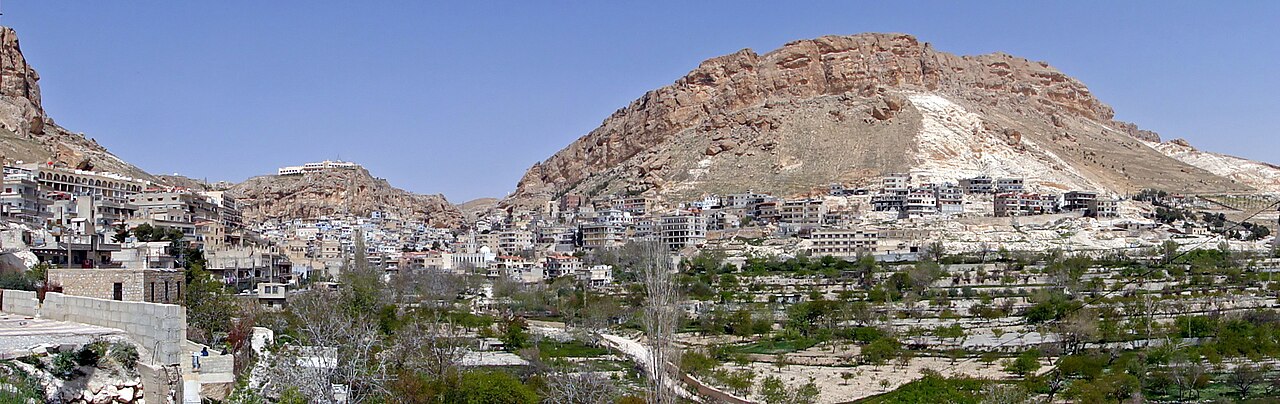
Photo: Bernard Gagnon, Wikimedia Commons (CC BY-SA 3.0)
The Hard Years and the Long Repair
It would be dishonest to write about Maaloula without acknowledging the suffering it has endured. The village was caught up in the wider Syrian conflict, and there were periods of real danger and damage to its churches, its homes and its people. Icons were lost or harmed, residents were displaced, and for a time the future of this ancient community looked genuinely uncertain.
Since then there has been a long, patient effort to repair what was damaged and to bring people home. Restoration of the shrines, the return of families, and the determination of the village to keep speaking its language and keeping its feasts have all been part of a slow recovery. It has not been easy, and the scars remain, but the very fact that Maaloula endures at all is itself a kind of testimony.
For pilgrims and well-wishers around the world, the village became a symbol of the vulnerability of ancient Christian communities in the Middle East, and also of their stubborn resilience. To care about Maaloula now is partly to hope that a place which has held onto so much for so long will not be allowed to disappear.
The Rock, the Caves and the Icons
Maaloula cannot be separated from its geology. The whole village is a conversation between people and stone. Houses are carved partly into the cliff, chapels back onto living rock, and caves that once sheltered hermits and refugees still open off the lanes and the gorge. Long before the present churches were built, this landscape of caverns and overhangs would have made it a natural home for the kind of solitary holy men and women who shaped early Eastern Christianity.
Inside the shrines, the icons carry their own weight of history. Eastern Christianity treats the icon not as decoration but as a window, a way the unseen becomes present to those who pray before it. The images at Mar Sarkis and Mar Takla, darkened by centuries of candle smoke, include works of real age and beauty, and some of the older pieces were recognised as treasures of Syrian Christian art. When some of these icons were lost or stolen during the hard years, it was felt as a wound to the whole community, because each one held generations of prayer.
To pray in these spaces is to be surrounded by faces that have watched over the village for centuries. The rough rock, the small flickering lights, the gaze of the icons all combine to create an atmosphere that no grand cathedral quite reproduces. It is intimate, ancient and slightly hidden, the way the earliest Christian worship must often have been.
How a Language Survives When Empires Do Not
The survival of Aramaic in Maaloula is worth pausing on, because it is genuinely against the odds. Languages do not usually outlive the empires that carried them. Aramaic was once the common speech of vast territories under successive ancient powers, the language of administration, trade and scripture across the Near East. As political tides turned and Arabic spread, Aramaic retreated, surviving mainly in liturgy and in a handful of remote pockets.
That Maaloula and a couple of neighbouring villages kept it in everyday use is partly an accident of geography. High in the mountains, somewhat apart from the main currents of change, the community simply went on speaking what it had always spoken. There was no academy preserving it, no grammar enforced from above. It lived because mothers sang to their babies in it and old men told stories in it on the doorstep in the evening.
In the modern era this fragile inheritance drew attention from scholars and from the wider Christian world, and there were efforts to record it, study it, and even teach its script to the young. But the deepest preservation has always been the simplest: a child learning the words from a grandparent. That chain, unbroken across so many centuries, is one of the quiet wonders of the Christian East, and it is why a visit to Maaloula can feel like stepping into a living archive of the ancient world.
Why Thecla Mattered So Much Across the East
To understand the pull of Maaloula, it helps to know how large a figure Saint Thecla was in the early church. In the first centuries of Christianity she was one of the most celebrated of all the saints associated with the apostolic age, honoured from Asia Minor to Egypt. Pilgrims travelled great distances to shrines connected with her, and her story of courage and steadfastness in the face of terrible threats made her a model especially for women drawn to the new faith.
Her popularity tells us something about the Christianity of that era. It was a faith in which dramatic personal conversion, the willingness to risk everything, and the conviction that God protected the faithful in moments of mortal danger were central. Thecla embodied all of that. The legend that the mountain itself split to save her fits perfectly into a world where believers expected heaven to intervene in the physical landscape.
Maaloula inherited a share of this vast devotion and made it local and concrete: this gorge, this cave, this spring. For pilgrims, that concreteness is precisely the appeal. The grand idea of an early Christian heroine becomes a place you can walk into, water you can touch, rock you can lay your hand against. Few sites in the world tie the great figures of the apostolic age so directly to a spot you can still visit.
The Sound of Worship in the Mountains
One of the things visitors most often try to describe afterwards is the sound of Maaloula at prayer. Eastern Christian worship is a sung worship, carried by chant rather than read in flat speech, and in these mountain churches the old melodies take on a particular intensity. When the liturgy turns to Aramaic, the effect on a listener can be hard to put into words: the sense that the very phonemes filling the small stone room are close cousins of the sounds that filled the first century.
This is not a museum reenactment. It is the ordinary worship of an ordinary congregation, families who have prayed this way their whole lives. The Lord Prayer in Aramaic, in particular, has become something pilgrims ask to hear, and many describe a shiver at recognising the rhythm of words they have only ever known in their own language. To hear the most familiar Christian prayer in the speech of its origin, in the place where that speech still lives, is a rare and quietly overwhelming thing.
Beyond the formal services, there is the softer soundscape of the village itself: bells from the heights, greetings exchanged in Aramaic, the wind moving through the gorge. Together they make Maaloula feel less like a site to be toured and more like a world to be entered, one that runs on a much older clock than the one most visitors arrive carrying.
A Crossroads Where Old Faiths Met
Maaloula did not grow up in isolation from the wider religious world around it. The Qalamoun mountains have long been a region where different communities lived side by side, and the village sat within a landscape shaped by many layers of belief, from the older cults of the ancient Near East to the Christianity that took root in the first centuries and the Islam that later became the regions majority faith. Some traditions even hold that the monastery on the heights rose where an older sanctuary once stood, a common pattern in which new devotion settled onto ground long considered sacred.
This long coexistence left its mark on Maaloula in subtle ways. The village kept its Christian identity and its ancient language while remaining part of a broader Syrian society, and for much of its history that meant a daily life of practical neighbourliness across religious lines. Pilgrims of different backgrounds have at times been drawn to its holy spring, and the saints honoured here, especially the soldier-saint Sergius, belonged to a devotional world that crossed many of the boundaries we now take for granted.
Understanding this helps explain why Maaloula feels less like a fortress of one faith and more like a deep well of memory. It preserves something very old and very Christian, but it does so within a region whose history is layered and intertwined, and that texture is part of what makes the place so rich for anyone who takes the time to learn its story.
Why a Small Village Carries So Much
It is fair to ask why a tiny mountain settlement should matter so much to the wider Christian world. The answer has to do with what Maaloula preserves that almost nowhere else does. It is not the grandest of holy sites; it has no vast basilica, no famous relic that draws millions. What it has is continuity, an unbroken thread reaching back toward the very origins of the faith, carried in a living language and in forms of worship of extraordinary age.
In an age when so much ancient heritage survives only behind glass or in books, Maaloula keeps its inheritance in use. The language is spoken, not merely studied. The shrines are prayed in, not merely visited. The feasts are celebrated by people for whom they are simply the shape of the year. That living quality is rare and precious, and it is why scholars, pilgrims and ordinary travellers alike have felt that the loss of Maaloula would be a loss for everyone, not only for those who live there.
To care about this village is to care about the idea that the deep past can remain alive, not as a performance but as a home. Maaloula stands for the stubborn survival of small things against the grinding of history, and for the possibility that what is most ancient and most fragile can, with enough love and persistence, still be passed on to another generation.
If You Go: Practical Notes
Reaching Maaloula has always meant a journey up from Damascus into the Qalamoun mountains, and conditions for travel to Syria vary a great deal over time, so anyone considering a visit should check carefully and travel responsibly. For those who do come, the village rewards a slow, respectful approach rather than a quick stop.
Walking the gorge, climbing to Mar Sarkis for its ancient altars, and spending time at the Convent of Mar Takla are the heart of any visit. These are working religious communities, so modest dress and quiet behaviour are expected, and it is worth remembering that the residents are not exhibits but people living their ordinary lives. A few words of greeting, an interest in their language and a little patience go a long way.
Maaloula does not overwhelm with grandeur. Its power is gentler and stranger than that. It is the power of continuity, of a small community that has carried an ancient faith and an ancient language up a cliff face and kept them alive against very long odds. To walk its lanes and hear its old words is to be reminded that the deepest things sometimes survive not in the great centres of the world but in its quiet, stubborn corners.


