Stand on a bridge over the Bosphorus at dawn and you are standing on a seam of the world. To one side lies Europe, to the other Asia, and ferries cross between the two continents as casually as a person crosses a street. The people who built this city out of an older one, who turned a Byzantine capital into the seat of a Muslim empire and then into the largest metropolis of a modern republic, are the Turks. They are a nation that does not fit neatly into any single box, and that is the most honest place to begin. They are a Middle Eastern people and a Mediterranean one, the inheritors of nomads from the Central Asian steppe and of the settled civilizations of Anatolia, a secular republic with a deeply Muslim soul, and a society that has spent the better part of two centuries arguing with itself about which of these things it most wants to be.
In This Article
- A People Born on the Move
- The Long Road into Anatolia
- The Roots of the Turkish Language
- The Rise of the Ottomans
- The Long Decline
- Confronting the Armenian Genocide
- Ataturk and the Birth of the Republic
- A Republic in Constant Argument
- Between the Mosque and the Modern
- The Pleasures of the Table and the Tea Glass
- A Culture That Spans Continents
- The Turks Beyond Turkey
- A Nation Still Deciding What It Is

A People Born on the Move
The story of the Turks does not begin in the land now called Turkey. It begins thousands of kilometers to the east, on the vast grasslands that stretch from Mongolia across Central Asia. There, more than a thousand years ago, lived nomadic and semi-nomadic tribes who herded horses and sheep, lived in felt tents, and spoke early forms of the Turkic languages. The very word Turk appears in inscriptions left by the Gokturk khaganate, a steppe empire of the sixth and seventh centuries, carved in stone along the Orkhon River in what is now Mongolia. These are among the oldest written records of any Turkic people, and they speak in a proud, mournful voice about leaders, loyalty, and the dangers of losing one’s way among more powerful neighbors.
From these steppe origins, waves of Turkic peoples moved west over the centuries, pushed by climate, conflict, and the search for grazing land. They did not move as a single nation but as many tribes and confederations, sometimes allied, often at war with one another. Along the way most of them encountered Islam, brought by Arab armies and merchants, and gradually adopted it. By the time large numbers of Turkic warriors and herders reached the edges of the Islamic world, they were already becoming Muslims, and they would carry that faith with them into the lands they were about to enter.

The Long Road into Anatolia
The turning point in the journey from steppe to settled empire came in the eleventh century. A Turkic dynasty, the Seljuks, had risen to power across Persia and Mesopotamia, and in 1071 a Seljuk army met the forces of the Byzantine Empire at Manzikert, near Lake Van in eastern Anatolia. The Byzantine defeat there cracked open the gate to Asia Minor, a peninsula that had been Greek-speaking and Christian for many centuries. Over the following generations, Turkic groups poured into Anatolia, settling its plateaus and valleys, mixing with the existing population, and slowly transforming the religious and linguistic character of the land.
It is worth being honest about what this transformation involved. It was not a peaceful migration into empty country. It was conquest, settlement, and a gradual demographic and cultural shift that took place over centuries, through war, intermarriage, conversion, and the steady pressure of newcomers on an older society. The Anatolia the Turks entered was home to Greeks, Armenians, Kurds, Assyrians, and others, peoples whose descendants are part of the region’s story to this day. Modern Turks are, genetically and culturally, very much a blend of the incoming Turkic groups and the many older populations of Anatolia. The language and the faith came largely from the east, but a great deal of the blood and the local culture was already there.
The Roots of the Turkish Language
If you want to understand where a people truly comes from, listening to their language often tells you more than any legend. Turkish belongs to the Turkic language family, a group of closely related tongues spoken across a huge arc of Eurasia, from the Balkans through Anatolia and the Caucasus into Central Asia and as far as Siberia and western China. Its close relatives include Azerbaijani, Turkmen, Uzbek, Kazakh, Kyrgyz, Uyghur, and Tatar, among many others. A Turkish speaker from Istanbul and an Azerbaijani speaker from Baku can understand each other with relative ease, and even with more distant cousins like Kazakh or Uzbek there are clear family resemblances in grammar and vocabulary.
What makes Turkish so distinct from the Indo-European languages of most of Europe is its structure. It is an agglutinative language, which means it builds long words by stringing together small suffixes, each adding a piece of meaning, onto a root. A single Turkish word can carry information that English would need a whole phrase to express. The language also features vowel harmony, a musical rule by which the vowels in a word adjust to match one another, giving spoken Turkish its characteristic flowing rhythm.
Scholars have long debated whether the Turkic family is related to other groups such as Mongolic and Tungusic in a larger so-called Altaic family. This Altaic theory was once widely taught, but it remains genuinely contested, and many linguists today treat Turkic, Mongolic, and Tungusic as separate families that share features through long contact rather than common descent. The honest position is that the deeper origins of Turkic are still debated. What is certain is that Turkish is not related to Arabic or Persian, despite having borrowed enormous numbers of words from both during the Islamic and Ottoman centuries, words that the language reformers of the twentieth century would later try, with mixed success, to replace.

The Rise of the Ottomans
Out of the patchwork of small Turkish principalities that filled Anatolia after the decline of the Seljuks, one would eclipse all the others. In the late thirteenth century a minor frontier lord named Osman established a small state in northwestern Anatolia, close to the Byzantine frontier. His followers became known, after him, as the Ottomans. From these modest beginnings grew one of the most powerful and long-lasting empires in world history. The Ottomans crossed into Europe, took city after city in the Balkans, and in 1453 the young sultan Mehmed II captured Constantinople, ending the thousand-year Byzantine Empire and giving the Turks the imperial capital they would hold until the twentieth century.
At its height in the sixteenth century, under Suleiman the Magnificent, the Ottoman Empire stretched across three continents. It governed the Balkans, Anatolia, the Arab Middle East, much of North Africa, and the holy cities of Mecca and Medina, making the Ottoman sultan the most powerful ruler in the Muslim world and the holder of the title of caliph. It was a multi-ethnic, multi-religious empire that ruled over Greeks, Serbs, Bulgarians, Armenians, Arabs, Jews, and many others, often through a system that granted religious communities a degree of self-government in exchange for loyalty and taxes.
This system could be remarkably tolerant by the standards of its age. When Jews were expelled from Spain in 1492, many found refuge in Ottoman lands. Yet it was also a hierarchy in which non-Muslims were second-class subjects, and the empire was built and maintained by conquest and military power. To romanticize it as a paradise of coexistence would be as dishonest as to paint it only as a tyranny. It was an empire, with the ambitions, the brutality, and the occasional generosity that empires display.

The Long Decline
No empire lasts forever, and the Ottoman decline was long and painful. From the seventeenth century onward the empire fell gradually behind a rising Europe in military technology, industry, and administration. Province after province slipped away. The Balkan nations, including the Bulgarians, one by one won their independence in the nineteenth and early twentieth centuries, often through bitter wars in which civilians on all sides suffered terribly. By the early twentieth century the Ottoman Empire had earned the grim nickname the sick man of Europe, and the great powers circled, waiting to divide its remains.
Within the shrinking empire, reformers struggled to modernize and to hold things together. A movement of officers and intellectuals known as the Young Turks seized power in the years before the First World War, hoping to save the state through modernization and a more assertive Turkish nationalism. That nationalism, in a multi-ethnic empire under existential pressure, would soon take a catastrophic turn.
Confronting the Armenian Genocide
The darkest chapter in the history of the late Ottoman state, and one that must be confronted honestly, is the destruction of the empire’s Armenian population during the First World War. Beginning in 1915, the Ottoman government carried out the mass deportation and killing of Armenians across Anatolia. Hundreds of thousands of men, women, and children died through massacre, forced marches into the Syrian desert, starvation, and disease. The most widely accepted estimates place the dead at roughly one to one and a half million people. Assyrian and Greek Christian communities were also subjected to deadly persecution in the same period.
The great majority of historians outside Turkey, and a growing number within it, describe these events as a genocide, a deliberate attempt to destroy a people. The modern Turkish state has long disputed that characterization, acknowledging that many Armenians died during wartime deportations but rejecting the term genocide and the claim of central, intentional planning. This remains one of the most painful and politically charged questions in Turkish public life. An honest account of the Turkish people cannot pass over it or hide behind euphemism. The weight of historical evidence supports the conclusion that what happened to the Armenians was a genocide, and acknowledging that does not condemn the Turkish people of today, who did not commit it, but it does insist on the truth about the past.

Ataturk and the Birth of the Republic
The First World War ended in total defeat for the Ottoman Empire. Foreign armies occupied parts of Anatolia, and Allied powers prepared to carve up what remained, leaving the Turks only a small territory in the interior. Out of this collapse rose the figure who would define modern Turkey more than any other. Mustafa Kemal, an Ottoman general who had distinguished himself at Gallipoli, organized a national resistance movement. Through several years of war against Greek, Armenian, and other forces, the Turkish nationalists drove out the occupiers and tore up the punitive peace treaty that had been imposed on the empire.
In 1923 the Republic of Turkey was proclaimed, with Mustafa Kemal as its first president. He later took the surname Ataturk, meaning father of the Turks. What followed was one of the most ambitious programs of social transformation any nation has attempted in so short a time. Ataturk abolished the sultanate and then the caliphate, severing the formal link between the state and Islamic religious authority. He replaced Islamic law with European-derived legal codes, changed the alphabet from Arabic to Latin script almost overnight, gave women the vote and the right to hold office earlier than in many Western countries, and pushed a vision of a secular, modern, Western-facing nation.
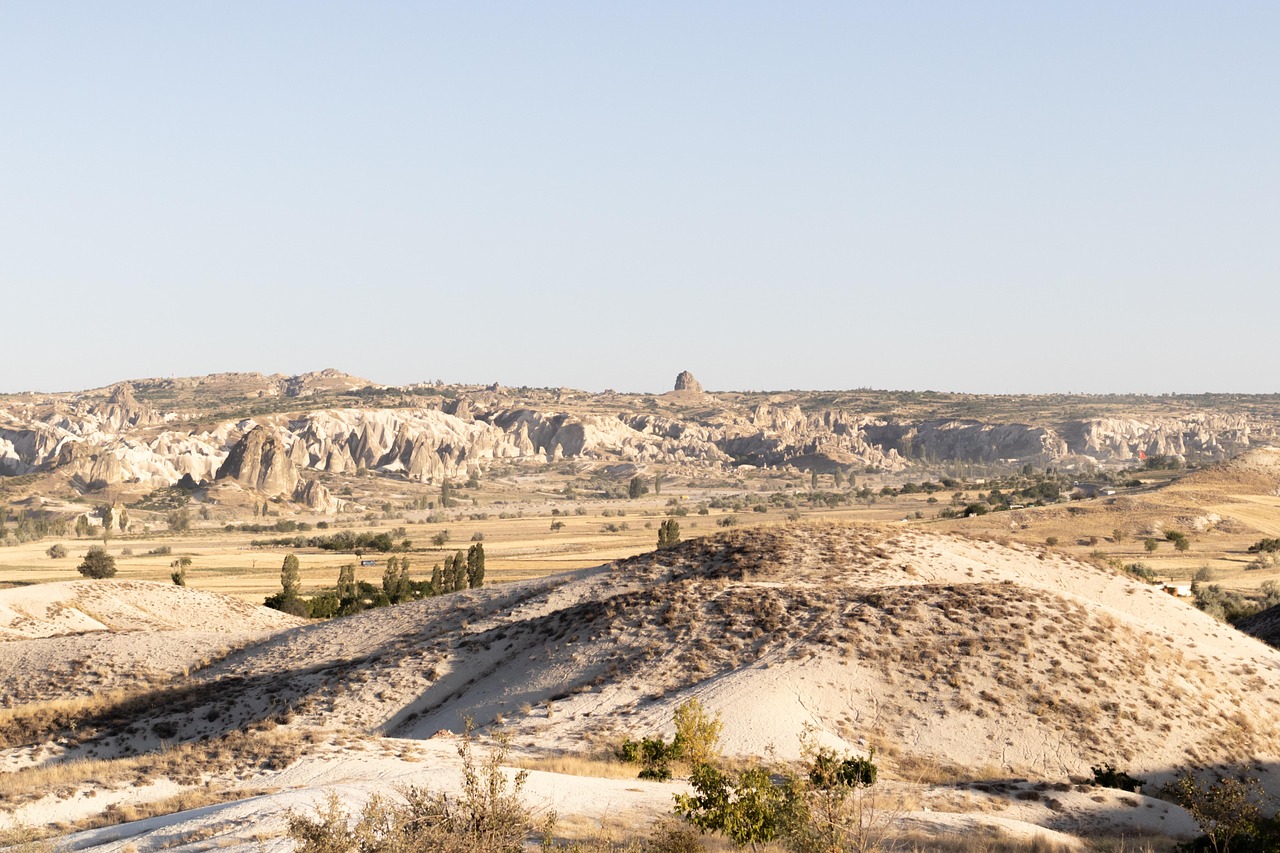
Ataturk’s reforms remade the country, and to this day he is revered by millions of Turks with a devotion that can startle outsiders. His image hangs in offices, schools, and homes across the country. Yet his project also had a harder edge. It was an authoritarian, single-party modernization imposed from above, often with little patience for dissent. Its strict secularism alienated devout Muslims, and its assertive Turkish nationalism left little room for the country’s minorities, above all the Kurds, whose distinct identity the new republic largely refused to recognize. The tensions built into the founding of the republic, between secular and religious, between center and periphery, between Turk and Kurd, have shaped the country’s politics ever since.
A Republic in Constant Argument
The modern Turkish republic has rarely been calm. Through the second half of the twentieth century the military repeatedly intervened in politics, staging coups in 1960, 1971, and 1980, each time claiming to defend Ataturk’s secular legacy, and each time leaving deep scars on the country’s democratic development. Civilian governments came and went, the economy lurched between crisis and growth, and the unresolved questions of the founding kept resurfacing.
The most persistent of these is the Kurdish question. The Kurds, who may number close to a fifth of Turkey’s population, are the largest minority in the country, concentrated mainly in the southeast. For decades the state denied them recognition as a distinct people, banned their language in public life, and at times even referred to them as mountain Turks. A long and bloody armed conflict between the Turkish state and Kurdish separatist insurgents, which began in the 1980s, has cost tens of thousands of lives and devastated parts of the southeast. Periods of reform and cautious opening have alternated with periods of harsh repression. An honest portrait of Turkey has to hold both the genuine progress some Kurds have made and the real injustices they have suffered.
In the early twenty-first century the long dominance of the secular establishment was broken by the rise of a religiously conservative political movement that drew its strength from the more pious, often less wealthy heartland of Anatolia. Under its leadership the country saw years of strong economic growth and rising international ambition, but also a steady concentration of power, pressure on the press and the courts, and a deepening polarization between secular and religious Turks. A failed coup attempt in 2016 and the sweeping crackdown that followed marked another turning point. Turkey today remains a democracy in form, but one where the balance between competing visions of the nation is fiercely and sometimes dangerously contested.
Between the Mosque and the Modern
Perhaps the deepest fault line running through Turkish life is the one between faith and secularism. The vast majority of Turks are Muslims, mostly Sunni, with a significant Alevi minority whose distinct, more heterodox tradition has often faced suspicion and discrimination. For some Turks, Islam is the core of their identity, and the secularism of the early republic felt like an attack on their way of life. For others, the secular republic is precisely what allowed Turkey to modernize, and they fear any erosion of it. This is not a simple divide between the religious and the irreligious. It runs through families, neighborhoods, and individual hearts. A woman in a headscarf and a woman in a sundress may be sisters, may love each other deeply, and may vote for bitterly opposed parties. To understand Turkey is to understand that this argument is not an aberration but a permanent feature of the national conversation.
The Pleasures of the Table and the Tea Glass
For all its political tensions, Turkey is also a country of extraordinary warmth, hospitality, and sensual pleasure, and nowhere is this clearer than around food and drink. Turkish cuisine is one of the great culinary traditions of the world, drawing on Central Asian, Middle Eastern, Mediterranean, and Balkan influences. It runs from the grilled meats of the kebab houses to the elaborate vegetable dishes cooked in olive oil, from the syrup-soaked sweetness of baklava to the savory pastries called borek. Breakfast can be a feast of cheeses, olives, eggs, tomatoes, and fresh bread that lingers for hours.
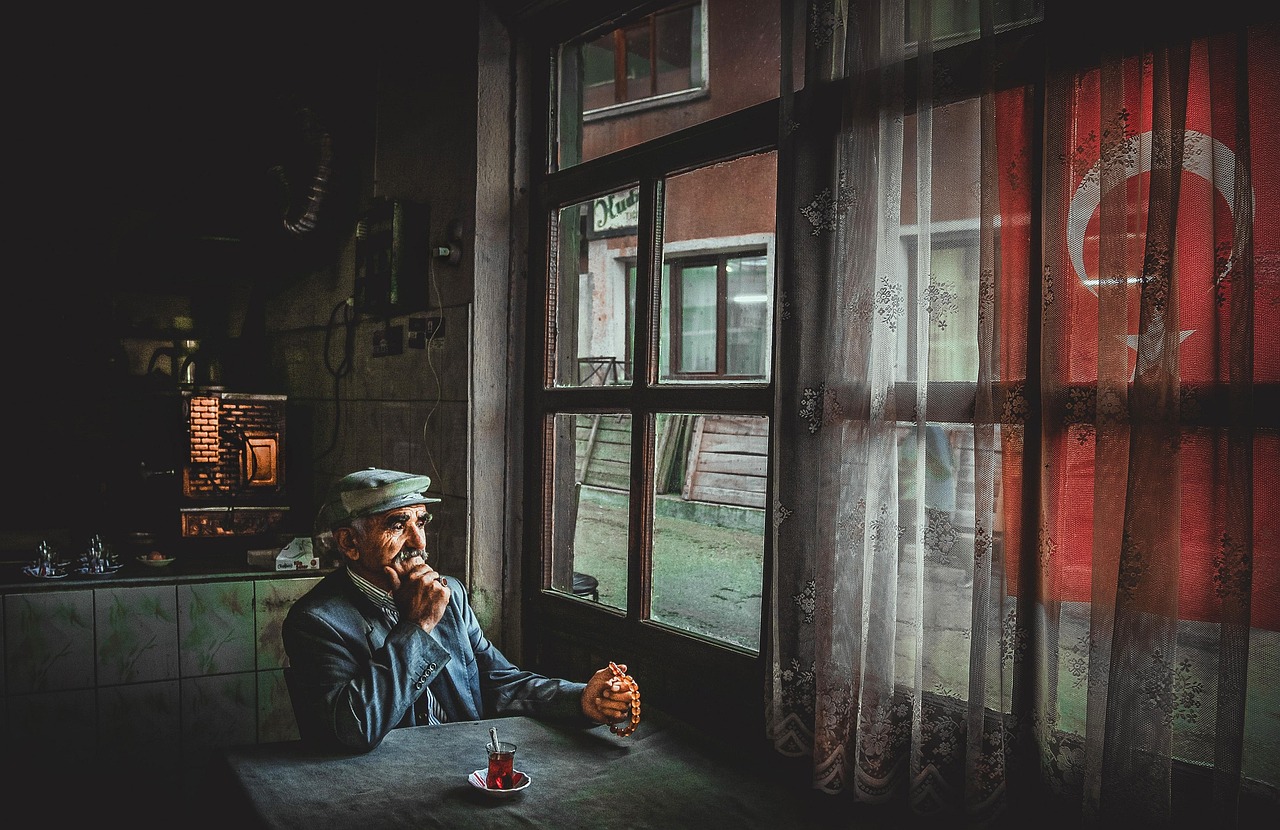
Above all there is tea. Turks are among the heaviest tea drinkers in the world, and the small tulip-shaped glass of strong black tea is a constant companion to daily life. It is offered to guests, shared between shopkeepers and customers, and sipped endlessly during conversation. Turkish coffee, thick and unfiltered and served with a glass of water, carries its own deep ritual, so much so that the grounds left in the cup are read to tell fortunes. To refuse tea or coffee in Turkey is almost to refuse friendship itself, and the famous Turkish hospitality, the insistence on feeding and welcoming a guest, is not a cliche but a lived value.

A Culture That Spans Continents
Turkish culture carries the same blend of East and West that marks the people themselves. In music you can hear it directly. The classical Ottoman tradition, with its subtle modal melodies and instruments like the long-necked saz, sits alongside the soulful, melancholy folk songs of the Anatolian countryside and the modern Turkish pop and rock that fill the airwaves of Istanbul. The country has also become a global force in television, exporting lavish historical dramas and romantic series that are watched and loved across the Middle East, the Balkans, Latin America, and far beyond, a soft-power success that few outside Turkey fully appreciate.
In literature, Turkey gave the world Orhan Pamuk, the novelist whose work explores the country’s divided soul, its longing for the West and its attachment to its own past, and who won the Nobel Prize for Literature in 2006. Earlier, the poet Nazim Hikmet brought a passionate, modern voice to Turkish verse, much of it written from prison or exile because of his communist convictions, a reminder that Turkish writers have often paid a heavy price for their freedom of expression. The tradition of the storyteller, of the shadow-puppet theater of Karagoz, and of richly decorated crafts such as carpet-weaving, ceramics, and the marbled paper art known as ebru, all speak to a deep and continuous artistic heritage.
Sport, especially football, is a national passion bordering on obsession. The great Istanbul clubs command fierce loyalty, and the atmosphere in their stadiums is among the most intense anywhere in the world. Wrestling, particularly the oiled wrestling that is one of the oldest sports in the country, holds a special traditional place, and Turkish athletes have made their mark in weightlifting, basketball, and other arenas on the international stage.

The Turks Beyond Turkey
The Turkish people are not confined to Turkey. In the second half of the twentieth century, large numbers of Turks emigrated to Western Europe, above all to Germany, where they arrived as guest workers and stayed to build communities that now span several generations. Today millions of people of Turkish descent live in Germany, the Netherlands, France, Austria, and beyond, forming one of Europe’s most significant immigrant-origin populations. Their experience has been a complicated one, marked by both real integration and real exclusion, by success stories and by the persistent sting of discrimination.
There are also the closely related Turkic peoples and the Turkish communities of Cyprus and the Balkans, lands once ruled by the Ottomans where Turkish-speaking populations remain. The relationship between Turkey and the wider Turkic world, from Azerbaijan to the republics of Central Asia, has grown warmer in recent decades, built on shared linguistic and cultural roots, even as each of those nations guards its own distinct identity.
A Nation Still Deciding What It Is
To describe the Turks is to describe a people who refuse easy summary. They are the heirs of steppe nomads and of settled empires, of a glorious imperial past and of a bold republican experiment, of a deeply Islamic culture and of a fiercely secular state tradition. They have produced great art and great cruelty, remarkable tolerance and terrible violence, and they continue to argue, loudly and passionately, about who they are and where they belong. They sit, quite literally, between continents, and the question of whether Turkey faces East or West, whether it is part of Europe or the Middle East or simply itself, has never been settled and perhaps never will be.
That very unsettledness may be the truest thing about them. The Turks are a people of the threshold, neither fully one thing nor the other, carrying the weight of a vast history while refusing to be defined by any single part of it. To cross the Bosphorus is to feel that in-betweenness in your own body, and to begin to understand why this nation, perched on the seam of the world, remains one of the most fascinating and consequential peoples on earth.


