There may be no people on earth whose name covers more variety than the Arabs. The word conjures, for many outsiders, a single image of desert and camel and minaret, yet the reality is one of the most diverse populations in the world, spread across more than twenty countries, two continents, and a span of land that runs from the Atlantic coast of Morocco to the shores of the Persian Gulf. A fisherman in Yemen, a banker in Beirut, a Berber-descended farmer in Algeria, a Bedouin in the Saudi interior, and a Coptic-neighboring Muslim in Cairo may all be called Arab, and yet their lives, dialects, and histories differ enormously. To speak of the Arabs is therefore to speak not of a single nation but of a vast cultural and linguistic family, bound together by a shared language, a shared body of memory, and for most though not all of them a shared faith.
In This Article
- Who Counts as an Arab
- The Cradle in the Desert
- The Roots of the Arabic Language
- The Coming of Islam
- A Golden Age of Learning
- The Long Eclipse
- Colonialism and the Drawing of Borders
- Oil, Wealth, and Inequality
- Conflict, Authoritarianism, and the Arab Spring
- Faith, Family, and Hospitality
- The Word, the Song, and the Table
- A Civilization, Not a Country
- The Arabs in a Wider World
- A People Between Memory and Hope

Who Counts as an Arab
The question of who is an Arab does not have a simple genetic answer, and anyone who claims it does is usually selling something. Arab identity is above all cultural and linguistic rather than racial. The most widely accepted definition is that an Arab is someone whose native language is Arabic and who identifies with Arab culture and history. By that measure the Arab world includes people of strikingly different ancestry, because the Arabic language and Arab identity spread far beyond the Arabian Peninsula over the centuries, absorbing and blending with the many peoples already living in the lands that became Arabic-speaking.
This means that an Egyptian Arab carries much of the ancient Egyptian heritage, a Syrian or Lebanese Arab descends in large part from the ancient peoples of the Levant, and a North African Arab is often as much Amazigh, or Berber, in ancestry as anything else. What unites them is not a single bloodline but the Arabic tongue and a sense of belonging to a shared civilization. This is worth stating plainly, because both outsiders and some nationalists have at times tried to turn Arabness into a matter of race, which it has never truly been.

The Cradle in the Desert
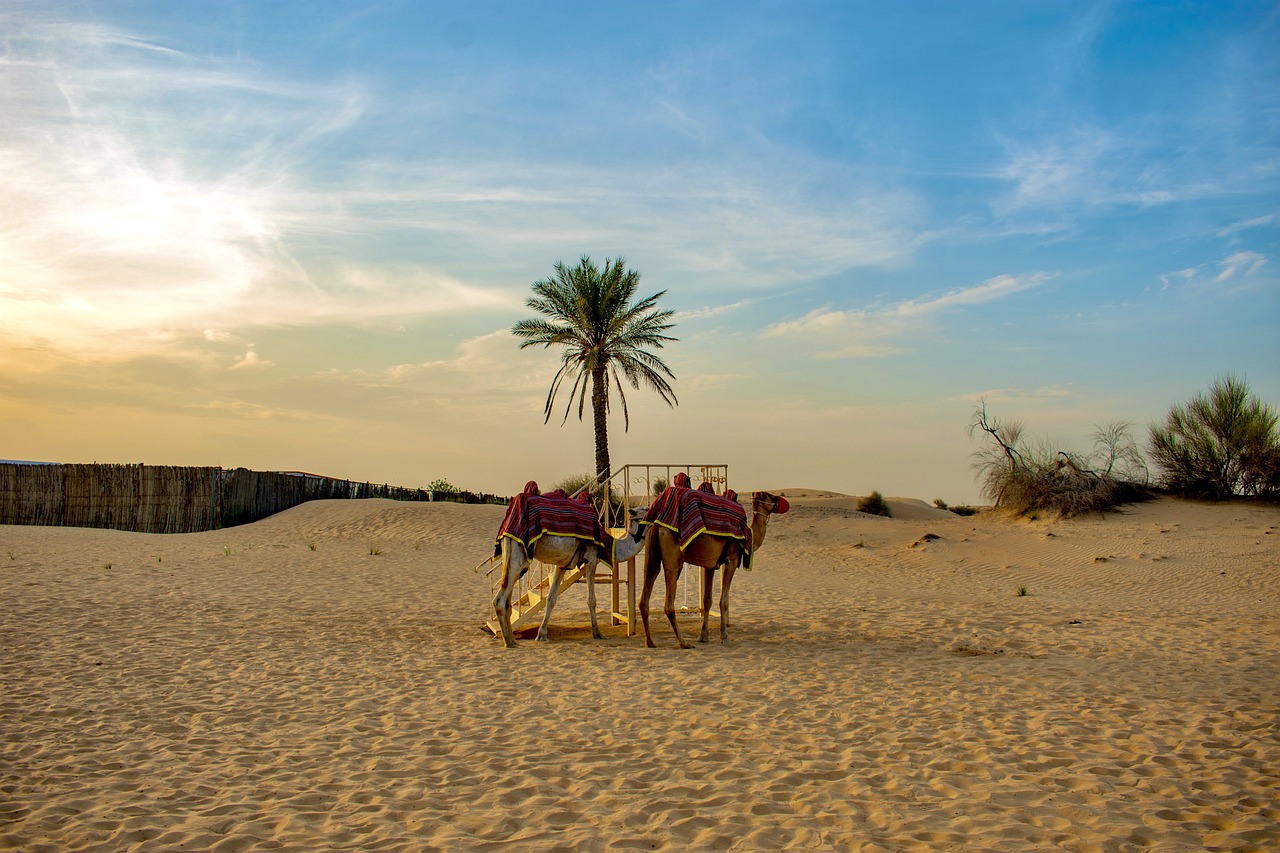
The original homeland of the Arabs is the Arabian Peninsula, that great wedge of desert, mountain, and coast that lies between Africa and Asia. Long before Islam, the peninsula was home to a patchwork of peoples. In the harsh interior lived the Bedouin, nomadic tribes who moved with their camels and herds across the sands, governed by fierce codes of honor, hospitality, and tribal loyalty. Along the trade routes and in the more fertile south rose settled kingdoms and merchant cities that grew wealthy on the caravan trade in incense, spices, and other goods passing between the Indian Ocean world and the Mediterranean.
These pre-Islamic Arabs were not a unified people. They were divided into countless tribes, often at war with one another, worshipping many gods at shrines scattered across the land. Yet they shared something that would prove momentous: a language, and a passionate love of poetry composed in it. The oral poets of the desert were celebrities of their age, their verses memorized and recited across the tribes, and this deep reverence for the spoken and recited word would shape Arab culture forever and would prepare the ground for what was to come.

The Roots of the Arabic Language
Arabic belongs to the Semitic branch of the larger Afro-Asiatic language family, which makes it a relative of Hebrew, Aramaic, and the ancient languages of Mesopotamia and Ethiopia such as Akkadian and Amharic. A speaker of Arabic and a speaker of Hebrew share a deep linguistic kinship, visible in shared roots and in the way both languages build words from three-consonant roots that are bent and shaped by patterns of vowels to create families of related meanings. This root system gives Semitic languages their distinctive feel, where a cluster of related words all grow from a single seed of consonants.
What is unusual about Arabic is the gap between its written and spoken forms. There is a single prestigious standard, classical or modern standard Arabic, the language of the Quran, of literature, of news broadcasts and formal writing, understood across the entire Arab world. Alongside it live the spoken dialects, which vary so much from region to region that a Moroccan and an Iraqi speaking their everyday speech may struggle to understand one another, almost as if they spoke different languages. This situation, where a formal shared language sits above a range of divergent local tongues, is one of the defining features of Arab linguistic life and a constant subject of debate about identity and unity.
The spread of Arabic far beyond its peninsular homeland is one of the great linguistic events of human history. Within a century of the rise of Islam, Arabic had become the language of administration, religion, and high culture across a vast empire, and over the following centuries it gradually replaced the older languages of Egypt, the Levant, Mesopotamia, and North Africa. That it became the mother tongue of so many peoples of such different origins is precisely why the Arab world is so genetically and culturally diverse today.

The Coming of Islam
In the early seventh century, in the trading city of Mecca, a merchant named Muhammad began to preach a message that would transform the Arabs and, through them, much of the world. He proclaimed the worship of one God, called for justice and care for the poor and the orphan, and delivered revelations that were gathered into the Quran, a text of such linguistic power that it became the supreme model of the Arabic language itself. Within his lifetime he united much of the fractious tribal society of Arabia under the new faith of Islam, succeeding where centuries of tribal politics had failed.
What happened next was extraordinary. In the decades after Muhammad’s death in 632, Arab armies carrying the banner of Islam burst out of the peninsula and conquered an empire with breathtaking speed. They overthrew the Persian Sasanian Empire entirely and stripped the Byzantine Empire of its richest provinces. Within a hundred years the Arab-Muslim realm stretched from Spain and Morocco in the west to the borders of India and China in the east, one of the largest empires the world had ever seen, assembled in a single astonishing burst of energy.
It is important to be honest about the nature of this expansion. It was a military conquest, driven by faith, ambition, and the prospect of wealth, and like all conquests it brought violence and subjugation. At the same time, conversion to Islam was often gradual rather than forced, and conquered Christians, Jews, and Zoroastrians were generally permitted to keep their faith as protected communities in exchange for a special tax and a subordinate legal status. The result, over centuries, was the slow transformation of vast regions into Arabic-speaking, largely Muslim societies, though significant Christian and other communities survived and survive to this day.
A Golden Age of Learning
The centuries that followed the conquests saw one of the most brilliant flowerings of civilization in human history. Under the Abbasid caliphs, with their capital at Baghdad, the Arab-Islamic world became the world’s great center of learning. While much of Europe languished, scholars in Baghdad, Cairo, Cordoba, and other cities translated and preserved the philosophical and scientific works of the Greeks, then carried that knowledge far beyond what they had inherited. They made fundamental advances in mathematics, giving us the very word algebra and the system of numerals we still use, in astronomy, medicine, chemistry, optics, and geography.
This was a cosmopolitan civilization in which Arabs, Persians, and many others worked side by side, and in which Muslims, Christians, and Jews all contributed to a shared intellectual project. The city of Cordoba in Muslim Spain became a beacon of culture and relative tolerance, a place where the three faiths produced a remarkable shared heritage. The achievements of this age were not a footnote to history but a crucial bridge in the transmission and growth of human knowledge, and the modern world owes the Arabs a debt that is too often forgotten.

The Long Eclipse
No golden age lasts forever. The Arab heartlands suffered devastating blows, above all the Mongol sack of Baghdad in 1258, which destroyed the Abbasid caliphate and shattered the great center of Arab learning. Political fragmentation, invasion, and the gradual shift of global trade routes all took their toll. Over the following centuries most of the Arab world fell under the rule of others, above all the Ottoman Turks, whose empire absorbed nearly all the Arab lands from the sixteenth century onward.
Under Ottoman rule the Arabs were largely subjects rather than masters, and the long period of foreign domination contributed to a sense of decline and a later longing for renewal. When the Ottoman Empire itself collapsed at the end of the First World War, the Arab world did not gain the independence many of its people had been promised. Instead the European powers, above all Britain and France, carved up the region between them, drawing borders that often ignored the realities on the ground and planting the seeds of conflicts that endure to this day.
Colonialism and the Drawing of Borders
The colonial period left deep wounds across the Arab world. The map of the modern Middle East was drawn in large part by European diplomats serving European interests, who divided the former Ottoman provinces into mandates and colonies with little regard for the wishes of the people who lived there. Promises made to Arab leaders during the war, in exchange for their revolt against the Ottomans, were broken. At the same time, Britain expressed support for a Jewish national home in Palestine, a commitment that would collide with the aspirations of the Arabs already living there and set the stage for one of the most intractable conflicts of the modern age.
The struggle against colonial rule shaped Arab politics for generations. Country after country won independence through the middle of the twentieth century, often after bitter struggle, as in Algeria, where a brutal war of independence against France cost enormous numbers of lives. The experience of foreign domination, and the artificial nature of many of the new borders, fed a powerful current of Arab nationalism, the dream of uniting the Arabic-speaking peoples into a single great nation, a dream that inspired millions even as it repeatedly foundered on the rivalries of states and leaders.

Oil, Wealth, and Inequality
The twentieth century brought a transformation that no one could have predicted: the discovery of vast reserves of oil beneath the Arabian Peninsula and the Gulf. Lands that had been among the poorest and most marginal in the world suddenly held a great share of the planet’s energy. Within a few decades, cities of glass towers rose from the desert, and small Gulf states became among the wealthiest places on earth. This sudden wealth reshaped the Arab world, but it spread very unevenly. The oil-rich states of the Gulf grew fabulously prosperous, while populous countries like Egypt, Yemen, and others remained poor, creating enormous disparities within the Arab world itself.
The wealth of the Gulf states was built, too, on the labor of millions of migrant workers from South Asia and elsewhere, many of whom have worked under harsh conditions with few rights, a reality that sits uncomfortably beneath the gleaming surface of the boom. An honest picture of the modern Arab world must include both the genuine achievements of development and the deep inequalities and injustices that accompanied it.
Conflict, Authoritarianism, and the Arab Spring
The modern history of the Arab world has been marked by painful conflict. The dispute over Palestine and the wars between Israel and its Arab neighbors have cast a long shadow over the entire region for generations. Within Arab states, the dream of nationalism and unity gave way too often to military coups and authoritarian regimes, rulers who held power for decades through repression, surveillance, and the suppression of dissent. The promise of independence frequently curdled into dictatorship, and ordinary Arabs paid the price in lost freedoms and stifled lives.
In 2011 a wave of popular uprisings swept across the region, the movement that became known as the Arab Spring. From Tunisia to Egypt to Syria, millions took to the streets demanding dignity, freedom, and an end to corruption and tyranny. For a brief moment it seemed that a new era might be dawning. Some rulers fell. But the hopes of those months were largely crushed. Some countries slid back into authoritarian rule, and others descended into devastating civil wars, above all Syria and Yemen, where the suffering of civilians has been immense and where outside powers turned local struggles into proxy battlegrounds. The story of the Arab Spring is one of enormous courage met, too often, with tragedy, and it is far from over.
Faith, Family, and Hospitality
For all the political turmoil, the texture of everyday Arab life is woven from threads that have endured for centuries. The great majority of Arabs are Muslims, and Islam shapes the rhythm of daily life, from the call to prayer that sounds five times a day to the fasting of Ramadan and the great pilgrimage to Mecca that draws millions each year. Yet it must not be forgotten that the Arab world is also home to ancient and important Christian communities, in Egypt, Lebanon, Syria, Iraq, and Palestine, peoples whose roots in the region predate Islam and who are very much part of the Arab story.
Beneath religion lies the bedrock of family and tribe. Arab society places enormous value on the extended family, on loyalty to kin, and on the honor and reputation of the family group. And then there is hospitality, perhaps the single most celebrated Arab virtue. The duty to welcome a guest, to offer food and shelter even to a stranger, runs back to the harsh logic of the desert, where to turn away a traveler could mean their death. To this day, a guest in an Arab home will be plied with coffee, dates, and food, and the generosity shown can overwhelm visitors from more reserved cultures.

The Word, the Song, and the Table
If there is one art the Arabs have loved above all others, it is the art of language. The reverence for poetry that marked the pre-Islamic Bedouin never faded, and the poet has always held a place of honor in Arab culture. Classical Arabic poetry, with its strict meters and its themes of love, loss, valor, and longing, remains a living tradition, and a gifted poet can still move an audience to tears or to fury. This love of the word found another supreme expression in calligraphy. Because much Islamic tradition discouraged the depiction of living figures in religious art, Arab and Muslim artists poured their genius into the beautification of the written word, turning verses of the Quran into flowing, breathtaking works of visual art that adorn mosques and manuscripts alike.
Arab music is equally rich, built on subtle scales and quarter-tones unfamiliar to Western ears, capable of an aching emotional intensity. The great singers of the twentieth century, above all the legendary Egyptian voice of Umm Kulthum, commanded audiences of millions across the entire Arab world, their concerts events that could bring whole cities to a standstill. In food, the Arab table offers a vast and generous spread, from the grilled meats and flatbreads of the Levant to the rice and lamb dishes of the Gulf, from hummus and falafel to the sweet pastries soaked in syrup and honey, all of it meant to be shared.

A Civilization, Not a Country
One of the hardest things for outsiders to grasp is that the Arabs are at once one people and many. There is a real and deeply felt sense of shared Arab identity, a feeling of belonging to a single great cultural nation that stretches across borders, nourished by a common language, a shared religion for most, a shared history, and a shared body of poetry, song, and memory. Arabs across two dozen countries watch the same television dramas, weep to the same songs, and feel a common pride in the achievements of the Arab past and a common pain at its tragedies.
And yet the Arab world is also profoundly divided, by national borders, by the gulf between rich and poor states, by sectarian differences between Sunni and Shia, by rival regimes and competing ambitions. The dream of Arab unity has repeatedly run aground on these divisions. To be an Arab is to live with this tension between a powerful sense of belonging to a great whole and the stubborn reality of fragmentation, between the memory of a glorious past and the difficulties of a troubled present.
The Arabs in a Wider World
The Arab people have never been confined to the Middle East and North Africa. For more than a century, waves of Arab emigrants have settled across the globe, building communities that now span every inhabited continent. Some of the earliest large migrations carried Lebanese and Syrian Christians to the Americas in the late nineteenth and early twentieth centuries, where they and their descendants became merchants, professionals, and political leaders, leaving a deep mark on countries from Brazil and Argentina to the United States. Later waves, driven by war, economic hardship, and the search for opportunity, brought millions more to Europe, the Americas, Australia, and beyond.
This diaspora has produced extraordinary figures in business, science, the arts, and public life, and it has built a bridge between the Arab world and the societies in which Arab migrants have settled. Yet the experience has also been marked by hardship and prejudice. In recent decades, Arabs and Muslims in the West have often faced suspicion and discrimination, sharpened by terrorism carried out by extremist minorities and by the way it has been used to tar entire communities. It is worth saying clearly that the violent extremism associated in some minds with Arabs represents a tiny and widely condemned fringe, and that its victims have overwhelmingly been other Arabs and Muslims. The vast majority of Arabs, at home and abroad, ask only for the same things people everywhere want: safety, dignity, opportunity, and a future for their children.
The recent tragedies of the region have added a darker chapter to this story of movement. The wars in Syria, Iraq, and Yemen have driven millions from their homes, creating one of the largest refugee crises of modern times. Families who once lived ordinary lives in ancient cities have been scattered across camps and foreign countries, carrying with them little more than memory and the hope of return. Their plight is a reminder that behind the headlines and the geopolitics are human beings, heirs to one of the world’s great civilizations, enduring losses that no people should have to bear.
A People Between Memory and Hope
The Arabs carry one of the longest and richest histories of any people on earth. They gave the world a great religion, a brilliant civilization that preserved and advanced human knowledge, a language of extraordinary beauty, and a culture of hospitality, poetry, and faith that has endured for more than a thousand years. They have also known conquest and decline, colonial humiliation, dictatorship, and devastating war, and much of the Arab world today struggles with poverty, repression, and conflict that have shattered the hopes of millions.
To understand the Arabs is to hold all of this at once, the golden age and the long eclipse, the deep dignity of the culture and the harsh realities of its modern politics, the warmth of the people and the cruelty they have too often suffered, much of it at the hands of their own rulers and of outside powers. They remain a young population, hungry for dignity and a better future, carrying the weight of a magnificent past and the burden of a difficult present. The story of the Arabs is far from finished, and what they make of the coming century will shape not only their own future but a great deal of the world’s.
You May Like
The Zaza, a Mountain People of Eastern Anatolia


7 thoughts on “One Language and Many Worlds, the Story of the Arabs From the Desert to the Globe”