Few peoples have shaped the world as profoundly as the Jews, and few have endured so much to survive. A small nation by numbers, scattered for most of their history across the face of the earth without a homeland of their own, the Jewish people have given humanity one of its foundational religions, contributed extraordinarily to science, philosophy, art, and law, and held onto a distinct identity through two thousand years of exile, persecution, and attempted annihilation. Their story stretches back more than three thousand years, runs through every corner of the world, and includes both the deepest tragedy and the most remarkable endurance in all of human history. To tell it honestly is to tell a story of faith, survival, achievement, suffering, and the long and painful return to a contested homeland.
In This Article
- A People and a Covenant
- Exile and the Birth of the Diaspora
- The Roots of the Hebrew Language
- How a Religion Preserved a People
- Between Tolerance and Persecution
- The Holocaust
- The Dream of Return
- A Homeland and a Conflict
- The Ingathering of a Scattered People
- A People of Ideas
- Many Ways of Being Jewish
- The Jews of the World Today
- The People Who Endured
A People and a Covenant
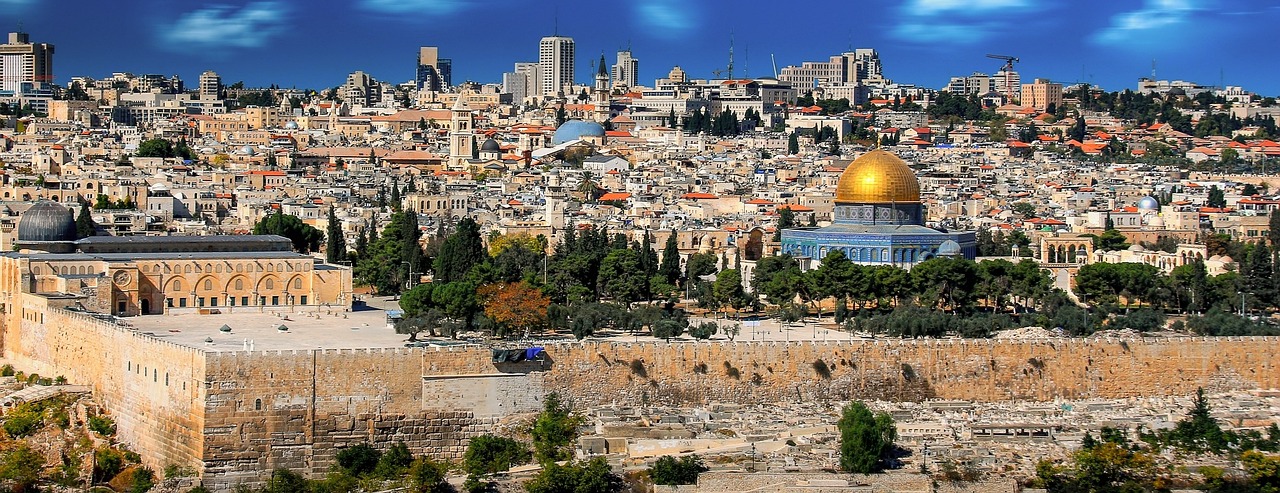
The Jewish people trace their origins to the ancient Hebrews of the land of Canaan, in the region that is now Israel and the Palestinian territories, more than three thousand years ago. Their foundational story, preserved in the Hebrew Bible, tells of the patriarchs Abraham, Isaac, and Jacob, of bondage in Egypt and a dramatic exodus to freedom, of the giving of the law at Sinai, and of the establishment of a kingdom in the promised land under figures such as David and Solomon, the latter said to have built the great Temple in Jerusalem. Whatever the precise relationship between these traditions and the historical record, which scholars continue to study and debate, they form the sacred narrative around which Jewish identity has been built.
What set the ancient Hebrews apart was their religion. In a world of many gods, they developed a belief in a single, invisible, universal God, and a conviction that they stood in a special covenant with that God, bound to live by his law. This monotheism was revolutionary, and from it would flow, in time, both Christianity and Islam, making the small nation of the Hebrews the spiritual ancestor of faiths now followed by more than half of humanity. The Hebrew Bible, the foundational text of Judaism, became one of the most influential books ever written, shaping the moral and religious imagination of much of the world.
Exile and the Birth of the Diaspora
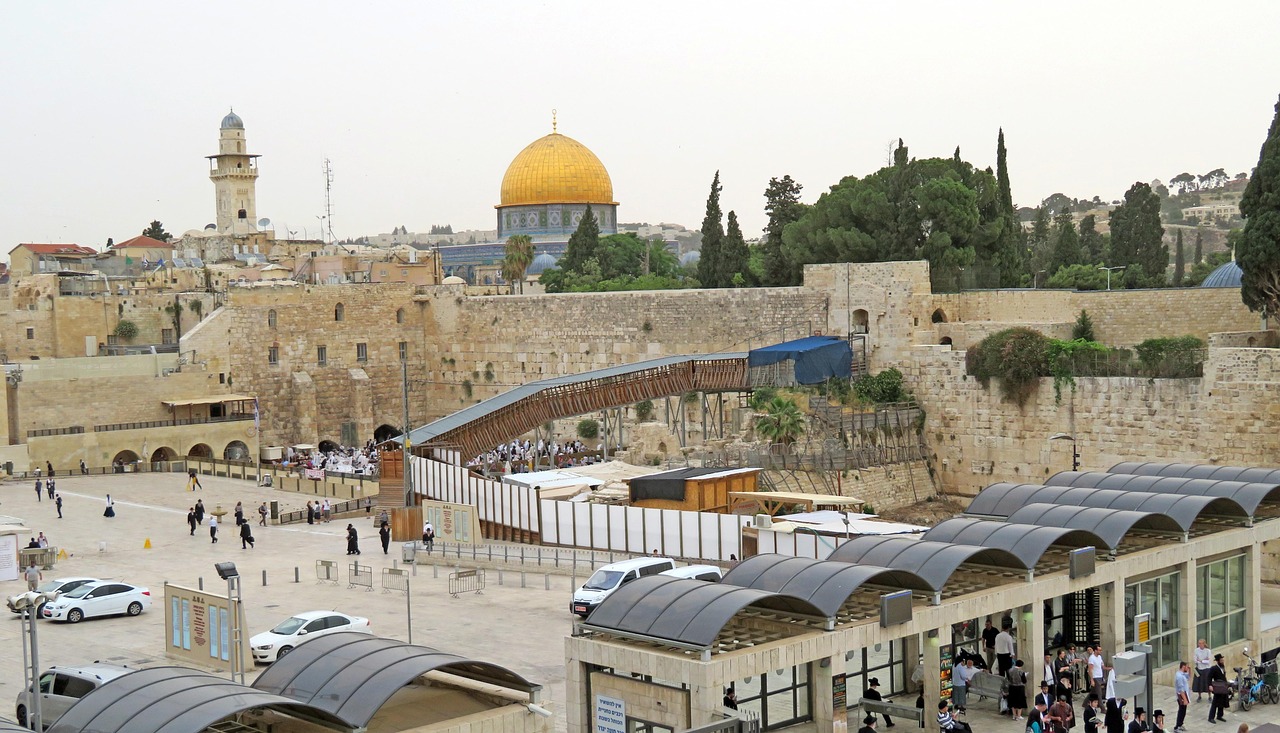
The history of the ancient Jewish kingdoms was turbulent, marked by division, conquest, and the looming power of great empires. The Temple in Jerusalem, the center of Jewish worship, was destroyed by the Babylonians and a portion of the people carried into exile, then later rebuilt. But the decisive catastrophe came under Roman rule. After Jewish revolts against the Roman Empire, the Romans destroyed the second Temple in the year 70 and, following a later rebellion, expelled or scattered much of the Jewish population from Jerusalem and Judea, even renaming the land in an effort to erase its Jewish character.
This began the long period known as the diaspora, the dispersion, during which the great majority of Jews lived outside their ancestral homeland, scattered across the Middle East, North Africa, Europe, and eventually the entire world. For nearly two thousand years, the Jews would be a people without a country, a minority everywhere, maintaining their identity not through a shared territory but through their religion, their law, their language of prayer, and an unshakable collective memory and hope of return. How they accomplished this, surviving as a distinct people for two millennia without a homeland, is one of the great wonders of human history.

The Roots of the Hebrew Language
The Hebrew language belongs to the Semitic branch of the Afro-Asiatic language family, which makes it a close relative of Aramaic and the Arabic tongue and a more distant cousin of the ancient languages of Mesopotamia and Ethiopia. Like other Semitic languages, Hebrew is built on a system of three-consonant roots, shaped by patterns of vowels into families of related words, and it is written in its own ancient alphabet from right to left. Hebrew is the language of the Bible and of Jewish prayer and scholarship, and for many centuries it lived on primarily as a sacred and literary language rather than an everyday spoken tongue.
One of the most extraordinary linguistic events of modern times was the revival of Hebrew as a living, spoken language. As Jews from many lands began to gather in their ancestral homeland in the late nineteenth and early twentieth centuries, speaking dozens of different languages, the dream took hold of reviving ancient Hebrew as a common modern tongue. Against the expectations of many, it succeeded, and Hebrew became once again the everyday language of millions, an achievement unique in the history of languages, the rebirth of a tongue that had not been spoken as a mother tongue for many centuries.
Across the long diaspora, Jews also developed their own distinctive languages, blending Hebrew with the tongues of the lands where they lived. The Jews of central and eastern Europe spoke Yiddish, a language rooted in German and written in Hebrew letters, while the Jews descended from the medieval Spanish communities spoke Ladino, based on old Spanish. These languages carried rich cultures and literatures of their own, and though both declined catastrophically through the persecutions of the twentieth century, they remain treasured parts of the Jewish heritage.
How a Religion Preserved a People
The survival of the Jews through two thousand years of dispersion is inseparable from their religion. Judaism is not only a faith but a comprehensive way of life, governing diet, the rhythm of the week and the year, family life, ethics, and community. The weekly Sabbath, the cycle of festivals recalling the great events of Jewish history, the dietary laws, and the central role of study and the synagogue all worked to bind Jews together and to set them apart from the surrounding peoples, generation after generation, wherever they lived.
At the heart of Jewish life stood the Torah and its study. The Jews became, famously, a people of the book, placing extraordinary value on literacy, learning, and the interpretation of their sacred texts. The vast body of rabbinic law and commentary known as the Talmud became the focus of endless study and debate, and the tradition of argument, questioning, and intellectual rigor it fostered would echo through Jewish culture into the secular achievements of the modern age. This deep culture of learning, maintained even in the harshest circumstances, was both a religious duty and a key to survival and, later, to remarkable success.

Between Tolerance and Persecution
The experience of the Jews in the diaspora varied enormously across time and place, swinging between periods of relative tolerance and prosperity and episodes of terrible persecution. In the medieval Islamic world, Jews were often able to live as a protected, if subordinate, religious community, and Jewish culture flourished in places such as Muslim Spain, which saw a golden age of Jewish poetry, philosophy, and science. The great philosopher Maimonides, one of the towering Jewish thinkers of all time, lived and worked in this world.
In Christian Europe, however, the Jews faced a long and deepening hostility. Cast as outsiders and frequently blamed for the death of Christ, they were subjected to discrimination, confined to particular occupations and quarters, periodically expelled from entire kingdoms, and subjected to violent massacres, especially in times of crisis such as the Crusades and the Black Death, when they were falsely accused of poisoning wells. This persistent hatred, which came to be called antisemitism, forced Jewish communities to live in perpetual insecurity, and it created a tradition of prejudice that would culminate, in the twentieth century, in the most systematic atrocity in human history.
The Holocaust
The darkest chapter not only of Jewish history but arguably of all human history is the Holocaust, the deliberate, industrialized murder of six million Jews by Nazi Germany and its collaborators during the Second World War. Building on centuries of European antisemitism and adding to it a poisonous racial ideology, the Nazi regime set out to annihilate the entire Jewish people. Across Europe, Jews were stripped of their rights, herded into ghettos, and then transported to extermination camps where they were murdered on an unimaginable scale in gas chambers, or shot in mass killings, or worked and starved to death.
Two out of every three Jews in Europe were murdered. Ancient communities that had existed for a thousand years were wiped out entirely. The rich Yiddish-speaking civilization of eastern Europe was almost completely destroyed. Entire families, towns, and worlds vanished. The Holocaust stands as the ultimate warning of where hatred, dehumanization, and indifference can lead, and its memory is seared into Jewish consciousness and into the conscience of humanity. The determination that such a thing must never happen again, and that the Jewish people must never again be left utterly defenseless, would powerfully shape everything that followed.

The Dream of Return
Throughout their long exile, Jews had never ceased to remember Jerusalem and to hope for an eventual return to their ancestral homeland, a longing expressed in their prayers and rituals for nearly two thousand years. In the late nineteenth century, this ancient hope took on a modern political form in the movement known as Zionism, which held that the Jews were a nation that needed and deserved a state of their own, above all as a refuge from the relentless persecution they faced. Inspired by this vision, Jews began to immigrate in growing numbers to their historic homeland, then under Ottoman and later British rule, buying land, building communities, and reviving the Hebrew language.
The Holocaust transformed Zionism from the aspiration of a minority into an urgent cause supported by much of the Jewish world and by international opinion, as the murder of European Jewry made the case for a Jewish refuge tragically undeniable. In 1948, in the aftermath of the war and the genocide, the State of Israel was declared, the first sovereign Jewish state in some two thousand years. For Jews around the world it was the fulfillment of an ancient dream and a vital guarantee of survival. But it also unfolded on a land that was not empty, and herein lies one of the most painful and intractable conflicts of the modern world.
A Homeland and a Conflict
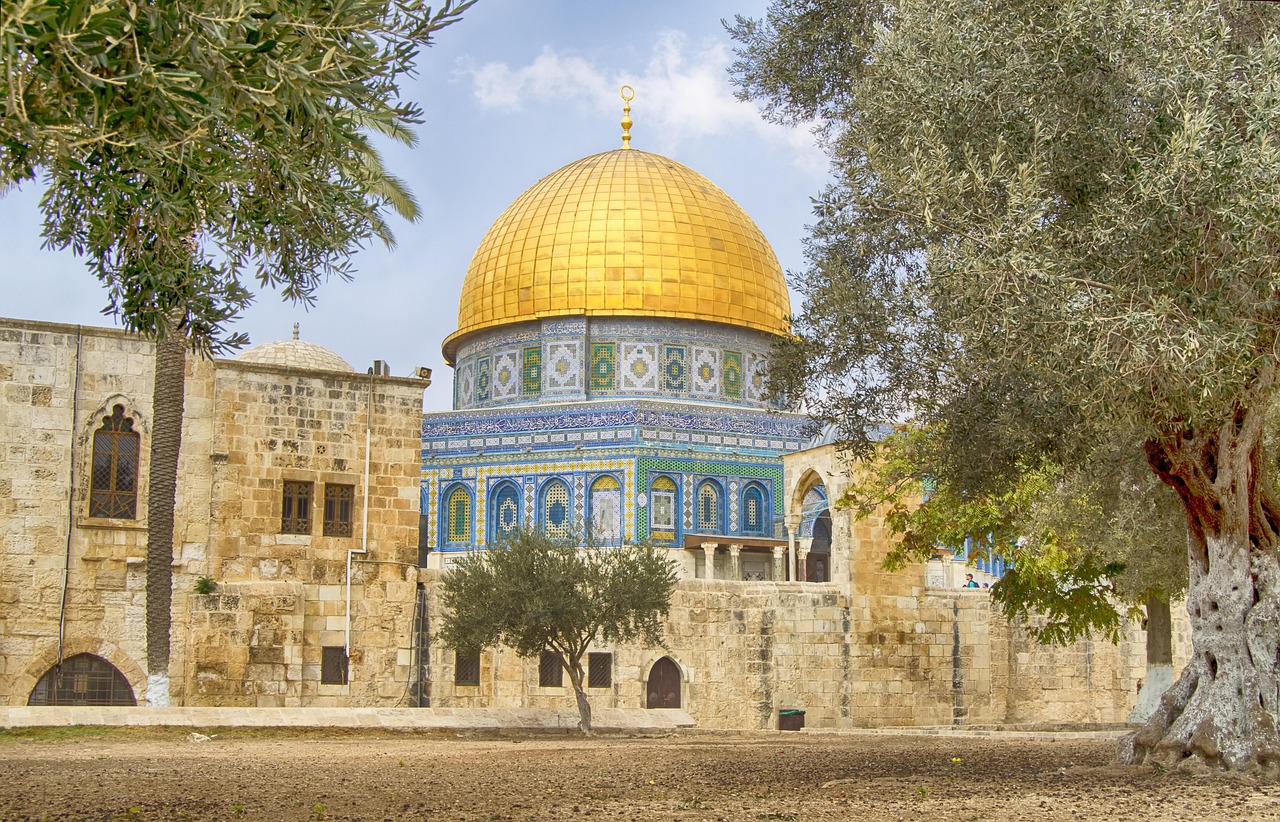
The creation of Israel fulfilled the hopes of the Jewish people but collided with the reality that the land was also home to an Arab population, the Palestinians, who had lived there for generations and who experienced the establishment of the Jewish state as a catastrophe. The war that accompanied Israel’s founding resulted in the flight and expulsion of hundreds of thousands of Palestinians from their homes, an event Palestinians call the Nakba, and created a refugee population and a national grievance that endure to this day. An honest account must hold two truths at once: the founding of Israel was, for Jews, a necessary refuge and the realization of an ancient longing after the worst catastrophe in their history, and it was also, for Palestinians, the loss of their homeland and the beginning of a long displacement.
In the decades since, the conflict between Israel and its Arab neighbors, and above all between Israelis and Palestinians, has been one of the most bitter and seemingly unsolvable in the world. There have been repeated wars, occupations, uprisings, acts of terrorism, and military operations, with terrible suffering inflicted and endured on both sides. Israelis have lived under the threat of violence and the hostility of neighbors who at times sought their destruction; Palestinians have lived under occupation, displacement, and the denial of a state of their own. This conflict is not the subject of this article, which concerns the Jewish people as a whole, but no honest portrait of the modern Jewish experience can ignore that the Jewish homeland exists amid a profound and ongoing conflict whose resolution has eluded generations.
The Ingathering of a Scattered People
One of the most remarkable features of modern Israel is that it became a gathering point for Jews from utterly different worlds. Jews came not only from Europe but from across the Middle East and North Africa, from Yemen, Iraq, Morocco, and beyond, many of them fleeing persecution in Arab lands; later came great waves from the former Soviet Union and from Ethiopia. These communities, separated for centuries and shaped by wildly different cultures, languages, and customs, were brought together in a single small country, united by their shared Jewish identity and the revived Hebrew language but bringing with them an extraordinary diversity.
This ingathering created a society of striking variety and considerable tension, between Jews of European origin and those from the Middle East, between the religious and the secular, between different visions of what a Jewish state should be. Modern Israeli society is famously argumentative, diverse, and dynamic, a place where ancient tradition and cutting-edge modernity exist side by side, where deeply religious communities live alongside one of the most secular and technologically advanced societies in the world.
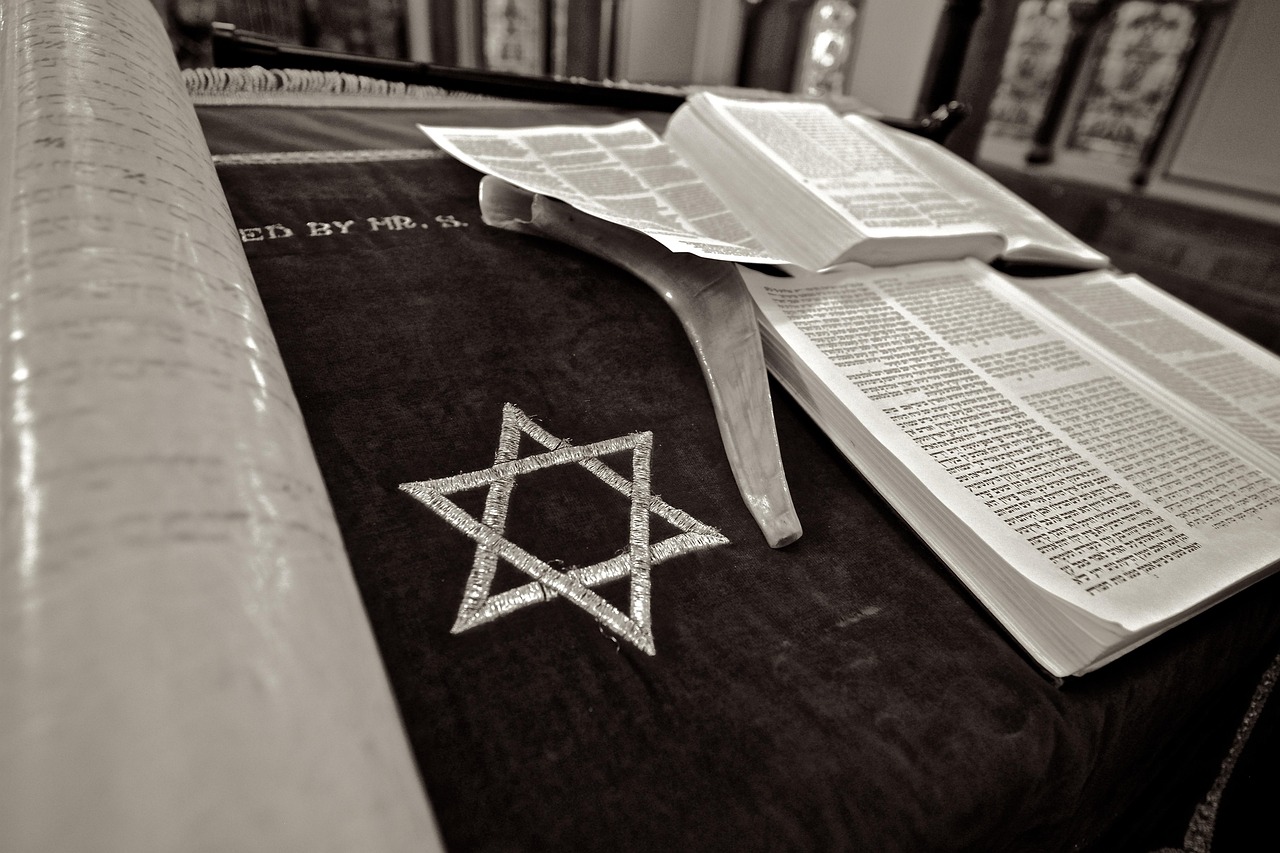
A People of Ideas
Out of all proportion to their small numbers, Jews have made an astonishing contribution to human civilization, particularly in the modern era, when emancipation in Europe and America opened doors long closed to them. In science, Jewish thinkers transformed our understanding of the universe and the mind, with figures such as Einstein and Freud reshaping entire fields. Jews have won the Nobel Prize in numbers vastly disproportionate to their share of the world’s population, and have stood at the forefront of physics, medicine, mathematics, economics, and countless other disciplines.
In the arts, literature, music, film, and philosophy, Jewish creativity has profoundly shaped modern culture. In law, social thought, and political philosophy, Jewish thinkers have been central to debates about justice and human rights. This extraordinary intellectual and creative achievement is often traced in part to the ancient Jewish reverence for study, learning, and the questioning of texts, a culture that placed the life of the mind at the very center of religious and communal life and that found, in the freedom of the modern world, an outlet for its enormous accumulated energy.
Many Ways of Being Jewish
Jewish identity is unusually complex, for being Jewish is at once a matter of religion, of peoplehood, and of culture, and a person can be Jewish in any combination of these. There are deeply observant Jews whose lives are governed by religious law, and there are entirely secular Jews who do not believe in God yet feel profoundly Jewish in their identity, culture, and sense of shared history and fate. Within the religion itself, there are different movements, from the strictly traditional Orthodox to the more liberal Reform and Conservative branches that emerged in the modern era, each interpreting the tradition in its own way.
There are also the broad cultural divisions of the Jewish world, above all between the Ashkenazi Jews of European origin and the Sephardi and Mizrahi Jews whose roots lie in Spain, the Middle East, and North Africa, each with their own customs, traditions, liturgical melodies, and cuisines. This internal diversity means that there is no single way to be Jewish, and Jews themselves often debate, sometimes fiercely, the question of Jewish identity. Yet across all these differences runs a powerful thread of shared peoplehood, a sense of belonging to a single ancient family bound by a common history, a common heritage, and a common destiny.
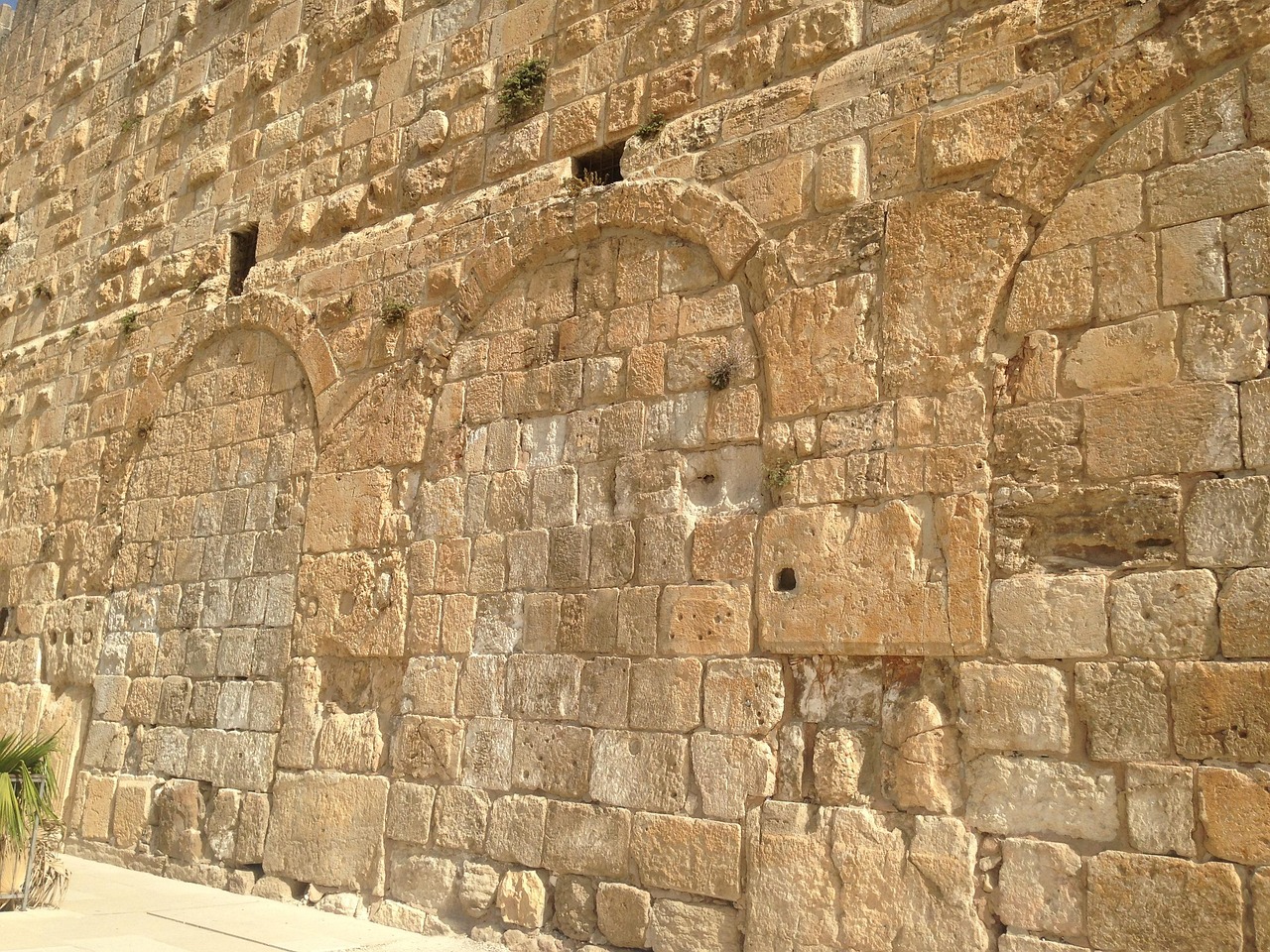
The Jews of the World Today
Today the Jewish people number some fifteen million worldwide, a figure that has still not recovered from the losses of the Holocaust. They are concentrated mainly in two great centers: the State of Israel, home to the largest Jewish community in the world, and the United States, home to the second largest and to one of the most successful and influential diaspora communities in Jewish history. Smaller but significant communities remain in countries around the globe, from France and Britain to Canada, Argentina, and beyond, while the ancient communities of the Arab world have largely vanished, their members having emigrated in the decades after Israel’s founding.
The relationship between Israel and the diaspora, and the debates within the Jewish world about religion, politics, and the meaning of Jewish identity, are vigorous and ongoing. Antisemitism, the ancient hatred, has not disappeared, and its persistence and resurgence in various forms remains a source of deep concern. Yet the Jewish people endure, sustaining their faith, their culture, their languages, and their communities, and continuing to contribute to the wider world far out of proportion to their numbers.
The People Who Endured
The story of the Jewish people is, more than anything, a story of endurance against odds that should have erased them many times over. They survived the loss of their homeland and the destruction of their Temple, two thousand years of exile and persecution, expulsions and massacres, and finally the systematic attempt to murder them all. Through all of it they kept their faith, their law, their language of prayer, their texts, and their hope, refusing to vanish from history even when history seemed determined to remove them from it.
From this small, scattered, and so often persecuted people came one of the world’s great religions and the spiritual roots of two others, a tradition of learning and ethical reflection that has enriched all of humanity, and a modern record of achievement almost without parallel. Their history holds the deepest tragedy and the most stubborn resilience, the catastrophe of the Holocaust and the rebirth of a nation, the pain of exile and the complexity of return. To understand the Jewish people is to confront some of the largest questions of human history, about faith and survival, about hatred and its consequences, and about the extraordinary capacity of a people to remain themselves across the millennia, against everything the world could throw at them.