There is a saying among the people of Damascus that their city was old when the world was young. It is not entirely a boast. Damascus has been lived in, argued in, prayed in, and traded in for more than ten thousand years, which makes it one of the oldest continuously inhabited cities anywhere on earth. To be Syrian is to inherit that depth of time, to walk over the bones of Aramaeans and Romans and Umayyad caliphs on the way to buy bread. It is also, in our own century, to carry one of the heaviest sorrows any people has had to bear. The Syrian story is both of these things at once, and it cannot honestly be told as only one of them.
In This Article
- A Land at the Center of Everything
- The Cradle of So Many Beginnings
- The Roots of the Syrian Tongue
- When Damascus Ruled an Empire
- Four Centuries Under the Ottomans
- The Broken Promise of Independence
- The Baath Party and the Assad Era
- A Mosaic of Faiths and Peoples
- The War That Broke a Country
- The Great Scattering
- A Cuisine and Culture Loved Everywhere
- The Land Itself
- A People Between the Old World and the New
- The Recent Turn and an Uncertain Dawn
- Family, Honor, and the Rhythm of Daily Life
- Music, Poetry, and the Syrian Soul
- A Story Far From Finished
A Land at the Center of Everything
Syria sits at a hinge of the world. To its west lies the Mediterranean, to its east the great rivers of Mesopotamia, to its south the deserts of Arabia, and to its north the highlands of Anatolia. Almost every empire that mattered in the ancient and medieval Near East either began here, passed through here, or fought to control it. That central position gave Syrians their cosmopolitan instinct and their long habit of absorbing newcomers, but it also made their homeland a permanent battlefield, coveted by everyone and rarely left in peace.
The modern country drawn on the map is young, a creation of the twentieth century, but the people and the land are ancient. Syrians often distinguish between the small, contested borders of the current state and the older, wider idea of greater Syria, the cultural region that once stretched across the Levant. Understanding that gap between the recent state and the deep civilization is the first step to understanding who the Syrians are.
The Cradle of So Many Beginnings
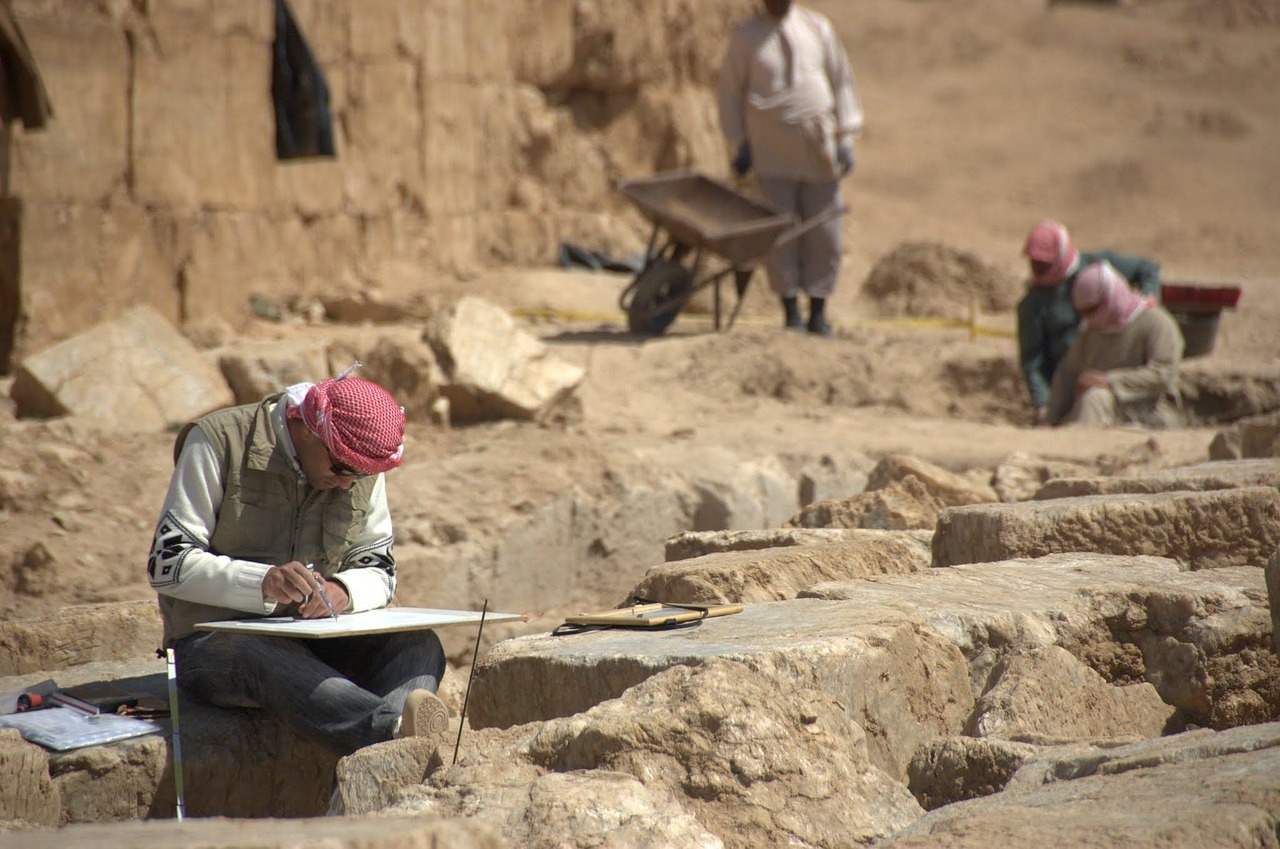
Few patches of ground have given humanity more firsts. At Ebla, near Aleppo, archaeologists found one of the earliest known archives of clay tablets, the records of a wealthy trading kingdom from more than four thousand years ago. At Ugarit, on the coast, scribes developed one of the world’s first true alphabets, a leap that would eventually make reading and writing possible for ordinary people rather than a priestly few. These were not borrowed achievements. They grew out of the soil of Syria itself.
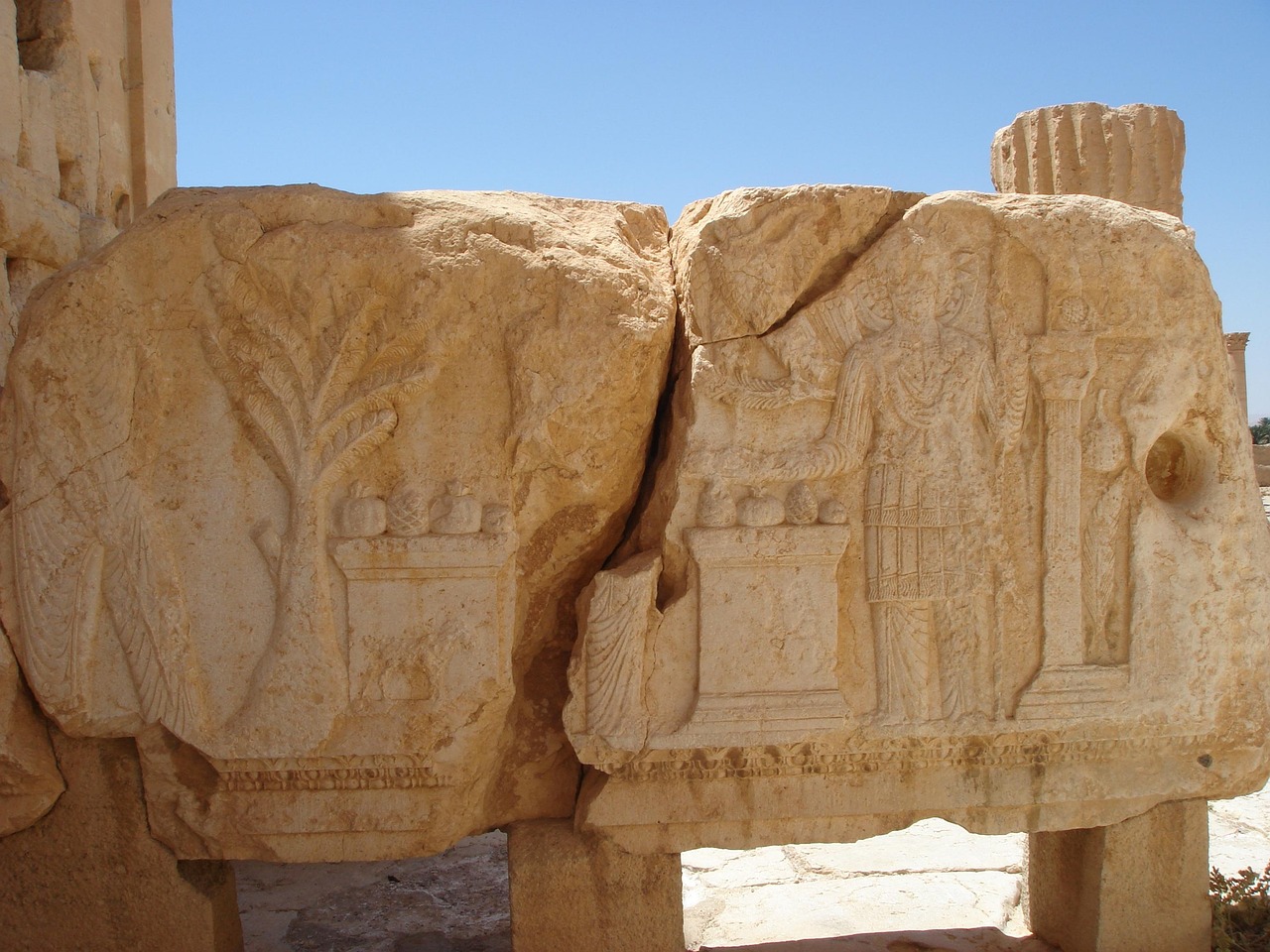
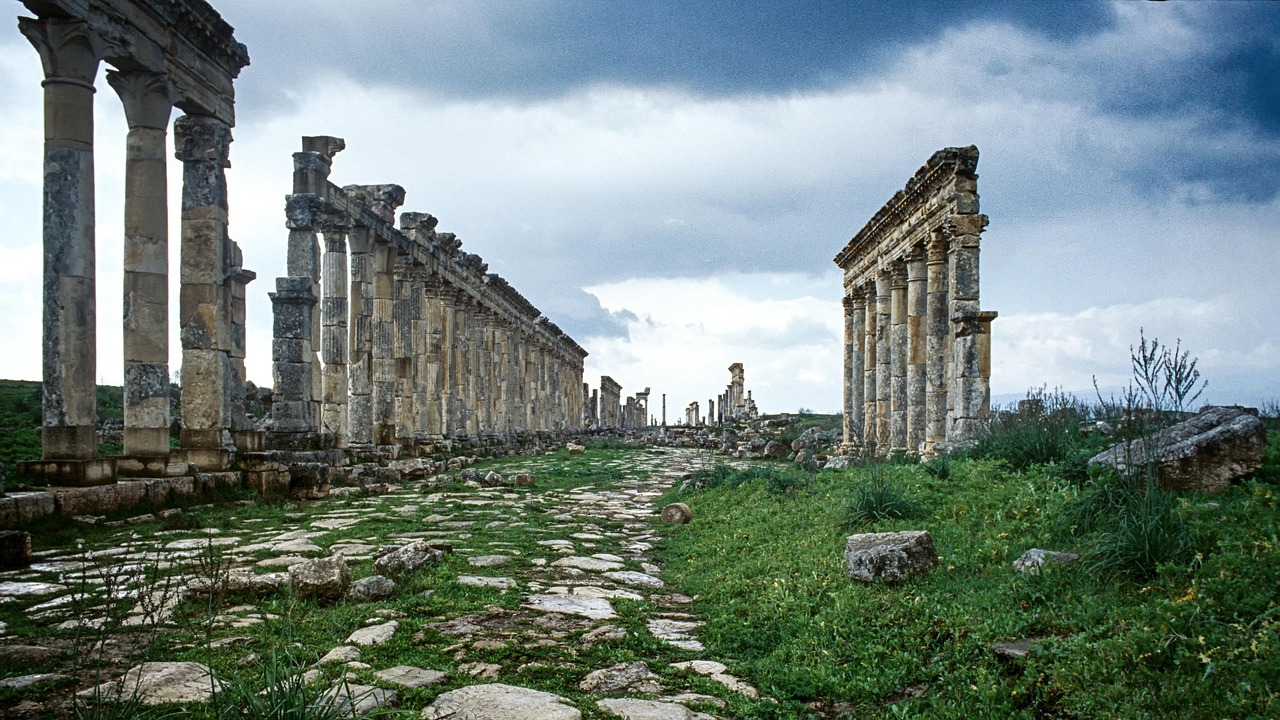
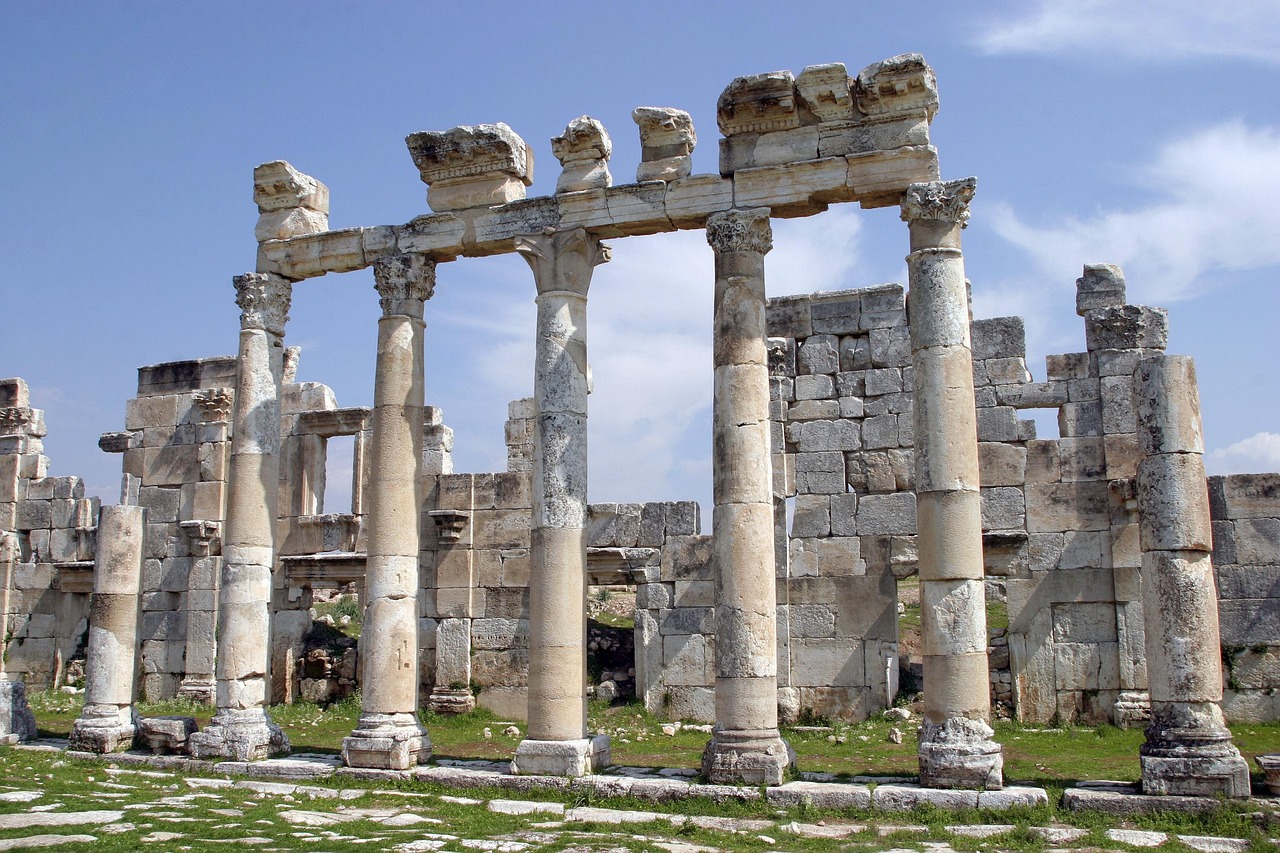
Then there was Palmyra, the desert city of palms, which under its famous queen Zenobia briefly challenged Rome itself in the third century. Its honey colored colonnades still rise out of the sand, a reminder that the deserts of Syria were once threaded with caravan routes carrying silk and spices between Asia and the Mediterranean. To stand among those columns is to feel how much wealth and ambition once flowed through this land.
The Roots of the Syrian Tongue
The language most Syrians speak today is Arabic, the tongue of the wider Arab world, in a warm and distinctive Levantine dialect that outsiders often find among the softest and most musical forms of the language. Arabic belongs to the Semitic branch of the Afro Asiatic family, a vast group that also includes Hebrew, the various forms of Aramaic, the ancient tongue of the Phoenicians, and the languages of Ethiopia such as Amharic. When a Syrian and a Moroccan and an Iraqi speak their home dialects, they are all working from this same deep Semitic root, even when the everyday words drift far apart.
But Arabic was a relative latecomer to Syria. For many centuries the language of the streets and the marketplaces was Aramaic, the great lingua franca of the ancient Near East, the tongue that Jesus himself is believed to have spoken. Aramaic did not vanish entirely. In a handful of villages north of Damascus, most famously Maaloula, an old form of it survived into modern times, kept alive by Christian communities who still recite their prayers in words close to those of the first century. Closely related Syriac, a Christian literary form of Aramaic, remains a liturgical language for several churches. So the linguistic story of Syria is a layered one, with Arabic on top and Aramaic underneath, the two of them branches of the same ancient Semitic tree.
When Damascus Ruled an Empire
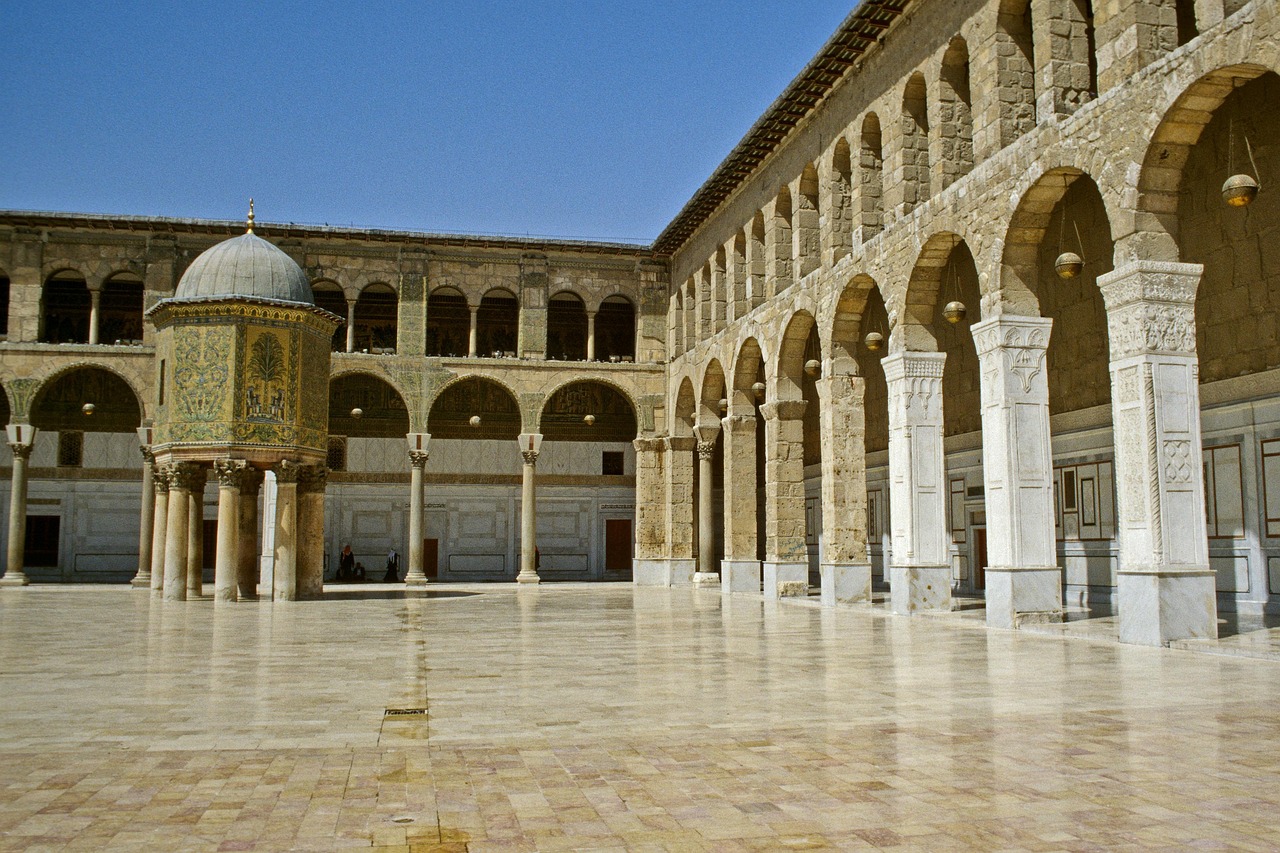
Syria’s greatest political moment came in the seventh and eighth centuries, when the Umayyad dynasty made Damascus the capital of an Islamic empire that stretched from Spain to Central Asia. For a few astonishing generations this city was the beating heart of one of the largest realms the world had ever seen. The Umayyad Mosque, built on a site that had been holy to pagans, Christians, and Muslims in turn, still stands as the monument of that age, its great courtyard glowing with golden mosaics.
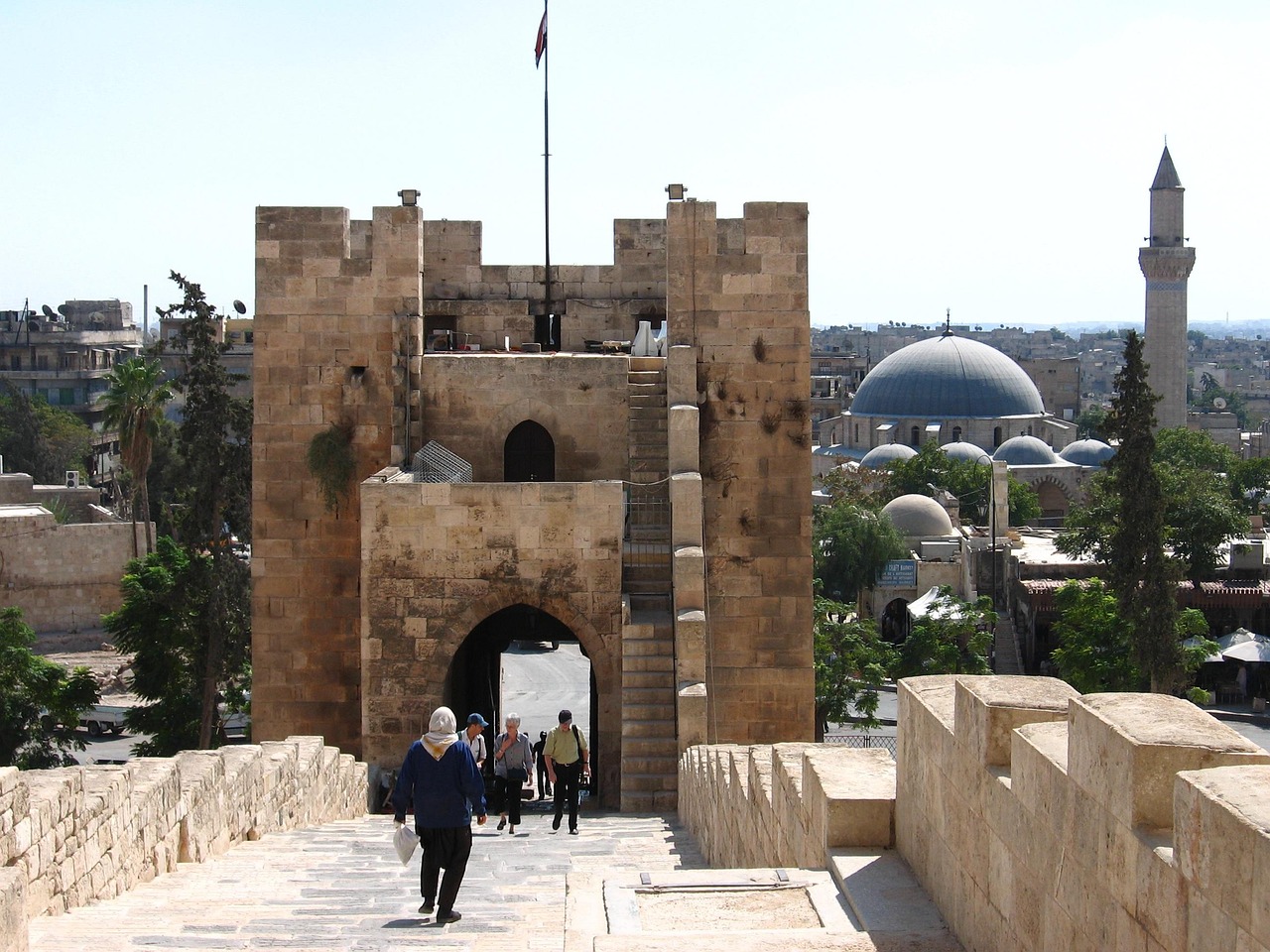
That golden age did not last. The capital eventually moved east to Baghdad, and Syria slipped from being the center of the world to being a prized province fought over by others. Crusaders built stone castles like the mighty Krak des Chevaliers in its hills. Mongols swept down from the east. Mamluks ruled from Egypt. Through it all, Damascus and Aleppo remained great cities of learning and trade, but the days of empire commanded from Syrian soil were over.
Four Centuries Under the Ottomans
From the early sixteenth century until the First World War, Syria was part of the Ottoman Empire, governed from distant Istanbul. These were long, mostly quiet centuries in which the famous mosaic of Syrian communities settled into its familiar pattern, with Sunni Muslims as the majority alongside Christians of many churches, Alawites in the coastal mountains, Druze in the south, Ismailis, Jews, and others. Aleppo grew rich as one of the greatest trading cities of the empire, its covered souks stretching for miles, its merchants dealing in silk, soap, and spices.
The Broken Promise of Independence
When the Ottoman Empire collapsed at the end of the First World War, many Syrians believed their moment of self rule had finally come. Arab forces had fought alongside the British with the understanding that independence would follow. Instead, the victorious European powers carved up the region between themselves, and Syria was handed to France as a mandate. The French drew borders, separated Lebanon off as a distinct state, and ruled with a heavy hand, crushing revolts and even shelling Damascus. The bitterness of that betrayal shaped Syrian politics for generations.
Full independence finally arrived in the years after the Second World War, but the young republic was unstable. Coups followed coups. A brief union with Egypt was tried and abandoned. The country searched restlessly for a political identity strong enough to hold its diverse population together, and that search would lead, fatefully, to the rise of a single party and eventually a single family.
The Baath Party and the Assad Era
In 1963 the Baath party, with its blend of Arab nationalism and socialism, seized power. Within a few years a military officer named Hafez al Assad rose to the top and established a rule that he and his son Bashar would maintain for more than half a century. It is impossible to describe this period honestly without acknowledging its authoritarian core. The state was held together by a powerful security apparatus, by an extensive network of secret police, and by a cult of personality around the ruling family. Dissent was dangerous, and at times deadly.
The darkest single episode of the elder Assad’s rule came in 1982 in the city of Hama, where an uprising linked to the Muslim Brotherhood was put down with overwhelming force. Large parts of the city were destroyed and many thousands of people were killed. The exact number has never been established, but the event seared itself into Syrian memory as a warning of what the state was prepared to do to survive. For the next generation, fear and a brittle stability went hand in hand.
A Mosaic of Faiths and Peoples
One of the most important things to understand about Syria is that the word Syrian has never meant a single religion or ethnicity. The majority are Sunni Arab Muslims, but the country is a genuine mosaic. The Alawites, a minority sect with roots in Shia Islam, are concentrated in the coastal mountains and rose to political prominence under the Assads, who came from that community. Christians of many denominations, some of them speaking the old Aramaic prayers, have lived here since the faith’s earliest days. The Druze, with their secretive and distinctive religion, hold the southern highlands. There are also Ismailis, a substantial Kurdish population in the north and east, Armenians who arrived as refugees from genocide, and once a thriving Jewish community.
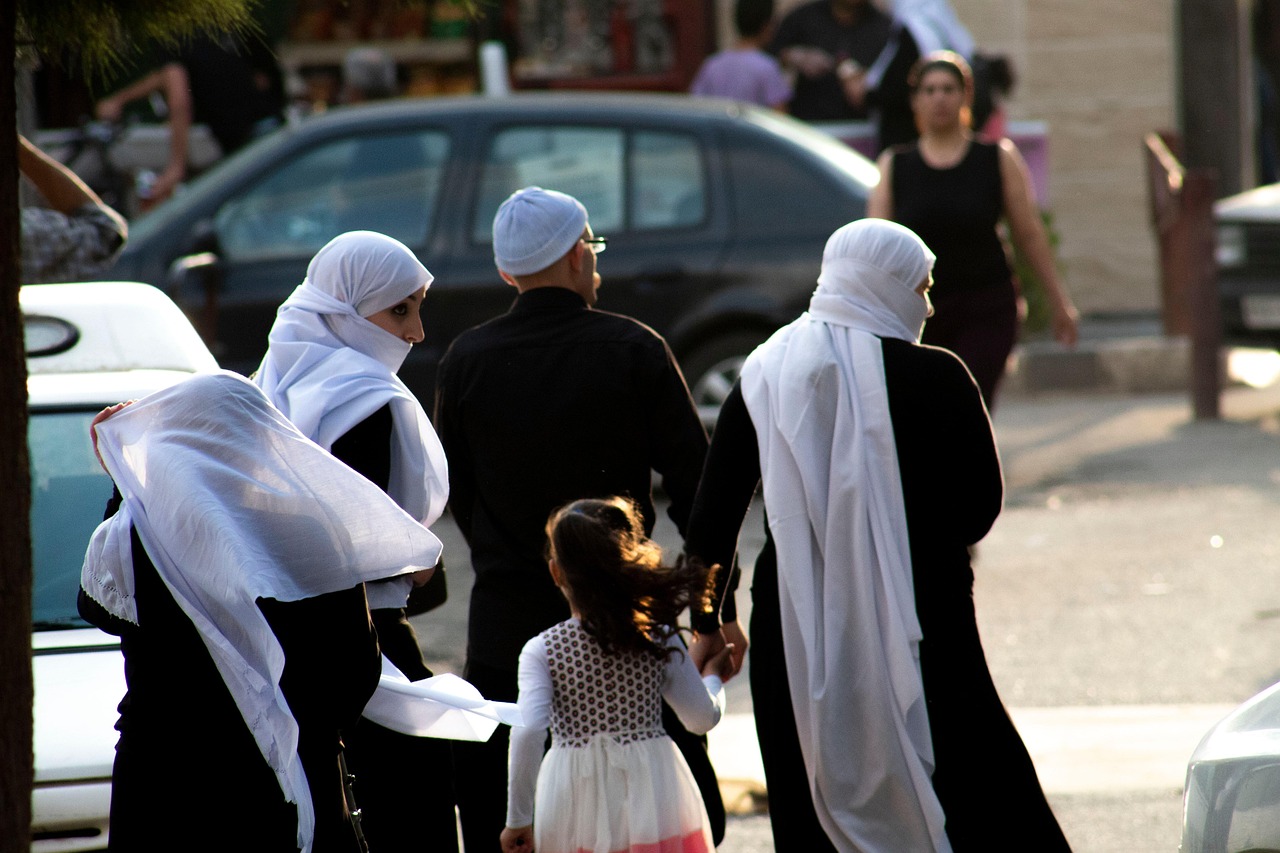
For long stretches of history this diversity was a source of richness rather than conflict, with communities living side by side in the same cities and quarters. But it also became a fault line that rulers could exploit and that war could tear open, as the tragic events of the twenty first century would show.
The War That Broke a Country
In 2011, as protests swept the Arab world, Syrians too took to the streets to demand freedom and dignity. What began as largely peaceful demonstrations met a ferocious crackdown, and within months the country slid into a civil war that would become one of the defining catastrophes of the century. It is a story without clean heroes, but honesty requires naming what happened. The government used massive violence against its own population, including siege warfare that starved whole neighborhoods and, on more than one occasion, chemical weapons that killed civilians in their homes.
The chaos drew in outside powers, each pursuing its own interests, and it opened space for brutal extremist groups, including the self proclaimed Islamic State, which seized large territories and inflicted horrors of its own before being beaten back at enormous cost. Ancient Palmyra was damaged by the fighting. Aleppo, one of the oldest cities on earth, saw its historic heart shattered by bombardment. No single account can capture the scale of the suffering.
The Great Scattering
The war produced one of the largest displacements of people since the Second World War. Millions of Syrians fled across borders into Turkey, Lebanon, Jordan, and beyond, and millions more were uprooted inside their own country. The image of Syrian families crossing seas in fragile boats, and of children washed up on European shores, became one of the defining and most painful images of the era. An entire generation has grown up knowing the homeland only as a memory or a story told by parents.
Yet the diaspora has also shown the resilience that runs through this people. Syrian refugees rebuilt lives, opened businesses, sent their children to universities, and carried their cuisine, their music, and their famous hospitality to cities around the world. The scattering was a tragedy, but it was not the end of the Syrian story. It became another chapter in a very long history of survival.
A Cuisine and Culture Loved Everywhere
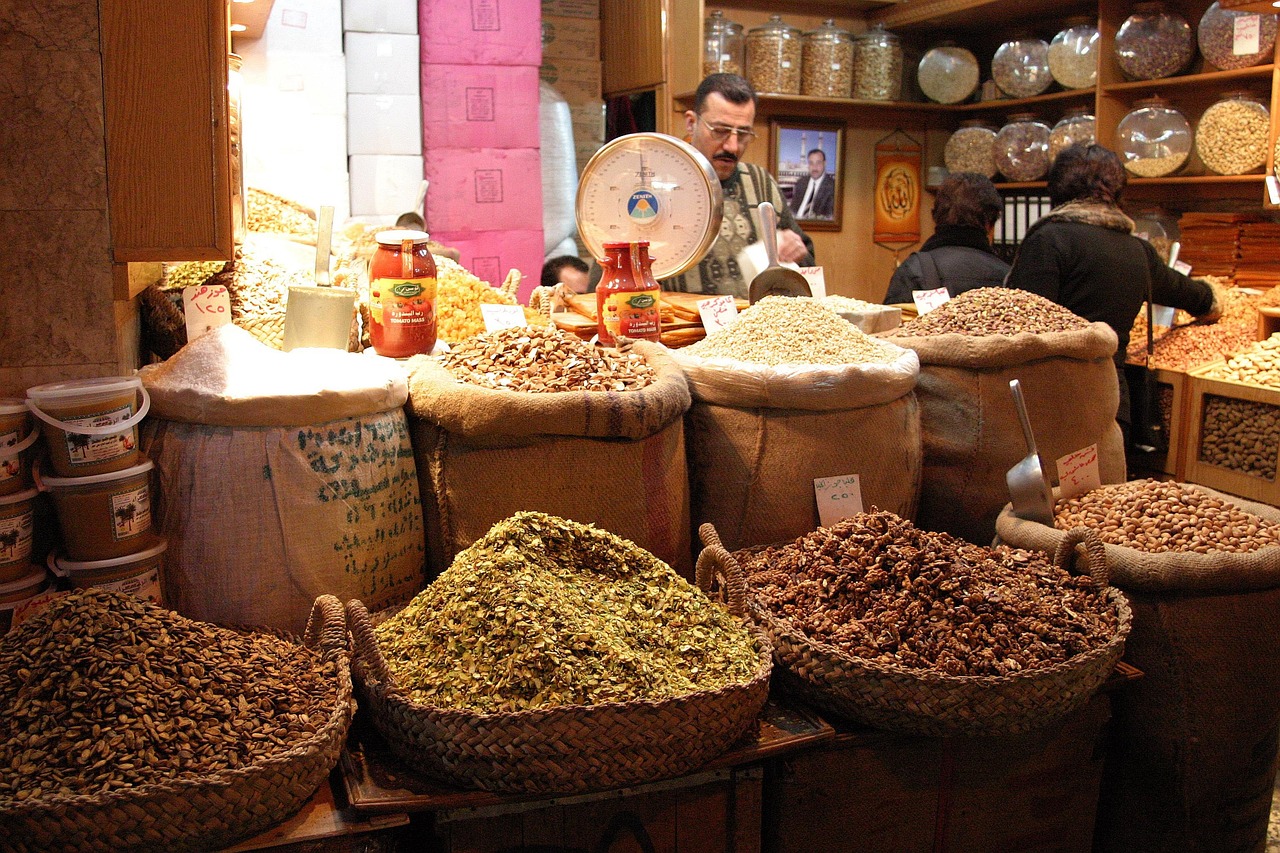
Even at its lowest moments, Syria has given the world things of great beauty. Its food is among the most celebrated in the region, a table of mezze where small dishes crowd together, of stuffed vegetables and slow cooked stews, of the cracked wheat dish kibbeh in dozens of forms, of pistachios and rosewater and the famously sweet ice cream of Damascus pounded by hand. Aleppo in particular is regarded as one of the great culinary capitals of the Arab world.
Syrian craft is equally renowned. Damascus gave its name to damask cloth and to the legendary patterned steel of its sword blades. Its artisans worked wood inlaid with mother of pearl, blew glass, and made the olive oil soap of Aleppo that is still sought after around the world. In poetry and song, figures admired across the Arabic speaking world carried the Syrian voice far beyond its borders.
The Land Itself
Syria is not all desert, as outsiders sometimes imagine. Along the coast lies a green Mediterranean strip, backed by the mountains where the Alawite villages cluster. The Orontes river waters the fertile plains around Hama, where ancient wooden water wheels still creak as they lift water to the fields. Inland the land dries into the steppe and then the true desert, the badia, crossed for thousands of years by Bedouin and their herds. In the northeast lie the wheat fields and oil fields of the Jazira, watered by the Euphrates. This variety of landscapes shaped a variety of livelihoods, from coastal fishing and citrus groves to desert herding and river farming.
The cities each have their own character. Damascus is ancient and proud, wrapped around its oasis. Aleppo is the great northern merchant city, looking toward Turkey and the trade routes. Homs and Hama sit in the central plain, Latakia and Tartus on the sea. Each city nurtured its own dialect, its own dishes, and its own sense of itself, so that to be Syrian has always also meant to be from somewhere very specific within Syria.
A People Between the Old World and the New
Syrians have always lived at the meeting point of cultures, and it shows in who they are. They can be deeply traditional and strikingly cosmopolitan at the same time, rooted in family and faith yet long accustomed to dealing with strangers and absorbing new ideas. The merchant instinct runs deep, sharpened by centuries on the trade routes. So does an extraordinary tradition of hospitality, in which a guest, even a stranger, is treated as a gift and turned away from no door hungry.
That openness sits alongside a hard earned wariness, the product of living for so long under regimes where the wrong word could be dangerous and where outside powers always seemed to have a hand in local affairs. Syrians learned to be careful, to read situations, to keep some thoughts private. It is the caution of a people who have seen empires come and go and who know that the powerful are not always to be trusted.
The Recent Turn and an Uncertain Dawn
The long Assad era did not last forever. After years of grinding stalemate, the political order that had ruled Syria for half a century finally gave way, and the country entered a new and deeply uncertain chapter. For many Syrians it brought a cautious, almost disbelieving hope, the possibility that the fear which had shadowed their whole lives might finally lift. For others it brought fresh anxiety about what would come next in a land so scarred by war and so divided by the wounds of recent years.
No honest writer can say today how the story ends, because it is still being written by the Syrians themselves. What can be said is that the same people who built Ebla and Palmyra, who made Damascus the capital of an empire, who survived Mongols and crusaders and mandates, are not a people easily erased. Whatever comes, they will carry their long memory with them.
Family, Honor, and the Rhythm of Daily Life
At the heart of Syrian society sits the family, extended and tightly woven, the institution that has held people together when states failed them. Loyalty runs first to kin, then to neighborhood, then to community, and these bonds have been a lifeline through every crisis. Marriages link clans, business is often conducted among relatives, and the elderly are honored rather than set aside. A young Syrian grows up surrounded by aunts, uncles, and cousins, learning early that the individual is never quite alone and never quite free of obligation to the group.
The rhythm of life turns on shared meals and long conversations. An evening can dissolve happily over endless small cups of bitter coffee or sweet tea, plates of seeds and nuts, and the slow unwinding of talk. The water pipe, or argileh, bubbles in cafes where men and increasingly women gather to play backgammon and argue about everything. Friday and the religious feasts gather families around tables that groan with food. Even in exile, Syrians have recreated these rhythms in living rooms from Berlin to Toronto, because they are not luxuries but the very texture of belonging.
Music, Poetry, and the Syrian Soul
Syria has a deep love of the spoken and sung word. Classical Arabic music found some of its great voices and composers in Aleppo, a city famous for the qudud, a tradition of sung poetry that blends the sacred and the worldly. The muwashshah, an old and intricate poetic and musical form inherited from medieval Andalusia and the wider Arab world, was nurtured here with special care. In the courtyards and concert halls, the long improvised vocal flights of a master singer could hold an audience spellbound late into the night.
Poetry, too, has always been close to the Syrian heart, treated less as a refined hobby than as a way of speaking the truth that prose could not. Modern Syrian poets became voices of love and protest admired far beyond their borders, their verses memorized and recited by people who had never met them. In a country where open political speech was dangerous, art and song often carried the feelings that could not be said plainly, and that quiet power helps explain why culture has mattered so fiercely to this people.
A Story Far From Finished
To write about the Syrians is to write about both glory and grief, often in the same breath. Theirs is a land that gave the world some of its first cities, its first alphabets, and one of its most beautiful cuisines, and it is also a land that in our own time has known some of its deepest suffering. The two truths belong together. A people is not defined only by its worst years, nor flattered by hiding them. The Syrians are an old and resilient people who have endured almost unimaginable loss and who, scattered across the world and slowly returning home, are still very much here. Their next chapter is unwritten, and after everything, that uncertainty also carries the seed of hope.
You May Like

The Damara, an Ancient People of Namibia



