High above the old town of Gotha in Thuringia rises one of the largest early baroque palaces in Germany. Friedenstein Palace, the rock of peace, was built in the middle of the seventeenth century as the Thirty Years War came to an end, and its very name expresses the longing for peace after decades of destruction.
Behind its massive walls and corner towers lie state rooms, a palace church, a cabinet of art and wonders and one of the most remarkable theatres in Europe, the Ekhof Theatre, whose original baroque stage machinery still works today. The palace was the seat of the dukes of Saxe Gotha, a dynasty whose descendants would sit on many of the thrones of Europe.
In this article we will explore Friedenstein from its founding by a pious duke to its treasures, its theatre and its park, and we will finish with practical tips for your own visit.
In This Article
- A Fortress of Peace Above Gotha
- Duke Ernst the Pious and His Vision
- A Name Born of War
- Arcades, Wings and Early Baroque Grandeur
- Towers Above the Thuringian Landscape
- The Courtyard and Its Fountain
- The Festive Hall and Stucco Splendour
- State Apartments of the Dukes
- A Cabinet of Art and Wonders
- The Ekhof Theatre and Its Living Machinery
- The Palace Church
- Discover Friedenstein on Video
- Visiting Friedenstein Palace Today
A Fortress of Peace Above Gotha
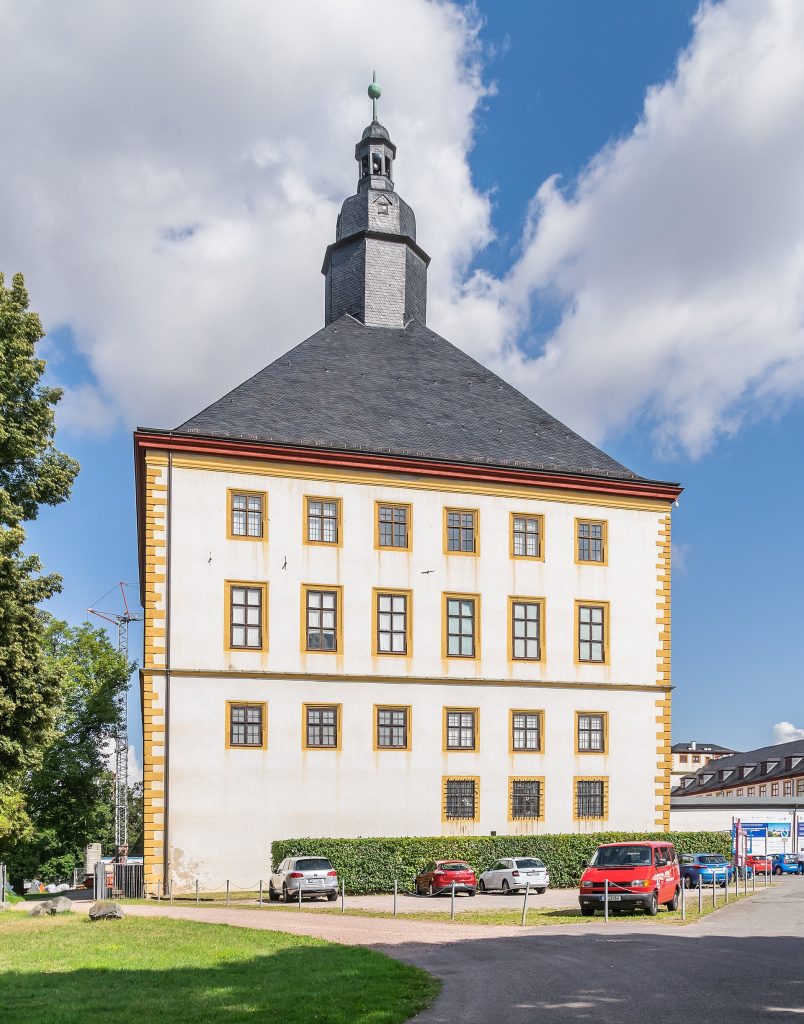
As you approach Gotha, Friedenstein dominates the skyline, a vast, pale building crowning the hill above the town. Its long wings and sturdy towers give it a fortress like appearance, a reminder that it was built in an age when security still mattered.
From the town, a grand series of terraces and fountains, the Wasserkunst, leads up toward the palace, creating a dramatic approach that links the ducal residence with the streets below.
Around the palace stretches a large park with an orangery, a museum building and one of the earliest English landscape gardens on the European continent. Together they form one of the most important cultural ensembles in Thuringia.
What makes Friedenstein special is its combination of scale, history and unique treasures, above all its theatre, which offers a living window into the world of baroque performance.
Duke Ernst the Pious and His Vision
The palace was built for Ernst I, Duke of Saxe Gotha, known as Ernst the Pious. He came to power in 1640, in the final years of the Thirty Years War, when much of central Germany lay in ruins. His territory was impoverished and its population reduced, and he set out to rebuild it on the principles of order, education and faith.
Ernst was a remarkable ruler. He introduced compulsory schooling, reformed administration and supported the church, earning a reputation as one of the most enlightened princes of his age. His duchy became a model of good government.
To house his court and administration, he needed a new residence. The old castle of Grimmenstein in Gotha had been destroyed in the previous century, so he decided to build a completely new palace on the hill.
Construction began in 1643 and the main building was completed by 1654, an extraordinary achievement in a war ravaged land. The name Friedenstein expressed the duke’s hope for a lasting peace.
A Name Born of War
The Thirty Years War, which lasted from 1618 to 1648, was one of the most devastating conflicts in European history. Armies crossed and recrossed the German lands, bringing destruction, famine and disease, and in some regions the population fell by half or more.
When Ernst began building his palace, the war was still raging, and the Peace of Westphalia was signed only in 1648. Naming the palace the rock of peace was an act of hope and a statement of purpose.
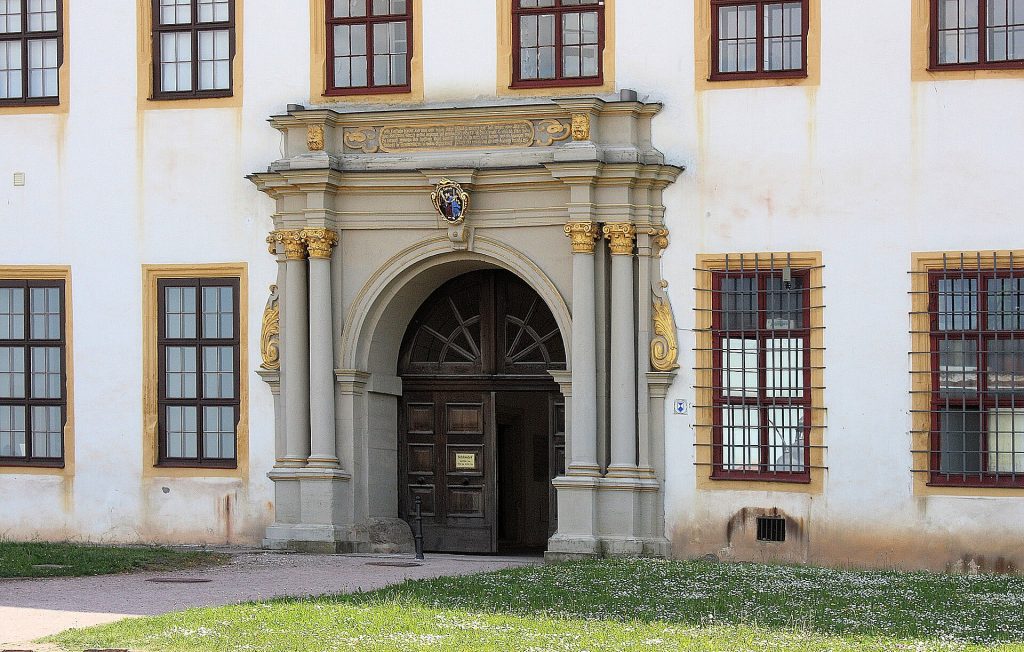
Above the main portal you can still see the inscription and decoration associated with this theme, a reminder of the historical moment in which the palace was born.
For the people of Gotha, the building of the palace also brought work and a sense of renewal, as craftsmen and labourers helped to create a new centre for the duchy.
Arcades, Wings and Early Baroque Grandeur
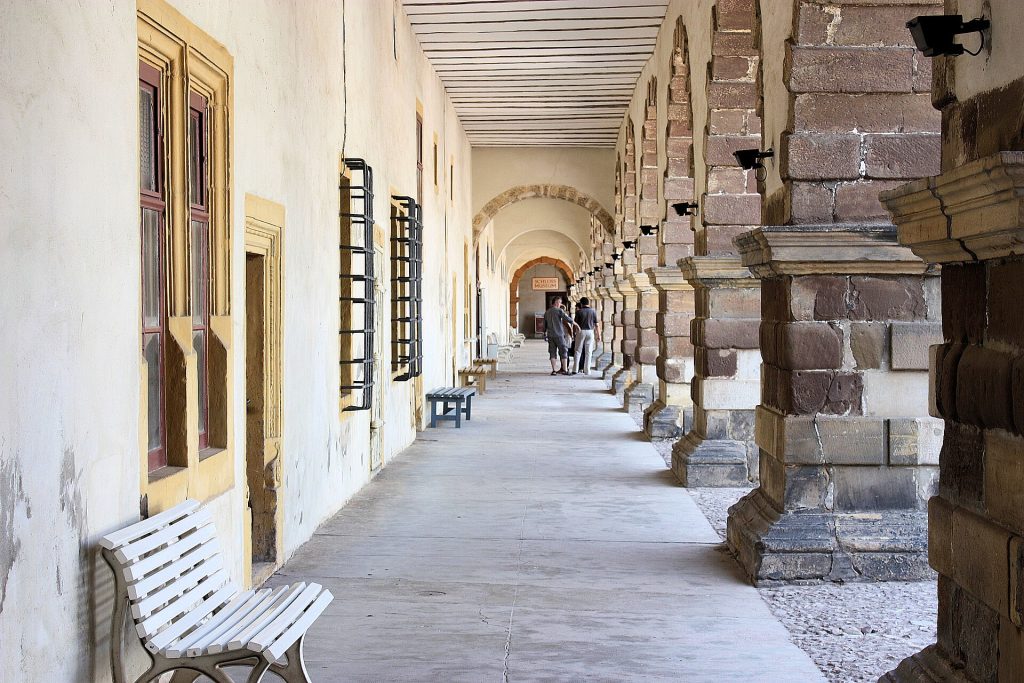
Friedenstein is built around a large courtyard, enclosed on three sides by long wings and open on the fourth toward the town. The courtyard is lined with arcades, which give it a sense of order and dignity and provide sheltered walkways around the inner facades.
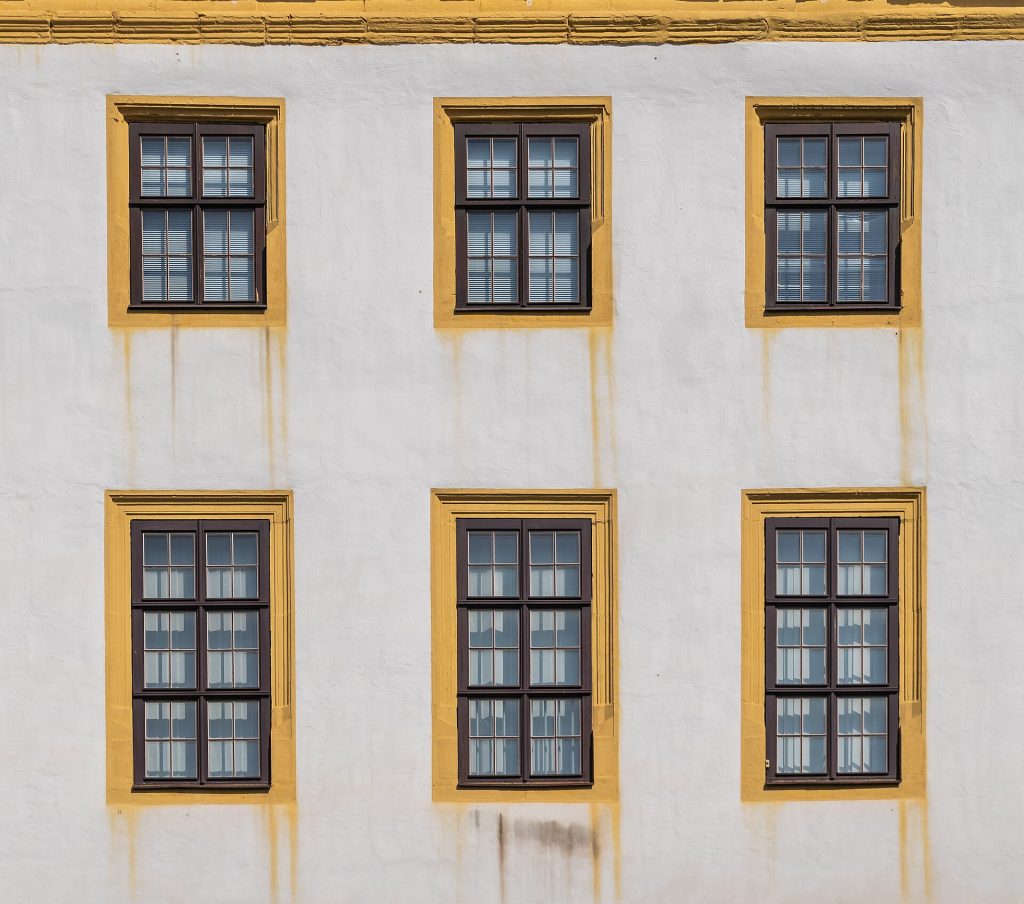
The architecture reflects the transition from the late Renaissance to the early baroque. The facades are relatively plain, with regular rows of windows, while the scale and symmetry of the building express the power and ambition of the duke.
The palace was designed not only as a residence but also as the seat of government, housing offices, archives, a library and a church, as well as the ducal apartments. In effect, it was the whole state under one roof.
Walking through the arcades, you can imagine officials, courtiers and visitors moving between the different parts of the palace, each with their own business in this busy centre of power.
Towers Above the Thuringian Landscape
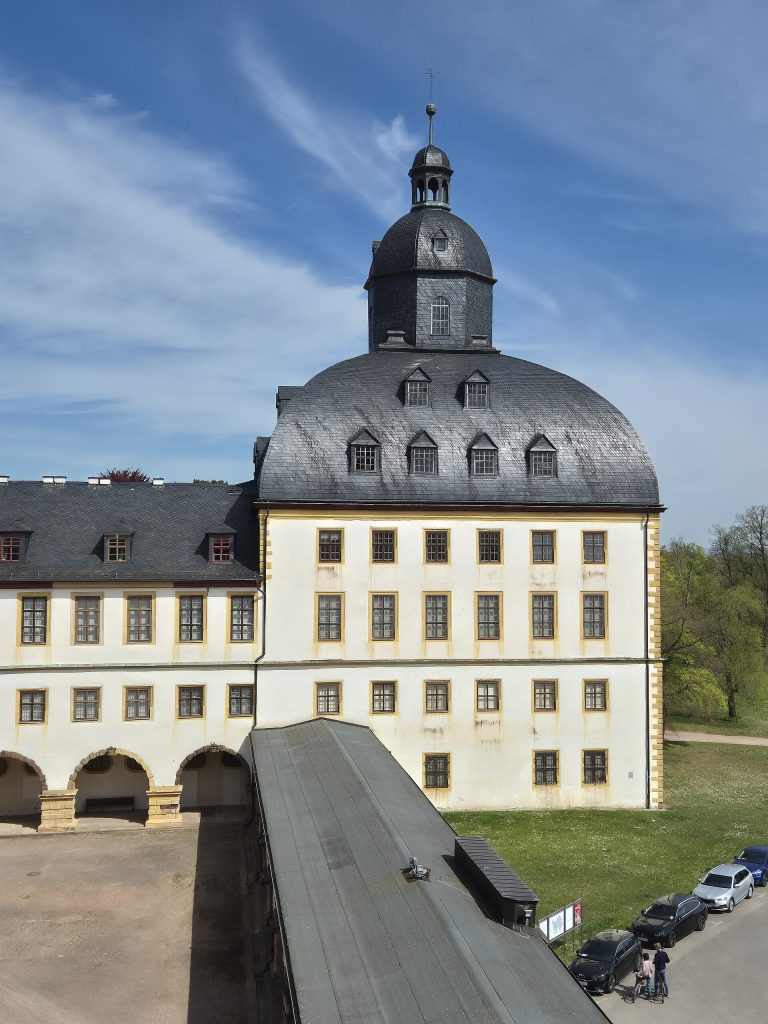
At the corners of the palace rise two great towers, which give Friedenstein its distinctive silhouette. Visible from far away, they announce the presence of the ducal residence over the town and the surrounding countryside.
The towers also had practical functions, housing staircases and providing lookout points. In an age still marked by war, the ability to see approaching danger was important.
From the top of the towers, when accessible, there are wide views over Gotha, the Thuringian Forest and the plains beyond, a reminder of how the palace dominated its landscape.
The towers have been restored in recent years, and their clean lines and bold presence make them one of the most photographed features of the palace.
The Courtyard and Its Fountain
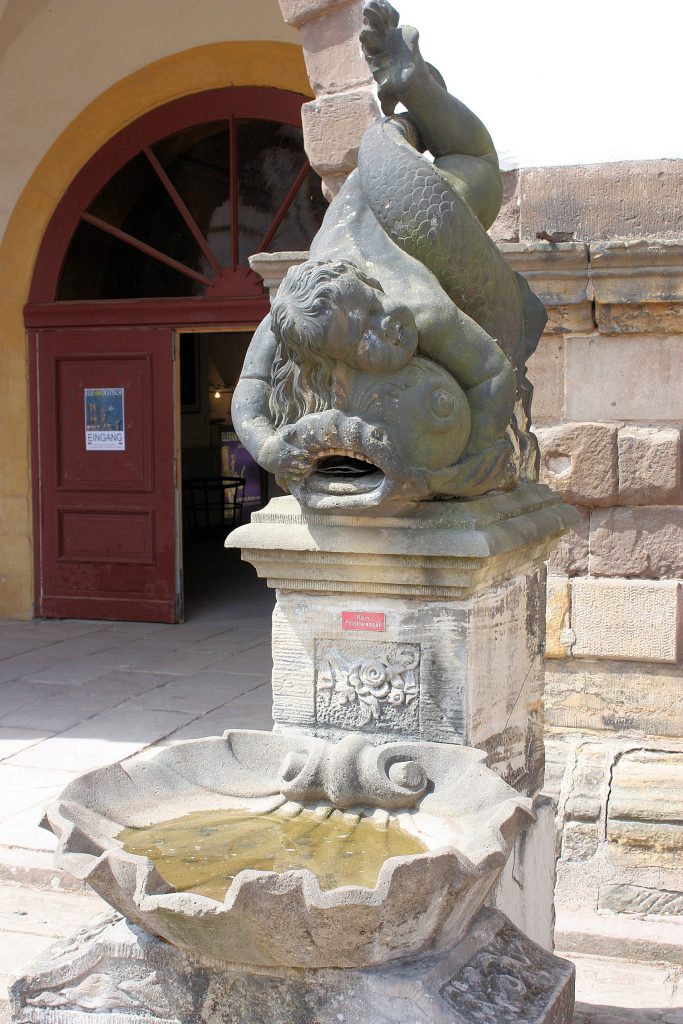
The large courtyard at the heart of Friedenstein is one of the most impressive spaces of the palace. Surrounded by arcaded wings, it creates a calm, enclosed world that contrasts with the busy town below.
A fountain adds life to the courtyard, and in summer the space is used for concerts, theatre performances and the popular baroque festival, when the palace fills with music, costumes and celebrations.
From the open side of the courtyard you look out over the terraces toward the town, a view that connects the palace with the community it was built to govern.
On quiet days, the courtyard is a peaceful place to pause and take in the scale of the building, its arcades and towers framing the sky.
The Festive Hall and Stucco Splendour
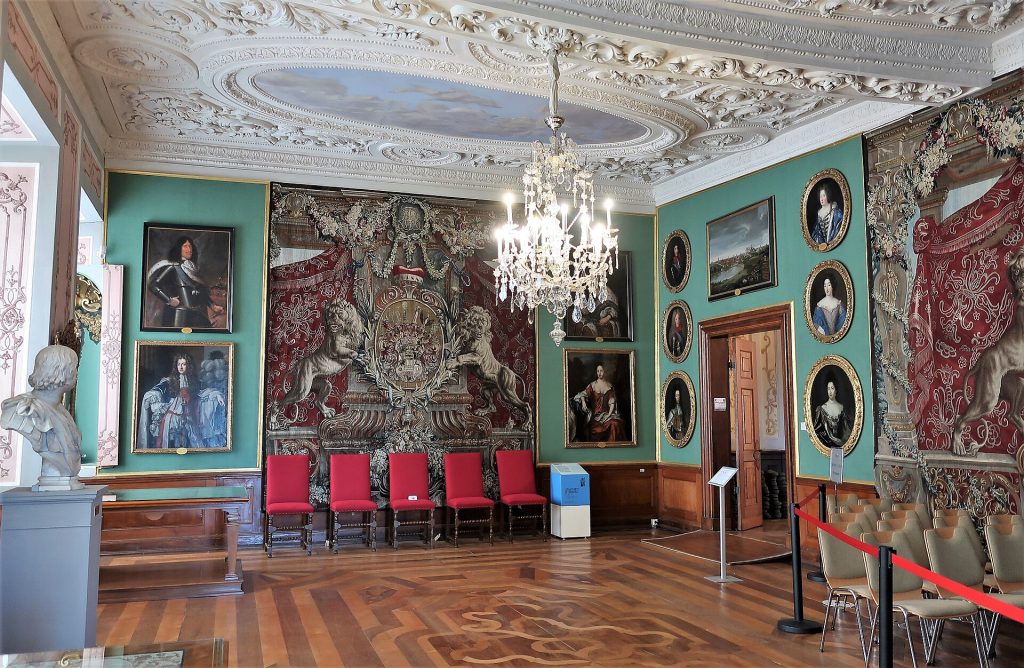
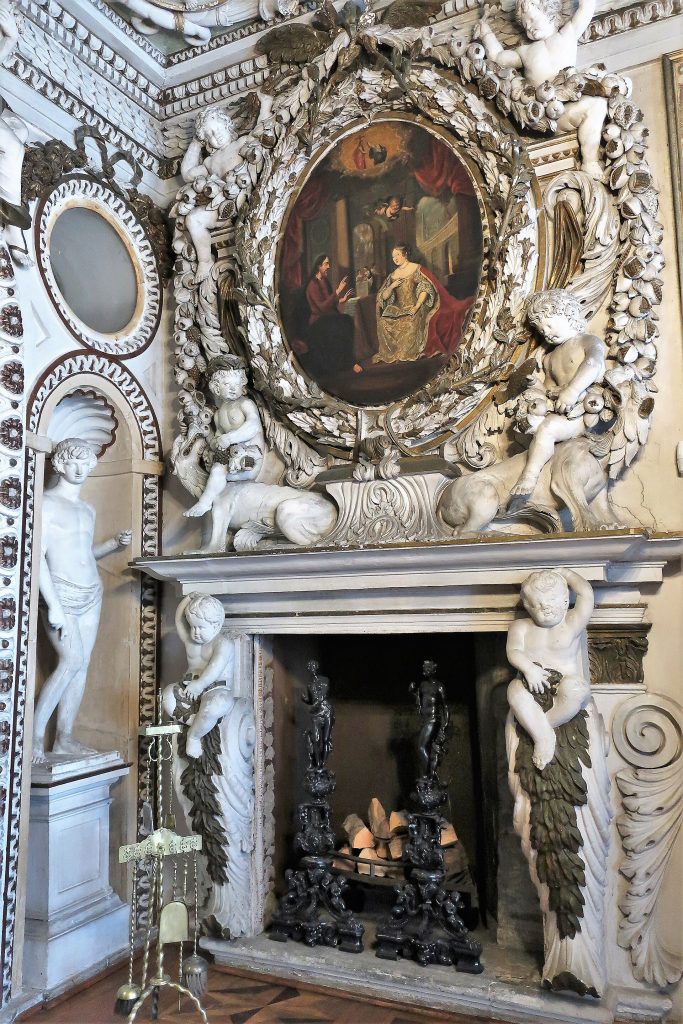
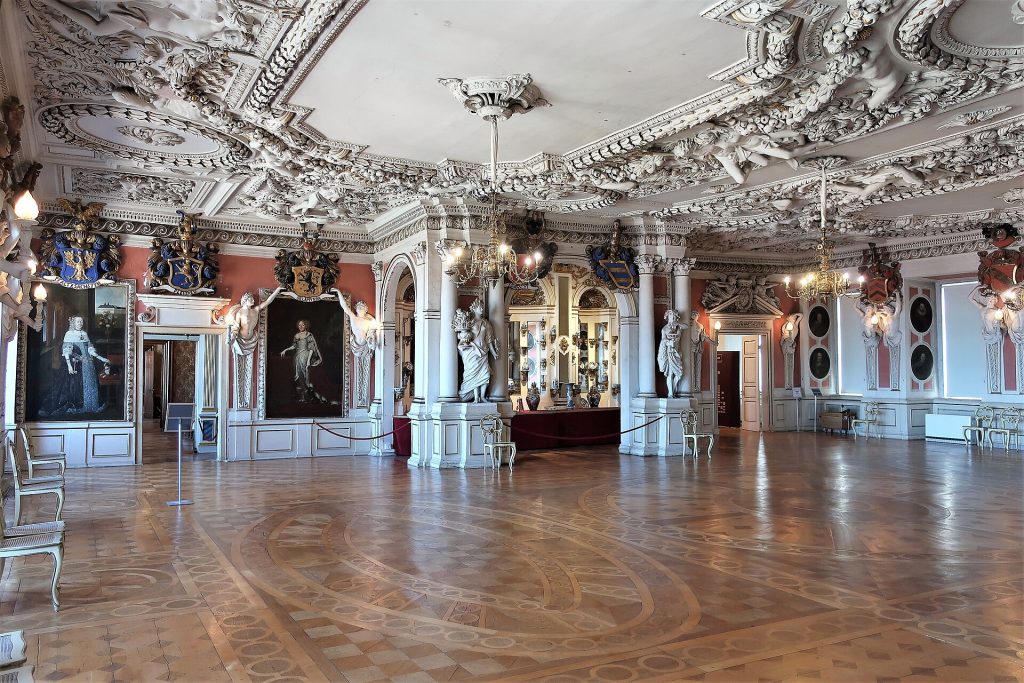
Inside the palace, the state rooms reveal the wealth and taste of the ducal family. The Festive Hall is one of the highlights, with rich stucco decoration on the ceiling and walls, created by skilled craftsmen in the seventeenth century.
The stucco work includes elaborate frames, garlands, figures and coats of arms, creating a sense of abundance and celebration. Light from the windows plays across the white and gold surfaces, making the hall glow.
The Festive Hall was used for receptions, banquets and ceremonies, and it was the stage for many important events in the life of the court.
Later dukes added new decoration in the rococo and classical styles, so the state rooms today show a layering of tastes from different periods.
State Apartments of the Dukes
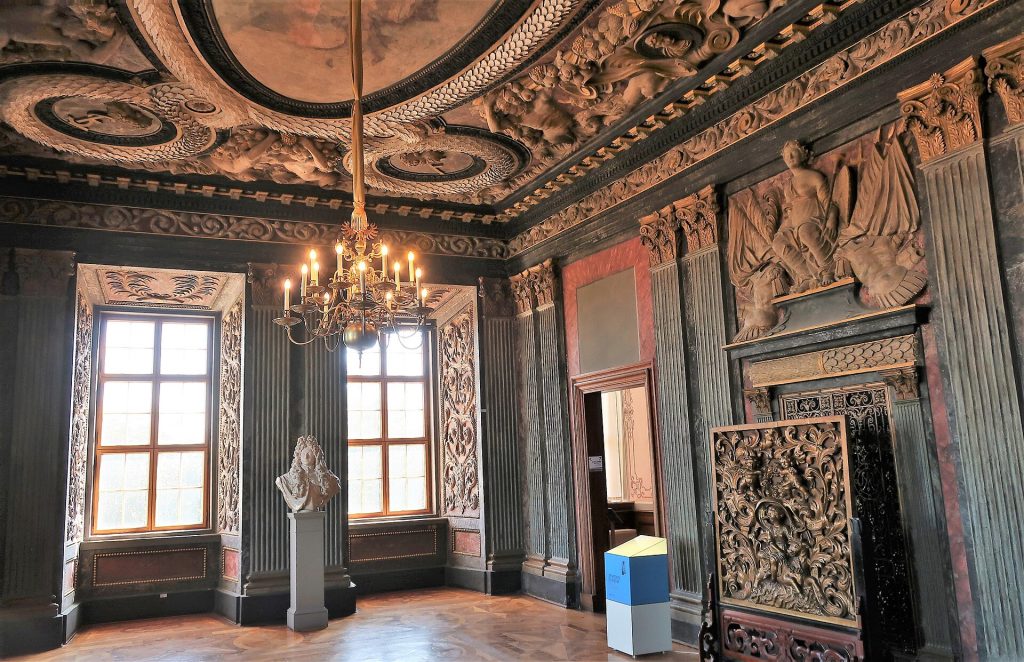
A sequence of state apartments leads through the palace, each furnished with period pieces, paintings and decorative objects. Some rooms preserve their baroque character, while others reflect the elegance of the eighteenth century.
Among the most beautiful are rooms decorated in the rococo style, with delicate stucco, pastel colours and mirrors that multiply the light. They show how the court of Gotha followed the fashions of the great European courts.
Portraits of the ducal family hang on the walls, introducing you to the rulers of Saxe Gotha and their relatives. Many of them were patrons of the arts and sciences, and their interests shaped the collections of the palace.
The apartments give a vivid sense of court life, from formal receptions to the private routines of the ducal family.
A Cabinet of Art and Wonders
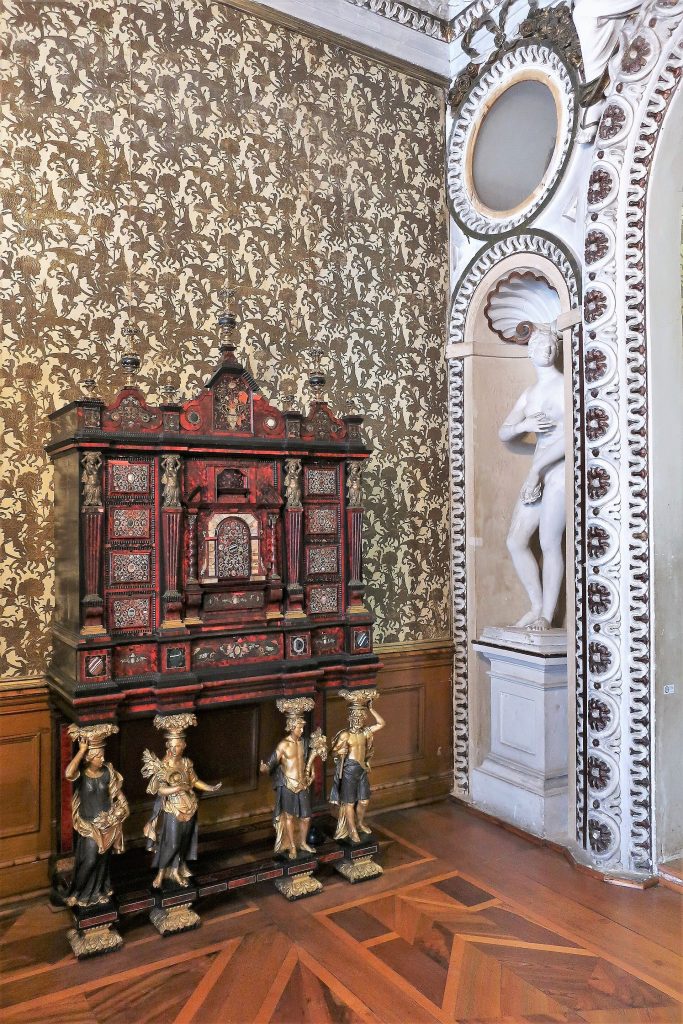
Friedenstein is home to one of the oldest and most important cabinets of art and curiosities in Germany. Founded by the early dukes, the Kunstkammer gathered precious objects, rare natural specimens, scientific instruments and works of art from around the world.
Highlights include exquisite carvings in ivory and amber, goldsmiths work, clocks, automata and exotic objects that fascinated collectors of the baroque age. Each case reveals a different aspect of the curiosity and ambition of the ducal collectors.
The cabinet reflects the belief that collecting could help people understand the variety of creation, combining art, science and wonder in a single experience.
Today the collections of the Friedenstein Foundation also include paintings, coins, Egyptian antiquities and natural history, displayed in the palace and in the nearby Ducal Museum.
The Ekhof Theatre and Its Living Machinery
One of the greatest treasures of Friedenstein is its theatre, installed in the west tower in the 1680s. It is one of the oldest baroque theatres in the world still in use, and its original stage machinery, operated by hand, still works today.
The theatre takes its name from Konrad Ekhof, a celebrated actor of the eighteenth century who worked here and is often called the father of German acting. Under his influence, Gotha became an important centre of the theatre in Germany.
The stage machinery allows scenery to be changed in seconds, with flats sliding in and out and clouds descending from above, creating the illusions that delighted baroque audiences. Seeing it in action is an unforgettable experience.
Each summer the Ekhof Festival brings performances back to the theatre, giving modern audiences the chance to experience baroque drama and music in an authentic setting.
The Palace Church
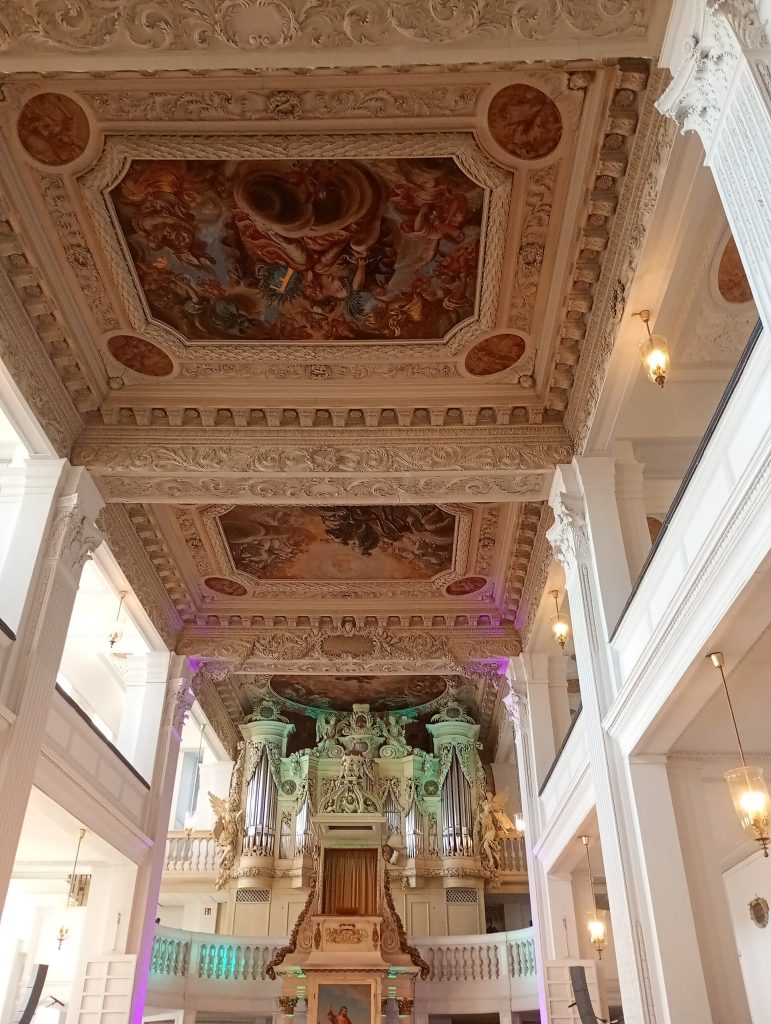
The palace church, located in one wing of the building, reflects the deep faith of Duke Ernst and his successors. It is a dignified Protestant church, with galleries, a pulpit and an organ, designed for preaching and worship.
The church served the ducal family and the court, and it was the setting for important ceremonies such as baptisms, weddings and funerals. Members of the ducal family were buried in the crypt.
Its decoration is restrained compared with the festive halls, emphasising the word and the sermon in keeping with Lutheran tradition.
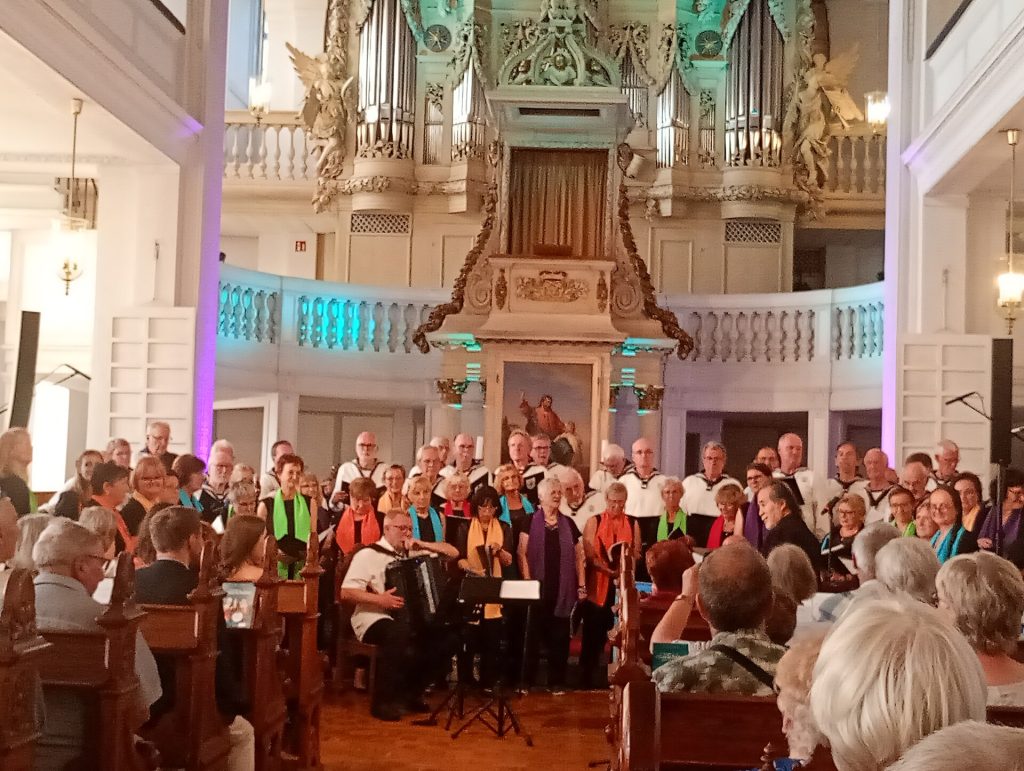
Concerts are held in the church throughout the year, and its acoustics make it a lovely place to hear organ and choral music.
Discover Friedenstein on Video
For an overview of the palace and its treasures, the video below presents Friedenstein, one of the largest baroque palaces in Germany. It is a good way to preview the building, its rooms and its setting above Gotha.
Watch for the courtyard, the towers and the views over the town.
If the video inspires you, read on for practical tips on visiting.
Visiting Friedenstein Palace Today
Friedenstein stands above the old town of Gotha in Thuringia, easily reached by train from Erfurt, Eisenach or Leipzig. From the station it is a pleasant walk or short tram ride to the palace.
The palace museum, the Ekhof Theatre, the Ducal Museum and the park are managed by the Friedenstein Foundation. Combined tickets give access to several museums, and guided tours are available, including special tours of the theatre machinery.
Plan at least half a day to see the palace and its collections, and a full day if you want to visit the Ducal Museum, walk in the English garden and explore the old town.
In summer, the Ekhof Festival and the baroque festival offer special opportunities to experience the palace at its liveliest. Check the programme in advance and book early for theatre performances.
View the location on Google Maps
Palaces Nearby
If Friedenstein has fascinated you, central Germany holds more remarkable residences. Here are two more well worth adding to your journey:
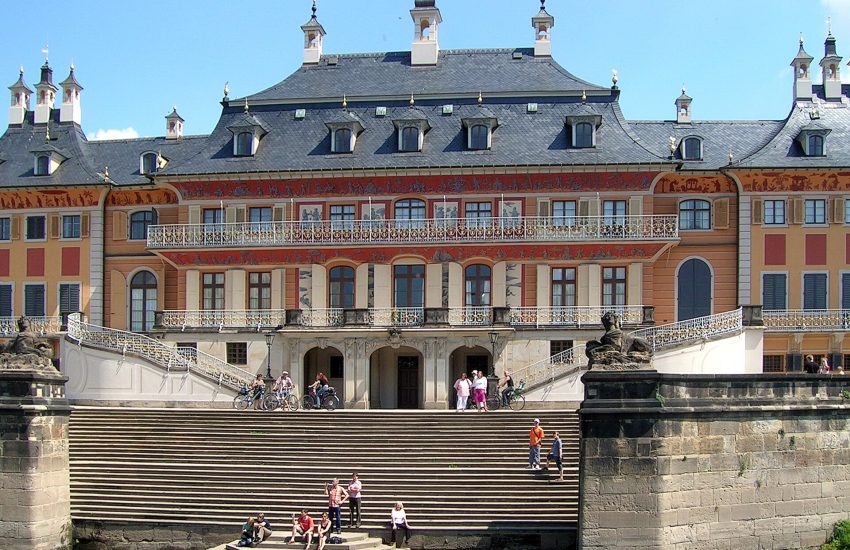
- Pillnitz Palace – the Chinese style summer palace of the Saxon kings on the Elbe near Dresden.
- Moritzburg Castle – the baroque hunting palace of Augustus the Strong set on an island north of Dresden.
You May Like
Pillnitz Palace and the Chinese Summer Dreams of Saxony