Lebanon is a country smaller than many a single province of its neighbors, yet few places on earth pack so much history, beauty, tragedy, and complexity into so little space. On its narrow strip of land between the Mediterranean Sea and the mountains, a remarkable people have built a society unlike any other in the Arab world, a mosaic of religious communities living side by side in an uneasy and often broken balance, a nation of merchants and poets and exiles, a place that has been both a beacon of cosmopolitan culture and a battlefield of devastating war. The Lebanese are an Arabic-speaking people, and yet many of them carry a sense of identity that reaches back beyond the Arab conquest to the ancient seafarers of Phoenicia, and that looks outward to a vast diaspora scattered across the globe. To understand Lebanon is to understand both the glory and the peril of diversity.
In This Article
- A Land of Mountain and Sea
- Heirs of the Phoenicians
- The Roots of the Lebanese Language
- A Mosaic of Faiths
- From Ottoman Province to French Mandate
- The Paris of the Middle East
- The Long Civil War
- An Uneasy Peace and Continuing Turmoil
- A Nation Scattered Across the World
- The Pleasures of Lebanese Life
- The Burden and Gift of Diversity
- The Communities of the Mountain
- Between East and West
- The Resilience of a Small Country

A Land of Mountain and Sea
The geography of Lebanon has shaped its people and its destiny. The country consists of a coastal plain along the Mediterranean, where its ancient port cities have stood for thousands of years, rising quickly to the Mount Lebanon range, then descending into a fertile valley before climbing again to a second mountain range along the eastern frontier. This compact but dramatic landscape, with its snow-capped peaks rising above a warm sea, is famously summed up in the boast that one can ski in the mountains and swim in the Mediterranean on the same day.
Crucially, the mountains of Lebanon served for centuries as a refuge. Their rugged valleys and high villages offered shelter to religious minorities fleeing persecution elsewhere in the region, and it was here, in the relative safety of the heights, that communities such as the Maronite Christians and the Druze established their strongholds and preserved their distinct identities. The mountain became a sanctuary for the persecuted, and this is one of the deepest reasons why Lebanon came to hold such an extraordinary diversity of faiths within its small borders.

Heirs of the Phoenicians
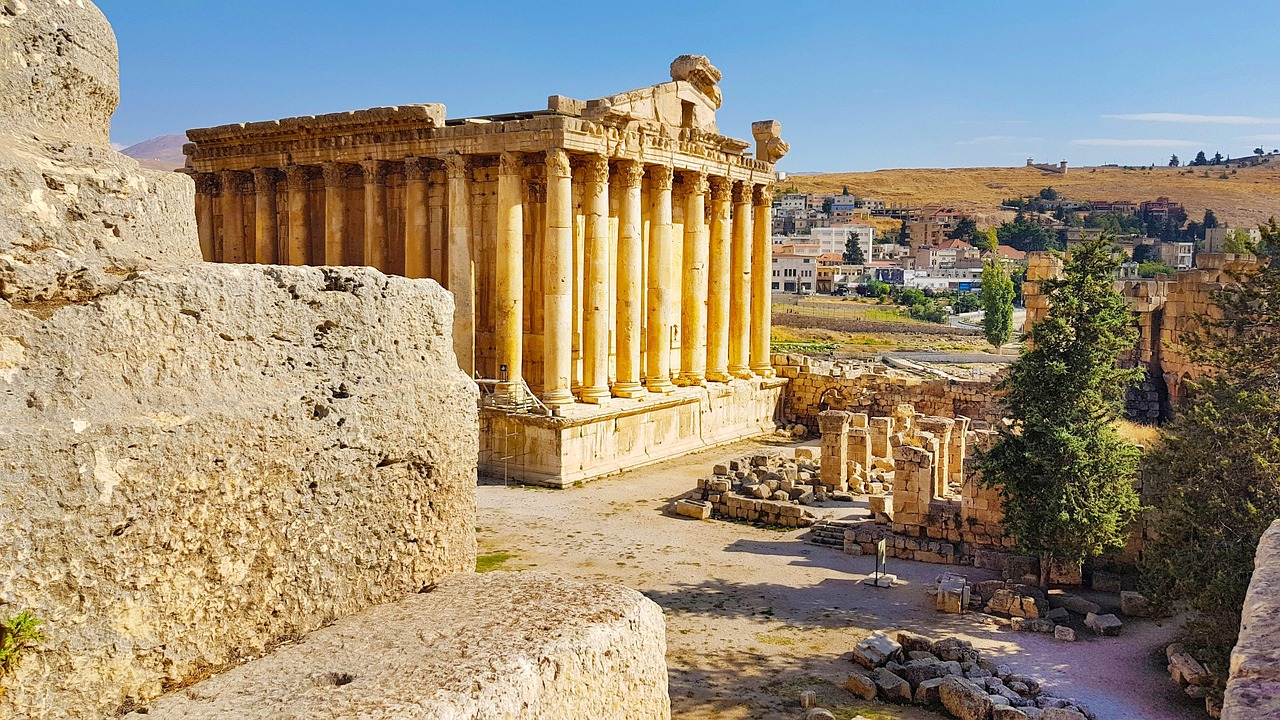
Long before there were Arabs or Muslims or even the great empires of the classical world, the coast of what is now Lebanon was home to one of the most remarkable peoples of antiquity: the Phoenicians. From their city-states such as Tyre, Sidon, and Byblos, these master mariners and traders sailed across the Mediterranean, founding colonies, spreading commerce, and, most momentously, giving the world the alphabet, the ancestor of the writing systems used by much of humanity today. The Phoenicians were the great seafarers and merchants of the ancient world, and their legacy is woven into the foundations of Western civilization.
For many Lebanese, especially among the Christian communities, this Phoenician heritage is a cherished part of their identity, a link to a glorious past that predates the Arab conquest and distinguishes Lebanon from its neighbors. How much of the modern Lebanese population truly descends from the ancient Phoenicians is a matter of debate, and the emphasis on Phoenician roots has sometimes been bound up with the politics of identity in a divided country. But the sense of connection to the ancient maritime civilization of the coast remains a powerful element in how many Lebanese understand themselves, and the spirit of the trading, seafaring, outward-looking Phoenician lives on in the famous Lebanese genius for commerce and emigration.

The Roots of the Lebanese Language
The language of Lebanon is Arabic, which belongs to the Semitic branch of the Afro-Asiatic language family, making it a relative of Hebrew, Aramaic, and the ancient tongues of the region. The Lebanese speak a distinctive dialect of Arabic, part of the broader Levantine group, with its own characteristic pronunciation, vocabulary, and rhythm that distinguish it from the Arabic of Egypt, the Gulf, or North Africa. As across the Arab world, the formal standard Arabic of writing and formal speech coexists with the spoken dialect of everyday life.
What is distinctive about Lebanon is the linguistic legacy of its layered history. Before Arabic became dominant, the people of the region spoke Aramaic, the lingua franca of the ancient Near East, and a form of it, Syriac, survives to this day as the liturgical language of some of Lebanon’s Christian churches, a living echo of the pre-Arab past. Lebanon is also famous for its multilingualism: French, a legacy of the period of French influence and rule, is widely spoken among the educated, and English has spread as well, so that it is common to hear Lebanese weave Arabic, French, and English together in a single conversation, a habit that reflects the country’s cosmopolitan, outward-facing character.

A Mosaic of Faiths
The single most important fact about Lebanon, the key to both its richness and its tragedy, is its extraordinary religious diversity. In this small country live numerous distinct religious communities, with no single one constituting a clear majority. There are several major Christian groups, above all the Maronites, an Eastern Catholic church with deep roots in the Lebanese mountains, along with Greek Orthodox, Greek Catholic, Armenian, and other Christians. Among Muslims there are both Sunni and Shia communities in large numbers, each with its own strongholds and traditions. And there are the Druze, followers of a unique faith that branched off from Islam long ago and who have their own distinct and secretive religious tradition.
This diversity is not a marginal feature but the very structure of Lebanese society and politics. For centuries these communities lived together in the mountains and along the coast, sometimes in harmony, sometimes in bloody conflict, each preserving its own identity, its own leadership, and its own sense of itself as a distinct people within the larger whole. The result is a country that is less a single unified nation than a delicate and perpetually contested coexistence of communities, a balance that has produced both a remarkable cultural richness and a chronic fragility.

From Ottoman Province to French Mandate
For centuries Lebanon was part of the Ottoman Empire of the Turks, though the mountain communities often enjoyed considerable autonomy under their own local lords. The nineteenth century, however, saw outbreaks of terrible sectarian violence, particularly between Maronites and Druze, episodes that drew in the European powers and foreshadowed the conflicts to come. The mountain’s communities, once relatively insulated, were increasingly caught up in the rivalries of empires and the tensions between their own faiths.
After the collapse of the Ottoman Empire in the First World War, Lebanon came under French control as a mandate, and it was the French who drew the borders of the modern state, deliberately enlarging the old Christian-majority mountain heartland to include coastal cities and other regions with large Muslim populations. This created the Lebanon we know today, a country with its delicate religious balance built into its very foundations. When Lebanon gained full independence in the 1940s, its leaders crafted an unwritten national pact that distributed political power among the major religious communities, reserving the presidency for a Maronite Christian, the premiership for a Sunni Muslim, and the speakership of parliament for a Shia Muslim, a power-sharing arrangement intended to hold the fragile mosaic together.
The Paris of the Middle East
In the decades after independence, Lebanon experienced a golden age that became legendary. Beirut flourished as the financial, cultural, and intellectual capital of the Arab world, a glamorous, cosmopolitan city where the banks of the region kept their money, where the press was freer than anywhere else in the Arab world, where universities drew students from across the Middle East, and where the elite of the entire region came to do business and to play. The city earned its famous nickname, the Paris of the Middle East, and Lebanon seemed to represent a model of how a diverse, open, entrepreneurial society could thrive.
But beneath the glittering surface, the tensions were building. The delicate sectarian balance was strained by shifting demographics, by deep inequalities between rich and poor, by the unresolved question of how power should be shared as the relative size of the communities changed, and by the destabilizing impact of the wider regional conflicts, above all the arrival of large numbers of Palestinian refugees and armed factions following the wars over Israel. The beautiful, prosperous Lebanon of the golden age was sitting on a fault line, and in 1975 it gave way.
The Long Civil War
From 1975 to 1990, Lebanon was torn apart by one of the most complex and devastating civil wars of the twentieth century. What began as conflict between Christian and Muslim and Palestinian factions fragmented into a bewildering, ever-shifting war of militias, in which alliances formed and dissolved, communities turned on one another, and the lines of battle ran through the heart of Beirut itself, dividing the city into hostile zones. The conflict drew in outside powers, including neighboring states whose armies invaded and occupied parts of the country, turning Lebanon into a battleground for the rivalries of the entire region.
The war was catastrophic. Well over a hundred thousand people were killed, a huge number for so small a country, and many more were wounded, displaced, or driven into exile. Beirut, once the jewel of the Middle East, was shattered, its center reduced to a ruined no-man’s-land. Massacres were committed by various factions, and atrocities scarred communities on all sides. An honest account must recognize that there were no innocent parties among the warring militias, and that the suffering inflicted on ordinary Lebanese civilians, of every faith, was immense. The war finally ended in 1990 with an agreement that adjusted the sectarian power-sharing system, but it left the country traumatized, its divisions unresolved beneath an uneasy peace.

An Uneasy Peace and Continuing Turmoil
The decades since the civil war have brought neither stability nor true reconciliation. Lebanon rebuilt its shattered capital and tried to recover its former role, but the underlying problems remained. A neighboring power maintained a heavy military and political presence for years, until a massive popular uprising, sparked by the assassination of a former prime minister, forced its withdrawal. A powerful armed movement among the Shia community grew into a state within a state, with its own militia more powerful than the national army, fighting wars with Israel and intervening in the conflicts of neighboring countries, a source of both pride to its supporters and deep division within Lebanon.
In recent years Lebanon has lurched from crisis to crisis. A staggering economic collapse wiped out the savings of much of the population and plunged the country into poverty, while a political class widely seen as corrupt and paralyzed by sectarian division proved unable to govern. In 2020, a catastrophic explosion at the port of Beirut, caused by negligently stored chemicals, devastated the heart of the capital, killed and injured many, and became a symbol of the failures of the state. Through it all, the resilience of the Lebanese people, their refusal to give up on their battered country, has been remarkable, even as many have concluded that their best hope lies abroad.

A Nation Scattered Across the World
One of the most extraordinary facts about the Lebanese is that there are far more people of Lebanese descent living outside Lebanon than within it. Driven by the country’s recurring crises, by economic hardship, and by the famous Lebanese entrepreneurial spirit, waves of emigrants have left over more than a century to build new lives across the globe. The Lebanese diaspora is one of the most successful and widespread in the world, with large and prosperous communities in Brazil, Argentina, the United States, Canada, Australia, West Africa, the Gulf states, and across Europe.
Wherever they have gone, the Lebanese have shown a remarkable talent for commerce and a capacity to rise to the heights of their adopted societies, producing business magnates, politicians, entertainers, and professionals of global renown. People of Lebanese descent have become presidents, billionaires, and world-famous artists in their adopted homelands. This vast and accomplished diaspora maintains deep ties to the homeland, sending remittances that have long been a lifeline for the Lebanese economy and keeping alive a connection to the small Mediterranean country from which their families came. In a real sense, the Lebanese nation is a global one, far larger than the borders of Lebanon itself.
The Pleasures of Lebanese Life
For all the tragedy of its modern history, Lebanon is famous for a culture of warmth, hospitality, and the passionate enjoyment of life. Lebanese cuisine is celebrated around the world as one of the finest of all culinary traditions, built on the abundant spread of small dishes known as mezze, on fresh herbs and vegetables and olive oil, on grilled meats and the ubiquitous flatbread, on dishes like hummus, tabbouleh, and kibbeh that have become beloved far beyond the country’s borders. To share a Lebanese table, laden with dozens of dishes and accompanied by the anise-flavored spirit arak, is to experience a generosity and conviviality that lie at the heart of the culture.
Lebanon has also long been a powerhouse of Arab culture, producing celebrated singers, poets, writers, and artists whose influence has spread across the entire Arabic-speaking world. The legendary singer Fairuz, whose voice has been the soundtrack of Lebanese mornings for generations, is revered as a national treasure and a symbol of the country’s soul. The poet and writer Khalil Gibran, who emigrated to America, became one of the best-selling poets in the world. This creative brilliance, flourishing even amid hardship, reflects the vitality and cosmopolitan spirit of a people who have always faced outward to the wider world.

The Burden and Gift of Diversity
At the center of the Lebanese experience lies the double-edged reality of diversity. The coexistence of so many religious communities in such a small space has given Lebanon an extraordinary cultural richness, an openness, and a cosmopolitan character unmatched in the region. It has also been the source of its deepest wounds, providing the fault lines along which the country has repeatedly fractured into conflict. The Lebanese live with a powerful but fragile sense of shared national identity that competes constantly with the older, deeper loyalties of sect and community.
The great unanswered question of Lebanon is whether its model of coexistence, its delicate sharing of power among the faiths, can be made to work, or whether it is doomed to perpetual instability. The same system that distributes power among the communities and prevents any one from dominating also entrenches sectarian division, breeds patronage and corruption, and paralyzes the state. Many Lebanese, especially among the young, long for a national identity that transcends sect, and movements demanding an end to the sectarian system have arisen, only to founder on the entrenched interests and fears that sustain it.
The Communities of the Mountain
To grasp Lebanon, one must understand something of the communities that compose it, each a people in its own right. The Maronites, an Eastern Catholic church in communion with Rome yet preserving their own ancient Syriac liturgical heritage, found their refuge and their heartland in the rugged northern mountains, where they maintained their faith and their autonomy through centuries of Muslim rule. Their strong sense of distinct identity, their historic ties to France and the West, and their leading role in the creation of modern Lebanon have made them one of the central pillars of the country.
The Druze, whose secretive faith emerged from Islam a thousand years ago but developed into something entirely distinct, are a tight-knit and famously martial community of the mountains, known for their fierce solidarity and their pivotal role in Lebanese history. The Shia Muslims, long among the poorer and more marginalized of Lebanon’s communities, concentrated in the south and the eastern valley, have risen to great political and military prominence in recent decades. The Sunni Muslims, strong in the coastal cities, have traditionally been associated with the merchant class and with ties to the wider Sunni Arab world. Each of these communities, and the others alongside them, carries its own history, its own leaders, and its own vision of what Lebanon is and should be.
Between East and West
More than perhaps any other Arab country, Lebanon has lived at the meeting point of East and West, and this has profoundly shaped its character. The historic ties of its Christian communities to Europe, the legacy of French rule, the role of Beirut as a window between the Arab world and the West, and the vast diaspora in the Americas and Europe have all given Lebanon a uniquely cosmopolitan and outward-looking identity. The Lebanese have often served as intermediaries, traders, and translators between civilizations, at home in multiple languages and cultures.
This in-between position has been a source of great cultural richness, making Lebanon a place where Arab and Western influences blend in everything from architecture to music to daily life. But it has also been a source of tension and division, as different communities have looked in different directions, some toward the Arab and Muslim world, others toward Europe and the West, and have disagreed profoundly about where Lebanon truly belongs. The question of identity, of whether Lebanon is fundamentally an Arab country, a Mediterranean one, or something uniquely its own, has never been fully resolved, and it lies at the heart of the country’s endless argument with itself.
The Resilience of a Small Country
Lebanon is a country that has been written off many times, and that has confounded the pessimists by surviving each time, battered but unbroken. Its people have endured civil war, occupation, economic collapse, and catastrophe, and yet they have rebuilt, again and again, and held onto their irrepressible spirit, their love of life, their humor, and their hope. The cedar tree on their flag, the ancient symbol of their land, stands for endurance and resilience, qualities the Lebanese have needed in full measure.
To understand the Lebanese is to understand a people poised perpetually between glory and catastrophe, between the cosmopolitan brilliance of their golden ages and the sectarian violence of their wars, between the small homeland on the Mediterranean and the vast global nation of the diaspora. They are heirs to the ancient seafarers who gave the world the alphabet, builders of one of the most vibrant cultures of the modern Arab world, and survivors of some of its worst tragedies. Whatever the future holds for their fragile and beautiful country, the Lebanese will surely meet it as they have met everything else, with resilience, with enterprise, and with an unquenchable attachment to the land of the cedars.
You May Like
The Damara, an Ancient People of Namibia