There is a saying among the Kurds that they have no friends but the mountains. It is a bitter line, and it carries the weight of their whole history. The Kurds are one of the largest peoples on earth without a country of their own, a nation of perhaps thirty to forty million people whose homeland is split across the borders of four states and who have spent the modern era fighting, again and again, simply to be recognized as who they are. Their story is one of endurance against extraordinary odds, of a distinct culture and language kept alive through decades of suppression, and of a dream of nationhood that has shaped one of the most volatile regions of the world. To understand the Middle East, one must understand the Kurds, the great stateless people at its heart.
In This Article
- A Nation Without a State
- An Ancient People of the Mountains
- The Roots of the Kurdish Language
- Faith and Diversity
- The Long Struggle in Turkey
- Genocide in Iraq
- The Rise of Iraqi Kurdistan
- The Kurds of Syria and the Pattern of Betrayal
- A Culture Kept Alive Against the Odds
- Family, Honor, and the Bonds of Community
- Kurds in the Pages of History
- The Land and Its Riches
- The Kurds Abroad
- A People Still Waiting

A Nation Without a State
The Kurds inhabit a mountainous region that they call Kurdistan, meaning land of the Kurds, a territory that does not appear on the political map because it is divided among four countries: Turkey, Iran, Iraq, and Syria. The largest number of Kurds live in Turkey, where they form a substantial minority, with sizable populations also in Iran, Iraq, and Syria, and a significant diaspora scattered across Europe and beyond. This is the defining fact of Kurdish existence. They are a people large enough to be a major nation, with their own language, culture, and identity, yet they have never had a state to call their own in the modern era.
How this came to be is itself a tragedy of history. After the First World War and the collapse of the Ottoman Empire, the victorious powers initially included provision for a possible Kurdish state in their plans for dividing the region. But those plans were swept aside when the new Turkish republic asserted itself, and the final settlement carved up the Kurdish lands among the emerging states with no homeland for the Kurds themselves. Ever since, the Kurds have been minorities in countries that have often viewed their distinct identity as a threat, and the dream of an independent Kurdistan has remained unfulfilled, paid for in generations of struggle and suffering.
An Ancient People of the Mountains
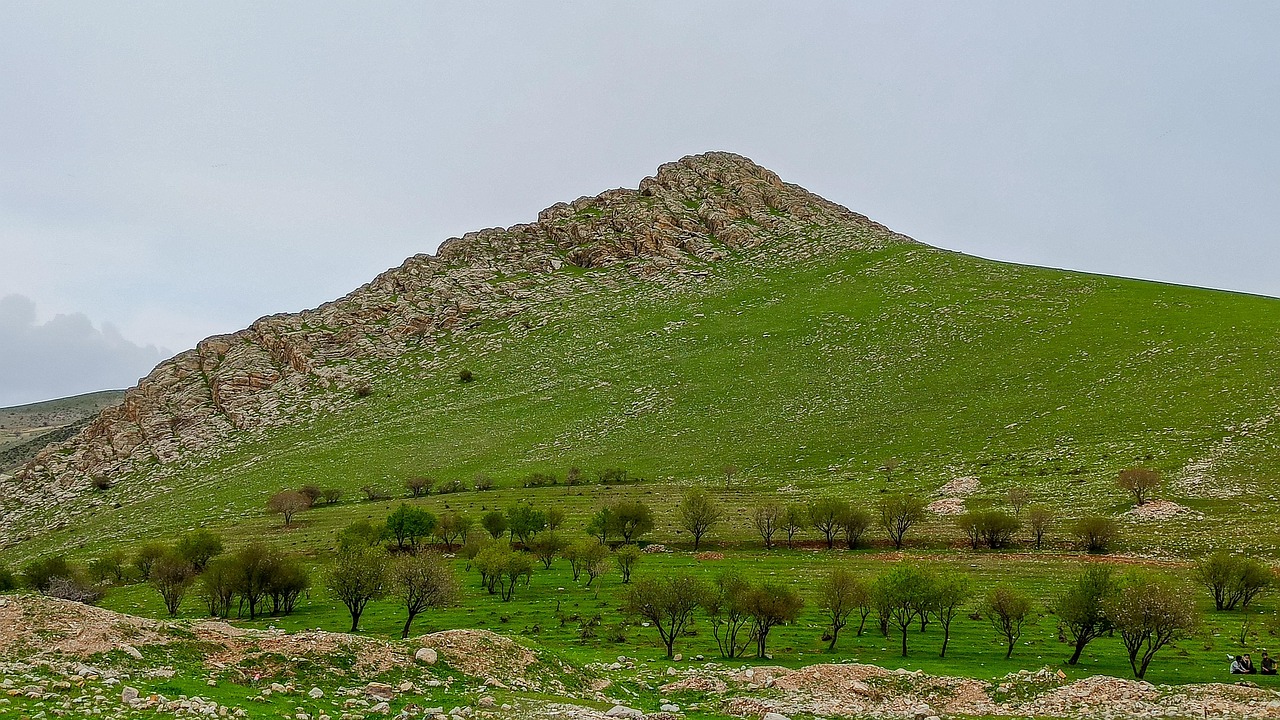
The Kurds are not newcomers to their land. They are an ancient people whose roots in the mountains of the region reach back thousands of years, and they are generally considered to be descended from the various Iranian peoples who have inhabited the area since antiquity. Their homeland sits at the meeting point of great civilizations, on the northern edges of Mesopotamia, the cradle of civilization itself, and they have lived alongside and under Persians, Arabs, Turks, and many others across the long sweep of history.
The mountains have been central to Kurdish life and identity in every sense. They provided refuge from conquerors, shaped a way of life built around herding and farming in high valleys, and bred a fierce spirit of independence and a tradition of local autonomy. Throughout history, powerful empires found it difficult to fully control the Kurdish highlands, and Kurdish chieftains and principalities maintained a measure of self-rule even under nominal foreign domination. The mountains gave the Kurds both their freedom and their isolation, and the famous saying about having no friends but the mountains reflects how often, in their darkest hours, the high country was the only thing that stood between them and destruction.

The Roots of the Kurdish Language
The Kurdish language is one of the strongest pillars of Kurdish identity, and its origins tell us a great deal about who the Kurds are. Kurdish belongs to the Iranian branch of the great Indo-European language family, which makes it a relative of Persian, Pashto, and Balochi, and a more distant cousin of the languages of Europe and northern India. It is emphatically not a dialect of Turkish or Arabic, despite the claims sometimes made by states that wished to deny the Kurds a separate identity. It is a distinct language with its own grammar, vocabulary, and deep history.
Kurdish is not a single uniform tongue but a group of closely related dialects, the two largest being Kurmanji, spoken mainly in Turkey, Syria, and the north, and Sorani, spoken mainly in Iraq and Iran. These differ enough that speakers of one can struggle to understand the other, a fragmentation that mirrors the political division of the Kurdish people themselves and that has complicated efforts to build a single unified national identity. The dialects are also written in different scripts, with Kurmanji often using a Latin-based alphabet and Sorani an Arabic-based one.
The survival of the Kurdish language is itself a story of resistance. For much of the twentieth century, the Turkish state banned the public use of Kurdish, refused to recognize it, and at times even denied that a separate Kurdish people existed, referring to them as mountain Turks. Kurdish names, music, and publications were suppressed. That the language survived this assault, passed down in homes and villages and carried abroad by the diaspora, is a testament to the determination of the Kurds to remain themselves. In recent decades restrictions have eased in some places, and Kurdish-language education, media, and culture have flourished above all in the autonomous Kurdish region of Iraq.

Faith and Diversity
Most Kurds are Sunni Muslims, but the religious landscape of the Kurdish world is more varied and tolerant than is often assumed. There are significant numbers of Shia Kurds, and the Kurdish lands are also home to several distinctive religious minorities that have existed there for centuries. Among these are the Yazidis, followers of an ancient faith with its own unique beliefs and traditions, who have suffered terrible persecution, most recently a genocidal campaign of massacre and enslavement waged against them by extremists in the twenty-first century, one of the great atrocities of recent times. There are also followers of other old traditions, reflecting the deep religious diversity of this ancient region.
Kurdish Islam has often been marked by the influence of Sufism, the mystical tradition within Islam, with its brotherhoods, its veneration of holy men, and its emphasis on the inner spiritual path. This has tended to give Kurdish religious life a somewhat different flavor from that of some of their neighbors, and many observers have noted a tradition of relative religious tolerance and a strong streak of secularism in modern Kurdish political movements, particularly in the emphasis some of them place on the rights of women and minorities.

The Long Struggle in Turkey
Nowhere has the Kurdish struggle been more bitter and protracted than in Turkey, home to the largest Kurdish population. The founding ideology of the Turkish republic left no room for a separate Kurdish identity, and for decades the state pursued a policy of forced assimilation, banning the Kurdish language in public life and suppressing any expression of Kurdish nationalism. Kurdish uprisings in the early decades of the republic were crushed with great brutality. The denial of basic cultural and political rights bred deep resentment that eventually erupted into armed conflict.
From the 1980s onward, a Kurdish insurgent movement waged a long guerrilla war against the Turkish state, seeking first independence and later greater autonomy and rights. The conflict has cost tens of thousands of lives on all sides over the decades, devastated the Kurdish southeast, and displaced large numbers of villagers. It has been marked by atrocities and human rights abuses, including by the state, and by cycles of negotiation and renewed violence. An honest account must acknowledge both the genuine grievances of the Kurds, long denied their basic rights, and the violence committed by armed groups, while recognizing that the overwhelming burden of suffering has fallen on ordinary Kurdish civilians caught in the middle.
Genocide in Iraq
The darkest chapter in modern Kurdish history unfolded in Iraq under the dictatorship of Saddam Hussein. The Kurds of northern Iraq had long sought autonomy, and their resistance was met with escalating ferocity. In the late 1980s the regime launched a campaign of systematic destruction against the Kurdish population, a series of operations in which villages were razed, tens of thousands of people were killed or disappeared, and chemical weapons were used against civilians. The most infamous single atrocity was the chemical gas attack on the Kurdish town of Halabja in 1988, which killed thousands of people in a matter of hours, many of them women and children, in one of the worst chemical weapons attacks ever carried out against a civilian population.
These campaigns, which killed an estimated tens of thousands and possibly far more Kurds, are widely recognized as genocide. They left a permanent scar on the Kurdish consciousness and stand as one of the gravest crimes of the late twentieth century. The memory of Halabja and of the wider campaign of destruction is central to how the Kurds understand their own history and their determination never again to be left defenseless at the mercy of those who would destroy them.

The Rise of Iraqi Kurdistan
Out of this suffering came, for the Iraqi Kurds, an unexpected measure of freedom. After the Gulf War of 1991, a no-fly zone protected the Kurdish north from the Iraqi regime, allowing the Kurds to build a self-governing region. Following the fall of Saddam Hussein in 2003, this developed into a recognized autonomous region within a federal Iraq, with its own government, parliament, and armed forces, known as the Peshmerga, a name that means those who face death. For the first time in modern history, a large Kurdish population governed itself, with Kurdish as the language of administration and education, and the region enjoyed a period of relative stability and development that stood in stark contrast to the violence elsewhere in Iraq.
The Iraqi Kurdish region became a symbol of what Kurdish self-rule could look like, and its Peshmerga forces won international admiration for their role in fighting against the extremist group that seized large parts of Iraq and Syria in the 2010s, including in the defense of the Yazidis and others. Yet the dream of full independence remained elusive. When the region held a referendum on independence in 2017, in which Kurds voted overwhelmingly to secede, the move was opposed by Iraq and its neighbors and by the major powers, and it was rolled back, a painful reminder of how far the Kurds still are from a state of their own and how little support they can count on when it matters most.

The Kurds of Syria and the Pattern of Betrayal
The civil war that engulfed Syria from 2011 opened another chapter in the Kurdish story. As the Syrian state lost control of its territory, the Kurds of the north carved out their own self-governing region, building an administration based on an unusual ideology emphasizing local democracy, ethnic pluralism, and a remarkable degree of gender equality, with women serving prominently in both government and the armed forces. Kurdish fighters, including all-female units, became famous around the world for their role in the brutal fight against the extremist group that had declared a so-called caliphate, suffering enormous casualties to defeat it on the ground.
And yet the Kurds once again learned the bitter lesson of their history. Having served as the primary ground force in defeating a common enemy, and having lost thousands of their fighters in the process, they found themselves abandoned by the powerful allies who had relied on them. When those allies withdrew their protection, the Kurds were left exposed to hostile neighbors, and many were displaced. This pattern, of the Kurds being used when useful and discarded when not, has repeated itself so often across the modern era that it has become the central theme of their tragic relationship with the great powers. No friends but the mountains, indeed.
A Culture Kept Alive Against the Odds
Through all the suffering and division, the Kurds have maintained a vibrant and distinctive culture. Kurdish music is rich and emotionally powerful, ranging from the haunting laments of singers who carry the memory of exile and loss to the driving rhythms that accompany the circle dances performed at weddings and celebrations, where lines of dancers link hands and move together in a powerful expression of communal solidarity. Storytelling, poetry, and oral tradition have been crucial vehicles for preserving Kurdish identity, especially during the long periods when the written language was banned.
The greatest celebration of the Kurdish year is Newroz, the spring new year festival that the Kurds share with the wider Iranian cultural world but have made peculiarly their own. For the Kurds, Newroz has become much more than a seasonal festival. It is a powerful symbol of national identity, resistance, and rebirth, celebrated with great bonfires leaping into the night sky, around which people gather in their traditional dress. The legend associated with the festival, of a blacksmith who rose up against a cruel tyrant and lit fires of freedom, has made Newroz a defiant assertion of Kurdish existence, and at times the celebrations have themselves become acts of political protest met with state repression.
Family, Honor, and the Bonds of Community
Traditional Kurdish society has been organized around the extended family, the clan, and the tribe, with strong bonds of loyalty and mutual obligation. Hospitality is a sacred duty, as it is across the region, and a guest is treated with great honor and generosity. These traditional structures, forged in the mountains over centuries, have given the Kurds resilience and cohesion, though like traditional societies everywhere they have also carried harsher customs, including patriarchal codes and, in some communities, practices that have oppressed women, realities that Kurdish reformers and especially the women of the modern Kurdish movements have increasingly challenged.
The experience of suffering and displacement has also forged a powerful sense of solidarity among Kurds across the borders that divide them. A Kurd from Turkey, a Kurd from Iraq, and a Kurd from Iran may speak different dialects and live under different governments, but they share a profound sense of belonging to a single people, bound together by a common language, a common history of struggle, and a common dream. This sense of shared identity, sustained despite every effort to suppress and divide it, is perhaps the most remarkable achievement of the Kurdish people.

Kurds in the Pages of History
Although the Kurds have never had a modern nation-state, individual Kurds have played enormous roles on the stage of history, often in the service of empires other than their own. The most famous of all was Saladin, the great Muslim leader who united much of the Middle East in the twelfth century, recaptured Jerusalem from the Crusaders, and earned a reputation, even among his European enemies, for his chivalry and magnanimity. Saladin was of Kurdish origin, born in the city of Tikrit, and he remains a source of immense pride for Kurds, a reminder that their people have produced figures of world-historical stature.
Across the centuries, Kurdish principalities and emirates rose and fell along the mountainous frontier between the great empires of the region, the Ottomans to the west and the Persians to the east. These Kurdish statelets enjoyed considerable autonomy, playing the rival empires against one another and maintaining their own distinct rule, until the centralizing reforms of the nineteenth century gradually brought them to heel. This long tradition of self-government, however incomplete, is part of why the Kurds have never accepted the idea that they are simply a minority within someone else’s nation, for they remember a time when they governed their own affairs in their own mountains.
The Land and Its Riches
The Kurdish homeland is not only mountainous but also, in places, surprisingly rich. The region sits atop significant reserves of oil, particularly in northern Iraq, and the rivers that rise in the Kurdish highlands, including the headwaters of the great Tigris and Euphrates, are among the most precious resources in a thirsty region. This wealth has been both a blessing and a curse. It has given the Kurdish region of Iraq a source of revenue to build a measure of prosperity and autonomy, but it has also made control of Kurdish land all the more valuable to the states that rule over it, deepening their reluctance to ever let it go.
Agriculture and herding remain central to life in the rural Kurdish areas, where the high valleys and pastures support flocks of sheep and goats and fields of grain and tobacco, much as they have for thousands of years. The combination of fertile valleys, abundant water, and underground wealth makes Kurdistan a land of real economic potential, and many Kurds believe that, freed from conflict and granted control of their own resources, their homeland could flourish. That potential, held back by war and political division, is part of the tragedy and the promise of the Kurdish situation.
The Kurds Abroad
Decades of war, persecution, and economic hardship have driven a large Kurdish diaspora out of the homeland and into Europe and beyond. Germany is home to the largest Kurdish community outside the Middle East, with substantial populations also in other European countries. There, freed from the restrictions they faced at home, Kurds have been able to publish in their own language, broadcast Kurdish television, organize politically, and keep their culture alive, making the diaspora a vital center of Kurdish national life and a constant advocate for the Kurdish cause on the world stage.
The diaspora has also produced successful professionals, artists, and politicians who have made their mark in their adopted countries while maintaining their connection to their roots. For many of these exiles and their children, the longing for a homeland they may have never seen, or seen only in childhood, remains a powerful force, and the dream of a free Kurdistan lives on as strongly in the apartments of European cities as it does in the villages of the mountains.
A People Still Waiting
The Kurds enter the future as they have endured the past, a great nation without a state, holding fast to an identity that powerful neighbors have repeatedly tried to erase. They have suffered genocide, betrayal, displacement, and the denial of their most basic rights, and yet they have refused to disappear. They have kept their language alive against bans and persecution, built islands of self-rule out of the chaos of war, and won the admiration of the world for their courage in battle, even as that same world has repeatedly failed them when it counted.
Whether the Kurds will ever achieve the independent homeland so many of them dream of remains one of the great open questions of the Middle East, bound up with the interests of powerful states that have every reason to keep Kurdistan divided. What is certain is that the Kurds will go on being Kurds, in their mountains and their cities and their scattered exile, carrying their language, their music, their fierce love of freedom, and their stubborn refusal to be anything other than themselves. They remain, in every sense, a people of the mountains, and the mountains, as they have always known, are still their truest and most faithful friend.



One thought on “The Largest Nation on Earth Without a Country, and Why the Kurds Refuse to Vanish”