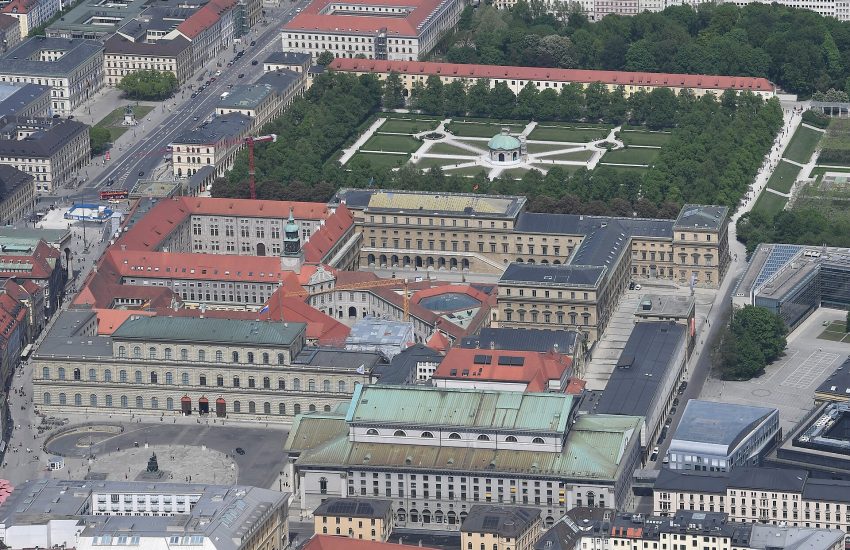
Chavin de Huantar sits at nearly 3,200 meters above sea level in the Peruvian Andes, at the exact point where the Mosna and Huachecsa rivers meet, a location its builders chose with obvious deliberation sometime around 900 BCE.
For roughly seven centuries this stone temple complex functioned as one of the most influential religious centers the ancient Andes ever produced, drawing pilgrims from hundreds of kilometers away and exporting an artistic and religious style that shaped Andean civilization long after the site itself fell silent.
Table of Contents
- A Ceremonial Capital at the Meeting of Two Rivers
- The Old Temple and Its Underground Galleries
- The Lanzon: Face to Face with a Stone God
- Cabezas Clavas: The Tenon Heads on the Temple Walls
- The Raimondi Stela and the Tello Obelisk
- Water, Sound, and the Engineering of Awe
- What Language Did the People of Chavin Speak?
- San Pedro, Trance, and the Priests of Chavin
- The Chavin Horizon: An Art Style Without an Army
- Decline and Rediscovery
- Nearby Places to Explore
A Ceremonial Capital at the Meeting of Two Rivers
Archaeologists divide Chavin’s history into two main architectural phases, an Old Temple built beginning around 900 BCE and a larger New Temple expansion completed several centuries later, together representing one of the most sophisticated ceremonial building programs of the Early Horizon period in Andean prehistory.
Unlike Caral, which came many centuries earlier, or the sprawling later capital of Wari, Chavin was never a large population center in its own right. Estimates suggest only a few thousand people lived there permanently, yet its religious and artistic influence radiated across a territory encompassing much of modern Peru’s coast and highlands.
The site’s builders selected this specific river confluence for reasons that go beyond simple practicality. Rivers held deep symbolic importance in Andean cosmology, often associated with the underworld and the passage between realms, and Chavin’s priests appear to have built their entire ceremonial program around controlling and channeling the sound and movement of water through the temple itself.
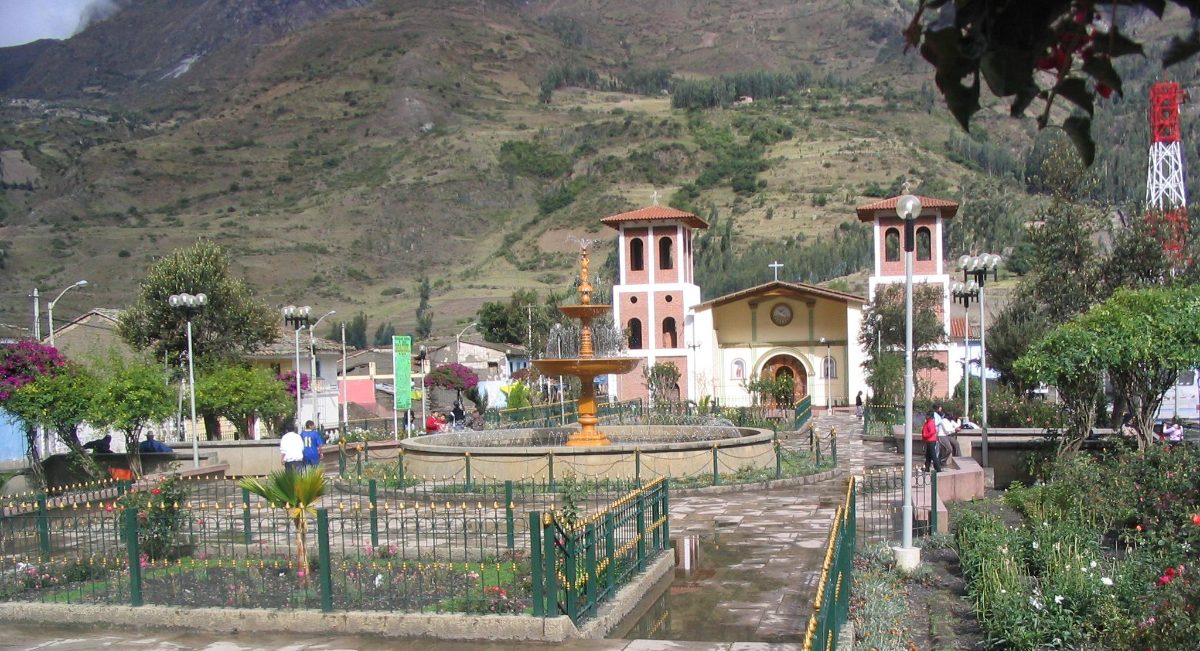
Getting to Chavin required real effort even in antiquity, since the site sits in a narrow highland valley reached by steep mountain trails rather than any easy coastal route, a fact that makes its extensive pilgrimage traffic and far-reaching artistic influence all the more remarkable given how physically remote the temple actually was.
Chavin’s location also placed it at a natural crossroads between Peru’s Pacific coast, its high Andean interior, and the eastern jungle margins beyond, giving the site unusually direct access to goods and travelers from three ecologically distinct regions that rarely intersected so conveniently anywhere else in the central Andes.
Later Inca religious geography retained an echo of this same logic, treating river confluences and mountain passes as inherently sacred meeting points between different cosmological forces, a worldview that may well trace its deepest roots back to the site-selection choices made by Chavin’s original builders nearly three thousand years ago.
The Old Temple and Its Underground Galleries
The Old Temple takes the form of a U-shaped complex opening toward a sunken circular plaza, a layout that would echo across Andean ceremonial architecture for the next thousand years, appearing in modified form at sites built long after Chavin’s own decline.
Beneath this visible architecture lies what makes Chavin genuinely unique: a labyrinth of narrow stone galleries, ventilation shafts, and drainage canals built directly into the solid core of the temple platforms. Some passages are barely wide enough for a single person to pass through, and many remain only partially explored even today.
These underground galleries were not simply storage or foundation work. Excavations show they were deliberately designed spaces meant to be entered, traversed, and experienced, likely as part of initiation rituals in which priests or select pilgrims moved through total darkness before emerging, disoriented, into daylight or torchlit ceremonial chambers.
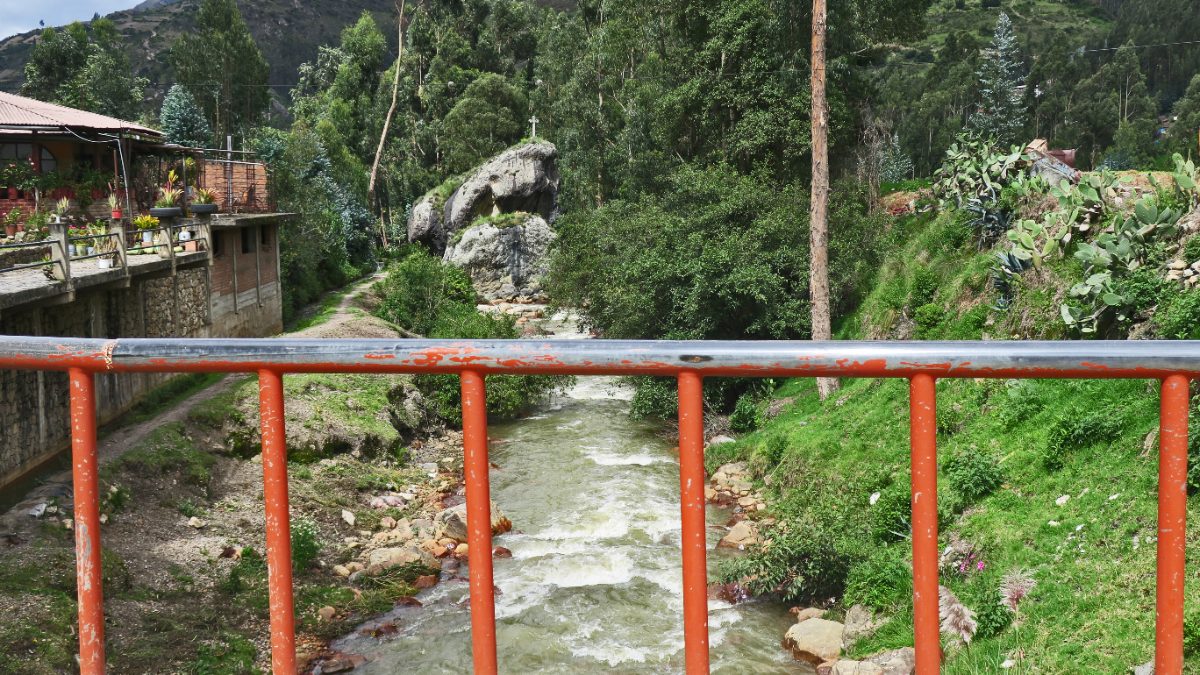
Some galleries within the Old Temple were deliberately built with ventilation shafts angled to catch prevailing winds, producing a constant, low airflow through otherwise sealed stone chambers, a detail suggesting the builders anticipated these spaces would be occupied for extended periods rather than simply sealed and forgotten.
The New Temple expansion, built centuries after the original Old Temple, roughly doubled the site’s monumental footprint and introduced the large sunken circular plaza most visitors encounter first today, a clear sign that Chavin’s religious authority and the resources available to its priesthood grew substantially over the centuries rather than remaining static.
Excavators mapping the gallery system have found small niches cut into the passage walls at irregular intervals, likely used to hold torches or oil lamps, providing just enough light for movement through the otherwise pitch-dark corridors without diminishing the disorienting sensory experience the space was clearly designed to produce.
The Lanzon: Face to Face with a Stone God
At the heart of this gallery system stands the Lanzon, a nearly five-meter granite shaft carved with a fanged, snarling deity that combines human, feline, and serpent features into a single overwhelming image. It remains fixed in its original position at the intersection of two underground passages, exactly where it was placed roughly 2,900 years ago.
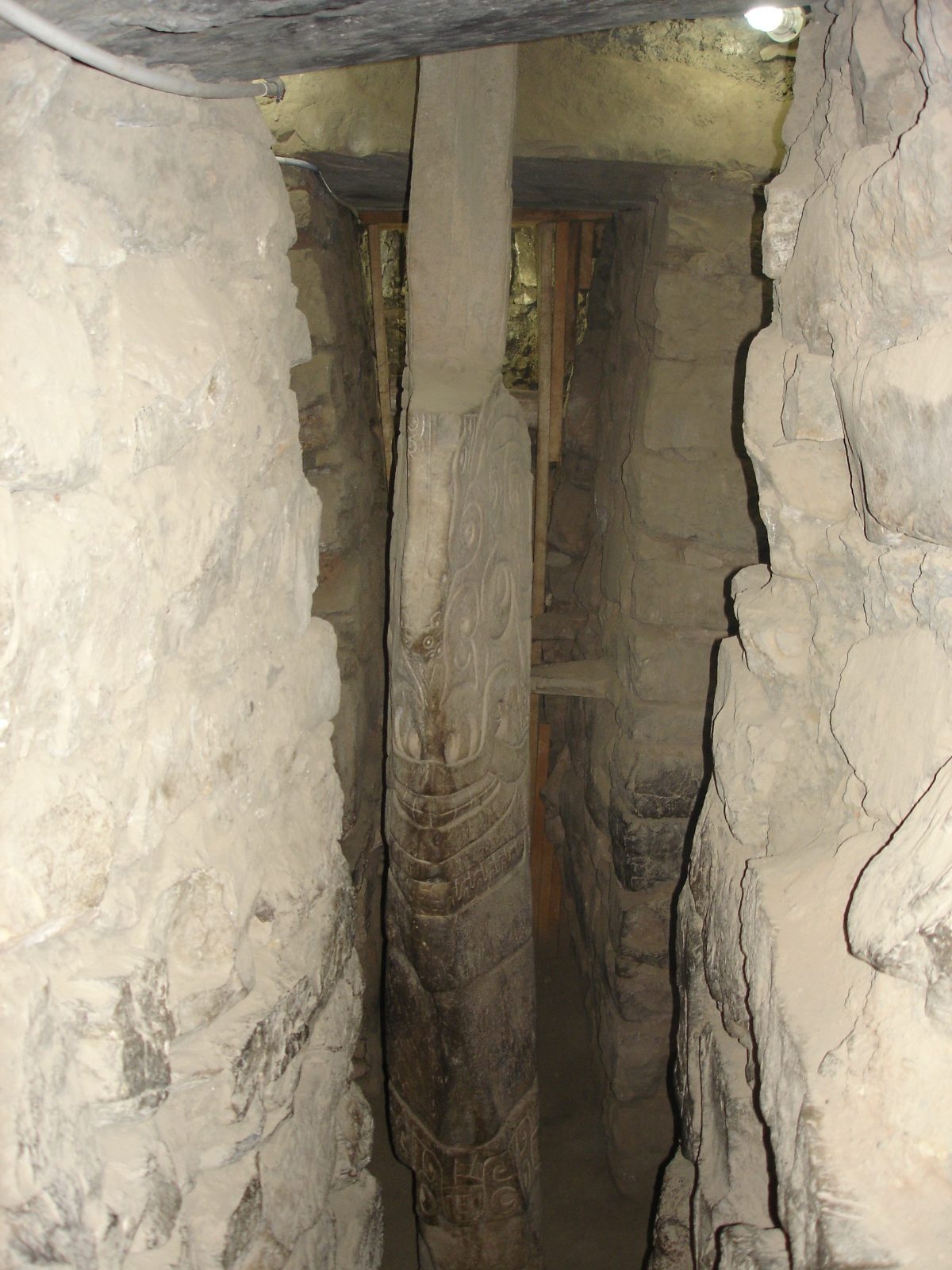
The Lanzon’s placement, at a crossing point deep within the temple’s dark interior, meant that few visitors ever saw it directly. Reaching it required passing through the narrow, disorienting gallery system first, transforming a simple viewing into an earned religious experience reserved for those who completed the passage.
Scholars have long debated whether the Lanzon represents a specific named deity or a composite representation of divine and natural forces, feline power, serpent wisdom, human authority, combined into a single image meant to embody the totality of Chavin religious belief rather than any single mythological figure.
The Lanzon’s single raised arm and clawed hand, carved with careful attention to anatomical detail despite the otherwise composite, fantastical nature of the figure, has led some researchers to propose it represents a specific mediating role between human and divine realms rather than a purely abstract or symbolic deity.
Visitors today reach the Lanzon via a narrow staircase and passage restored for controlled public access, though the experience remains deliberately claustrophobic, a modern echo, however diminished, of the disorienting ritual journey ancient pilgrims would have undergone before ever laying eyes on the carved deity themselves.
Cabezas Clavas: The Tenon Heads on the Temple Walls
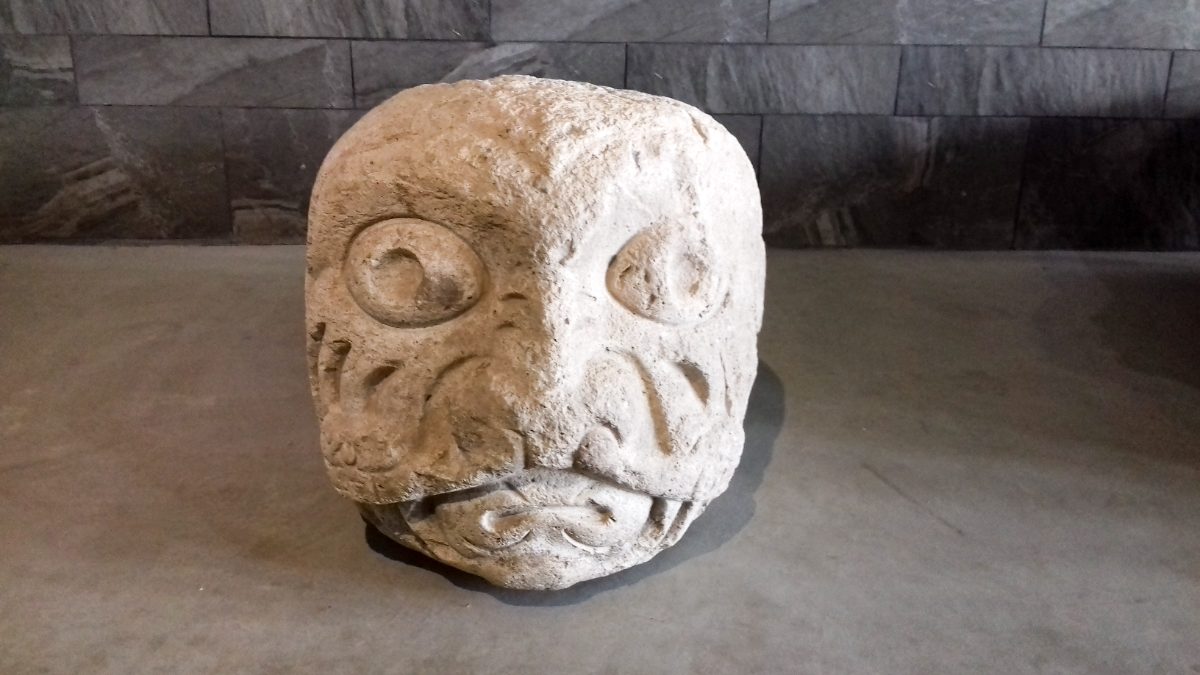
Chavin’s exterior temple walls were once studded with dozens of cabezas clavas, tenon heads, carved stone faces fitted into sockets that projected outward from the stonework, staring down at anyone who approached. Only a handful remain in their original positions today; most have fallen or been removed over the centuries.
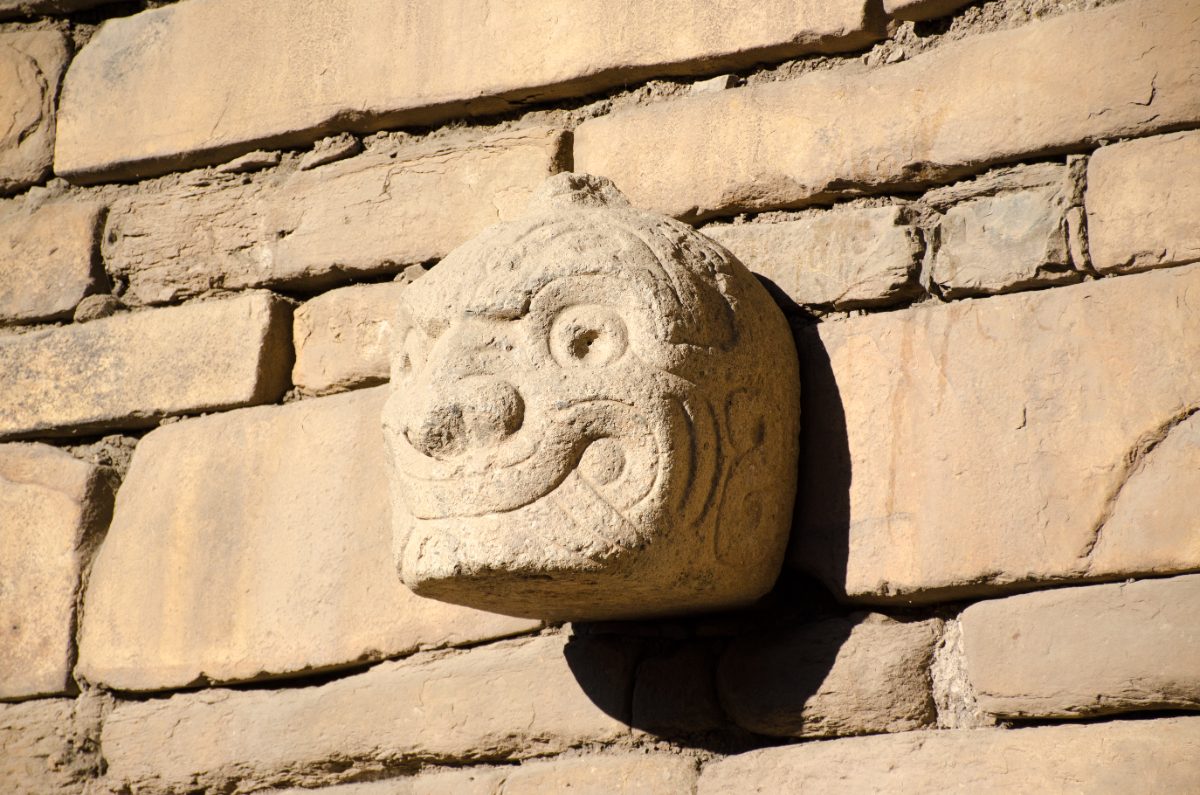
Each carved head appears to depict a different stage of ritual transformation, with some showing relatively naturalistic human features and others displaying increasingly feline or supernatural characteristics, fangs, flared nostrils, streaming mucus rendered as serpents. Many researchers interpret this progression as a visual narrative of shamanic transformation, the process by which a religious practitioner takes on the powers and identity of a jaguar spirit during ritual trance.
The sheer scale of stone carving required for these tenon heads, along with the temple’s other sculptural elements, implies a class of dedicated specialist artisans working under religious direction, further evidence that Chavin functioned as a genuine center of skilled craft production rather than a purely rural shrine.
Weathering patterns and tool marks on the surviving tenon heads indicate they were carved on site rather than transported from elsewhere, meaning Chavin supported resident stoneworkers skilled enough to produce sculpture of consistently high quality across what was likely several generations of ongoing temple expansion.
Several fallen tenon heads were discovered not at the base of the walls they once projected from but scattered some distance away, leading some archaeologists to speculate that a major earthquake, a hazard the seismically active Andes have never been free of, may have dislodged much of the temple’s exterior stonework at some point during or after its active use.
The transition depicted across the surviving sequence of tenon heads, from calm human faces near the temple’s lower sections to increasingly fierce, fanged visages higher up, mirrors the physical act of ascending toward the temple’s most sacred spaces, reinforcing the idea that the entire structure was built to narrate a journey of spiritual transformation through its architecture and sculpture alike.
The Raimondi Stela and the Tello Obelisk
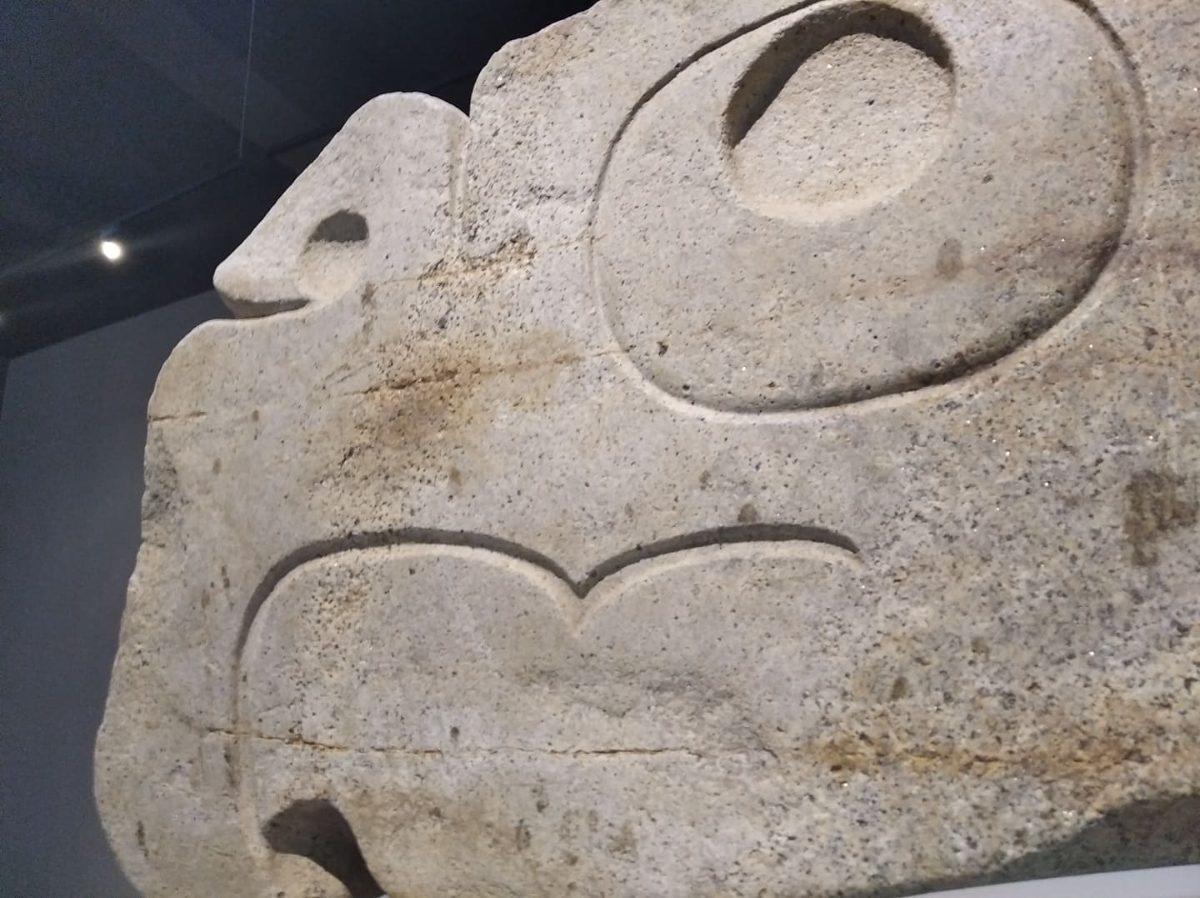
The Raimondi Stela, a flat granite slab over two meters tall, carries one of the most intricate carved images to survive from ancient Peru: a staff-bearing deity whose headdress unfolds upward into an elaborate cascade of interlocking feline and serpent faces that can be read right-side up or upside down with equally coherent imagery.
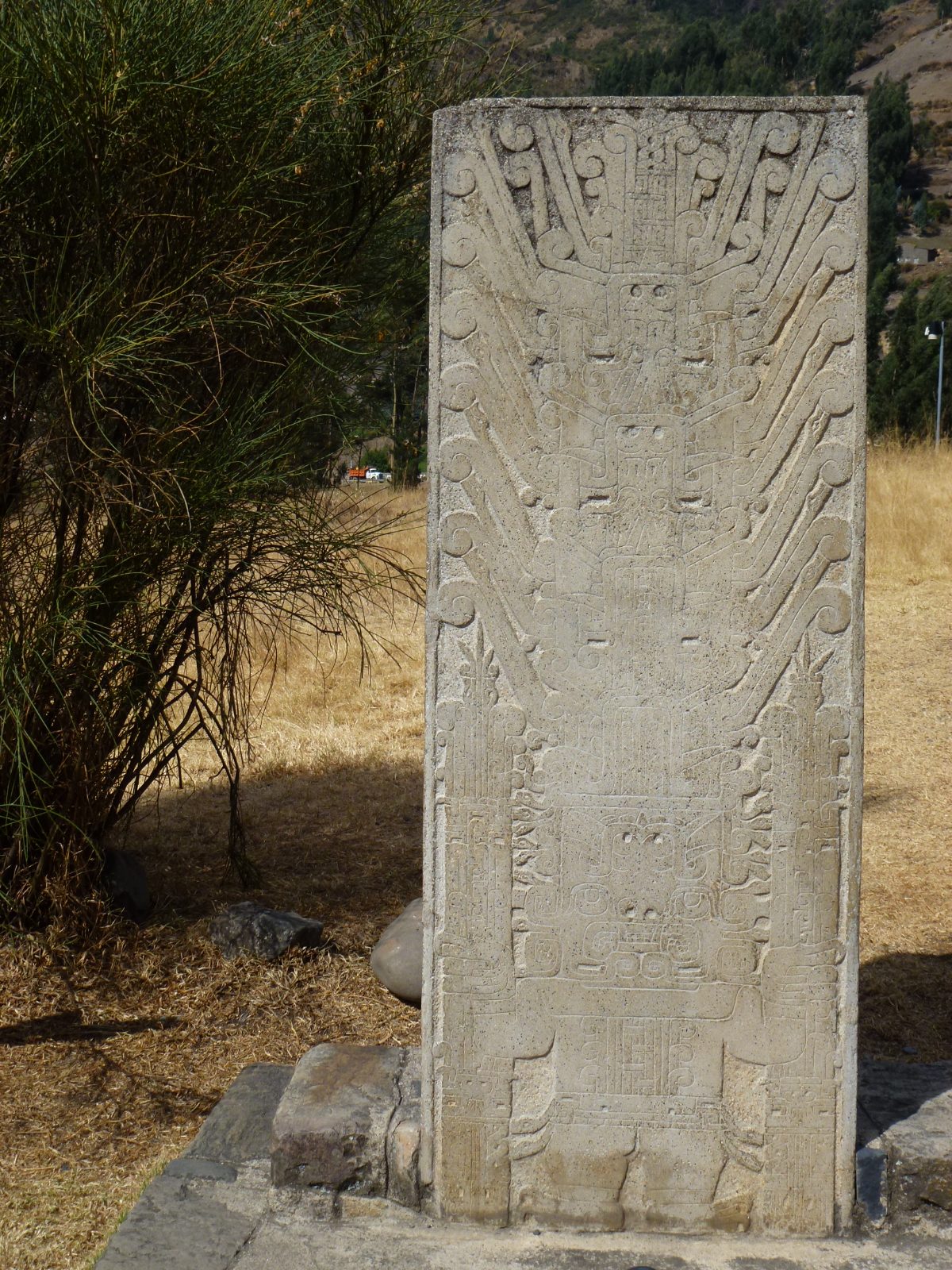
This deliberate visual duality, an image that transforms depending on orientation, appears repeatedly across Chavin’s sculptural program and likely reflects a broader religious concept involving inversion, transformation, and the collapsing of ordinary categories, themes closely tied to the shamanic and hallucinogenic practices archaeologists believe were central to Chavin ritual life.
The Tello Obelisk, a four-sided carved pillar named for the Peruvian archaeologist who first documented it, depicts a caiman-like being surrounded by cultivated plants including manioc, chili peppers, and gourds, suggesting Chavin’s religious imagery was directly tied to agricultural fertility and the natural forces believed to govern successful harvests.
Both the Raimondi Stela and the Tello Obelisk are now housed in museums in Lima rather than at the site itself, a common pattern for Chavin’s portable stone monuments, many of which were removed for preservation or display long before modern site-management practices prioritized keeping artifacts in their original archaeological context.
Comparative analysis of the carving style used on both monuments has helped archaeologists establish a relative chronology for different phases of Chavin’s artistic development, since subtle shifts in how feline and serpent motifs were rendered over time provide a rough stylistic timeline even in the absence of any written dates.
Water, Sound, and the Engineering of Awe
Chavin’s builders engineered an elaborate network of stone-lined canals running beneath and through the temple platforms, channeling river water in ways that produced a distinct roaring sound, especially during the rainy season when flow increased dramatically through the confined channels.
Acoustic analysis conducted by modern researchers has shown that the temple’s stone galleries and ventilation shafts also amplify and distort sound in unusual ways, meaning voices, conch-shell trumpets, or the rush of water moving through the canal system could have created an immersive, disorienting soundscape for anyone moving through the site’s darker passages.
Some archaeologists argue this combined water, sound, and darkness engineering was intended to simulate the roar of a jaguar, tying the physical experience of visiting Chavin directly to the feline imagery covering its walls, an early and remarkably sophisticated example of architecture designed explicitly to manufacture a religious and psychological experience rather than simply to shelter ritual objects.
Modern reconstructions of Chavin’s canal system, tested by pouring measured amounts of water through excavated channel sections, have confirmed that the stonework produces sound at frequencies and volumes that would have been clearly audible, and genuinely startling, to anyone standing near the temple’s exterior during periods of high water flow.
Beyond pure acoustic effect, the canal system also served the practical function of managing runoff during the highland rainy season, protecting the temple’s stone foundations from erosion and flooding, a dual-purpose engineering solution that combined structural necessity with deliberate religious theater.
Engineers studying the canal network have also noted that its precise gradient and channel width appear carefully calculated rather than accidental, requiring a working understanding of hydraulics that ancient builders would have developed through generations of empirical trial and observation rather than any formal mathematical theory.
What Language Did the People of Chavin Speak?
Chavin left behind no writing system and no inscriptions that record spoken words, so its language cannot be read directly from any surviving text. What can be said comes largely from geography and later linguistic distribution rather than any direct evidence from the site itself.
Chavin flourished centuries before Quechua or Aymara reached anything resembling their historically documented forms, placing its language, like Caral’s, well outside the reach of secure identification. Some linguists have speculated about a relationship to now-extinct central Andean languages once spoken in the region before Quechua’s later expansion, but such proposals remain tentative at best.
What is reasonably well established is that Chavin’s influence traveled primarily through religious ideology, imagery, and pilgrimage rather than through direct political or linguistic conquest, meaning the site may well have hosted visitors and specialists speaking a range of different regional languages, unified by shared ritual practice rather than a single common tongue.
The absence of any Chavin script stands in notable contrast to roughly contemporary writing systems developing elsewhere in the world, reinforcing how the ancient Andes as a whole built remarkably complex religious and artistic traditions through purely oral transmission and visual symbolism rather than through any recorded textual language.
Later Spanish colonial chroniclers, writing more than two thousand years after Chavin’s active period, recorded Andean oral traditions describing ancient oracle sites and powerful mountain deities, fragments that some scholars read as distant, transformed echoes of religious concepts that may ultimately trace back to sites like Chavin, even though no direct textual link can ever be firmly established.
San Pedro, Trance, and the Priests of Chavin
Carved images at Chavin repeatedly depict figures holding the San Pedro cactus, known locally as huachuma, a plant containing mescaline capable of producing powerful visionary states. This iconography, combined with the temple’s disorienting underground galleries, has led most researchers to conclude that hallucinogenic ritual formed a central part of Chavin religious practice.
Priests likely served as ritual specialists who consumed these substances and underwent the physical journey through the temple’s dark passages as part of a controlled process of transformation, emerging to deliver oracular pronouncements or religious authority derived from their direct contact with the supernatural forces represented by the Lanzon and its surrounding imagery.
This oracle function may explain much of Chavin’s enduring appeal to distant pilgrims. Rather than ruling through military force or economic coercion, Chavin’s priesthood appears to have built regional influence through control of ritual knowledge, hallucinogenic experience, and access to a deity considered powerful enough to draw visitors from hundreds of kilometers distant.
Botanical identification of San Pedro cactus imagery at Chavin required careful comparative work, since the plant’s carved representation had to be distinguished from purely decorative floral motifs also present in the site’s sculptural program, a task that has occupied specialists in Andean iconography for decades.
Ethnographic parallels from contemporary Andean shamanic traditions, in which San Pedro cactus preparations are still used in healing ceremonies today, have informed much of the scholarly interpretation of Chavin’s ancient ritual practice, though researchers are careful to note that modern practices cannot be assumed to perfectly mirror beliefs held nearly three millennia ago.
The Chavin Horizon: An Art Style Without an Army
Chavin’s distinctive artistic style, feline fangs, interlocking serpents, staff-bearing deities rendered in dense, interwoven carving, spread across a huge swath of the central Andes during what archaeologists call the Early Horizon, appearing on pottery, textiles, and metalwork from sites hundreds of kilometers from the temple itself.
This spread happened without any evidence of Chavin military conquest or centralized political control over the regions that adopted its imagery, leading most scholars to interpret the Chavin Horizon as a religious and cultural phenomenon, a shared belief system and prestige art style voluntarily adopted by distant elites eager to associate themselves with Chavin’s spiritual authority.
Gold working, advanced textile weaving, and painted pottery all show clear Chavin stylistic influence at sites far removed from the temple, suggesting traveling artisans, pilgrims returning home with new ideas, or long-distance trade in prestige goods carried Chavin’s religious vocabulary outward far more effectively than any army could have.
Textile fragments bearing clear Chavin-style imagery have been recovered from coastal burial sites hundreds of kilometers from the temple itself, preserved by the extreme dryness of Peru’s desert coastline, offering some of the clearest surviving evidence for just how far Chavin’s religious and artistic influence actually traveled.
Metallurgical techniques including early gold hammering, soldering, and repousse decoration also spread alongside Chavin’s artistic motifs, suggesting the exchange of craft knowledge and skilled artisans traveled the same pilgrimage and trade networks that carried the site’s religious imagery across the wider Andean world.
Because so much of this influence spread through portable objects, pottery, textiles, and metalwork, rather than through monumental construction, the Chavin Horizon is often described by archaeologists as evidence of a shared ideology carried by traveling elites and pilgrims rather than proof of any centralized political empire radiating outward from the temple itself.
Comparative studies with the earlier Caral civilization and later Wari empire suggest a recurring Andean pattern in which religious or economic influence spread across vast distances well before political conquest ever followed, if it followed at all, a cultural rhythm that Chavin exemplifies as clearly as any site archaeologists have yet studied.
Decline and Rediscovery
Chavin’s influence faded by around 200 BCE, and the site was gradually abandoned as new regional centers rose to prominence elsewhere in the Andes. No single dramatic event explains the decline; rather, the religious and political landscape simply shifted, and Chavin lost the pilgrimage traffic and prestige that had sustained it for centuries.
The Peruvian archaeologist Julio C. Tello brought Chavin to international scholarly attention beginning in the 1910s, arguing forcefully that it represented the true foundational culture of Andean civilization rather than a peripheral curiosity, a position now broadly accepted, even as Caral’s far greater age has since reshaped exactly where Chavin fits within that longer timeline.
Excavation continues at Chavin today, with researchers still mapping portions of its underground gallery system and refining the chronology of construction phases, work that continues to reshape scholarly understanding of exactly how this remote mountain temple came to exert such outsized influence over ancient Andean religion and art.
Tello’s early twentieth-century excavations were conducted with far less advanced equipment and methodology than researchers use today, meaning several of his original interpretations have since been revised, even as his central insight regarding Chavin’s foundational importance to Andean civilization has held up remarkably well.
Today Chavin de Huantar holds UNESCO World Heritage status, recognized specifically for its role as one of the earliest and most influential ceremonial centers in South America, and its on-site museum now displays many of the tenon heads and carved stones removed from the temple walls over the past century.
Researchers continue to debate whether the eventual decline of Chavin’s influence reflected competition from newly emerging regional centers, environmental pressures affecting the surrounding highland agriculture, or simply the gradual erosion of religious prestige that can affect any pilgrimage site once alternative centers of spiritual authority begin to draw worshippers away.
Conservation work at the site remains an ongoing challenge, since the same seismic activity that likely damaged the ancient tenon heads continues to threaten the surviving stonework today, requiring careful structural reinforcement alongside the archaeological excavation still being carried out in the temple’s less thoroughly explored sections.
Nearby Places to Explore
Chavin de Huantar connects directly to other ancient Peruvian sites already covered on InKend.
- Caral: The Oldest City Ever Built in the Americas
- Wari: The Andean Empire That Came Before the Inca
- Cerro Sechin: The 3,600-Year-Old Peruvian Temple Carved With Warriors and Their Victims
closing
Chavin de Huantar never grew into a great imperial capital the way Wari or the Inca eventually would, yet almost every later Andean civilization carried forward some trace of its jaguar gods, its sunken plazas, and its instinct for building architecture meant to overwhelm the senses.
Standing today at the confluence of the Mosna and Huachecsa, amid stone walls that once channeled river water into a deliberate roar, it remains possible to sense why pilgrims once traveled so far to consult whatever power the Lanzon was believed to hold.
You May Like
Mafra, the Palace a King Built From a Vow