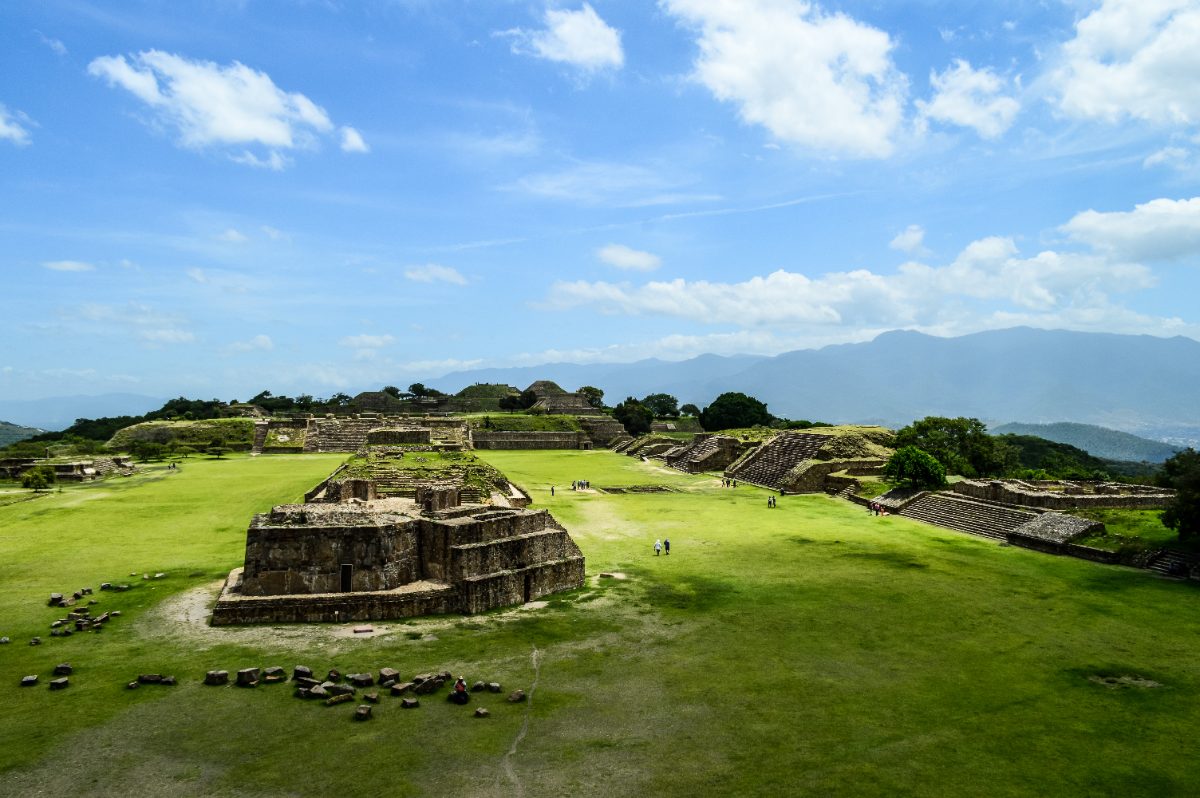
Monte Alban sits atop an artificially leveled mountain roughly 400 meters above the floor of Oaxaca’s central valley, a position its Zapotec builders chose around 500 BCE specifically because no natural water source, farmland, or existing settlement occupied the summit before them.
That deliberate choice, building a capital where no one had ever needed to live, marks Monte Alban as one of the first planned cities in Mesoamerica, founded not around an existing village but as a calculated political project meant to unify three separate valley branches under a single new capital visible from every direction below.
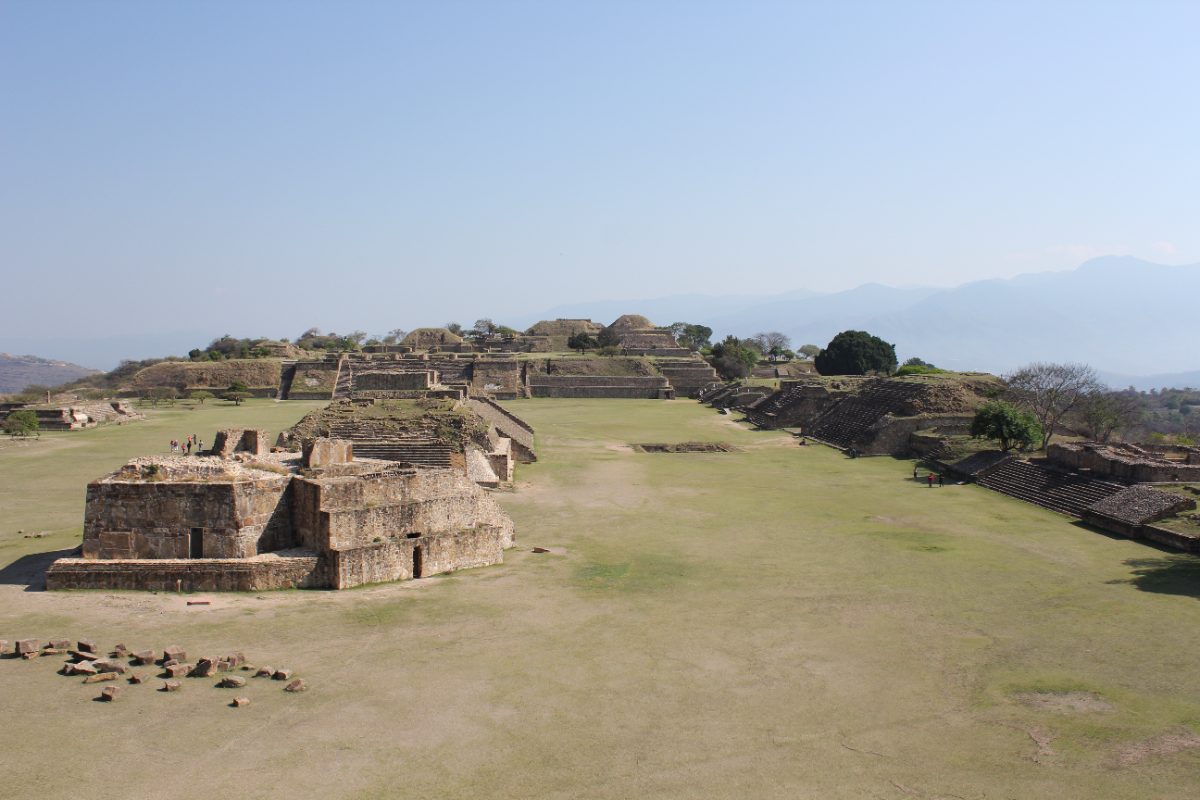
Table of Contents
- A City Built on a Leveled Mountain
- The Zapotec Capital of the Oaxaca Valley
- Los Danzantes: Mesoamerica’s Earliest Writing?
- Building J: An Observatory Aligned to War
- The Main Plaza and Its Monuments
- What Language Did the People of Monte Alban Speak?
- Cocijo, Ancestors, and the Zapotec Cosmos
- Tomb 7 and the Gold That Waited Two Thousand Years
- Trade, Power, and the Valley Below
- Decline, Abandonment, and Rediscovery
- Nearby Places to Explore
A City Built on a Leveled Mountain
Before Monte Alban’s founding, the Oaxaca Valley held several competing chiefdoms, each controlling one of the valley’s three converging arms, San Jose Mogote to the north being the most prominent among them. Archaeological evidence suggests Monte Alban emerged as a neutral, elevated site where rival factions could establish a shared capital without any single existing town claiming dominance over the others.
Leveling the mountaintop required moving enormous quantities of earth and stone by hand, creating flat plaza surfaces and building platforms on a summit that had originally been an irregular, sloping ridge. This artificial flattening alone represents one of the largest labor investments of any Early and Middle Formative period project in Mesoamerica.
The elevated, defensible position also served an obvious strategic purpose. Monte Alban’s summit offers clear sightlines down all three branches of the valley, letting its rulers monitor movement and potential threats across the entire region from a single vantage point, a military advantage matched by very few other capitals in the ancient Americas.
Water for Monte Alban’s substantial population had to be collected and stored rather than drawn from any natural spring or river on the summit itself, requiring an extensive system of cisterns, terraced catchment surfaces, and channeled runoff that represents a considerable engineering achievement in its own right, sustaining tens of thousands of residents on a mountaintop with no natural water source.
The three valley arms that Monte Alban was positioned to oversee, now generally referred to by archaeologists as the Etla, Tlacolula, and Zaachila-Zimatlan branches, each supported distinct agricultural resources and population centers, meaning a capital positioned to unify them needed to be visible and accessible from all three simultaneously rather than favoring any single existing settlement.
Comparable mountaintop capitals are rare in Mesoamerica, and Monte Alban’s founders may have drawn inspiration from smaller hilltop ceremonial sites already established in the Oaxaca region, scaling up an existing local architectural tradition to an unprecedented size rather than inventing the concept of elevated ceremonial construction entirely from scratch.
The Zapotec Capital of the Oaxaca Valley
At its height, roughly 100 to 650 CE, Monte Alban’s population is estimated to have reached between 17,000 and 30,000 residents, making it the largest and most politically dominant city in the Oaxaca region for well over a thousand years of continuous or near-continuous occupation.
The city’s layout centers on a vast rectangular Main Plaza, oriented to specific astronomical alignments, surrounded by temple platforms, palaces, and administrative buildings. Residential terraces spread down the mountainside in concentric rings, housing a stratified population ranging from elite officials near the summit to farmers and craftspeople on the lower slopes.
Zapotec rulers governed a shifting territory that, at various points, extended control or influence over much of the Oaxaca Valley and into surrounding highland regions, making Monte Alban not simply a religious center but the seat of an actual regional state with the administrative capacity to coordinate labor, tribute, and military action across multiple subject communities.
Residential terracing at Monte Alban has revealed distinct neighborhoods with markedly different house sizes and burial goods, evidence of a clearly stratified society in which elite families occupied larger, more elaborately constructed compounds near the summit while commoners lived in smaller dwellings further down the mountainside.
Population estimates for Monte Alban’s peak period rely heavily on systematic surface surveys mapping thousands of residential terraces across the mountainside, a painstaking archaeological methodology that has allowed researchers to reconstruct settlement density with reasonable confidence despite centuries of erosion and later disturbance.
Monte Alban’s administrative reach appears to have extended well beyond simple religious authority, with evidence of standardized ceramic production, coordinated large-scale construction projects, and a settlement hierarchy of smaller subordinate towns feeding tribute and labor into the capital, all hallmarks of genuine state-level political organization rather than a loose confederation of allied communities.
Craft specialization at Monte Alban extended to fine greyware ceramics, distinctive to the Oaxaca Valley and traded well beyond it, alongside shell and stone ornament workshops whose products have been recovered from sites throughout southern Mexico, evidence of an economy sophisticated enough to support dedicated artisans working outside direct food production.
Los Danzantes: Mesoamerica’s Earliest Writing?
Among Monte Alban’s earliest and most debated monuments are the so-called Danzantes, more than 300 carved stone slabs depicting contorted human figures in poses once interpreted as dancers, giving the carvings their popular name. Modern scholarship instead reads most of these figures as sacrificed or tortured captives, their bodies shown nude, bound, or mutilated in ways inconsistent with any dance.
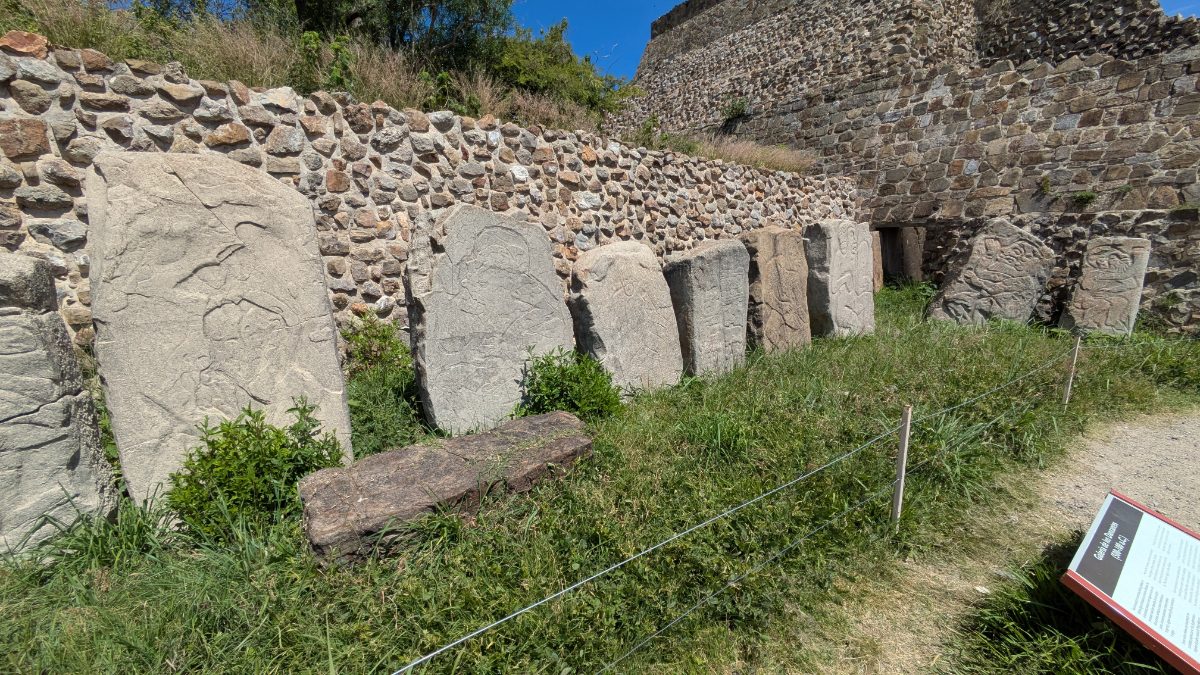
Several Danzante carvings include accompanying glyphs, short hieroglyphic inscriptions carved alongside the human figures, that many linguists and archaeologists consider among the earliest confirmed writing anywhere in Mesoamerica, potentially predating comparable Maya or Olmec script by a significant margin.
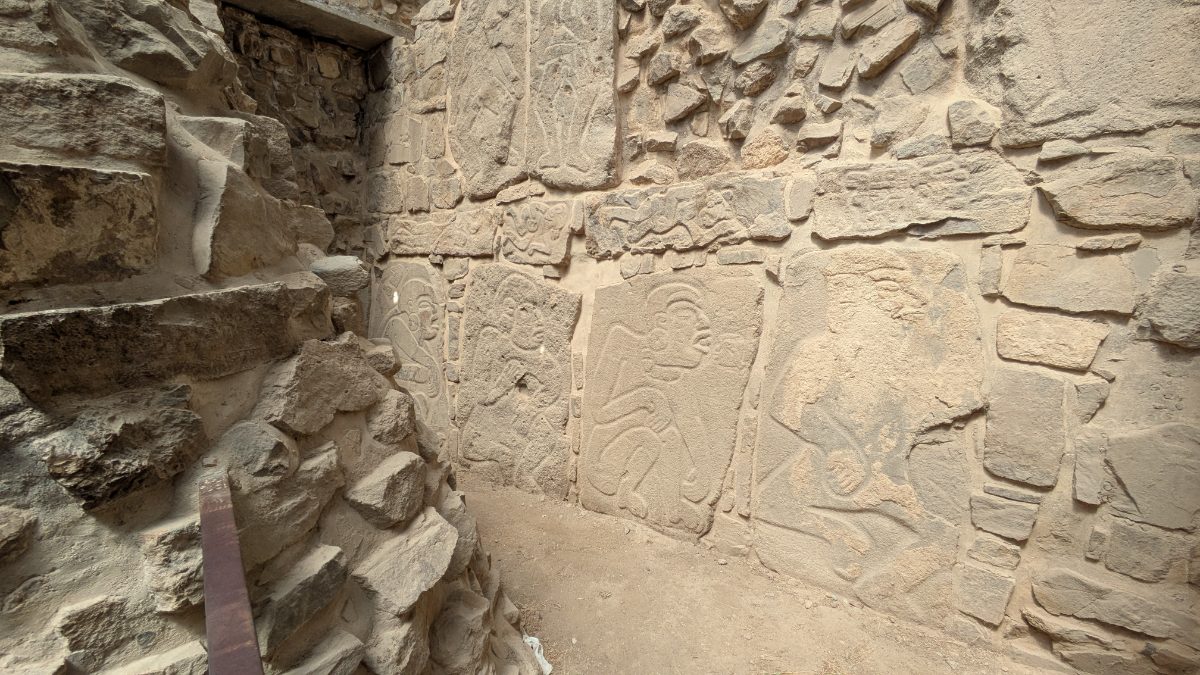
These early glyphs remain only partially deciphered, but the ones that can be read appear to record calendar dates and possibly the names or titles of the defeated figures depicted, suggesting the entire gallery functioned as a political monument, a public record of military victory meant to broadcast Monte Alban’s dominance to visitors and rivals alike.
Debate continues over whether the Danzantes depict captives from a single decisive military campaign or a cumulative record assembled over generations of conflict, since the carvings show some stylistic variation suggesting they were not all created during a single building phase.
Some Danzante figures show medical conditions rendered with striking anatomical accuracy, including what appear to be depictions of specific pathologies, leading a handful of researchers to propose the gallery may partly commemorate the ritual killing of individuals afflicted with recognized illnesses rather than exclusively depicting military captives, though this remains a minority interpretation.
The Danzantes gallery was later partially incorporated into the foundations of Building L, a subsequent construction phase that reused many of the older carved slabs as ordinary building material, a practice that ironically helped preserve numerous Danzante carvings by burying them within later stonework rather than leaving them exposed to open-air weathering for twenty-five centuries.
Building J: An Observatory Aligned to War
Building J stands out immediately from Monte Alban’s otherwise orderly grid of plazas and platforms: an arrow-shaped structure oriented roughly 45 degrees off the axis followed by every surrounding building, its unusual footprint a deliberate architectural choice rather than any construction error.
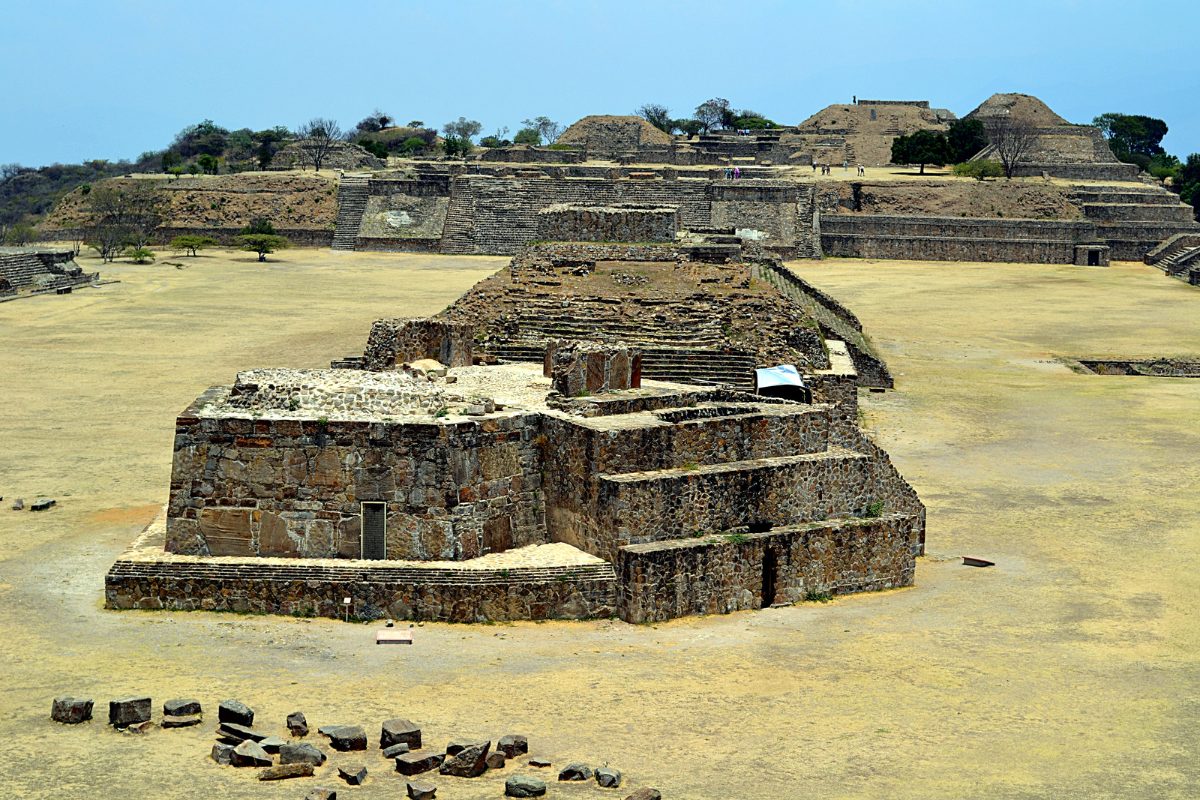
Researchers have proposed that this odd orientation aligns Building J with the heliacal rising of specific stars, functioning as an astronomical observatory used to track celestial events tied to the agricultural calendar and important ritual dates, a role echoing similar celestially aligned structures found at other major Mesoamerican centers.
Carved stone slabs embedded in Building J’s walls depict place names combined with inverted human heads, widely interpreted as a running record of towns conquered by Monte Alban’s rulers, turning the structure into both an astronomical instrument and a permanent, stone-carved list of military campaigns.
Similar conquest-slab monuments, recording defeated towns through combined place-name and inverted-head glyphs, appear on other structures around the Main Plaza as well, suggesting Building J was part of a broader, sustained tradition of publicly commemorating military victory in carved stone rather than an isolated architectural experiment.
Some archaeoastronomers have proposed alternative interpretations of Building J’s alignment, connecting it to the appearance of specific bright stars rather than solar events, though the conquest-slab carvings embedded in its walls make the structure’s political messaging considerably less ambiguous than its astronomical function.
The precise identity of every conquered town listed on Building J’s carved slabs remains debated, since many of the place-name glyphs correspond to locations that cannot be confidently matched to any known archaeological site today, leaving a partial but tantalizing record of military campaigns whose full geographic scope may never be completely reconstructed.
The Main Plaza and Its Monuments
Monte Alban’s Main Plaza, roughly 300 meters long, forms the ceremonial and political heart of the city, flanked by temple platforms, the North Platform palace complex, and the South Platform rising at its opposite end, with Building J and the Danzantes gallery positioned along its western edge.
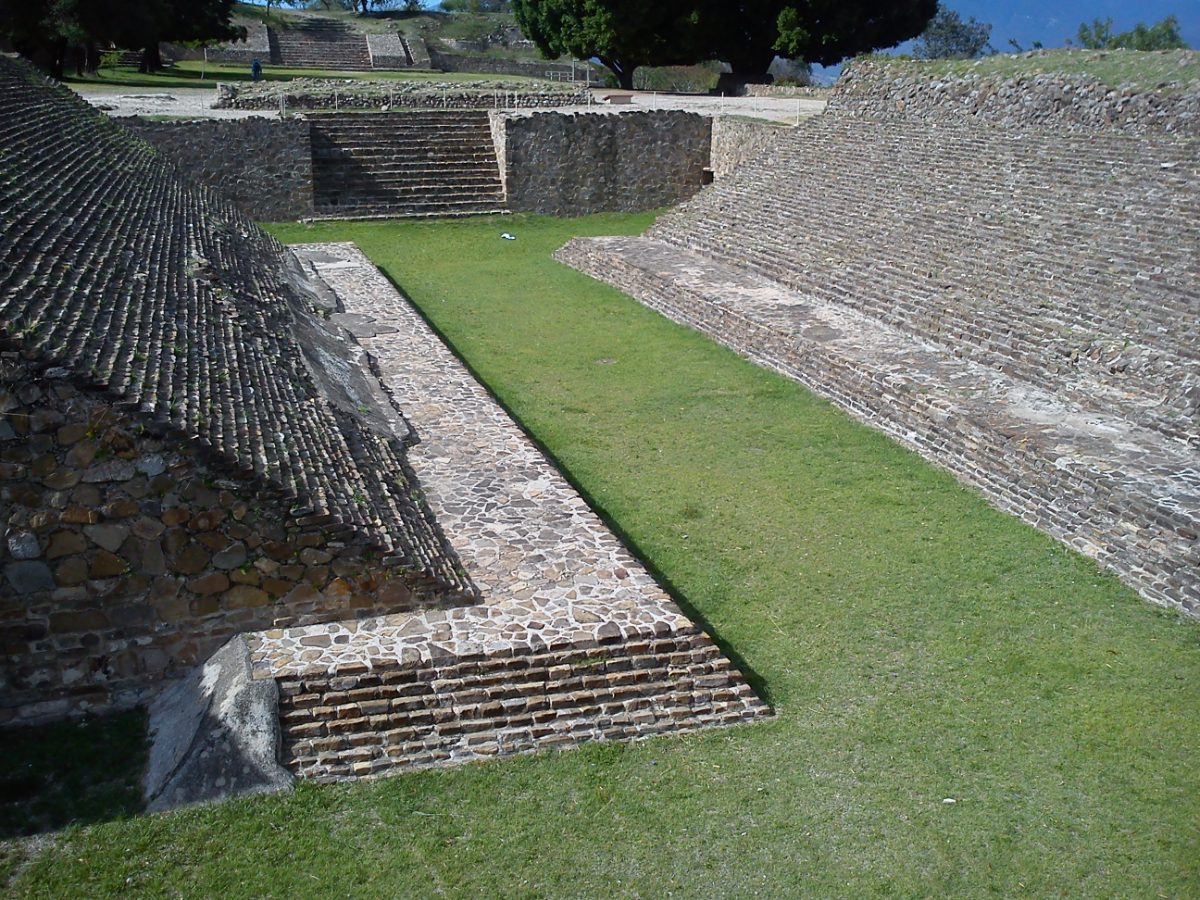
An I-shaped ballcourt sits just off the plaza’s northeastern corner, used for the ritual ballgame played across Mesoamerica for millennia, a contest carrying deep religious symbolism tied to cosmological cycles and, in many depictions from other sites, connected to human sacrifice of the losing team or captured players.
Palace structures along the North Platform show evidence of multiple rebuilding phases, with later Zapotec rulers repeatedly expanding and re-plastering earlier foundations, a pattern of continuous renovation over centuries that mirrors similar practices seen at other major Mesoamerican and Andean ceremonial centers.
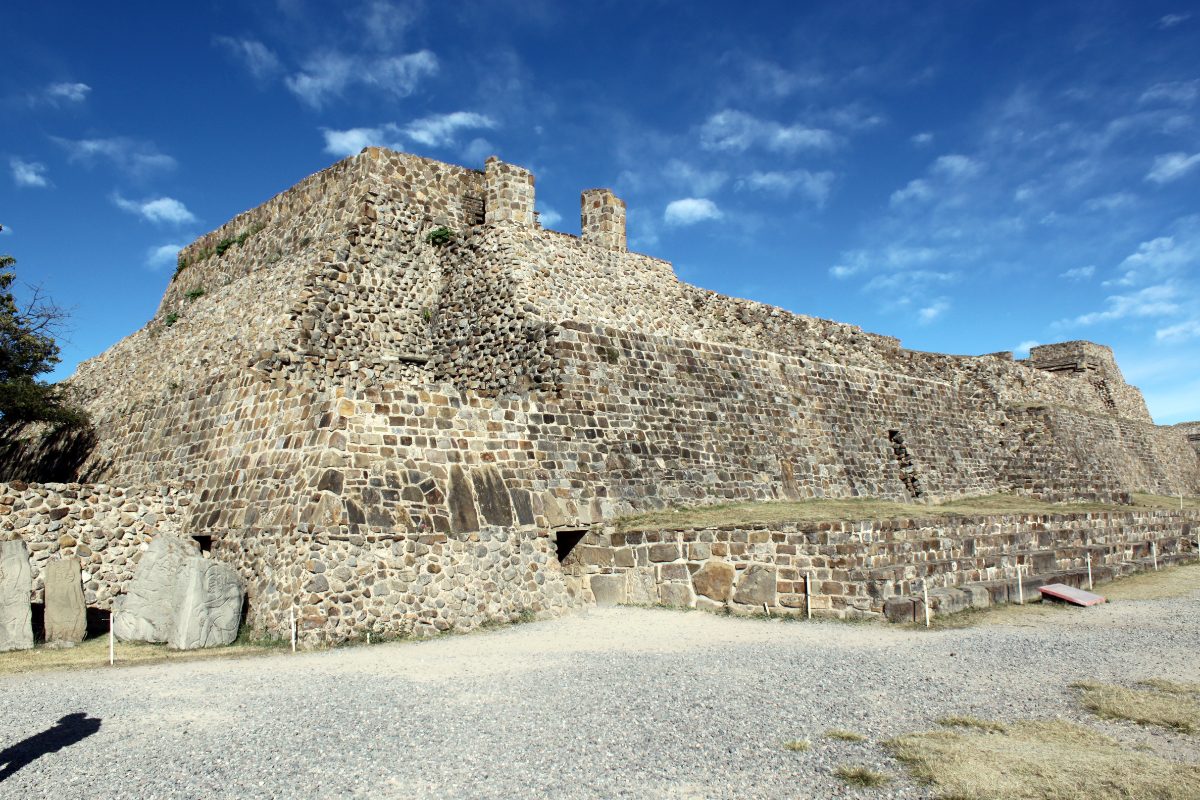
Excavations beneath the Main Plaza’s paved surface have revealed multiple earlier construction phases, indicating the plaza was resurfaced and reconfigured repeatedly over centuries as successive generations of Zapotec rulers left their own mark on the city’s ceremonial core.
Stone drainage channels built beneath the plaza floor directed rainwater away from ceremonial structures and toward the terraced residential slopes below, another example of the practical engineering knowledge that allowed such a large population to sustain itself on a site with no natural water source of its own.
What Language Did the People of Monte Alban Speak?
The people who built and ruled Monte Alban spoke an early form of Zapotec, a language family still spoken today by several hundred thousand people across Oaxaca, making it one of the relatively rare cases in this series where a reasonably direct linguistic descendant of an ancient city’s population survives into the present.
Modern Zapotec is not a single unified language but a large family of related but often mutually unintelligible varieties, a diversity that likely reflects Monte Alban’s own political fragmentation into competing valley factions even before the Spanish conquest further scattered Zapotec-speaking communities across the region’s mountainous terrain.
The Danzante and Building J inscriptions represent early written Zapotec, using a glyphic system distinct from later Maya or Aztec writing, employing bar-and-dot numerals alongside calendar and place-name glyphs. Full decipherment remains incomplete, but epigraphers have made steady progress identifying calendrical and onomastic content within the surviving carved texts.
Linguists classify Zapotec as part of the Oto-Manguean language family, one of the oldest and most internally diverse language families in Mesoamerica, alongside related languages such as Mixtec, spoken by neighboring groups who would later come to share the Oaxaca Valley and eventually Monte Alban itself.
Colonial-era Spanish missionaries produced some of the earliest written grammars and dictionaries of Zapotec in the sixteenth century, using Latin script to record a language whose ancient glyphic writing system had by then fallen out of active use, creating an unusual situation in which two entirely different writing systems, separated by more than a thousand years, both attempted to capture the same underlying spoken language.
Modern Zapotec varieties spoken today in the Oaxaca Valley and surrounding mountains remain vibrant living languages, taught in some local schools and used in community media, even as UNESCO classifies several smaller Zapotec varieties as endangered due to shifting generational language use toward Spanish.
Cocijo, Ancestors, and the Zapotec Cosmos
Cocijo, a rain and lightning deity depicted with a forked serpent tongue and stylized facial features, ranks among the most important gods in the Zapotec pantheon, appearing repeatedly on ceramic funerary urns recovered from tombs throughout Monte Alban and the surrounding valley.
These effigy urns, often placed as offerings within elaborate tomb chambers, depict deities, deified ancestors, and possibly specific historical rulers dressed in elaborate ceremonial regalia, suggesting a religious system that closely intertwined ancestor veneration with the worship of specific named gods tied to rain, agriculture, and the underworld.
Zapotec tombs at Monte Alban were frequently built beneath residential structures and reopened over generations for successive burials, much like the mortuary practices seen at Wari centuries later, reflecting a broader Mesoamerican and Andean pattern in which the dead remained active, consulted participants in the ongoing life of their descendants rather than figures simply left behind.
Ceramic urns representing Cocijo and other deities were often placed at tomb entrances rather than alongside the human remains directly, suggesting they functioned as guardian figures protecting the deceased, a role distinct from simple grave goods meant to accompany the dead into the afterlife.
Iconographic analysis of Cocijo imagery shows clear stylistic continuity with rain deities depicted at other Mesoamerican sites, including Tlaloc at Teotihuacan and later Aztec Tenochtitlan, suggesting a broadly shared, if regionally distinct, religious vocabulary concerning rain and agricultural fertility that spanned much of ancient Mexico.
Beyond Cocijo, Zapotec religious imagery included representations of maize deities, ancestral founder figures associated with specific noble lineages, and composite creatures blending jaguar, serpent, and bird characteristics, a visual vocabulary broadly consistent with religious themes found across much of ancient Mesoamerica despite Zapotec culture’s distinct language and political history.
Tomb 7 and the Gold That Waited Two Thousand Years
In 1932, Mexican archaeologist Alfonso Caso excavated Tomb 7 at Monte Alban and uncovered one of the richest troves of precious-metal artifacts ever found in the ancient Americas: gold pectorals, jade beads, silver vessels, and carved bone, an assemblage that instantly became one of Mexico’s most celebrated archaeological discoveries.
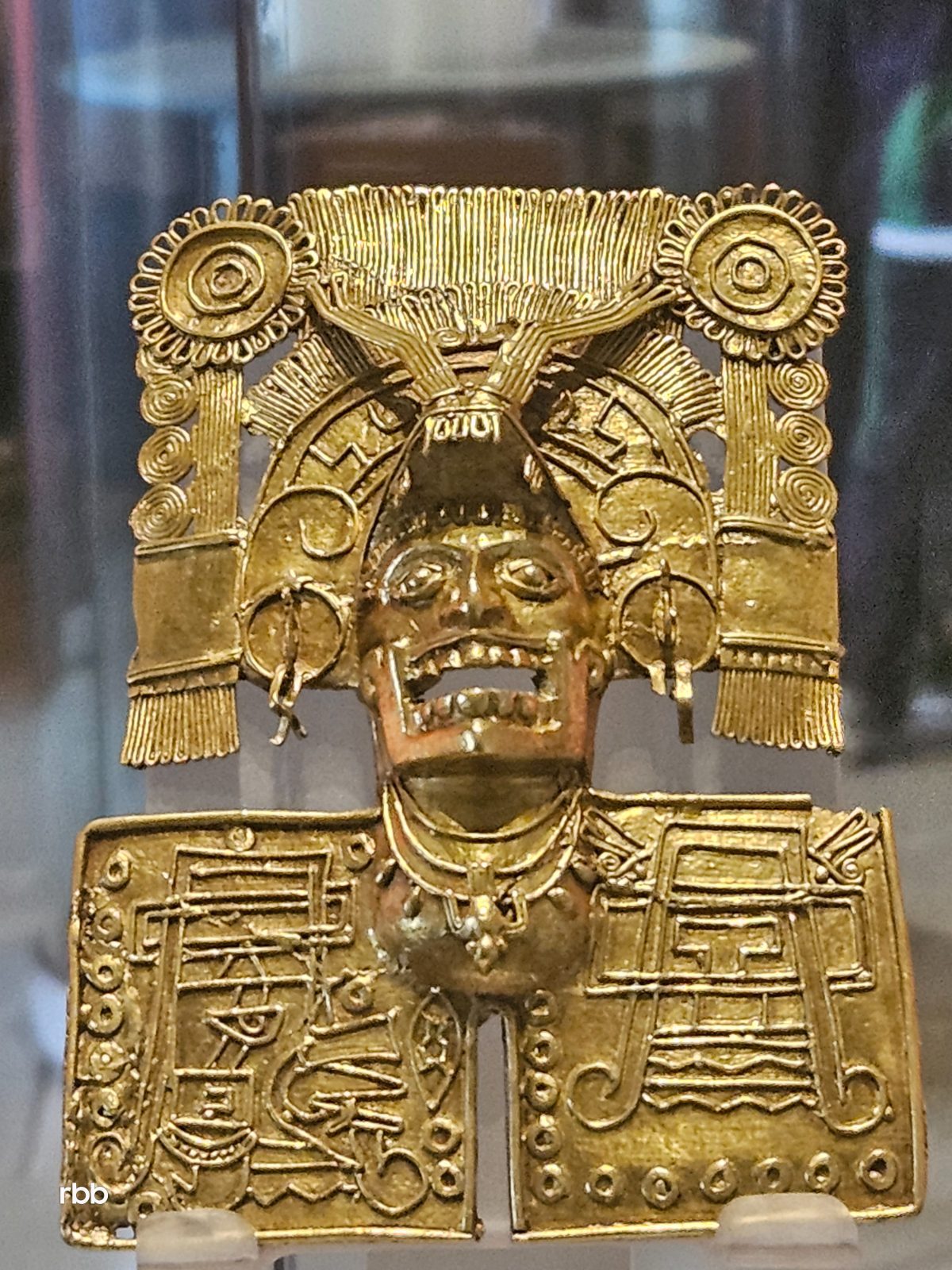
The tomb itself had originally been built by Zapotec builders centuries earlier, but the spectacular gold offerings found inside were added later, when Mixtec elites reused the existing chamber to bury one of their own high-status dead, adorning the burial with metalwork reflecting distinctly Mixtec artistic style rather than earlier Zapotec conventions.
This layered history, a Zapotec tomb repurposed centuries later by Mixtec rulers for their own elite burial, reflects Monte Alban’s long afterlife even following its political decline as a functioning Zapotec capital, remaining a place of recognized sacred and ancestral importance long after its original builders had lost direct political control of the valley.
The Tomb 7 treasure is now displayed at the Museo de las Culturas de Oaxaca, housed in a former convent in Oaxaca City, where it remains one of the most visited archaeological collections in southern Mexico.
Alfonso Caso’s meticulous documentation of Tomb 7’s contents, cataloguing hundreds of individual gold, jade, and bone objects, set a methodological standard for Mexican archaeology at a time when many earlier excavations across the region had been considerably less rigorous, helping establish Monte Alban as a training ground for generations of subsequent Mexican archaeologists.
Comparative analysis of the Tomb 7 metalwork alongside other known Mixtec goldwork has helped art historians establish stylistic benchmarks used to date and authenticate similar objects recovered from other sites and, unfortunately, from looted contexts lacking any clear archaeological record.
Trade, Power, and the Valley Below
Monte Alban’s rulers extracted tribute and labor obligations from communities throughout the Oaxaca Valley and, at various points, from more distant highland territories, funding the city’s monumental construction and supporting a substantial non-farming population of priests, administrators, and craft specialists.
Obsidian, a volcanic glass essential for cutting tools and weapons, arrived at Monte Alban through long-distance trade networks reaching sources well outside the valley, alongside marine shell, exotic feathers, and fine ceramics, evidence that the city sat within a broader Mesoamerican exchange system linking it to distant regions including the Gulf Coast and central Mexican highlands.
Some evidence suggests Monte Alban maintained diplomatic or trade contact with Teotihuacan, the enormous contemporary metropolis in the Valley of Mexico, including a residential compound at Teotihuacan apparently occupied by a resident Zapotec community, a rare direct archaeological trace of relations between two of ancient Mesoamerica’s largest cities.
Control of obsidian distribution throughout the valley gave Monte Alban’s rulers significant economic leverage over smaller communities dependent on the material for everyday cutting tools as well as ceremonial and military purposes, reinforcing political dominance through economic dependency rather than military force alone.
Cotton textiles, cacao, and worked shell also moved through Monte Alban’s trade networks, luxury goods that helped cement alliances and reward loyal subordinate elites throughout the valley, a pattern of prestige-good exchange functioning alongside more strictly economic trade in everyday materials like obsidian and pottery.
Contact with the Gulf Coast lowlands brought Monte Alban access to tropical goods unavailable in the highland Oaxaca Valley, including brightly colored feathers and certain shell species used in elite ornamentation, further extending the reach of a trade network that connected this mountaintop capital to ecologically distant regions of ancient Mexico.
Marketplace exchange likely complemented formal tribute obligations, with smaller regional centers throughout the valley hosting periodic markets where agricultural surplus, craft goods, and imported luxury items changed hands under conditions that probably combined state oversight with genuine independent commerce.
Decline, Abandonment, and Rediscovery
Monte Alban’s political dominance declined sharply after roughly 700 to 750 CE, with monumental construction slowing and the city’s population contracting significantly over the following century and a half, though the site was never fully abandoned and continued to hold ceremonial and funerary importance for centuries afterward.
Scholars debate the precise causes of decline, pointing variously to the fragmentation of centralized authority into smaller competing valley polities, agricultural strain from supporting such a large non-farming population for so many centuries, and broader political shifts affecting Mesoamerica following the roughly contemporaneous decline of Teotihuacan itself.
Alfonso Caso’s excavations beginning in the 1930s transformed Monte Alban from a locally known ruin into one of Mexico’s most thoroughly studied archaeological sites, work that continues today and has steadily refined the chronology separating Monte Alban’s original Zapotec builders from the later Mixtec groups who repurposed parts of the site for their own elite burials.
Even after losing its position as the valley’s dominant political capital, Monte Alban continued to receive occasional new burials and small-scale construction for several more centuries, showing that its symbolic and religious importance to Zapotec identity persisted well beyond the collapse of its earlier political power.
Present-day Monte Alban draws large numbers of visitors from nearby Oaxaca City, and ongoing conservation efforts must balance public access against the long-term preservation of exposed stonework and carved monuments that have already endured twenty-five centuries of erosion, earthquakes, and human activity.
Nearby Places to Explore
Monte Alban connects to other major Mexican and Mesoamerican sites already covered on InKend.
- Maya Pyramids: The Secrets of El Castillo at Chichen Itza
- Templo Mayor: The Aztec Great Pyramid at the Center of the World
- The Oldest Colossal Heads in the Americas Were Carved Here: The Story of San Lorenzo
closing
Monte Alban’s builders chose to raise their capital on a mountain no one had previously wanted, turning an empty summit into the political and ceremonial center of an entire valley for well over a thousand years, and in doing so left behind some of the earliest writing anywhere in the Americas.
Millions of Zapotec speakers still live in the valley below today, a rare direct thread connecting the modern Oaxaca Valley to the language once carved into the Danzantes and the observatory walls of Building J nearly twenty-five centuries ago.
You May Like
Mafra, the Palace a King Built From a Vow


3 thoughts on “Monte Alban, the Zapotec Capital Carved Into a Mountain”