Palenque rises from the edge of the Chiapas rainforest in southern Mexico, where the last hills of the highlands drop into the flat Gulf Coast plain, a location that gave this Maya city command over river routes and lowland trade while its builders still had access to abundant highland stone and water.
Between roughly 226 and 799 CE, Palenque grew from a modest regional center into one of the most artistically accomplished capitals of the Classic Maya world, producing sculpture, hieroglyphic writing, and architecture that modern scholars still rank among the finest achievements of ancient Mesoamerica.
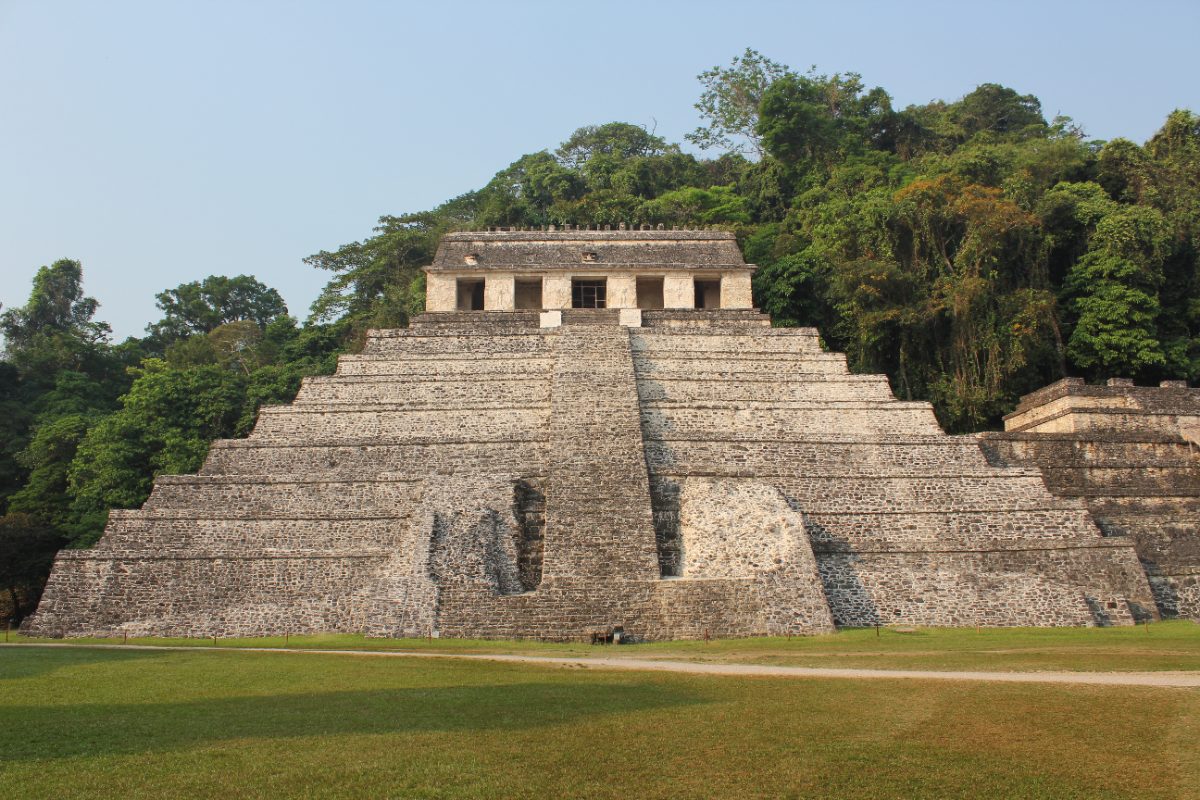
Table of Contents
- A Maya City Hidden in the Chiapas Jungle
- Pakal the Great and the Rise of Palenque
- The Temple of Inscriptions and a King’s Tomb
- The Sarcophagus Lid and the Myth of Ancient Astronauts
- The Palace and Its Mysterious Tower
- The Cross Group: Temples of Myth and Dynasty
- Water Engineering: The Aqueduct Beneath the City
- What Language Did the People of Palenque Speak?
- Gods, Ancestors, and the Maya Underworld
- Decline, Rediscovery, and Deciphering Palenque’s Texts
- Nearby Places to Explore
A Maya City Hidden in the Chiapas Jungle
Palenque’s Classic Maya name was Lakamha, meaning Big Water, a reference to the numerous streams and springs running through the site, including the Otulum River that Palenque’s engineers would later channel directly beneath the city’s ceremonial core.
The surrounding jungle, thick and fast-growing in this humid lowland climate, reclaimed much of Palenque within a century or two of its abandonment, burying temples and palaces under vegetation so completely that Spanish colonial administrators living only a few days’ travel away remained largely unaware of the ruins for over two centuries.
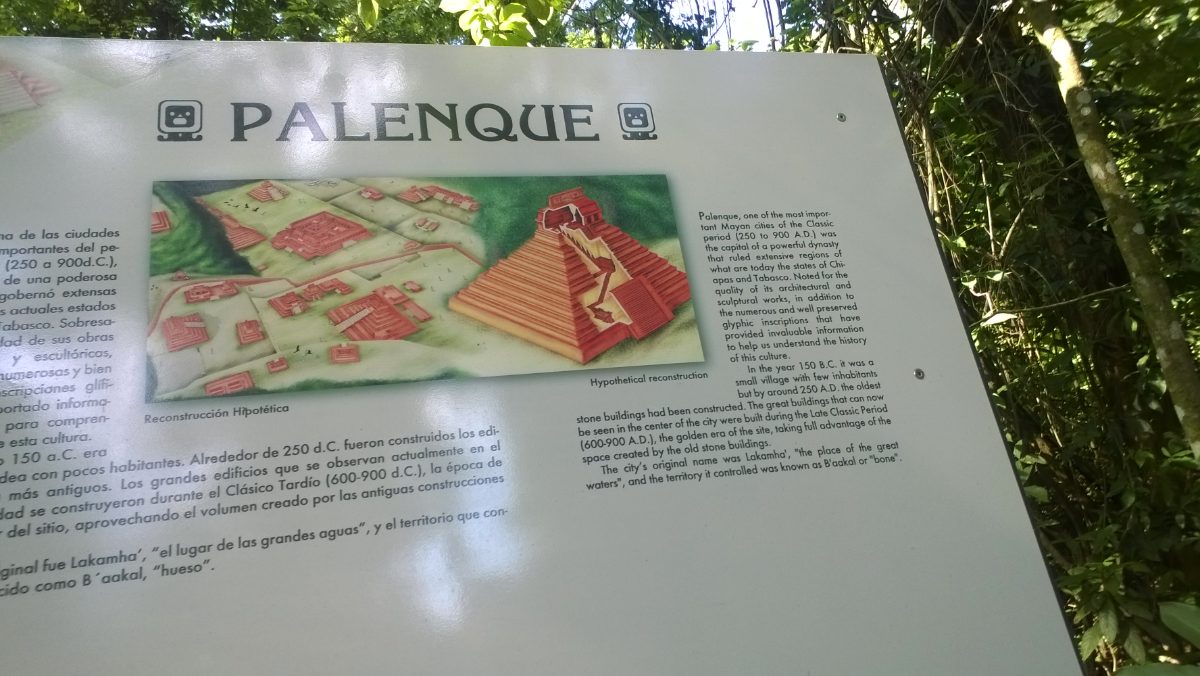
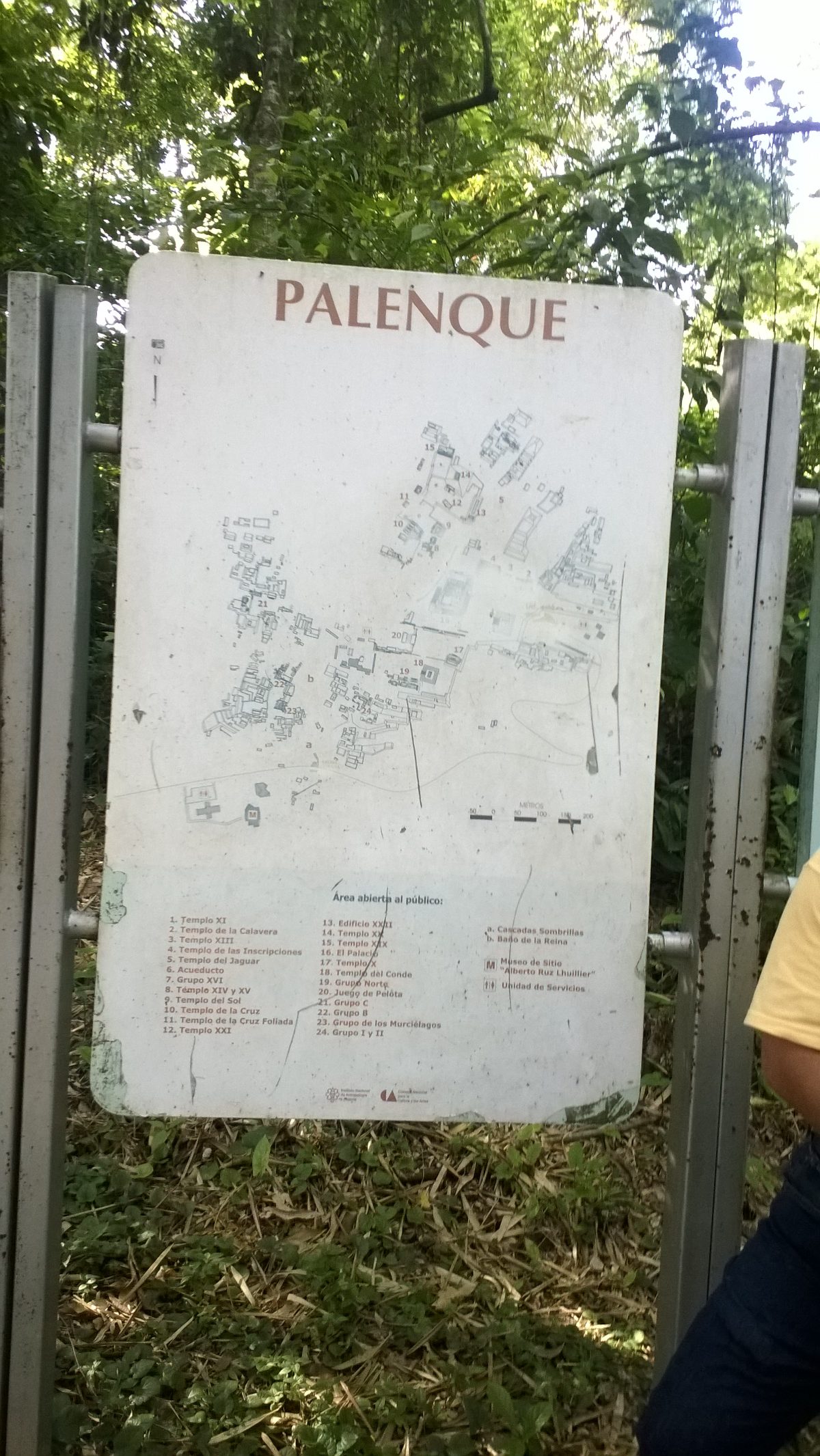
Modern excavation has revealed that visible temples and palaces represent only a fraction of ancient Palenque. Lidar surveys and ground survey work suggest the full urban area, including residential terraces spreading into the surrounding hills, was considerably larger than the restored ceremonial core that most visitors see today.
Nineteenth-century explorers including John Lloyd Stephens and artist Frederick Catherwood produced some of the earliest widely circulated illustrations of Palenque’s ruins, sparking considerable public and scholarly interest in the Maya world decades before systematic archaeological excavation began at the site.
The site’s abundant natural springs and streams also supported year-round agriculture in the immediately surrounding area, helping sustain a resident population even as the ceremonial core absorbed increasing amounts of labor and resources for monumental construction under successive rulers.
Rainfall in this part of Chiapas remains among the heaviest anywhere in Mexico, a climate that supported the abundant springs feeding Palenque’s water system in antiquity but also accelerated the jungle regrowth that so thoroughly concealed the site after its abandonment.
Pakal the Great and the Rise of Palenque
Palenque’s most celebrated ruler, K’inich Janaab Pakal, known popularly as Pakal the Great, ascended to the throne in 615 CE at just twelve years old and would go on to reign for 68 years, one of the longest documented rulerships anywhere in the ancient Maya world.
Pakal inherited a city that had recently suffered a serious military defeat at the hands of the rival kingdom of Calakmul, and his long reign is credited with restoring Palenque’s political stability, expanding its territorial influence, and launching the ambitious building program that produced most of the city’s surviving monumental architecture.
Hieroglyphic inscriptions commissioned under Pakal and his immediate successors recorded an extensive dynastic history reaching back centuries before his own birth, giving modern archaeologists one of the most complete ruler lists available for any Classic Maya city.
The military defeat inflicted by Calakmul early in Pakal’s reign appears to have come through Calakmul’s regional ally, a pattern typical of the shifting alliance networks that characterized political conflict among Classic Maya city-states, where direct territorial conquest was often less common than proxy warfare conducted through allied kingdoms.
Pakal’s mother, Sak Kuk, appears to have ruled Palenque in her own right or served as an influential regent during her son’s minority, one of relatively few well-documented instances of significant female political authority recorded in Classic Maya inscriptions.
Later in his reign, Pakal oversaw a significant military and diplomatic realignment that reduced Calakmul’s regional influence over the western Maya lowlands, restoring Palenque to a position of considerable prestige among its neighboring city-states by the final decades of his unusually long rule.
Palenque’s rivalry with Calakmul reflects a broader pattern of Classic Maya geopolitics often described by archaeologists as a contest between two competing superpowers, Calakmul and Tikal, each cultivating networks of smaller allied and vassal city-states, with Palenque falling for a time within Calakmul’s sphere before Pakal’s later diplomatic and military successes shifted the balance.
The Temple of Inscriptions and a King’s Tomb
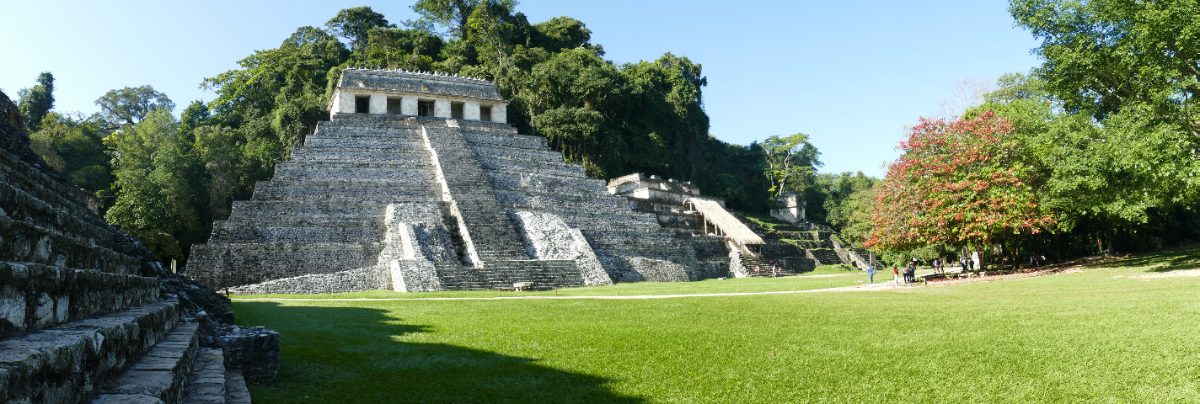
The Temple of Inscriptions, a nine-tiered pyramid rising above the city’s main plaza, takes its name from three long panels of hieroglyphic text lining its upper temple, together forming one of the longest surviving Maya inscriptions, recording Palenque’s dynastic history in extraordinary detail.
In 1952, Mexican archaeologist Alberto Ruz Lhuillier discovered a hidden stairway beneath the temple floor, sealed and forgotten for over twelve centuries, that descended deep into the pyramid’s core to a vaulted burial chamber containing Pakal’s own tomb, one of the most significant funerary discoveries ever made in the Maya region.
The tomb chamber itself, decorated with stucco figures representing the Nine Lords of the Night, underworld deities associated with the passage of time, remains one of the very few Maya royal burials found essentially intact and undisturbed by looters, preserving Pakal’s skeleton along with an extraordinary jade funerary mask and extensive jade ornamentation.
Ruz Lhuillier’s excavation of the hidden stairway took roughly four years of careful, painstaking work to clear rubble deliberately packed into the passage by ancient builders, a sign that Pakal’s tomb had been sealed with considerable ceremony and intention rather than simply forgotten or abandoned in haste.
A carved stone slab found at the entrance to the burial chamber bears a inscription referencing a psychoduct, a narrow stone tube running from the tomb up through the pyramid to the temple floor above, which some researchers interpret as a symbolic channel allowing the king’s spirit to communicate with the living world above.
The Nine Lords of the Night stucco figures lining Pakal’s burial chamber walls represent a well-documented Maya conception of time as cyclical and divided among nine rotating deities governing successive nights, a cosmological framework appearing across multiple Maya sites in various artistic forms.
The Sarcophagus Lid and the Myth of Ancient Astronauts
Pakal’s sarcophagus lid, a massive carved limestone slab covering his stone coffin, depicts the king at the moment of his death falling backward into the open jaws of the underworld, positioned beneath a cross-shaped World Tree that stretches upward toward a celestial bird representing the heavens above.
Maya iconographers read this scene as a carefully composed statement of cosmic rebirth: Pakal descending into Xibalba, the Maya underworld, in death, only to be reborn upward through the World Tree in the manner of the resurrected maize god, a core theme running throughout Classic Maya royal funerary art.
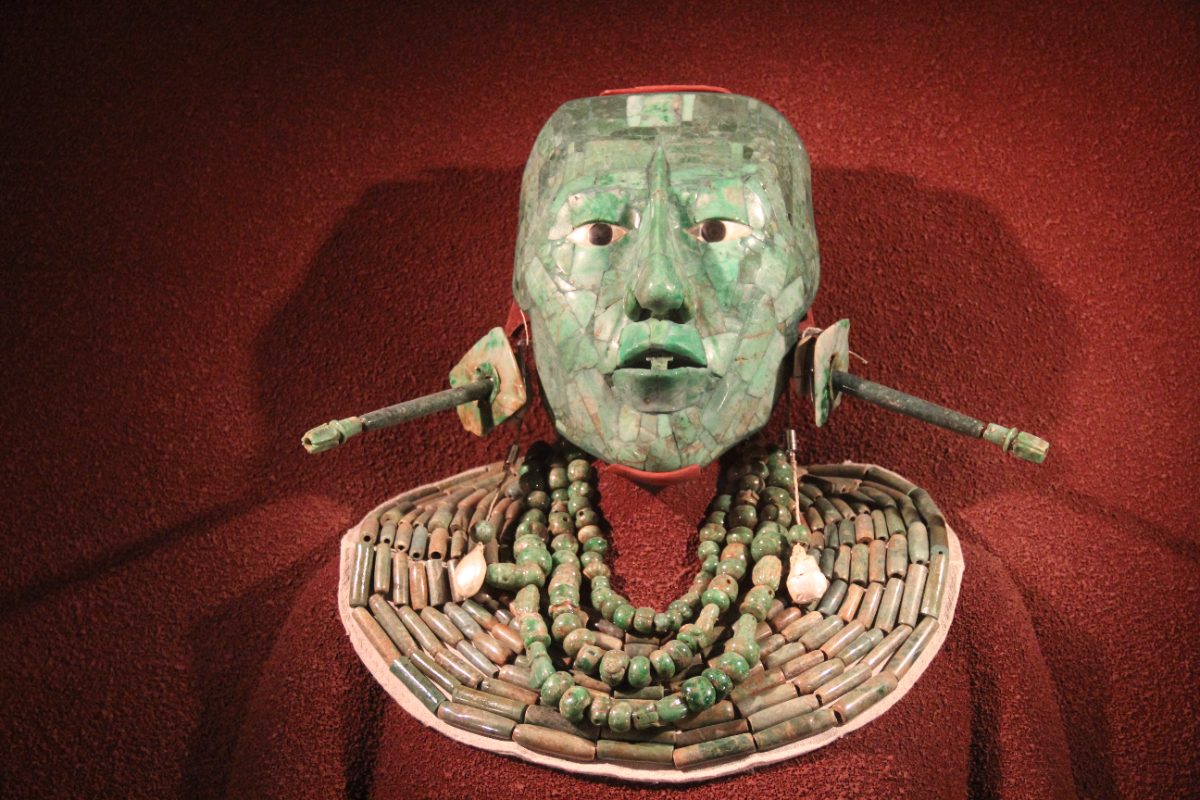
This same carving became, unfortunately, one of the most widely misrepresented images in all of archaeology after author Erich von Daniken argued in the 1960s that it depicted an ancient astronaut piloting a rocket ship, an interpretation flatly contradicted by decades of careful Maya epigraphic and iconographic scholarship, which reads the scene instead as entirely consistent with well-documented Maya beliefs about death, maize, and cosmic renewal.
Professional Maya scholars have repeatedly and thoroughly rejected the ancient astronaut interpretation, noting that every element of the carving, the World Tree, the celestial bird, the underworld jaws, corresponds directly to symbols already well attested elsewhere in Maya art centuries before any possible contact with outside visitors could be proposed.
The sarcophagus itself, carved from a single massive block of limestone, required enormous labor simply to move and position within the temple’s inner chamber before construction of the pyramid’s upper levels could proceed, evidence of careful advance planning integrating the tomb directly into the temple’s original architectural design.
Comparative study of sarcophagus and stelae imagery from other Classic Maya sites has confirmed that the World Tree and celestial bird motifs on Pakal’s lid follow well-established artistic conventions rather than representing anything unique or unprecedented in Maya religious iconography.
The Palace and Its Mysterious Tower
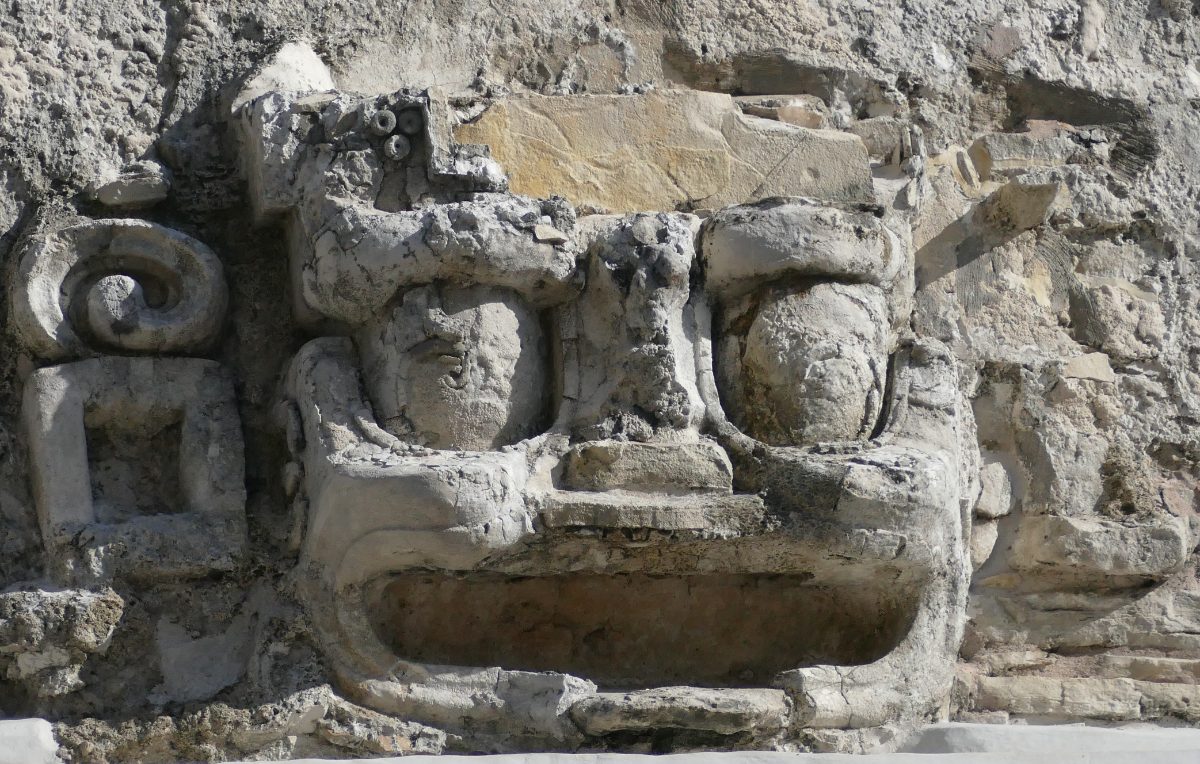
Palenque’s Palace complex, a sprawling arrangement of courtyards, galleries, and residential chambers built and rebuilt by successive rulers, served as the administrative and residential heart of the city, its walls once covered in painted stucco relief depicting rulers, captives, and mythological scenes.
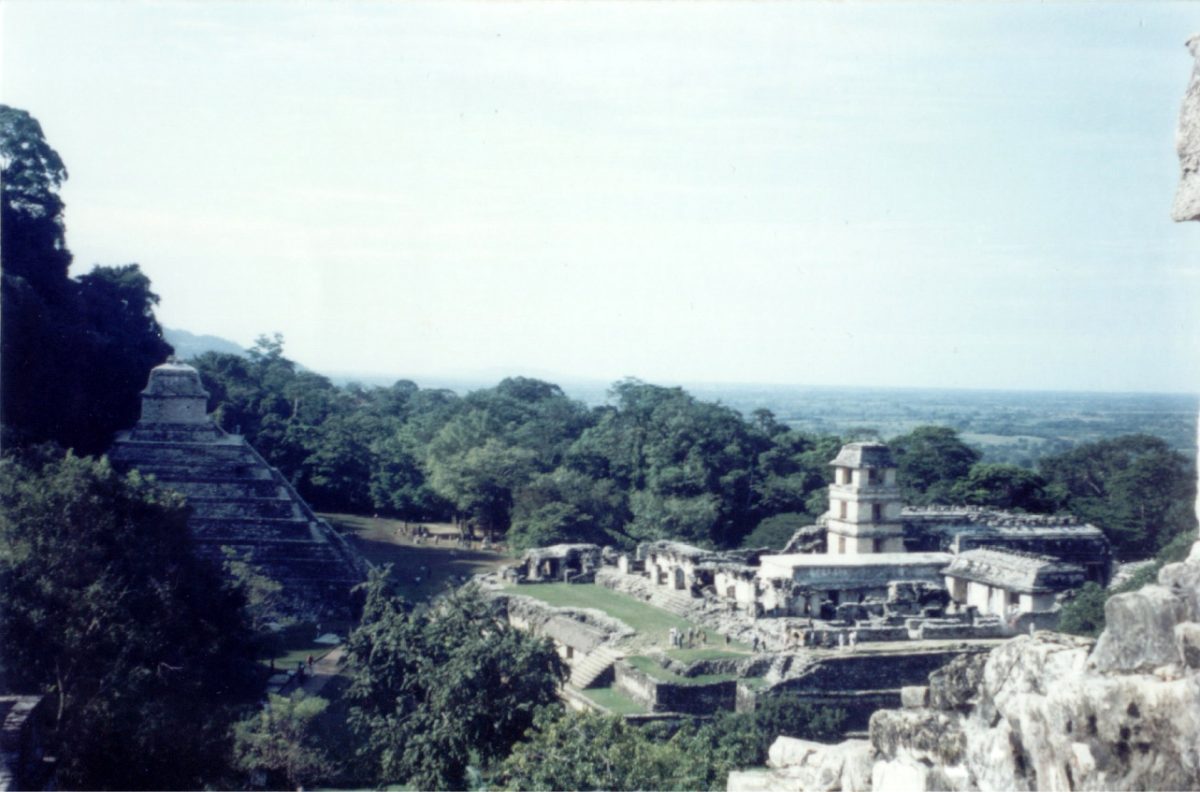
A distinctive four-story tower rises from the Palace’s northern courtyard, unique among surviving Classic Maya architecture, its function still debated among archaeologists. Proposed explanations range from an astronomical observation post tracking solar events to a watchtower monitoring approaches to the city, or simply an elite residential space offering commanding views over the surrounding jungle and plaza below.
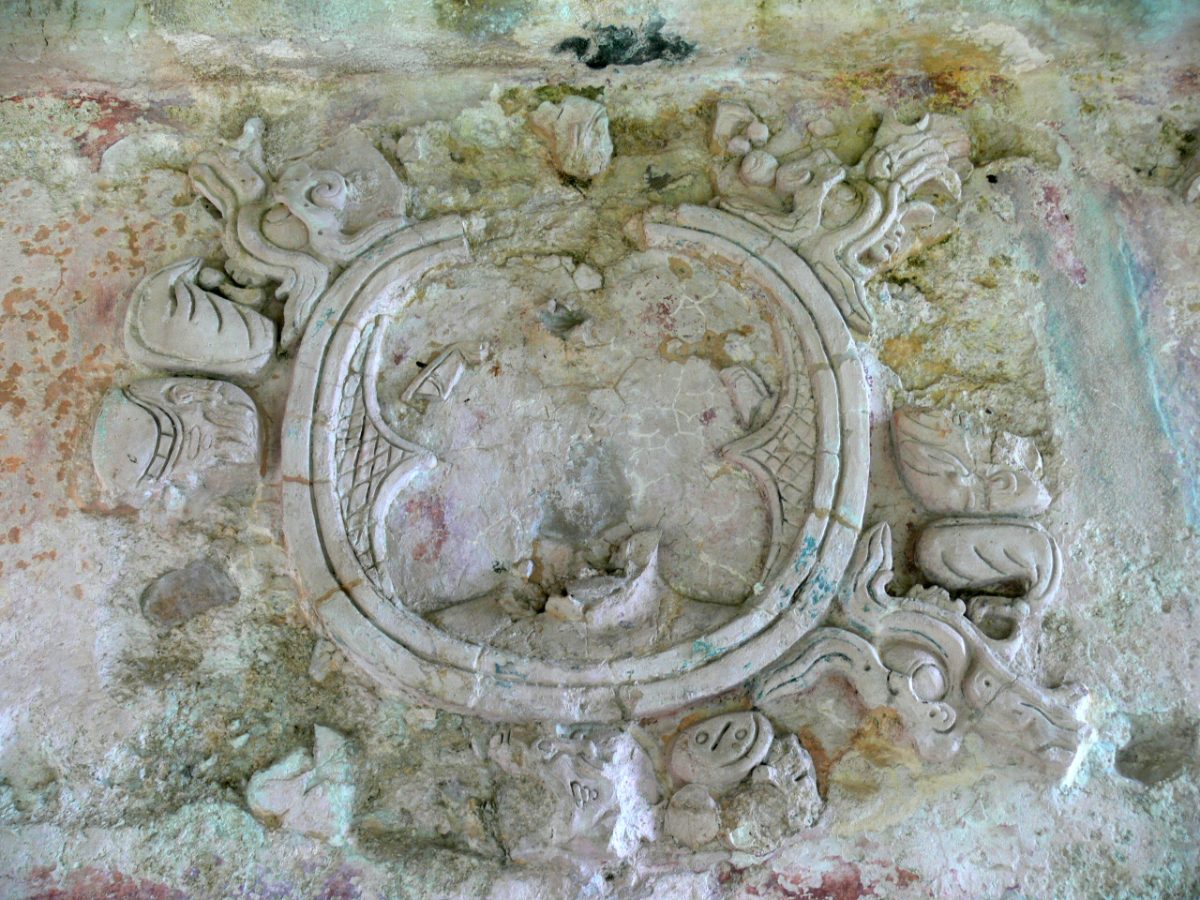
Elaborate stucco portraits and hieroglyphic panels throughout the Palace commemorate specific historical events, royal accessions, military victories, and ritual observances, giving researchers an unusually rich visual and textual record of Palenque’s political history compared to many contemporary Maya cities.
Excavated stucco fragments from the Palace’s demolished sections suggest its walls were once far more densely decorated than what survives today, with entire galleries of painted relief now reduced to scattered pieces recovered during systematic excavation and careful reconstruction efforts.
Structural analysis suggests the tower’s uppermost level, no longer standing, may have supported an additional wooden structure since lost to time, meaning the tower’s original height and appearance were likely somewhat different from the stone remains visitors observe at the site today.
Visitors climbing the Palace tower’s restored interior staircase today reach a viewing platform offering sightlines across the plaza toward the Temple of Inscriptions, a vantage point that would have given ancient occupants a commanding view over ceremonial processions and any approach to the city’s core.
The Cross Group: Temples of Myth and Dynasty
Pakal’s son and successor, K’inich Kan Bahlam II, commissioned the Cross Group, three matching temples, the Temple of the Cross, the Temple of the Foliated Cross, and the Temple of the Sun, each housing a carved tablet recounting mythological events tied to the birth of Palenque’s three patron deities, known to modern scholars simply as GI, GII, and GIII.
These tablets weave together cosmological myth with dynastic legitimacy, tracing the patron gods’ births back to a mythological date thousands of years before Kan Bahlam’s own reign, then connecting that deep mythic past directly to his own accession, a sophisticated propaganda strategy binding the ruling family’s authority to the very origins of the Palenque cosmos itself.
The Cross Group’s inscriptions rank among the most historically and mythologically detailed texts surviving from any Classic Maya city, and their systematic study played a significant role in advancing the broader decipherment of Maya hieroglyphic writing during the twentieth century.
Each of the three Cross Group temples was positioned with deliberate architectural symmetry around a shared courtyard, reinforcing the triadic structure of the patron deities they were built to honor through the very geometry of their placement relative to one another.
The mythological narrative recorded in the Cross Group tablets describes events dated to a period thousands of years before any plausible human occupation of the region, a deliberate mythological deep-time framing meant to root the ruling dynasty’s legitimacy in cosmic rather than merely historical origins.
Kan Bahlam’s decision to commission an entirely new temple group rather than simply expanding his father’s existing monuments suggests a ruler deliberately establishing his own distinct architectural and religious legacy while still carefully building on the political foundation Pakal had spent decades securing.
Water Engineering: The Aqueduct Beneath the City
Palenque’s engineers accomplished something unusual among Classic Maya cities: they built a stone vaulted aqueduct that channeled the Otulum River directly underground beneath the site’s main plaza, allowing monumental construction to proceed directly above a natural watercourse without disrupting its flow.
This subterranean water management system, extending roughly 100 meters beneath the plaza, ranks among the earliest known pressurized water conduits anywhere in the ancient Americas, demonstrating a level of hydraulic engineering knowledge not typically associated with Classic Maya lowland cities, which more commonly relied on surface reservoirs rather than underground channels.
Additional smaller aqueducts and drainage channels have been identified elsewhere across the site, indicating that managing the abundant local water supply, a defining feature that gave Palenque its ancient name of Lakamha, required sustained, sophisticated engineering investment throughout the city’s active centuries.
Engineers studying the Otulum aqueduct today have noted that its corbeled vault construction technique matches the same building method used in Palenque’s temple roofs, suggesting the same skilled masons responsible for the city’s monumental architecture also designed and built its underground water infrastructure.
Beyond the main Otulum channel, archaeologists have identified additional smaller stone drains integrated into residential terraces throughout the site, suggesting Palenque’s water management system extended well beyond the ceremonial core to serve ordinary households living across the wider urban area.
Similar underground water channeling has since been documented at other Maya sites, though rarely on the scale or with the architectural sophistication found at Palenque, reinforcing the city’s reputation among archaeologists for unusually advanced civil engineering relative to its Classic Maya contemporaries.
What Language Did the People of Palenque Speak?
Palenque’s inscriptions were written in Classic Maya script recording a language closely related to Western Ch’olan Maya, the linguistic branch ancestral to modern Ch’ol and Chontal Maya languages still spoken today by communities living not far from the ancient ruins.
Palenque’s abundant, carefully dated hieroglyphic texts made the city one of the single most important sources for twentieth-century scholars working to decipher Maya writing as a genuine phonetic and logographic script rather than a purely symbolic or calendrical system, a breakthrough achieved gradually through the combined work of researchers including Yuri Knorozov, Tatiana Proskouriakoff, Linda Schele, and David Stuart.
Modern Ch’ol Maya, spoken by roughly 250,000 people in Chiapas and Tabasco today, retains clear grammatical and lexical continuity with the Classic Ch’olan recorded in Palenque’s stone inscriptions, offering linguists a rare, relatively direct line of comparison between an ancient Maya city’s written language and a living descendant spoken in the same region thirteen centuries later.
Classic Ch’olan is now understood to have functioned as a broader prestige language across much of the Classic Maya lowlands, used in formal hieroglyphic inscriptions even at cities where the everyday spoken language of ordinary residents may have differed somewhat from the elite scribal standard.
Comparative linguistic reconstruction places the split between Western and Eastern Ch’olan Maya languages, the branch that includes Palenque’s Classic script alongside languages recorded at cities like Copan and Yaxchilan, at roughly two thousand years ago, considerably predating the Classic period inscriptions themselves.
Bilingual education programs in parts of Chiapas today incorporate Ch’ol language instruction alongside Spanish, part of a broader effort to preserve a linguistic tradition tracing directly back to the script once carved into Palenque’s temple walls by royal scribes working under Pakal and his successors.
Gods, Ancestors, and the Maya Underworld
Palenque’s religious life centered on a triad of patron gods, GI associated with the ocean and sacrifice, GII linked to lightning and closely resembling deities known elsewhere in the Maya world, and GIII connected to the sun and the underworld, together forming a divine framework legitimizing the ruling dynasty’s authority.
Ancestor veneration ran alongside this formal pantheon, with deceased rulers like Pakal treated as active participants in the city’s ongoing religious and political life, their tombs and portraits serving as focal points for rituals performed by living descendants seeking continued divine favor and dynastic legitimacy.
Maize god mythology permeates Palenque’s art, tying royal death and rebirth imagery, most famously on Pakal’s sarcophagus lid, directly to the agricultural cycle believed to govern the harvest that sustained the entire population, a recurring theme linking kingship, death, and agricultural renewal throughout the Classic Maya world.
Palenque’s temple names, assigned largely by later archaeologists rather than preserved from ancient usage, sometimes obscure the original Classic Maya terms used for these structures, a reminder that much of the site’s modern nomenclature reflects nineteenth and twentieth century scholarship rather than an unbroken indigenous naming tradition.
Ritual bloodletting, performed by rulers piercing their own tongues or genitals with stingray spines or obsidian blades, appears in Palenque’s art as a means of communicating directly with ancestors and deities, a practice documented across the wider Classic Maya world as a core element of royal religious obligation.
Temple censers found throughout the site, elaborately modeled with divine faces and worn as part of ongoing incense-burning rituals, indicate that religious practice at Palenque continued as an active, daily part of court life rather than being reserved solely for major calendrical ceremonies.
Comparable patron-deity triads appear at other Classic Maya cities under different specific names, suggesting Palenque’s particular configuration of GI, GII, and GIII represented a local variation on a broader shared Maya religious framework rather than an entirely unique theological system invented independently.
Decline, Rediscovery, and Deciphering Palenque’s Texts
Palenque’s political power declined sharply during the eighth century, and the last securely dated inscription at the site comes from 799 CE, placing its final years within the broader wave of political collapse that swept across the southern Maya lowlands during the ninth century, affecting dozens of major cities within a relatively compressed span of decades.
Spanish colonial explorers documented the overgrown ruins as early as the 1780s, though serious scientific excavation did not begin until the twentieth century, culminating in Alberto Ruz Lhuillier’s landmark 1952 discovery of Pakal’s tomb, a find that brought Palenque worldwide archaeological attention almost overnight.
Ongoing excavation and epigraphic study continue at Palenque today, steadily refining the dynastic chronology and expanding the known extent of the ancient city beyond its restored ceremonial core, work that has cemented Palenque’s reputation as one of the most historically well-documented capitals of the entire Classic Maya world.
Palenque today holds UNESCO World Heritage status, and its on-site museum displays many of the stucco panels, ceramic vessels, and jade ornaments recovered from Pakal’s tomb and surrounding structures, allowing visitors to see firsthand the artistry that made Palenque’s royal court so distinctive among Classic Maya cities.
Recent Lidar mapping conducted across the wider Palenque region has revealed previously unknown residential and agricultural terracing extending well beyond the excavated ceremonial center, suggesting the ancient urban footprint was considerably larger than what earlier ground-based surveys alone had been able to detect.
David Stuart’s continued epigraphic work at Palenque, building on decades of prior scholarship, has refined the reading of numerous inscriptions once only partially understood, illustrating how the decipherment of Maya writing has remained an active, evolving field of study rather than a task completed once and for all decades ago.
Nearby Places to Explore
Palenque connects to other major Maya and Mexican sites already covered on InKend.
- Copan: The Maya City of Kings and Scribes
- Maya Pyramids: The Secrets of El Castillo at Chichen Itza
- Monte Alban: The Zapotec Capital Carved Into a Mountain
closing
Pakal’s twelve-centuries-old tomb lay sealed beneath the Temple of Inscriptions for so long that by the time Alberto Ruz Lhuillier finally opened it, the very idea of Maya kings buried with such elaborate ceremony had faded almost entirely from popular memory.
Today, with the surrounding jungle cleared back from its plazas and palaces, Palenque stands as one of the clearest windows available into how a Classic Maya royal court actually lived, worshipped, governed, and, in Pakal’s case, prepared quite deliberately for what came after death.
You May Like
Mafra, the Palace a King Built From a Vow


2 thoughts on “Inside Palenque, Where a Maya King’s Tomb Stayed Hidden”