When most people hear the word pyramid, their mind jumps straight to Egypt and the golden desert. But on the other side of the world, with no contact whatsoever between the two cultures, the Maya were building their own pyramids deep in the rainforests of Central America and the Yucatán. And while they share that famous triangular silhouette, the Maya pyramids tell a completely different story. The most famous of them all, the one you have almost certainly seen on a postcard, is El Castillo at Chichén Itzá. In this piece I want to take you through what this remarkable building is, the genius hidden in its design, the eerie light show it performs twice a year, and what the wider world of Maya pyramids can teach us about one of history’s most fascinating civilizations.
Table of Contents
- Meet El Castillo
- A calendar carved in stone
- The serpent of light
- A pyramid inside a pyramid
- Tomb, temple, or something else?
- The wider world of Maya pyramids
- How they differ from Egypt
- What happened to the builders?
- Closing thoughts
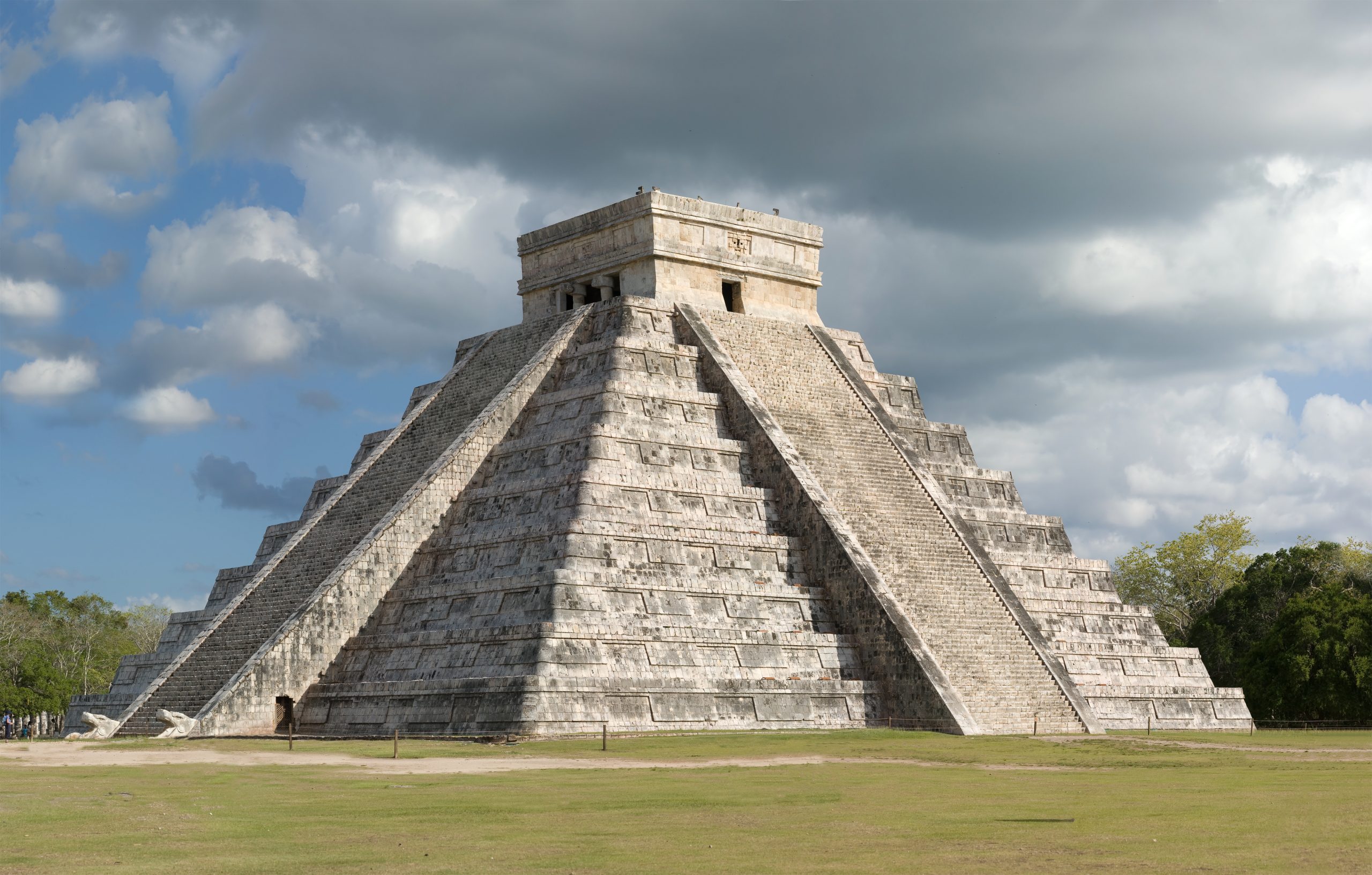
Meet El Castillo
El Castillo is the Spanish name, meaning simply “the castle,” given by colonists who had no idea what they were really looking at. The Maya did not build a castle. They built a temple to a god. Its proper name is the Temple of Kukulcán, after the feathered serpent deity who was central to their religion, the same god the Aztecs later knew as Quetzalcóatl. So whenever you hear El Castillo, just remember it is really a shrine wearing a misleading nickname.
The pyramid sits at the heart of Chichén Itzá, a sprawling ancient city in the northern Yucatán Peninsula of modern Mexico. It rises in nine great stepped terraces to a height of about 30 meters, with a flat platform on top crowned by a square temple. Four staircases climb its four faces, one on each side, each one steep and direct, leading up to that summit shrine. Compared to the Great Pyramid of Giza it is small, but what it lacks in raw size it more than makes up for in cleverness. This is a building designed by people who were obsessed with the sky, with time, and with numbers, and every part of it reflects that.
The setting matters as much as the building. Chichén Itzá was one of the largest and most powerful cities of the entire Maya world during its peak, roughly a thousand years ago. It was a bustling center of trade, religion, and politics, home to thousands of people, with grand plazas, a huge ball court where a sacred and sometimes deadly game was played, observatories for tracking the planets, and sacred wells where offerings were cast into the water. El Castillo stood at the symbolic center of all of it, the building everything else seemed to orbit around. To understand the pyramid you have to picture it not as a lonely ruin in an empty field, the way it can feel today, but as the beating heart of a crowded, noisy, living city.
A calendar carved in stone
Here is where El Castillo stops being just a pretty ruin and starts being something genuinely astonishing. The whole structure is essentially a giant calendar built out of limestone. The Maya were extraordinary astronomers and mathematicians, and they encoded their understanding of the year directly into the architecture.
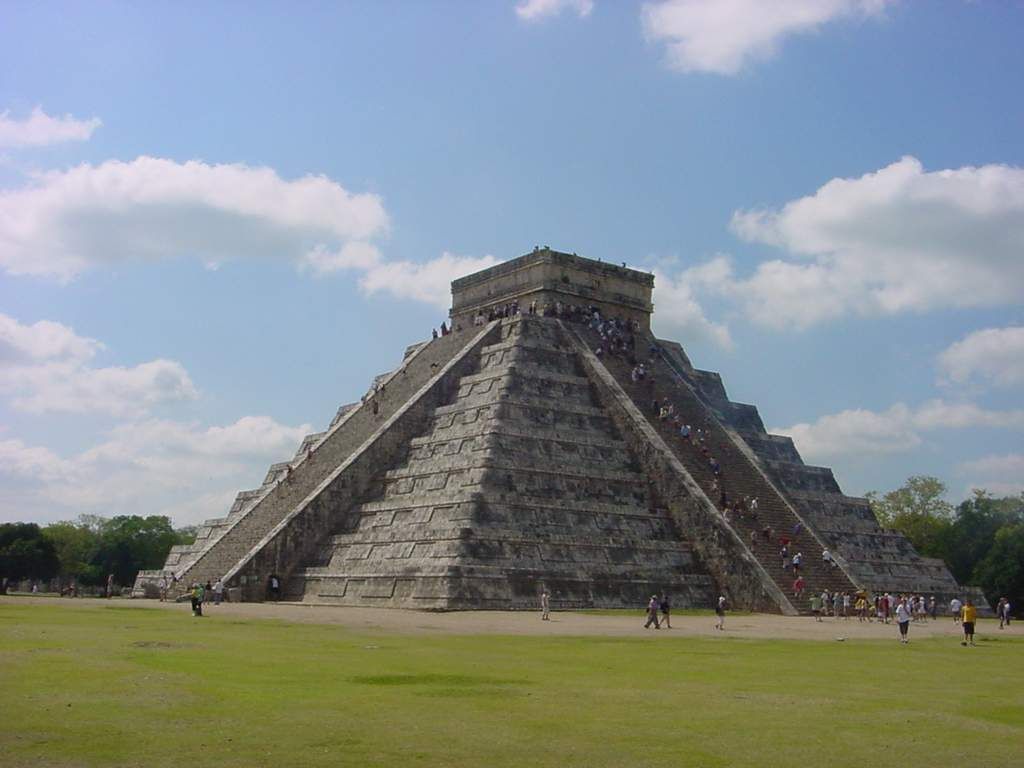
Count the steps and the meaning starts to appear. Each of the four staircases has 91 steps. Multiply 91 by four and you get 364, and then you add the single shared step of the platform at the very top, which brings the total to 365, the exact number of days in a year. That is not a coincidence. The Maya deliberately built the solar year into the climb of the pyramid.
The numbers keep going. Each face of the pyramid has nine terraces, but the central staircase splits each side into two, giving eighteen panels per face. Eighteen happens to be the number of months in the Maya solar calendar, which divided the year into eighteen periods of twenty days each. There are also 52 carved panels on the structure, and 52 was a deeply sacred number to the Maya, because it marked the length of their “calendar round,” the great cycle when their two main calendars, the sacred 260-day count and the 365-day solar count, lined back up with each other. So the pyramid is not just decorated with numbers. It is a working monument to the Maya obsession with cosmic timekeeping.
The serpent of light
If the calendar built into the steps does not impress you, this next part should. Twice a year, on the spring and autumn equinoxes, El Castillo performs one of the most famous illusions in the ancient world, and the Maya engineered it on purpose.
As the late afternoon sun sinks on the equinox, it strikes the stepped terraces of the northwest corner of the pyramid at just the right angle. The corners of those nine terraces cast a series of triangular shadows onto the side of the northern staircase. One after another, those triangles link up into a long, rippling line of light and shadow that runs all the way down the edge of the stairs. And at the very bottom of that staircase sits a carved stone serpent head. The effect is that a glowing snake of light appears to slither down the side of the pyramid and join its body to the carved head at the base. The feathered serpent god, Kukulcán himself, seems to descend from the temple to the earth.
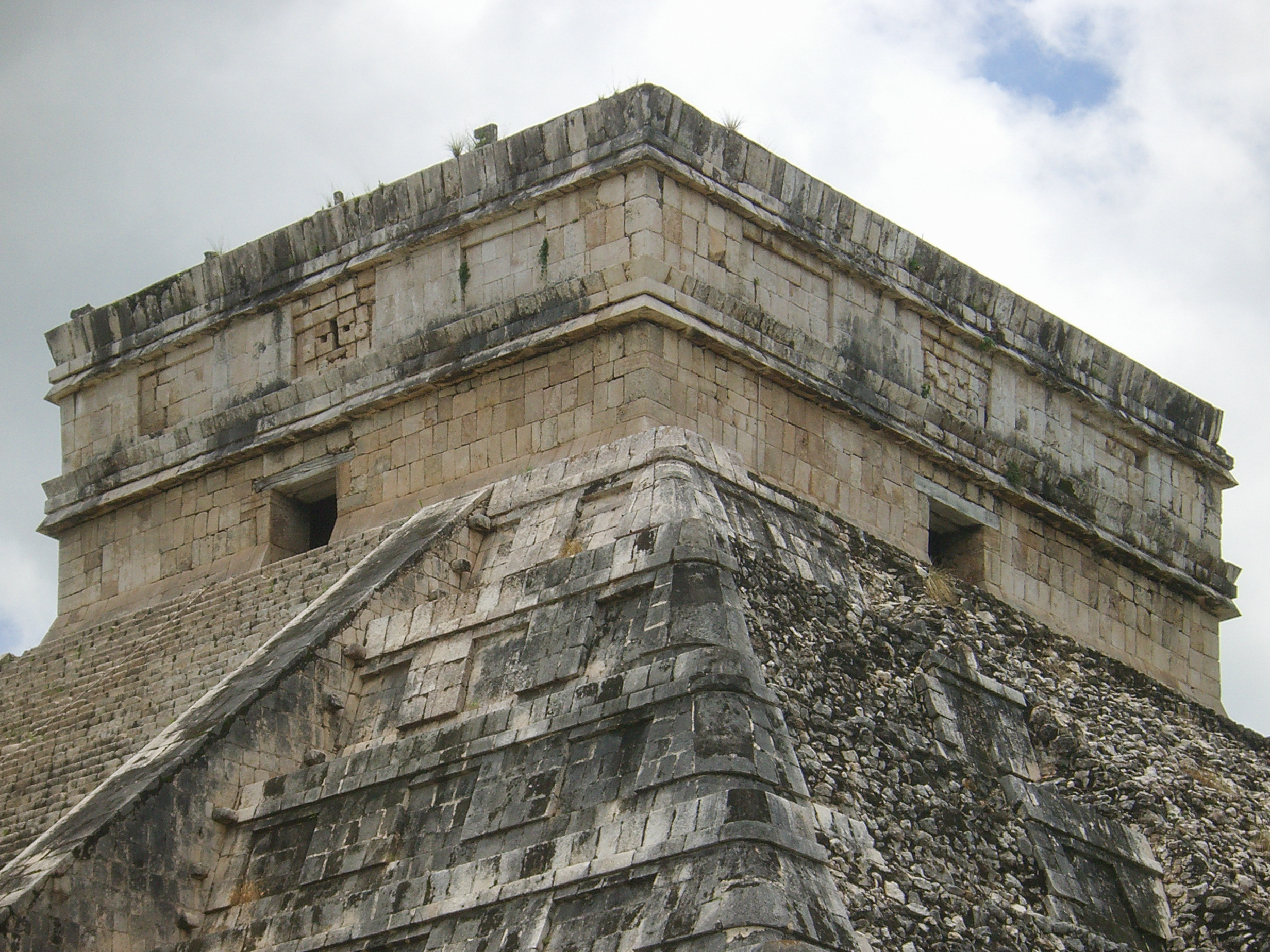
Think about what that means. Without telescopes, without computers, using only careful observation and generations of recorded sky-watching, the Maya aligned an entire multi-storey building so precisely that it would produce a specific shadow play on two specific days of the year, every year, reliably enough that we can still watch it happen today. Thousands of people gather at Chichén Itzá each equinox to see the serpent appear. It is part science, part theater, and part religion, all fused into stone. As a piece of ancient engineering it is hard to beat.
It is worth noting that the serpent effect, striking as it is, is not unique to the two exact equinox days. The shadow play actually builds up and fades over a span of several weeks on either side, growing sharper as the date approaches and softening afterward. This has led some researchers to debate just how deliberately the Maya engineered the precise equinox alignment versus how much we read into it today. But even the skeptics agree the broad effect is real and that the orientation of the pyramid is clearly tied to the movement of the sun across the year. Whether the Maya were aiming for the exact equinox or for the season around it, they were unmistakably building with the sky in mind.
A pyramid inside a pyramid
One of the strangest and most wonderful facts about El Castillo is that it is not a single pyramid at all. It is a pyramid wrapped around an older, smaller pyramid, like a Russian nesting doll made of stone. The Maya often did this. Rather than tear down a sacred structure, they would build a brand new, larger one directly over the top of it, swallowing the old temple inside the new one.
When archaeologists tunneled into El Castillo, they found this earlier pyramid hidden within. Inside its buried temple room they discovered remarkable treasures, including a stone throne carved in the shape of a jaguar, painted bright red and studded with jade for the spots and eyes, along with a reclining stone figure of the type known as a chacmool. These objects had sat sealed in darkness for centuries, perfectly preserved by the outer pyramid built around them.
And the surprises did not stop there. More recently, scientists using imaging techniques that can sense what lies beneath the surface found evidence of yet a third, even older structure hidden deep at the core, plus signs of a natural sinkhole, a cenote, lying directly underneath the whole pyramid. To the Maya, cenotes were sacred gateways to the underworld and to the gods, so the discovery that El Castillo may have been deliberately built on top of one fits perfectly with everything we know about their beliefs. The pyramid was not placed at random. It was planted on a spot the Maya already considered holy.
Tomb, temple, or something else?
This is a key difference worth dwelling on. The Egyptian pyramids were, at their heart, tombs, built to house a dead pharaoh and launch his soul into the afterlife. Maya pyramids worked differently. While some did contain royal burials deep inside, their main purpose was to be temples. They were raised platforms that lifted a shrine high into the air, closer to the heavens and the gods, with the steep staircase serving as a sacred path for priests and rulers to climb during ceremonies.
Standing on top of a pyramid like El Castillo, a priest would be visible to the crowds gathered in the plaza below, performing rituals against the backdrop of the open sky. The height was the point. It created a dramatic stage for public religion, a place where the human world and the divine world were meant to touch. So while an Egyptian pyramid was a sealed house for the dead, a Maya pyramid was more like a vertical cathedral, a living, working space for ceremony at the very top of the city.
The acoustics of El Castillo add yet another layer to the mystery. If you stand at the base of the pyramid and clap your hands sharply, the echo that bounces back off the steps does not sound like a normal echo at all. It returns as a strange chirping noise, and remarkably, it closely resembles the call of the quetzal, the brilliantly colored bird whose feathers were sacred to the Maya and associated with the feathered serpent god himself. Whether this was a deliberate design or a happy accident is still argued, but it is hard not to suspect that a people who built a shadow-serpent into their architecture might also have tuned their staircase to echo the cry of a holy bird. Sound, light, number, and stone all seem to work together here in a way that feels almost theatrical.
The wider world of Maya pyramids
Chichén Itzá and El Castillo are the famous face of Maya architecture, but they are only one chapter in a much bigger story. The Maya built pyramids across a vast region covering parts of what is now Mexico, Guatemala, Belize, and Honduras, and they did it over many centuries, with different cities developing their own distinct styles.
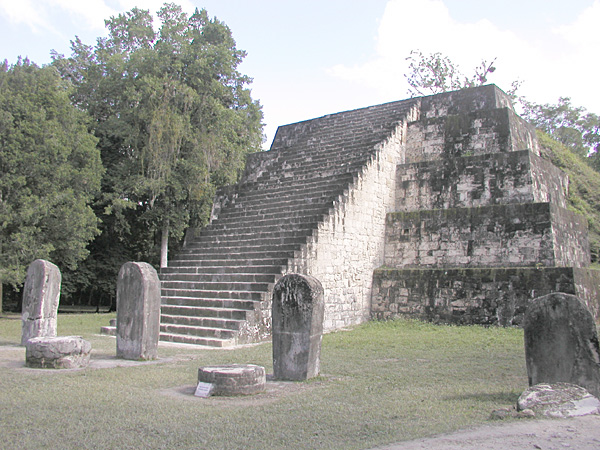
Deep in the jungles of Guatemala lies Tikal, perhaps the most breathtaking Maya city of all. Its temple pyramids are tall and steep, almost vertical, soaring up out of the rainforest canopy like stone rockets. Some of them top 60 meters, nearly twice the height of El Castillo, and standing among them you get a vivid sense of a great metropolis that once held tens of thousands of people. For generations these temples were swallowed by jungle, with only their peaks poking above the trees, which is exactly why one of them stood in for an alien temple in an early Star Wars film.
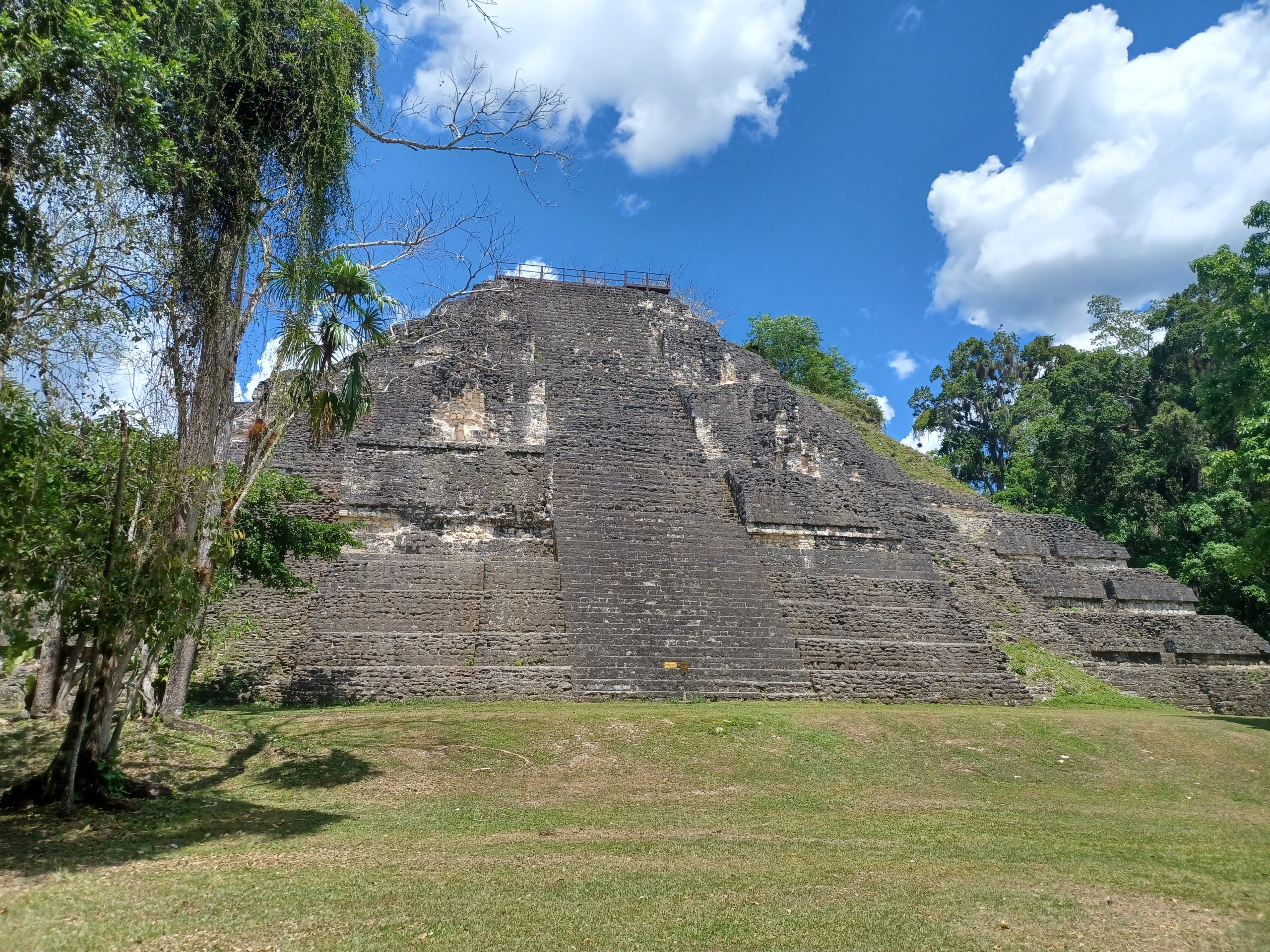
Other Maya sites each have their own character. At Palenque, the Temple of the Inscriptions famously turned out to contain the spectacular tomb of a great king deep inside, complete with a carved sarcophagus lid that has become one of the most studied images in all of Maya art. At Uxmal there is a pyramid with unusual rounded corners and a legend that a magician built it overnight. Across the whole Maya world, these structures served as the spiritual and political anchors of their cities, the places where rulers were crowned, gods were honored, and the deep cycles of time were marked.
One thing that ties all these sites together is the Maya practice of building in layers over time. Just as El Castillo hides older pyramids inside it, many Maya temples grew through repeated phases of construction, each generation enlarging and renewing the sacred structure their ancestors had raised. A single great pyramid might contain four or five earlier versions buried within, a literal stack of history. For archaeologists this is a gift, because tunneling into one pyramid can reveal centuries of changing styles, beliefs, and rulers, all preserved one inside another like the rings of a tree.
How they differ from Egypt
It is worth being clear about how the Maya and Egyptian pyramids relate, because people often assume some hidden connection between them. There is none. The two cultures were separated by an entire ocean and thousands of years, and they never met. The fact that both built pyramids is not evidence of a shared secret. It is evidence of something simpler and more interesting. A pyramid is just the most natural large structure to build when you stack heavy material upward. A wide, stable base narrowing toward the top is the obvious way to pile stone high without it toppling. Different peoples, facing the same engineering reality, arrived at the same basic shape on their own.
Beyond the silhouette, the differences are bigger than the similarities. Egyptian pyramids were smooth-sided sealed tombs, designed to be closed forever. Maya pyramids were stepped, with staircases meant to be climbed, and temples on top meant to be used. One was built to be shut and hidden, the other to be ascended and seen. Comparing them side by side is one of the best ways to appreciate how human creativity solves the same problem in wildly different ways depending on its beliefs.
What happened to the builders?
One of the lingering puzzles of the Maya is what became of them. There is a popular myth that the Maya simply vanished, mysteriously disappearing into thin air. That is not true. Millions of Maya people are alive today, living across the same region, speaking Maya languages and keeping many of their traditions. The culture did not disappear.
What did happen is that, centuries before Europeans arrived, many of the great southern cities like Tikal were abandoned and reclaimed by the jungle. Scholars think this so-called collapse was driven by a tangle of pressures, including prolonged droughts, overpopulation straining the land, warfare between rival cities, and political breakdown. The grand pyramid-building era wound down, the big cities emptied, and the centers of power shifted. By the time Spanish colonizers showed up, places like Chichén Itzá were already long past their prime. So the pyramids outlasted the civilization that made them, standing silent in the forest as monuments to a world that had moved on.
It is also a useful corrective to remember how recently we have come to understand all this. For centuries, outsiders looked at these jungle-covered mounds and could not believe the ancestors of local people had built them, inventing all sorts of far-fetched theories instead. Only patient archaeology, and crucially the painstaking decipherment of Maya writing over the last several decades, finally let the Maya speak for themselves. Their carved inscriptions turned out to be detailed historical records, naming kings, dating battles, and marking ceremonies, which is how we now know so much about who built these pyramids and why. The stones, it turned out, were never silent. We just had to learn to read them.
Closing thoughts
El Castillo and its cousins across the Maya world deserve to be just as famous as the pyramids of Egypt, and for different reasons. Where the Egyptian pyramids astonish us with sheer scale and precision, the Maya pyramids astonish us with their cleverness, the way they fold an entire calendar into their steps and stage a serpent of shadow on cue twice a year. They are buildings that think, in a sense, monuments built by a people who watched the sky more closely than almost anyone before them.
When you stand in the plaza at Chichén Itzá and look up at that great stepped tower, you are looking at the work of brilliant astronomers, mathematicians, and engineers who never spoke to anyone in Egypt and never needed to. They reached for the heavens in their own way, on their own terms, and left behind a stone calendar that still keeps perfect time after a thousand years. That, to me, is every bit as wonderful as anything in the deserts of Giza.
To keep exploring, browse more on topics like pyramids, the Maya civilization, Chichén Itzá, Mesoamerica, El Castillo, and Kukulcán.
You May Like
The Bardo, a Palace of the Beys Filled With Roman Mosaics


6 thoughts on “Maya Pyramids: The Secrets of El Castillo at Chichén Itzá”