Rain forest heat presses down on the Gulf lowlands of northern Veracruz, and out of that green haze rises a stepped pyramid unlike any other in Mexico. Its face is not smooth stone but hundreds of small square recesses, stacked in tidy rows, catching shadow after shadow as the sun crosses the sky. This is El Tajín, a city whose name comes from a Totonac word associated with a Gulf Coast god of thunder and lightning, and whose builders left behind one of the most architecturally distinctive capitals of ancient Mesoamerica.
At its height between roughly 600 and 1200 CE, El Tajín controlled trade routes linking the Gulf coast to the highlands of central Mexico, and its influence can be traced through ballcourt art, ceramics, and architectural styles found hundreds of kilometers away. Unlike the sprawling grid of Teotihuacan or the towering temples of the Maya lowlands, El Tajín built low, wide, and intricate, favoring covered galleries, flying cornices, and a signature niche motif that appears again and again across its plazas.
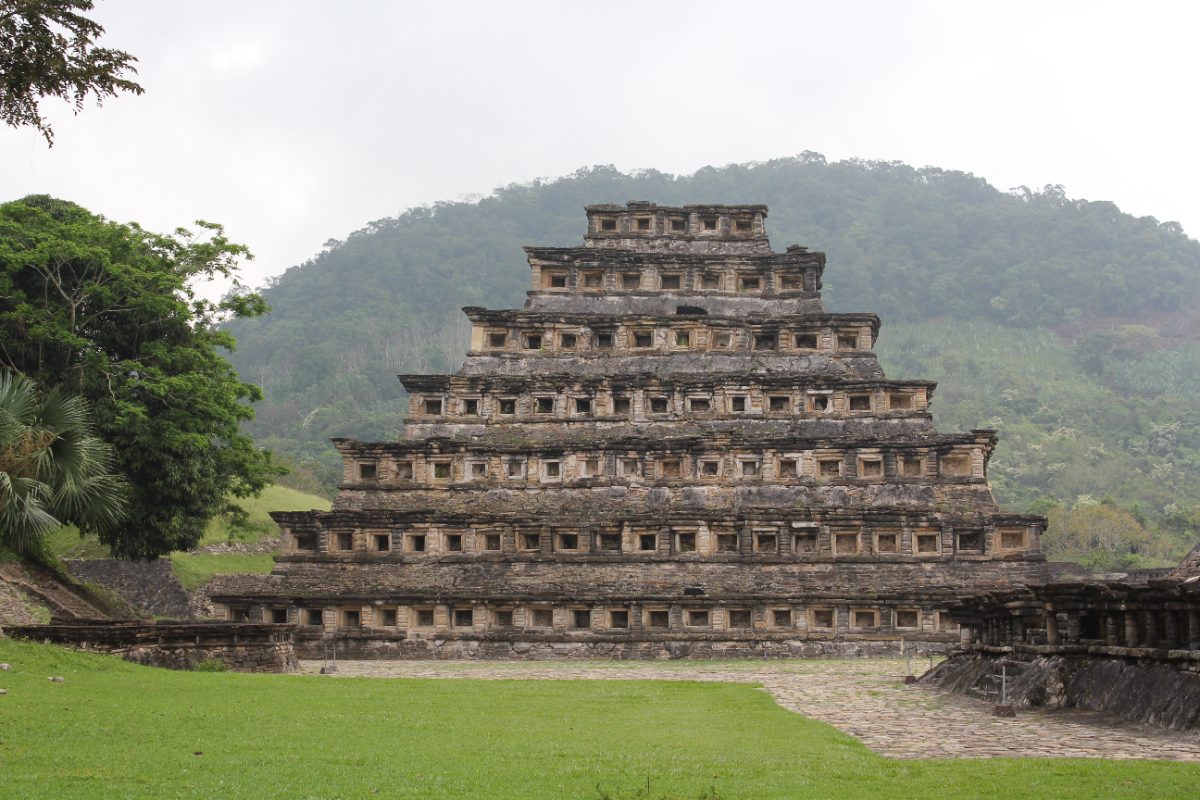
Table of Contents
- Arriving at the City of Thunder
- Builders in Question: Totonac, Huastec, or Someone Earlier?
- The Pyramid of the Niches
- Seventeen Ballcourts and a City Built for Play
- What Language Echoed Through El Tajín?
- The Voladores: A Ritual That Never Stopped
- Sacrifice, Serpents, and the Gods of the Ballcourt Panels
- Rise and Fall of a Gulf Coast Power
- Buried, Forgotten, and Found Again
- Visiting El Tajín Today
- Nearby Places to Explore
- Closing Thoughts
Arriving at the City of Thunder
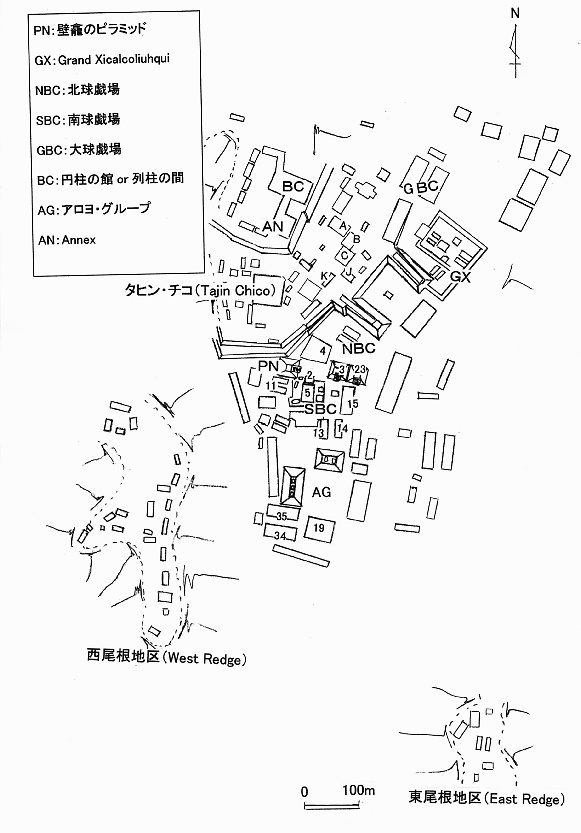
The core of El Tajín sits in a natural amphitheater formed by low hills, a placement that historians believe was chosen deliberately to shield the city from the strongest Gulf winds while still allowing views toward the coastal plain. Visitors today enter through a modern path that opens onto Tajín Chico, then descends toward the Plaza of the Niches, where the famous pyramid dominates the skyline. Early morning is the best time to arrive, when mist still clings to the surrounding jungle and the carved stonework glows amber in the low sun.
The site covers over a thousand structures across some six square kilometers, though only a fraction has been excavated and opened to the public. Archaeologists divide it into two main zones: the ceremonial core with its pyramids and ballcourts, and Tajín Chico to the north, a cluster of administrative and elite residential buildings decorated with stepped-fret designs and columned porticoes. Walking between the two areas, one gets a sense of a city planned for both spectacle and daily governance.
What strikes most visitors first is the sheer density of ballcourts. No other Mesoamerican city has yielded as many in so small an area, a detail that hints at how central the ritual ballgame was to whatever political and religious order held El Tajín together for six centuries.
The surrounding Papantla region remains one of Mexico’s most important vanilla-growing areas, and the humid microclimate that suits vanilla orchids so well is the same climate that has both preserved and slowly eroded El Tajín’s stonework over the centuries, a reminder that the city’s fortunes and its landscape have always been closely linked.
Builders in Question: Totonac, Huastec, or Someone Earlier?
For over a century, scholars debated who actually built El Tajín. Colonial-era Totonac communities living near the ruins claimed descent from the city’s founders, and the name itself comes from their language, but archaeological evidence complicates a simple Totonac-only narrative. Some researchers have proposed that Huastec-speaking groups, whose territory lay just to the north along the Pánuco basin, may have shared in the city’s early development, while others argue that El Tajín’s formative population predates both groups as they are known historically.
The confusion stems partly from timing. The Totonac people are well documented in this region by the time of Spanish contact in the sixteenth century, and they maintained strong oral traditions connecting themselves to El Tajín’s ruins. But the city’s major building phases occurred many centuries earlier, during what archaeologists call the Classic and Epiclassic periods, and no contemporary written records survive to confirm ethnic identity with certainty. Ceramic styles, burial practices, and architectural parallels suggest a population that shared cultural traits with both Huastec and Totonac speaking groups, along with elements distinct enough that some scholars simply refer to the builders as bearers of the Classic Veracruz culture, sidestepping the ethnic label entirely.
This uncertainty is not a failure of research so much as an honest reflection of how difficult it is to match archaeological remains to specific linguistic groups across a thousand years and the disruptions of conquest, epidemic, and migration that followed. What is clear is that El Tajín absorbed influences from the Gulf coast, the central highlands, and possibly the Maya region, producing an artistic style recognizable as its own.
Complicating matters further, some linguists have proposed that a now-extinct language once spoken along this stretch of the Gulf coast, unrelated to either Totonac or Huastec, may lie behind certain place names and loanwords recorded in early colonial documents. If true, it would mean El Tajín’s founding population spoke something that vanished entirely before written records could capture it, leaving only faint traces absorbed into the languages of later arrivals.
The Pyramid of the Niches
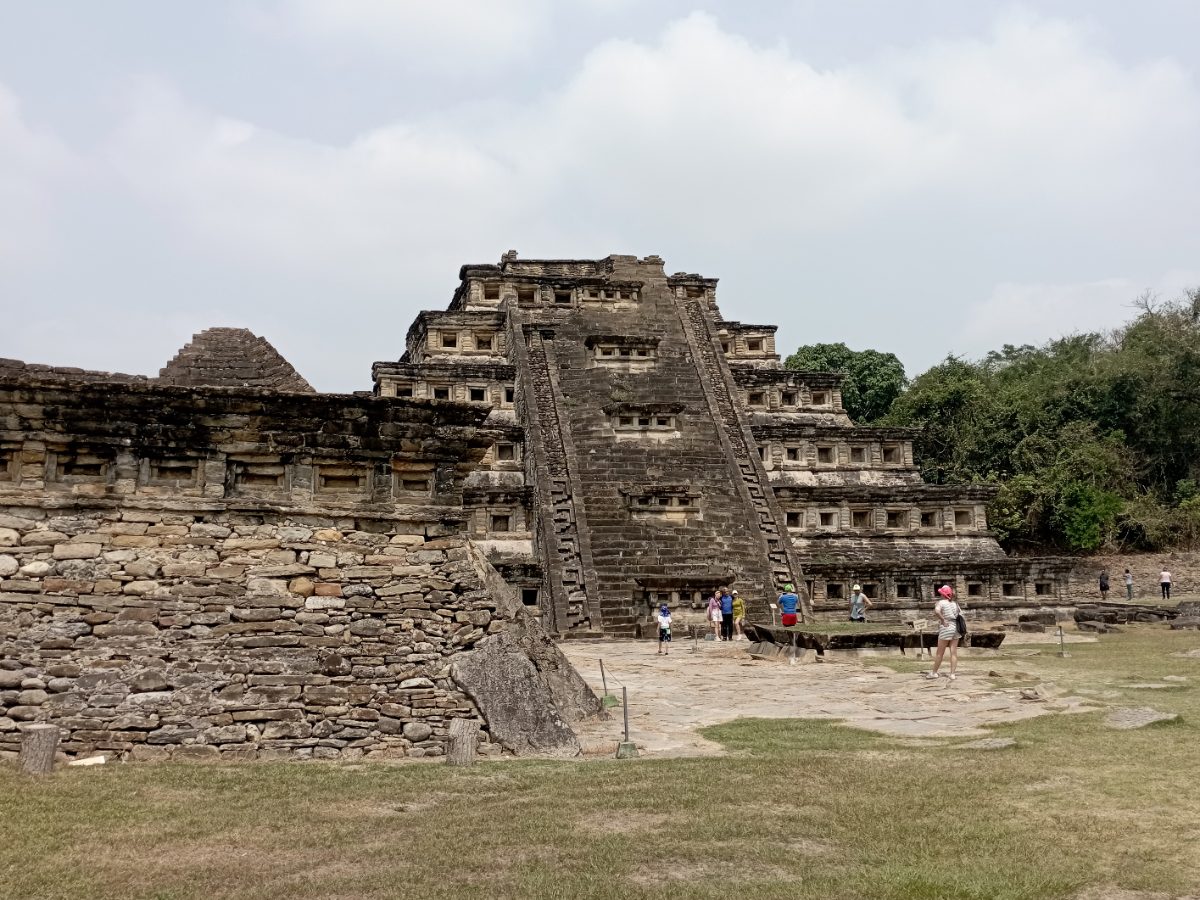
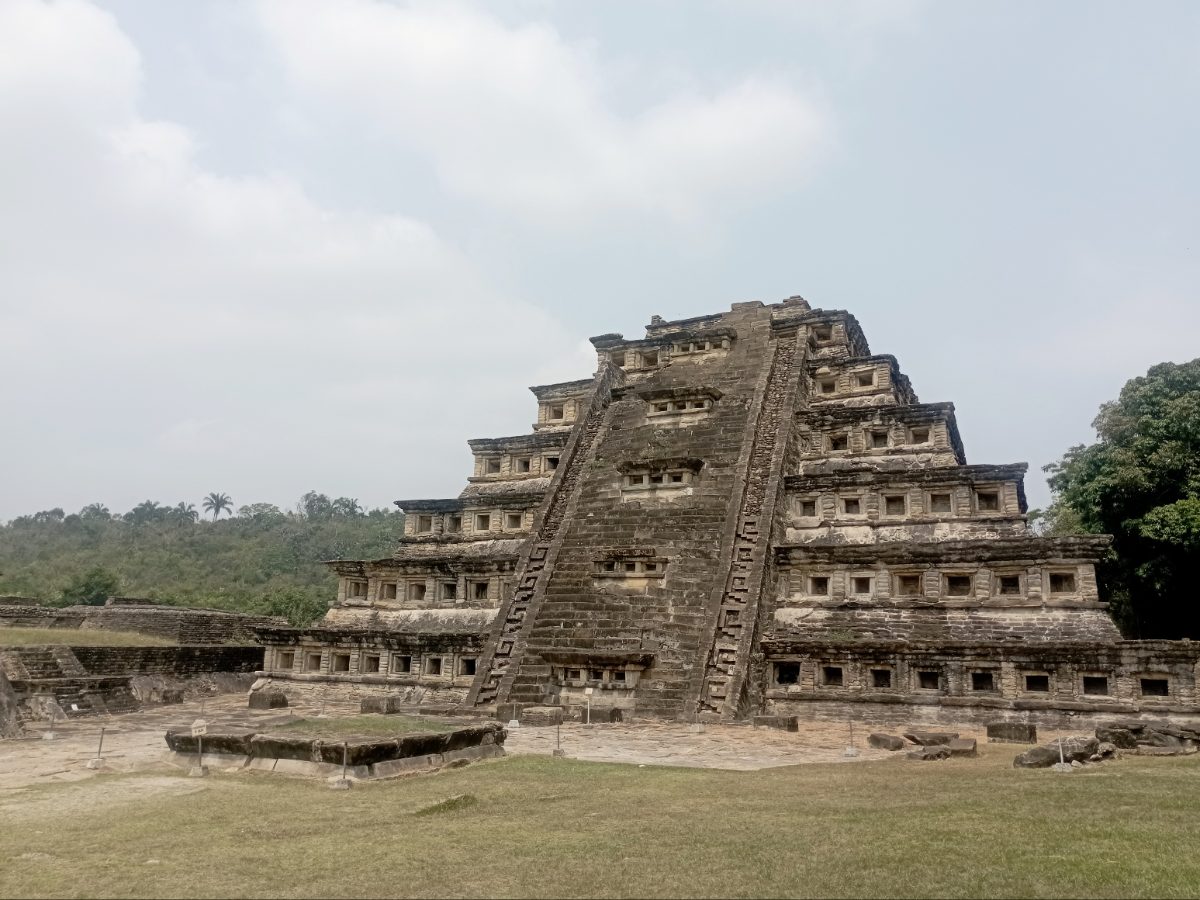
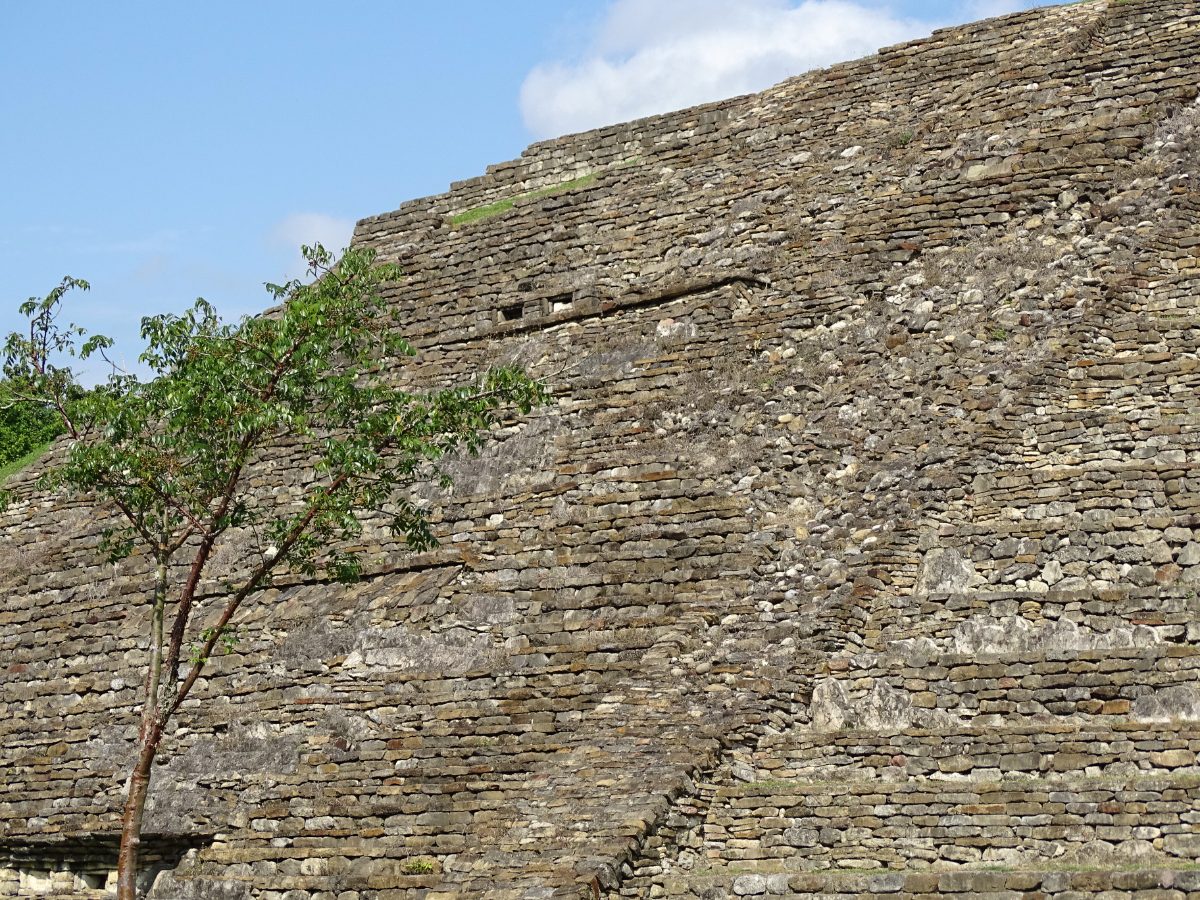
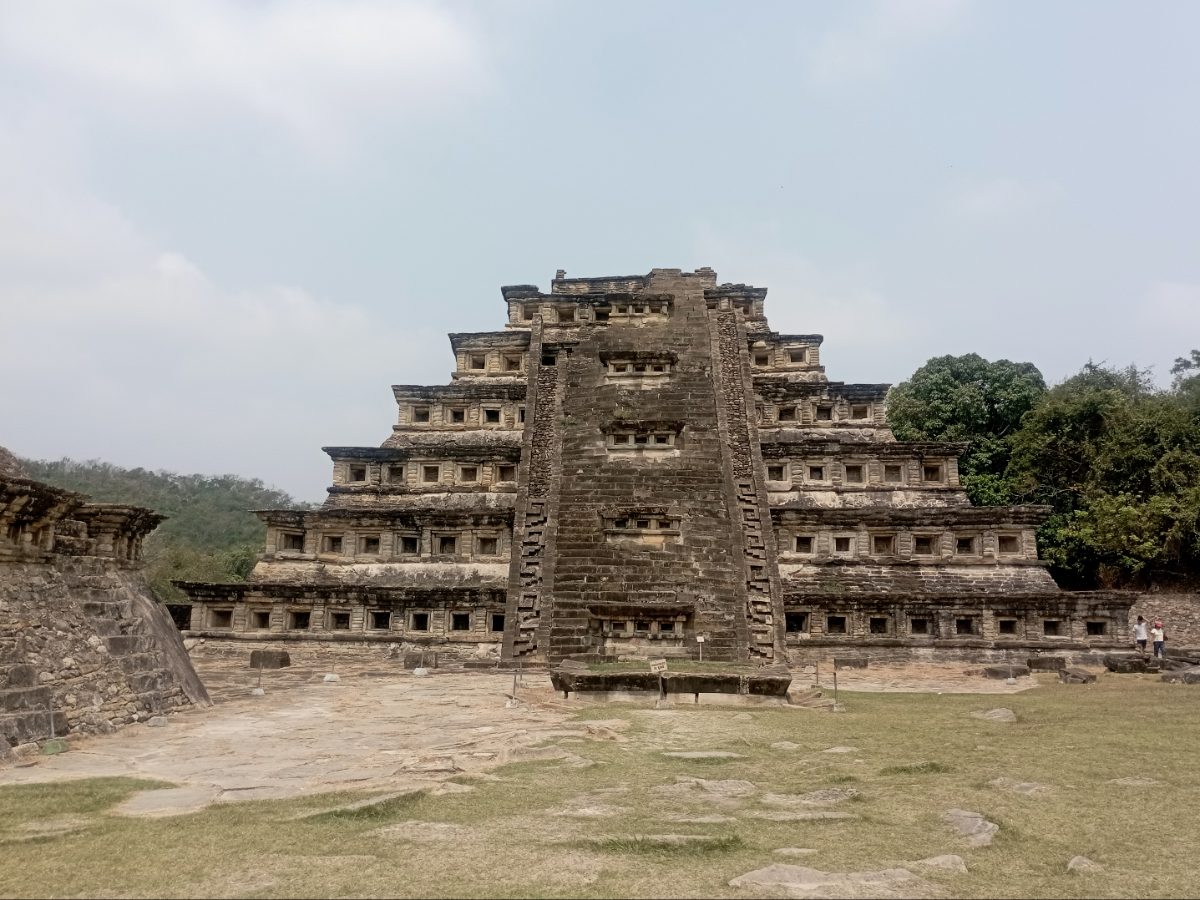
The Pyramid of the Niches is El Tajín’s signature monument and one of the most photographed ruins in Mexico. Rising in six stepped tiers to a height of about twenty meters, its stone facing is punctuated by 365 rectangular niches, a number that closely matches the days of the solar year and has led most researchers to interpret the structure as a calendar in stone, marking time as much as it marked sacred space.
Each niche was originally painted, likely in the dark red that appears in traces on other Tajín structures, creating a shifting pattern of light and shadow deep enough to make the entire facade seem to breathe as the sun moved. A central staircase, flanked by sculpted panels, climbs to a now-vanished temple that once crowned the summit. Fragments of stucco and paint recovered during excavation suggest the completed pyramid was considerably more vivid than the bare gray stone visitors see today.
Construction techniques here differ from central Mexican pyramids in a subtle but important way. Rather than a solid rubble core faced with stone, sections of the pyramid used a lighter fill technique that reduced the weight bearing on the foundation, a practical adaptation to the softer, wetter soils of the coastal lowlands. That engineering choice, easy to overlook, speaks to a sophisticated local building tradition adapted to a very different environment than the volcanic highlands where many famous Mexican pyramids stand.
Some researchers have also proposed a secondary, more practical explanation for the niches beyond calendrical symbolism, suggesting they may have once held small offerings, torches, or painted idols during nighttime ceremonies, turning the entire pyramid facade into a coordinated display of flickering light visible across the plaza during major rituals.
Seventeen Ballcourts and a City Built for Play
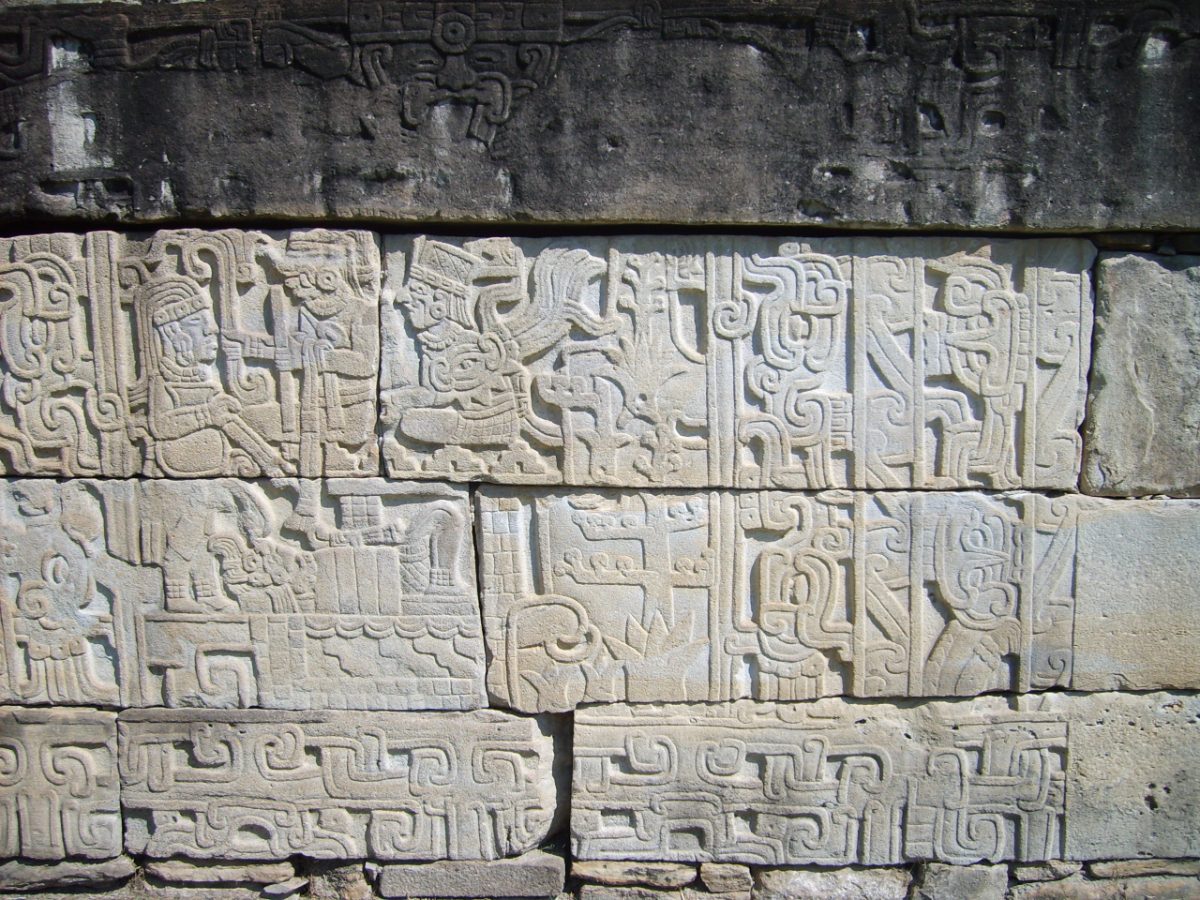
El Tajín contains at least seventeen identified ballcourts, more than any other known site in ancient Mesoamerica, a concentration that tells us the ritual ballgame here was not a single civic event but an ongoing, perhaps competitive, part of political and religious life. The most studied of these, the South Ballcourt, is famous for six carved stone panels lining its walls, each depicting scenes tied to the game’s outcome and its cosmological meaning.
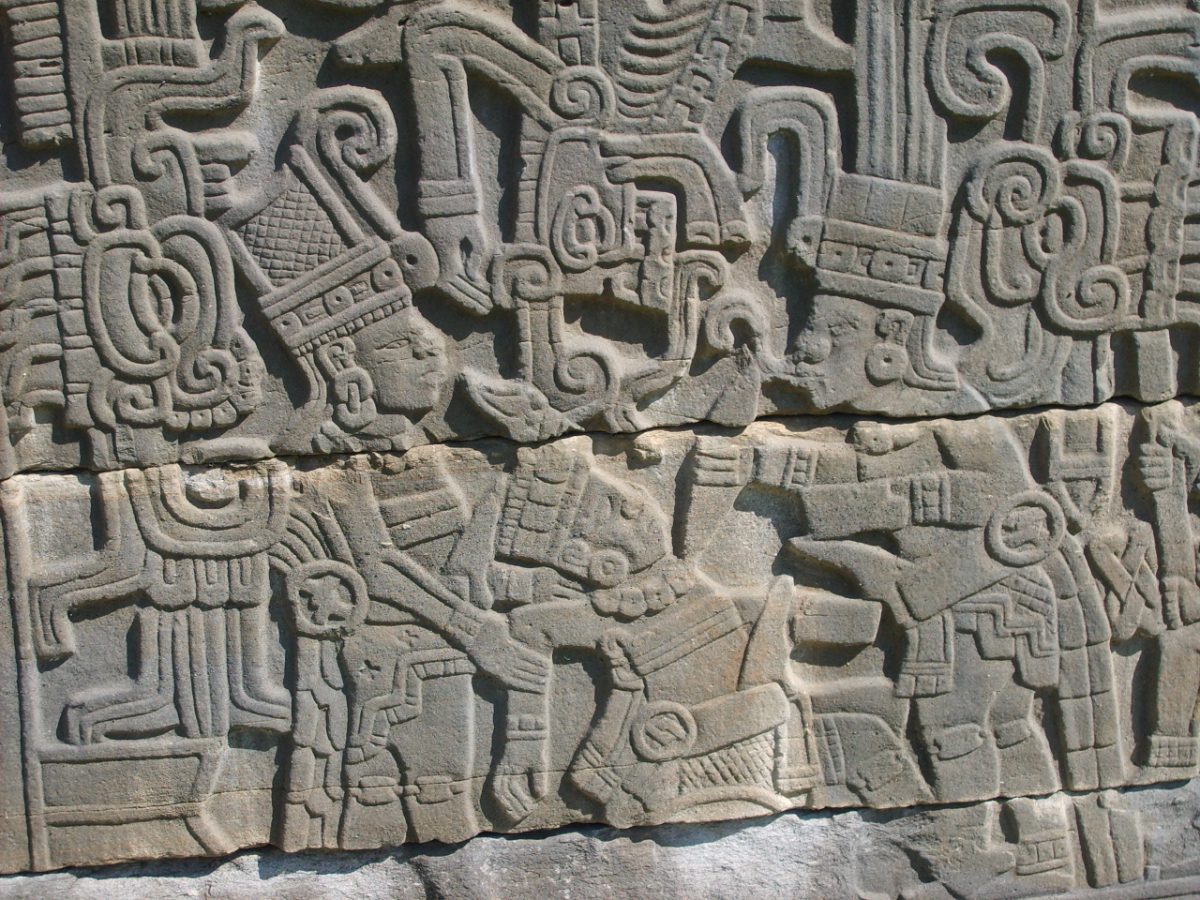
The panels show ballplayers in elaborate costume, complete with the thick protective yokes, palmas, and hachas that archaeologists have also found as actual stone objects buried as offerings across the region. Several panels depict a decapitation scene, a ballplayer’s death linked to fertility and the underworld, echoing a theme found in ballgame iconography from the Maya lowlands to central Mexico, but rendered here with a distinctly Gulf Coast style of scrollwork and interlacing lines.
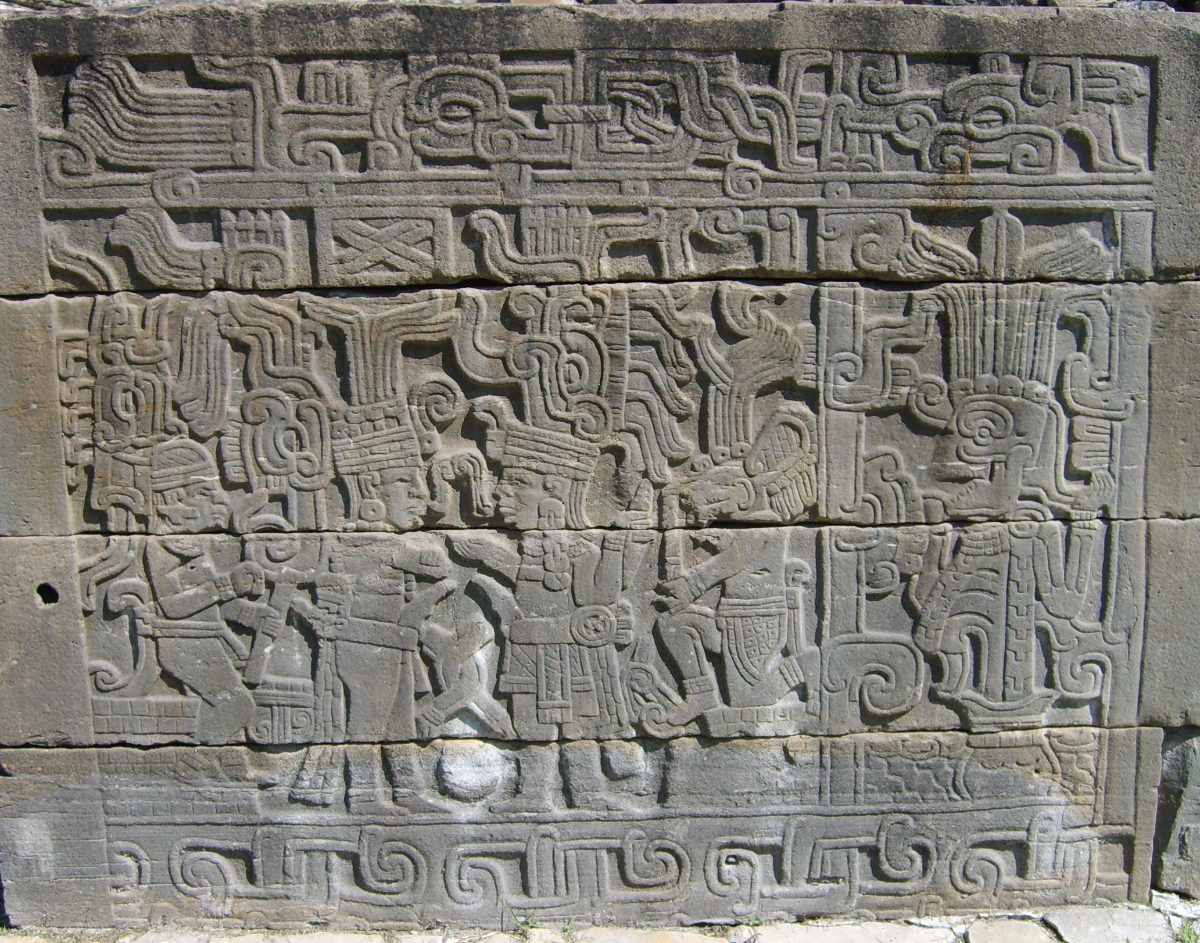
Beyond the South Ballcourt, smaller courts are scattered throughout the site, some barely large enough for a handful of spectators, others positioned prominently near elite residences. This range suggests the game was played at different scales for different audiences, from intimate ritual contests to major public spectacles tied to the calendar or to political alliances between the city’s rulers and visiting dignitaries.
Comparative studies of ballcourt distribution across Mesoamerica note that most cities built one or two courts at most, reserving the ritual for occasional major events. El Tajín’s decision to build so many suggests either a much larger population regularly engaged in competitive play, or a political system that used repeated ballgame ritual across many neighborhoods and elite compounds as a routine tool of governance rather than a rare ceremonial highlight.
What Language Echoed Through El Tajín?
Pinning down the exact language spoken in El Tajín during its Classic period peak remains one of the more difficult open questions in Gulf Coast archaeology. The strongest historical thread connects the city to the Totonac language, a member of the small Totonacan family that has no confirmed relatives outside its own branch and is still spoken today by several hundred thousand people in Veracruz and Puebla. Colonial documents and community memory tie Totonac speakers closely to the region around El Tajín and to nearby Papantla, a town that still treats the ruins as part of its own cultural heritage.
However, the Huastec language, a surprising outlier because it belongs to the Mayan family despite being spoken far from the Maya heartland, was also present in the wider region to the north, and some scholars argue Huastec speaking communities may have had a hand in El Tajín’s earlier development, before Totonac influence became dominant. Because no deciphered written texts from El Tajín itself survive to settle the matter, linguists and archaeologists rely on indirect evidence: place names, colonial-era testimony, and the distribution of related archaeological traits in areas with better documented language history.
The honest answer, then, is that El Tajín most likely heard a mix of languages across its history, quite possibly including early forms of Totonac alongside Huastec and other now-vanished Gulf Coast tongues, rather than a single uniform speech community. This linguistic layering mirrors the city’s mixed architectural influences and reinforces the idea of El Tajín as a crossroads rather than an isolated capital of one ethnic group.
Modern Totonac, still spoken by communities around Papantla and in parts of the Sierra Norte de Puebla, preserves complex verb structures and a rich vocabulary tied to agriculture, weather, and ritual life, and linguists studying it hope that continued documentation may eventually clarify how much of its structure could plausibly reach back to the Classic period city, even without direct textual evidence from the ruins themselves.
The Voladores: A Ritual That Never Stopped
Few Mesoamerican traditions have survived into the present day as vividly as the Danza de los Voladores, the Dance of the Flyers, still performed by Totonac communities in and around Papantla, just a short distance from the ruins of El Tajín. In this ritual, five men climb a pole that can reach thirty meters in height. Four tie ropes around their waists and, at a signal, launch themselves backward into the air, spinning slowly downward as the ropes unwind, while a fifth remains at the top playing a flute and small drum, dancing on a tiny platform barely wide enough for his feet.
Scholars connect the ritual to fertility, rain, and solar symbolism, and some tie its numerical structure directly to the calendar, since four flyers circling thirteen times each as they descend produces fifty-two, the number of years in the Mesoamerican calendar round. Whether the ritual in its present form dates back to El Tajín’s peak or developed later, UNESCO recognized it in 2009 as an Intangible Cultural Heritage practice precisely because of how continuously it has been maintained by Totonac performers, who still train from childhood and regard the dance as inseparable from their identity.
Standing at the base of the Pyramid of the Niches and hearing the thin, high melody of the flute drift over from a performance at the nearby visitor plaza is one of the few moments in Mexican archaeology where ancient stone and living tradition sit close enough to touch.
Sacrifice, Serpents, and the Gods of the Ballcourt Panels
Religious life at El Tajín centered on themes common across the Gulf Coast and wider Mesoamerica: fertility, rain, the underworld, and the maintenance of cosmic order through sacrifice and ritual bloodletting. The ballgame panels make this explicit, showing not abstract sport but a cosmological drama in which the losing player, or perhaps a designated ritual substitute, faced decapitation as an offering that ensured continued fertility of crops and renewal of the agricultural cycle so vital to a farming population living on the humid coastal plain.
Serpent imagery recurs throughout the carvings, often intertwined with scrollwork that some researchers connect to depictions of pulque, a fermented drink associated with both ritual intoxication and the underworld across much of ancient Mexico. Figures wearing elaborate headdresses and carrying ceremonial staffs appear alongside skeletal imagery, reinforcing the sense that these panels functioned as narrative texts in stone, meant to be read and understood by a population fluent in a shared symbolic language even without alphabetic writing.
Priests likely held significant authority alongside secular rulers, and the concentration of ballcourts near elite compounds in Tajín Chico suggests that religious spectacle and political power were tightly interwoven, with the ruling class using ritual performance to reinforce its legitimacy in the eyes of the wider population.
Excavators have also recovered small ceramic figurines and incense burners from residential areas surrounding the ceremonial core, suggesting that religious practice at El Tajín was not confined to grand public ritual alone but extended into household shrines and everyday devotional life among ordinary residents of the city.
Rise and Fall of a Gulf Coast Power
El Tajín’s rise paralleled the decline of Teotihuacan in the central highlands, and some archaeologists see the Gulf Coast city stepping into a regional power vacuum during the seventh and eighth centuries, extending its trade influence and artistic style outward as older networks collapsed. Its peak, often placed between 600 and 900 CE with continued importance until around 1200 CE, coincides with a broader Epiclassic period across Mesoamerica marked by shifting alliances and the emergence of several competing regional capitals rather than one dominant empire.
The reasons for El Tajín’s eventual decline are not fully settled. Some researchers point to pressure from Chichimec groups migrating from the north, others to internal political fragmentation, and still others to environmental stress affecting agricultural productivity in the surrounding lowlands. By the time Totonac communities encountered by Spanish chroniclers in the sixteenth century were interviewed about the ruins, El Tajín had already been abandoned for centuries and had faded into local legend rather than living memory of its builders.
Whatever combination of causes ended its political power, the physical city was gradually reclaimed by the surrounding forest, its stone niches and ballcourt panels disappearing beneath vines and soil until the site existed more as rumor among nearby villagers than as a place regularly visited.
Trade goods recovered from sites as far away as the Valley of Mexico and the Gulf lowlands near the Isthmus of Tehuantepec show ceramic and stylistic influence traceable to El Tajín workshops, suggesting that even as the city’s political reach eventually contracted, its artistic and religious ideas continued circulating through Mesoamerican exchange networks well beyond its own borders.
Buried, Forgotten, and Found Again
El Tajín reentered written history in 1785, when Spanish colonial official Diego Ruiz, searching the area for illegal tobacco plantations, stumbled upon the Pyramid of the Niches rising out of the jungle. His report to colonial authorities marked the first documented modern account of the site, though local Totonac communities had likely always known of its existence even if they no longer built there.
Serious archaeological investigation did not begin until the early twentieth century, with Mexican archaeologist José García Payón conducting extensive excavations from the 1930s through the 1960s that uncovered much of the ceremonial core visible today, including the ballcourt panels and the layout of Tajín Chico. Later projects through Mexico’s National Institute of Anthropology and History expanded excavation and stabilization work, gradually opening more of the roughly 1,221 documented structures to research, even as the great majority remain unexcavated beneath the surrounding vegetation.
In 1992, UNESCO added El Tajín to the World Heritage List, citing both the artistic originality of its niche architecture and the ballgame friezes, and its importance in understanding the diversity of Classic-era Mesoamerican civilization beyond the more famous Maya and central Mexican centers.
Ongoing conservation work at El Tajín faces the constant challenge of the region’s high humidity and heavy seasonal rainfall, both of which accelerate erosion of exposed stone carvings. Mexican conservators have experimented with various protective coatings and drainage systems around the Pyramid of the Niches specifically to slow the deterioration of its hundreds of individual recesses, a maintenance problem almost unique to this style of architecture.
Visiting El Tajín Today
El Tajín lies a short drive from the city of Papantla, itself worth visiting for its Totonac cultural center and as the best place to see the Voladores perform outside of the ruins themselves. The archaeological zone includes a visitor center, a shaded walking path connecting the main plazas, and enough tree cover that even midday visits remain more comfortable than the open, sun-blasted plazas typical of highland Mexican sites.
Because El Tajín receives fewer international visitors than Chichén Itzá or Teotihuacan, travelers often find the ballcourt panels and the Pyramid of the Niches remarkably uncrowded, allowing time to walk the full circuit between the ceremonial core and Tajín Chico at an unhurried pace. Guides at the entrance, many of Totonac descent, can arrange demonstrations of the Voladores ritual for visitors who want to see the living tradition connected to the ruins in person.
Nearby Papantla also produces much of Mexico’s vanilla, a crop indigenous to this coastal region long before European contact, and several small museums and cooperatives in town let visitors connect the ancient city to a continuing local economy and culture rather than treating El Tajín as a ruin disconnected from the people who still live around it.
Travelers combining a visit with the broader Veracruz coast often pair El Tajín with a stop in the port city of Veracruz itself, allowing a single trip to take in both a Classic-period Mesoamerican capital and the layered colonial and modern history of Mexico’s most historic Gulf port.
Nearby Places to Explore
El Tajín sits within a wider landscape of Gulf Coast and Mexican highland cities that together tell the story of Classic and Postclassic Mesoamerica. The following sites, each covered in depth elsewhere on this site, offer useful points of comparison for understanding how Gulf Coast urbanism related to its neighbors.
- Templo Mayor: The Aztec Great Pyramid at the Center of the World
- Maya Pyramids: The Secrets of El Castillo at Chichén Itzá
- Tula: The Toltec City the Aztecs Called Their Origin
Closing Thoughts
El Tajín resists easy categorization, and that may be its most honest legacy. It was not a Maya city, not an Aztec city, and not quite reducible to a single Totonac or Huastec narrative, but a Gulf Coast power that absorbed influence from every direction while developing an architectural signature entirely its own. The niches that gave the pyramid its name, the unmatched cluster of ballcourts, and the flying dancers who still spin above Papantla today all point to a civilization that valued rhythm, repetition, and spectacle as ways of ordering the world.
Visiting El Tajín is less about seeing a single famous monument than about walking through the density of a city that took the ballgame, the calendar, and the sky seriously enough to build an entire capital around them, and that left descendants still willing to climb a pole and fall gracefully toward the earth in its memory.
You May Like
Mafra, the Palace a King Built From a Vow