Deep in the tropical forest of southern Campeche, closer to the Guatemalan border than to any major Mexican town, lie the ruins of one of the largest cities the ancient Maya ever built. Calakmul is not an easy place to reach, and that isolation is precisely why so much of it still lies buried beneath rainforest canopy, undisturbed since the collapse of the political power that once made this jungle capital a genuine rival to the great city of Tikal.
Archaeologists have documented more than 6,700 individual structures across Calakmul’s urban core and surrounding settlement zones, making it one of the most extensive Maya cities ever mapped, home during its Classic-period peak to a population likely numbering in the tens of thousands, ruled by a dynasty whose emblem glyph, a snake’s head, gave the kingdom its modern nickname: the Snake Kingdom, or Kaan in Classic Maya.
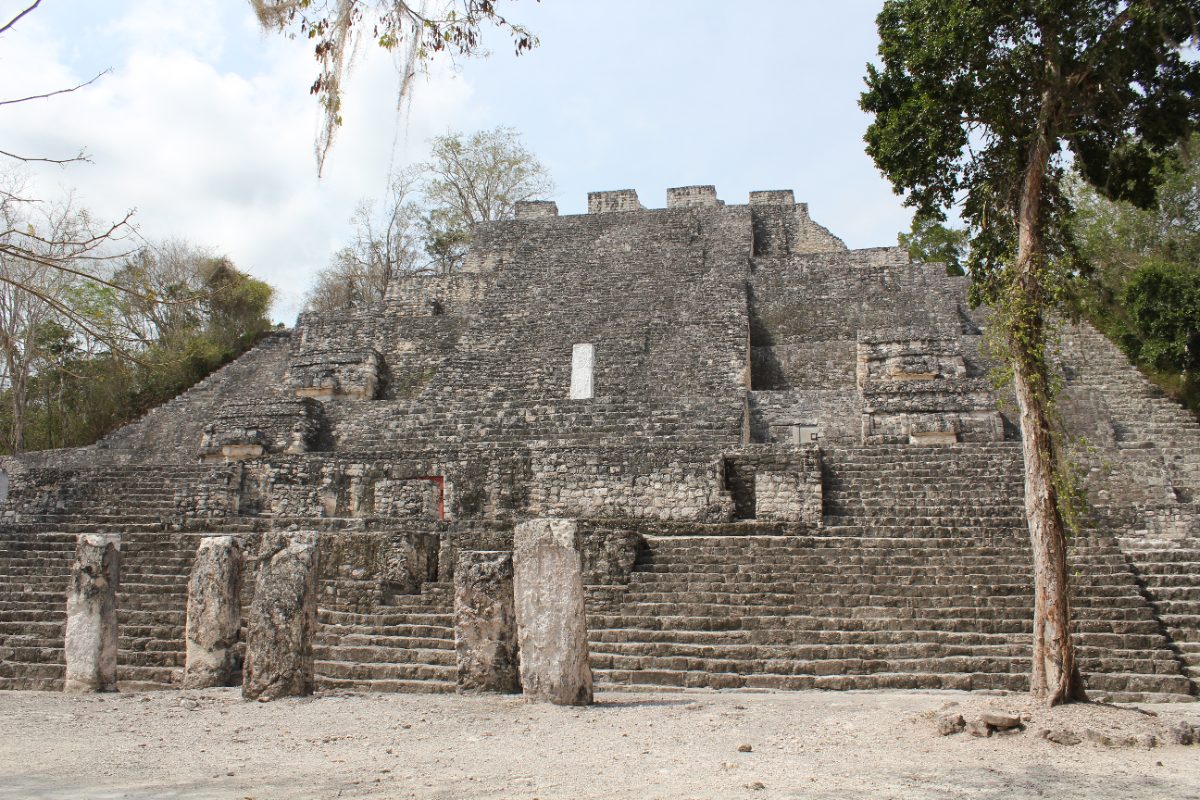
Table of Contents
- Deep in the Biosphere: Arriving at Calakmul
- The Snake Kingdom and Its Rivalry with Tikal
- Structure II: One of the Largest Pyramids in the Maya World
- Yuknoom the Great and the Kings of Kaan
- What Language Did Calakmul’s Rulers Speak?
- The Chiik Nahb Murals: A Window into Everyday Life
- Gods, Kingship, and Ritual at Calakmul
- A City Swallowed by the Jungle
- War, Collapse, and the End of the Snake Kingdom
- Visiting Calakmul Today: Ruins and Rainforest
- Nearby Places to Explore
- Closing Thoughts
Deep in the Biosphere: Arriving at Calakmul
Calakmul sits inside the Calakmul Biosphere Reserve, one of the largest protected tropical forest areas in Mexico, and UNESCO recognized the site in 2002, then expanded that recognition in 2014, as a mixed World Heritage property, honoring both its archaeological significance and the exceptional biodiversity of the surrounding rainforest that still shelters jaguars, spider monkeys, and hundreds of bird species among the ruins.
The drive into the reserve alone takes well over an hour from the nearest paved highway, passing through dense forest with almost no settlement along the way, and the isolation that makes Calakmul difficult to visit today is the same isolation that protected much of the site from looting and modern disturbance for centuries after its abandonment.
Visitors who make the journey are rewarded with something increasingly rare among major Maya ruins: a genuine sense of discovery, climbing structures still partially wrapped in exposed tree roots, with howler monkeys calling from the canopy overhead rather than tour buses idling in a parking lot.
Chicle, the natural gum resin once harvested from the region’s sapodilla trees, drew loggers and surveyors into these same forests decades before archaeologists arrived, and their trails through the jungle occasionally still overlap with routes used by researchers today, an odd but practical inheritance from an unrelated twentieth-century industry.
Few other Maya archaeological zones can offer visitors the same sense of undisturbed wilderness, since the reserve surrounding Calakmul remains largely intact tropical forest rather than the cleared agricultural land or modern development that borders many other major ruins across the Yucatan Peninsula.
The Snake Kingdom and Its Rivalry with Tikal
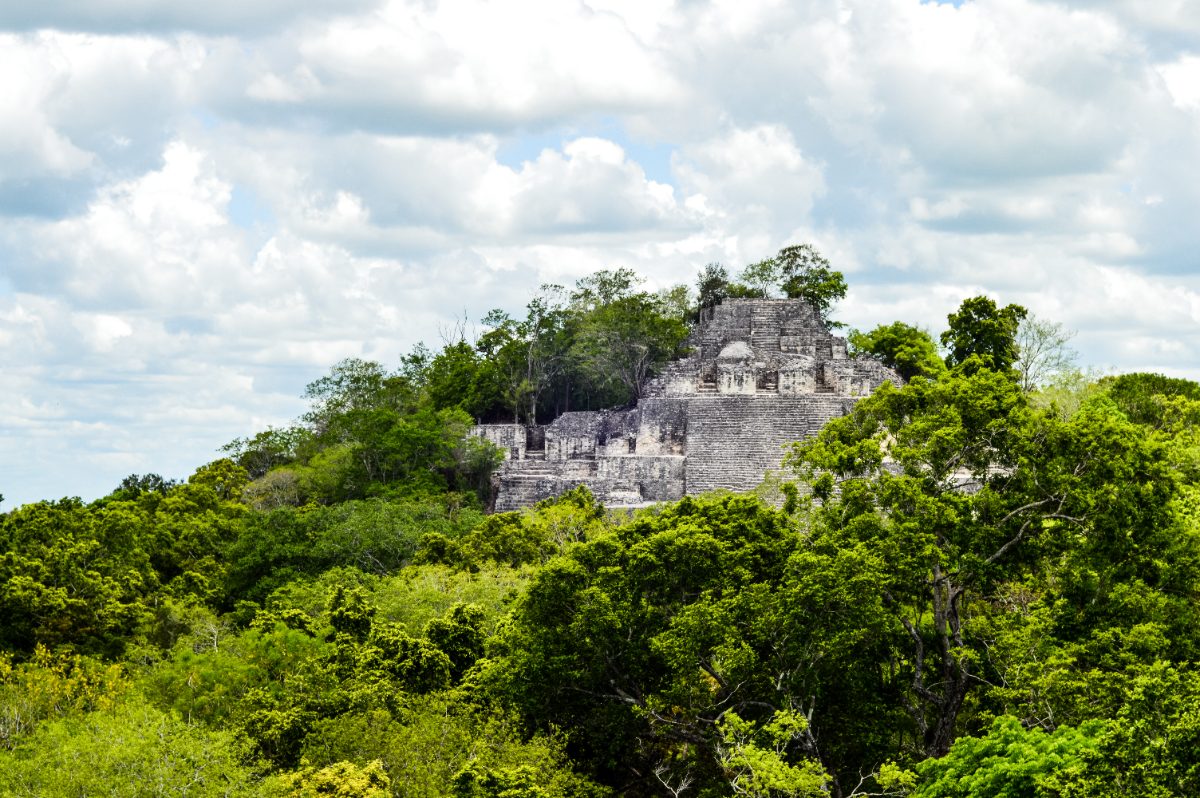
For much of the Classic Maya period, roughly 250 to 900 CE, Mesoamerica’s Maya lowlands were dominated by a long rivalry between two great powers: Tikal, in the Petén region of modern Guatemala, and Calakmul, ruling from the Snake Kingdom’s capital in what is now Campeche. This rivalry, sometimes called the superpower conflict by modern epigraphers, played out across generations through warfare, strategic alliances, and the political maneuvering of client states scattered throughout the lowlands.
Hieroglyphic inscriptions recovered from both cities and their allied and subordinate centers record a complex web of shifting loyalties, military campaigns, and dynastic marriages, as Calakmul repeatedly worked to encircle and isolate Tikal by building alliances with cities positioned around its rival, including Caracol, Dos Pilas, and El Perú, essentially waging a proxy war of influence across the wider Maya lowlands.
Calakmul’s strategy proved effective for extended periods. Inscriptions record at least one major military defeat inflicted directly on Tikal by Calakmul-allied forces in the sixth century, a setback severe enough that Tikal’s own monument-carving activity dropped off noticeably for decades afterward, a phenomenon epigraphers sometimes describe as a hiatus in the historical record.
Modern epigraphers have been able to reconstruct much of this rivalry only because both Tikal and Calakmul, along with their various allied and subordinate cities, continued erecting dated stone monuments throughout the conflict, effectively leaving a centuries-long, if fragmentary and one-sided, historical record of claims, counterclaims, and shifting fortunes carved directly into stone.
The term superpower conflict, borrowed somewhat playfully by modern epigraphers from twentieth-century geopolitical vocabulary, captures how thoroughly this rivalry structured the political landscape of the entire Maya lowlands for generations, with smaller cities frequently forced to align with one power or the other rather than maintaining true independence.
Structure II: One of the Largest Pyramids in the Maya World
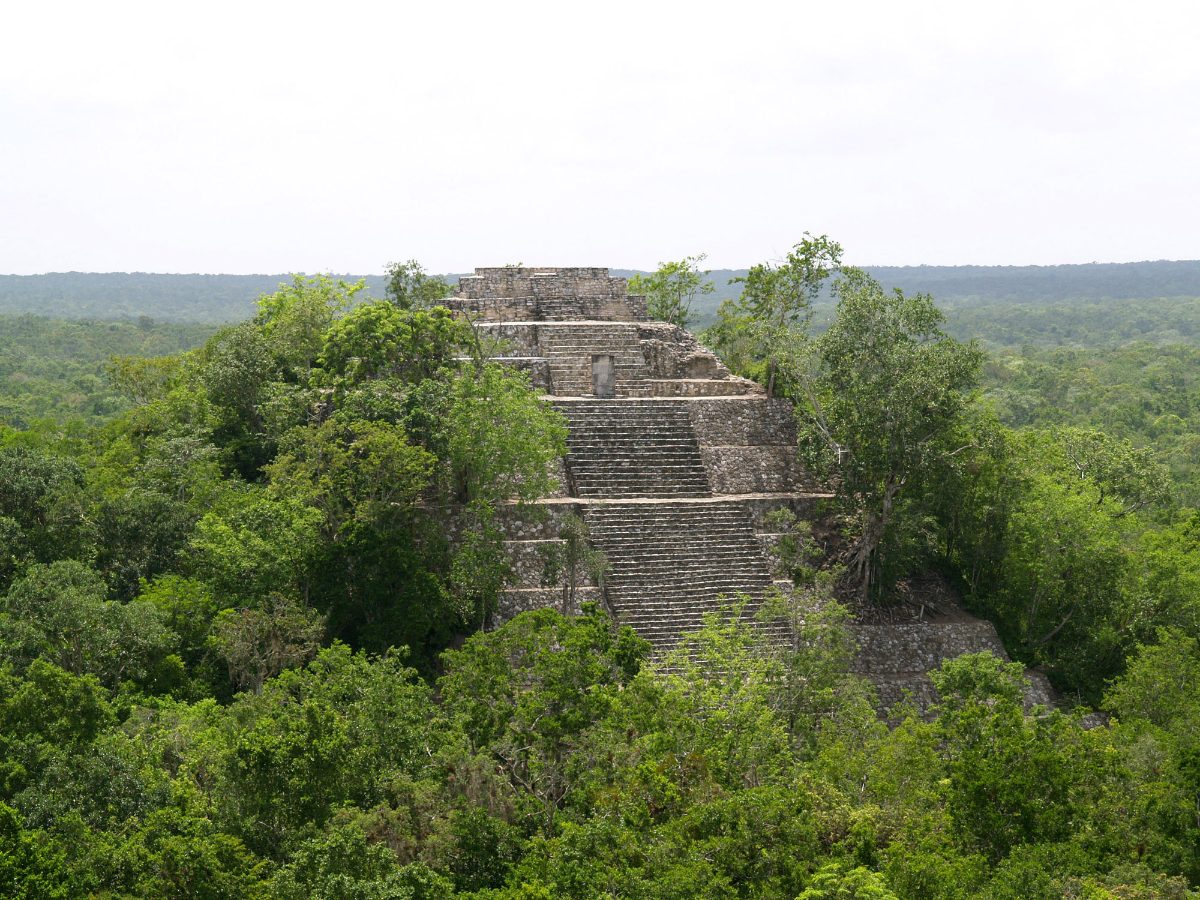
Structure II at Calakmul ranks among the largest pyramids by total volume anywhere in the ancient Maya world, rising over 45 meters and covering a footprint far larger than its height alone suggests, since the pyramid was expanded and rebuilt across multiple construction phases spanning centuries, each new phase encasing the previous structure inside a larger shell.
Excavations inside Structure II uncovered a rare, well-preserved stucco frieze from an early construction phase, buried and protected by later building layers for over a thousand years, depicting mythological scenes rendered in a style distinct enough to give scholars valuable insight into Calakmul’s Early Classic religious iconography, long before the city’s Late Classic political peak.
Nearby Structure I, nearly as large, faces Structure II across the city’s main plaza complex, and together the two pyramids frame a monumental core dense with stelae, stone monuments carved with royal portraits and hieroglyphic texts recording the reigns, military victories, and ritual accomplishments of Calakmul’s kings.
Because later builders repeatedly encased older versions of Structure II rather than demolishing them outright, the pyramid functions almost like a layered historical archive, and archaeologists tunneling into its interior have been able to trace changing architectural styles and religious iconography across several centuries within a single, continuously used monument.
Height alone understates Structure II’s significance, since its base covers several hectares, making its total construction volume greater than many taller pyramids built on more compact footprints elsewhere in Mesoamerica, a distinction that matters considerably to archaeologists comparing the sheer labor investment different ancient societies committed to their most important monuments.
Yuknoom the Great and the Kings of Kaan
Among Calakmul’s many recorded rulers, Yuknoom Ch’een II, known to modern scholars as Yuknoom the Great, stands out as the kingdom’s most successful king, ruling for over fifty years during the seventh century and presiding over Calakmul’s period of greatest political and military influence across the Maya lowlands.
Under Yuknoom the Great, Calakmul’s network of allied and subordinate cities reached its widest extent, and inscriptions from multiple sites across the region record diplomatic visits, military support, and ritual sponsorship tied directly to his reign, evidence of a king who understood that Calakmul’s power rested as much on political relationships as on the city’s own monumental architecture.
Later rulers, including Yuknoom Yich’aak K’ak’, inherited a kingdom still powerful but increasingly contested, and the eventual reversal of Calakmul’s fortunes against Tikal in the early eighth century marked a turning point after which the Snake Kingdom never fully regained its earlier dominance, even as the city itself continued to be occupied and to commission monuments for another century or more.
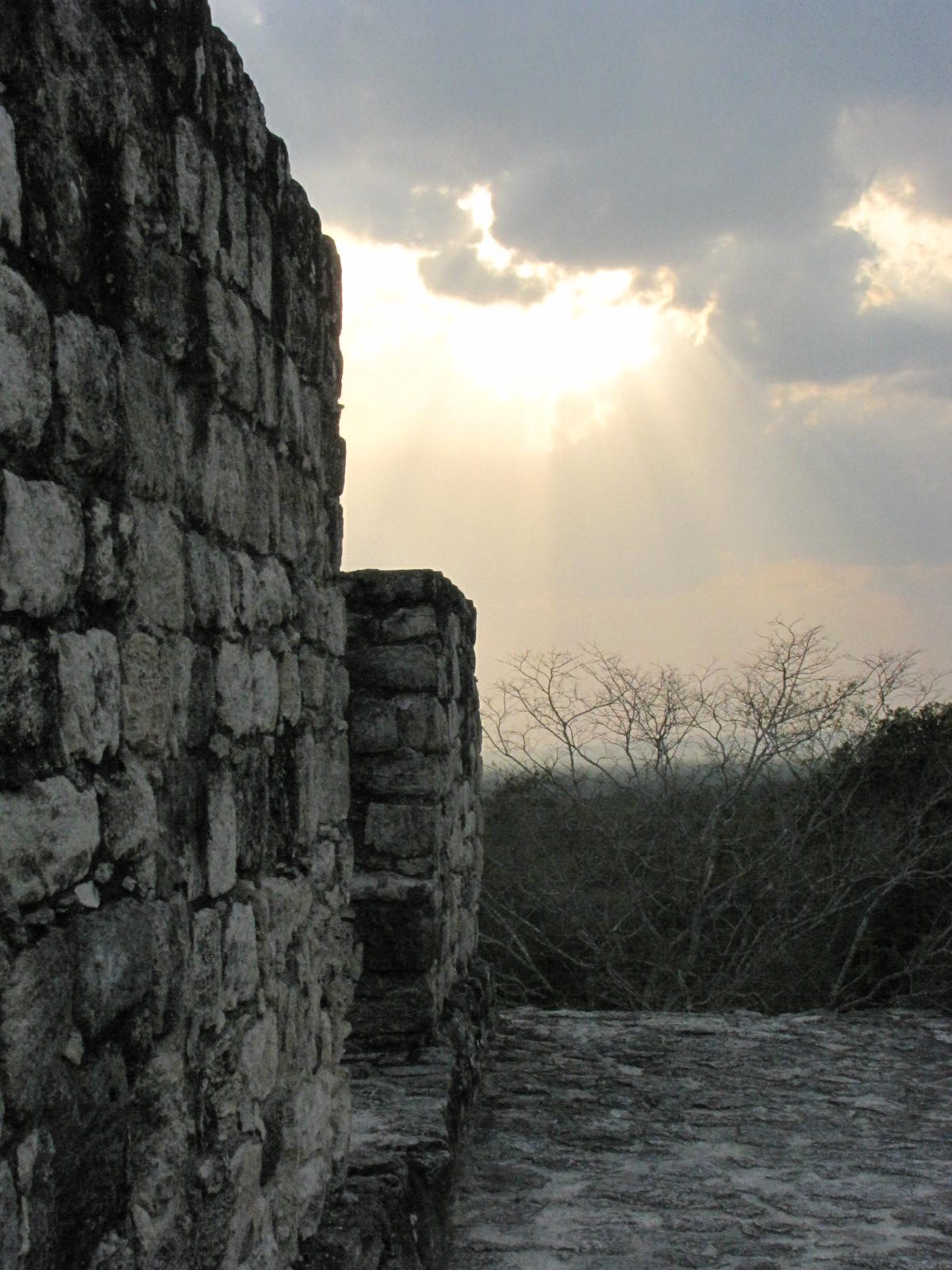
Diplomatic marriages arranged during Yuknoom the Great’s reign helped bind allied royal houses to Calakmul through kinship as well as military obligation, a strategy visible in genealogical references carved on monuments at several subordinate cities that explicitly trace descent or marriage ties back to the Snake Kingdom’s ruling family.
Modern reconstructions of Calakmul’s full dynastic sequence remain incomplete, with gaps in the record corresponding to periods when either monuments were not erected, have since been destroyed, or simply have not yet been excavated, meaning the list of known Kaan dynasty kings will likely continue to grow as archaeological work at the site progresses.
What Language Did Calakmul’s Rulers Speak?
Calakmul’s hieroglyphic inscriptions are written in Classic Ch’olan, the prestige literary language used across the Classic Maya lowlands for royal monuments regardless of the everyday spoken language in any particular city, meaning inscriptions alone cannot fully settle what language ordinary residents of Calakmul actually spoke in the marketplace and at home.
Linguists generally believe the spoken language in Calakmul’s home region was likely an early form of Ch’olan or a closely related Maya language, given the site’s location within the broader Ch’olan-speaking zone that also included Palenque and other major Classic-period lowland cities, though the exact boundary between Ch’olan and neighboring Yucatecan-speaking areas during this period remains difficult to pin down with precision.
This distinction between the formal written language of royal monuments and the everyday spoken language of the general population is common across many ancient literate societies, and Calakmul’s case is a useful reminder that hieroglyphic texts, however informative about political history, do not necessarily give us direct access to the full linguistic reality of daily life among the tens of thousands of non-elite residents who actually built and maintained the city.
Understanding the precise linguistic landscape of the Classic Maya lowlands remains an active area of scholarship, complicated by the fact that elite scribes across many different cities, regardless of their local spoken language, were trained to write in the same prestige Ch’olan literary register, somewhat analogous to how Latin functioned as a shared written language across medieval Europe long after most regions had developed distinct spoken vernaculars.
Future decipherment work and continued excavation may eventually clarify these linguistic questions further, but for now researchers generally prefer honest acknowledgment of this uncertainty over confidently asserting a single definitive spoken language for a city that, like Xochicalco and El Tajin far to the north, likely hosted a genuinely diverse population across its long history.
The Chiik Nahb Murals: A Window into Everyday Life
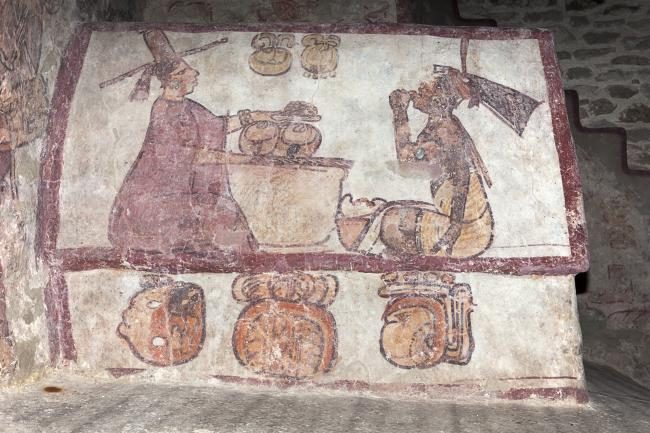
One of Calakmul’s most remarkable archaeological discoveries has nothing to do with kings or warfare. The Chiik Nahb murals, uncovered on a substructure beneath one of the city’s residential platforms, depict ordinary Maya people engaged in everyday activities: preparing food, drinking, and exchanging goods, rendered with individual captions identifying specific figures by name and occupation, including a woman labeled as a maker of tamales and a man identified as a seller of salt.
These murals are exceptionally rare in Maya art specifically because they depict common people rather than royalty, offering archaeologists a genuinely unusual window into marketplace life and social roles among Calakmul’s non-elite population, a perspective almost entirely absent from the royal monuments and stelae that dominate the surviving Maya artistic record elsewhere.
The murals’ captions, though brief, represent some of the only surviving Maya hieroglyphic texts specifically describing commoners by their economic roles, giving linguists and historians rare direct evidence of vocabulary tied to trade, food preparation, and daily commerce rather than royal genealogy and military conquest.
Art historians studying the Chiik Nahb murals have noted the careful attention paid to clothing, posture, and gesture in depicting these ordinary figures, suggesting the artists who produced them were just as skilled as those who carved the city’s royal stelae, even though the subject matter here was deliberately mundane rather than dedicated to commemorating kings or military victories.
Gods, Kingship, and Ritual at Calakmul
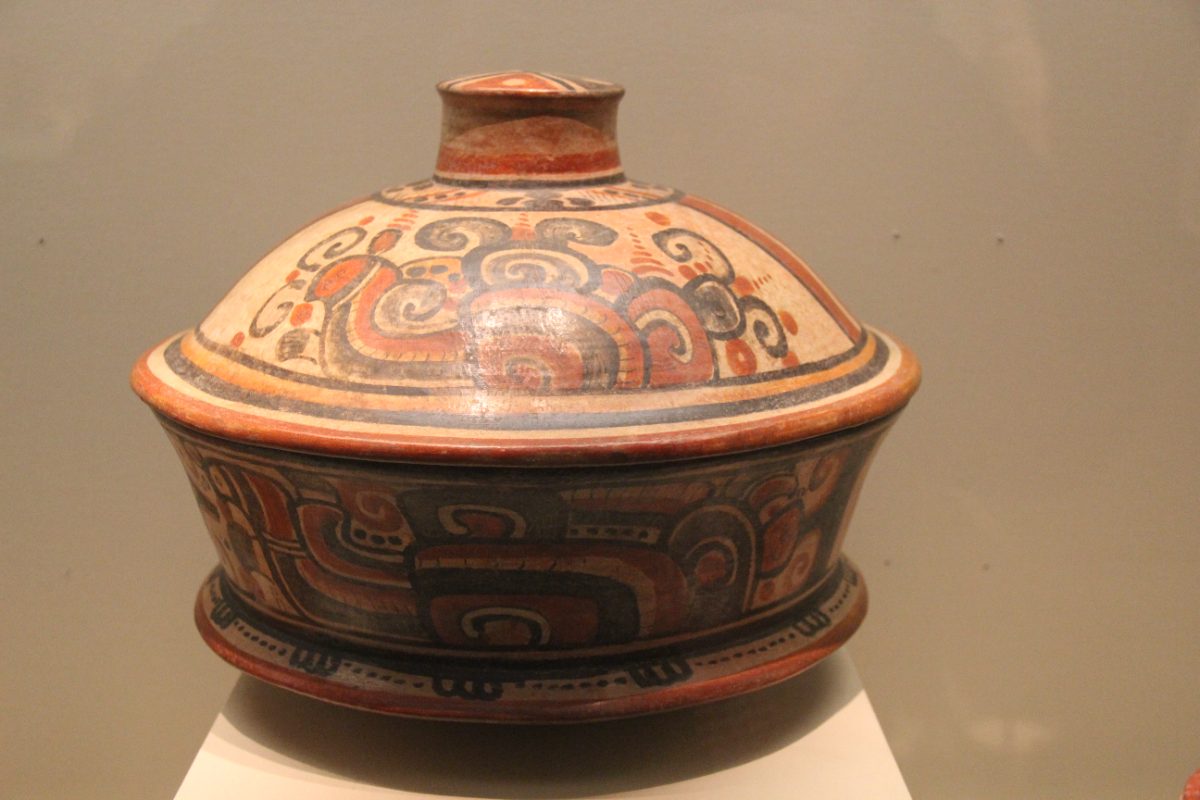
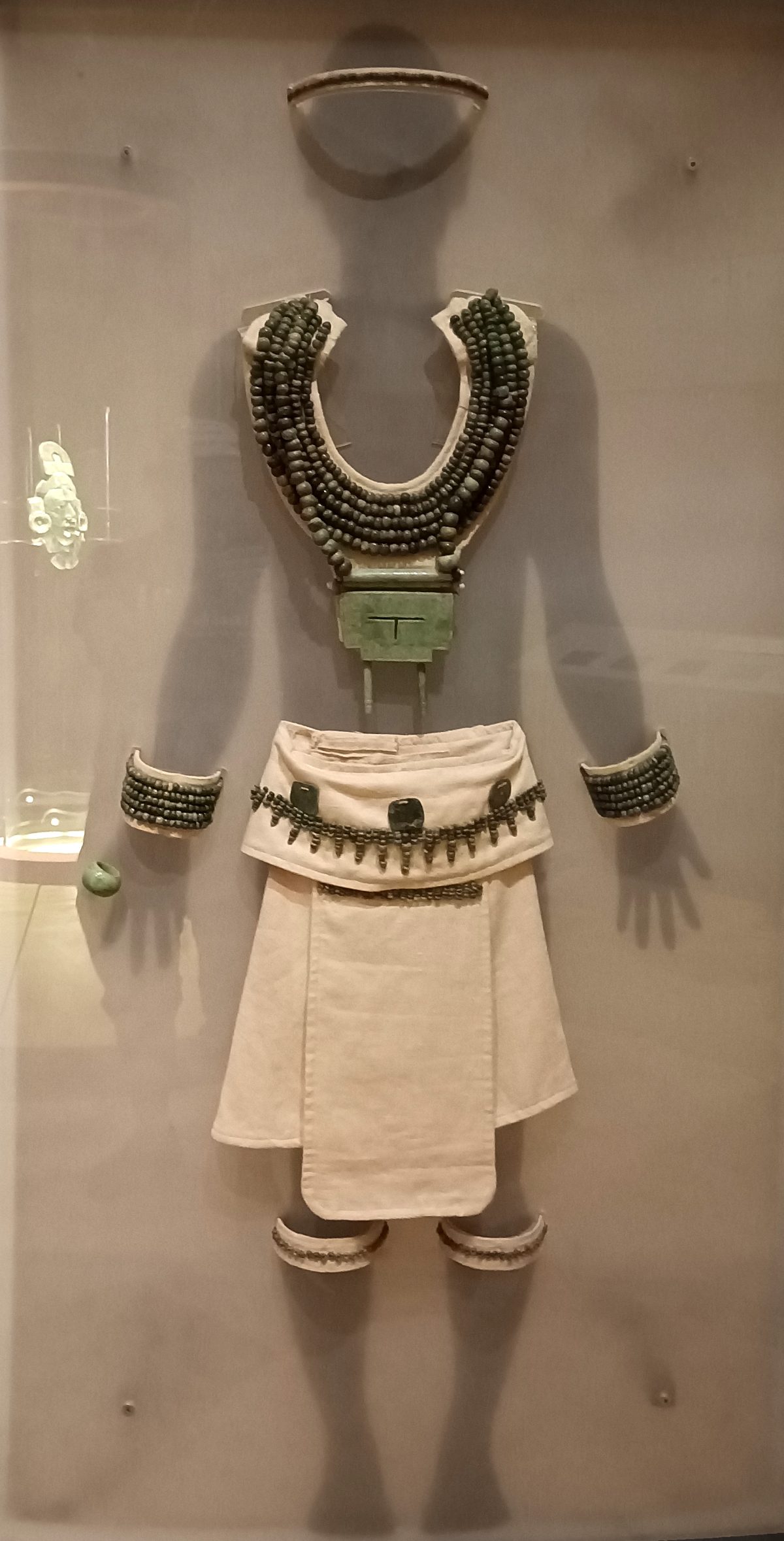
Religious life at Calakmul centered on the same broad Maya cosmological themes found throughout the lowlands: the maintenance of cosmic order through royal ritual, ancestor veneration, and the ballgame’s symbolic connection to the underworld and the cycle of the sun. Royal tombs excavated beneath Structure II and other major buildings have yielded jade funerary masks, ornate ceramic vessels, and other high-status grave goods reflecting the elaborate mortuary practices reserved for the city’s kings and their immediate family.
Calakmul’s kings positioned themselves as intermediaries between their subjects and the divine forces governing agricultural fertility, warfare, and cosmic time, a role reinforced through public ritual performance at the main plaza and recorded for posterity on the many carved stelae erected throughout the ceremonial core, several of which specifically commemorate the dedication of new temples or the completion of significant calendar cycles.
As at other major Classic Maya capitals, bloodletting rituals performed by the king and royal family served to reinforce the ruler’s unique capacity to communicate directly with ancestral and divine forces, a practice documented both through surviving imagery and through the specialized ritual implements recovered from elite burial contexts at the site.
Ceramic vessels recovered from elite Calakmul burials frequently include painted hieroglyphic texts identifying their owners and describing their ritual function, a genre of inscribed pottery that has proven enormously valuable to epigraphers piecing together Calakmul’s dynastic sequence, since many of these vessels name specific kings not otherwise well documented on the city’s damaged and eroded stone stelae.
The specific combination of jade, shell, and painted ceramic offerings found in Calakmul’s royal tombs closely parallels burial practices documented at Palenque and other major Classic Maya centers, reflecting a broadly shared elite mortuary tradition across the lowlands even as each city developed its own distinctive artistic conventions for royal portraiture and monumental inscription.
A City Swallowed by the Jungle
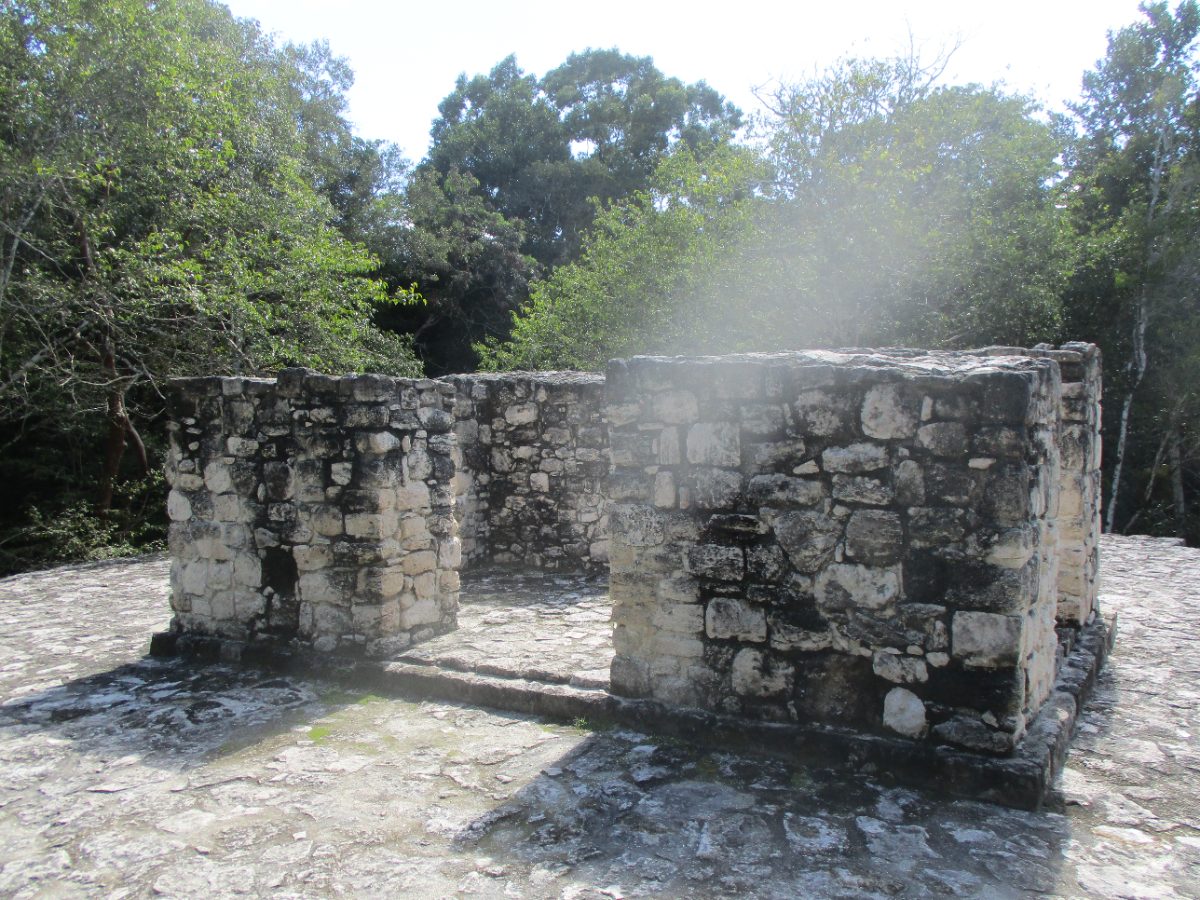
After Calakmul’s political decline during the Terminal Classic period, the city was gradually reclaimed entirely by the surrounding rainforest, its pyramids and plazas disappearing beneath centuries of tree growth so thoroughly that the site remained essentially unknown to the outside world until the twentieth century, unlike more visible ruins such as Chichén Itzá or Uxmal that had at least partially remained exposed.
American biologist Cyrus Lundell rediscovered Calakmul in 1931, not while searching specifically for Maya ruins but while surveying the region’s chicozapote trees for chicle production, the raw material used in chewing gum manufacturing at the time. Recognizing the scale of the structures he encountered, Lundell reported the find to archaeologists, and the site’s name, meaning roughly two adjacent mounds in Yucatec Maya, was coined shortly afterward to describe its twin major pyramids.
Serious systematic excavation did not begin until decades later, and large sections of Calakmul’s documented 6,700-plus structures remain unexcavated beneath forest cover today, meaning the site likely still holds significant undiscovered inscriptions and architectural features awaiting future archaeological work.
Lundell’s original 1931 report likely undersold the site’s true scale, since later aerial and satellite-based surveys using lidar technology have revealed extensive additional structures hidden beneath dense canopy well beyond the boundaries of the areas mapped by early ground-based archaeological teams, confirming that Calakmul’s full urban footprint was even larger than twentieth-century researchers initially estimated.
Lidar surveys conducted across the wider region in the 2010s, part of a broader wave of laser-mapping projects that transformed Maya archaeology, confirmed that Calakmul was connected to at least one other major center by a raised causeway, evidence of substantial infrastructure investment linking the Snake Kingdom’s capital to its wider network of subordinate settlements.
War, Collapse, and the End of the Snake Kingdom
Calakmul’s decisive military setback against Tikal in 695 CE, recorded in Tikal’s own triumphant inscriptions, marked a genuine turning point in the two cities’ centuries-long rivalry, though Calakmul’s political and military decline afterward was gradual rather than immediate, with the city continuing to commission royal monuments and maintain regional influence for another century or more.
By the ninth century, Calakmul, like most of the great Classic Maya lowland cities, experienced the broader political fragmentation and population decline now generally called the Terminal Classic collapse, a process researchers link to some combination of prolonged drought, agricultural strain from supporting such a large urban population, and the cumulative destabilizing effects of generations of warfare between rival kingdoms.
The last dated monuments at Calakmul come from the early tenth century, after which the city’s political structure appears to have dissolved entirely, its population dispersing into smaller settlements as the elaborate court culture that had sustained centuries of monumental construction and hieroglyphic record-keeping came to an end.
Some researchers have proposed that the psychological and political impact of Calakmul’s 695 defeat may have been more significant than any single military loss alone could explain, since Classic Maya kingship depended heavily on a ruler’s demonstrated favor with ancestral and divine forces, meaning a major battlefield reversal could undermine a dynasty’s legitimacy in ways that extended well beyond the immediate military consequences.
Population decline at Calakmul appears to have been gradual rather than sudden, with outlying residential zones showing signs of abandonment before the monumental core itself ceased to function as a political center, a pattern consistent with broader Terminal Classic collapse dynamics documented at other large Maya cities facing similar combinations of environmental and political stress.
Visiting Calakmul Today: Ruins and Rainforest
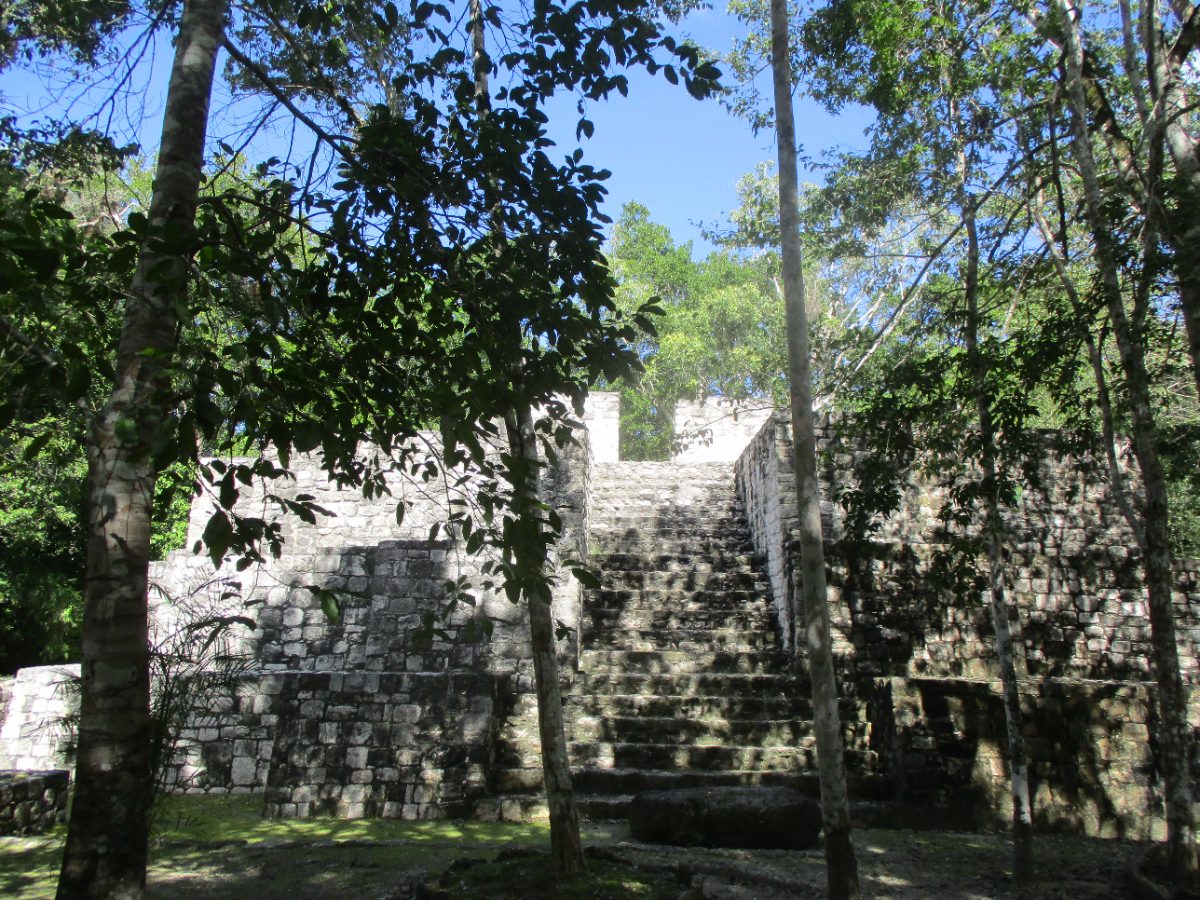
Visiting Calakmul today means committing to a genuine expedition, well beyond the day-trip convenience of Chichén Itzá or Uxmal. The reserve’s remoteness limits daily visitor numbers considerably, and travelers typically base themselves in nearby towns like Xpujil before making the long drive into the biosphere reserve itself.
Climbing Structure II remains possible, and the summit offers a rare, genuinely spectacular view: an unbroken canopy of rainforest stretching to the horizon in every direction, with the tips of other Maya pyramids, both at Calakmul and at more distant sites, occasionally visible poking above the treeline, a vantage point that makes the scale of the ancient Snake Kingdom’s territory viscerally apparent in a way no museum display could match.
Wildlife spotting is practically guaranteed given the reserve’s protected status, and visitors frequently report seeing spider monkeys, toucans, and a wide range of tropical bird species during the walk between the entrance and the main ceremonial core, making a trip to Calakmul as much a rainforest expedition as an archaeological visit.
Because mobile phone signal is essentially nonexistent throughout most of the reserve, visitors are generally advised to carry sufficient water and to plan their return journey carefully, since the combination of remote location, midday heat, and genuine physical distance between the entrance and the main pyramids makes Calakmul considerably more demanding than most other major Mexican archaeological sites open to the public.
A small site museum near the reserve entrance displays selected artifacts recovered from decades of excavation, giving visitors context before making the longer walk into the ceremonial core itself, and rangers stationed throughout the reserve provide basic safety information given the genuinely wild character of the surrounding forest.
Nearby Places to Explore
Calakmul’s centuries-long rivalry and cultural connections link it closely to several other major Maya and Mexican cities covered elsewhere on this site, each offering useful points of comparison for understanding the wider Classic Maya world.
- Palenque: The Maya City of Pakal’s Hidden Tomb
- Maya Pyramids: The Secrets of El Castillo at Chichén Itzá
- Uxmal: The Maya City Built Where No River Ever Flowed
Closing Thoughts
Calakmul offers a different kind of encounter with the ancient Maya world than the more accessible ruins of the Yucatan Peninsula. Its remoteness, its unmatched scale of over 6,700 documented structures, and its centuries-long political rivalry with Tikal together tell the story of a genuine superpower of the Classic Maya lowlands, one whose kings once commanded alliances stretching across much of the Maya world.
The Chiik Nahb murals, with their rare glimpse of ordinary tamale-makers and salt-sellers, remind visitors that behind the royal inscriptions and dynastic warfare stood a large working population whose daily lives, however rarely recorded, made the Snake Kingdom’s imperial ambitions possible in the first place.
You May Like
Mafra, the Palace a King Built From a Vow


3 thoughts on “Deep in the Jungle, Calakmul Ruled the Snake Kingdom”