There is a reason the Great Pyramid of Giza has stayed in our imagination for more than four and a half thousand years. It is the only one of the seven wonders of the ancient world that is still standing, and even today, when you walk up to its base, the thing simply does not look like something people built by hand. It is huge, it is precise, and it sits there in the desert like a giant stone question mark that we have never fully answered. In this piece I want to walk you through what this monument actually is, who built it, how on earth they pulled it off, and why so many of the wild theories you hear about it tend to fall apart once you look at the real evidence.
Table of Contents
- What exactly is the Great Pyramid?
- Who built it, and for whom?
- How did they actually build it?
- What is hidden inside?
- The numbers that make people lose their minds
- Myths, aliens, and why they do not hold up
- What the pyramid really meant to the Egyptians
- The pyramid today and what we are still learning
- Closing thoughts
What exactly is the Great Pyramid?
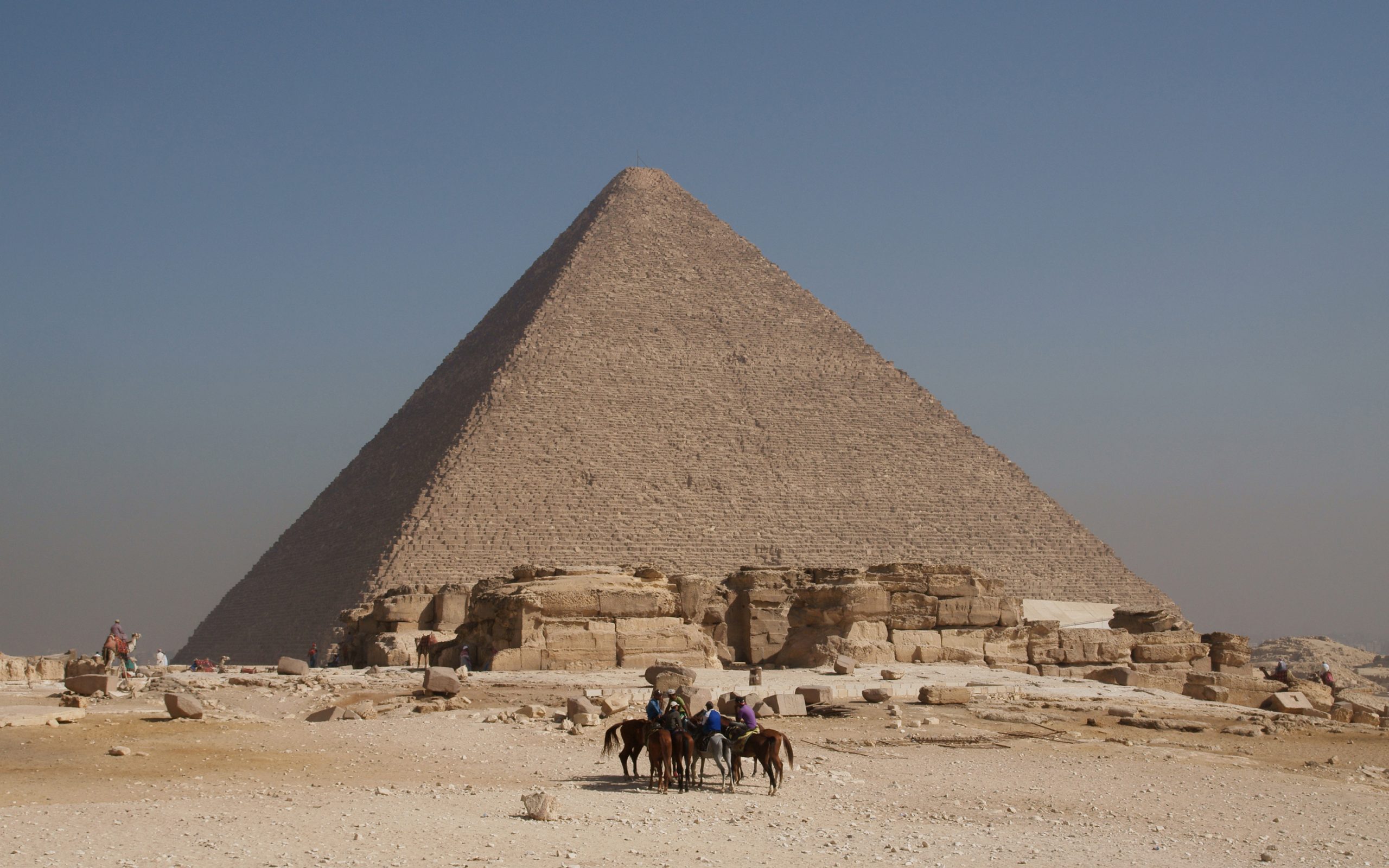
Let us start simple. The Great Pyramid is the biggest of the three main pyramids that sit on the Giza plateau, just outside modern Cairo. People also call it the Pyramid of Khufu, or sometimes the Pyramid of Cheops, which is just the Greek version of the same pharaoh’s name. It was built around 4,500 years ago, during what historians call the Old Kingdom of ancient Egypt. That puts it roughly in the middle of the 2000s BCE, give or take.
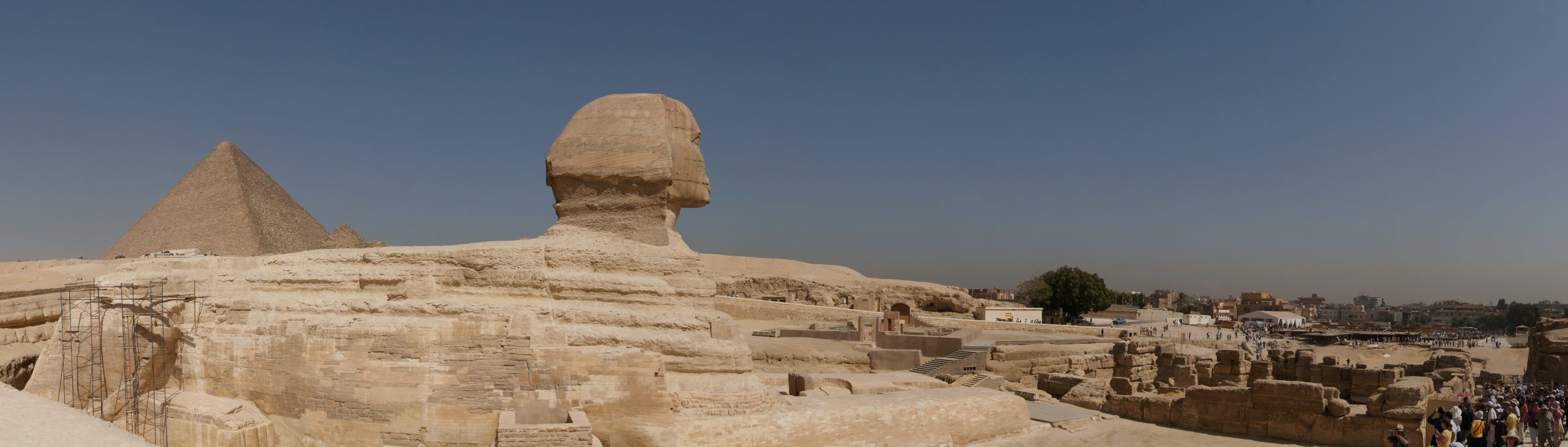
When it was finished, it stood about 146 meters tall. To put that in everyday terms, that is taller than a forty-storey building, and it held the record as the tallest human-made structure on the planet for something like 3,800 years. Think about that for a second. No cathedral, no tower, nothing we made beat it until the late Middle Ages. Today it is a little shorter, around 138 meters, because the smooth white casing stones that once covered the whole surface were stripped away over the centuries and reused for other buildings. What you see now is the rougher core underneath.
The base of the pyramid is a near-perfect square, each side running about 230 meters. The whole thing is made of roughly 2.3 million blocks of stone. Most of those blocks weigh somewhere between two and a half and fifteen tonnes, and a handful of the granite blocks deep inside weigh a lot more than that. Stack all of that together and you get a monument that still makes engineers raise their eyebrows.
It is worth pausing on those casing stones, because they change how you should picture the monument in its prime. When it was new, the Great Pyramid was not the rough brown staircase of blocks we see today. It was sheathed in gleaming white polished limestone, smooth from base to tip, so flat and bright that under the Egyptian sun it would have blazed like a beacon visible for many kilometers across the desert. Some ancient writers said it shone almost painfully in the daylight. Over the centuries, earthquakes loosened that outer skin, and people quarried the fallen stone to build mosques, walls, and houses in nearby Cairo. So in a strange way, pieces of the Great Pyramid are scattered throughout the old city, hiding in plain sight inside other buildings.
Who built it, and for whom?
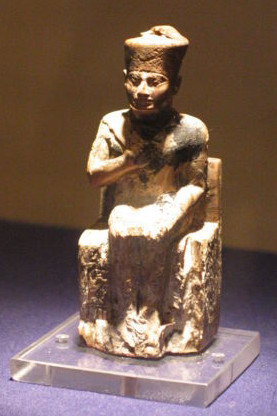
The pyramid was built as a tomb for the pharaoh Khufu, who ruled during the Fourth Dynasty. And here is one of the funny ironies of history. Khufu commissioned the largest pyramid ever made, a monument so big it can be seen from space, and yet the only confirmed statue we have of him is a tiny ivory figure just a few centimeters tall. The man behind the biggest building of the ancient world is known to us through one of the smallest portraits. There is something almost poetic about that.
For a long time popular culture told us that the pyramids were built by armies of slaves cracking under the whip. That picture, it turns out, is mostly wrong. Archaeologists digging near the plateau found the remains of a whole workers’ town, complete with bakeries, breweries, sleeping quarters, and even the bones of cattle and other good food. These were not starving captives. They were skilled laborers and seasonal workers who were fed well, organized into teams with cheerful nicknames, and given proper burials close to the king they served. Being buried near the pharaoh was an honor, not something you would offer to a disposable slave.
The work was almost certainly organized like a massive national project. During the months when the Nile flooded and farming stopped, large numbers of people were free to work, and the state put them to use. So instead of imagining whips and chains, picture something closer to a gigantic public works program that pulled the whole society together around a single goal.
How did they actually build it?
This is the part everyone really wants to know, and honestly it is where the mystery still has some teeth. We do not have a single ancient instruction manual that says step one, step two, step three. What we have is a pile of strong clues, and from those clues most experts have pieced together a believable story.
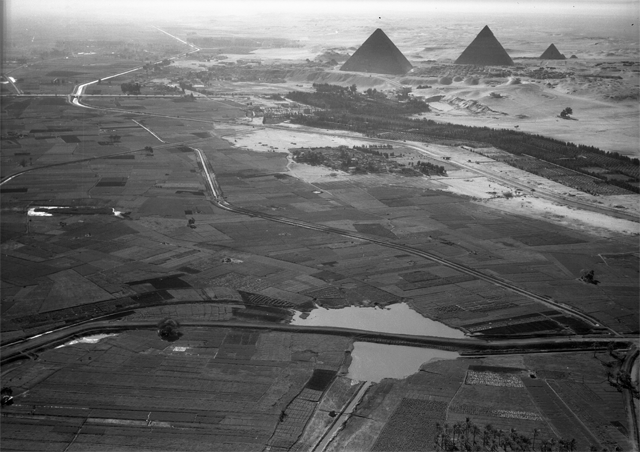
The limestone for the core came from a quarry right there on the plateau, only a short distance from the building site. That alone saved an enormous amount of effort, because the heaviest and most common blocks did not have to travel far. The finer white limestone for the outer casing came from across the river at Tura, and the heavy granite for the inner chambers was floated all the way from Aswan, hundreds of kilometers to the south. The Nile did the long-distance hauling. Boats carried the stone downstream, and a network of canals brought it close to the foot of the pyramid.
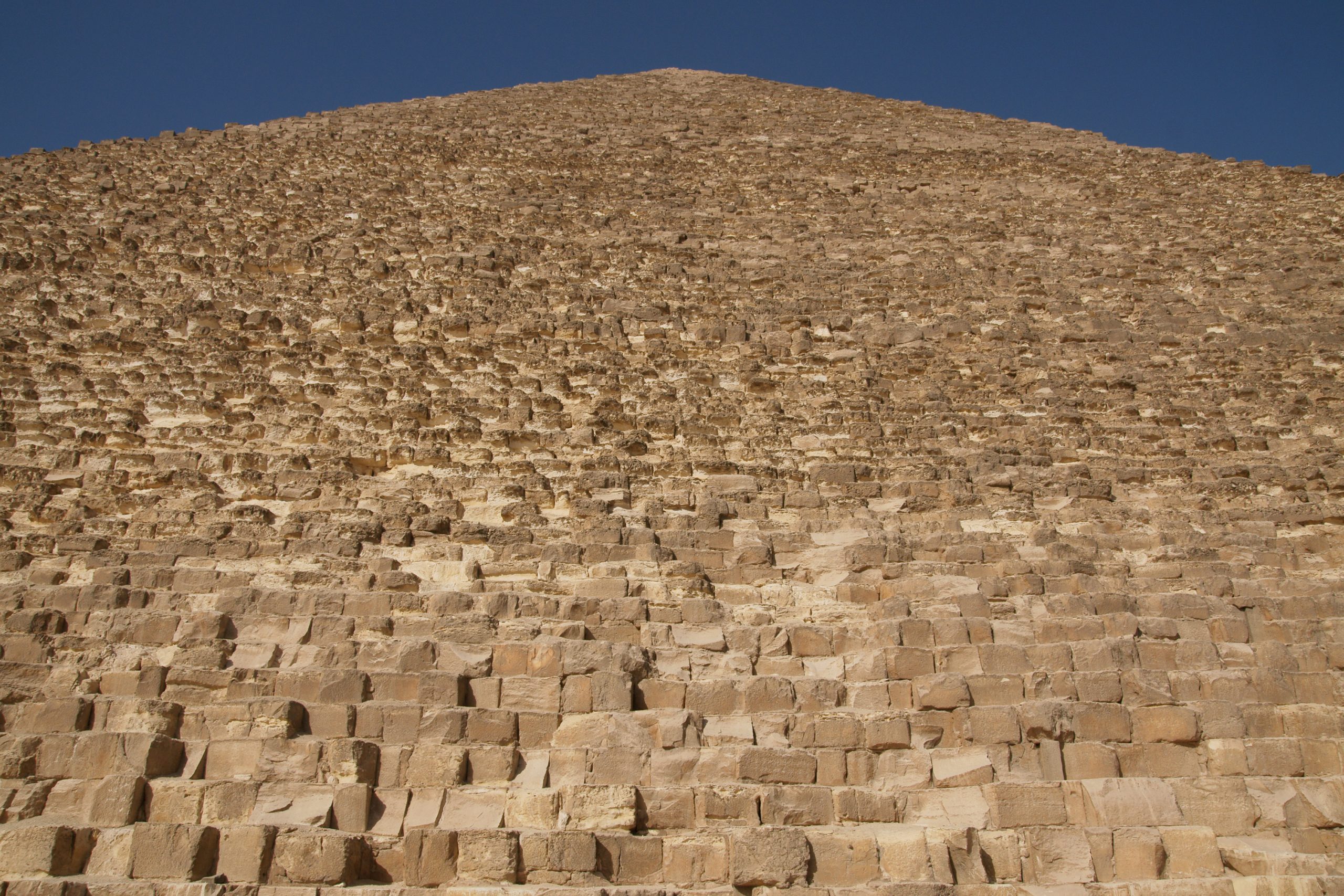
On site, the big question is how they lifted millions of heavy blocks up to height. The leading idea is ramps. The Egyptians most likely built ramps of earth, mud brick, and rubble, and dragged the blocks up on wooden sleds. To make the sleds slide more easily, workers poured water onto the sand in front of them. That is not a guess pulled out of thin air either. There is an ancient Egyptian wall painting that literally shows a worker pouring water in front of a sled hauling a giant statue. Wet sand is far firmer and less sticky than dry sand, which cuts the dragging force roughly in half. It is a beautifully simple trick.
There has been a lot of debate over the shape of the ramps. Were they long and straight, running out from one side? Did they spiral around the outside of the pyramid as it grew? Or were they built inside the structure itself? Each option has supporters and problems. A discovery at a different site, an alabaster quarry, even revealed a steep ramp with postholes on either side, suggesting the Egyptians used some kind of pulley-and-rope system to help haul blocks up sharp inclines. The honest answer is that they probably used a mix of methods, adapting as the pyramid rose and the job changed. What we can say for certain is that they did it with ramps, ropes, sleds, copper tools, raw human muscle, and a frankly staggering amount of planning. No magic required.
It helps to think about the timeline too. Most estimates put the construction of the Great Pyramid at roughly twenty years. If you do the rough arithmetic, fitting 2.3 million blocks into two decades means setting a block in place every couple of minutes during working hours, year after year. That sounds impossible until you remember this was not a handful of people but a rotating workforce of thousands, working in well-drilled teams, each handling one part of an assembly line that ran on muscle and routine. Quarrying crews cut the stone, hauling crews dragged it, and setting crews positioned it, all in a rhythm that never really stopped.
Copper was the hardest metal the Egyptians had for tools, and people often ask how you cut granite, which is far harder than copper, with such soft equipment. The answer is patience and sand. Workers used copper saws and drills together with an abrasive sand slurry that did the actual cutting, slowly grinding through the stone grain by grain. For shaping limestone they used stone hammers, wooden wedges soaked to swell and crack the rock, and a lot of careful chiseling. None of it was fast, but all of it worked, and the tool marks left behind in the quarries match exactly what we would expect from these methods.
What is hidden inside?
Most pyramids keep the burial chamber underground, but the Great Pyramid is unusual because it has chambers built up high inside the body of the structure itself. There are three main spaces. There is an unfinished chamber cut into the bedrock far below, which looks like it was abandoned partway through. Above that sits a room often called the Queen’s Chamber, though no queen was ever buried there. And higher still is the King’s Chamber, a room lined entirely with red granite, where a large granite sarcophagus still sits today.
The most jaw-dropping interior feature is the Grand Gallery, a tall, narrow corridor that climbs steeply up toward the King’s Chamber. Its ceiling soars almost nine meters high, and the walls step inward as they rise in a technique called corbelling. Standing inside it, people often describe a strange cathedral-like feeling, all sharp angles and polished stone. It was a genuine feat of engineering to build a passage like that inside a solid mountain of rock without the whole thing collapsing.
Above the King’s Chamber the builders left a series of empty spaces called relieving chambers. Their job was to spread the immense weight of the stone above so it would not crush the room below. It is a clever piece of structural thinking, and it has worked for four and a half thousand years through earthquakes and everything else nature has thrown at the place.
In recent years, scientists using a technique borrowed from particle physics found something new. By tracking muons, tiny particles that rain down from space and pass through stone, a team detected a large empty void above the Grand Gallery that nobody knew about. We still do not know what it is for, whether it is a hidden room, a construction gap, or something else entirely. The fact that we can still find brand new spaces inside a monument this famous tells you how much it keeps holding back from us.
One more detail about the chambers is worth mentioning. Narrow shafts run from the King’s Chamber and the Queen’s Chamber out toward the surface, angled upward. For a long time people assumed these were simply for ventilation, to let air into the deep rooms. But the angles line up suggestively with certain stars and constellations the Egyptians cared about, which has led many researchers to think the shafts had a spiritual purpose, acting as channels for the king’s soul to travel out toward the heavens. Whether practical, symbolic, or both, they are another reminder that nothing in this building was placed at random.
The numbers that make people lose their minds
Part of the pyramid’s legend comes from how precise it is. The sides of the base are aligned to the cardinal directions, north, south, east, and west, with an accuracy that is off by only a tiny fraction of a degree. The four sides are almost exactly equal in length, the corners are almost perfect right angles, and the base is remarkably level across its entire footprint despite covering an area as big as several football fields. Achieving that kind of precision without modern lasers or levels is genuinely impressive.
How did they manage it? They almost certainly used the sky. By watching the rising and setting points of stars or the sun and marking them carefully, the Egyptians could lay out a true north-south line on the ground. For leveling, they likely used water channels, since water always finds its own flat surface, along with simple but reliable measuring tools. The point worth holding onto is that this precision is the product of patient, clever surveying, not of some lost super-technology.
Myths, aliens, and why they do not hold up
No monument on Earth attracts strange theories quite like this one. You have probably heard at least a few. Aliens built it. A lost civilization with forgotten technology built it. The dimensions secretly encode the speed of light or the distance to the sun. It is fun stuff, and I get the appeal, but it is worth being clear about why archaeologists do not take these claims seriously.
For one thing, we can actually trace the whole development of pyramid building in Egypt. It did not appear out of nowhere. You can follow a clear line from simple flat-topped tombs called mastabas, to the first stepped pyramid built for King Djoser, to a couple of experimental pyramids where the builders clearly made mistakes and learned from them, and finally to the smooth, confident Great Pyramid. That is exactly what a long human learning curve looks like. A civilization handed perfect technology by aliens would not need a few centuries of trial and error to get there.
On top of that, we have the quarries with the tool marks still in them, the workers’ town with its bakeries and graves, the inscriptions left by the work gangs, and the unfinished blocks abandoned mid-job. The whole messy, human fingerprint of the project is right there in the ground. The number coincidences people get excited about mostly come from cherry-picking measurements and choosing whichever units happen to give a tidy answer. The simplest and best-supported explanation, by far, is that talented, organized human beings built it. Saying ancient people could not have done this without help is, if anything, an insult to just how brilliant they actually were.
What the pyramid really meant to the Egyptians
To understand why anyone would pour the resources of an entire kingdom into a single tomb, you have to step into the ancient Egyptian view of life and death. For them, death was not the end but a passage into another existence, and the pharaoh was not just a ruler. He was a living link between the people and the gods. Making sure he reached the afterlife safely was, in their eyes, essential for the whole order of the world to keep running.
The pyramid shape itself carried meaning. Many scholars connect it to the rays of the sun spreading down to earth, or to a sacred mound from Egyptian creation stories, the first piece of land that rose out of the waters at the beginning of time. The monument was a kind of machine for resurrection, a launch pad designed to help the king’s spirit rise and join the gods among the stars. Seen that way, the pyramid was not a vanity project so much as the most serious religious undertaking the society could imagine.
It also says something about the strength of the Egyptian state. To build the Great Pyramid you needed a stable government that could feed thousands of workers, organize quarrying and transport across long distances, store and distribute food, and keep a complex operation running for around two decades without falling apart. The pyramid is not only a tomb. It is hard physical proof of an extraordinarily well-run society at the height of its powers.
The afterlife the Egyptians imagined was not vague or gloomy. It was a vivid continuation of the best parts of life, and the tomb was stocked, at least in intention, with everything the dead would need for the journey and the eternity beyond it. Food, furniture, jewelry, protective spells carved or painted on the walls, and small servant figures meant to do labor on the owner’s behalf all played a role. The pyramid was the grandest possible version of this idea, scaled up to match the status of a god-king. Everything about it, from its orientation to its internal layout, was bound up with helping the pharaoh make a safe crossing and take his proper place among the eternal stars.
There is a quieter lesson in all of this too. We tend to talk about the pyramid as a triumph of engineering, and it is, but it was first and foremost an act of belief. Thousands of people gave years of their lives to a project whose entire purpose lived in the realm of faith and meaning, not in anything you could eat or trade. That tells you something deep about human beings. Long before skyscrapers and rockets, we were already willing to move literal mountains for the sake of an idea about what comes after death. The Great Pyramid is, among everything else, a four-and-a-half-thousand-year-old monument to the human need to reach for something beyond ourselves.
The pyramid today and what we are still learning
You might assume that after centuries of study there is nothing left to discover. The opposite is true. The muon scan that revealed the big hidden void is only a few years old. Researchers are still mapping the internal structure with new imaging tools that let them peek inside without drilling a single hole. Every few years brings a fresh paper, a new measurement, or a small surprise.
The plateau also faces modern challenges. Pollution, mass tourism, rising groundwater, and simple age all wear at the ancient stone, and conservators work constantly to protect it. Meanwhile a giant new museum near the plateau is bringing together thousands of Egyptian artifacts, including treasures connected to the pyramid age, so that visitors can see the wider story in one place rather than scattered across the world.
What I find most moving is the sheer continuity of the thing. People stood in awe of the Great Pyramid when it was already ancient. Greek travelers wrote about it more than two thousand years ago, marveling that it was old even to them. Medieval scholars puzzled over it. And here we are today, still standing at its base with our heads tilted back, still not entirely sure how to feel. Very few human creations connect us across that much time.
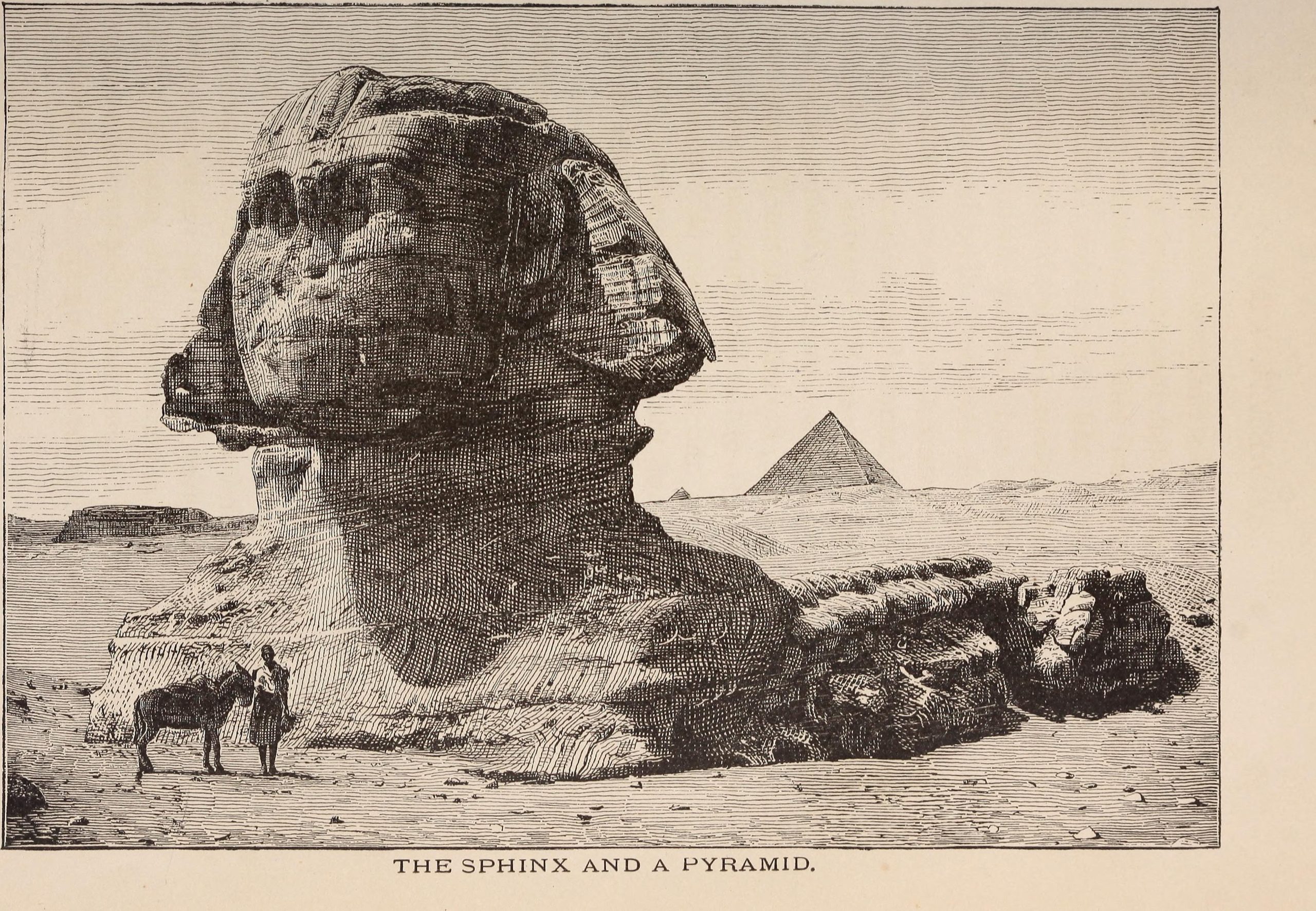
It is also worth remembering that the Great Pyramid does not stand alone. Right beside it sit the slightly smaller pyramid of Khafre, Khufu’s successor, which looks taller from some angles because it stands on higher ground and still keeps a cap of its original casing near the top, and the smaller pyramid of Menkaure. Around them cluster smaller queens’ pyramids, rows of mastaba tombs for nobles and officials, mortuary temples, and the Great Sphinx keeping its silent watch. The plateau was a whole sacred landscape, a city of the dead designed as a single grand statement, and the Great Pyramid was its towering centerpiece.
Closing thoughts
The Great Pyramid of Giza does not need aliens or lost continents to be amazing. The real story is better than any of that. A society four and a half thousand years ago, working with copper tools, ropes, sleds, ramps, the river, and an almost unbelievable amount of coordination, raised a mountain of precisely cut stone that has outlasted empires, religions, and languages. They aligned it to the stars, hollowed out soaring chambers inside it, and built it to carry their king into eternity.
When you strip away the myths, what remains is a monument to human ambition and skill at its absolute peak. The mystery that is left is not whether ordinary people could have done this. It is how much further their genius went than we usually give them credit for. And that, to me, is a far more interesting question to sit with.
If you want to keep exploring, you can browse more on related topics like pyramids, ancient Egypt, the Great Pyramid of Giza, Khufu, Giza, and Egyptian archaeology.
You May Like
The Bardo, a Palace of the Beys Filled With Roman Mosaics


One thought on “The Great Pyramid of Giza: How and Why It Was Really Built”