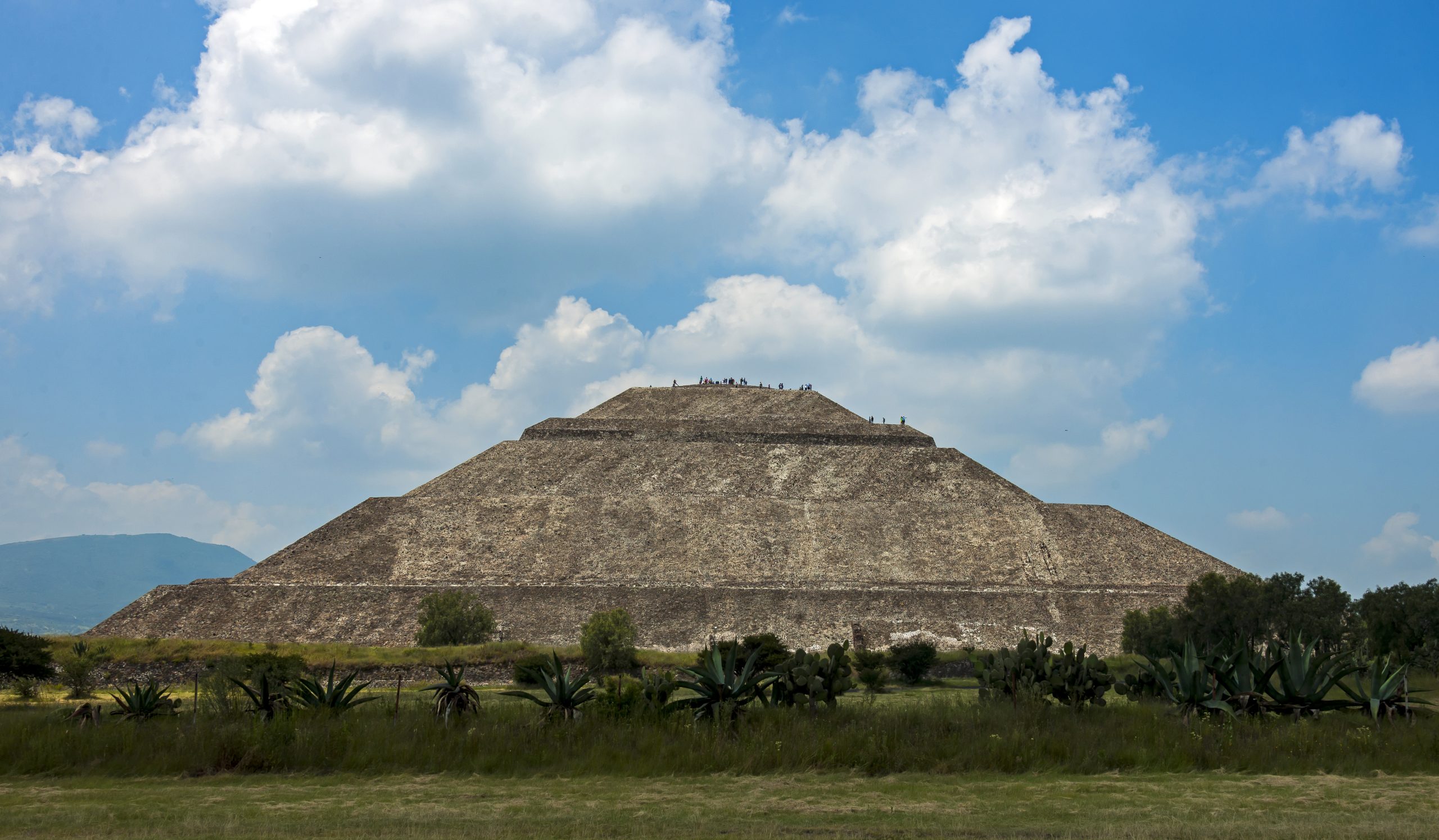
About an hour outside Mexico City lies one of the most mysterious places on the planet. A vast ancient city of broad avenues and towering pyramids, built by a people whose real name we do not even know, who spoke a language we cannot identify, and who vanished centuries before the Aztecs ever arrived. The Aztecs themselves stumbled upon the ruins long after they were abandoned, were so awestruck that they decided the gods must have been born there, and gave the place the name we still use today: Teotihuacán, often translated as the place where the gods were created. At its heart stands the enormous Pyramid of the Sun, one of the largest pyramids in the entire world. In this piece I want to walk you through this haunting city, the giant pyramid at its center, and the deep questions that still surround the people who built it.
Table of Contents
- A city of the gods
- The Pyramid of the Sun
- The Avenue of the Dead
- The Pyramid of the Moon
- The feathered serpent and its dark secret
- Who were these people?
- The tunnel beneath the pyramid
- The fall of a great city
- Closing thoughts
A city of the gods
Long before the Aztecs, long before the height of the Maya cities far to the south, Teotihuacán was already a thriving metropolis. At its peak, roughly 1,500 to 2,000 years ago, it was one of the largest cities on Earth, home to well over a hundred thousand people, possibly many more. To put that in perspective, it was bigger than almost any city in Europe at the time. This was a true ancient superpower, with influence that radiated across Mesoamerica, reaching even the distant Maya kingdoms, who knew of Teotihuacán and were clearly affected by its culture and politics.
The city was carefully planned on a grid, laid out with a precision that speaks of powerful central authority and skilled engineers. It had distinct neighborhoods, large apartment compounds where ordinary families lived, workshops, marketplaces, and grand ceremonial monuments along its central spine. People from many different ethnic groups seem to have lived there together, making it a genuinely cosmopolitan place. And yet, for all its size and sophistication, we still do not know what its builders called themselves or what language they spoke. The names we use, Teotihuacán, Pyramid of the Sun, Avenue of the Dead, were all given centuries later by the Aztecs, who inherited the ruins as a sacred mystery.
The Pyramid of the Sun
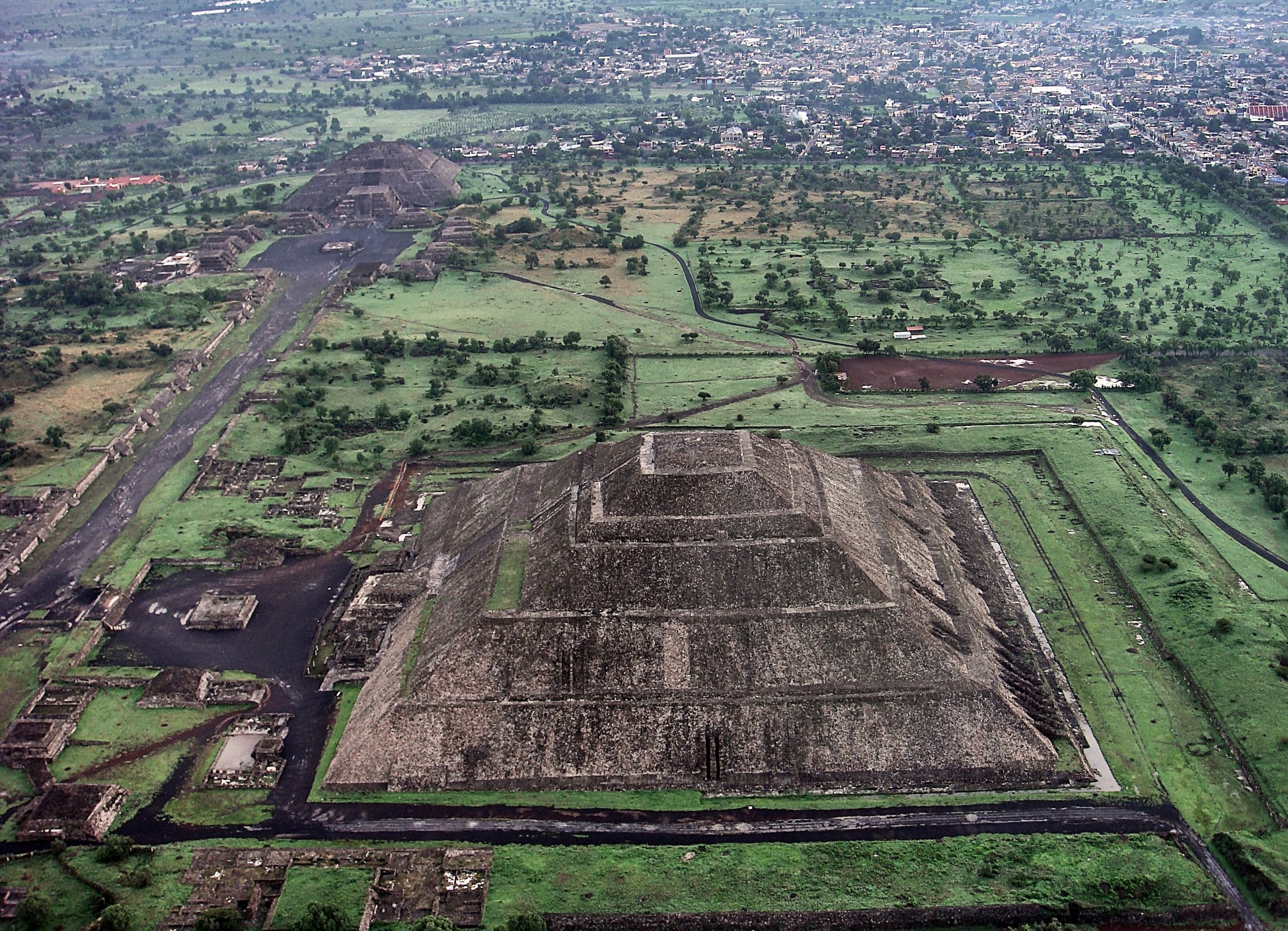
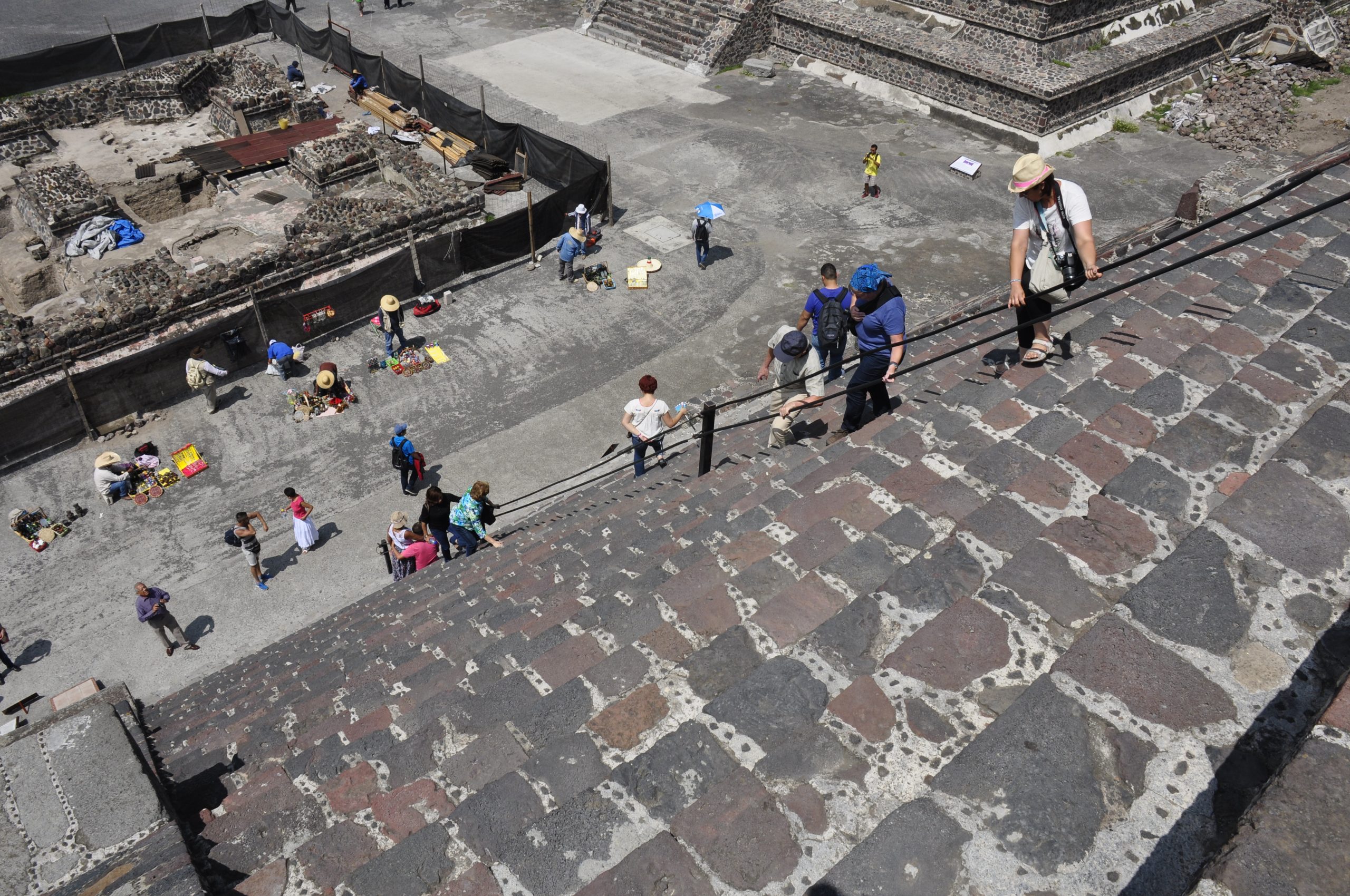
The Pyramid of the Sun dominates the city and the surrounding valley. It is enormous. Its base is roughly 220 meters on each side, comparable to the footprint of the Great Pyramid of Giza, and it rises in stepped terraces to a height of around 65 meters. By sheer volume it ranks among the very largest pyramids ever built anywhere on Earth. Standing at its foot and looking up the steep central staircase, you feel just how much human labor and organization went into raising such a mass of stone, rubble, and earth.
Unlike the smooth-sided pyramids of Egypt, this is a stepped pyramid, built in broad tiers, with a staircase climbing the front to a flat summit. Originally the whole structure would have been covered in a smooth coat of plaster and brightly painted, most likely in vivid reds and other colors, so that in its prime it would have blazed with color rather than showing the bare brown stone we see today. A temple almost certainly once crowned the top, though it has long since disappeared, leaving the flat platform that visitors climb to now.
One thing that has long fascinated researchers is the orientation of the pyramid. Like much of the city, it is aligned in a deliberate way that connects to the movement of the sun and certain key dates in the year, tying the architecture to the sky and the agricultural calendar. The builders of Teotihuacán, like the Maya and so many ancient peoples, wove their understanding of the heavens directly into the bones of their city.
How they built something so massive without metal tools, draft animals, or the wheel for heavy transport is a question worth sitting with. The answer, as with the pyramids of Egypt and the Maya, comes down to organization and labor on an immense scale. The core of the pyramid was filled with millions of basketloads of rubble and adobe, carried and packed by human hands, then faced with stone. It was a project that would have required a huge, coordinated workforce over a long stretch of time, and that in itself tells us how strong and centralized the authority running the city must have been.
The Avenue of the Dead
Running through the heart of the city is a long, wide ceremonial road that the Aztecs called the Avenue of the Dead. It stretches for kilometers, lined on both sides by platforms, temples, and pyramids, with the Pyramid of the Sun rising along its eastern side and the Pyramid of the Moon closing off its northern end. Walking along it, even in ruins, gives an overwhelming sense of grandeur and deliberate design.
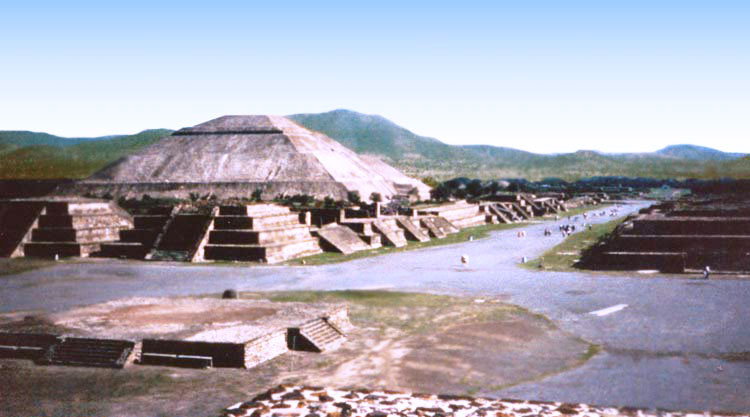
The Aztecs gave it that grim name because they assumed the many platforms lining it were tombs, the burial mounds of kings. In that they were mistaken. These were not graves but temples and ceremonial structures. But the name stuck, and there is something fitting about it anyway, because walking down that silent avenue between the looming pyramids really does feel like passing through a city of ghosts, a place built on a scale meant to humble any human being who stood within it.
The Pyramid of the Moon
At the northern end of the Avenue of the Dead stands the Pyramid of the Moon. It is smaller than the Pyramid of the Sun, but its position makes it just as important to the design of the city. It sits at the head of the avenue, framed dramatically by the mountain that rises behind it, and many believe its shape was deliberately built to echo the profile of that sacred peak. From the right spot, the pyramid and the mountain seem to mirror one another, the human-made and the natural forming a single sacred whole.
Excavations inside the Pyramid of the Moon have revealed a darker side to the city’s ceremonies. Archaeologists found buried offerings that included not only precious objects and animals but also human sacrifices, their remains placed within the structure as part of dedication rituals when the pyramid was enlarged. These grim discoveries are an important reminder that, for all its beauty and planning, Teotihuacán was a society with religious practices that could be brutal, where human lives were offered to the gods at moments the builders judged to be sacred.
The feathered serpent and its dark secret
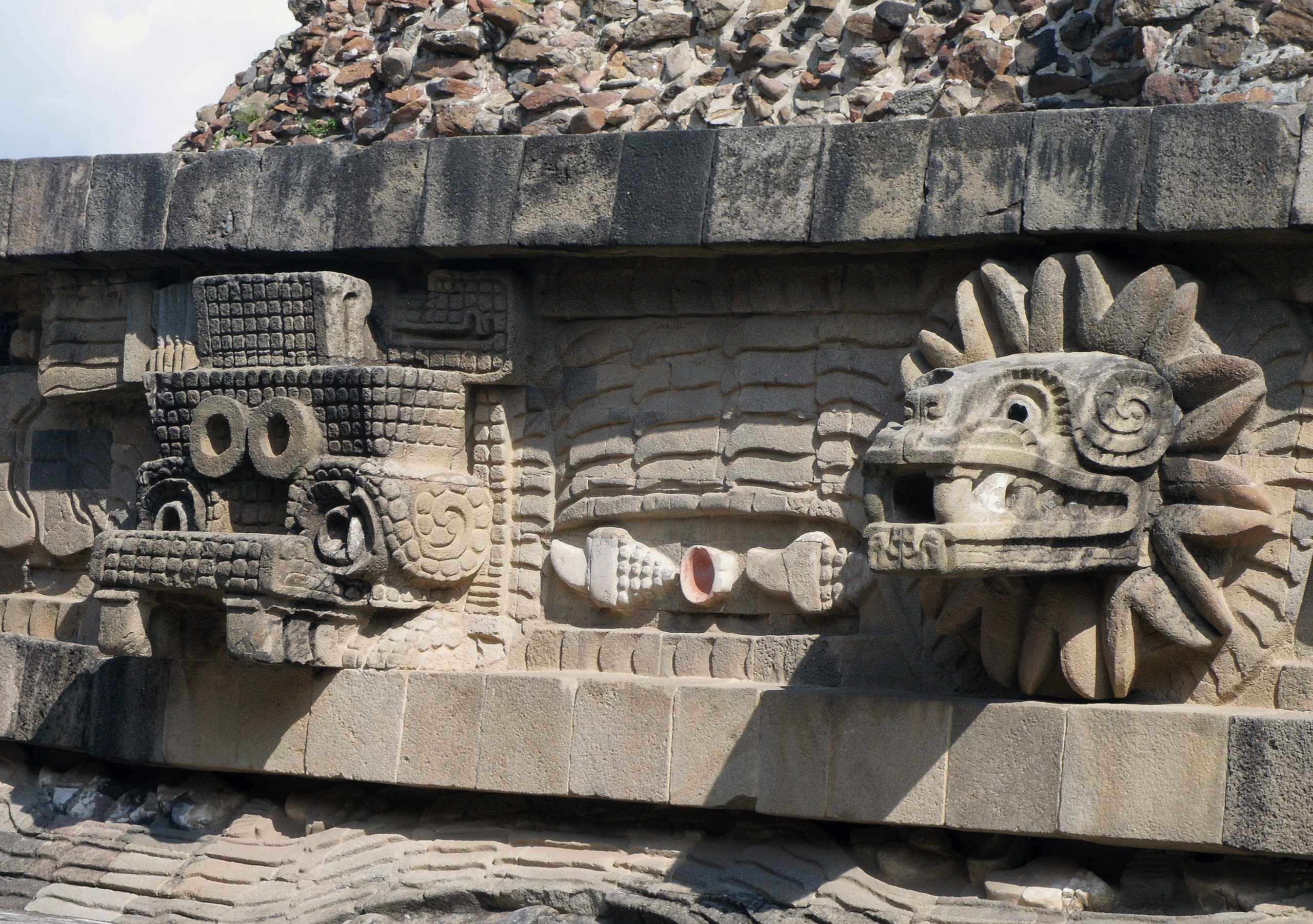
A third major monument, smaller than the two great pyramids but extraordinarily important, is the Temple of the Feathered Serpent, sometimes set within a great walled compound. Its facade is one of the most striking pieces of art to survive from the ancient city, covered in carved stone heads of the feathered serpent, the same deity later cultures would know as Quetzalcóatl, alternating with another fanged figure, all of it once brightly painted.
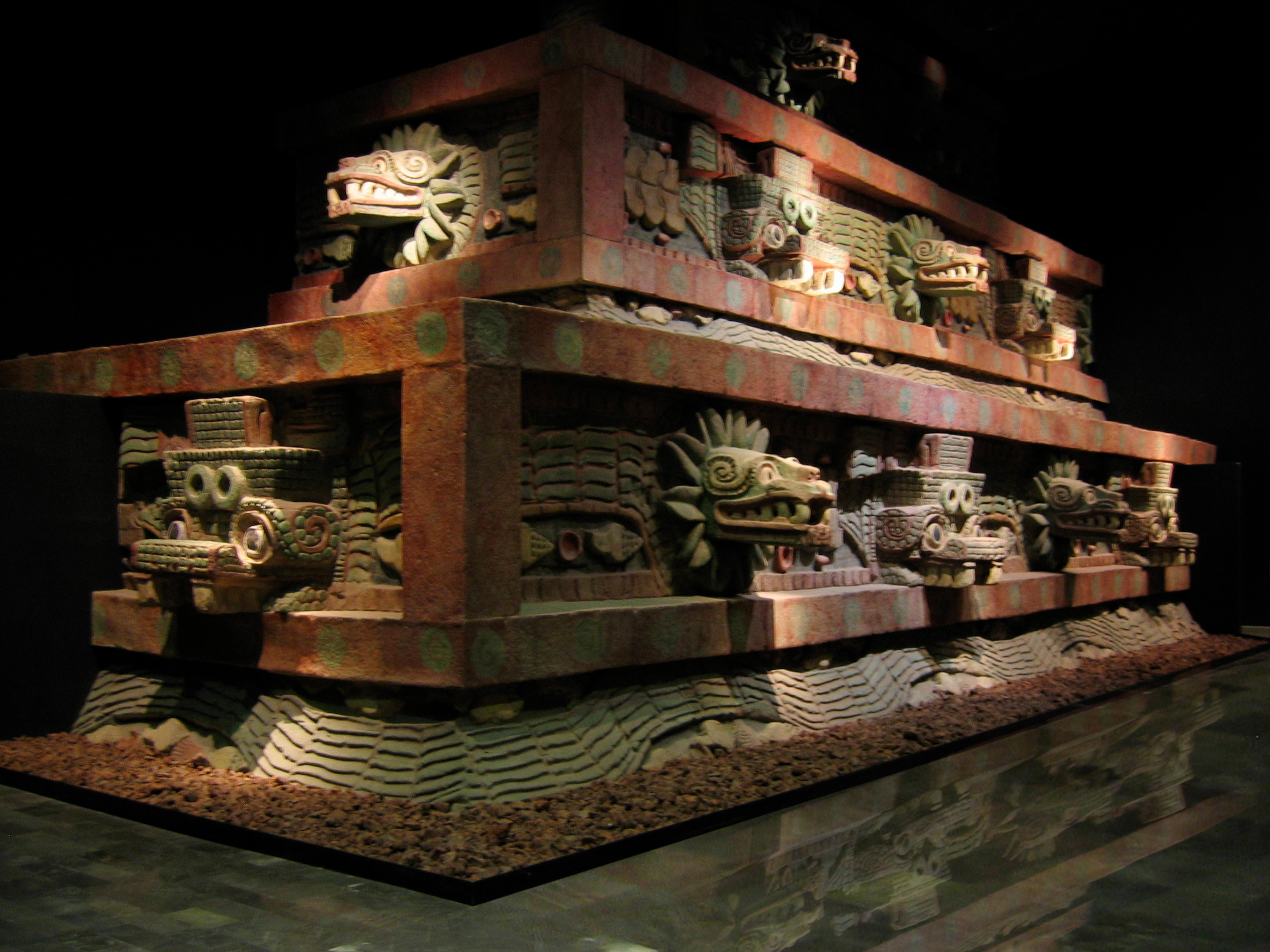
This temple, too, hides a chilling secret. When archaeologists excavated it, they uncovered the remains of more than a hundred people who had been sacrificed and buried in and around the structure when it was built. Many appear to have been warriors, buried with weapons and ornaments, their hands bound. The scale of the sacrifice suggests this was a massive, deliberate offering, possibly to consecrate the temple and project the power of the rulers who ordered it. It is a sobering glimpse into how seriously this civilization took the link between blood, power, and the favor of the gods.
Who were these people?
This is the great frustration and fascination of Teotihuacán. Despite being one of the most important cities in the history of the Americas, we know remarkably little about the people who built it. They did not leave behind a written language we can read, unlike the Maya with their detailed inscriptions. We do not know what they called their city, their gods, or themselves. We do not even know for certain what ethnic group they belonged to, and it may well have been a mix of several.
What we do know comes from the silent evidence of the ruins themselves: their art, their architecture, their pottery, the layout of their homes, and the bones and offerings buried in their monuments. From these clues, archaeologists have pieced together a picture of a powerful, organized, multi-ethnic state with far-reaching trade and influence. But the human story, the names and words and beliefs in their own voice, is largely lost to us. Teotihuacán speaks to us only through stone, and much of what it says remains a riddle.
One of the more poignant details is how dependent we are on the very people who came after them. Almost everything we casually call these monuments by, we owe to the Aztecs, who arrived as latecomers and named what they found. So when we say Teotihuacán, we are essentially using a nickname coined by tourists from a later age, who were just as mystified by the ruins as we are, perhaps more so. There is something humbling in realizing that the original identity of this superpower has slipped so completely through the cracks of time.
The tunnel beneath the pyramid
Some of the most exciting recent discoveries at Teotihuacán have come from beneath the ground. Under the Temple of the Feathered Serpent, researchers found a long sealed tunnel that had been deliberately closed off for nearly two thousand years. When they explored it, using small robots and careful excavation, they found it packed with thousands of offerings, including jade, shells, carved figures, and other precious objects.
Most astonishing of all, parts of the tunnel had been decorated with a glittering powder of minerals that would have made the ceiling sparkle like a starry sky in the torchlight, apparently meant to recreate the underworld and the cosmos beneath the earth. The tunnel seems to have been a sacred passage symbolizing a journey into the world below. Discoveries like this show that even after a century of study, Teotihuacán is still giving up brand new secrets, and that there is almost certainly far more waiting to be found beneath its plazas and pyramids.
The fall of a great city
Like every great civilization, Teotihuacán eventually fell. Sometime around 1,400 years ago, the city went into decline, and at some point its grand central monuments were deliberately burned and destroyed. Exactly what happened is still debated. Some evidence points to an uprising from within, a revolt against the ruling elite, since the destruction seems focused on the palaces and temples of the powerful rather than on the city as a whole. Other factors, such as drought, food shortages, and internal conflict, likely played a part as well.
Whatever the cause, the great city was largely abandoned, and over the centuries it fell into ruin. By the time the Aztecs rose to power and found the site, Teotihuacán had been empty and silent for hundreds of years. They looked upon the giant pyramids with awe and reverence, made pilgrimages there, and wove the place into their own myths, believing it was where the current age of the world had begun. In a sense, the city had a second life as a sacred relic for a civilization that had nothing to do with building it.
Closing thoughts
Teotihuacán is a humbling place to think about. Here was a city that rivaled the greatest in the world, raised pyramids among the largest ever built, planned its streets with mathematical care, traded and exchanged ideas across an entire continent, and then vanished so completely that even its own name was lost. The people who walked its avenues, climbed its pyramids, and carved its serpents are anonymous to us, known only through the magnificent and sometimes terrible things they left behind.
And yet, precisely because so much remains unknown, the place keeps its grip on the imagination. Every new tunnel, every fresh excavation, every buried offering brings us a little closer to understanding them. The Pyramid of the Sun still stands where it has stood for nearly two thousand years, waiting, as if the gods who were said to be created there might one day give up the rest of their secrets.
To keep exploring, browse more on topics like pyramids, Teotihuacán, the Pyramid of the Sun, Mesoamerica, ancient Mexico, and the Avenue of the Dead.
You May Like
The Bardo, a Palace of the Beys Filled With Roman Mosaics


One thought on “Teotihuacán: The Pyramid of the Sun and the Lost City of the Gods”