When you think of Rome, you picture the Colosseum, the Forum, ancient temples and triumphal arches. You almost certainly do not picture an Egyptian-style pyramid. And yet, standing in the middle of the city, wedged between busy roads and an ancient gate, is exactly that: a sharp white marble pyramid, nearly two thousand years old, that would not look out of place beside the Nile. It is the Pyramid of Cestius, and it is the strangest and most unexpected monument in Rome. How did a pyramid end up in the heart of the Roman Empire, who built it, and why? The answer is a fascinating tale of ancient fashion, personal vanity, and a city’s long obsession with Egypt.
Table of Contents
- A pyramid in Rome?
- Who was Cestius?
- Rome’s obsession with Egypt
- Why so steep and sharp?
- Inside the tomb
- Saved by the city walls
- The pyramid and the poets
- The pyramid today
- Closing thoughts
A pyramid in Rome?
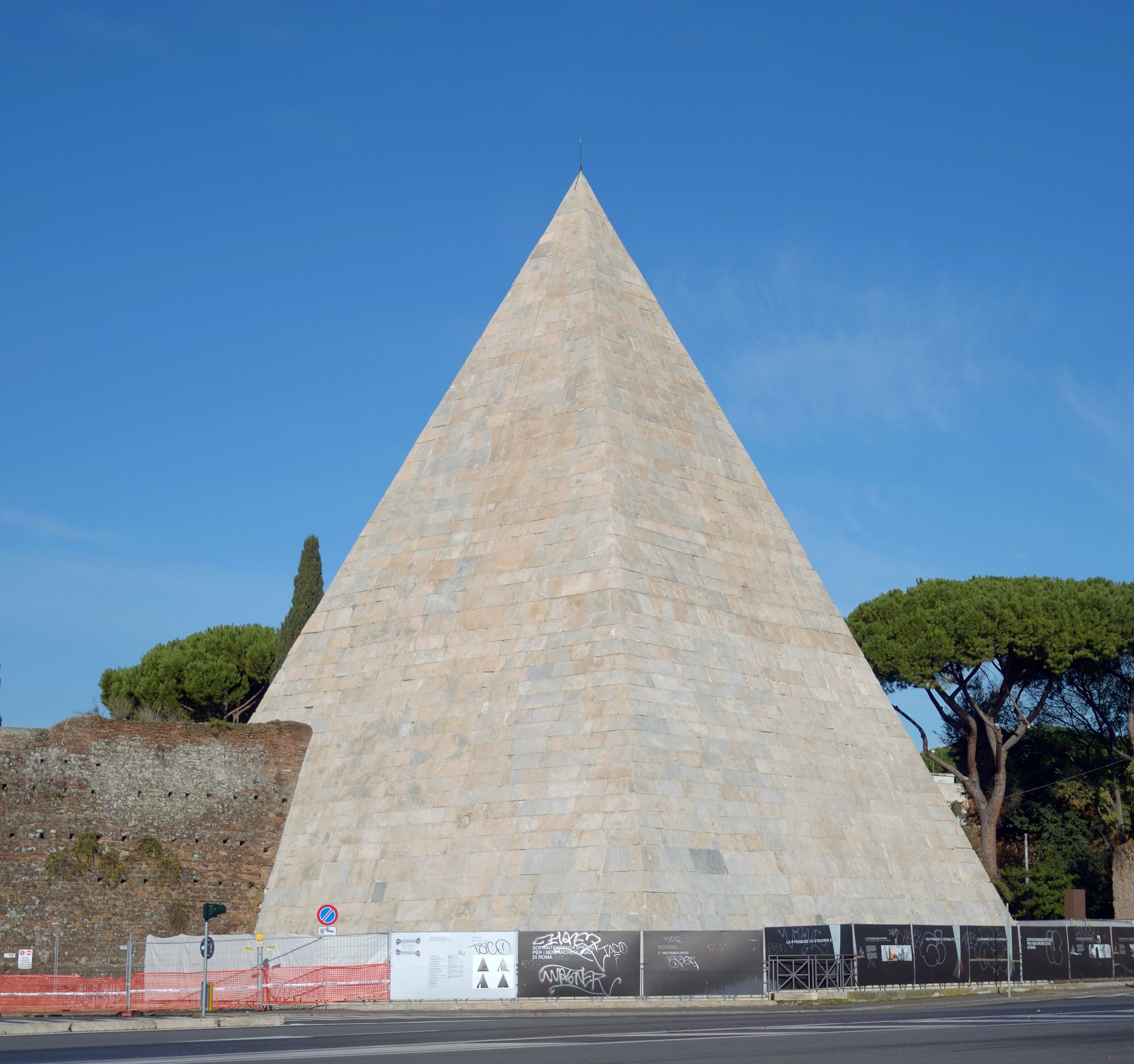
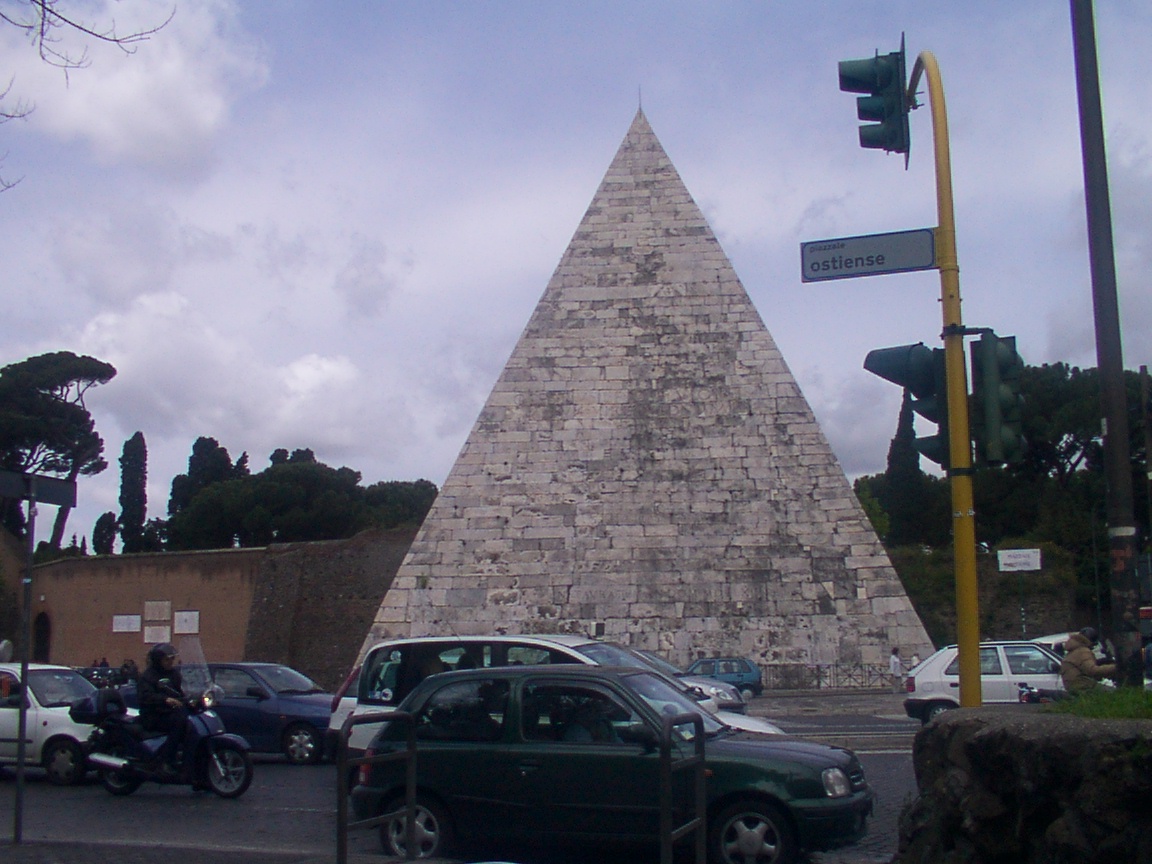
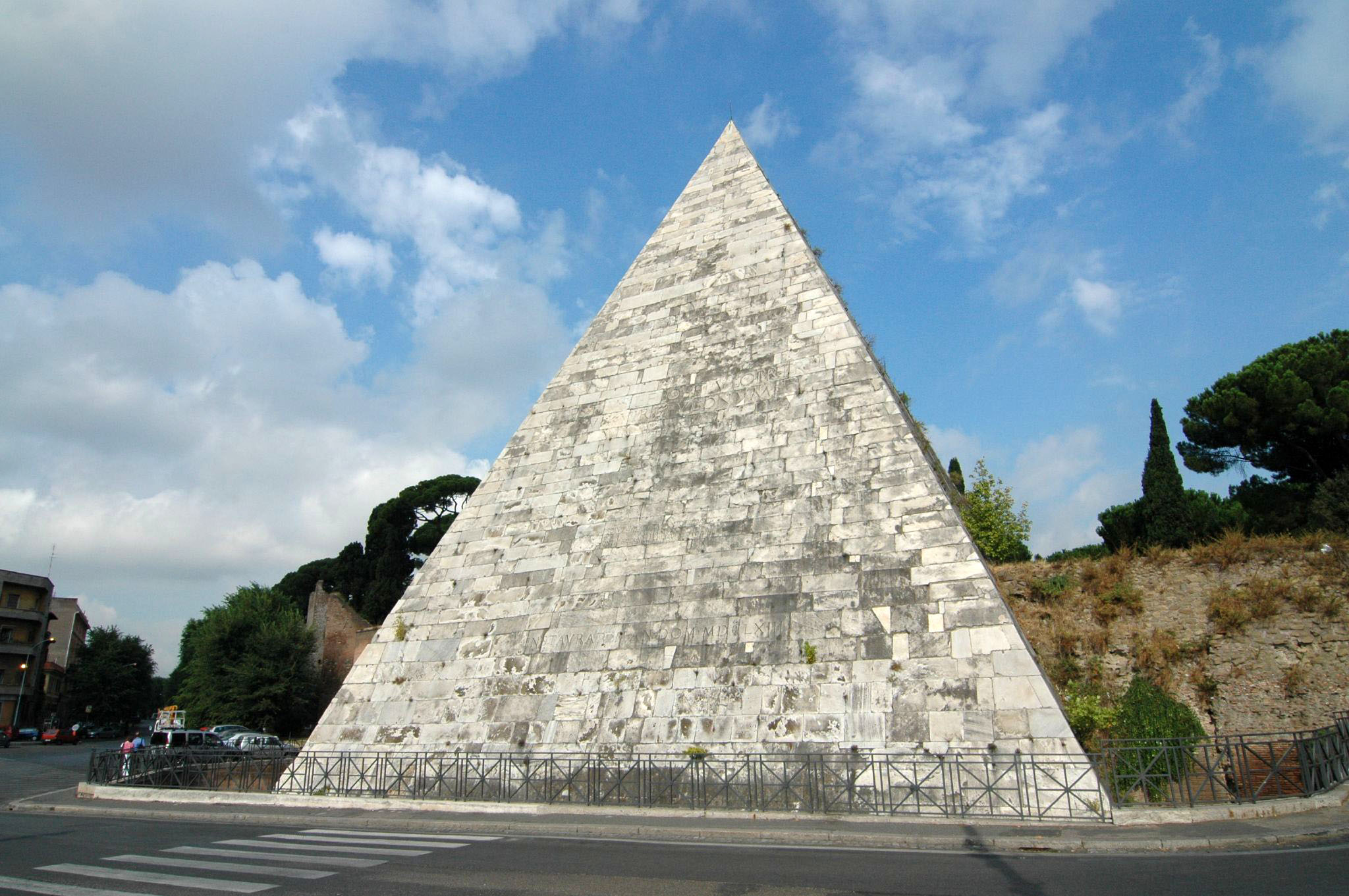
The Pyramid of Cestius rises about 36 meters high, built of brick-faced concrete and clad in gleaming white marble that gives it a crisp, almost startlingly clean appearance even today. It sits at a junction in the city, right beside one of the ancient gates in the old Roman walls, and a whole neighborhood and metro station nearby are simply named after it. For Romans it is a familiar landmark, but for visitors who stumble upon it, the sight of a genuine ancient pyramid in the middle of a European capital is wonderfully disorienting.
It is, importantly, a real ancient monument, not a later imitation. It was built around two thousand years ago, in the days of the early Roman Empire, not long after Rome had absorbed Egypt into its domains. So this is not a modern folly or a Renaissance curiosity. It is an authentic piece of antiquity, a tomb shaped like an Egyptian pyramid, raised by a Roman for a Roman, standing where it has stood for two millennia.
Who was Cestius?
The pyramid was built as a tomb for a man named Gaius Cestius, a wealthy and reasonably important Roman official who lived in the first century BCE. We know a fair amount about him precisely because he made sure of it: inscriptions carved boldly on the faces of the pyramid record his name and his titles, telling everyone who passed by exactly who lay within and what positions he had held in life.
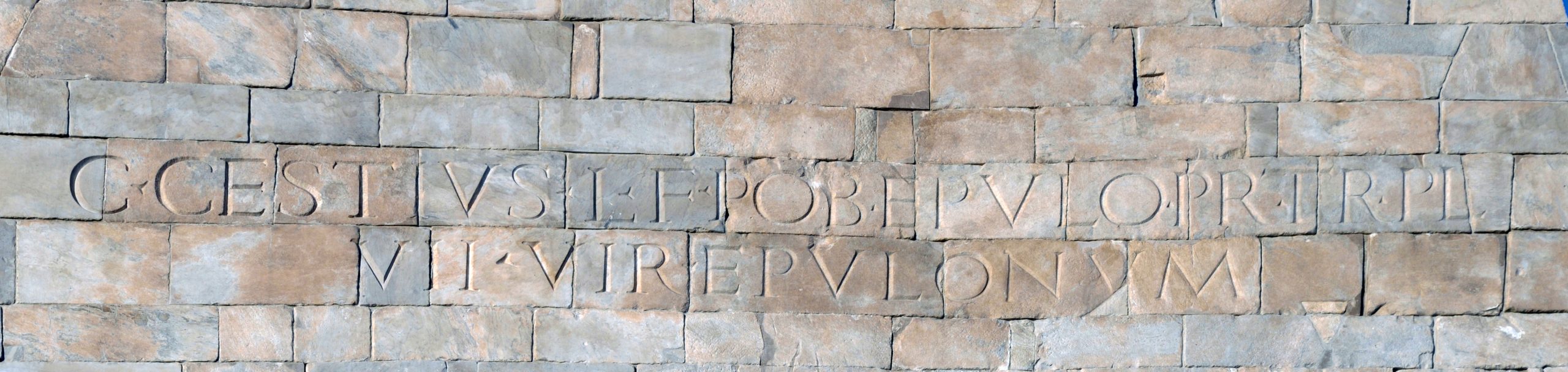
Cestius was not an emperor or a famous general. He was an affluent member of the Roman elite who wanted to be remembered, and he chose a spectacular and unusual way to guarantee it. The inscriptions even tell us, in effect, that the pyramid was completed in a remarkably short time, built to a deadline set by the terms of his will. In other words, this enormous stone monument was thrown up quickly to satisfy the dying wishes of a rich man determined to leave his mark on the world. And it worked. Two thousand years later, we are still talking about Gaius Cestius, a man who would otherwise be a forgotten name, simply because he built himself a pyramid.
Rome’s obsession with Egypt
So why a pyramid, of all things? The answer lies in a craze that swept Rome after it conquered Egypt. When the Romans defeated Cleopatra and absorbed the ancient land of the pharaohs into their empire, Egypt and all things Egyptian became wildly fashionable in Rome. The Romans were dazzled by Egypt’s antiquity, its exotic gods, its strange and beautiful art, and above all its monuments. This wave of fascination is sometimes called Egyptomania, and it left its mark all over the city.
The Romans hauled genuine Egyptian obelisks across the Mediterranean and set them up in their squares, where many of them still stand today, making Rome the city with the most ancient Egyptian obelisks in the world. They built temples to Egyptian gods like Isis, and they decorated their homes with Egyptian motifs. Against this backdrop, a wealthy Roman choosing an Egyptian pyramid for his tomb makes perfect sense. It was the height of fashion, a way of showing off his sophistication, his wealth, and his awareness of the exotic new province that had captured the imagination of the empire. Cestius’s pyramid was, in a sense, the ultimate status symbol of its age.
It is worth appreciating just how deep this fascination ran. Egypt was, to the Romans, almost unimaginably old, a land whose monuments were already ancient ruins when Rome itself was just a cluster of villages. Owning Egypt gave Rome not only its grain and its wealth but also a kind of borrowed prestige, a connection to a civilization of legendary antiquity. To wear that connection openly, by building Egyptian-style monuments, was to share in that aura of timeless grandeur. Cestius understood this perfectly, and his tomb is essentially a personal advertisement of refined, cosmopolitan taste.
Why so steep and sharp?
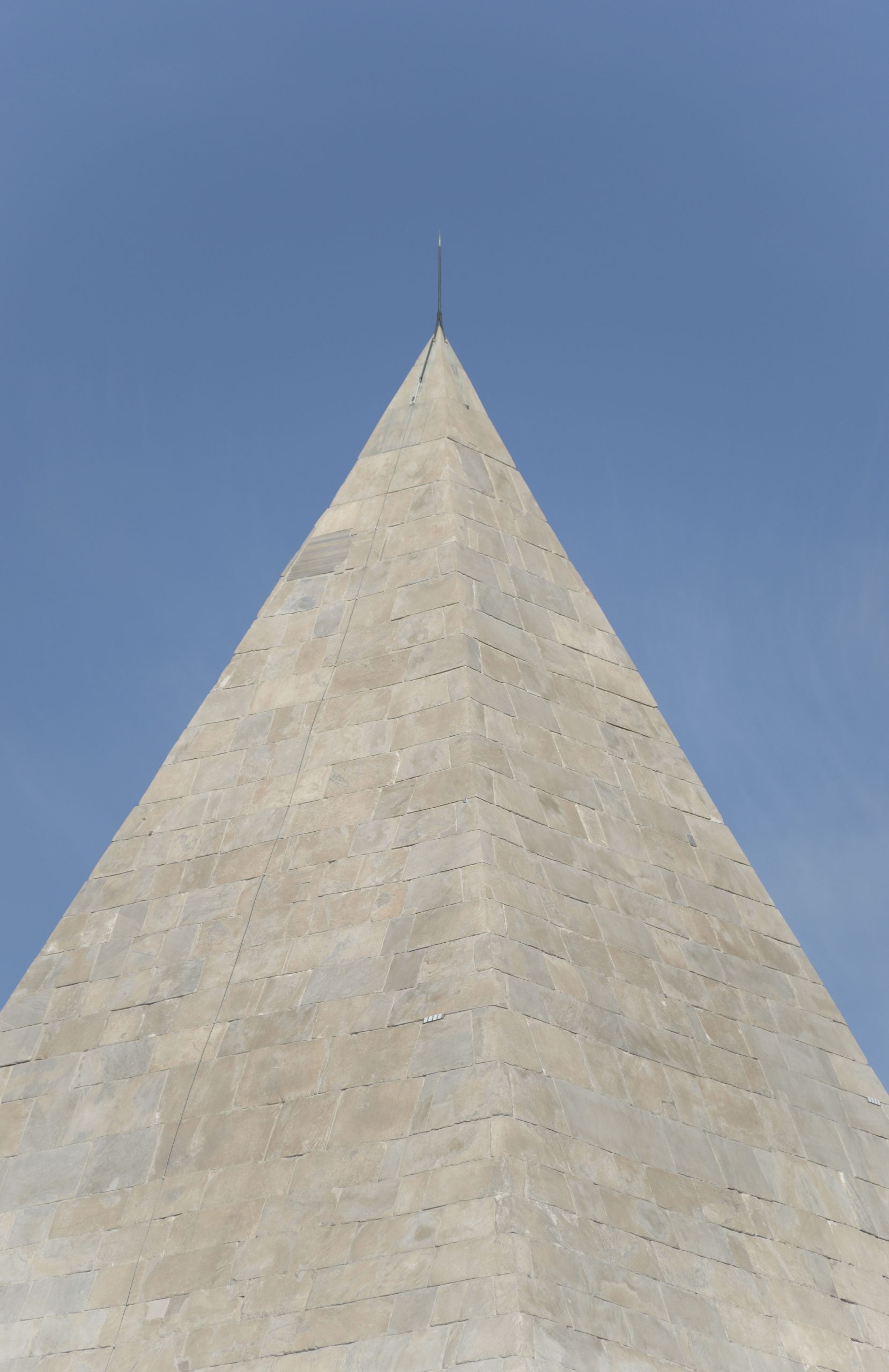
If you compare the Pyramid of Cestius to the great pyramids of Egypt, you will notice it looks quite different. The Egyptian pyramids at Giza have broad, relatively gentle slopes. The Cestius pyramid is far steeper and pointier, rising at a sharp angle to a narrow peak, with a tall, slender profile.
There is a reason for this, and it tells us something about how the Romans encountered Egypt. The Romans were most familiar not with the ancient pyramids of Giza but with the steeper, sharper pyramids of Nubia, to the south, which they had seen on their campaigns and which had that distinctive needle-like shape. So when Cestius and his builders modeled his tomb on a pyramid, they reproduced the steep Nubian style rather than the gentler Giza slope. In a neat twist that ties our whole pyramid journey together, the Roman pyramid in the heart of Italy actually echoes the African pyramids of Sudan more than the famous ones of Egypt. It is a small but lovely reminder of how interconnected the ancient world really was.
Inside the tomb
Inside the solid mass of the pyramid is a single small burial chamber, a modest room compared to the grand exterior. In the Egyptian tradition the Romans were imitating, such a chamber would have held the body and goods of the deceased. The interior was decorated with painted frescoes in the Roman style, traces of which survive, blending Roman artistic taste with the Egyptian-inspired form of the building.
Like so many ancient tombs, the burial chamber was robbed long ago, probably broken into during the medieval period, so the original contents and the body of Cestius himself are long gone. What remains is the magnificent shell, the pyramid itself, which has proven far more durable than whatever treasures it once contained. The monument outlasted not only its owner but also the thieves who plundered it, standing firm through the centuries while empires rose and fell around it.
Saved by the city walls
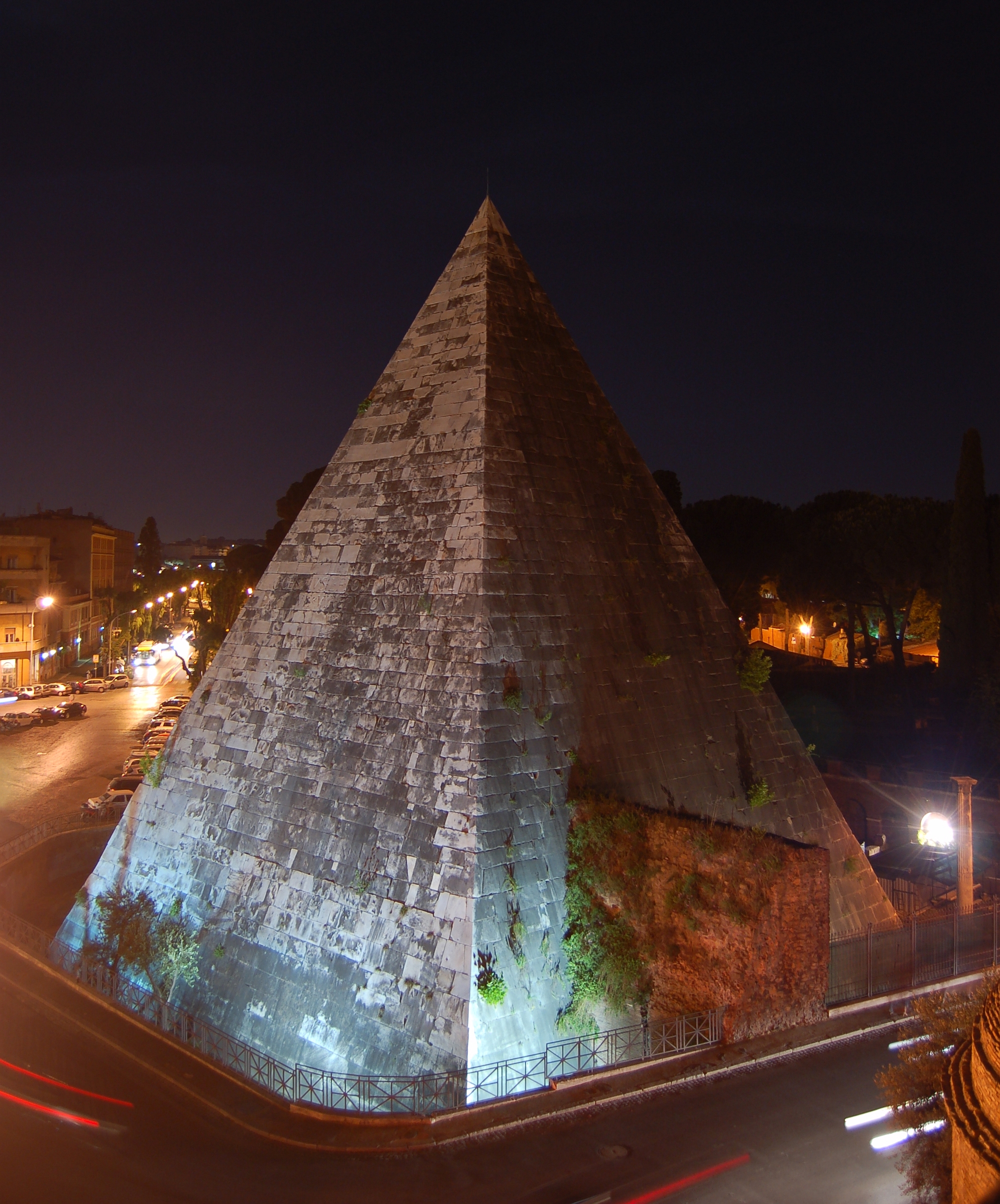
One of the reasons the Pyramid of Cestius survives in such good condition has to do with a stroke of historical luck. A few centuries after it was built, when Rome came under threat and needed stronger defenses, the city constructed a massive new ring of walls. Rather than demolish the pyramid, the builders simply incorporated it directly into the line of the walls, where it served as a ready-made bastion.
This is why the pyramid stands right next to an ancient gate: it became part of Rome’s fortifications. And that turned out to be its salvation. Being built into the defensive walls meant the pyramid was protected and maintained as a useful military structure, rather than being quarried away for its stone like so many other ancient Roman monuments were over the centuries. Many a grand Roman building was slowly dismantled to provide cut stone for later construction, but the pyramid, locked into the walls, survived nearly intact. Sometimes a monument endures not because it is treasured, but because it happens to be useful.
The pyramid and the poets
Over the centuries, the area around the pyramid became home to a famous cemetery, a peaceful, leafy burial ground that became the resting place for many non-Catholic foreigners who died in Rome, including a number of celebrated artists and writers. Because of this, the pyramid forms the backdrop to one of the most romantic and melancholy corners of the city.
For generations of travelers on the grand tour of Europe, and for the Romantic poets in particular, the sight of this ancient pyramid looming over a quiet cemetery full of cypress trees was deeply evocative. It captured a mood of beauty, mortality, and the passage of time that inspired writers and painters. The pyramid became not just an oddity but a symbol, a meeting point of ancient grandeur and human transience, watching silently over the graves at its feet. It is one of those places where history, art, and emotion all gather around a single old stone.
The pyramid today
Today the Pyramid of Cestius has been beautifully restored, its white marble cleaned so that it gleams once more much as it did when new. It stands amid the swirl of modern Roman traffic, an astonishing survivor, and on certain occasions visitors are even allowed inside to see the burial chamber and its faded frescoes.
It remains one of Rome’s most charming surprises, a monument that delights precisely because it is so unexpected. In a city overflowing with classical ruins, the pyramid stands apart, a reminder that ancient Rome was a vast, cosmopolitan empire that reached across the Mediterranean and absorbed the wonders of other lands, including the pyramids of Egypt and Nubia. It is proof that the pyramid, that universal human form, found its way even into the heart of the classical world.
There is a quiet irony worth savoring here as well. Cestius built his pyramid out of personal vanity, a rich man’s bid for immortality. By the ordinary measures of history he was a minor figure who left no great deeds behind. And yet his gamble succeeded beyond anything he could have dreamed. The emperors and generals he lived among are remembered, if at all, in dusty texts, while Cestius is remembered every single day by the thousands of people who pass his gleaming pyramid, by the neighborhood that bears its name, by every traveler who stops, surprised, to photograph it. He wanted to be remembered, and he is. Few monuments have ever fulfilled their purpose so completely.
Closing thoughts
The Pyramid of Cestius is a perfect final stop on a journey through the world’s pyramids, because it shows just how far the idea traveled. Here, in the capital of the Roman Empire, a wealthy man chose to be buried beneath an Egyptian-style pyramid, built in the steep Nubian style, as a fashionable expression of Rome’s love affair with Egypt. It survived because it was built into the city walls, inspired poets gazing over a quiet cemetery, and still astonishes visitors today.
From Giza to the Maya jungles, from the deserts of Sudan to the valleys of Peru, from the temples of the Aztecs to a street corner in Rome, the pyramid appears again and again, raised by peoples who often never knew of one another. The little white pyramid of Cestius, modest beside the giants of Egypt, ties the whole story together. It reminds us that the urge to build upward, to reach toward something greater, and to be remembered after death, is one of the most universal threads in the entire human story.
To keep exploring, browse more on topics like pyramids, the Pyramid of Cestius, ancient Rome, Roman architecture, Egyptomania, and Rome.
You May Like

The Bardo, a Palace of the Beys Filled With Roman Mosaics


2 thoughts on “The Pyramid of Cestius: Why There Is an Egyptian Pyramid in Rome”