You may have come across the claim online: China is secretly hiding its own pyramids, deliberately covering them with trees so the world will not notice them. It is the kind of story that spreads fast on the internet, complete with grainy old photos, satellite images, and hints of a government cover-up. So let me clear this up right away, because the truth is more interesting than the myth. Yes, there really are dozens of pyramid-shaped monuments in China. No, they are not a secret, and no, there is no grand conspiracy to hide alien technology. What they actually are is something genuinely remarkable: the colossal earthen tombs of ancient Chinese emperors, including one that hides what may be the most astonishing unopened tomb on Earth. Let us separate the facts from the fiction.
Table of Contents
- Are the Chinese pyramids real?
- What they actually are
- The “cover-up” claim, examined
- The First Emperor and his mountain
- The Terracotta Army
- Rivers of mercury
- Why they will not open the main tomb
- The other pyramids
- Closing thoughts
Are the Chinese pyramids real?
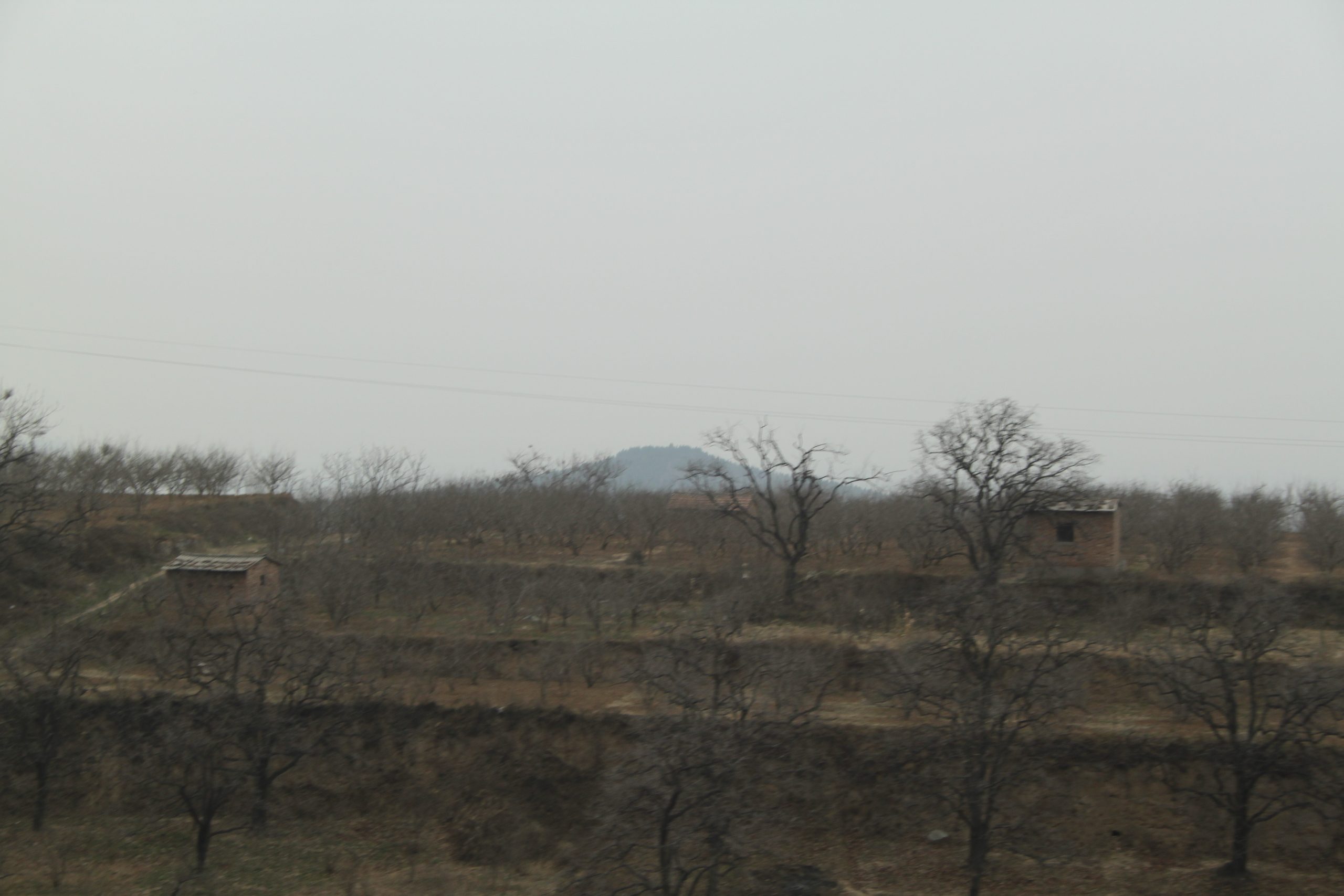
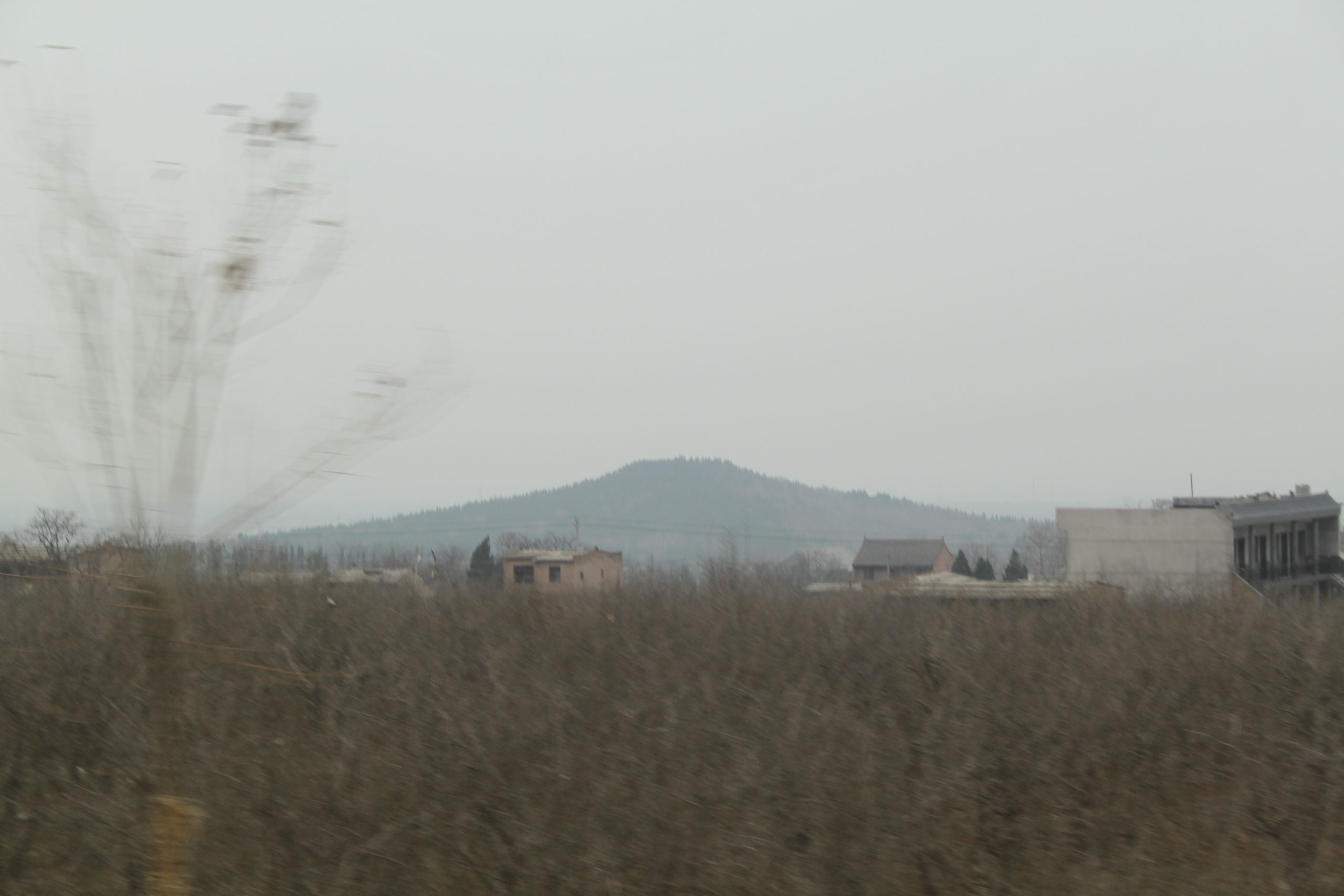
Let us start with the basic question, because it is the one that surprises people most. Yes, the Chinese pyramids are absolutely real. They sit mostly in the plains around the city of Xi’an, in Shaanxi province in central China, and there are dozens of them, with some counts running into the many tens. You can find them yourself on satellite maps if you know roughly where to look. They are large, flat-topped, and broadly pyramidal in shape, rising out of the farmland like great artificial hills.
So the existence of the structures was never really in doubt. What the internet rumors get wrong is everything about their nature and the supposed secrecy surrounding them. These are not mysterious, unexplained anomalies. They are well-documented archaeological sites, studied by Chinese scholars for decades, with a clear and well-understood history. The mystery, where there is one, lies inside them, not in whether they exist.
It is worth being honest about how the legend got started, because it has a real historical kernel. Back in the early twentieth century, Western travelers and pilots flying over central China reported seeing huge pyramid-like mounds, and a few sensational photographs and second-hand stories circulated, including wild talk of a gigantic “white pyramid.” Because China was largely closed off and hard to reach for much of that century, these reports went uninvestigated for decades, and rumor filled the gap. By the time the outside world could look properly, the internet had already turned a genuine but poorly understood sight into a full-blown mystery. So the myth did not come from nothing. It came from real mounds, glimpsed from a distance, in an age before anyone outside could simply go and check.
What they actually are
The Chinese pyramids are tombs. More precisely, they are enormous burial mounds raised over the graves of emperors and powerful nobles, mostly from the Qin and Han dynasties, dating back more than two thousand years. Rather than building with cut stone like the Egyptians, the Chinese piled up vast quantities of rammed earth, packing the soil down layer by layer into a solid, durable mass. Over centuries this technique produced huge, stable, pyramid-shaped hills of earth.
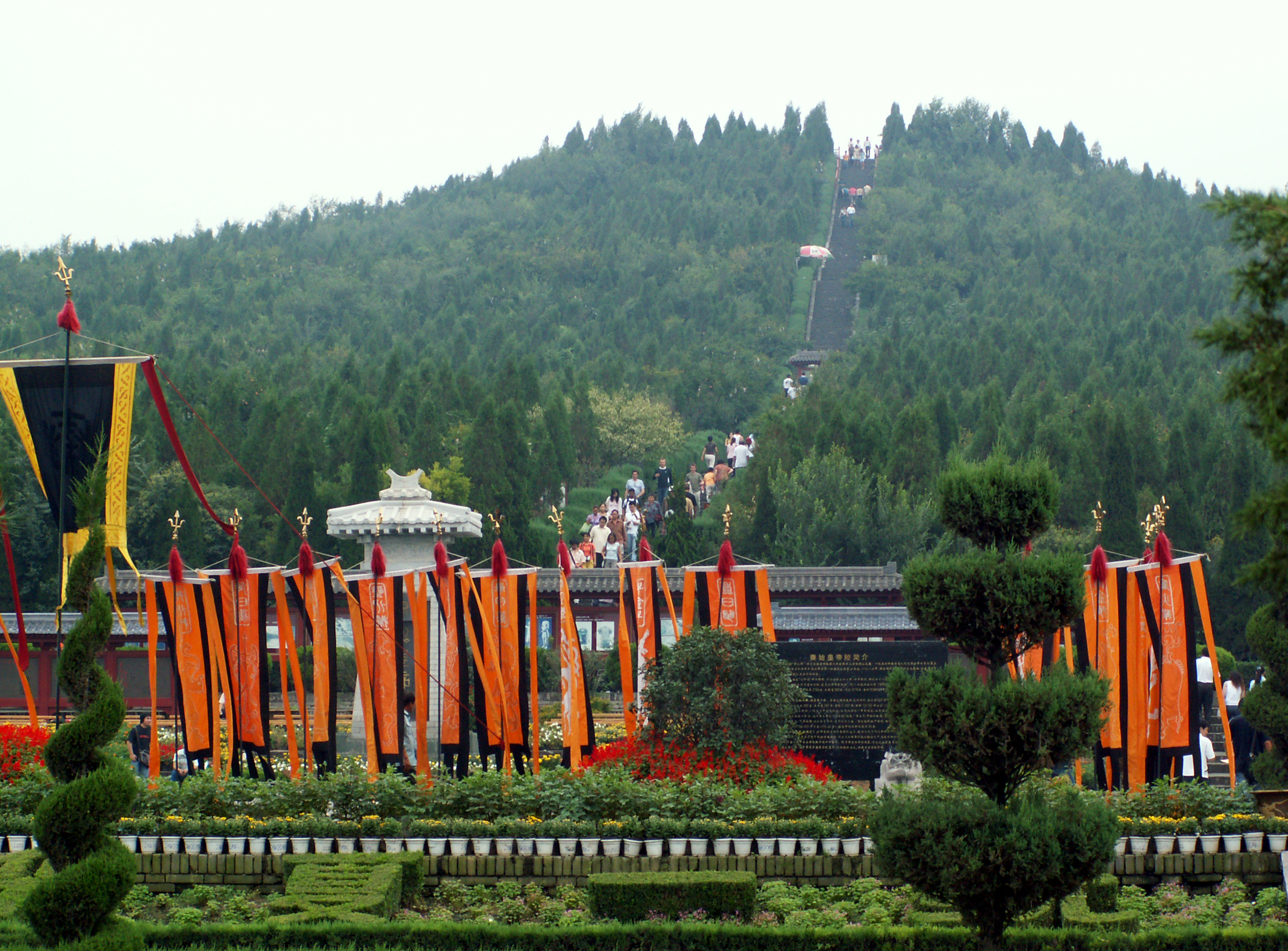
The flat-topped, stepped shape was not an accident or an attempt to copy Egypt. It was the natural result of the rammed-earth method and of Chinese ideas about the cosmos and the afterlife. The tomb mound was meant to be a kind of eternal palace for the dead ruler, a place from which his spirit could continue to govern in the next world. Their orientation and layout were carefully tied to Chinese beliefs about the heavens, the cardinal directions, and the proper harmony between the human world and the cosmos. So while they share a rough silhouette with the pyramids of Egypt and Mesoamerica, they grew out of an entirely separate tradition, with its own materials, methods, and meaning.
The “cover-up” claim, examined
Now to the juicy part: the supposed conspiracy. The popular story goes that the Chinese government deliberately planted trees on the pyramids to disguise them as natural hills and keep them hidden from the outside world, perhaps because they contain secrets too explosive to reveal. It is a great story. It is also not true, at least not in the way it is told.
Here is what is actually going on. It is true that many of these mounds have trees and vegetation growing on them, and that in some cases trees have been planted on and around them. But the reason is far more ordinary than a cover-up. Planting vegetation on ancient earthen mounds is a well-known conservation measure. The roots help hold the soil together and protect the fragile rammed-earth structure from wind and water erosion, which would otherwise slowly wear these hills away. Far from hiding the tombs, this is a way of preserving them. Greening bare earth is also simply common land management across the region.
As for secrecy, the sites are not hidden at all. The most famous of them is a major tourist destination visited by millions of people from all over the world. Chinese archaeologists have published extensively on these tombs. The idea that they are concealed falls apart the moment you realize you can buy a ticket and walk right up to the most important one. What probably fueled the myth was the genuine fact that the greatest of these tombs has never been excavated, which conspiracy theories then twisted into a tale of deliberate hiding. The reality behind that decision, as we will see, is fascinating but entirely down to earth.
The First Emperor and his mountain
The crown jewel of the Chinese pyramids is the tomb of Qin Shi Huang, the First Emperor of China. This was the ruler who, more than two thousand years ago, unified the warring states into a single empire, standardized writing, money, and measurements, began connecting the early walls that would grow into the Great Wall, and gave China its very name. He was one of the most powerful and ruthless figures in all of history, and he wanted a tomb to match his ambition.
His burial mound is gigantic, a great flattened pyramid of earth rising tens of meters above the surrounding plain near Xi’an. But the mound is only the visible tip of something far larger. Beneath and around it lies an enormous buried complex, a whole underground necropolis built to serve the emperor in death, planned on a scale that staggers the imagination. The First Emperor did not just want a grave. He wanted an entire world to rule over for eternity, and he had the absolute power and the workforce of hundreds of thousands of laborers to build it.
The Terracotta Army
And here is where the story becomes world-famous. In 1974, farmers digging a well near the tomb mound stumbled upon something extraordinary: fragments of life-sized clay soldiers buried in the ground. What they had found turned out to be one of the greatest archaeological discoveries of the twentieth century, the Terracotta Army.
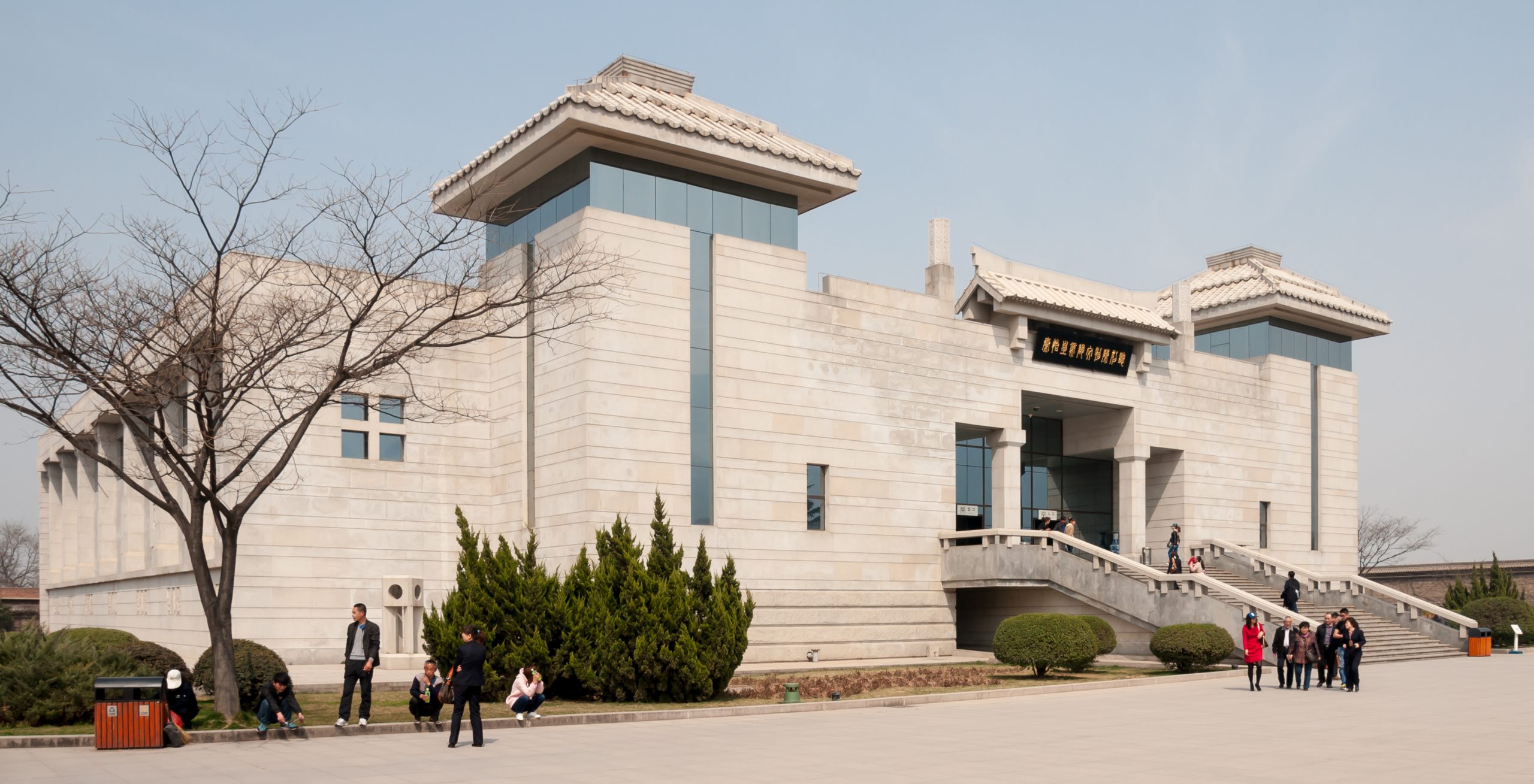
Buried in pits a short distance from the emperor’s mound stood an army of thousands of clay warriors, arranged in battle formation, ready to guard their ruler in the afterlife. And these were no crude dolls. Each soldier was individually crafted, with its own face, hairstyle, uniform, and rank, so that no two are exactly alike. There are foot soldiers, archers, cavalrymen, officers, and generals, along with horses and wooden chariots. Originally they were all painted in bright colors, though much of the paint flaked away soon after the figures met the air following their long burial.
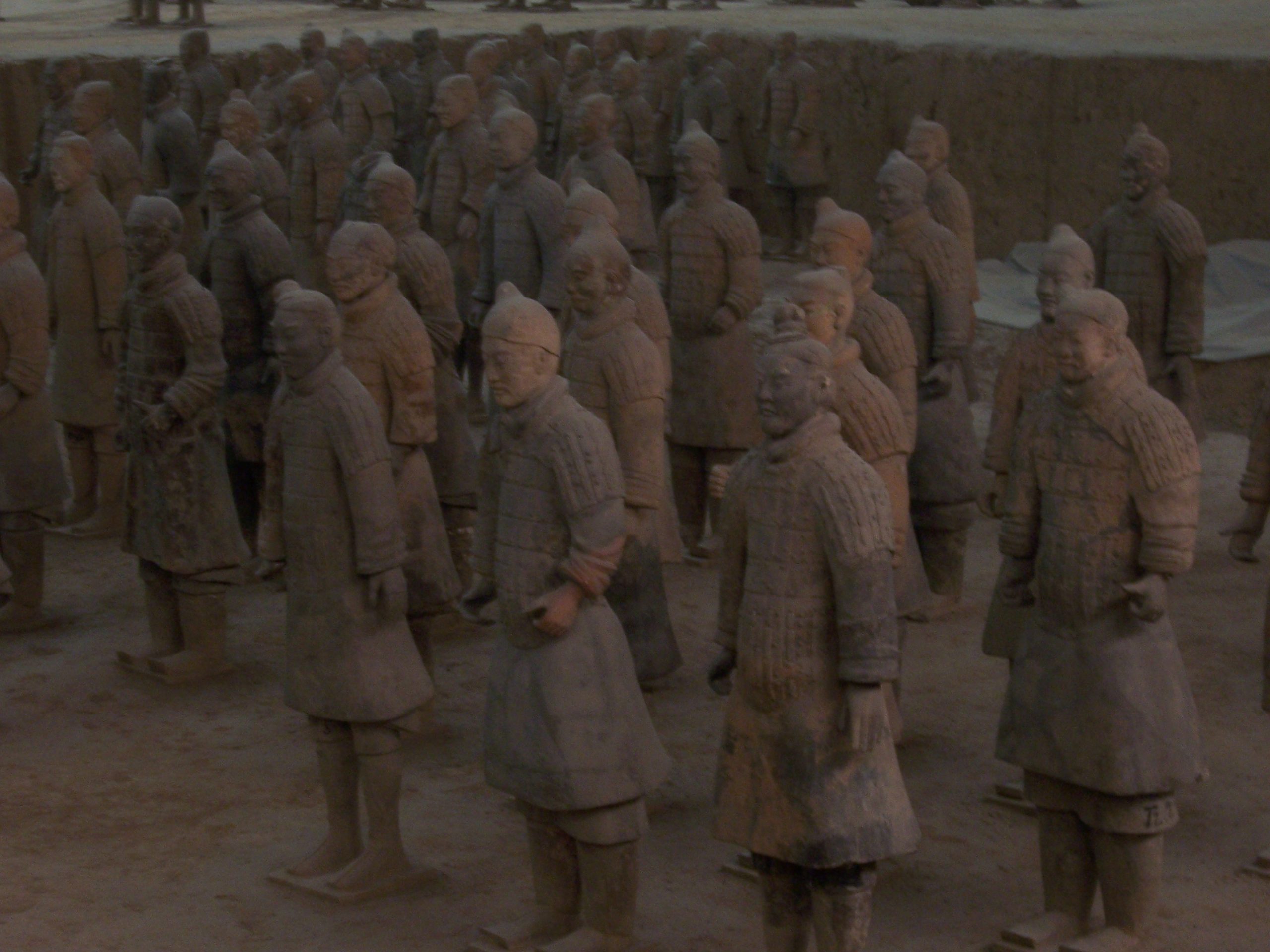
The scale and craftsmanship of this buried army give us a sense of the sheer obsession that went into the First Emperor’s tomb. And remember, the Terracotta Army is not even inside the main tomb. It is just one part of the outer defenses, the guards stationed in the pits surrounding the central mound. If the warriors were what they buried on the edges, the question of what lies at the heart of the tomb becomes almost unbearably tantalizing.
Rivers of mercury
Here the ancient written record adds a detail that sounds like pure legend but may well be true. An ancient Chinese historian, writing about a century after the emperor’s death, described the inside of the tomb in vivid terms. He wrote that the burial chamber contained a model of the emperor’s entire empire, complete with its great rivers and seas recreated in flowing mercury, with the heavens painted above and the earth laid out below. Mechanical crossbows were said to be rigged to fire automatically at any intruder who dared break in.
For a long time this was dismissed as a colorful exaggeration. But then modern scientists tested the soil of the tomb mound and found something striking: unusually high concentrations of mercury, far above natural levels, distributed across the mound in a pattern that some have suggested could even echo the layout of ancient China’s rivers. This does not prove the ancient account in every detail, but it strongly supports the core of it. There really does appear to be a large amount of mercury sealed inside that tomb, just as the old historian claimed. It is one of those rare cases where a story that sounds mythical turns out to have hard physical evidence behind it.
What makes this detail so compelling is the way it bridges legend and laboratory. For most of history we only had the word of a single ancient writer, and it would have been easy to file his account under myth and move on. Instead, modern soil testing reached back across two thousand years and quietly confirmed that he seems to have known what he was talking about. It is a humbling reminder not to dismiss old records too quickly. Sometimes the ancients were recording something they had genuinely seen or known, even when it sounds fantastical to us now.
Why they will not open the main tomb
So we come to the real heart of the matter. The central tomb of the First Emperor, the one beneath the great mound, has never been opened. It has sat sealed for more than two thousand years, and the Chinese authorities have deliberately chosen not to excavate it. This is the genuine fact that conspiracy theories distort into a cover-up. The truth is that the reasons for leaving it sealed are sensible, even admirable.
The first reason is that mercury. If the chamber really is flooded with it, opening the tomb carelessly would release a cloud of toxic vapor, endangering anyone nearby and the surrounding area. Excavating it safely would require extraordinary precautions. The second reason is preservation. We have already seen what can go wrong. When the Terracotta warriors were first unearthed, their bright original paint reacted with the air and began to flake and fade within minutes. Archaeologists watched priceless color vanish before their eyes. The fear is that opening the main tomb with today’s technology would destroy delicate treasures that have survived intact for millennia, the moment they are exposed.
So the decision is essentially this: better to wait. Better to leave the tomb sealed and protected until science develops methods good enough to excavate it without ruining what is inside. It is a remarkable act of patience and humility, choosing to preserve a mystery rather than tear it open for the sake of curiosity. The greatest unopened tomb in the world is being saved, quite deliberately, for a future that can do it justice.
The other pyramids
The First Emperor’s tomb is the star, but it is far from the only Chinese pyramid. The plains around Xi’an are dotted with the burial mounds of later emperors and nobles, especially from the Han dynasty that followed. One of the largest is the tomb of a powerful Han emperor, a massive mound that ranks among the biggest of all the Chinese pyramids.
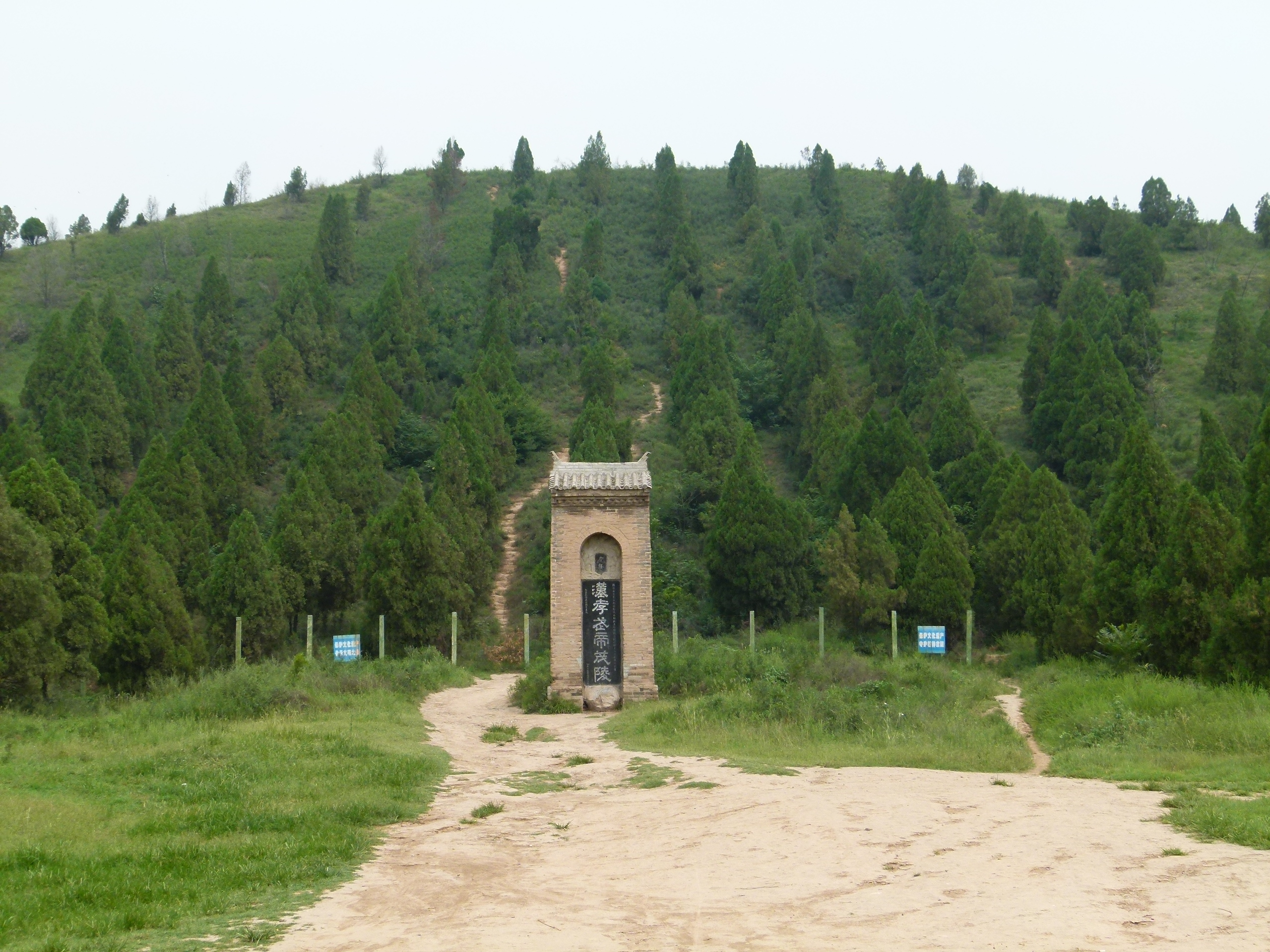
These other mounds have their own buried treasures and their own armies of figures, though usually on a smaller scale than the First Emperor’s. Some have been partially excavated, revealing further pits of ceramic figures, animals, and goods meant to accompany the dead into the afterlife. Together they form one of the richest concentrations of imperial tombs anywhere in the world, a whole landscape of ancient power frozen in earth. They are a reminder that the tradition of the great tomb mound continued in China for centuries, each dynasty adding its own monuments to the plain.
Closing thoughts
The story of the Chinese pyramids is a perfect example of how a genuine wonder gets buried under internet nonsense. Strip away the talk of cover-ups and hidden aliens, and what remains is arguably more amazing than the myth. A ruthless emperor who unified a civilization built himself an entire underground world, guarded by thousands of individually sculpted clay soldiers and, if the ancient accounts are right, filled with rivers of liquid mercury beneath a painted sky. And the centerpiece of it all still lies sealed, untouched, waiting beneath its great mound of earth.
There is no conspiracy here, just conservation, caution, and a refreshing willingness to leave a mystery intact rather than spoil it. The trees on the mounds are protecting them, not hiding them. The sealed tomb is being preserved, not concealed. And the real secret of the Chinese pyramids is simply this: the most extraordinary one of all has not been opened yet, and when it finally is, it may rewrite parts of what we know about the ancient world. That is a future discovery worth being patient for.
To keep exploring, browse more on topics like pyramids, the Chinese pyramids, Qin Shi Huang, the Terracotta Army, ancient China, and Xi’an.
You May Like
The Bardo, a Palace of the Beys Filled With Roman Mosaics