Quick question: what is the largest pyramid in the world? If you said the Great Pyramid of Giza, you are in good company, but you would also be wrong. By sheer volume, the biggest pyramid ever built by human beings is not in Egypt at all. It sits in the town of Cholula, in central Mexico, and here is the twist that makes it one of the strangest monuments on Earth. For centuries, almost nobody realized it was a pyramid, because it looks like a big grassy hill with a church perched on top. People had literally built a town around it and a chapel on it without grasping that the whole mound beneath their feet was the greatest pyramid humanity ever made. Let me tell you the remarkable story of the Great Pyramid of Cholula.
Table of Contents
- The biggest pyramid in the world
- The pyramid that hid as a hill
- A pyramid built in layers
- Who built it, and for whom?
- The church on the summit
- Conquest and a terrible massacre
- The tunnels inside
- Cholula today
- Closing thoughts
The biggest pyramid in the world
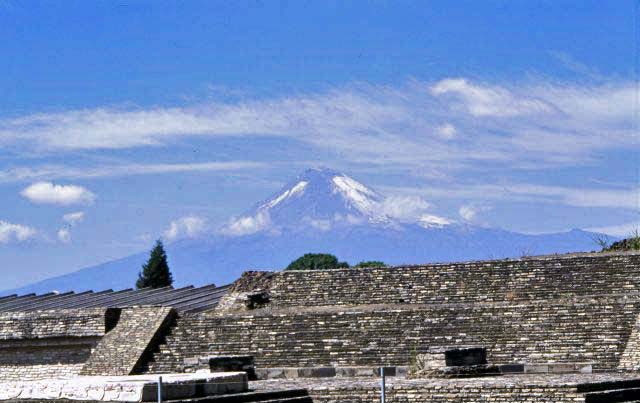
Let us settle the record straight away. The Great Pyramid of Cholula holds the title of the largest pyramid, and indeed the largest monument, ever constructed anywhere on the planet, measured by volume. Its base covers a staggering area, far wider than the base of the Great Pyramid of Giza, spanning something like 400 meters on each side. While it is not as tall as Giza, rising to around 55 to 66 meters, its enormous footprint means it contains a greater total volume of material than any other pyramid in existence.
So when people debate whether Giza or some other monument is the greatest, the honest answer depends on what you measure. Giza is the tallest of the ancient pyramids and the most precisely engineered. But if you are asking which single pyramid is the most massive, which one used the most material and covers the most ground, the winner is Cholula, by a wide margin. And almost nobody knows it.
It helps to picture the comparison concretely. The Great Pyramid of Giza has a base of around 230 meters per side, which is already vast. Cholula’s base stretches far wider than that, which is why, even though it stands lower, the total bulk of material packed into it comes out greater. Imagine a pyramid so broad that an entire neighborhood, with streets, houses, and a hilltop church, now sits comfortably on and around it. That is the scale we are dealing with. It is less a building you look up at and more a piece of landscape you walk across.
The pyramid that hid as a hill
This is the detail that makes Cholula so wonderfully strange. Today, if you walk up to it, the Great Pyramid does not look like a pyramid at all. It looks like a large natural hill, green and overgrown, with trees and grass covering its slopes and a pretty yellow church sitting on the very top. You could stand right next to it and never guess that the entire hill is a human-made structure.
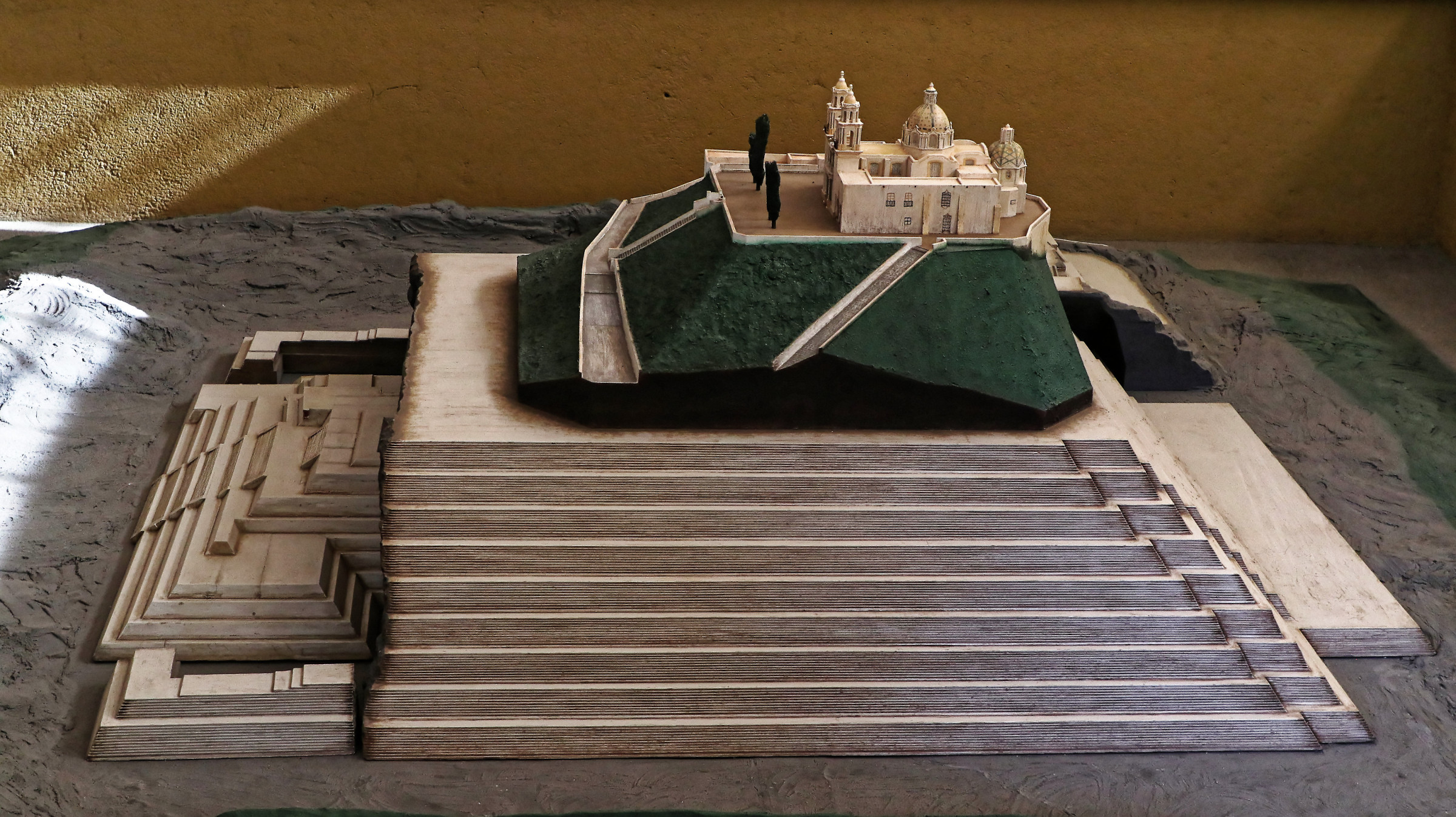
The reason is centuries of abandonment and nature reclaiming the site. After the pyramid stopped being used and maintained, soil and vegetation gradually covered its surface. Over a very long time, the sharp lines of the structure softened into what looked like an ordinary hill. By the time Spanish conquerors arrived in the early sixteenth century, the great monument was already grassed over and disguised. The Spanish, seeing a commanding hilltop, did what they often did: they built a Christian church on top of it, symbolically planting their faith above the highest point in the area. They had no real idea they were standing on the largest pyramid ever built. That knowledge only came much later, when archaeologists began tunneling into the hill and discovered the colossal man-made structure hidden inside.
A pyramid built in layers
The Great Pyramid of Cholula was not raised all at once. Like a number of Mesoamerican pyramids, it grew over many centuries through repeated construction, with each new generation building a fresh, larger pyramid over the top of the older one. The result is a kind of nested structure, with several earlier pyramids buried one inside the next, like the layers of an onion or a set of nesting boxes.
This layered growth happened over a very long span of time, with the earliest building stages reaching back roughly two thousand years or more, and later expansions continuing for centuries afterward. Each phase reflected the beliefs, styles, and ambitions of the people who built it in their own era. Because of this, the pyramid is really many pyramids in one, a stacked record of generations of devotion, all hidden today beneath its grassy skin. For archaeologists, cutting into it is like reading the rings of an ancient tree, each layer telling part of a long story.
It is worth noting how this approach differs from Egypt. The Egyptians generally built a pyramid for a single ruler and sealed it. In Mesoamerica, by contrast, a great pyramid was a living, evolving thing, repeatedly rebuilt and enlarged on the same sacred spot, because the location itself was holy and worth honoring again and again. Cholula is perhaps the ultimate example of this philosophy, a monument that kept growing for the better part of a thousand years, never finished so much as endlessly renewed.
Who built it, and for whom?
The pyramid was a religious monument, dedicated to the worship of the gods, and it was closely associated with the feathered serpent deity Quetzalcóatl, one of the most important gods across ancient Mexico. On top of the structure, in its active days, stood temples where ceremonies, offerings, and rituals were performed. The pyramid functioned much like the temple pyramids of other Mesoamerican peoples, serving as a raised sacred stage lifting the holiest rites high above the surrounding city.
Cholula itself was an ancient and important city, one of the most significant religious centers in all of central Mexico, and it remained continuously inhabited for an extraordinarily long time, making it one of the oldest continually occupied cities in the Americas. Pilgrims traveled there to honor the gods, and its great pyramid was a focus of that devotion. Several different cultures contributed to the city and its monument over the centuries, so rather than the work of a single people, the pyramid is better understood as the accumulated achievement of a long-lived and sacred city that many groups held dear.
The church on the summit
The church that sits on top of the pyramid today is a striking symbol in its own right. After the Spanish conquest, a Catholic church dedicated to a patron Virgin was built upon the summit of the overgrown mound. It is a beautiful building, brightly colored, with commanding views over the town and, on clear days, a breathtaking vista of the great volcano Popocatépetl smoking in the distance.
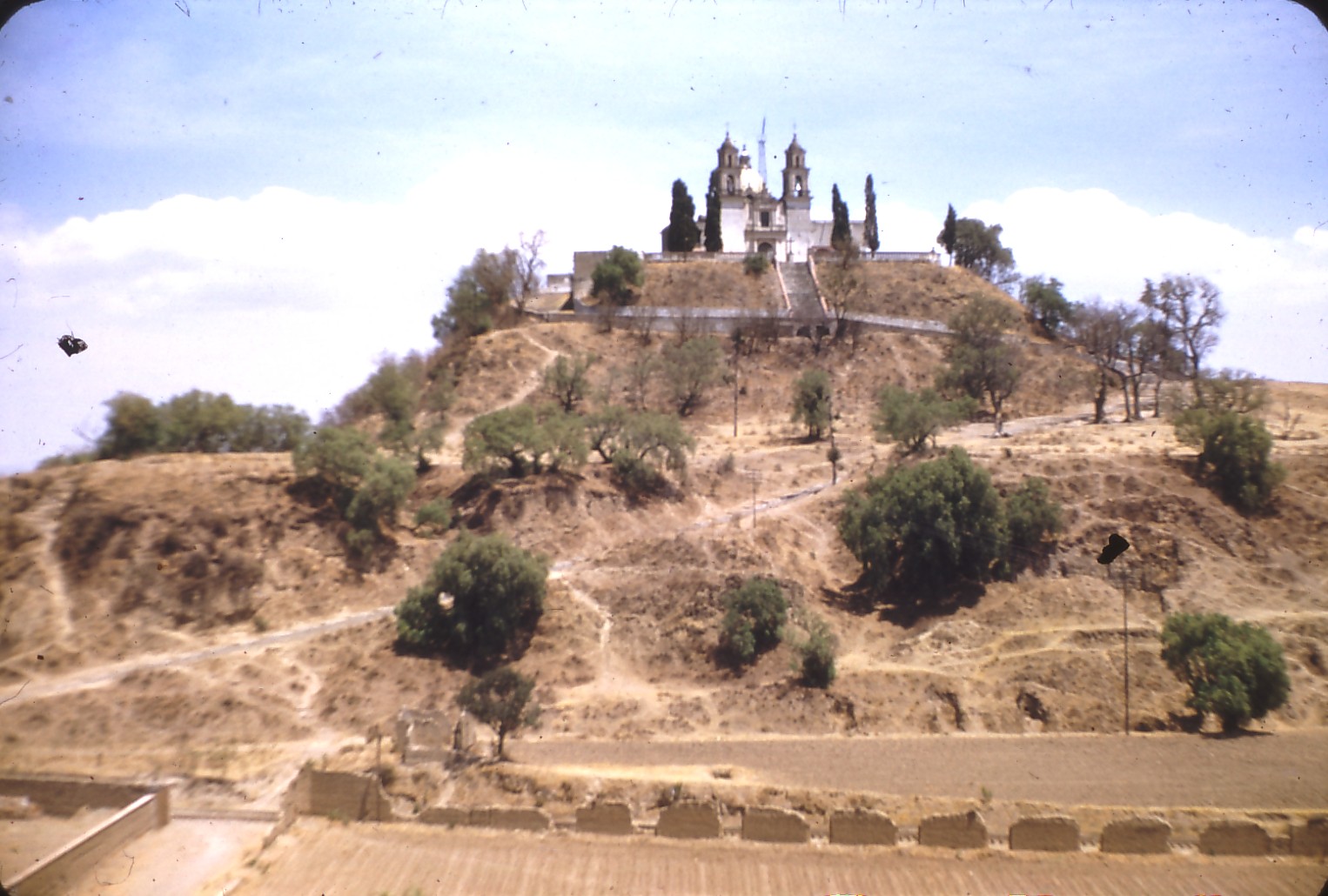
The image of a Christian church standing directly on top of an ancient indigenous pyramid is one of the most powerful visual symbols of the Spanish conquest of Mexico. It captures, in a single sight, how the conquerors sought to plant their religion literally above the old sacred sites, claiming the high ground both physically and spiritually. And yet there is an irony in it too. By building on the hill rather than destroying it, the Spanish unwittingly helped protect the giant pyramid beneath, leaving its hidden bulk largely intact for archaeologists to rediscover centuries later. The church, in a sense, became the crown that preserved the very monument it was meant to overshadow.
Conquest and a terrible massacre
Cholula’s history also carries a dark and tragic chapter from the time of the conquest. As the Spanish conquistadors marched inland toward the Aztec capital, they passed through the sacred city of Cholula. There, amid tension, suspicion, and accusations of a planned ambush, the Spanish and their allies carried out a brutal massacre of the city’s inhabitants, killing thousands of largely unarmed people gathered in the central precinct over a short, savage span of time.
It was one of the most notorious atrocities of the conquest, a moment of horror that helped spread terror ahead of the Spanish advance. The sacred city, with its great pyramid at the heart of its religious life, became a scene of slaughter. Remembering this is important, because the serene grassy hill and the pretty church on top can make it easy to forget the violence woven into the site’s history. Cholula was not only a place of devotion and wonder. It was also a place where one of the great tragedies of the encounter between two worlds played out.
The tunnels inside
So how do we know the hill is really a pyramid, and how do we study a monument hidden inside a mountain of earth with a church on top that cannot simply be dug away? The answer is tunnels. To explore the structure, archaeologists bored a network of tunnels straight into the mound, cutting through the layers to reveal the buried pyramids within.
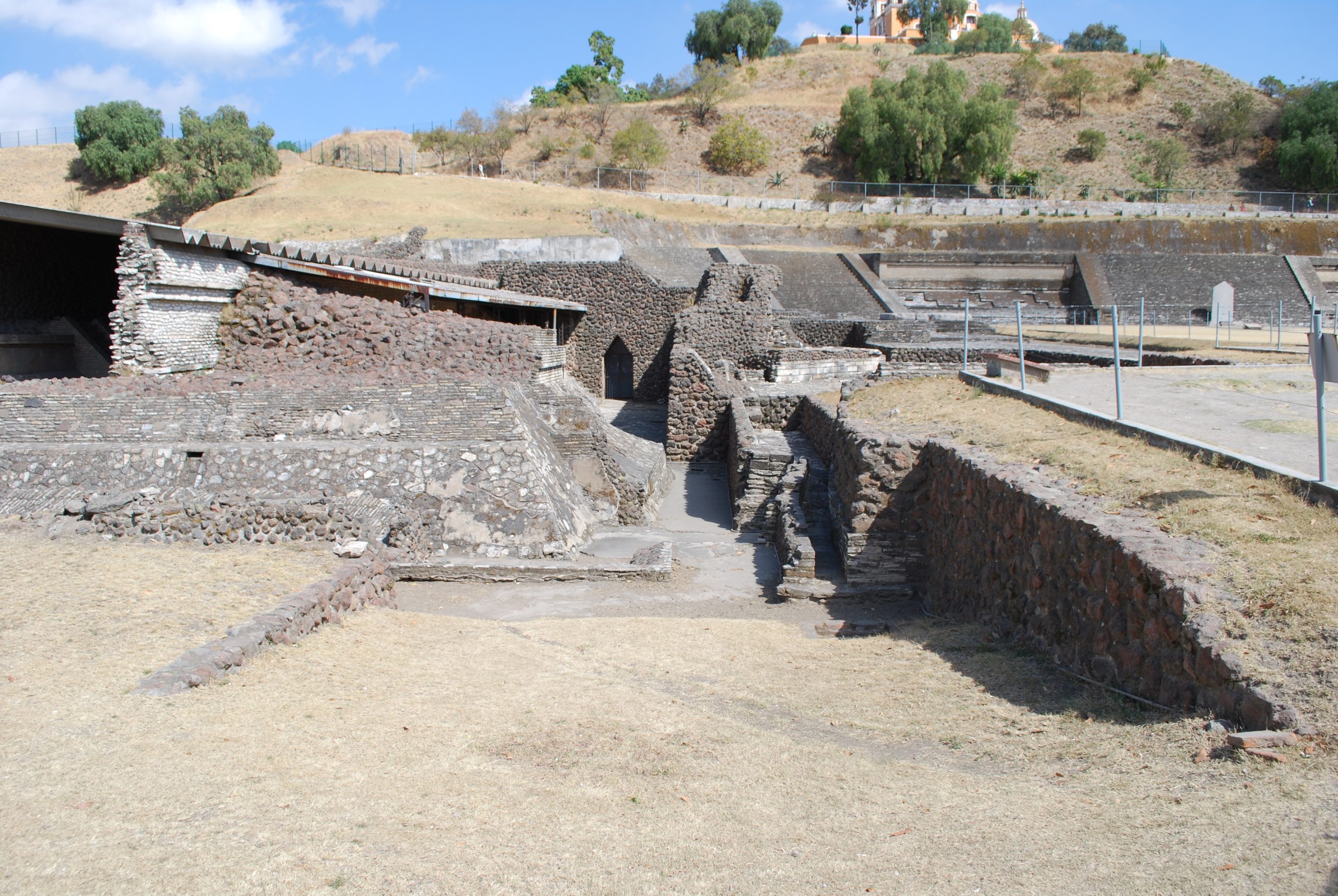
These tunnels run for several kilometers in total, threading through the heart of the pyramid, and today some of them are open to visitors. Walking through them is an unforgettable experience: you are literally moving inside the largest pyramid on Earth, surrounded by the ancient construction, able to see the stepped faces of older pyramids that were swallowed by later building. The tunnels are how the secret was finally confirmed, turning a humble-looking hill into one of the most astonishing archaeological sites in the world. They are also a vivid reminder of just how much can hide in plain sight, waiting for someone to dig in the right place.
Cholula today
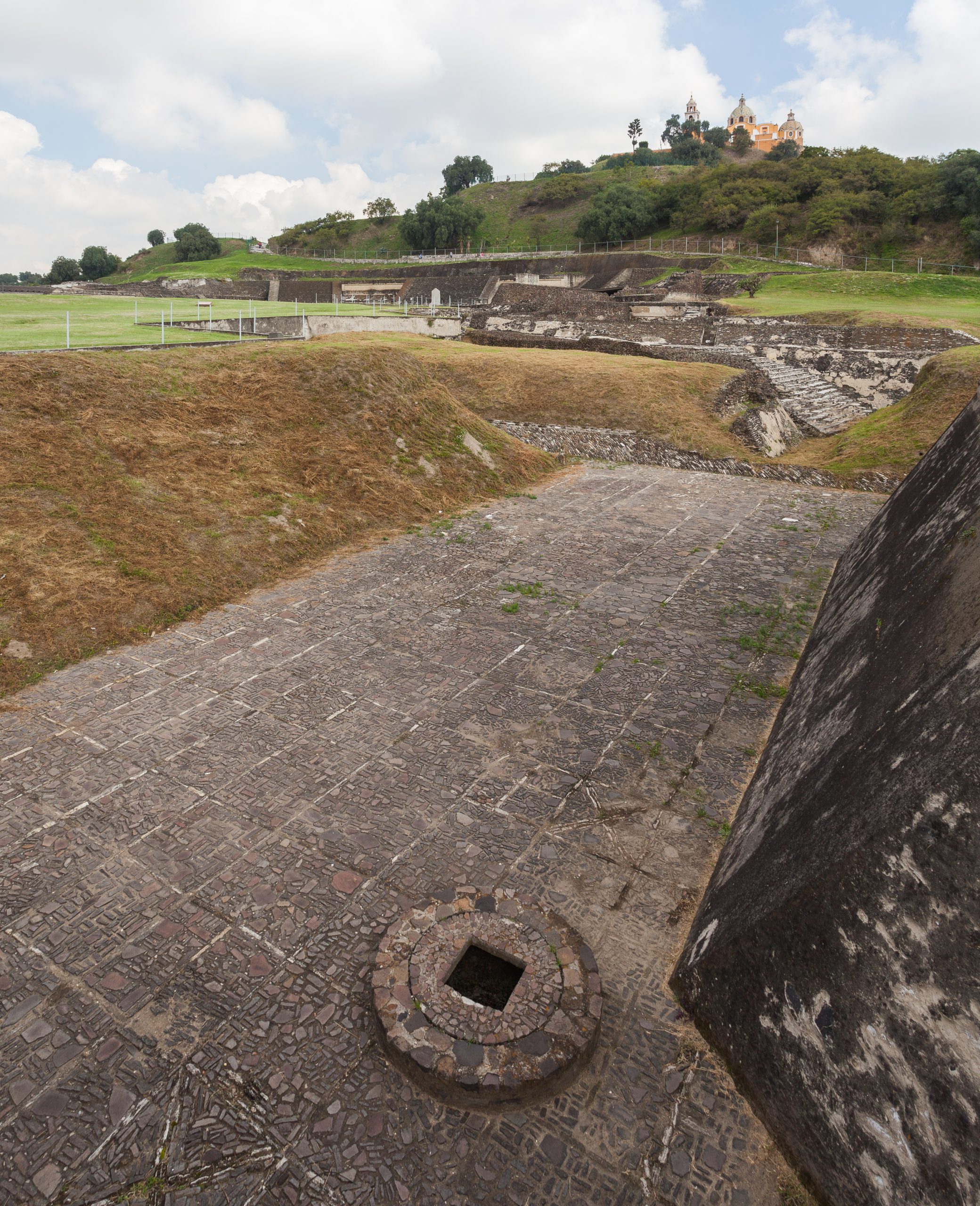
Today the Great Pyramid of Cholula is a celebrated site, drawing visitors who come to climb the hill, admire the church and the volcano views, and venture into the tunnels beneath. Around the base, excavated areas reveal sections of the ancient structure and its plazas, giving a sense of the scale and grandeur the place once had. A museum nearby helps tell the long story of the monument and the city.
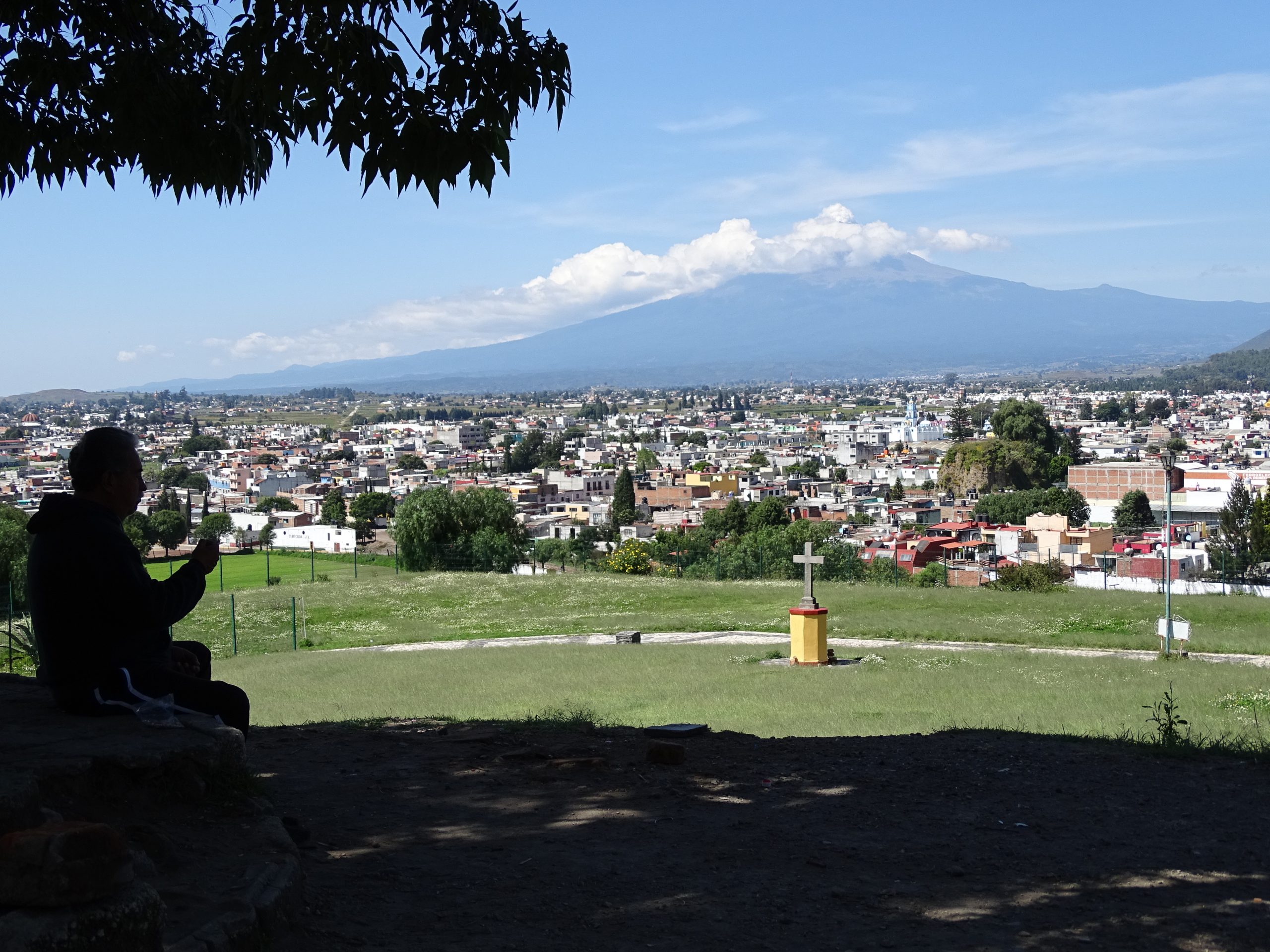
What makes Cholula so special among the world’s great pyramids is exactly this blend of layers, not just of earth and stone, but of history. In one single hill you have an ancient sacred pyramid built across many centuries, a colonial church marking the conquest, the memory of a terrible massacre, a living town that has occupied the spot for thousands of years, and a stunning natural backdrop of a smoking volcano. Few places on Earth pack so much meaning into one mound of grass-covered earth.
Closing thoughts
The Great Pyramid of Cholula is a perfect reminder that the most extraordinary things are not always the ones that announce themselves loudly. The largest pyramid humanity ever built does not gleam in the desert or dominate a skyline. It hides, modestly, as a green hill in a Mexican town, so well disguised that the very people who conquered the land built a church on it without ever knowing what lay beneath their feet.
It took curiosity, tunnels, and patient archaeology to uncover the truth: that this quiet hill is the most massive monument ever raised by human hands, a stack of pyramids built by generations of devotion, holding within it both wonder and tragedy. So the next time someone confidently tells you that Giza is the biggest pyramid in the world, you can smile and tell them about a grassy hill in Cholula, and the giant that has been hiding inside it all along.
To keep exploring, browse more on topics like pyramids, Cholula, the Great Pyramid of Cholula, Mesoamerica, ancient Mexico, and Quetzalcóatl.
You May Like
The Bardo, a Palace of the Beys Filled With Roman Mosaics