Imagine a civilization building great pyramids in the desert at the very same time the Egyptians were raising theirs at Giza, but on the other side of the planet, in South America, completely cut off from the rest of the world. A society with monumental architecture, planned cities, music, and trade, flourishing nearly five thousand years ago, centuries before the famous cultures we usually associate with the Americas. For a long time, almost nobody knew it existed. This is the story of Caral, the oldest known city in the Americas, and the astonishing pyramids that have rewritten the history of an entire hemisphere.
Table of Contents
- The oldest city in the Americas
- Building pyramids while Egypt did
- The pyramids of Caral
- A city without walls or weapons
- Daily life, music, and trade
- The civilization that had no war
- How it was finally discovered
- Why Caral matters so much
- Closing thoughts
The oldest city in the Americas
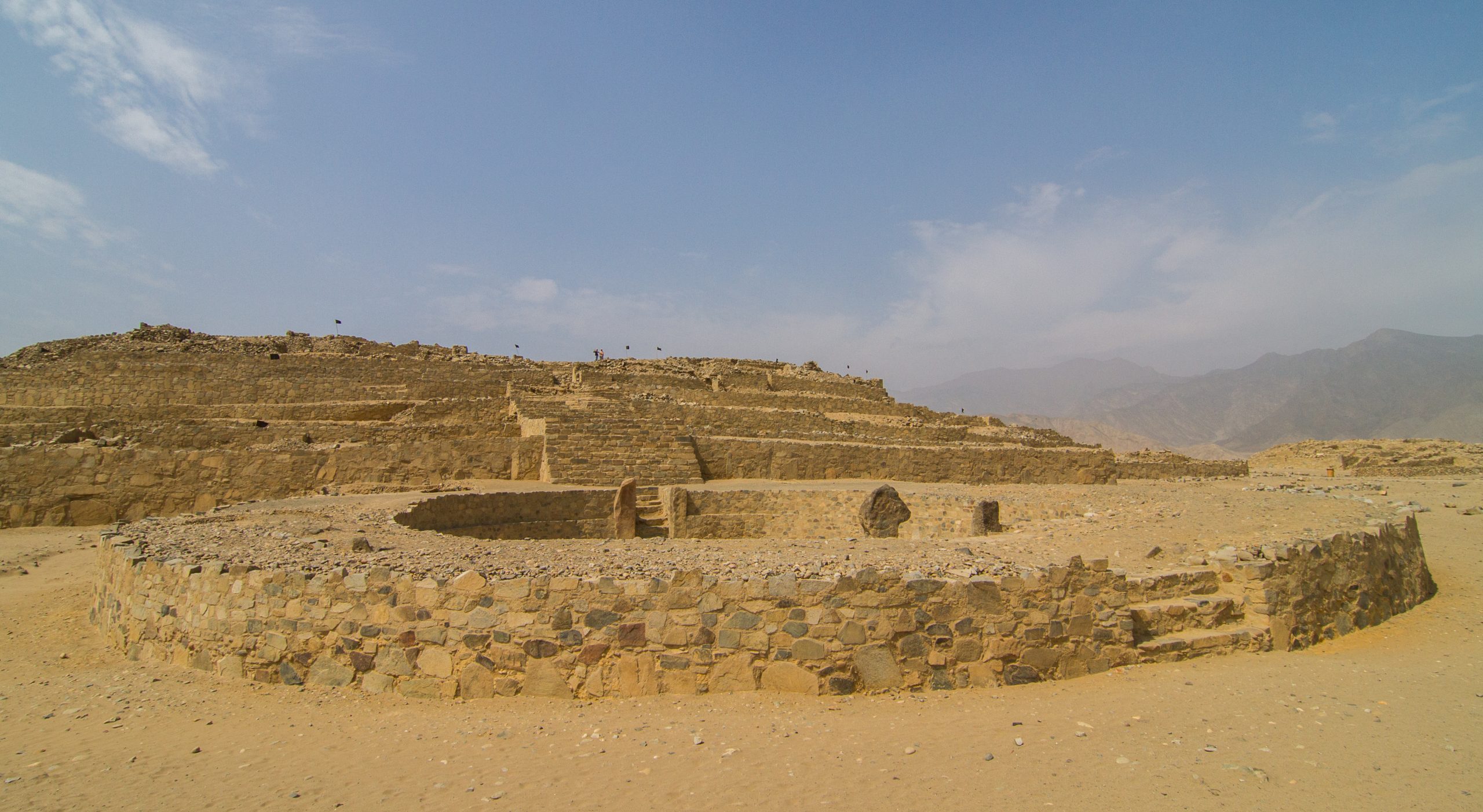
Caral sits in a dry river valley a few hours north of Lima, in Peru, in a region sometimes called the Norte Chico. It was the heart of what is now recognized as the oldest known civilization in all of the Americas, flourishing roughly 5,000 years ago. To grasp how old that is, consider that Caral was already a thriving city centuries before the Maya, the Aztecs, or the Inca ever appeared. Those famous cultures, which most people think of as ancient, came thousands of years later. Caral was the true beginning, the first great urban society of the New World.
This makes Caral one of only a small handful of places on Earth where civilization seems to have sprung up on its own, from scratch, without borrowing the idea from anyone else. Alongside ancient Mesopotamia, Egypt, the Indus Valley, and China, the Norte Chico of Peru is now counted as one of the world’s cradles of civilization, the rare spots where humans independently took the leap from simple villages to complex cities with monuments and social organization. That alone makes it one of the most important archaeological sites anywhere.
Building pyramids while Egypt did
Here is the fact that really makes people stop and think. The people of Caral were building their pyramids at roughly the same time the ancient Egyptians were building theirs. While workers along the Nile were raising the early pyramids, including the age of the great pyramid builders, a completely separate people on the other side of the world, who had no contact whatsoever with Egypt and could not have known it existed, were independently constructing their own monumental pyramids in the Peruvian desert.
This is a powerful illustration of something we have seen throughout the story of pyramids around the world. The pyramid is not the signature of one culture or one secret source of knowledge. It is an idea that humanity arrives at again and again, independently, whenever a society grows complex enough and ambitious enough to pile material high toward the sky as a statement of power and devotion. Egypt and Caral, separated by an entire ocean and total ignorance of each other, both reached for the same form at nearly the same moment in history. There is something almost poetic in that parallel.
The comparison also reframes how we should think about the Americas. There is a common, mistaken assumption that complex civilization arrived late in the New World, somehow lagging behind the Old. Caral shatters that idea completely. At the very moment Old World civilizations were producing their first great monuments, the New World was doing exactly the same, on its own timetable and by its own genius. The peoples of the Americas were not latecomers to the human story of cities and pyramids. They were full and independent participants in it from the very beginning.
The pyramids of Caral
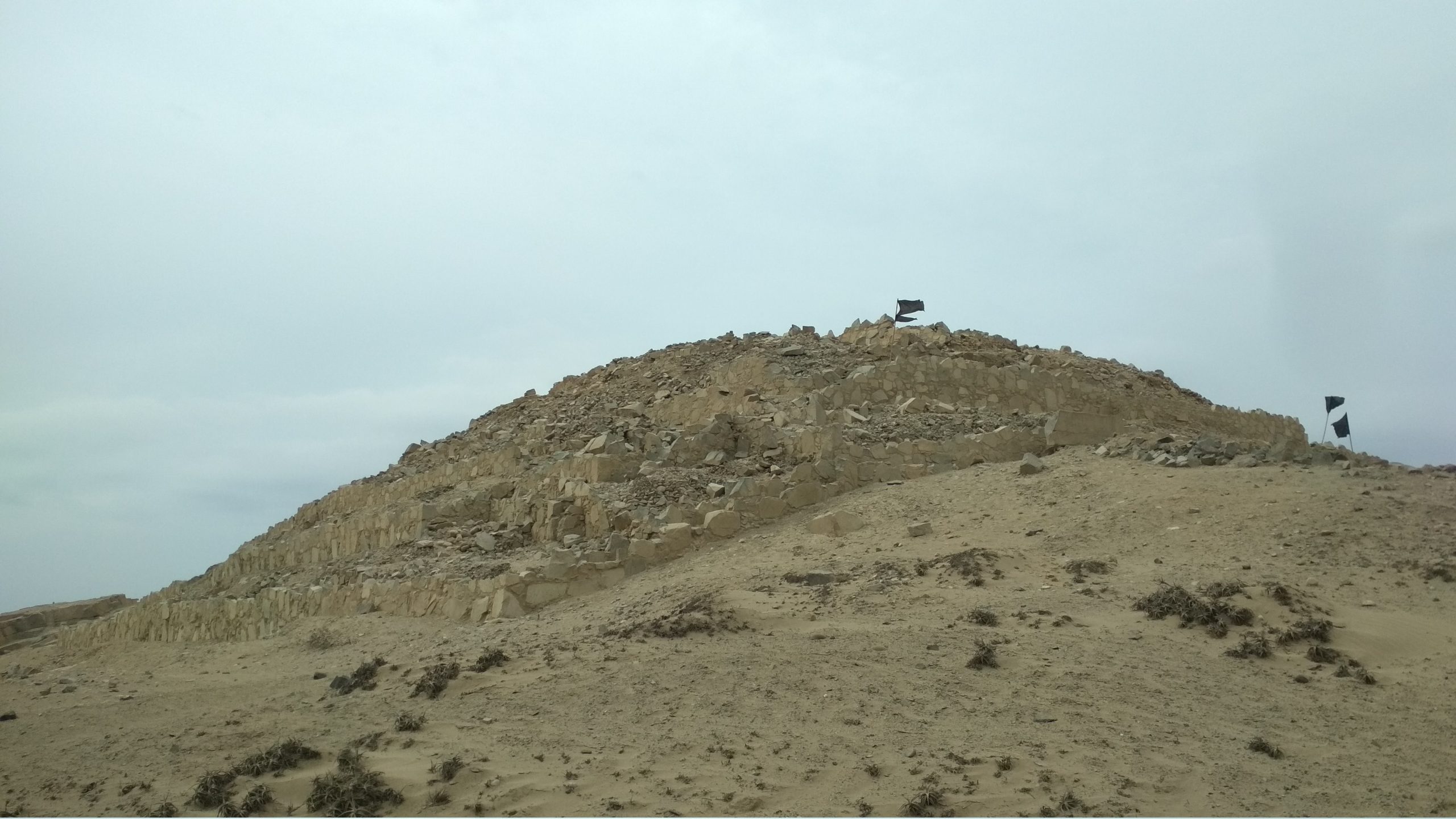
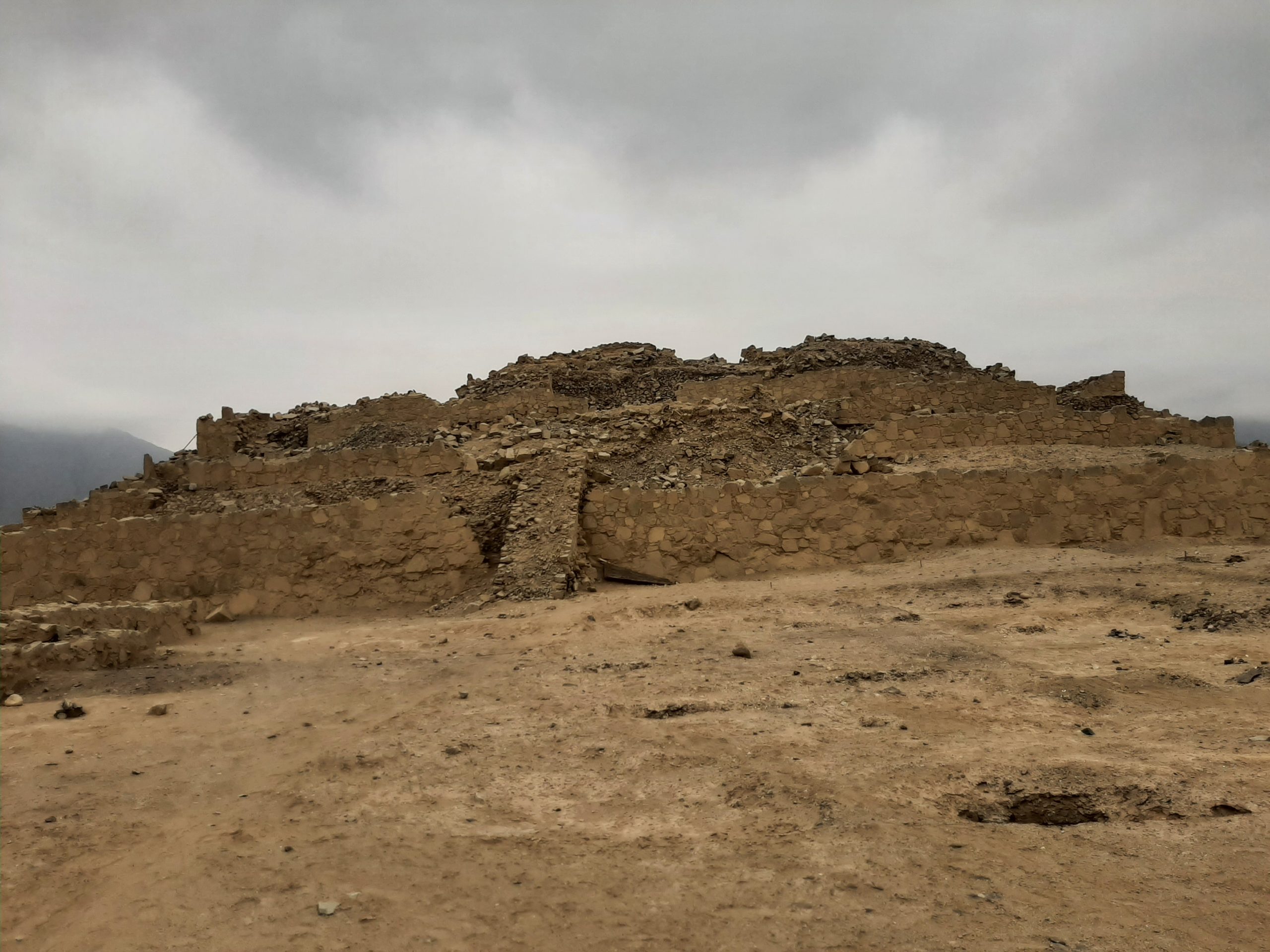
Caral was not a single pyramid but a whole city built around several of them. The site contains a number of large platform pyramids, stepped structures of stone and earth, arranged around open public spaces. The largest of them is an impressive monument that dominates the site, rising in terraces with a staircase climbing to a summit where ceremonies once took place. At the base of some pyramids lie distinctive sunken circular plazas, round amphitheater-like spaces dug into the ground, which seem to have been important gathering places for rituals and public events.
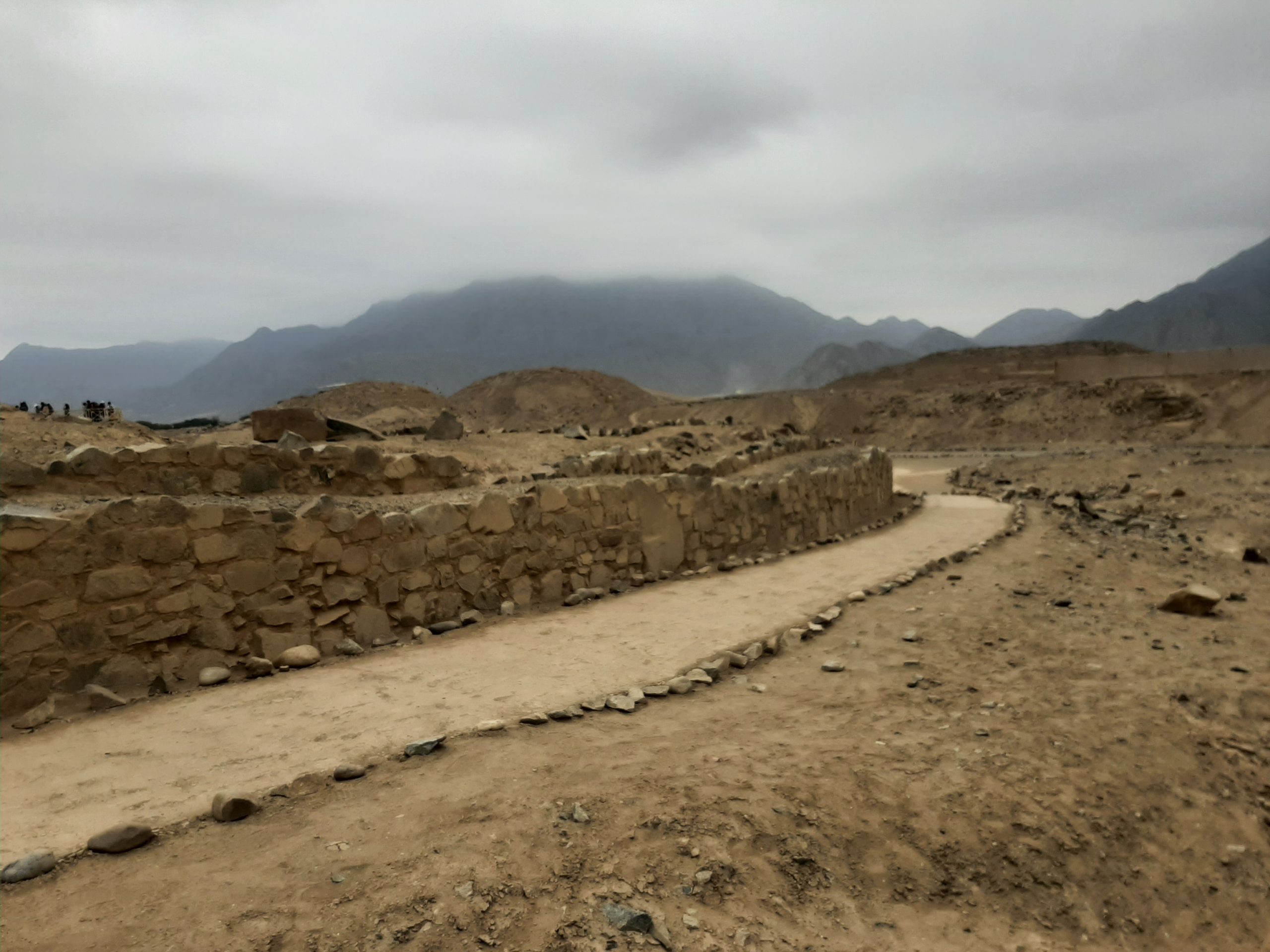
One ingenious detail of how they were built has impressed modern engineers. The builders filled large woven bags, made from reeds, with stones, and used these stuffed bags, sometimes called shicra bags, as building blocks packed inside the structures. This was not just convenient. It appears to have given the pyramids a kind of flexibility that helped them survive earthquakes, which are common in the region. In other words, the people of Caral may have figured out a primitive form of earthquake-resistant construction nearly five thousand years ago, a remarkable piece of practical engineering for such an early society.
A city without walls or weapons
When archaeologists studied Caral closely, they noticed something striking and unusual. Across the whole city, they found no defensive walls, no fortifications, no weapons, and no clear signs of warfare. There were no battlements, no piles of broken weaponry, and no evidence of bodies showing violent death in battle. For a major early civilization, this is genuinely remarkable, because so many ancient societies were shaped heavily by war and the need to defend themselves.
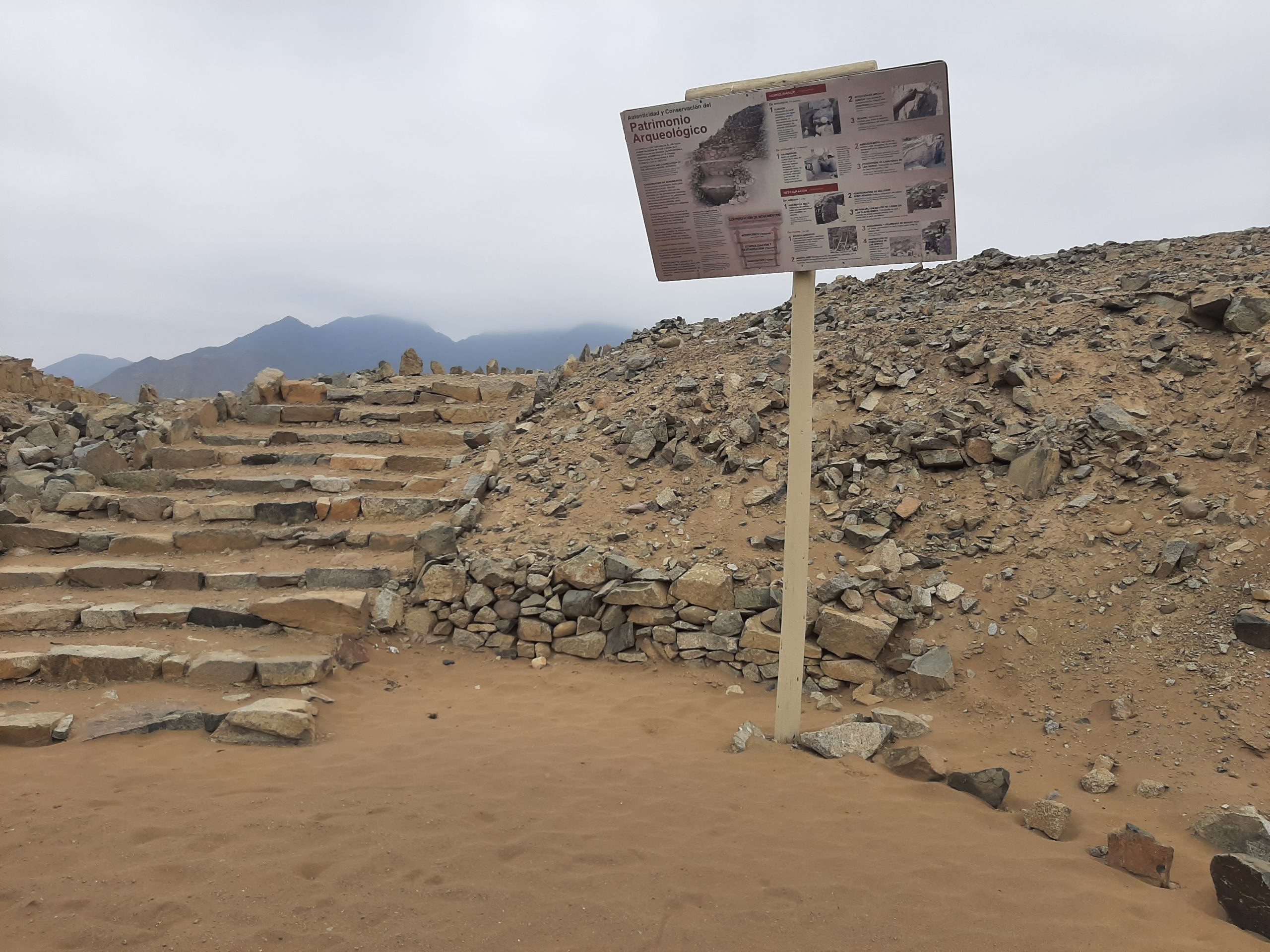
This has led researchers to suggest that Caral may have been a largely peaceful society, one that held itself together not mainly through military force but through shared religion, trade, and cooperation. The great pyramids and plazas seem to have been the glue, places where people came together for ceremonies and communal life. If this picture is right, Caral offers a rare and hopeful example of an early civilization that grew large and sophisticated without being built on conquest and bloodshed. It is a reminder that the rise of complex society did not have to follow only one path.
Daily life, music, and trade
What was life like in this ancient city? The evidence paints a picture of a surprisingly rich and organized society. The people of Caral were skilled farmers, growing crops in the valley with the help of irrigation, including plants like squash, beans, and notably cotton, which they used to make textiles, nets, and the woven bags that went into their pyramids.
They were also connected to a wider world through trade. Although Caral lies inland, archaeologists found large quantities of remains from seafood and shells from the distant coast, showing that the city exchanged goods with fishing communities by the ocean. Caral cotton, it seems, was traded to coastal fishers who needed it for their nets, while the catch of the sea flowed back inland. Even more evocative, excavators discovered musical instruments at the site, including flutes made from animal bones and horns, beautifully crafted. These finds let us imagine the sound of the ancient city: music echoing across the plazas during ceremonies, an entire culture with its own art and celebration, nearly five thousand years ago.
The civilization that had no war
It is worth lingering on the peaceful character of Caral, because it is one of the things that makes it so special and so studied. Among the artifacts found are signs of a culture focused on religion, community, and the arts rather than militarism. There is a famous discovery of a small artifact and other remains that point to ritual and ceremonial life as the organizing force of the society.
We should be careful not to romanticize the past too much, of course. The full picture of any ancient society is complex, and absence of evidence is not always absolute proof. But the consistent lack of fortifications and weapons across this large and long-lived city is striking enough that many scholars take it seriously. Caral may genuinely represent a model of an early civilization where shared belief and mutual benefit, rather than armies and conquest, were the main forces holding people together. In an age when we often assume civilization and warfare go hand in hand, Caral quietly suggests otherwise.
How it was finally discovered
Given how important Caral is, you might wonder why it is not as famous as Giza or the Maya cities. Part of the answer is that its true significance was only recognized recently. The site had been known to exist, but its mounds looked like natural hills, much like the situation at Cholula, and for a long time their real nature and incredible age went unappreciated.
It was largely through the work of the Peruvian archaeologist Ruth Shady and her team, beginning in the 1990s, that the world came to understand what Caral truly was. When the dating results came back showing the city was around five thousand years old, they were astonishing, pushing the origins of civilization in the Americas back far earlier than most had believed possible. Suddenly this quiet valley north of Lima was revealed as the cradle of New World civilization. It was a discovery that rewrote the textbooks, and it happened within living memory, which is part of why so many people have still never heard of it.
The recognition of Caral also changed how archaeologists look at the whole Norte Chico region. Caral, it turned out, was not alone. It was the largest and most studied of a cluster of related ancient sites scattered through the nearby river valleys, all part of the same early civilization. This means we are not looking at a single freak monument but at an entire network of early urban centers, a whole ancient cultural world that flourished together. The more researchers dig, the larger and more impressive this lost chapter of human history becomes.
Why Caral matters so much
Caral matters for several big reasons. It pushes back the dawn of civilization in the Americas by a huge margin, establishing that complex urban society arose in the New World thousands of years earlier than once thought, and entirely on its own. It stands as one of the precious few independent cradles of civilization in all of human history, a place where the great leap to cities and monuments happened from scratch.
And it offers that rare, intriguing example of a major early society that seems to have thrived without war, organized instead around religion, trade, and shared public life. For anyone interested in the deep roots of human civilization, in how and why people first came together to build cities and pyramids, Caral is one of the most valuable windows we have. It shows the human story branching independently in distant corners of the globe, arriving at strikingly similar achievements through entirely separate journeys.
Closing thoughts
The pyramids of Caral may not be as tall as Giza or as ornate as the temples of the Maya, but in their own way they are every bit as significant. They are the work of the first great civilization of the Americas, a people who built monuments, made music, traded across the land, and seemingly lived without war, all at the same time the pyramids of Egypt were rising half a world away.
That two peoples who never knew of each other reached so high, so similarly, so long ago, tells us something profound about our species. The impulse to build, to gather, to honor the gods and reach toward the sky, runs deep in all of humanity. Caral, hidden and forgotten for thousands of years in a Peruvian valley, reminds us that the story of human civilization is far older, far wider, and far more wonderful than we often imagine. It is a beginning that almost slipped away unnoticed, and one well worth remembering.
To keep exploring, browse more on topics like pyramids, Caral, the Norte Chico, ancient Peru, the oldest civilization in the Americas, and South America.
You May Like
The Bardo, a Palace of the Beys Filled With Roman Mosaics