Before La Venta, before the Maya, before every great civilization of ancient Mexico, there was a capital on the Gulf coast where the first colossal stone heads of the Americas were carved and the first Mesoamerican kings held court. This is the story of San Lorenzo, the earliest great center of the Olmec, the mother culture of Mesoamerica.
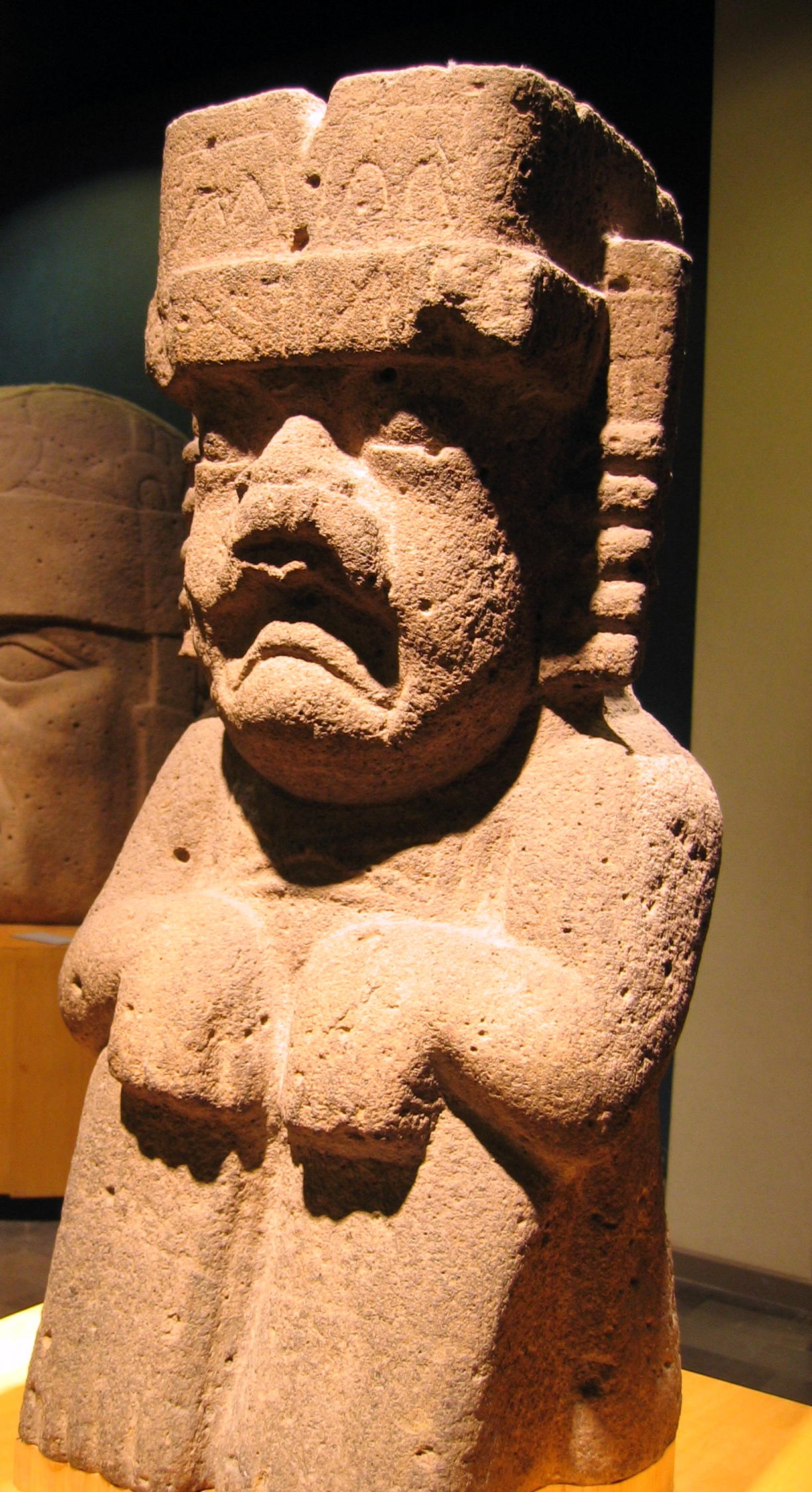
Table of Contents
- Mesoamerica’s first great capital
- A capital built upon a reshaped earth
- The oldest colossal heads in the Americas
- Hauling mountains of basalt without the wheel
- Thrones, rulers, and the roots of kingship
- Were-jaguars and the Olmec supernatural world
- Beyond the monuments: everyday San Lorenzo
- A hub of long-distance exchange
- The fall of the first capital
- Rediscovering the Olmec heartland
- The seedbed of Mesoamerican civilization
- Stone drains and the management of water
- Recarving the faces of power
- Jade, figurines, and the art of small things
- The origins of the Mesoamerican ballgame
- A capital in the tropical lowlands
- San Lorenzo and the first cities of the world
- San Lorenzo’s place in Mexico’s heritage today
- Nearby in the Americas’ ancient story
- Closing thoughts
Mesoamerica’s first great capital
Long before the Maya raised their temples or the Aztec built their island city, and centuries before the Olmec capital of La Venta rose in the swamps to the east, there was San Lorenzo. Flourishing from around 1400 BCE on a plateau above the floodplains of the Coatzacoalcos River in what is now the Mexican state of Veracruz, San Lorenzo was the first great center of Olmec civilization and, by many measures, the earliest city-like settlement in all of Mesoamerica. It was here that the distinctive Olmec culture, often called the mother culture of later Mesoamerican civilizations, first took monumental form.
At its height San Lorenzo dominated its region as no settlement in Mesoamerica had before, a place of colossal sculpture, elite power, and long-distance trade that set patterns later civilizations would follow for more than two thousand years. To understand San Lorenzo is to stand at the very beginning of the Mesoamerican story, at the moment when the sculpture, symbolism, and social hierarchy that would define the region’s civilizations first emerged from the tropical lowlands of the Gulf coast.

A capital built upon a reshaped earth
One of the most remarkable features of San Lorenzo is the great plateau on which it sits, which archaeologists have concluded was extensively shaped and built up by human hands. The Olmec raised and modified the natural terrain on an enormous scale, constructing artificial ridges and a raised platform that lifted the ceremonial and elite heart of the settlement above the surrounding floodplain, an undertaking that required moving vast quantities of earth using only human labor and simple tools.
This deliberate reshaping of the landscape was itself a statement of power and organization, demonstrating the ability of San Lorenzo’s rulers to mobilize and direct large numbers of workers. The elevated plateau protected the center from seasonal flooding and set it apart as a special, elevated place, and its construction so early in Mesoamerican history reveals that the impulse to reshape the earth into monumental form, so central to later Mesoamerican civilization, was already fully developed among the Olmec of San Lorenzo.

The oldest colossal heads in the Americas
San Lorenzo is above all famous for its colossal stone heads, the earliest examples of this iconic Olmec sculptural form and among the most extraordinary artworks of the ancient Americas. Carved from single massive boulders of basalt, some weighing many tons, these heads depict individuals with distinctive features and elaborate headdresses, and are widely believed to portray specific Olmec rulers, making them among the earliest monumental portraits of named individuals anywhere in the New World.
The heads found at San Lorenzo are the oldest known, predating those of La Venta, and their creation posed staggering logistical challenges. The basalt from which they were carved came from the Tuxtla Mountains many kilometers away, meaning that multi-ton boulders had to be transported across difficult terrain, probably in part by raft along rivers, before being sculpted with stone tools into the powerful, brooding faces that still confront visitors today. Each head represents an immense investment of labor and skill in the service of commemorating the rulers who governed Mesoamerica’s first capital.

Hauling mountains of basalt without the wheel
The transport of the enormous basalt boulders used for San Lorenzo’s monuments ranks among the most impressive feats of engineering in the early Americas, all the more so because the Olmec had neither the wheel for practical haulage nor draft animals to pull heavy loads. Instead, the movement of these multi-ton stones relied entirely on human muscle, organized in large work gangs and aided by rafts, sledges, ropes, and rollers, exploiting the region’s rivers to float the boulders for part of their long journey from the distant mountains.
Coordinating such an effort implies a society capable of commanding substantial labor and sustaining it over the weeks or months required to move a single stone, a clear sign of centralized authority and social organization. That San Lorenzo achieved this so early speaks to the precocious development of Olmec political power, and it foreshadows the monumental ambitions that would characterize Mesoamerican civilization for the rest of its history, from the pyramids of Teotihuacan to the temples of the Maya and the Aztec.

Thrones, rulers, and the roots of kingship
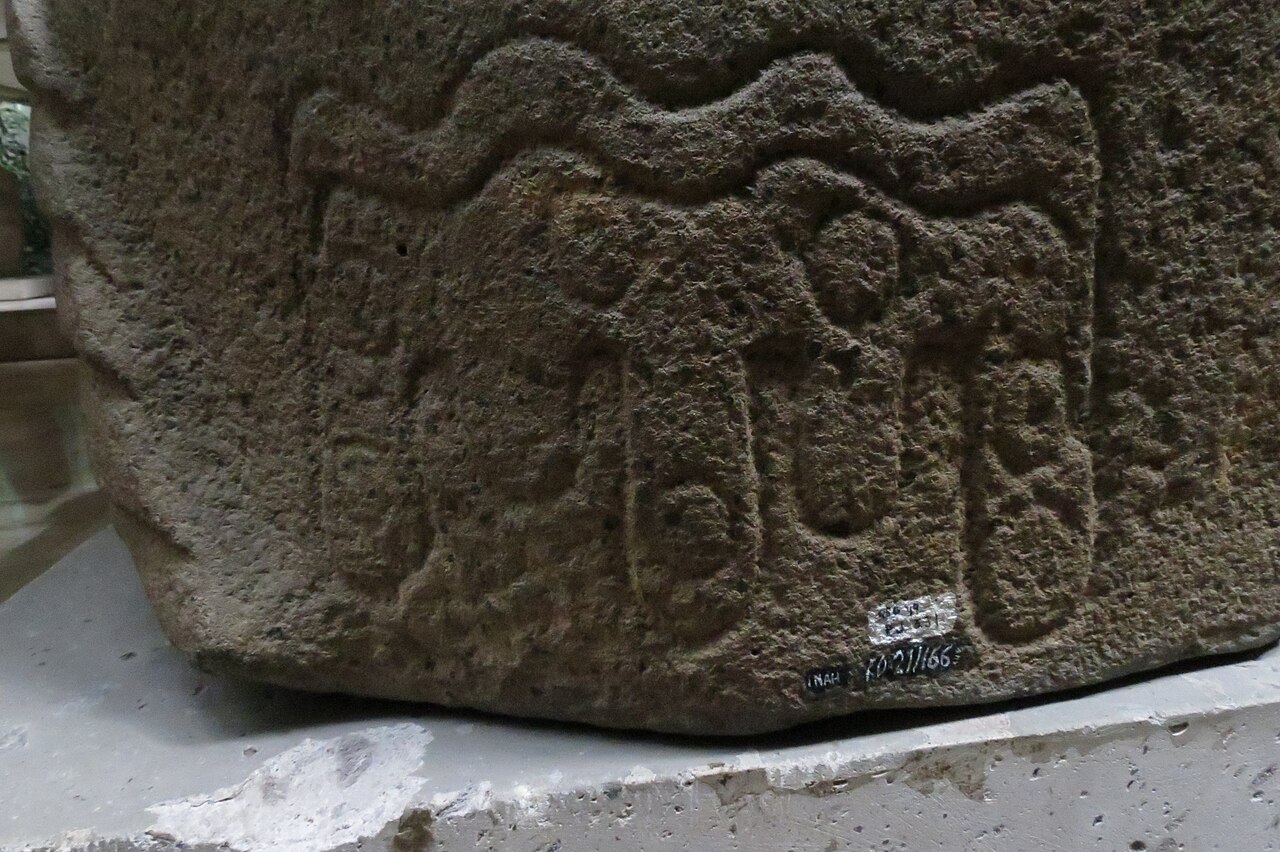
Beyond the colossal heads, San Lorenzo has yielded massive stone monuments often called altars but now widely interpreted as thrones, great carved blocks on which rulers may have sat during ceremonies, some depicting figures emerging from niches that may represent caves or portals to the supernatural world. Together with the portrait heads, these monuments point to the existence of powerful individual rulers at San Lorenzo who commanded both political authority and religious significance, embodying the union of earthly and cosmic power that would characterize Mesoamerican kingship for millennia.
The concentration of such monuments in the elite heart of the settlement, along with evidence of high-status residences and craft production, indicates a stratified society with a clear ruling class set apart from the general population. San Lorenzo thus represents one of the earliest emergences of institutionalized political hierarchy in the Americas, a development of profound importance, for the forms of rulership and elite ideology first expressed here would echo through every subsequent Mesoamerican civilization.

Were-jaguars and the Olmec supernatural world
The religious imagination of San Lorenzo, expressed in its sculpture and small carved objects, was populated by powerful supernatural beings, most famously the so-called were-jaguar, a being combining human and feline features that appears repeatedly in Olmec art. Jaguars, the most formidable predators of the tropical lowlands, held deep symbolic power, and the blending of human and jaguar traits seems to have expressed ideas about transformation, rulership, and access to supernatural force that lay at the heart of Olmec belief.
Other imagery evokes rain, maize, and fertility, concerns central to a farming society dependent on the seasonal rhythms of the tropical environment. Much of this symbolic system, including the were-jaguar and associated deities, would be inherited and elaborated by later Mesoamerican civilizations, making San Lorenzo a foundational source of the religious concepts that would shape the spiritual world of the region for thousands of years and marking the Olmec as the originators of a distinctly Mesoamerican vision of the cosmos.
Beyond the monuments: everyday San Lorenzo
While the colossal heads and thrones command attention, most of San Lorenzo’s inhabitants were farmers, fishers, and craftspeople whose daily lives unfolded far from the elite ceremonial core. They cultivated maize, beans, and squash, exploited the rich aquatic resources of the surrounding rivers and wetlands, and lived in more modest dwellings scattered across and around the great plateau, their labor providing the food surplus that sustained the rulers, artisans, and monument-builders at the center.
Excavations of residential areas have recovered the humbler traces of this population, including pottery, tools, and food remains that reveal the mixed economy underpinning the settlement’s grandeur. This broad base of farmers and workers was the true foundation of San Lorenzo’s power, for it was their surplus and their labor that made possible the transport of basalt boulders, the raising of the plateau, and the carving of the monuments, reminding us that behind every colossal head stood a whole society of ordinary people whose names and stories are lost to us.

A hub of long-distance exchange
San Lorenzo sat at the center of trade networks that reached across large parts of Mesoamerica, importing not only the basalt for its monuments but obsidian, jade, and other valued materials from distant sources, and exporting its influence and its distinctive artistic style far beyond the Gulf coast. Olmec-style objects and imagery appear at sites across a wide swath of Mesoamerica during this period, testifying to the reach of San Lorenzo’s connections and the prestige of its culture among contemporary communities.
This far-flung exchange was more than a matter of goods, for along the trade routes travelled ideas, symbols, and techniques that helped spread elements of Olmec culture across the region. Whether this reflects the Olmec acting as a true mother culture from which later civilizations descended, or a more complex web of mutual influence among early Mesoamerican societies, remains debated, but there is no doubt that San Lorenzo was a powerful engine of cultural diffusion whose reach shaped the emerging civilizations around it.
The fall of the first capital
Around 900 BCE, after some five centuries of dominance, San Lorenzo declined, and its role as the preeminent Olmec center passed to La Venta to the east. The reasons for this decline are not fully understood and may have included environmental changes such as shifts in the courses of the rivers on which the settlement depended, along with social and political upheavals within Olmec society itself. Strikingly, many of San Lorenzo’s great monuments show signs of deliberate defacement and burial, suggesting that the fall of the old order may have been accompanied by acts of ritual destruction directed at the images of its rulers.
Whether this mutilation of monuments reflects violent upheaval, the ritual deactivation of images after a ruler’s death, or some other practice remains uncertain, but it lends the decline of San Lorenzo an air of drama and mystery. What is clear is that the center of Olmec civilization shifted, and that the traditions San Lorenzo had pioneered, the colossal heads, the thrones, the monumental construction, and the supernatural imagery, were carried forward and elaborated at La Venta, ensuring that the legacy of Mesoamerica’s first capital would endure.
Rediscovering the Olmec heartland
The modern rediscovery of San Lorenzo and the recognition of the Olmec as Mesoamerica’s earliest civilization unfolded over the twentieth century, as archaeologists working in the Gulf coast lowlands uncovered the colossal heads and monuments and gradually pieced together the antiquity and importance of the culture that had produced them. Excavations at San Lorenzo revealed the great engineered plateau, the elite residences, and the workshops where monuments were carved and recarved, transforming understanding of how early and how sophisticated Mesoamerican civilization had been.
These discoveries overturned older assumptions that had cast the Maya as the earliest high civilization of the region, establishing instead that the Olmec of sites like San Lorenzo had laid the foundations centuries earlier. Ongoing research, including modern survey and excavation techniques, continues to refine the picture, revealing the scale of the engineered landscape and the complexity of Olmec society, and cementing San Lorenzo’s status as one of the most important early sites anywhere in the Americas.
The seedbed of Mesoamerican civilization
San Lorenzo’s true significance lies in its role as a beginning, the place where so many of the defining features of Mesoamerican civilization first appeared in monumental form. The tradition of colossal sculpture and ruler portraiture, the practice of reshaping the earth into artificial platforms and mounds, the emergence of powerful kings clothed in religious authority, the pantheon of supernatural beings including the were-jaguar, and the far-reaching networks of trade and cultural influence all find early and powerful expression at San Lorenzo, from which they would spread and evolve across the region for the next two and a half thousand years.
In this sense San Lorenzo was the seedbed from which the great civilizations of Mesoamerica grew, an ancestor whose innovations echo through Teotihuacan, the Maya cities, and the Aztec empire alike. Though its name is far less known than those of its successors, this early capital on the Gulf coast holds a foundational place in the human story, a reminder that the towering achievements of later ages so often rest on the forgotten labors of those who came first, carving the earliest faces from the mountain and raising the first great center of a new world.
Stone drains and the management of water
Among the more surprising discoveries at San Lorenzo are elaborate systems of carved stone drains, U-shaped basalt channels fitted together and buried beneath the surface of the plateau to carry water through and away from the ceremonial center. These sophisticated waterworks, some connected to carved stone basins and monuments, reveal that the Olmec were concerned not only with monumental display but with the practical and perhaps ritual management of water in an environment dominated by seasonal rains and river flooding.
The purpose of these drainage systems has been much debated, with some researchers emphasizing their practical role in preventing erosion and controlling runoff on the artificial plateau, and others suggesting they played a part in water-related rituals, given the central importance of rain and water to Olmec religion and agriculture. Whatever their precise function, the drains testify to a level of engineering sophistication and planning that reinforces the picture of San Lorenzo as a carefully designed capital, its landscape shaped by rulers who commanded both labor and technical knowledge.
Recarving the faces of power
Detailed study of San Lorenzo’s monuments has revealed that some colossal heads may have been recarved from earlier thrones, the massive basalt blocks reworked from one form of royal monument into another over the course of the settlement’s history. This recycling of precious basalt, so laboriously transported from the distant mountains, underscores just how valuable the stone was and how the monuments themselves were treated as objects that could be transformed, renewed, and reinterpreted rather than fixed forever in a single form.
This practice offers a glimpse into how the Olmec thought about their monuments and the rulers they commemorated. The transformation of a throne into a portrait head, or the reworking of an older monument, may have been tied to the succession of rulers, the death of a king, or shifts in political power, embedding the history of San Lorenzo’s dynasties into the very stone of its sculpture. The monuments thus become not static artworks but documents of a living political and religious tradition, continually reshaped by the people who made and remade them.
Jade, figurines, and the art of small things
Alongside its monumental sculpture, San Lorenzo produced exquisite works on a far smaller scale, including finely carved figurines and ornaments of jade and other greenstones, materials the Olmec prized above almost all others. Jade, imported from distant sources, carried deep symbolic associations with water, maize, fertility, and the color of new life, and Olmec artisans worked it into delicate figures, celts, and ornaments of extraordinary craftsmanship that circulated as elite goods and ritual objects.
These small masterpieces reveal another dimension of Olmec achievement, a refined aesthetic sensibility and technical mastery expressed in miniature as well as in the colossal. The recurring forms and motifs of these objects, including the were-jaguar and various supernatural beings, helped spread Olmec religious imagery across Mesoamerica through exchange and gift-giving among elites. The artistry of San Lorenzo thus operated at every scale, from multi-ton heads to jade figures small enough to hold in the hand, all serving the intertwined purposes of power, religion, and prestige.
The origins of the Mesoamerican ballgame
The famous Mesoamerican ballgame, played for millennia across the region with a solid rubber ball on specially built courts, may have its deepest roots in the Olmec world of which San Lorenzo was the first great center. Rubber itself was processed from the latex of trees native to the Gulf coast lowlands, and the very word Olmec, applied by later peoples, means rubber people, hinting at the association of this region with the material at the heart of the game. Early evidence of rubber balls and ballgame-related imagery points to the antiquity of the tradition in the Olmec heartland.
The ballgame was far more than sport, carrying deep religious and political significance and serving as an arena for ritual, competition, and the enactment of cosmic myths in later Mesoamerican societies. If its origins do lie with the Olmec, then San Lorenzo stands near the beginning of yet another enduring Mesoamerican tradition, one that would spread across the region and persist for thousands of years, linking the earliest Gulf coast capital to the ballcourts of the Maya and the great arena of the Aztec capital.
A capital in the tropical lowlands
San Lorenzo arose in the humid, low-lying tropical environment of the southern Gulf coast, a landscape of rivers, wetlands, and seasonally flooded plains that shaped every aspect of life in the settlement. This environment presented both opportunities and challenges: the fertile floodplains and abundant aquatic resources could support a dense population, but the seasonal floods and shifting river courses demanded adaptation, and it was partly to rise above these waters that the great plateau was raised.
The reliance of San Lorenzo on this river environment, so productive yet so changeable, may help explain both its rise and its eventual decline, for shifts in the rivers that fed and surrounded the settlement could dramatically alter its fortunes. As at so many early settlements across the world, from the Mesopotamian floodplains to the wetlands of Budj Bim, the story of San Lorenzo is inseparable from the water that made it possible, a reminder of how closely the first great human centers were bound to the rhythms of the rivers and marshes that sustained them.
San Lorenzo and the first cities of the world
Viewed on a global scale, San Lorenzo takes its place among the world’s earliest experiments in centralized, hierarchical settlement, alongside the temple-towns of Mesopotamia and the great Neolithic settlements of the Old World, yet it arose entirely independently, with no contact whatsoever with those distant civilizations. The parallels, monumental construction, powerful rulers, long-distance trade, and elaborate religious imagery, are all the more striking for having emerged separately, offering a natural experiment in how human societies develop complexity.
The differences are equally revealing. Where Mesopotamian cities developed writing, wheeled vehicles, and metal tools, San Lorenzo achieved its monumental grandeur without any of these, relying on stone tools, human muscle, and rafts to move mountains of basalt. This independent path to civilization in the Americas demonstrates that the rise of complex, hierarchical, monument-building societies was not the unique product of any one region or set of technologies, but a recurring human possibility that could unfold in strikingly different forms wherever the conditions allowed.
San Lorenzo’s place in Mexico’s heritage today
Today San Lorenzo and the colossal heads it produced occupy a place of pride in Mexico’s understanding of its own deep history, celebrated as evidence of the antiquity and sophistication of the civilizations that flourished on Mexican soil thousands of years before European contact. The Olmec heads, displayed in museums and reproduced as national symbols, have become icons of ancient Mexico, their brooding faces instantly recognizable emblems of a civilization once nearly forgotten.
Ongoing archaeological work in the region continues to deepen understanding of San Lorenzo and the wider Olmec world, while efforts to protect and interpret the site preserve it for future generations. As the earliest great center of the mother culture of Mesoamerica, San Lorenzo holds a foundational place not only in the story of the Olmec but in the entire history of the Americas, a distinction that ensures this ancient capital on the Gulf coast will continue to fascinate scholars and inspire national pride for generations to come.
Nearby in the Americas’ ancient story
To place this site within its wider region, these related articles trace nearby chapters of the ancient story:
- Stone Heads in the Jungle: the story of La Venta
- Caral and the oldest cities of the Andes
- Watson Brake and the oldest mounds of North America
Closing thoughts
San Lorenzo endures as the overlooked beginning of a story usually told through its more famous heirs. To trace Mesoamerican civilization back to its source is to arrive here, on a reshaped plateau above a tropical river, where a forgotten people first carved rulers’ faces from mountains of stone and set in motion a tradition that would flower for millennia across an entire world.
You May Like
Mafra, the Palace a King Built From a Vow


One thought on “The Oldest Colossal Heads in the Americas Were Carved Here: The Story of San Lorenzo”