In the tropical lowlands of eastern Bolivia, between the Amazon basin and the dry scrub of the Gran Chaco, live the Chiquitano, one of the largest indigenous peoples of the country’s eastern departments. Their homeland, known as the Chiquitania, is a land of dry forest, savanna, and slow rivers where seasons swing between flooding rains and long months of drought. Here the Chiquitano built a distinctive world, shaped first by their own ancestors and later by the famous Jesuit missions that left an enduring mark on the region.
The Chiquitano are known far beyond Bolivia for the baroque music that survives in their mission towns, a legacy of the eighteenth-century reductions where European and indigenous traditions fused into something wholly their own. Yet music is only one thread of a rich culture that includes farming, woodcarving, weaving, and a deep attachment to the forest. This article follows the Chiquitano from their origins through their language, homeland, and way of life to the community that endures in the towns and villages of the Chiquitania today.
Contents
- Origins of the Chiquitano People
- The Meaning of the Chiquitano Name
- The Chiquitano Language
- Homeland in the Chiquitania
- The Old Way of Life
- Society and Community Life
- Religion and the Mission Legacy
- Traditions and Ceremonial Music
- Crafts and Woodcarving
- Food and Farming
- Festivals and the Ritual Year
- History and the Jesuit Reductions
- The Chiquitano Today
Origins of the Chiquitano People
The Chiquitano descend from a mosaic of indigenous groups who lived in the eastern Bolivian lowlands long before the arrival of Europeans. Rather than a single tribe, the people that came to be called Chiquitano formed from many communities drawn together over time, sharing a region and eventually a common tongue.
Their ancestors were farmers and forest dwellers who cultivated the clearings of the dry tropical woodland and moved with the rhythm of the rains. The land they occupied lay at a crossroads between the Amazon, the Andes, and the plains to the south, giving their culture a character all its own.
By the time Spanish expeditions reached the region, the peoples of the Chiquitania were numerous and widely spread. The process that welded them into a single Chiquitano identity would accelerate dramatically with the founding of the missions, but its roots reach back into this older indigenous world.
The peoples who became the Chiquitano spoke many tongues and followed varied customs before the mission era, and part of the achievement of that period was to draw them into a single community with a common language and faith. Historians see in this process both loss and creation, as older identities faded and a new one took their place.
Archaeology and early accounts suggest a dense population across the lowlands, with villages tied to the rivers and the fertile clearings of the forest. This was no empty wilderness but a settled and cultivated land when the first Europeans arrived.
The blending of many groups into one people did not erase all older distinctions overnight, and traces of the varied origins of the Chiquitano can still be read in local customs and memories. The nation that emerged was a genuine synthesis rather than a simple replacement.

The Meaning of the Chiquitano Name
The name Chiquitano comes from a Spanish term, chiquito, meaning small, which early colonists applied to the region and its peoples. The story often told is that the low doorways of the local houses gave the newcomers the impression of a land of small dwellings.
Whatever its exact origin, the name was an outsider’s label rather than a term the people first used for themselves. It came to cover a wide range of communities gathered under the missions, who over generations accepted and reshaped the name as their own.
Today Chiquitano is embraced as a marker of a shared identity spanning many towns and villages of the eastern lowlands. The name that began as a colonial description now carries the pride of a people with a distinctive history and culture.
The tale of the low doorways is memorable, but scholars note that the name may equally have referred to the region as a whole or to some other feature noted by the newcomers. What matters is that a foreign word came to name a people who made it their own.
Over time the people came to wear the name with dignity, using it to assert their place among the recognized indigenous nations of Bolivia. What had been an outsider’s convenience became an instrument of pride and political claim.

The Chiquitano Language
The Chiquitano speak a language that stands largely on its own, difficult to link firmly to the larger families of South America and often classified as an isolate or the sole survivor of a small group. This linguistic distinctiveness reflects the deep and separate history of the peoples of the Chiquitania.
During the mission period the language was standardized and written down by the priests, who used it to preach and teach, helping to spread a common tongue across communities that had once spoken many. This gave the Chiquitano language a reach and stability unusual for the region.
Today the language is spoken by a portion of the population, especially among older generations, while Spanish dominates public life and schooling. Efforts to teach and document the language aim to keep it alive for the young, who are its future guardians.
Because the language resists easy classification, linguists have long debated its place among the tongues of South America, and its very isolation makes it precious as a window into the region’s deep past. Every recording and grammar adds to a fragile but growing record.
The mission-era practice of writing and teaching the language helped it survive where many neighboring tongues vanished, an unexpected legacy of the reductions that shaped so much of Chiquitano life.
Radio programs, songbooks, and school materials in the language have appeared in recent years, small but meaningful steps toward keeping it in daily use. The community understands that a language lives only if it is spoken by the young.

Homeland in the Chiquitania
The Chiquitania is a vast region of eastern Bolivia lying mostly within the department of Santa Cruz, a transitional land where the Amazon rainforest gives way to drier tropical forest and open savanna. It is defined by a marked wet and dry season that governs the rhythm of life.
Rivers wind through the region, swelling in the rains and shrinking in the dry months, and the forest holds a wealth of hardwood trees, game, and useful plants. This environment shaped a people skilled in farming the clearings and drawing on the resources of the woodland.
The mission towns, with their great wooden churches, remain the cultural anchors of the Chiquitania, and around them spread the villages and farms of the Chiquitano. The land itself, forest and field alike, remains central to how the people understand who they are.
The dry forest of the Chiquitania is one of the largest surviving tracts of its kind, home to hardwoods, wildlife, and a distinctive ecology adapted to the long dry season. Its protection has become a pressing concern as ranching and clearing advance.
Seasonal wetlands and rivers add variety to the landscape, drawing birds and game and offering fish in the rainy months. The Chiquitano learned to read this shifting environment with care honed over generations.
The mission towns are strung across the Chiquitania like beads on a thread, each with its church and plaza, and travel between them still follows routes worn over centuries. This network of towns gives the region a shared identity beyond any single settlement.
Conservation groups and indigenous organizations increasingly work together to protect the dry forest, recognizing that its survival is bound up with that of the people who have long lived within it.

The Old Way of Life
Before and during the mission era the Chiquitano lived by farming, hunting, and gathering across the dry forest. They cleared plots to plant maize, manioc, and other crops, moving their fields as the soil demanded and drawing game and fruit from the surrounding woodland.
The seasonal swing between flood and drought shaped every part of this life, dictating when to plant, when to hunt, and when to gather the harvest of the forest. Knowledge of the land and its cycles was the foundation on which survival rested.
Community labor, in which families joined to clear land, build, and harvest, bound the villages together. This spirit of shared work, reinforced during the mission period, remains a hallmark of Chiquitano rural life into the present day.
The skills of clearing, planting, and harvesting the dry-forest clearings were passed from parents to children, along with the knowledge of which trees, fruits, and animals the forest offered in each season. This inherited wisdom was the true wealth of the community.
Hunting and fishing supplemented the harvest, and the forest supplied materials for houses, tools, and crafts. Little was wasted in a way of life closely tuned to the possibilities of the land.
Storytelling around the hearth passed on not only practical knowledge but the myths and memories that gave the community its sense of itself. In the absence of writing, the spoken word carried the whole inheritance of the people.

Society and Community Life
Chiquitano society is organized around the village and the extended family, with a strong tradition of communal cooperation in farming and public works. Leadership has historically combined local authority with roles inherited from the mission system, such as the caretakers of the church and its music.
The mission towns established a pattern of settlement in which a central plaza, church, and public buildings anchored the community, and this layout still marks many Chiquitano towns. Around it the households of the community carry on the rhythms of work and worship.
Ties of kinship, godparenthood, and shared labor weave the community together, and festivals and religious observances draw people into a common life. Even as modern pressures reshape the region, this fabric of mutual obligation remains resilient.
The role of the cabildo, or town council, inherited from the mission system, long governed community affairs and the care of the church, and versions of this institution survive in many towns. It blended indigenous authority with the forms introduced by the missions.
Godparenthood and ties forged at baptism and marriage extend the web of kinship well beyond the immediate family, creating obligations that bind neighbors and villages together across the region.
Communal work parties, in which neighbors gather to help a family clear land or build a house, remain common and are often followed by shared food and drink. Such gatherings knit the community together through labor and celebration alike.
The blending of indigenous authority with mission-era institutions produced a form of self-government that has proven remarkably durable, giving communities a framework for managing land, labor, and ritual across the generations.
Religion and the Mission Legacy
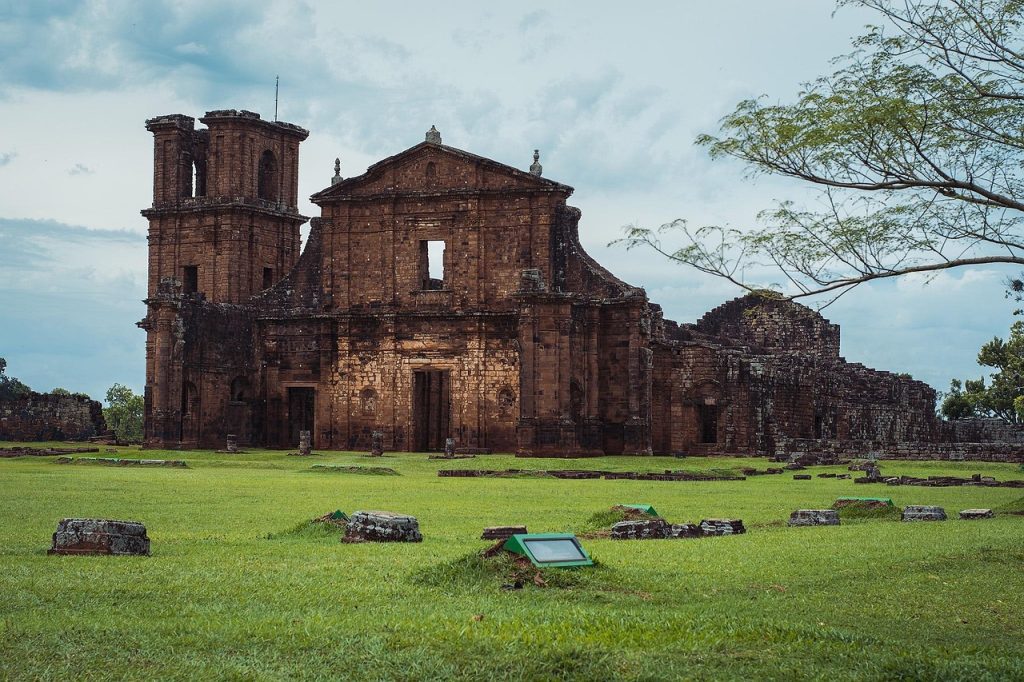
The religious life of the Chiquitano is deeply shaped by the Jesuit missions of the eighteenth century, which brought Catholicism to the region and fused it with indigenous practice. The result is a distinctive local Christianity centered on the great mission churches and their patron saints.
Devotion to the saints, the celebration of feast days, and the care of the historic churches stand at the heart of community religious life. The mission churches, several now recognized for their architectural and cultural value, remain living centers of worship rather than mere monuments.
Underlying this Christianity run older beliefs about the forest and its spirits, and about the powers that govern the land and the seasons. The Chiquitano religious world blends these strands into a whole that is neither purely European nor purely indigenous but genuinely their own.
The feast of a town’s patron saint is the high point of its religious year, drawing the whole community into preparation, procession, and celebration. Such devotions fuse Catholic form with a local warmth and character all their own.
Care of the historic churches, several of them recognized internationally for their heritage value, is itself a religious duty, tying the community’s faith to the fabric of the buildings their ancestors raised.
Processions carrying the image of a saint through the streets are among the most moving expressions of Chiquitano faith, drawing the whole town into a shared act of devotion. The rhythm of the church year gives shape to the passing of time itself.
Traditions and Ceremonial Music
The most celebrated Chiquitano tradition is the baroque music that survives in the mission towns, a legacy of the Jesuit period when indigenous musicians learned and then transformed European sacred music. For generations Chiquitano players have kept alive scores and instruments passed down since mission times.
This music accompanies religious festivals and processions, filling the wooden churches with violins, harps, and voices in a sound found nowhere else. The preservation of thousands of pages of mission-era scores has made the region famous among lovers of early music worldwide.
Beyond the churches, music and dance mark the rhythms of community life, from feast days to family celebrations. The tradition is not a frozen relic but a living practice, taught to new generations of players who carry the sound forward.
The survival of the mission-era musical archives, rediscovered and studied in recent decades, revealed a treasure of compositions written and performed in the reductions. Chiquitano musicians have been central to bringing this music back to life.
Learning an instrument and joining the church ensemble remains a path of pride for young people in the mission towns, ensuring that the tradition passes to new hands rather than fading into memory.
Ensembles from the mission towns now perform at festivals and concerts far beyond the Chiquitania, carrying their music to national and international audiences. This wider recognition has renewed local pride in the tradition.
The annual mission music festival has become a landmark event, filling the historic churches with sound and drawing performers and listeners from around the world to the heart of the Chiquitania.

Crafts and Woodcarving
Woodcarving is among the finest of Chiquitano crafts, a skill nurtured during the mission era when local artisans carved altars, pulpits, and the great wooden columns of the churches. This tradition of working the region’s hardwoods continues in the making of furniture, instruments, and religious images.
Weaving, pottery, and the crafting of everyday tools round out the material culture, with women often leading the work of spinning and weaving cotton. Each craft ties practical use to inherited technique, passed within families and communities.
The instruments used in the famous mission music, including violins and harps, are themselves the product of local craft, made and repaired by Chiquitano hands. In this way the arts of wood and sound come together in a single living tradition.
The great carved altars and columns of the mission churches stand as monuments to the skill of Chiquitano woodworkers, whose descendants still practice the craft. Restoration work on the churches has drawn on this living tradition of carving.
Everyday crafts, from woven cotton to fired pottery, supply the household while carrying inherited patterns and techniques. In the making of these objects the knowledge of generations is quietly preserved.
Apprenticeship in carving and instrument-making passes the skills to younger hands, often within families where the craft has been practiced for generations. The continuity of these workshops keeps the tradition from becoming a mere memory.
Visitors to the mission towns can often watch carvers and weavers at work, and the sale of their pieces provides both income and a way of keeping the crafts visible and valued.

Food and Farming
Chiquitano food rests on the crops of the cleared fields, above all maize, manioc, rice, and plantains, supplemented by game, fish, and the fruit of the forest. These staples are prepared in dishes that reflect both indigenous roots and the influences absorbed over centuries.
Farming follows the seasons closely, with planting timed to the rains and harvest to the drier months, and the community often working the land together. The forest provides an additional larder of fruit, honey, and game to round out the diet.
Food is central to festival and celebration, when special dishes and drinks mark the feast days of the saints and the gatherings of the community. To share a meal is, here as elsewhere, to reaffirm the bonds of kinship and neighborliness.
Chicha and other traditional drinks accompany celebrations, prepared from maize or fruit in ways handed down over generations. Such drinks are as much a part of the festival as the music and the procession.
The forest and rivers add seasonal variety to the table, from wild fruit and honey to fish drawn from the swollen streams of the rainy season. This blend of farm and forest gives Chiquitano food its distinctive character.
Markets in the towns bring together the produce of the surrounding farms and forest, and a visit to the market is a social occasion as much as an errand. The exchange of food and news binds the scattered community together.

Festivals and the Ritual Year
The Chiquitano ritual year turns around the feast days of the patron saints of the mission towns, occasions of processions, music, dance, and communal feasting. These festivals draw together the whole community and often visitors from surrounding villages.
The great churches come alive during these celebrations, filled with the baroque music that is the region’s pride, as processions wind through the plaza and the streets. Costume, ornament, and dance add color and movement to the sacred observances.
Alongside the church calendar run celebrations tied to the farming year and to family milestones, weaving religious and seasonal rhythms together. The festival is a moment when the whole life of the community, past and present, is on display.
Preparations for a patronal feast can occupy a town for weeks, as musicians rehearse, cooks prepare, and the church is readied for the great day. The anticipation itself becomes part of the celebration.
Dance groups in elaborate costume perform during the festivals, enacting stories and roles that blend indigenous and colonial themes. These performances are among the most vivid expressions of Chiquitano culture.
For many Chiquitano living away in the cities, the patronal feast is a reason to return home, renewing ties to family and place and reminding the whole community of what binds it together.

History and the Jesuit Reductions
The decisive chapter in Chiquitano history is the founding of the Jesuit reductions in the late seventeenth and eighteenth centuries, mission towns where priests gathered scattered indigenous groups into settled communities. These missions reshaped the peoples of the region into the Chiquitano nation.
The reductions introduced Christianity, European crafts and music, and a new pattern of town life, while also sheltering the people from the slave raids that plagued the frontier. When the Jesuits were expelled in the later eighteenth century, the Chiquitano carried the traditions forward on their own.
The following centuries brought the pressures of the rubber economy, forced labor, and the expansion of ranching and settlement into the lowlands. Through all of this the Chiquitano preserved their language, music, and communal life, adapting to survive as a distinct people.
The expulsion of the Jesuits in the eighteenth century was a turning point, leaving the Chiquitano to sustain the missions and their traditions largely on their own. That they succeeded is a testament to how deeply the culture had taken root.
The rubber boom of the late nineteenth and early twentieth centuries brought harsh labor demands to the lowlands, and many Chiquitano suffered under its exploitation. The community endured this era as it had earlier trials, holding to its identity.
Through revolution, land reform, and the shifting fortunes of the Bolivian state, the Chiquitano adapted while holding to the core of their identity. Their history is one of resilience in the face of forces far larger than themselves.

The Chiquitano Today
Today the Chiquitano number in the tens of thousands, one of the largest indigenous groups of eastern Bolivia, living in the towns and villages of the Chiquitania. They combine farming and rural work with growing engagement in regional and national life.
The mission towns, with their restored baroque churches, have drawn recognition and visitors, giving the Chiquitano both pride in their heritage and new economic opportunities. The famous mission music festivals have carried the name of the Chiquitania around the world.
At the same time the community faces pressures from deforestation, land conflict, and the loss of language among the young. Chiquitano organizations work to protect their territory, revive their tongue, and pass on the traditions that make them who they are.
Bilingual education programs and cultural centers work to strengthen the language and traditions among the young, who increasingly move between village and city. This mobility brings both risk and opportunity to the community’s future.
Land rights remain a central struggle, as the Chiquitania faces pressure from agriculture, ranching, and infrastructure. Chiquitano organizations press their claims through legal and political channels, tying the defense of the land to the survival of their culture.
Younger Chiquitano increasingly take up leadership in regional indigenous organizations, bringing new energy to the defense of land, language, and culture. Their engagement suggests a community determined to shape its own future.
In the towns and villages alike, the church bell, the carved facade, and the strains of a violin still mark the Chiquitano as heirs to a history unlike any other in the Americas.

Related Peoples of the Region
- Piaroa People of the Orinoco Forests and Their Philosophy of Peace
- Witoto and Bora Peoples of the Northwest Amazon and Their World of the Maloca
- Cofan People of the Ecuadorian Amazon and Their Fight to Save the Forest
- Nasa People of the Colombian Andes and Their Enduring Struggle for the Land
- Kamsa People of the Sibundoy Valley and Their Carnival of Forgiveness
- Bororo People of the Mato Grosso Savanna and Their Circle of the Dead