In the forests and savannas of the middle Orinoco basin, in southern Venezuela and neighboring Colombia, live the Piaroa, an indigenous people known for their rich spiritual life and their distinctive philosophy that prizes knowledge and the avoidance of conflict. Their homeland is a land of forested hills, winding rivers, and the ancient flat-topped tepui mountains, and they have inhabited it for a very long time, developing a culture deeply attuned to its forests and waters.
This article explores who the Piaroa are, from their ancient roots and living language to their beliefs, crafts, food, and their remarkable cultural continuity through centuries of contact with the outside world. Their story offers a window into the depth of Orinoco indigenous culture and into a way of life shaped by a profound concern with the spiritual forces of the world and the value of living in peace.
Contents
- Origins of the Piaroa in the Orinoco Forests
- The Name Piaroa and What They Call Themselves
- The Saliban Language of the Piaroa
- Homeland in the Middle Orinoco Basin
- The Old Way of Life in the Forest
- How Piaroa Society Was Organized
- Beliefs, Shamans, and a Philosophy of Peace
- Traditions Carried Through the Generations
- Crafts of Fiber, Bark, and Resin
- Food from Gardens, Forest, and River
- Festivals, Music, and the Warime Ceremony
- A History of Contact and Adaptation
- The Piaroa People Today
Origins of the Piaroa in the Orinoco Forests
The Piaroa are an indigenous people of the middle Orinoco basin, living in the rainforests and savannas of southern Venezuela and reaching into neighboring parts of Colombia. Their homeland lies in a region of forested hills, winding rivers, and the ancient flat-topped mountains known as tepuis that rise from the surrounding lowlands. The Piaroa have inhabited this land for a very long time, developing a culture deeply attuned to its forests and waters.
For centuries the Piaroa lived as one of the many peoples of the Orinoco region, distinct in language and custom from their neighbors. Their traditional way of life combined the cultivation of forest gardens with hunting, fishing, and gathering, a pattern found among many peoples of the region but expressed in ways particular to the Piaroa. They were known for their relatively peaceful disposition and their rich spiritual life.
Understanding the Piaroa means appreciating a people whose culture placed great emphasis on knowledge, on the avoidance of conflict, and on a complex relationship with the spirit world. Their deep history in the forests of the Orinoco is a story of adaptation to a rich but demanding environment, and of the development of a philosophy of life that set them apart among the peoples of the region.
The tepuis that punctuate their homeland, among the oldest rock formations on earth, gave the Piaroa world a distinctive character, their sheer walls and mist-wreathed summits featuring in the mythology and imagination of the people who lived in their shadow. These ancient mountains stood as landmarks both physical and spiritual.
Neighboring peoples such as the Warao of the delta and the various groups of the upper Orinoco shared parts of this vast river world with the Piaroa, each adapting in its own way to a region of extraordinary natural wealth.

The Name Piaroa and What They Call Themselves
The people are widely known as Piaroa, a name applied to them by outsiders and recorded in the historical literature. Among themselves, however, they use other names in their own language, terms that carry their own meanings and reflect how the people understand their own identity. As with many indigenous peoples, the name by which they became widely known is not the one they use for themselves.
The self-designations of the Piaroa refer to the people and their relationship to their land in ways rooted in their language and worldview. The gap between the outside name and the people’s own names for themselves is a common feature across the Americas, where explorers and officials rarely learned how communities described themselves. Understanding this distinction is part of understanding the Piaroa on their own terms.
Whatever the name used, the Piaroa have long possessed a strong sense of their distinct identity, separate from the many other peoples of the Orinoco region. That identity was rooted in shared language, custom, and a particular philosophy of life. In the modern era, asserting that identity has become part of the wider effort to defend Piaroa rights and secure their place in contemporary society.
The careful attention the Piaroa gave to naming, both of themselves and of the many beings of their world, reflected a culture in which knowledge and the proper understanding of things carried deep importance. To name rightly was, in a sense, to understand rightly.
Scholars who have worked closely with the Piaroa have helped bring these self-understandings to wider notice, adding depth to how the people are known beyond their forests.
The Saliban Language of the Piaroa
The Piaroa language belongs to the small Saliban family, a grouping of related languages spoken in the Orinoco region. Piaroa is one of the main members of this family, and its distinct structure and vocabulary make it a subject of interest to linguists studying the diversity of the region’s tongues. The language carries the accumulated knowledge of the forest world built up over countless generations.
Compared to many indigenous languages of the Americas, Piaroa has shown considerable vitality, remaining in use in many communities where it continues to be spoken by people of all ages. This relative strength stands in contrast to the endangerment of many smaller languages, and it reflects the resilience of Piaroa cultural identity and the continued cohesion of their communities.
Nonetheless, the Piaroa language faces the pressures common to indigenous tongues, including the influence of Spanish and the changes brought by contact with the wider society. Efforts to support the language through education and documentation are part of the broader movement to defend indigenous cultures. The continued vitality of Piaroa depends on the strength of the communities that speak it.
That Piaroa children still grow up speaking their ancestral tongue in many communities is a considerable achievement in a region where so many indigenous languages have faded. This everyday vitality gives the language a resilience that formal programs alone could never provide.

Homeland in the Middle Orinoco Basin
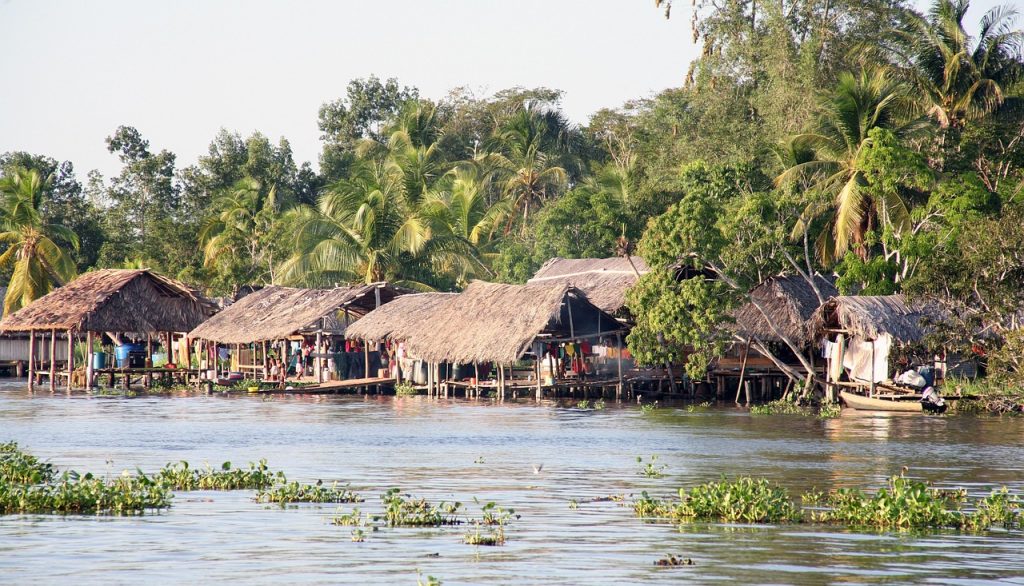
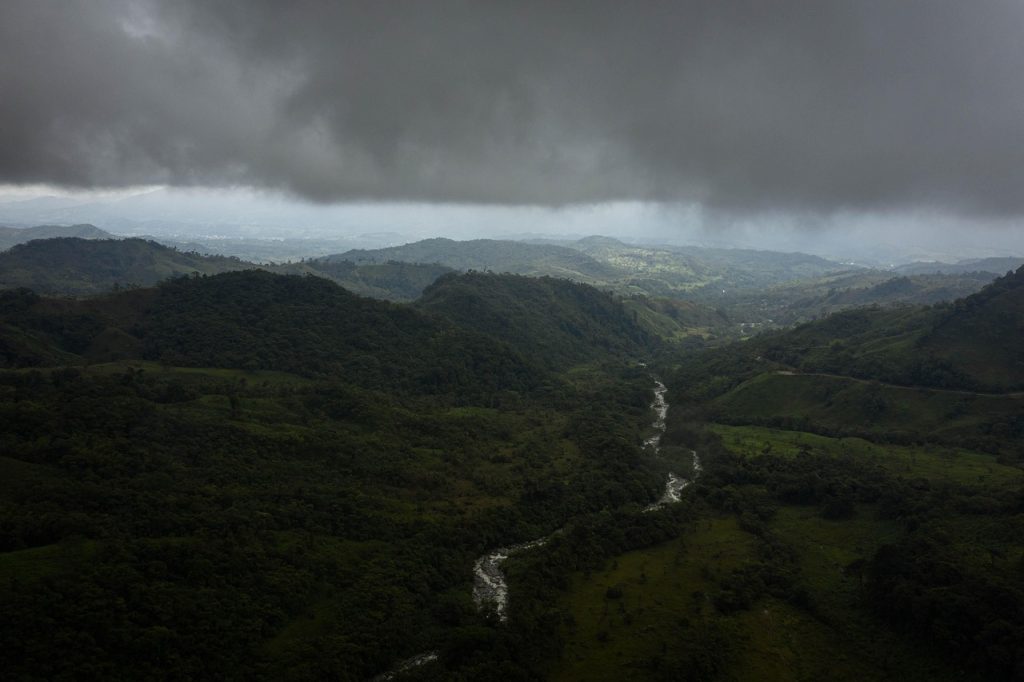
The Piaroa homeland lies in the middle Orinoco basin of southern Venezuela, a region of tropical forest, savanna, and the dramatic tepui mountains that rise abruptly from the surrounding lowlands. The great Orinoco River and its many tributaries shape the landscape, providing water, food, and routes of travel. This is a land of striking natural beauty and considerable biological richness.
For the Piaroa, this environment was both home and provider. They knew its forests, rivers, and seasons with a precision born of long experience, and they drew from it nearly everything they needed. Settlements were traditionally located to take advantage of the resources of forest and river alike, and the rhythm of life followed the cycles of rain and dry season that governed the region.
Much of the traditional territory now falls within regions that have seen pressure from mining, settlement, and other outside activities. Defending the homeland has become part of the modern struggle of the Piaroa to maintain their way of life. For them, as for so many peoples of the region, the land is not merely where they live but the foundation of their identity and survival.
The alternation of a pronounced wet season with a drier one governed the movement of game, the level of the rivers, and the timing of planting and harvest, and reading these cycles correctly was among the most important of Piaroa skills.
Fish were especially important in the rainy season when the swollen rivers spread across the land, while the dry months favored hunting in the forest, so that the Piaroa year moved between these complementary sources of food.

The Old Way of Life in the Forest
Traditional Piaroa life was built around the communal house, a large structure that sheltered an extended family group and stood at the center of social and spiritual life. Around the house lay garden plots cut from the forest, where the staple crops were grown. This pattern of settlement suited an environment where resources were spread across a wide area and where the forest needed time to recover after cultivation.
The daily rhythm followed the forest and the rivers. Men hunted and fished, cleared gardens, and gathered forest products, while women tended crops, prepared food, and cared for children. Knowledge and work were shared according to age and skill, and children learned the ways of the forest by watching and helping their elders. The communal house was the heart of this shared life.
This way of life gave the Piaroa a strong self-sufficiency, for a household could provide nearly everything it needed from the forest and rivers around it. Yet Piaroa life was also marked by a distinctive emphasis on the avoidance of conflict and on the cultivation of knowledge, values that shaped how people lived together and how they understood their place in a world they saw as full of spiritual power.
The communal house was more than a dwelling; it was a model of the ordered world the Piaroa strove to maintain, a place where the values of harmony and mutual respect were expressed in the daily conduct of life under a single great roof.

How Piaroa Society Was Organized
Piaroa society was organized around the communal house and the extended family rather than around powerful chiefs or centralized authority. Leadership was closely tied to spiritual knowledge, with the most respected leaders being those who had mastered the complex body of ritual and esoteric wisdom that lay at the heart of Piaroa culture. Authority rested on knowledge and moral standing rather than on force.
The Piaroa were known for a strong emphasis on individual autonomy and on the avoidance of coercion and violence. Social harmony was highly valued, and the ideal leader was one who guided through wisdom and example rather than through command. Conflicts were to be avoided or managed carefully, and the maintenance of peaceful relations was a central concern of Piaroa social life.
Kinship and marriage linked the scattered communal houses into a wider network, and these ties were essential in a landscape where households lived at some distance from one another. This decentralized and consensus-oriented structure gave Piaroa society flexibility and reflected their deep-seated values. In the modern era, they have built new forms of organization to represent themselves while drawing on these traditions.
The Piaroa reputation for gentleness and for the deliberate avoidance of violence struck many outside observers, and it grew directly out of a worldview that saw aggression as a dangerous force to be contained. Peace, for the Piaroa, was not merely an absence of conflict but an active achievement.
The high value placed on personal autonomy meant that no one could easily compel another, and cooperation had to be won through respect and reciprocity rather than commanded, shaping a society remarkably free of coercive authority.

Beliefs, Shamans, and a Philosophy of Peace
The spiritual world lay at the very heart of Piaroa culture, which was marked by an unusually rich and complex body of religious thought. The Piaroa understood their world as filled with spiritual powers and dangers, and much of their intellectual life was devoted to understanding and managing these forces. Knowledge of the spirit world was the highest form of wisdom and the foundation of leadership.
Shamans held a central place in Piaroa society, serving as healers, as keepers of sacred knowledge, and as intermediaries between the human community and the powers of the cosmos. Their training was long and demanding, involving the mastery of chants, myths, and rituals, and in some cases the use of sacred plants. The shaman’s knowledge was essential to protecting the community from spiritual harm.
A striking feature of Piaroa belief was a deep concern with the dangers of aggression and the importance of controlling the destructive forces that could arise between people and within the cosmos. This philosophy of restraint and peace shaped the whole of Piaroa life. It was closely tied to the language and to the intimate relationship between the people and the spiritual world they inhabited.
So central was esoteric knowledge that the greatest shamans were regarded as the true guardians of the community, their long years of learning giving them the power to shield their people from the unseen dangers that pressed in from every side.
Dreams and visions were treated as genuine encounters with the spiritual world, sources of insight that the knowledgeable could interpret, in keeping with a worldview in which the seen and unseen were understood as constantly touching.

Traditions Carried Through the Generations
Piaroa traditions were carried forward through the spoken word, through ritual, and through the guidance of elders and shamans rather than through writing. The vast body of myth, chant, and esoteric knowledge that lay at the heart of Piaroa culture was transmitted through long and careful instruction. This oral and ritual inheritance held the accumulated wisdom of the people.
Storytelling, song, and ceremony carried the myths and values of the community, teaching the young how to live and how to understand the spiritual dangers and responsibilities of the world. The most important knowledge was held by the shamans and passed on through demanding apprenticeship. Through these forms the Piaroa maintained a shared identity and a distinctive worldview across their scattered communities.
The pressures of contact with the outside world have placed strain on the transmission of these traditions, as communities have been affected by economic change, missionary activity, and the influence of the wider society. Yet the Piaroa have shown determination in maintaining their customs and their spiritual heritage, and passing this inheritance to the young remains central to their sense of who they are.
The transmission of the most sacred knowledge was deliberately slow and selective, reserved for those willing to undertake the demanding path of the shaman, so that the deepest wisdom of the people was concentrated in a few who carried it on behalf of all.
Crafts of Fiber, Bark, and Resin
Piaroa crafts drew on the materials the forest provided, transformed by skill and knowledge into tools, containers, and objects of daily and ritual use. Fibers from palms and other plants were woven into baskets, mats, and other useful items, each shaped for a particular purpose. These objects reflected a practical mastery of the resources of the forest and the many uses to which they could be put.
The Piaroa were known for particular crafts tied to their environment and culture, including items made from bark, fiber, and forest resins. Objects used in ritual and ceremony held special importance, connecting the material world to the spiritual concerns that were so central to Piaroa life. The making of these objects was itself bound up with knowledge and, in some cases, with spiritual meaning.
The knowledge required to produce these crafts was a form of inheritance, learned by watching skilled hands and practicing over years. As with language and ritual, this knowledge has faced pressure from the changes brought by contact with the wider world. Encouraging the continued practice of traditional crafts is part of the effort to keep Piaroa culture alive for future generations.
Certain baskets and ritual objects were made with particular care for use in ceremony, their forms and materials chosen for meaning as much as for function, a reminder that among the Piaroa the practical and the sacred were rarely far apart.

Food from Gardens, Forest, and River
The Piaroa drew their food from a combination of forest gardens, hunting, fishing, and gathering, a mixed strategy well suited to the abundance and variability of their environment. Garden plots provided staple crops, above all bitter manioc, which was processed and prepared in various forms as it is among many peoples of the region. Manioc formed the foundation of the Piaroa diet.
Hunting and fishing supplied vital protein. The Piaroa hunted the game of the forest and fished the rivers and streams, drawing on detailed knowledge of the habits of animals and the cycles of the waters. The forest also offered wild fruits, nuts, and other foods gathered according to the season, and certain forest products such as insects were valued additions to the diet.
The processing of bitter manioc, which requires careful preparation to remove its natural toxins, was an important part of daily life and a skill central to the food economy. Sharing food within the communal house and beyond was an important social act, binding people together and expressing the values of generosity and harmony that lay at the heart of Piaroa culture.
The labor of turning bitter manioc into safe and lasting food occupied the women through much of the day, a patient and skilled process without which the staple of the Piaroa diet could not be eaten at all. It stood as one of the quiet foundations of the whole way of life.

Festivals, Music, and the Warime Ceremony
Ceremony and celebration held great importance in Piaroa life, and among the most significant was the great ritual gathering known as the Warime, a complex ceremony involving masks, music, and dance that brought communities together. Such events were among the most elaborate expressions of Piaroa culture, uniting the social, the artistic, and the deeply spiritual in a single powerful occasion.
Music, dance, and the wearing of elaborate masks marked these ceremonies, which were tied to the myths and spiritual concerns at the heart of Piaroa belief. The gatherings reinforced the bonds between communities, provided occasions for the exchange of goods and the arrangement of marriages, and passed on the knowledge and traditions that carried the culture forward. They were moments of great cultural intensity.
In the modern era, ceremonies and gatherings have taken on added importance as expressions of Piaroa identity and pride. Efforts to maintain and celebrate ceremonies such as the Warime help younger generations connect with their heritage and assert the continued vitality of Piaroa culture. These occasions link the present to a deep past, keeping ancient traditions alive in a changing world.
Preparing for a great ceremony such as the Warime could occupy a community for a long stretch, the making of masks and the gathering of food drawing everyone into a shared effort that was itself part of the ritual’s meaning.

A History of Contact and Adaptation
The history of the Piaroa since the arrival of Europeans is one of contact, disruption, and adaptation. For much of the colonial period the relative remoteness of the middle Orinoco kept the Piaroa somewhat insulated from the full force of outside powers, though they were affected by the diseases, slave raids, and upheavals that swept the wider region. Their homeland lay beyond the main centers of colonial activity.
As the centuries passed, contact with missionaries, traders, and settlers increased, bringing new pressures and changes. Like peoples across the region, the Piaroa suffered from introduced diseases and from the disruptions of the colonial and later national eras. Yet their relative isolation and the strength of their culture allowed them to preserve much of their language and way of life through these challenges.
In more recent times the Piaroa have faced new pressures from mining, settlement, and the expansion of the wider society into their homeland. The recognition of indigenous rights in Venezuela has given them some legal foundation on which to defend their lands and culture. Their history is one of a people who, through relative isolation and cultural strength, preserved much of their heritage against the forces of change.
The strength of Piaroa culture, and the difficulty outsiders faced in penetrating their forested homeland, helped the people weather storms that shattered many other communities, allowing them to enter the modern era with much of their heritage intact.

The Piaroa People Today
Today the Piaroa are one of the more numerous indigenous peoples of the Venezuelan Amazon, living in many communities across their traditional territory in the middle Orinoco basin, with related people in Colombia. Their language remains widely spoken, and their communities retain much of their traditional culture, making the Piaroa a notable example of cultural continuity in the region.
The challenges they face are nonetheless serious. Their homeland has come under pressure from mining and other activities, and the wider social and economic difficulties of the region affect their communities. Balancing engagement with the wider society against the preservation of language, ceremony, and their distinctive philosophy of life is an ongoing task for the Piaroa today.
The story of the Piaroa is one of cultural strength and continuity in a changing world. Preserving a rich spiritual heritage, a living language, and a distinctive philosophy that prized knowledge and peace, they have maintained their identity through centuries of contact. As they look to the future, the Piaroa carry forward a heritage rooted in the forests of the Orinoco, insisting on their right to remain who they are.
Among the peoples of the Venezuelan Amazon, the Piaroa stand out for the degree to which they have kept their language and ceremonies alive, offering a hopeful counterexample to the pattern of loss seen so widely across the region.
Their example is often cited by those who study the region as evidence that indigenous languages and ceremonies can endure when communities remain cohesive and rooted in their land.
Related Peoples of the Region
- Tucano Peoples of the Vaupes Rivers and Their World of Many Languages
- Shawi People of the Peruvian Foothill Forests and Their World of Masato and Rivers
- Zaparo People of the Upper Amazon and Their Language on the Edge of Silence
- Nambikwara People of the Mato Grosso Savanna and Their Seasonal Wandering World
- Yagua People of the Northwestern Amazon and Their World of Palm and Blowgun
- Kawesqar People of the Patagonian Channels and Their Vanishing Canoe World
You May Like
The Damara, an Ancient People of Namibia


One thought on “Piaroa People of the Orinoco Forests and Their Philosophy of Peace”