Along the storm-battered fjords and channels of western Patagonia, at the far southern edge of Chile, lived the Kawesqar, one of the great seafaring peoples of the Americas. For thousands of years they made their home on the cold and rain-soaked waters, moving by bark canoe through a labyrinth of islands and glaciers, gathering their food from the sea and keeping a fire burning even aboard their vessels. Few peoples anywhere adapted so completely to so harsh a world.
This article explores who the Kawesqar are, from their ancient roots and critically endangered language to their beliefs, crafts, food, and their brush with extinction after contact with the outside world. Their story is one of extraordinary human adaptation to one of the planet’s most extreme habitable regions, and of the fragile survival of a culture that came perilously close to being lost forever.
Contents
- Origins of the Kawesqar in the Southern Channels
- The Name Kawesqar and Its Meaning
- The Alacalufan Language and Its Last Speakers
- Homeland Among the Fjords of Patagonia
- The Old Canoe-Faring Way of Life
- How Kawesqar Society Was Organized
- Beliefs and the Spirit World of the Sea
- Traditions of a Seafaring People
- Crafts of Bark, Reed, and Sealskin
- Food from the Sea and the Shore
- Gatherings, Song, and Ceremony
- A History of Near Extinction
- The Kawesqar People Today
Origins of the Kawesqar in the Southern Channels
The Kawesqar are an indigenous people of the far south of Chile, one of the seafaring nations who for thousands of years made their home among the cold fjords, channels, and islands of western Patagonia. Their world was one of water, rock, and forest, a labyrinth of waterways stretching along the Pacific edge of South America toward the tip of the continent. Few peoples anywhere adapted so completely to life on the sea in such a harsh and demanding environment.
Archaeological evidence shows that people have lived in this region of southern channels for many thousands of years, moving by canoe through a maze of waterways in one of the wettest and stormiest places on earth. The Kawesqar are among the descendants of these ancient canoe peoples, who developed a way of life almost entirely oriented toward the sea, gathering their food from its waters and shores and traveling its channels in bark canoes.
To understand the Kawesqar is to understand a people shaped by an extraordinary environment. The cold, rain-soaked, wind-battered channels of western Patagonia would seem forbidding to most, yet the Kawesqar not only survived there but built a rich culture attuned to its rhythms. Their deep history in this remote corner of the world is a story of remarkable human adaptation to one of the planet’s most extreme habitable regions.
The waters they navigated lie among the most inhospitable in the world, where rain falls on the majority of days and williwaw winds can descend without warning from the mountains. That human beings not only endured but flourished here for millennia is a testament to a body of hard-won knowledge that few outsiders could ever hope to match.
Alongside the Kawesqar, other canoe peoples such as the Yaghan lived farther south still, together forming one of the most remarkable maritime cultural traditions found anywhere on earth.

The Name Kawesqar and Its Meaning
The people are known today as Kawesqar, a name that in their own language refers to the people themselves, though they have also been recorded under other names in the historical literature. Earlier accounts often called them by the term Alacaluf or similar spellings, a name applied by outsiders that has since largely given way to the people’s own designation. The shift reflects a wider movement to name indigenous peoples as they name themselves.
As with many peoples encountered by Europeans, the Kawesqar were recorded under a confusing variety of names by explorers, missionaries, and officials who struggled to understand a language and culture so different from their own. These outside labels often carried misunderstandings, and reclaiming the name Kawesqar has been part of restoring dignity and accuracy to how the people are known.
For the Kawesqar themselves, identity was rooted in their way of life and their relationship to the channels rather than in any single name. Their sense of who they were survived even as their numbers collapsed to the very edge of extinction. Today the name Kawesqar carries the weight of that survival, standing for a people who endured against odds that would have erased almost any other.
The replacement of the old outside label with the people’s own word for themselves is more than a matter of spelling; it is a small restoration of agency to a community long described entirely in the words of others.

The Alacalufan Language and Its Last Speakers
The Kawesqar language belongs to the Alacalufan family, a grouping now reduced almost entirely to Kawesqar itself. It is one of the most endangered languages in the world, spoken fluently by only a tiny number of elderly people. The language is unrelated to the major tongues of South America, a linguistic isolate or near-isolate that carries a unique way of describing the world of the southern channels.
Every word of Kawesqar encodes knowledge of a specific and demanding environment, from the names of the many kinds of weather and water to the terms for the plants, animals, and places of the fjords. The loss of the language would mean the loss of this irreplaceable body of knowledge, accumulated over thousands of years of life on the sea. Linguists have worked to record what remains before the last fluent speakers pass away.
Efforts to document and revive the Kawesqar language face enormous challenges, given how few speakers remain and how thoroughly the community was disrupted. Recordings, dictionaries, and educational projects aim to preserve the language and pass fragments of it to younger people. The very existence of these efforts reflects a determination not to let the voice of one of the world’s most remarkable maritime cultures fall silent.
That a language spoken across such a vast territory for thousands of years should come to rest on the memory of a mere handful of elders is a sobering measure of how completely the Kawesqar world was overturned. Each recording made of their speech is now a small act of rescue against that loss.

Homeland Among the Fjords of Patagonia
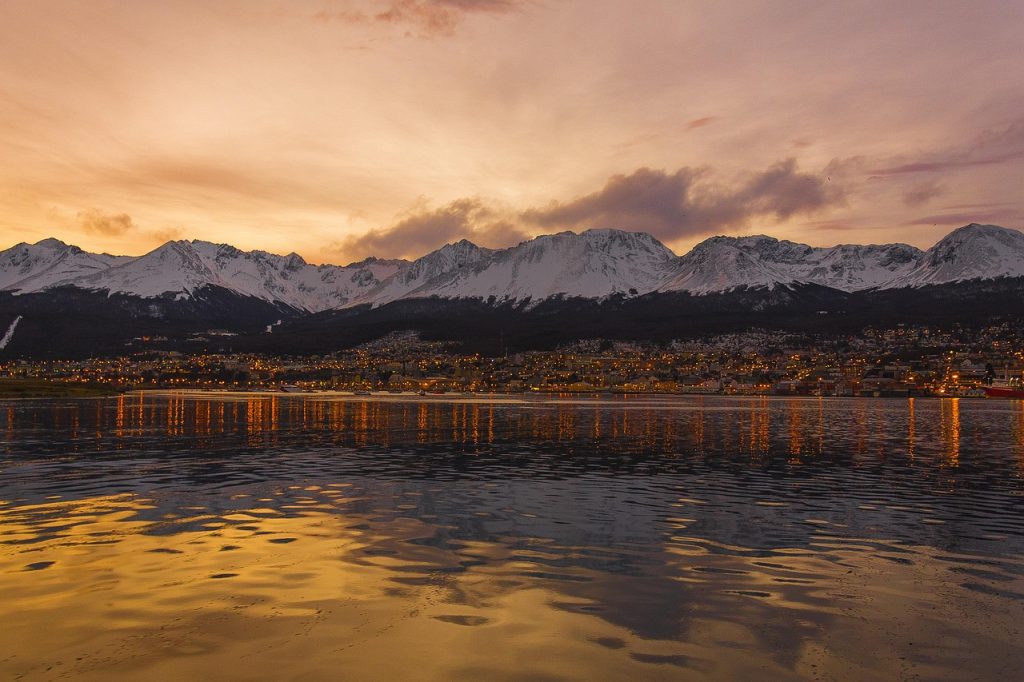
The Kawesqar homeland lies along the western coast of Patagonia in southern Chile, a vast and intricate region of fjords, channels, islands, and glaciers stretching for hundreds of miles. This is one of the wettest and stormiest places on earth, lashed by rain and wind that sweep in from the Pacific. The landscape is a maze of waterways winding between steep, forested slopes and ice-capped mountains.
For the Kawesqar, this watery world was not forbidding but home. They knew its channels, its currents, its weather, and its resources with a precision born of countless generations of experience. The sea and the shore provided nearly everything they needed, and the canoe was the key that unlocked this environment, allowing them to move freely through a region where travel by land was nearly impossible.
Much of this remote homeland now lies within national parks and protected areas, recognized for its extraordinary natural beauty and ecological importance. The Kawesqar themselves are few, and their traditional way of life on the water has largely ended, but the connection to this land and sea remains central to their identity. Defending their rights within this homeland is part of the modern struggle for survival.
Names on the modern map, such as the fjords and channels that draw travelers from around the world, mark places the Kawesqar knew by other names and by intimate experience long before any chart was drawn. Beneath the tourist geography lies an older, lived geography of camps, hunting grounds, and safe passages.
The forests that cling to these steep shores are among the southernmost on the planet, a green fringe between the cold sea and the ice above.

The Old Canoe-Faring Way of Life
Traditional Kawesqar life was built almost entirely around the canoe and the sea. Small family groups moved through the channels in bark canoes, carrying with them nearly everything they owned, including a smoldering fire kept burning on a bed of earth or clay in the vessel itself. This mobile, seafaring existence allowed them to follow the shifting resources of the coast and shore throughout the year.
The family group was the basic unit of this life, moving from one camp to another as they gathered shellfish, hunted sea mammals, and fished the cold waters. Temporary shelters of branches covered with bark or skins were raised at each stopping place and left behind when the group moved on. Little was accumulated, for everything had to fit in the canoe and be suited to a life constantly on the move across the water.
This way of life demanded extraordinary skill and endurance. Living exposed to the cold, wet, and wind of the southern channels, the Kawesqar developed remarkable resilience and an intimate mastery of their environment. The keeping of fire, even in the canoe and in the rain, was central to survival, a constant source of warmth in one of the coldest inhabited coasts on earth.
The sight of a canoe moving through the mist with a thread of smoke rising from the fire aboard it became one of the enduring images of the southern channels, recorded with wonder by the few outsiders who witnessed it. That smoke, seen from a distance, is thought to have given the whole region of Tierra del Fuego its name, the land of fire.
How Kawesqar Society Was Organized
Kawesqar society was organized around small, mobile family groups rather than large villages or centralized authority. The demands of life in the channels, where resources were scattered and the environment harsh, favored a dispersed and flexible social structure. Each family group was largely self-sufficient, moving and making decisions on its own while maintaining ties to a wider network of relatives.
Leadership was informal, resting on the respect earned through skill, experience, and knowledge of the channels rather than on inherited power. In a life so dependent on the sea and the canoe, the wisdom of experienced elders and skilled navigators carried great weight. Cooperation within and between family groups was essential, and marriage and kinship linked the scattered groups across the vast territory.
This decentralized structure suited an environment that could not support large permanent settlements. It gave the Kawesqar the flexibility to survive in a demanding land, but it also meant they were vulnerable when outside forces arrived. In the modern era, the few remaining Kawesqar have had to come together in new ways to represent themselves and defend their heritage and rights.
Because a single family often traveled alone for long stretches, self-reliance was prized above almost all else, and children learned early the skills on which survival depended. Yet the bonds of kinship that linked these wandering groups mattered no less, providing partners, allies, and help in times of need.
Beliefs and the Spirit World of the Sea
The spiritual world of the Kawesqar was bound up with the sea, the weather, and the powerful and often dangerous environment in which they lived. Like other peoples of the far south, they understood their world as filled with unseen forces that had to be respected and understood. The storms, the currents, and the creatures of the sea all had their place in a worldview shaped by life on the water.
Ceremonies and beliefs marked important moments in the life of the community and helped people make sense of an environment that could be both bountiful and deadly. The knowledge of these spiritual matters, like so much of Kawesqar culture, was held by elders and passed down through the generations. It was closely tied to the language and to the intimate relationship between the people and their world.
The catastrophic disruption of Kawesqar life placed this spiritual knowledge, along with the language that carried it, at grave risk. As the population collapsed and the traditional way of life ended, much was lost. Yet the effort to document and remember what remains is part of the wider work of preserving the heritage of a people whose beliefs were as distinctive as their extraordinary way of life.
The sea that fed them could also kill them without warning, and this double face of their world, generous and merciless by turns, lay at the heart of a spiritual outlook attuned to forces far larger than any human being.

Traditions of a Seafaring People
Kawesqar traditions were carried forward through the spoken word, through the practice of daily life, and through the guidance of elders rather than through writing. The knowledge needed to survive in the channels, the stories that explained the world, and the customs that governed social life all passed from one generation to the next by example and shared experience aboard the canoe and at the camps along the shore.
Song held an important place in Kawesqar culture, and the recording of traditional songs by researchers has helped preserve a precious part of the heritage. These songs, along with stories and detailed environmental knowledge, formed the living memory of the people. Through them the Kawesqar maintained a shared identity across the vast and scattered territory of the southern channels.
The near destruction of the Kawesqar placed enormous strain on the transmission of their traditions. When so few survived and the traditional way of life ended, the chain connecting the generations was nearly broken. The work of recording elders and gathering what remains has become urgent, an effort to preserve the memory of one of the most remarkable seafaring cultures the world has known.
Anthropologists who worked with the last generations to live the old life captured songs and testimonies that now form an irreplaceable archive, a bridge across the rupture that nearly severed the Kawesqar from their own past.
Crafts of Bark, Reed, and Sealskin
Kawesqar crafts were shaped by the materials of their environment and the demands of a mobile, seafaring life. The bark canoe was the supreme achievement of their material culture, built from great sheets of bark and designed to carry a family and its possessions through the channels. Making and maintaining these canoes required deep skill and knowledge passed down through generations.
Beyond the canoe, the Kawesqar made tools, containers, and other objects from the materials at hand, including reed, bark, bone, and the skins of sea mammals. Baskets and cordage of plant fiber served everyday needs, while sealskin and other materials provided protection against the cold and wet. Every object was suited to a life on the move, valued for its usefulness rather than for display.
The knowledge required to produce these crafts was a form of inheritance, learned by watching and doing over many years. As the traditional way of life ended, much of this knowledge was lost, and the great bark canoes are no longer built as they once were. Preserving the memory of these crafts is part of the effort to honor and remember the extraordinary skills of the Kawesqar.
The bark for the great canoes had to be taken from particular trees at the right time and worked with care, a process that could occupy a family for a long stretch. The finished vessel was the single most valuable possession a group owned, the very foundation of their existence on the water.

Food from the Sea and the Shore
The Kawesqar drew their food almost entirely from the sea and the shore, a diet suited to a people who lived on and by the water. Shellfish gathered from the rocks and shallows were a mainstay, along with fish taken from the cold channels. The women were skilled divers, gathering shellfish from beneath the frigid water, a demanding task central to the food economy of the group.
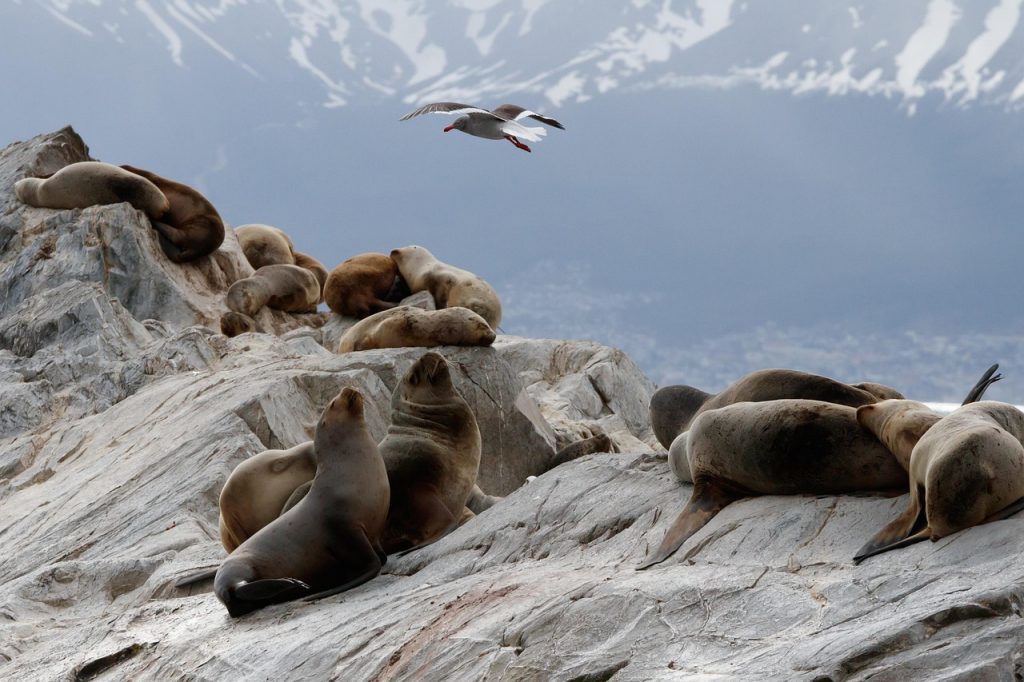
Sea mammals such as seals and sea lions were hunted for their meat, fat, and skins, providing not only food but also vital materials for a life in the cold. Sea birds and their eggs, gathered in season, added to the diet, as did the limited plant foods the harsh environment offered. This reliance on the sea reflected an environment where the land itself provided little to sustain human life.
Sharing food within the family group was essential to survival in such a demanding world, binding people together in the face of a challenging environment. The gathering, hunting, and preparation of food filled much of daily life, and the deep knowledge of where and when to find the sea’s bounty was among the most vital of Kawesqar skills, honed over thousands of years on the water.
The stranding of a whale was an event of enormous importance, a sudden abundance of meat and fat that could draw scattered groups together and sustain them for a long time. Such windfalls punctuated a food economy otherwise built on the patient, daily gathering of shellfish and the hunting of seals.
Gatherings, Song, and Ceremony
Gatherings among the scattered Kawesqar family groups were shaped by the demands of their mobile life on the water, occurring when groups came together at favored locations or when events such as the stranding of a whale drew people from a wide area. Such occasions offered a chance to renew social ties, arrange marriages, exchange news, and share in the rare abundance that brought people together.
Song and ceremony marked important moments in the life of the community, from rites of passage to gatherings occasioned by a windfall of food. These events reinforced the bonds between the scattered groups and passed on the songs and knowledge that carried the culture forward. In a life so often spent in small, isolated family units, moments of coming together held special meaning.
The recording of Kawesqar songs and the memory of their ceremonies have become precious in the modern era, as the community works to preserve what remains of its heritage. Efforts to honor and celebrate Kawesqar identity help connect the few remaining people to their extraordinary past and assert their place in contemporary Chile, keeping alive the memory of a unique way of life.
Even in a life so often solitary, the human need to come together found its expression, and the memory of those gatherings carries an emotional weight for a people who have known so much loss.

A History of Near Extinction
The history of the Kawesqar since sustained contact with outsiders is one of catastrophic decline. For most of the colonial period the remoteness and harshness of their homeland kept the Kawesqar largely beyond the reach of European powers. That isolation ended in the nineteenth and twentieth centuries as ships, settlers, missionaries, and disease reached the southern channels, with devastating consequences.
Introduced diseases swept through the small and scattered Kawesqar population, killing a large portion within a short time. The disruption of their way of life, the pressures of missionaries and settlers, and the transformation of their homeland by outside interests compounded the demographic disaster. Within a few generations, a people who had thrived in the channels for millennia were reduced to a tiny remnant.
That any Kawesqar survived at all is remarkable given the scale of the collapse. A small number held on, though the traditional canoe-faring way of life came to an end and the survivors gathered in settlements. Their survival into the present, and the growing recognition of their heritage, stand as a testament to the endurance of a people who came terrifyingly close to disappearing entirely.
The gathering of survivors into a few settlements marked the end of the ancient rhythm of movement through the channels, a rupture as profound as the loss of life itself. A way of being that had defined the Kawesqar for thousands of years simply ceased within living memory.
The Kawesqar People Today
Today the Kawesqar are a very small community, with people living in settlements in the far south of Chile, including in and around the town of Puerto Eden and in cities of the region. The traditional way of life on the water has ended, but a Kawesqar identity endures, and community members work to preserve their language, their history, and their connection to the channels of their ancestors.
The challenges they face are profound. With only a handful of fluent speakers of the language remaining, the transmission of Kawesqar to younger generations is a race against time. Yet efforts to document the language, record the memories of elders, and assert Kawesqar rights within their protected homeland reflect a determination to keep the culture from vanishing entirely.
The story of the Kawesqar is among the most striking examples of both human adaptability and the fragility of cultures in the face of outside forces. Having mastered one of the harshest inhabited environments on earth for thousands of years, they were brought to the edge of extinction within a few generations. As they look to the future, the Kawesqar carry the memory of an extraordinary seafaring heritage, insisting that it not be forgotten.
For the young Kawesqar of today, connecting with this heritage often means learning from recordings and archives as much as from living memory, a poignant reflection of how much was lost. Yet the determination to reclaim that heritage remains a powerful force within the community.

Related Peoples of the Region
- Qom People of the Gran Chaco and Their Fierce Independence on the Argentine Plains
- Tucano Peoples of the Vaupes Rivers and Their World of Many Languages
- Shawi People of the Peruvian Foothill Forests and Their World of Masato and Rivers
- Zaparo People of the Upper Amazon and Their Language on the Edge of Silence
- Nambikwara People of the Mato Grosso Savanna and Their Seasonal Wandering World
- Yagua People of the Northwestern Amazon and Their World of Palm and Blowgun
You May Like
The Damara, an Ancient People of Namibia


One thought on “Kawesqar People of the Patagonian Channels and Their Vanishing Canoe World”