Deep in the rainforest where eastern Ecuador meets northern Peru live the Zaparo, also known as the Sapara, a people whose story stretches back thousands of years and whose survival into the present is nothing short of remarkable. Once among the most numerous nations of the upper Amazon, they were brought to the very edge of extinction by disease and exploitation, only to rise again as a symbol of indigenous endurance. Their language, one of the world’s most endangered, holds knowledge of a forest world found nowhere else.
This article explores who the Zaparo are, where they come from, and how they have held on to their identity through centuries of upheaval. From their ancient roots and unique language to their beliefs, crafts, food, and their fight for the future, the Zaparo offer a window into both the richness of Amazonian culture and the fragility of that richness in a changing world.
Contents
- Origins of the Zaparo in the Upper Amazon
- The Many Names of the Sapara Nation
- A Language Family on the Edge of Silence
- Homeland Between the Napo and Pastaza Rivers
- The Old Way of Life in the Rainforest
- How Zaparo Society Was Organized
- Beliefs, Dreams, and the Forest Spirits
- Traditions Passed Between Generations
- Crafts of Bark, Fiber, and Feather
- Food from the River and the Forest Floor
- Festivals, Music, and Gatherings
- A History of Collapse and Survival
- The Zaparo People Today
Origins of the Zaparo in the Upper Amazon
The Zaparo people, also written Sapara or Zapara, are among the oldest inhabitants of the rainforest that stretches across the modern border between eastern Ecuador and northern Peru. Their story begins deep in the upper Amazon basin, in a region of tangled rivers and towering trees where human presence reaches back thousands of years. Long before the arrival of Europeans, the ancestors of the Zaparo were one of the most numerous peoples of this vast forest, spread across a wide territory and speaking a family of related tongues that set them apart from their neighbors.
Archaeological and linguistic evidence suggests that the Zaparoan peoples once occupied an enormous stretch of lowland forest between the great tributaries of the Amazon. Early accounts from travelers and missionaries described a dense population living in scattered settlements, moving between garden clearings and hunting grounds. The Zaparo were not a single unified nation in the modern sense but a constellation of closely related groups who shared language, custom, and a common understanding of the forest as both home and provider.
Understanding Zaparo origins means looking past the borders drawn on modern maps. The forest they inhabited did not recognize the later boundary between Ecuador and Peru, and Zaparo families moved freely through a homeland defined by rivers rather than nations. This deep rootedness in one of the most biodiverse places on earth shaped every part of their culture, from the words they used to the food they ate and the spirits they believed moved among the trees.
Because so much of the early record comes from outsiders who understood little of what they saw, reconstructing the deep past of the Zaparo is a delicate task. Oral tradition, the shape of the language, and the patterns of settlement all combine to sketch a picture of a people long at home in this corner of the forest. What emerges is a portrait of continuity, of a nation whose presence in the upper Amazon was measured not in centuries but in millennia.

The Many Names of the Sapara Nation
The people known in most historical records as Zaparo call themselves Sapara in their own language, and both spellings appear across scholarship and official documents. The variation reflects the difficulty outsiders had in writing down sounds from a language unrelated to Spanish or Portuguese. Different missionaries, explorers, and government officials recorded the name in their own way, leaving a trail of spellings that can confuse anyone trying to follow the group through the historical record.
The name itself has been given various interpretations over the centuries, some tied to place, others to descriptions of the people or their way of life. What matters most is that the Zaparo have always had a clear sense of who they were, distinct from the surrounding Kichwa, Shuar, and other neighbors. That sense of a separate identity survived even when their numbers fell to the edge of extinction and many families adopted the language of larger groups around them.
In recent decades the spelling Sapara has become the preferred form used by the people themselves and by the organizations that represent them. Reclaiming the name has been part of a wider effort to restore pride and visibility to a nation that the outside world had nearly written off. Today the name carries the weight of survival, a reminder that a people once counted in the tens of thousands endured against overwhelming odds.

A Language Family on the Edge of Silence
The Zaparoan language family is one of the great linguistic treasures of the western Amazon, and also one of the most endangered. At its height it included several distinct but related languages spoken across a wide territory. Today only a handful of elderly speakers retain fluency in the traditional tongue, and the language stands as a symbol of both cultural richness and the fragility of that richness in the modern world.
Linguists have long been fascinated by Zaparoan because it does not fit neatly with the larger language families of the region. Its unique grammar and vocabulary offer clues about the ancient movements of peoples through the Amazon and about ways of describing the forest world that exist nowhere else. Each word for a plant, animal, or river carries knowledge accumulated over countless generations, knowledge that risks vanishing when the last fluent speakers pass away.
Efforts to record and revive the language have gathered pace in recent years, with recordings, dictionaries, and school programs aimed at passing fragments of Zaparoan on to younger people. Many in the community now speak Kichwa or Spanish as their first language, so revival is a slow and difficult process. Yet the very existence of these efforts shows a determination not to let the voice of the ancestors fall completely silent.
The loss of a language is never only the loss of words. Each Zaparoan term for a medicinal plant, a hunting technique, or a seasonal change encodes an understanding of the environment that took generations to build. When linguists speak of the Zaparoan family as endangered, they are describing the possible disappearance of an entire way of perceiving and naming the living world, a loss that would diminish not just one community but the shared heritage of humanity.

Homeland Between the Napo and Pastaza Rivers
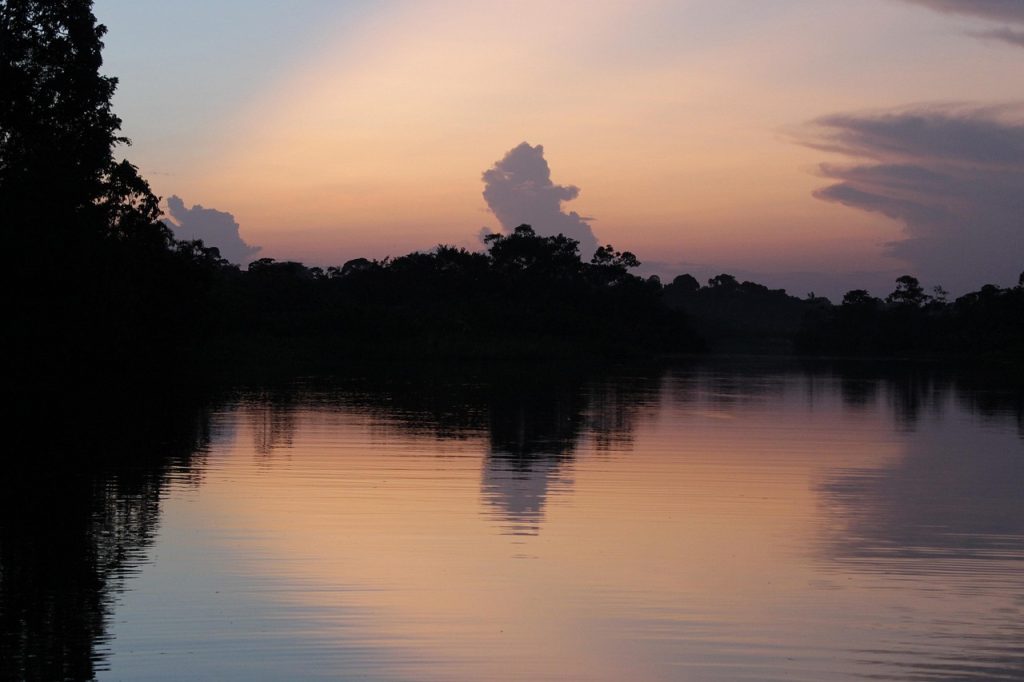
The Zaparo homeland lies in the heart of the upper Amazon, in a region drained by rivers such as the Napo, the Pastaza, the Curaray, and their many tributaries. This is a world of flooded forest, black-water streams, and endless green canopy, where the rhythm of life follows the rise and fall of the waters. For the Zaparo the rivers were highways, larders, and boundaries all at once, and their settlements clustered along the banks where fishing and travel were easiest.
This land is one of the wettest and most biologically diverse on the planet. Rain falls through much of the year, feeding rivers that swell and shrink with the seasons and nourishing a forest that holds an almost unimaginable variety of plants and animals. The Zaparo learned to read this environment with great precision, knowing which trees fruited when, where game gathered, and how to move safely through terrain that could bewilder any outsider.
Much of the traditional Zaparo territory now falls within protected areas and indigenous reserves, a recognition of both its ecological importance and the rights of its original inhabitants. The forest remains under pressure from oil exploration, logging, and other outside interests, and defending the homeland has become inseparable from defending the people themselves. For the Zaparo the land is not simply where they live but the source of their identity and survival.
Seasonal flooding shaped the calendar of Zaparo life, dictating when travel was easy, when fish were plentiful, and when gardens could be planted or harvested. Reading these cycles correctly meant the difference between abundance and hardship, and the accumulated knowledge of the rivers was passed down as carefully as any story or song.
The Old Way of Life in the Rainforest
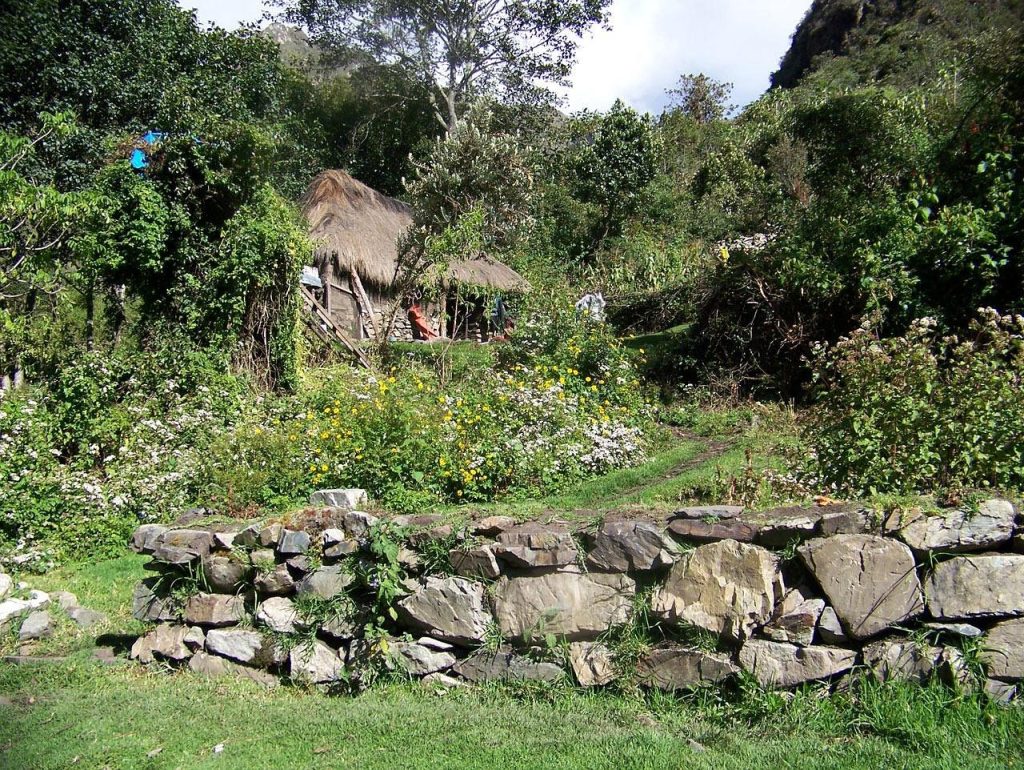
Traditional Zaparo life was built around a deep and practical intimacy with the rainforest. Families lived in dispersed settlements, often a single extended household in a large communal house surrounded by garden plots carved from the forest. This pattern of scattered living suited an environment where resources were spread thinly and where moving on to fresh ground allowed the forest to recover behind them.
The rhythm of daily life followed the forest and the rivers. Men hunted with blowguns and spears, fished the streams, and cleared new gardens, while women tended crops, prepared food, and cared for children. Work and knowledge were shared according to age and skill, and children learned by watching and helping rather than through formal instruction. Nothing was wasted, and the forest supplied nearly everything a family needed.
This way of life demanded constant attention and skill, but it also gave the Zaparo a remarkable independence. A household could provide its own food, shelter, tools, and medicine from the resources around it. That self-sufficiency was both a strength and, in the end, a vulnerability, because when the forest itself came under threat the entire foundation of Zaparo life was placed at risk.
How Zaparo Society Was Organized
Zaparo society was organized around the extended family and the local group rather than around chiefs or a centralized authority. Leadership tended to be informal and based on respect, experience, and the ability to persuade rather than on inherited power. A skilled hunter, a wise elder, or a powerful shaman might carry great influence, but decisions were often reached through discussion and consensus within the group.
Kinship ties bound the scattered households into a wider web of relationships. Marriage, trade, and shared ceremonies linked families across the territory, and these connections were essential in a landscape where any single household lived far from its neighbors. Alliances between groups could shift, and rivalries sometimes flared, but the shared language and culture provided a common thread that held the wider Zaparo world together.
This decentralized structure gave Zaparo society great flexibility, allowing groups to disperse or gather as conditions required. It also meant there was no single authority that outsiders could deal with, which complicated their relations with colonial powers and later national governments. In the modern era the Zaparo have had to build new kinds of organizations to represent themselves collectively, a task that draws on old traditions of consensus even as it adapts to new demands.
When conflicts did arise, they were often resolved through negotiation, the mediation of respected elders, or the movement of a household to a new part of the forest. The freedom to relocate acted as a kind of safety valve, allowing tensions to ease without escalating into lasting feuds. This capacity to disperse and regroup was one of the quiet strengths of a society that never relied on rigid hierarchy.

Beliefs, Dreams, and the Forest Spirits
The spiritual world of the Zaparo was inseparable from the forest around them. They understood the rainforest as a living place filled with spirits and powers, where animals, plants, rivers, and even certain places held their own kind of consciousness. To live well meant to maintain right relationships with these beings, respecting the rules that governed hunting, fishing, and the use of the land.
Dreams held a central place in Zaparo belief, seen as a way of gaining knowledge and guidance from the spirit world. Elders and shamans paid close attention to their dreams, drawing from them advice about hunting, healing, and the future. This attention to the dreaming mind connected the Zaparo to a wider Amazonian tradition in which the visible and invisible worlds were understood as constantly touching one another.
Shamans, sometimes working with sacred plants, served as healers and as intermediaries between the human community and the powers of the forest. Their role was to restore balance when illness or misfortune struck, and their knowledge of medicinal plants was vast. Much of this spiritual knowledge was tied to the language and the land, so its survival has been threatened by the same forces that endanger the Zaparo tongue itself.
Traditions Passed Between Generations
Zaparo traditions were carried forward not through writing but through the spoken word, through daily practice, and through the steady example of elders. Stories, songs, and detailed knowledge of the forest passed from one generation to the next around the household fire and during shared work. This oral inheritance held the accumulated wisdom of the people, from practical survival skills to the myths that explained the world.
Storytelling was both entertainment and education, weaving together accounts of ancestors, animals, and spirits that taught younger listeners how to behave and how to understand their place in the world. Songs accompanied work, ceremony, and celebration, and specific melodies belonged to particular occasions. Through these forms the Zaparo maintained a shared memory that bound the living to those who had come before.
The disruption of Zaparo life brought severe strain to this chain of transmission. When populations collapsed and families were scattered or absorbed into other groups, many traditions were interrupted or lost. The revival efforts of recent years have sought to gather what remains, recording elders and encouraging younger people to learn, so that the thread connecting past and present is not broken entirely.

Crafts of Bark, Fiber, and Feather
Zaparo crafts drew directly on the materials the forest provided, transformed by skill and knowledge into tools, containers, clothing, and ornaments. One of the most distinctive traditions was the making of cloth and clothing from the inner bark of certain trees, beaten and softened into a workable material. This bark cloth, used for garments and other purposes, was a hallmark of Zaparo material culture and reflected their intimate understanding of the forest’s plants.
Weaving with plant fibers produced baskets, nets, and carrying bags essential to daily life, each shaped for a particular task. Feathers from the many birds of the rainforest were used for ornamentation, and seeds, teeth, and other natural materials became beads and decorations. These objects were not merely functional but often carried meaning, marking status, occasion, or belonging within the community.
Making these crafts required knowledge that was itself a kind of inheritance, learned by watching skilled hands and practicing over years. As with language and story, this knowledge has been endangered by the pressures on Zaparo life. Encouraging the continued practice of traditional crafts has become part of the wider effort to keep the culture alive, giving younger people a tangible connection to the ways of their ancestors.
Passing these skills to the young has become a deliberate act of cultural survival, with workshops and gatherings where elders demonstrate techniques that might otherwise fade. In learning to beat bark cloth or weave a basket, a young person absorbs more than a craft; they take up a thread that connects them directly to the hands of their ancestors.

Food from the River and the Forest Floor
The Zaparo drew their food from a combination of forest gardens, hunting, fishing, and gathering, a mixed strategy well suited to the abundance and unpredictability of the rainforest. Small garden clearings provided staple crops such as manioc and plantains, which formed the base of the diet. These gardens were cut from the forest, used for a few seasons, and then allowed to return to wild growth as the family moved on.
Hunting and fishing supplied vital protein. Men used blowguns to take monkeys, birds, and other game from the canopy, and fished the rivers and streams with a range of techniques. The forest also offered wild fruits, nuts, palm hearts, and insects, gathered according to the season. This varied diet reflected a deep knowledge of what the forest offered at different times of year and where to find it.
Manioc was central not only as food but also in the form of a fermented drink prepared by the women, a staple of daily life and of every gathering and celebration. Sharing food and drink was an important social act, binding households together and marking hospitality. As with so much of Zaparo culture, the way food was produced and shared expressed values of self-reliance, generosity, and connection to the land.
Sharing the fermented manioc drink was a gesture of welcome and trust, and to refuse it could be taken as an insult. In this way even the simplest meal carried social weight, expressing the bonds of kinship and community that held the dispersed Zaparo world together across the great distances of the forest.
Festivals, Music, and Gatherings
Gatherings and celebrations punctuated the dispersed rhythm of Zaparo life, bringing scattered families together for feasting, music, dance, and the renewal of social ties. These occasions were essential in a society where households lived far apart, offering a chance to arrange marriages, settle disputes, exchange goods, and simply enjoy one another’s company. They were moments when the wider Zaparo community became visible to itself.
Music and dance lay at the heart of these events, with songs and rhythms that belonged to particular ceremonies and seasons. The fermented manioc drink flowed freely, and the celebrations could last through the night. Such gatherings reinforced shared identity and passed on the songs and stories that carried the culture forward, making them as much about memory and belonging as about pleasure.
In the modern era, festivals and communal gatherings have taken on added importance as a way of asserting Zaparo identity and pride. Events that celebrate the language, crafts, and traditions of the Sapara nation help younger generations connect with their heritage and show the wider world that the Zaparo endure. These celebrations blend old forms with new purposes, keeping ancient traditions alive in a changing time.

A History of Collapse and Survival
The history of the Zaparo since the arrival of Europeans is one of dramatic decline followed by an extraordinary struggle to survive. In the early colonial period they were among the most numerous peoples of the upper Amazon, but contact brought devastating epidemics of introduced diseases against which they had no immunity. Wave after wave of illness swept through the forest, killing a vast portion of the population within a few generations.
The disruption did not end with disease. The rubber boom of the late nineteenth and early twentieth centuries brought brutal exploitation to the Amazon, with indigenous people forced into labor, displaced, and killed. The Zaparo, already reduced in number, suffered terribly. Survivors were scattered, and many were absorbed into neighboring groups, adopting the Kichwa language and way of life to endure. By the twentieth century observers believed the Zaparo were on the verge of disappearing entirely.
Against this grim background the survival of any Zaparo identity at all is remarkable. A small number of families held on to the memory of who they were, and in the later twentieth century this remnant began to reassert itself. International recognition of the Zaparo heritage, including acknowledgment of the value of their oral culture and language, gave new momentum to their cause and helped bring the story of their near-destruction to a wider audience.
Some of those who survived by joining Kichwa-speaking communities never forgot their Zaparo origins, keeping the knowledge alive in private even as they spoke another language in public. It was from these hidden roots that the later revival would grow, proof that identity can endure beneath the surface long after outsiders have declared it gone.

The Zaparo People Today
Today the Sapara nation, though small, is very much alive, organized into communities across its traditional territory in Ecuador and with related people in Peru. Formal organizations now represent the Zaparo, defending their land rights, promoting their culture, and negotiating with governments and outside interests. From a people once thought to be vanishing, the Zaparo have become a symbol of indigenous resilience in the Amazon.
The challenges remain formidable. The rainforest homeland faces pressure from oil development, deforestation, and the many forces that threaten indigenous lands across the Amazon. The traditional language survives only among a few elders, and passing it on to the young is a race against time. Yet the community’s determination to reclaim its heritage has produced real results, from language programs to cultural festivals to a renewed sense of collective pride.
The story of the Zaparo is ultimately one of endurance against extraordinary odds. It is a reminder of how much the world stands to lose when a people and their language disappear, and of how much can be saved when a community refuses to let that happen. As the Sapara nation looks to the future, it carries forward a heritage that reaches back thousands of years into the heart of the rainforest, insisting that its voice still matters.
International attention, including recognition of the Zaparo oral and cultural heritage as something of value to all humanity, helped shift the story from one of quiet disappearance to one of active revival. That recognition brought resources, allies, and a sense that the world was finally watching, strengthening the community’s own resolve to carry its heritage forward.

Related Peoples of the Region
- Klamath and Modoc Marsh Peoples of the Oregon Lakes and Their Stand in the Lava Beds
- Purepecha Empire Builders of Michoacan and Their Language Without Kin
- Embera River Weavers of the Darien Rainforest and Their Jagua-Painted World
- Qom People of the Gran Chaco and Their Fierce Independence on the Argentine Plains
- Tucano Peoples of the Vaupes Rivers and Their World of Many Languages
- Shawi People of the Peruvian Foothill Forests and Their World of Masato and Rivers
You May Like
The Damara, an Ancient People of Namibia


One thought on “Zaparo People of the Upper Amazon and Their Language on the Edge of Silence”