There are castles that dominate a town, and then there is Edinburgh Castle, which dominates a whole nation’s imagination. Rising on a sheer black crag in the very centre of Scotland’s capital, visible from almost everywhere in the city, it is not just a fortress but the beating heart of Scotland itself, the place where the country’s crown jewels are kept, where its kings and queens were born and buried, and where its long, fierce struggle for independence was fought out again and again. It is one of the most famous and most beloved castles in the world, and one of the most fought-over places on the planet.
Edinburgh Castle has been besieged more times than almost any other stronghold anywhere, some twenty-six times over its long history, which is often said to make it the most besieged castle in Britain, and among the most besieged in the world. That grim record is a direct result of its position and its importance: whoever held this rock held the key to Scotland, and so armies came for it, century after century, in the endless wars between Scotland and England and in Scotland’s own bloody internal struggles.
But it is far more than a battered fortress. On its summit stand a tiny ancient chapel, the ancient Honours of Scotland, a giant medieval cannon, and the room where a queen gave birth to the king who would unite two crowns. So let’s climb the long slope to the castle gate and explore the rock at the heart of Scotland.
We will move up through the layers of the castle much as its history was laid down, from the ancient rock and the little chapel to the age of sieges, the crown jewels, and the birth of a king, ending with the living rituals that keep the place at the heart of Scottish life. By the top of the rock, the reason this fortress means so much to Scotland should be clear.

Table of Contents
- A Fortress on a Dead Volcano
- Scotland’s Oldest Building
- The Most Besieged Place in Britain
- The Long Siege and the Great Hall
- The Daring Night the Scots Took It Back
- The Honours of Scotland
- Mons Meg and the Great Guns
- Where a King Was Born
- A Living Symbol of Scotland
- Prisoners on the Rock
- Visiting Edinburgh Castle
- Nearby Castles
- Before You Go
A Fortress on a Dead Volcano
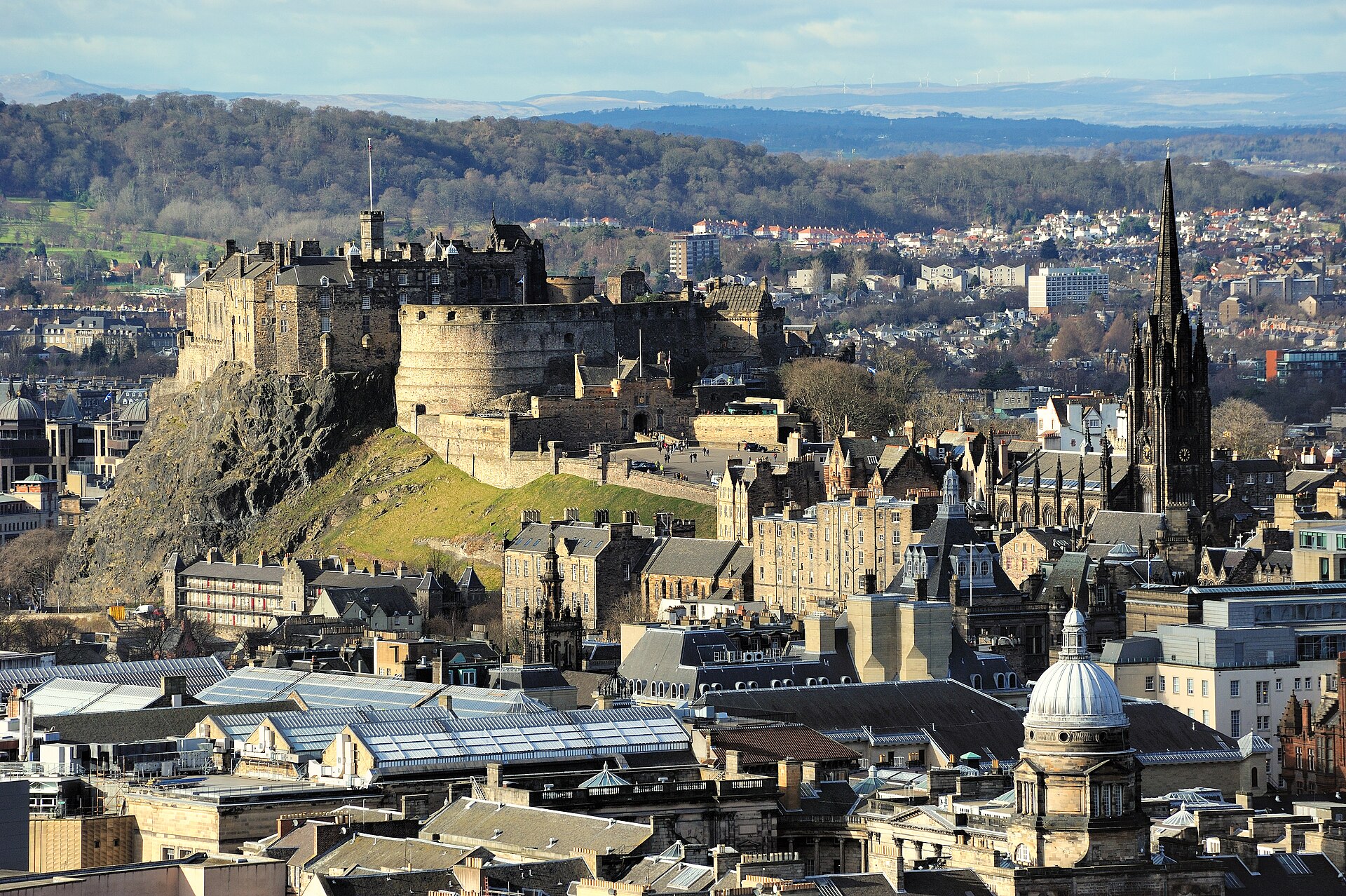
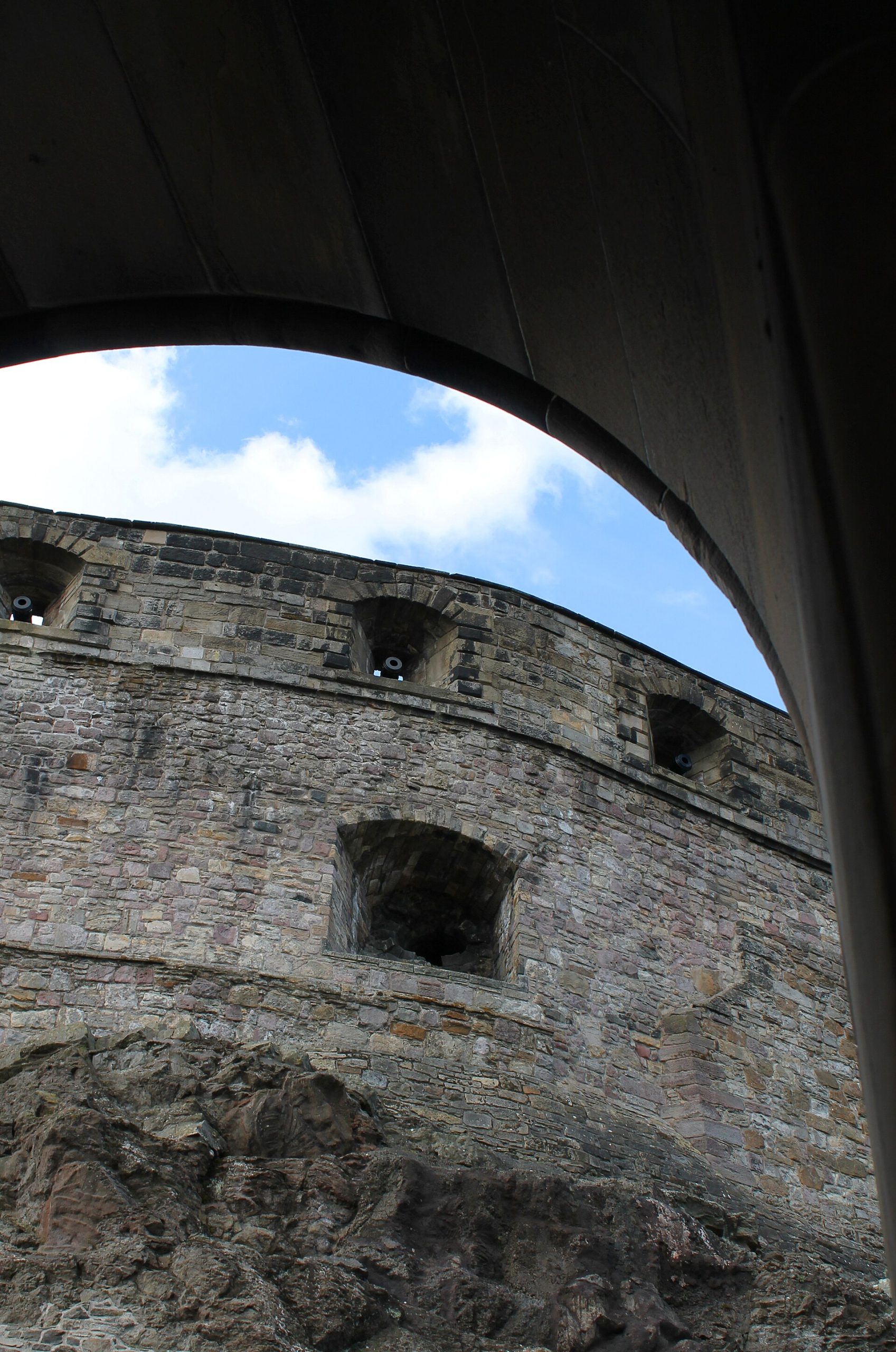
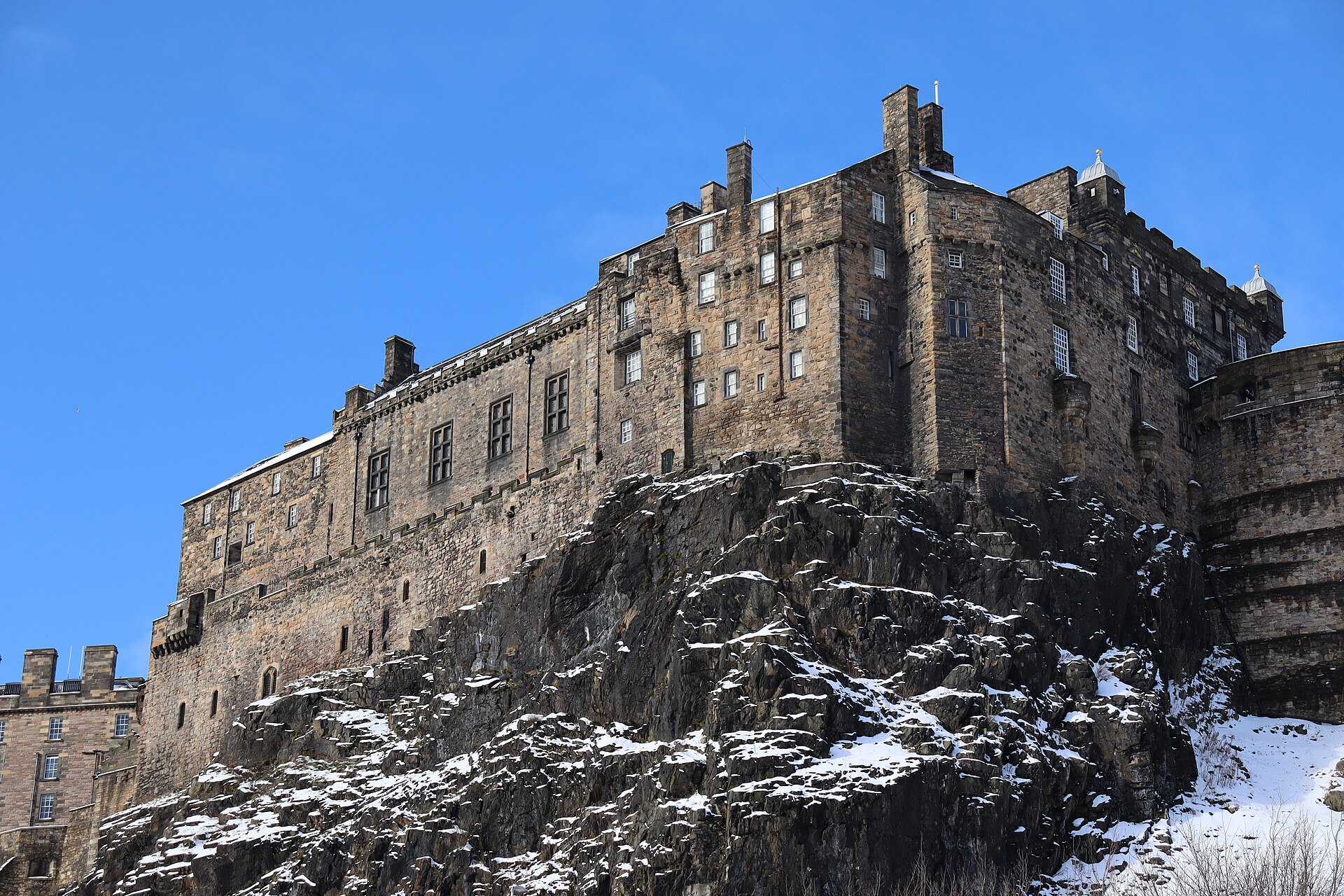
Edinburgh Castle owes its whole existence to a lump of very old, very hard rock. The crag it stands on is the plug of an extinct volcano, worn by ancient glaciers into a shape perfect for defence: sheer cliffs on three sides, with only the eastern approach rising gently enough to climb. This is Castle Rock, and it has drawn people to fortify it for an astonishingly long time, with evidence of settlement stretching back thousands of years to the Iron Age and beyond.
The reasons are obvious the moment you see it. A fortress on this rock is protected on three sides by precipices that no army could easily storm, leaving only the single ridge to the east to be defended. It commands the surrounding country for miles, controlling the routes through central Scotland, and it is simply unmissable, a natural throne rising above the plain. Nature could hardly have designed a better spot for a castle.
So people have held this rock for as long as there has been anything worth defending in this part of Scotland. Over the centuries a great royal castle grew up on the summit, layer upon layer of walls, towers, batteries, and buildings, all shaped by the rock beneath them. Edinburgh Castle is not a single design but the accumulated fortress of a thousand years and more, piled onto the crag that made it all possible.
Geologists have a lovely term for the shape of the rock: a crag and tail. As ancient ice sheets ground eastward, they were split by the hard volcanic plug, scouring away the softer rock on either side but leaving a long ramp of material in its lee. That ramp is the ridge down which the Royal Mile now runs, so that the very street plan of old Edinburgh was dictated by the glacier and the rock, with the castle at the high, defended head and the town trailing down its tail.
Scotland’s Oldest Building
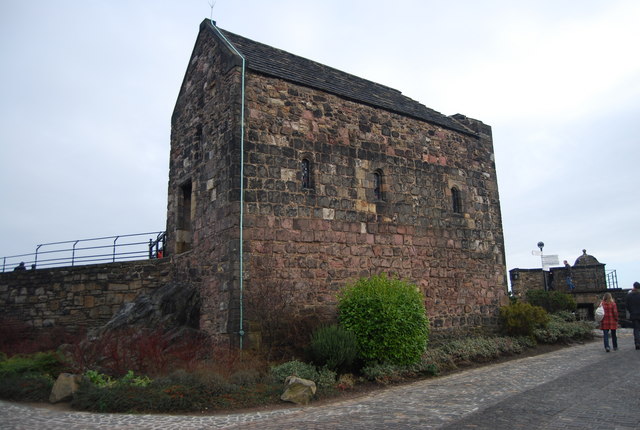
Tucked away near the summit of the castle is its oldest and most touching survival: St Margaret’s Chapel, a tiny, simple stone building dating from the early twelfth century, making it the oldest surviving building in the whole of Edinburgh. It was dedicated to Saint Margaret, a pious queen of Scotland, and it has stood on the rock for some nine hundred years, through all the sieges and rebuildings that raged around it.
That it survives at all is remarkable. Time and again the castle was battered, blown up, and rebuilt, yet this little chapel endured, a small pocket of peace and continuity amid centuries of violence. Simple and beautiful, with its rounded Norman arches, it is a reminder that the castle was a place of faith and family as well as war.
Standing in St Margaret’s Chapel, it is humbling to think of everything that has happened around it. Kings and queens have prayed here, armies have besieged the walls outside, cannon have thundered, and dynasties have risen and fallen, and through it all this modest room has quietly remained, the oldest and gentlest heart of a famously warlike fortress.
The Most Besieged Place in Britain
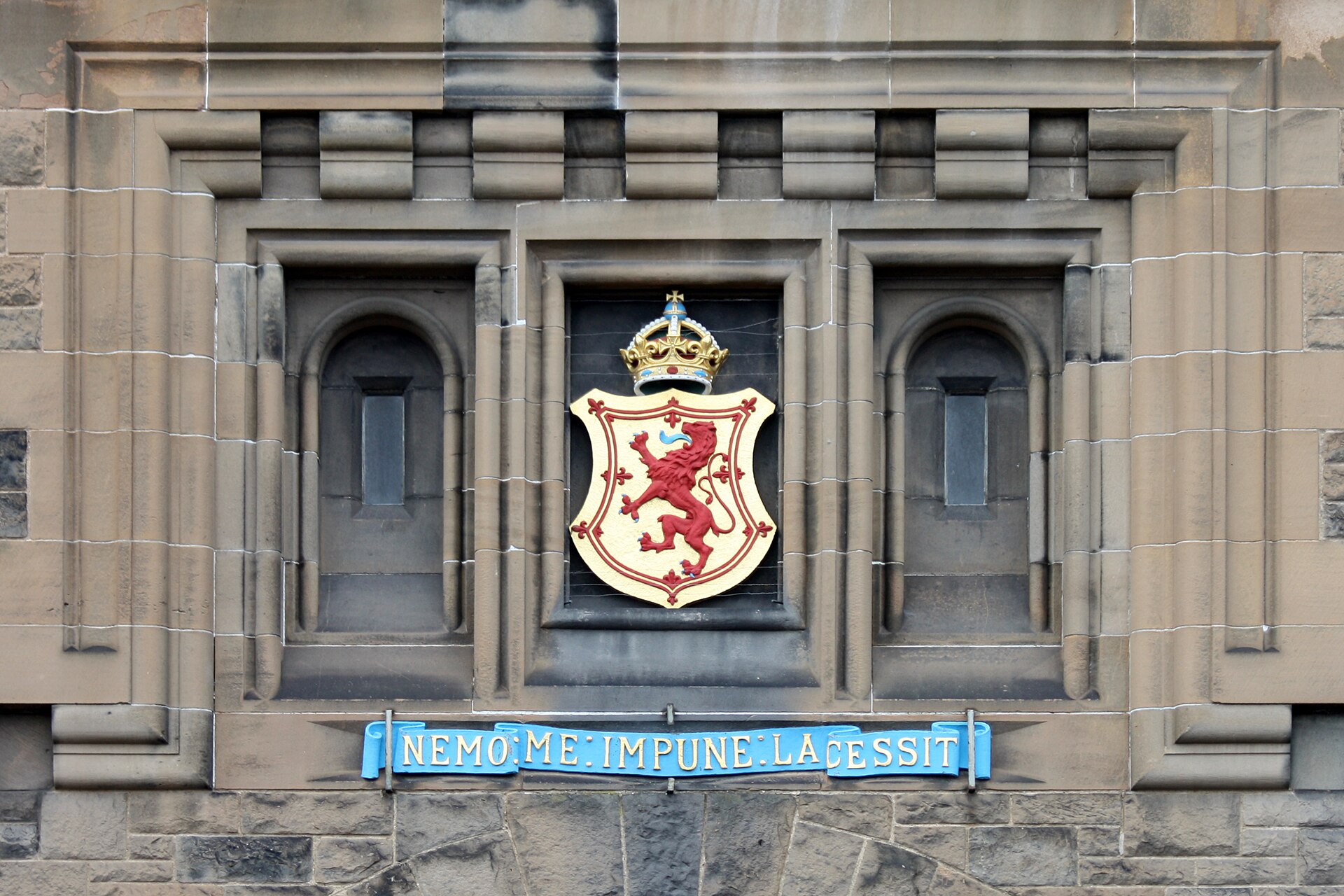
No history of Edinburgh Castle can avoid its extraordinary record of warfare. Because it was the key to Scotland, it was fought over relentlessly, besieged, taken, and retaken some twenty-six times across its history, a total that is often said to make it the most besieged place in Britain and one of the most besieged in the world. Its walls have seen more assaults than almost any other fortress anywhere.
Many of these sieges came during the long and bitter Wars of Scottish Independence, when Scotland fought to free itself from English domination in the late thirteenth and fourteenth centuries. The castle changed hands repeatedly as the tide of war shifted, held now by the Scots, now by the English, each capture a bloody and hard-won prize in the struggle for the nation’s freedom.
This constant warfare shaped the castle physically as well as historically. Battered and rebuilt again and again, it grew ever stronger, its defences updated to meet each new age of siege warfare, from medieval battering rams to gunpowder artillery. The castle you see today is the product of all that fighting, a fortress forged and reforged in the fire of Scotland’s wars.
The list of attackers reads like a roll-call of the enemies and rivals Scotland faced across the centuries. English armies came for it during the wars of independence and again and again afterward; rival Scottish factions fought over it in the country’s own civil conflicts; and it saw action as late as the eighteenth century, when Jacobite forces tried and failed to take it during their bid to restore the Stuart kings. Few fortresses have been contested so continuously for so long.
The Long Siege and the Great Hall
One of the most destructive episodes in the castle’s history came in the sixteenth century, in what is remembered as the Lang Siege, or long siege. In the turbulent years after Mary, Queen of Scots was forced from her throne, her supporters held Edinburgh Castle against her enemies, refusing to give in. The siege dragged on, and eventually English guns were brought in to help pound the fortress into submission, battering its medieval defences to rubble.
The bombardment brought down the castle’s great medieval tower and did enormous damage, and after the garrison finally surrendered, the fortress had to be substantially rebuilt. Much of the strong, angular defences you see today, including the imposing Half Moon Battery curving around the eastern approach, date from this reconstruction, raised on the ruins of the older castle smashed in the siege.
Amid all this warfare, the castle also gained grander domestic buildings, including a magnificent Great Hall built for King James IV around 1500, with a splendid timber roof, used for feasts and ceremonies of state. Restored in later centuries and hung with arms and armour, it survives as one of the finest medieval halls in Scotland, a reminder that the castle was a seat of royal magnificence as well as a machine of war.

The Daring Night the Scots Took It Back
Of all the castle’s many sieges, one stands out as a tale of pure daring. During the Wars of Independence, in 1314, the castle was held by an English garrison, and it seemed impregnable. But a Scottish force under Thomas Randolph, a nephew of King Robert the Bruce, resolved to take it back by a bold and secret plan, exploiting a local man’s knowledge of a hidden route up the supposedly unclimbable cliffs.
Under cover of darkness, a small band of Scots scaled the sheer rock face on the castle’s steep side, a terrifying climb in the black of night, hauling themselves up the crag that everyone believed no attacker could manage. Reaching the top, they surprised and overwhelmed the startled garrison, and the great fortress fell to a handful of determined men who had literally climbed the impossible.
To make sure it could not be so easily used against the Scots again, Robert the Bruce ordered much of the castle’s defences to be destroyed after its capture, a deliberate slighting to deny it to the enemy. The story of the night climb has become one of the great legends of Scottish history, a perfect emblem of courage and cunning triumphing over brute strength.
The recapture was part of a wider strategy by Robert the Bruce, who repeatedly slighted the castles he took so the English could not simply reoccupy and hold them against him. It was a hard, unromantic logic, destroying great fortresses rather than risk them falling back into enemy hands, but it worked, and Edinburgh’s defences had to be rebuilt almost from scratch afterward, which is why so much of what survives dates from later rebuildings rather than the earliest medieval castle.
The Honours of Scotland
Today the castle guards Scotland’s greatest treasures: the Honours of Scotland, the ancient crown, sceptre, and sword of state that make up the Scottish crown jewels. These are among the oldest royal regalia in the whole of Europe, used to crown Scottish monarchs for centuries, and they are displayed within the castle alongside the famous Stone of Destiny.
The Honours have had a dramatic history of their own. To keep them safe during dangerous times, they were more than once hidden away, and on one occasion in the nineteenth century they were rediscovered, locked in a chest and half forgotten, by a search led by the novelist Sir Walter Scott, who dramatically brought them back into the light. Their survival, when the crown jewels of England were destroyed in the seventeenth century, makes them all the more precious.
Alongside them sits the Stone of Destiny, the ancient block of stone on which Scottish kings were once enthroned, an object of enormous symbolic power. Seized by the English king Edward I and taken to London, where it sat beneath the coronation chair for centuries, it was eventually returned to Scotland, and it now rests in Edinburgh Castle, a potent symbol of Scottish nationhood.
The contrast with England is striking. When the English monarchy was overthrown in the seventeenth century, its ancient crown jewels were broken up and sold, so that the regalia used today are later replacements. Scotland’s Honours, hidden and preserved through the same turbulent years, are the genuine ancient articles, which makes them not just beautiful objects but rare and irreplaceable survivors of the medieval and Renaissance monarchy.
Mons Meg and the Great Guns
Among the castle’s most popular sights is Mons Meg, a colossal medieval cannon, one of the great siege guns of its age. Given to a Scottish king in the fifteenth century, this enormous bombard could hurl gigantic stone cannonballs great distances, a fearsome weapon in the age when gunpowder was transforming warfare and rendering the tall thin walls of older castles obsolete.
Mons Meg is a reminder that Edinburgh Castle was always at the cutting edge of military technology. As artillery developed, the castle’s defences were rebuilt to mount and withstand cannon, with great gun batteries added to blast any attacker and to fire salutes on grand occasions. The castle moved with the times, from the age of the sword to the age of the gun.
That tradition continues today in one of Edinburgh’s most famous rituals: the One O’Clock Gun. Every day, except Sundays, a gun is fired from the castle battery at precisely one o’clock, a time signal that once helped ships in the harbour set their clocks and that still startles unwary visitors and delights the crowds. It is a living link to the castle’s long life as a working military stronghold.

Where a King Was Born
Edinburgh Castle was a royal residence as well as a fortress, and within its walls one of the most consequential births in British history took place. In 1566, in a small room in the castle, Mary, Queen of Scots, gave birth to a son, the future James VI of Scotland. It was a birth watched anxiously by a divided and dangerous court, for the child’s future, and Scotland’s, hung on his survival.
That baby grew up to become one of the most important monarchs in the history of the British Isles. On the death of the childless Elizabeth I of England in 1603, James VI of Scotland also became James I of England, uniting the two crowns under a single monarch for the first time and setting the two nations on the long road toward eventual union. The king who joined the crowns of Scotland and England was born here, on this rock.
The tiny room where Mary gave birth can still be seen, a modest space that witnessed a moment of enormous significance. It is another example of how this single fortress has been present at so many turning points of British history, not just as a battlefield but as a royal home where the future of nations was decided.
A Living Symbol of Scotland
In more recent centuries the castle has remained at the centre of Scottish life, its role shifting from active fortress to national symbol and military headquarters. It has served as a garrison, an arsenal, and a prison of war, holding captives from various conflicts, some of whom left carved graffiti still visible today. It houses Scotland’s national war memorial and regimental museums, honouring the country’s soldiers.
Above all, it has become the defining image of Edinburgh and of Scotland itself. Its silhouette on the rock appears on countless postcards, its walls form the backdrop to the world-famous Edinburgh Military Tattoo, a spectacular display of music and marching held on the castle esplanade each summer, and it draws vast numbers of visitors from around the globe, making it one of the most visited attractions in the whole country.
Through all its changing roles, the castle has never lost its grip on the Scottish imagination. It is where the nation keeps its crown, remembers its wars, and tells its story, a place that is at once a working piece of history and a living emblem of Scotland’s identity, pride, and long, hard-won survival.
Prisoners on the Rock
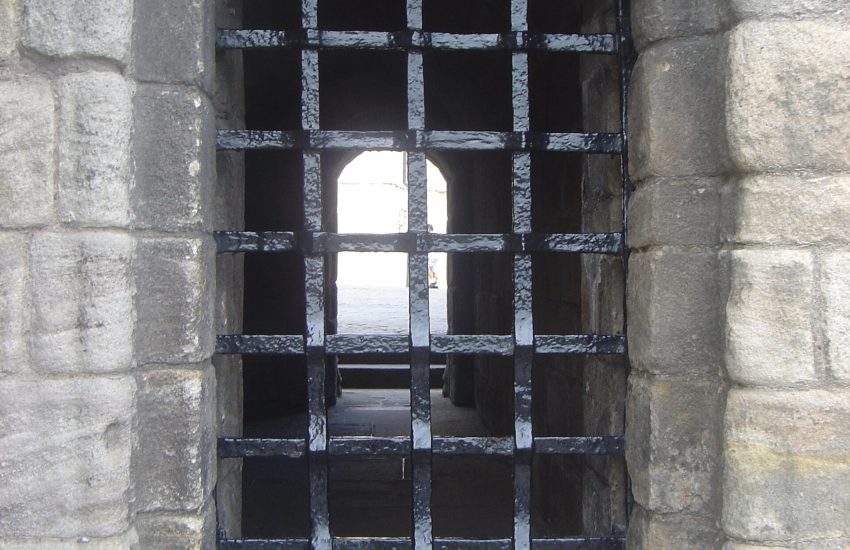
For long stretches of its later history, Edinburgh Castle served as a prison, and its vaults held captives from many wars, including sailors and soldiers taken in the great conflicts of the eighteenth and early nineteenth centuries, among them Americans, French, and others swept up in the age of revolution and empire. Packed into the cavernous spaces beneath the castle, these prisoners left their own mark on the place.
That mark survives in one of the castle’s most poignant details: graffiti carved by the prisoners into the woodwork and stone of their cells, including ships, names, and even a surprisingly accurate version of a national flag, scratched by bored and homesick captives to pass the endless days. These humble carvings bring the human reality of imprisonment vividly to life, a counterpoint to the grand history of kings and sieges above.
The prison vaults have been restored to evoke those grim conditions, and they are among the most atmospheric parts of a visit. They remind us that a great fortress was not only a place of power and ceremony but also, for many, a place of confinement and misery, and that the castle’s long story includes the lives of the forgotten as well as the famous.
Visiting Edinburgh Castle
Edinburgh Castle stands right at the heart of Scotland’s capital, at the top of the historic Royal Mile that runs through the Old Town, and it is impossible to miss, dominating the city skyline. It is within easy walking distance of everything in central Edinburgh, and the approach up the Royal Mile, through the atmospheric old streets, is part of the experience. It is one of the most accessible great castles anywhere.
Allow at least a couple of hours, and more if you can, because there is a great deal to see: the crown jewels and the Stone of Destiny, tiny St Margaret’s Chapel, Mons Meg, the royal palace and the birth room, the great hall, the war memorial, and the tremendous views over the city and beyond. Try to be there for the firing of the One O’Clock Gun, book ahead in the busy summer months, and give yourself time simply to stand on the ramparts and take in the view from the rock at the heart of Scotland.
The castle sits at roughly 55.9486, -3.1999. Punch that into Google Maps and it will take you straight to Edinburgh Castle.
Nearby Castles
The Rock at the Heart of Scotland
Edinburgh Castle is Scotland in stone. On its ancient volcanic rock, the whole story of the nation has played out: its faith in a tiny chapel, its wars in twenty-six sieges, its kingship in a birth chamber and a chest of crown jewels, its defiance in a daring midnight climb up an impossible cliff. No other single place holds so much of Scotland’s past, or means so much to its present.
Stand on the ramparts with the city spread out below and the wind off the Firth of Forth in your face, and you can feel the weight of it all. This is the rock that armies died to take, that kings were born and crowned in the shadow of, that still guards the crown of a proud old nation. Edinburgh Castle is not just the finest castle in Scotland; it is, in a very real sense, the heart of the country itself.
You May Like
Stirling Castle: The Fortress and Palace at the Heart of Scotland


One thought on “Edinburgh Castle: The Most Besieged Rock in Britain”