Every so often a castle does more than witness history; it makes it. Pembroke, standing on a great rock almost surrounded by a tidal river in the far south-west of Wales, is one of those places. Behind its mighty walls, in the winter of 1457, a thirteen-year-old widow gave birth to a boy named Henry Tudor. Nobody could have guessed that this fatherless child, born in a remote Welsh fortress, would one day seize the crown of England, end the Wars of the Roses, and found the Tudor dynasty, the most famous royal house in English history. Pembroke, quite literally, is the castle where the Tudors began.
But Pembroke was already a great and formidable fortress long before that famous birth. It was the stronghold of one of the most legendary figures of the Middle Ages, William Marshal, often called the greatest knight who ever lived, who rebuilt it in stone and crowned it with an enormous round keep that still dominates the skyline. Guarded by water on three sides and by powerful walls on the fourth, Pembroke was so strong that, remarkably, it was never once taken by the Welsh in all the centuries of border warfare.
It even hides a secret beneath its feet: a vast natural cavern, opening onto the water, that the castle’s builders put to their own use. So this is a story of a great knight, a huge keep, a hidden cave, and above all a baby who would change the course of English history. Let’s cross the bridge into the castle that made a king.
We will follow the castle’s story from its Norman beginnings through the age of the great knight who built it in stone to the birth that made it famous, keeping the water always in view, since it is the river wrapped around the rock that made Pembroke both so strong and so beautiful. By the end you should see why this remote fortress deserves to be far better known than it is.

Table of Contents
- A Rock Almost Surrounded by Water
- The Greatest Knight and His Keep
- Never Taken by the Welsh
- A Tower Built to Last
- The Cavern Beneath the Castle
- The Birthplace of the Tudors
- Cromwell at the Gates
- Ruin and Restoration
- The Springboard to Ireland
- Exploring Pembroke Today
- How to Reach Pembroke
- Nearby Castles
- Before You Go
A Rock Almost Surrounded by Water
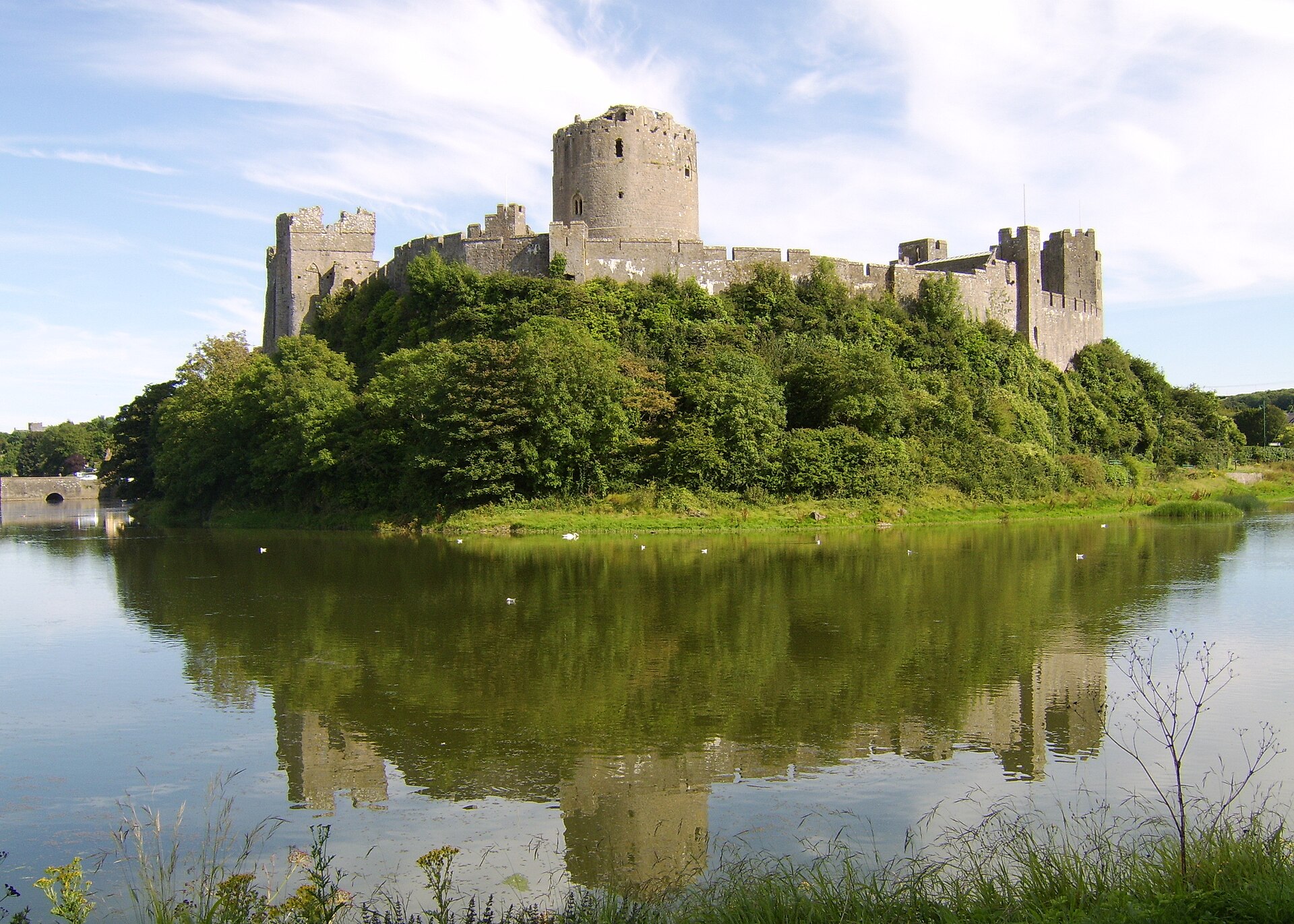
Pembroke owes its strength to a superb natural site. It sits at the end of a long, narrow promontory of rock, with a tidal river curling around it on three sides, so that the castle is nearly an island, approachable by land only along one narrow neck. This meant that its builders had to worry about defending only a single landward side seriously, while the water did much of the work everywhere else, keeping attackers and their siege engines at bay.
The Normans recognised the value of this spot almost as soon as they pushed into south-west Wales. In 1093 a castle was founded here, at first the usual earth-and-timber affair, as a base from which to control the surrounding region and hold down the Welsh. From these modest beginnings Pembroke would grow into one of the greatest stone fortresses in the country.
That combination, a strong natural position and a strategic location commanding the sea approaches and the rich lands around, made Pembroke a place of the first importance. It became the centre of a powerful earldom and the launching point for further conquests, including the Norman invasion of Ireland, giving this remote Welsh castle a reach far beyond its own corner of the map.
This far south-western corner of Wales became so thoroughly settled by Normans, Flemings, and English that it earned a nickname, the Little England beyond Wales, its culture and language set apart from the Welsh-speaking country to the north. Pembroke sat at the heart of this anglicised enclave, which is part of why it faced the Welsh so consistently as an outpost of foreign power, and why it mattered so much to hold it.

The Greatest Knight and His Keep
Pembroke’s transformation into a great stone fortress was largely the work of one extraordinary man: William Marshal, Earl of Pembroke, who is often described as the greatest knight of the Middle Ages. Marshal rose from a landless younger son to become one of the most powerful men in England, a champion of the tournament, a loyal servant of a succession of kings, and finally regent of England, ruling the kingdom on behalf of a boy king. His life reads like a chivalric romance, and much of it was true.
Around the year 1200, Marshal set about rebuilding Pembroke in stone, and his greatest addition was its magnificent round keep. This enormous cylindrical tower, rising to a great height and topped with an unusual stone dome, is one of the finest of its kind anywhere in Britain. Round keeps were harder to undermine and left no blind corners for attackers, and Pembroke’s is a superb example, a soaring symbol of Marshal’s power and wealth.
Under Marshal and his sons, Pembroke became a mighty concentric-style fortress, with the great keep at its heart, strong curtain walls and towers, and a powerful gatehouse guarding the vulnerable landward approach. It was a castle worthy of the greatest knight of the age, and it set Pembroke on the path to becoming one of the most important strongholds in all of Wales.
William Marshal’s own story is worth knowing, because it is one of the most remarkable of the age. Starting with almost nothing, he won fame and fortune on the tournament circuit, served four English kings faithfully through decades of turmoil, and ended his life as regent, effectively ruling England for the boy king Henry III. That such a man chose Pembroke as a principal seat, and lavished his wealth on its great keep, tells you how important the castle was, and how important he intended it to remain.
Never Taken by the Welsh
In a land wracked by centuries of Anglo-Welsh warfare, Pembroke can boast a remarkable record: it was never once captured by the Welsh. Time and again, as revolts flared and Welsh armies swept across the country, other castles fell, but Pembroke, protected by its water on three sides and its strong walls on the fourth, held firm. It became a byword for security, a stronghold that simply could not be taken by the enemies it was built to face.
This unbroken record made Pembroke enormously valuable. It served as a secure base for the Marcher lords who held it and as a springboard for English and Norman ambitions further afield, including into Ireland. Its reliability in a dangerous land gave it a status that many larger or grander castles could not match, precisely because it always held.
Even during the great Welsh rebellion of Owain Glyndŵr in the early fifteenth century, when so much of Wales rose in flames and many castles were taken or threatened, Pembroke stood firm. Its long immunity from Welsh capture is a testament both to the wisdom of its siting and to the strength of the fortress that William Marshal and his successors had raised on the rock.
A Tower Built to Last
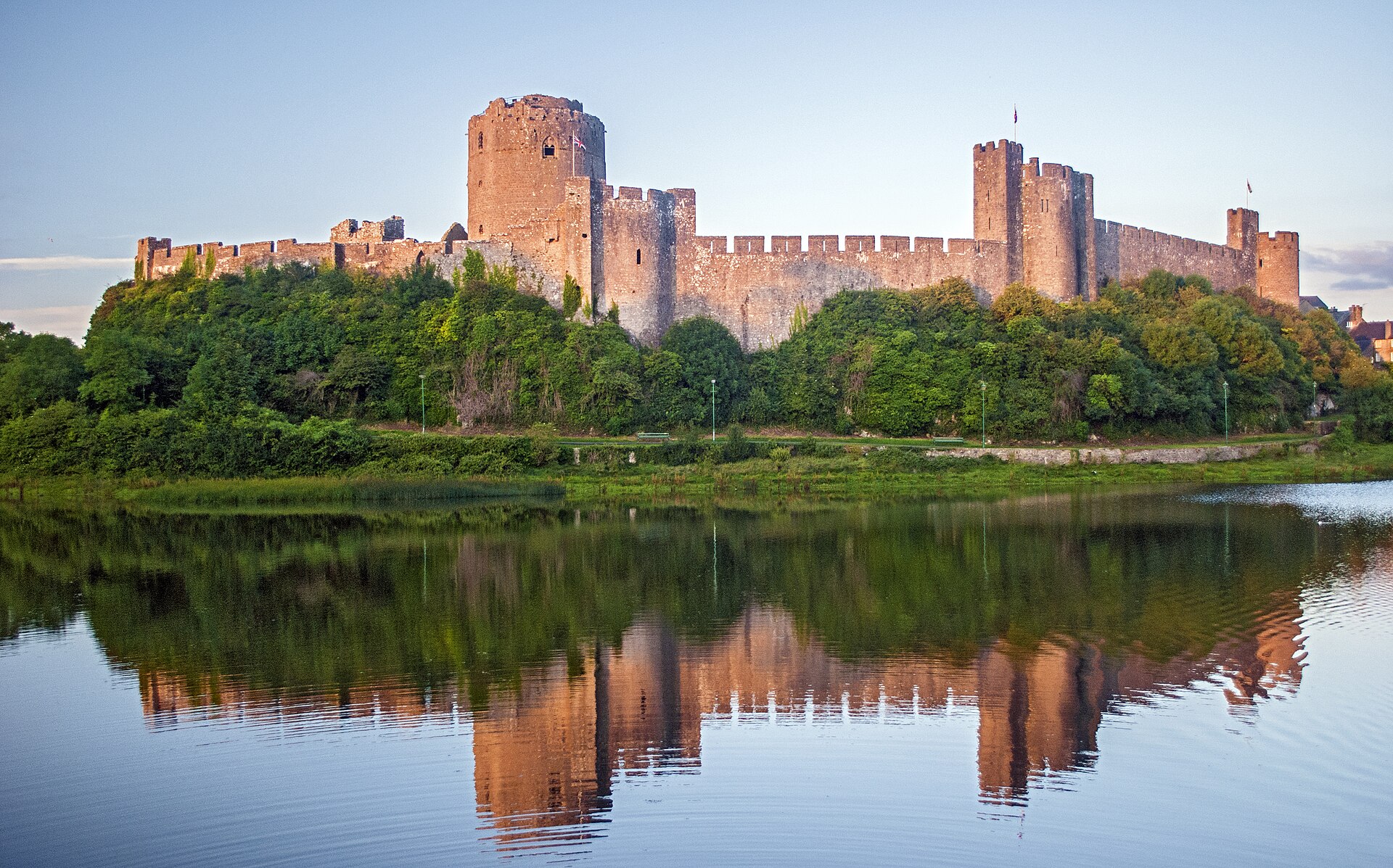
The great round keep is worth dwelling on, because it is one of the finest medieval towers in Britain. Rising in a single massive cylinder to a great height, with walls of enormous thickness, it was topped by an unusual stone dome rather than the more common timber roof, making it exceptionally strong and fireproof. Round keeps like this were a deliberate improvement on the older square towers, offering no corners for attackers to undermine and no blind spots for defenders.
Inside, the keep provided lordly accommodation on several floors, reached by stairs built into the thickness of the walls, a self-contained stronghold at the castle’s heart. From its top, defenders commanded views in every direction, and the whole tower served as both a symbol of power and a last refuge if the rest of the castle fell.
That it still stands to its full height, dome and all, after eight centuries is a tribute to the skill of William Marshal’s builders. In an age when many keeps have crumbled or been reduced to stumps, Pembroke’s remains gloriously intact, the crowning glory of the castle and one of the great sights of medieval Wales.

The Cavern Beneath the Castle
Pembroke hides a genuine secret beneath its walls: a huge natural cavern, known as the Wogan, carved out of the rock under the castle by nature over countless ages. This great cave opens onto the tidal river, and the castle’s builders were quick to see its value, walling and fortifying it and turning it to their own uses.
The Wogan served as a storehouse and, crucially, as a kind of boat-cave, giving the castle direct access to the water below. Supplies could be brought in by boat and hauled up into the castle through the cavern, providing yet another way to keep the garrison fed and reinforced by sea even if the landward approach were blocked. It was a natural gift that the castle’s designers exploited brilliantly.
Today the Wogan is one of the most atmospheric parts of a visit, a vast, echoing space of natural rock beneath the man-made fortress above. Standing in it, you get a vivid sense of how completely Pembroke’s builders bent both nature and stone to their purposes, making the very ground beneath the castle work for its defence.
The Wogan is a genuine geological curiosity as well as a historical one, a large limestone cave that happened to lie exactly where a castle would later be built. That the medieval builders incorporated it so cleverly, fortifying its mouth and using it as a watergate and store, is a lovely example of how the best castle designers worked with the landscape rather than against it, turning even a hole in the ground into an asset for defence and supply.
The Birthplace of the Tudors
Pembroke’s greatest claim to fame came in 1457, and it changed English history. In that year, within the castle walls, Margaret Beaufort, a girl of just thirteen and already a widow, gave birth to a son, Henry Tudor. The child’s father had died before he was born, and the times were dangerous, with England sliding into the dynastic wars we call the Wars of the Roses. Few can have imagined any great future for this fatherless boy born in a far-off Welsh castle.
Yet Henry Tudor carried, through his mother, a thread of royal blood, and as the Wars of the Roses tore the rival houses of Lancaster and York to pieces, that distant claim grew steadily more important. After years of danger and exile, Henry returned, landing in Wales, and in 1485 he defeated and killed King Richard III at the Battle of Bosworth, seizing the crown as King Henry VII and founding the Tudor dynasty.
That dynasty would go on to include some of the most famous monarchs in history, among them Henry VIII and Elizabeth I, and it would reshape England forever. And it all began here, in a room in Pembroke Castle, with the birth of a child no one expected to be king. Few castles anywhere can claim to be the cradle of so momentous a royal line.
The room said to be Henry’s birthplace is still pointed out to visitors, and it is a strangely humbling spot. It is easy, standing there, to feel the sheer improbability of it all: that a fatherless baby born to a teenage mother in this remote castle, in the middle of a savage civil war, would grow up to take a kingdom by force and found a line of monarchs whose names still echo around the world. History, Pembroke reminds you, can turn on the smallest and unlikeliest of beginnings.

Cromwell at the Gates
Pembroke’s long run of invulnerability finally met its match in the seventeenth century, during the English Civil War, and in dramatic fashion. In a confusing turn of events, the castle, which had earlier been held for Parliament, ended up in the hands of former Parliamentarians who switched to the Royalist side, drawing down upon themselves the wrath of Parliament itself. In 1648 no less a figure than Oliver Cromwell arrived in person to besiege Pembroke.
The siege was hard and prolonged, lasting around seven weeks. Pembroke’s great strength once again made it a tough nut to crack, and Cromwell’s men struggled against the powerful defences. In the end it was not a grand assault but the cutting of the castle’s water supply, and the exhaustion of the defenders, that forced a surrender. The mighty fortress that the Welsh had never taken had finally fallen, to an English army in a civil war.
In the aftermath, Pembroke was slighted, deliberately damaged so it could not be defended again, and parts of its defences were blown up or pulled down. Its long career as a working fortress was over, and the castle that had cradled a king passed into a long period of decline and decay.

Ruin and Restoration
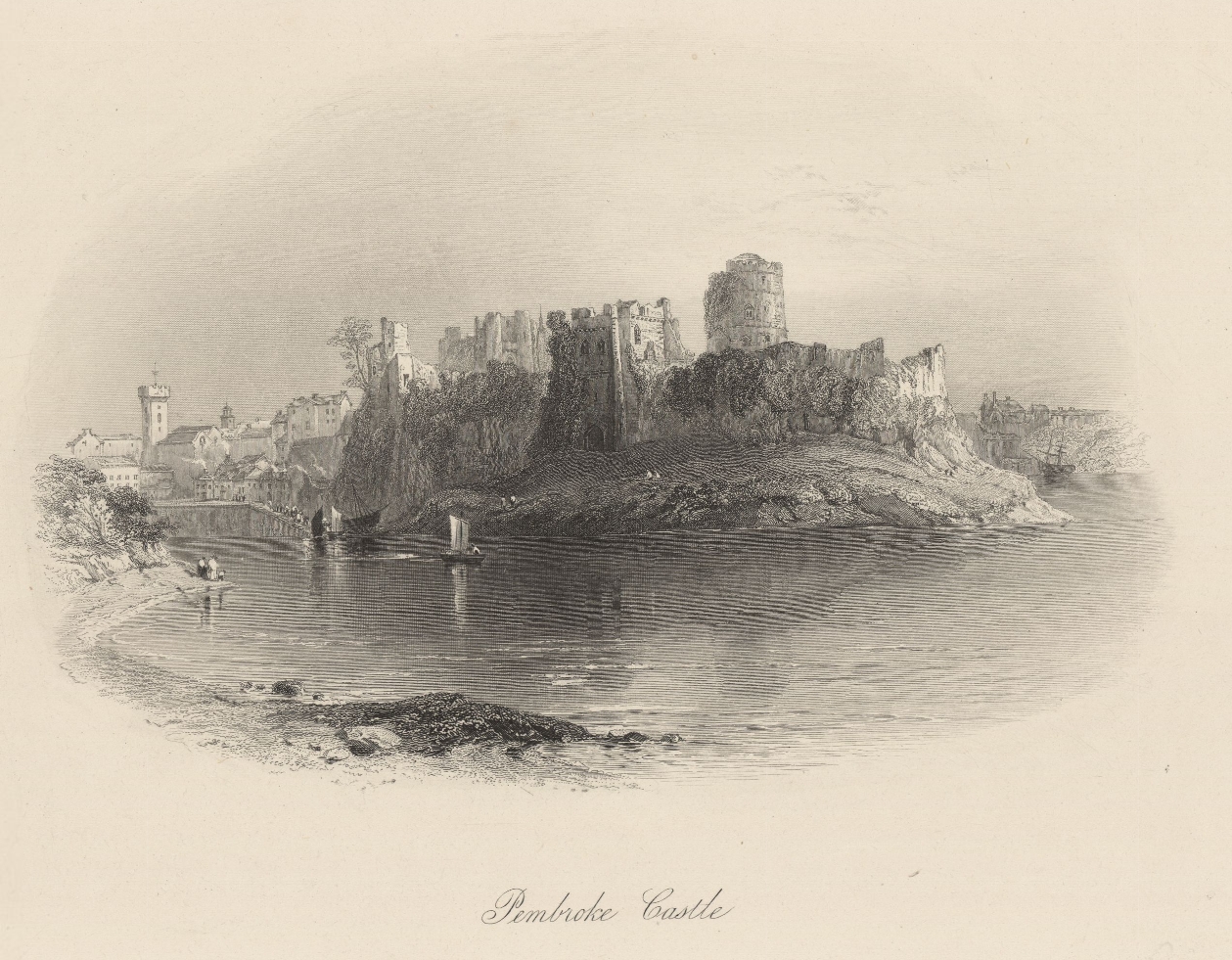
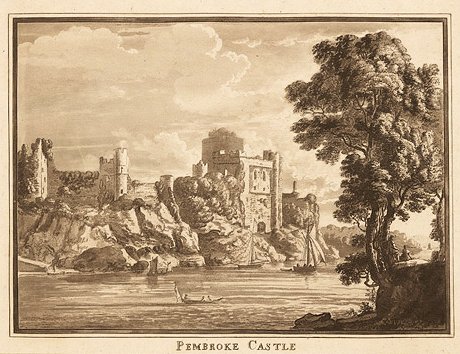
After the Civil War, Pembroke stood for centuries as a ruin, its slighted walls and towers slowly weathering above the river. Like so many castles, it became a subject for artists and travellers of the romantic age, who admired its dramatic silhouette and its watery setting, even as the buildings crumbled and ivy crept over the stones.
Its salvation came in the early twentieth century, when a wealthy and dedicated owner undertook a major programme of restoration, repairing the walls and towers and rescuing the great keep and other buildings from further decay. Thanks to this work, Pembroke today is far more complete than many slighted castles, with much of its impressive circuit of walls and its towers standing once again to a considerable height.
Now cared for by a charitable trust and open to the public, Pembroke is one of the finest and most rewarding castles in Wales to visit. Its combination of a magnificent Norman keep, powerful walls, a hidden cavern, and its extraordinary royal history makes it a place where the past feels unusually close and alive.
The Springboard to Ireland
Pembroke’s importance stretched far beyond Wales, because it was from here that the Norman conquest of Ireland was launched. In the later twelfth century, a Marcher lord associated with Pembroke, remembered by his nickname Strongbow, led an expedition across the sea to Ireland, intervening in Irish politics and carving out lands for himself and his followers. It was the beginning of centuries of English involvement in Ireland, and it set out from this castle and its region.
This gave Pembroke a strategic reach out of all proportion to its remote position. Facing the sea routes to Ireland, it was a natural launching point for expeditions westward, and the earls of Pembroke became deeply entangled in Irish as well as Welsh affairs. The castle was not just a border fortress but a gateway to the Irish Sea and the lands beyond it.
That maritime dimension is easy to forget when you stand among the landward walls today, but it was central to Pembroke’s history. Its lords looked outward across the water as much as inland toward Wales, and the castle played a quiet but real part in shaping the long, fraught relationship between Britain and Ireland.
Exploring Pembroke Today
A visit to Pembroke is a rich experience. The great round keep can be climbed for sweeping views over the castle, the town, and the winding river, and its scale and the cleverness of its design are best appreciated from close up. The walls and towers can be walked and explored, and the atmospheric Wogan cavern beneath the castle should not be missed, offering a glimpse into the castle’s watery underworld.
The castle also tells its remarkable story well, with displays and exhibitions bringing to life the great figures associated with it, above all William Marshal and Henry Tudor. Standing in the castle where the Tudor dynasty was born, it is easy to feel the weight of the history that turned on this remote Welsh fortress, and the extraordinary chain of events that led from a baby’s birth here to the throne of England.
The little town of Pembroke, strung out along its main street beneath the castle walls, adds to the charm, and the whole is set in the beautiful county of Pembrokeshire, with its famous coastline and national park close at hand. Castle, town, and coast together make Pembroke a superb destination in the far south-west of Wales.
How to Reach Pembroke
Pembroke lies in Pembrokeshire, in the far south-west of Wales, a region famous for its spectacular coast and its national park. It is reached by road and by rail, with the town’s station a short walk from the castle, though it is a fair journey from the main cities of Wales and England, deep in the west. The effort is well rewarded, both by the castle and by the glorious coastline nearby.
Allow a couple of hours or more to explore the castle thoroughly, taking in the keep, the walls, the towers, and the Wogan cavern, and to absorb its remarkable history. Combine your visit with the beauties of the Pembrokeshire coast and the other castles of south-west Wales, and you will experience one of the most rewarding and historically important corners of the whole country, in the castle where a dynasty was born.
The castle sits at roughly 51.6741, -4.9147. Punch that into Google Maps and it will take you straight to Pembroke Castle in Pembrokeshire.
Nearby Castles
The Castle That Made a King
Pembroke is the rare castle that changed the course of a nation. It was a mighty fortress in its own right, raised by the greatest knight of the age, crowned with one of the finest keeps in Britain, guarded by water and by walls the Welsh could never breach. But its true greatness lies in a single winter’s day in 1457, when a baby was born within its walls who would grow up to found the Tudor dynasty and reshape England forever.
Stand beneath the great round keep, look out over the river curling around the rock, and you are standing at a hinge of history. From this remote Welsh castle came a king, and from that king came Henry VIII, Elizabeth I, and the whole glittering, terrible Tudor age. Few castles anywhere have made so much history, and fewer still wear it so quietly. Pembroke is, in the fullest sense, the castle that made a king.
You May Like

Mafra, the Palace a King Built From a Vow