There is a famous Welsh song, fierce and stirring, called Men of Harlech, sung by choirs and soldiers for generations and known to millions who have never set foot in Wales. It celebrates the defenders of a castle holding out against the odds, and the castle it honours is this one: Harlech, a grim grey fortress clinging to a great rock in North Wales, staring out over the sea toward the mountains of Snowdonia. Few castles have earned their reputation for defiance more thoroughly, because Harlech spent much of its life under siege, and it became a byword for holding out to the bitter end.
Harlech was one of the iron ring of castles Edward I threw up in the 1280s to crush and hold conquered Wales, the work of the same brilliant architect who built Caernarfon and Conwy. But where those castles are famous for their grandeur, Harlech is famous for its sheer bloody-minded strength. Compact, concentric, and set on a crag that falls away in sheer cliffs, it was built to be nearly impossible to take, and time and again it proved it, most spectacularly during the longest siege in the whole of British history.
So this is a story of endurance. It is about a Welsh rebel who made Harlech his capital, about a garrison that held out for seven years against a kingdom, and about the last castle in Britain to hold for a doomed king. Let’s climb the rock and see why Harlech would not yield.
We will follow Harlech through its long catalogue of sieges, because its history really is one dramatic stand after another. Keep the crag and the sea in mind as we go, since between them they explain almost everything: why the castle could hold out for years, why it was worth fighting over again and again, and why its name became a byword for refusing to give in.
Table of Contents
- A Fortress on a Crag
- The Great Gatehouse and the Way from the Sea
- A Masterpiece of the Concentric Age
- Tested by the First Welsh Revolt
- Owain Glyndŵr’s Capital
- The Longest Siege in British History
- The Song of Defiance
- The Last Castle to Fall
- Mountains, Sea, and a Changed Coast
- From Ruin to Treasured Landmark
- Visiting Harlech
- Nearby Castles
- Before You Go
A Fortress on a Crag
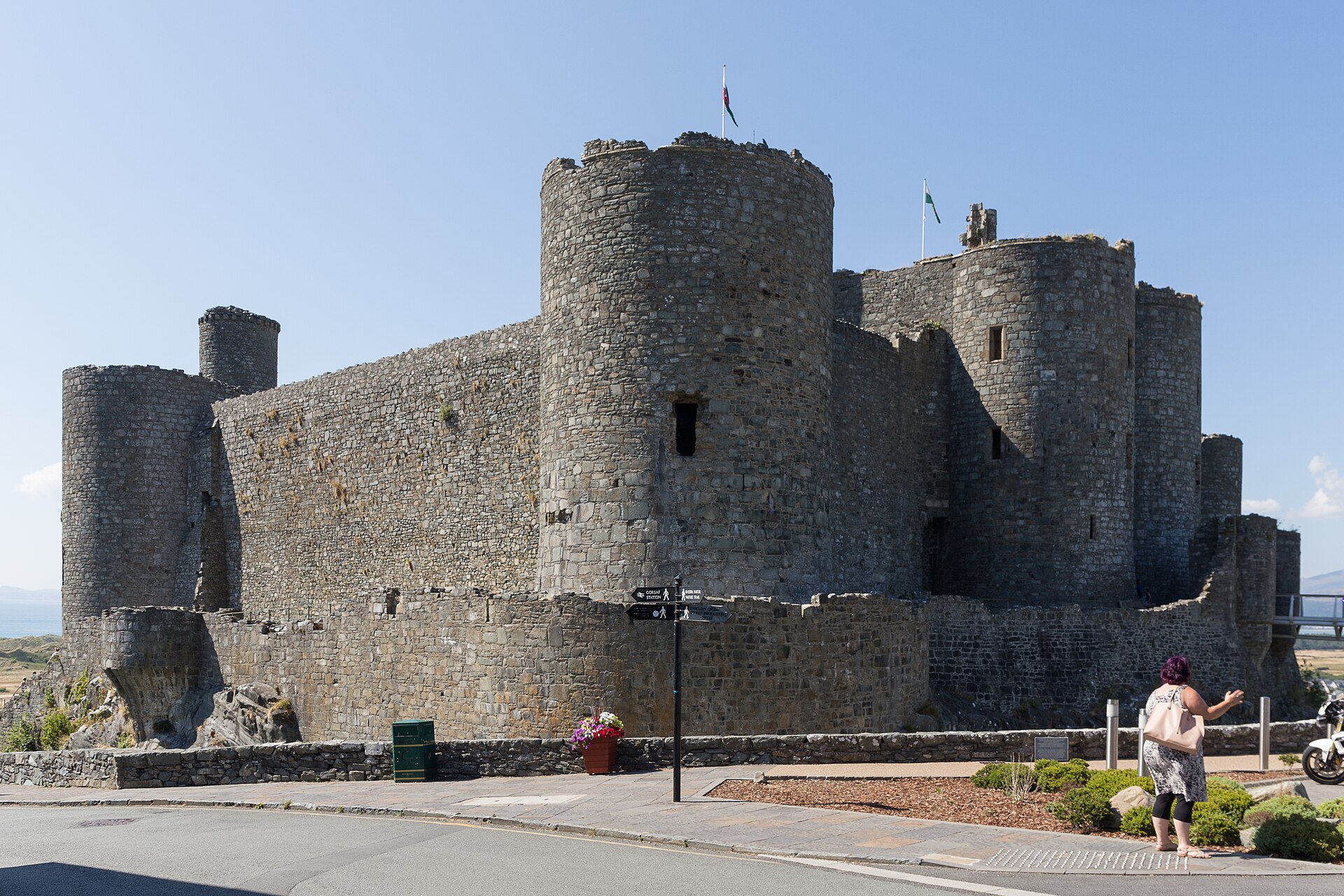
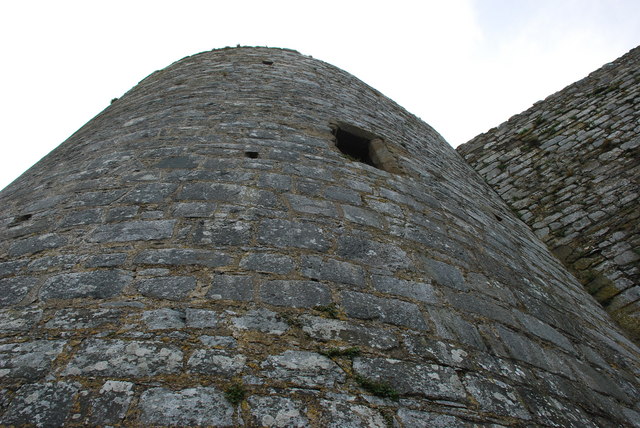
Harlech’s strength begins with its site. The castle sits on top of a great spur of rock that rises sharply above the surrounding land, its western side falling away in a sheer cliff. In the Middle Ages the sea came right up to the foot of that cliff, so that the castle was protected on one side by a precipice and the water below, and on the others by its own formidable walls. It was a position almost made for a fortress, and Edward I’s builders exploited it to the full.
Work began in 1283, as part of Edward’s great programme of castle-building following his conquest of Wales, and, like the other Edwardian castles, it went up with astonishing speed, largely complete within about seven years. The architect was Master James of St George, the Savoyard genius behind Caernarfon and Conwy, and at Harlech he produced one of the purest examples of the concentric castle, the most advanced military design of the age.
The concentric plan meant rings of defence, one inside the other. At Harlech a lower outer wall surrounds a much higher inner wall, so that defenders on the inner battlements could fire over the heads of those on the outer, and any attacker who breached the outer ring found himself trapped in a narrow killing ground beneath the towering inner walls. Combined with the crag, it made Harlech extraordinarily hard to take.
Because it did not need to sprawl, Harlech has a wonderful compactness that makes it easy to read. Where Caernarfon overwhelms and Conwy stretches along its ridge, Harlech is tight, square, and logical, the concentric idea reduced to its cleanest form. For anyone trying to understand how a medieval castle was actually meant to work, it is close to the perfect teaching example, every part visibly doing its job.
The Great Gatehouse and the Way from the Sea
The heart of Harlech’s defences is its enormous gatehouse, a massive twin-towered structure that dominates the inner ward. Bristling with portcullises, doors, and murder-holes, it was designed as the strongest point in the castle and doubled as grand accommodation, its upper floors providing comfortable chambers for the constable and important guests. In many ways the gatehouse was a castle within the castle, a final stronghold if all else fell.
Harlech’s other great feature was a fortified stairway known as the way from the sea. When the tide was in and the water reached the base of the crag, this long, protected flight of steps ran down the cliff from the castle to a water gate below, allowing supplies and reinforcements to be brought in by ship even while the castle was surrounded on land. This lifeline to the sea was the secret of Harlech’s ability to hold out through long sieges, and it was defended every step of the way.
That combination, an impregnable concentric fortress on a crag with its own protected access to the sea, made Harlech a nightmare to besiege. As long as ships could reach the foot of the rock, the garrison could be fed and reinforced almost indefinitely, and an encircling army on land might sit outside the walls for years without result. Time and again in Harlech’s history, that is exactly what happened.
Gatehouses like Harlech’s marked a real shift in castle design. Earlier fortresses concentrated their strength in a single great tower, or keep, but by Edward’s time the thinking had changed, and the gatehouse itself, the point most likely to be attacked, became the mightiest and best-appointed part of the whole castle. At Harlech the constable effectively lived in the strongest spot he had, ready to make a last stand in the very gateway if the walls were ever breached.

A Masterpiece of the Concentric Age
Harlech belongs to a very special moment in the history of fortification, when the concentric castle reached its perfection. The idea of rings of walls, one commanding another, had developed over the previous century, influenced partly by the great crusader castles of the Holy Land, and in the Edwardian castles of Wales it found its finest European expression. Harlech, compact and logical, is one of the purest examples anywhere.
The beauty of the design lies in its layering. An attacker faced not one obstacle but a sequence of them, each covered by the defenders on the wall behind, so that breaking through the outer defences only led into a trap. Add the crag, the sea access, and the powerful gatehouse, and you have a fortress in which every element reinforces the others, the work of an architect thinking several moves ahead of any enemy.
It is this quality, as much as its dramatic history, that has earned Harlech a place, alongside Caernarfon, Conwy, and Beaumaris, as part of a World Heritage Site recognising the outstanding importance of Edward I’s Welsh castles. Together they represent the high point of medieval military architecture in Britain, and Harlech, small but perfect, holds its own proudly among them.
Tested by the First Welsh Revolt
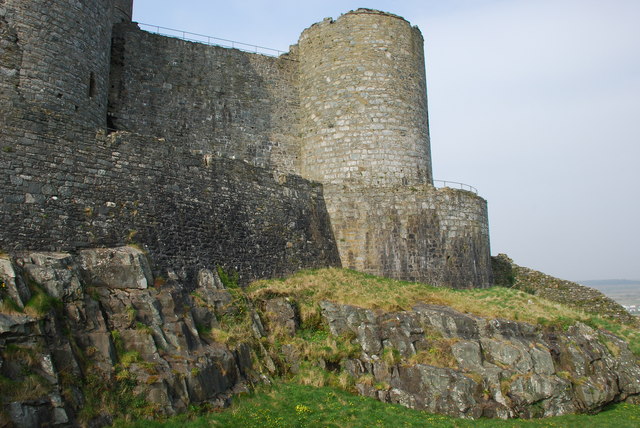
Harlech’s defences were tested almost as soon as they were finished. In the winter of 1294 to 1295, the great Welsh revolt of Madog ap Llywelyn swept North Wales, and rebel forces moved against the new Edwardian castles. Harlech, still freshly built, came under threat, but its small garrison held out behind the mighty walls, supplied by sea, until the revolt was eventually crushed.
It was the first demonstration of what would become Harlech’s signature quality: the ability to hold on against the odds. The castle’s concentric strength and its sea link did exactly what Edward’s planners had intended, allowing a handful of defenders to defy a hostile country. The lesson was clear, and it would be repeated, on an even grander scale, in the centuries to come.
For a time after this, Harlech settled into the routine life of a garrison fortress, holding down its corner of conquered Wales. But the deepest Welsh longing for independence had not died, and roughly a century later it would blaze up in the greatest revolt of all, and Harlech would find itself at the very centre of the story.
Owain Glyndŵr’s Capital
In the early fifteenth century Wales rose one last time under Owain Glyndŵr, in a rebellion that came closer than any other to winning back Welsh independence. Glyndŵr, proclaimed Prince of Wales by his followers, swept across the country, and in 1404 he captured mighty Harlech itself, taking the very kind of fortress that had been built to hold the Welsh down.
Harlech became Glyndŵr’s stronghold and, in effect, his capital. It is said that he held a parliament here and used the castle as a centre of his short-lived independent Welsh state, a stunning reversal that saw the great English conquest-castle become the seat of Welsh resistance. For a few years, from behind these walls, Glyndŵr governed as a genuine Prince of Wales, and Harlech stood at the heart of the last real Welsh bid for freedom.
It could not last. As Glyndŵr’s rebellion faltered, the English closed in, and in 1409 Harlech was besieged and eventually retaken after a hard struggle, with members of Glyndŵr’s family captured in the fall. Glyndŵr himself escaped and vanished into legend, never betrayed and never caught, but his great revolt was broken, and Harlech passed back into English hands. Yet the castle’s association with Welsh defiance was now sealed forever.
Glyndŵr’s brief use of Harlech as a seat of government is one of the great what-might-have-beens of Welsh history. For a few short years an independent Welsh prince ruled from a castle built to end Welsh independence, summoning supporters, receiving envoys, and dreaming of a free Wales with its own church and universities. That the dream died does not lessen its power, and Harlech remains, for many Welsh people, a place where that dream briefly lived.
The Longest Siege in British History
Harlech’s most famous chapter came during the Wars of the Roses, the dynastic bloodbath between the houses of Lancaster and York that tore England apart in the fifteenth century. As the Yorkists gained the upper hand, Harlech became one of the last strongholds still holding out for the Lancastrian cause, and it refused, year after year, to surrender.
The siege that followed became legendary. Supplied from the sea and defended by a determined garrison, Harlech held out for around seven years, from the early 1460s until 1468, making it the longest known siege in the whole of British history. While the rest of the country fell to the Yorkists, this remote Welsh fortress on its crag simply would not give in, a small island of Lancastrian defiance against the tide.
When it finally fell, after the sea route was cut and the defenders were worn down, the garrison marched out with honour, their courage acknowledged even by their enemies. This epic stand is traditionally said to have inspired the famous song Men of Harlech, that stirring anthem of defiance and endurance, forever linking the castle with the idea of holding out against overwhelming odds.
Seven years is a scarcely believable length for a siege, and it was possible only because of the castle’s design. As long as the sea route stayed open, no encircling army could starve the garrison out, and Harlech’s walls were far too strong to storm. In the end it was the cutting of that lifeline, as much as any assault, that finally forced the surrender, proving both the strength of the castle and the genius of the men who had built it to be supplied from the water.

The Song of Defiance
Few castles have their own anthem, but Harlech does, and it is one of the most rousing pieces of music to come out of Wales. Men of Harlech, with its driving rhythm and its call to stand firm against the enemy, has been sung by Welsh choirs, regiments, and rugby crowds for generations, and it has featured in films and ceremonies around the world as the very sound of stubborn courage.
The song is traditionally linked to the great Wars of the Roses siege, imagining the defenders holding their rock against all comers, though it has also been associated with other moments of Welsh resistance. Whatever its precise origins, it has become inseparable from the castle, so that to many people the name Harlech means, above all, defiance set to music.
This musical fame is a fitting tribute to a fortress whose whole history is one of holding out. Harlech was besieged again and again over the centuries, and again and again it endured, and the song captures that spirit perfectly. Standing on the walls with the wind off the sea, it is not hard to hear, in your imagination, the defenders singing back at the armies below.

The Last Castle to Fall
Harlech’s career as a fortress of last resort was not over even then. During the English Civil War in the seventeenth century, the castle was held for King Charles I, and as the royalist cause collapsed across Britain, Harlech once again became one of the very last strongholds still flying the king’s flag. In 1647 it finally surrendered, earning the distinction of being the last mainland castle to hold out for the king in the whole of the war.
After that surrender, the castle was partly slighted to prevent it being used again, and its long military life came to an end. But by then Harlech had built up an almost unmatched record of endurance, having held out in siege after siege, revolt after revolt, across nearly four centuries, from the Welsh risings to the Wars of the Roses to the Civil War.
No other British castle can quite match that reputation for stubborn defiance. Harlech was besieged more often, and held out longer, than almost any fortress in the land, and its whole story reads as a series of last stands. It is entirely fitting that its name should have become a synonym for holding on when all seems lost.
Mountains, Sea, and a Changed Coast
Part of what makes Harlech so magical today is its setting, which is among the most spectacular of any castle in Britain. From its battlements the view sweeps across the dunes and the sea to the great peaks of Snowdonia, with Snowdon itself often visible on the horizon, a backdrop of mountains and water that few fortresses can rival. It is worth the visit for the view alone.
One striking change has come over the centuries: the sea has retreated. In the Middle Ages the water reached the foot of the castle crag, which is why the fortified way from the sea and the water gate were so vital. Today the sea has withdrawn some distance, leaving a broad expanse of dunes and flat land between the castle and the shore, so that the old sea stairway now runs down to dry ground.
This shifting of the coastline is a reminder that landscapes change as surely as kingdoms do. The lifeline that kept Harlech supplied through its great sieges no longer touches the water, and you have to imagine the tide lapping at the rock to understand how the castle’s defences once worked. It is one more layer of history written into this extraordinary place.

From Ruin to Treasured Landmark
After its final surrender in the Civil War and the partial destruction that followed, Harlech’s fighting days were over, and the castle slipped into the long quiet of a romantic ruin. Its remote and beautiful setting drew artists and travellers of later centuries, who came to sketch the grey towers against the mountains and the sea, and the castle became one of the iconic images of wild, historic Wales.
In time it was taken into public care, and today it is looked after as one of the great monuments of the country, its walls and towers still standing to a remarkable height thanks to the sheer quality of its building. A striking modern visitor centre and footbridge now make it far easier to reach and enjoy than in the days when defenders toiled up the crag.
For all the comforts of a modern visit, though, Harlech has lost none of its power to stir the imagination. It remains what it has always been, a fortress built to endure, standing firm on its rock through the centuries, a monument both to the ruthless ambition of a conquering king and to the stubborn defiance its walls came to symbolise.

Visiting Harlech
Harlech lies on the coast of North Wales, within the Snowdonia National Park, in a region of mountains, dunes, and sea. It is reached by road and by a scenic railway line that runs along the coast, and the small town of Harlech clusters around the castle on its hill. The approach is famously steep, and the town boasts what has been called one of the steepest streets in the world.
Allow a good hour or two to explore the castle, climbing the gatehouse and walking the walls for those unforgettable views over the dunes to Snowdonia. A modern footbridge now gives easy access to the castle, and displays help bring its turbulent, siege-filled history to life. Combine Harlech with the other great Edwardian castles, Caernarfon, Conwy, and Beaumaris, and you will have toured the finest, and most fought-over, castles in all of Wales.
The castle sits at roughly 52.8600, -4.1090. Punch that into Google Maps and it will take you straight to Harlech Castle in North Wales.
Nearby Castles
The Rock That Would Not Yield
Harlech is the castle of the last stand. Built to hold the Welsh down, it ended up sheltering their greatest rebel; built by an English king, it became a synonym, in song and story, for defiance against overwhelming odds. Through Welsh revolts, the longest siege in British history, and the dying days of a royalist cause, Harlech simply refused to give in, again and again, across the better part of four centuries.
Stand on its walls today, with the wind off the sea and Snowdonia rising blue in the distance, and you can feel why. This is a fortress that was built to endure, on a rock that seems to grow the very idea of holding on. The tide has gone out and the wars are long over, but Harlech still keeps its grim, magnificent watch, and somewhere, faintly, you can almost still hear the men of Harlech singing their defiance into the wind.
You May Like
Mafra, the Palace a King Built From a Vow