Some castles guard a hill, some a river crossing, some a coast. Caerphilly guards itself with water, and lots of it. Spread across a series of great artificial lakes in a valley in South Wales, this enormous fortress seems almost to float, its grey towers and walls doubled in the still water that surrounds them on every side. It is the largest castle in Wales and the second largest in the whole of Britain, beaten only by Windsor, and its elaborate water defences make it one of the most important and innovative castles in all of medieval Europe.
Caerphilly also has a party trick that delights every visitor: a leaning tower. One of its great corner towers tilts at an alarming angle, leaning further out of true than the famous Tower of Pisa, and it has become the castle’s unlikely mascot, a reminder that even the mightiest stone can shift and settle over the centuries. But behind the fun of the leaning tower lies a serious and fascinating history, because Caerphilly was a pioneer, a castle whose revolutionary design helped shape the great fortresses that came after it.
Unusually, this was not a royal castle but the creation of one of the most powerful nobles in the land, built in a hurry to hold down a dangerous frontier against a Welsh prince who very nearly wrecked it before it was finished. So let’s cross the dams and the drawbridges and explore this water-guarded giant, from its violent birth to its leaning tower.
We will trace it from that violent, contested birth through its one great siege to its long decline and dramatic rescue, keeping the water always in view, because at Caerphilly the lakes are not scenery but the whole point. They are what made this giant possible, what made it nearly unconquerable, and what, restored at last, make it so unforgettable today.
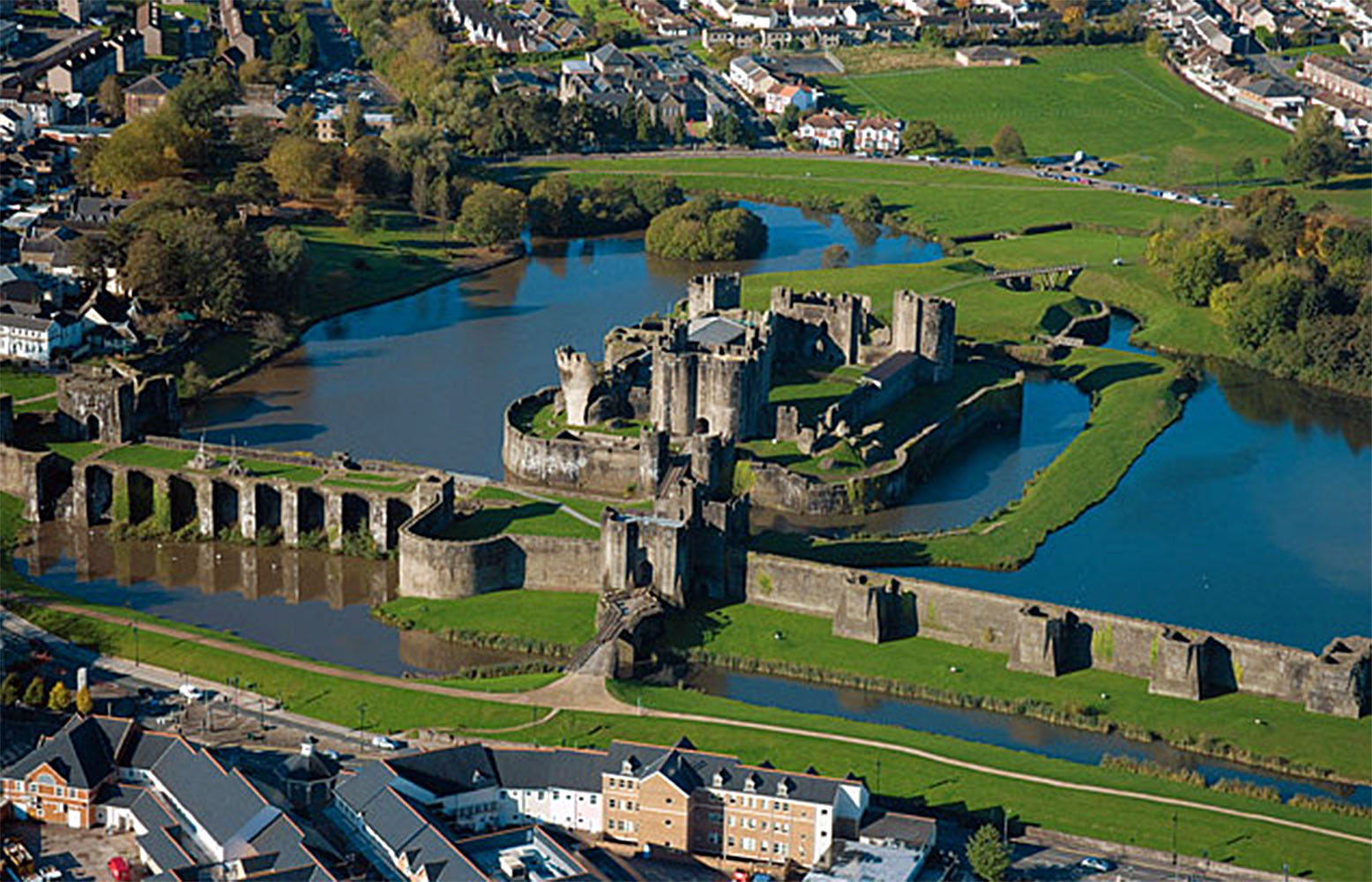
Table of Contents
- A Marcher Lord’s Great Gamble
- Attacked Before It Was Finished
- The Power of Water
- A Fortress on a Giant Scale
- The Famous Leaning Tower
- A Royal Favourite’s Last Refuge
- Decline and a Long Neglect
- Rescued by the Marquesses of Bute
- Life Behind the Walls
- Caerphilly Today
- Getting to Caerphilly
- Nearby Castles
- Before You Go
A Marcher Lord’s Great Gamble
Caerphilly was not built by a king but by a subject, though a very great and very rich one. Its creator was Gilbert de Clare, known as Red Gilbert for his colouring and his temper, one of the most powerful of the Marcher lords, the semi-independent barons who ruled the borderlands between England and Wales almost like kings in their own right. In the 1260s Gilbert was locked in a bitter struggle for control of this part of South Wales with the mighty Welsh prince Llywelyn ap Gruffudd, and he needed a fortress to hold his ground.
So in 1268 Gilbert began building Caerphilly on a huge scale, pouring his enormous wealth into a castle designed to dominate the region and block Llywelyn’s expansion. This was a private war between a Marcher baron and a Welsh prince, fought years before Edward I’s royal conquest of Wales, and Caerphilly was Gilbert’s great gamble, a fortress meant to settle the contest in his favour by sheer overwhelming strength.
The stakes were high and the danger was real. This was a frontier in the fullest sense, a violent, contested land where a great castle could tip the balance of power. Gilbert was betting a fortune that his new fortress would be strong enough to face down one of the most formidable Welsh leaders in history, and Llywelyn was not about to let him build it in peace.
The Marcher lords like Gilbert de Clare were a peculiar breed, holding their border territories with royal-style powers the king tolerated because they did the hard, dangerous work of controlling the Welsh frontier. They could wage their own wars and build their own castles almost at will, and Caerphilly is the supreme monument to that strange, semi-independent power, a fortress a subject built on a scale most kings could only envy.
Attacked Before It Was Finished
Llywelyn understood exactly what Caerphilly meant, and he moved to stop it. While the castle was still under construction, the Welsh prince attacked, and the half-built fortress was seized and damaged before Gilbert could complete it. For a moment his great gamble looked as though it might fail before it had even begun.
But Gilbert was determined and immensely wealthy, and he came back, retook the site, and pressed on with the building, this time to an even more ambitious and formidable design. Out of the interrupted first attempt grew the vast water-defended fortress we see today, its scale and sophistication a direct response to the danger that had nearly destroyed it in its infancy.
This stormy birth is a reminder that Caerphilly was no vanity project but a genuine engine of war, built under fire in a live conflict. Every dam, wall, and tower was designed with a real and powerful enemy in mind, and the castle’s revolutionary defences were the answer of a desperate, ruthless lord to a threat that had already shown it could strike.
The Power of Water
What makes Caerphilly so important in the history of castles is its water defences, which were revolutionary for their time. Rather than rely only on high walls, Gilbert’s engineers dammed the local streams to create a series of great artificial lakes, so that the castle sits on islands within a broad expanse of water, ringed by moats and protected by massive dams that are fortifications in their own right.
This use of water was brilliantly effective. The lakes kept attackers and their siege engines at a distance, made mining under the walls impossible, and forced any assault to cross open water under fire. To hold back and control such a volume of water required sophisticated engineering, and the great dams, with their walls and platforms, are among the most impressive features of the whole site.
Caerphilly is often regarded as the first truly concentric castle in Britain, with its rings of walls one inside the other, and its combination of concentric defences with elaborate water works was hugely influential. The ideas pioneered here by a Marcher lord fed directly into the design of the great royal castles that Edward I would soon build in North Wales. In a real sense, Caerphilly helped write the textbook of medieval fortification.
It is worth stressing just how ahead of its time this was. When Caerphilly rose, the fully concentric castle was still a novelty in Britain, and nobody had combined it with water defences on anything like this scale. A private baron, not a king, was experimenting at the very frontier of military engineering, and the results were so successful that the royal architects who later built Edward I’s Welsh castles clearly learned from what Gilbert de Clare had done here first.
A Fortress on a Giant Scale
Everything about Caerphilly is big. Covering a vast area of walls, towers, islands, and lakes, it is the largest castle in Wales and second in size in all of Britain only to Windsor. Its concentric rings of defence, its powerful gatehouses, and its great corner towers were built to a scale that must have been simply staggering to anyone who saw it rise in a quiet South Wales valley in the thirteenth century.
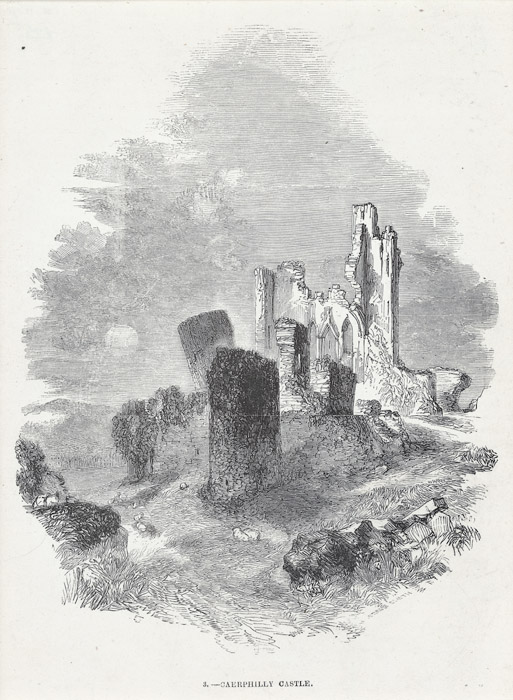
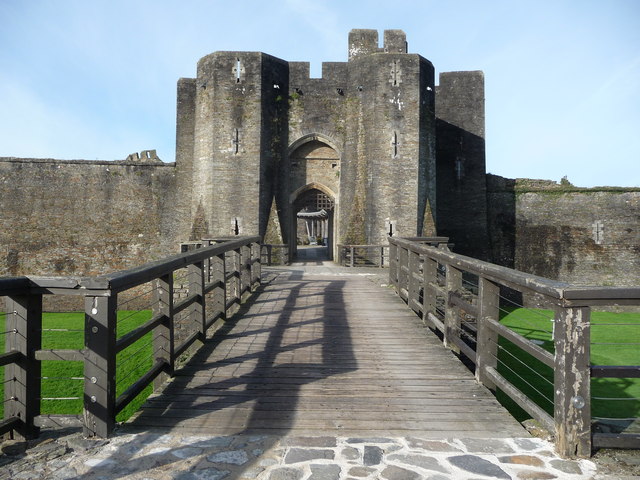
The heart of the castle is the inner ward, a strong rectangular enclosure with a massive tower at each corner and imposing gatehouses on two sides, surrounded in turn by a lower outer ward, and then by the water. To reach the centre, an attacker would have to cross the lakes, storm the dams, fight through the outer defences, and only then face the towering inner walls, an almost hopeless sequence of obstacles.
This overwhelming strength was the whole point. Gilbert de Clare wanted a fortress so formidable that no Welsh prince could ever take it, and in that he largely succeeded. After its troubled beginning, Caerphilly was never again seriously threatened by the Welsh, and it stood as an unmistakable symbol of Marcher power dominating the region for generations.
The Famous Leaning Tower
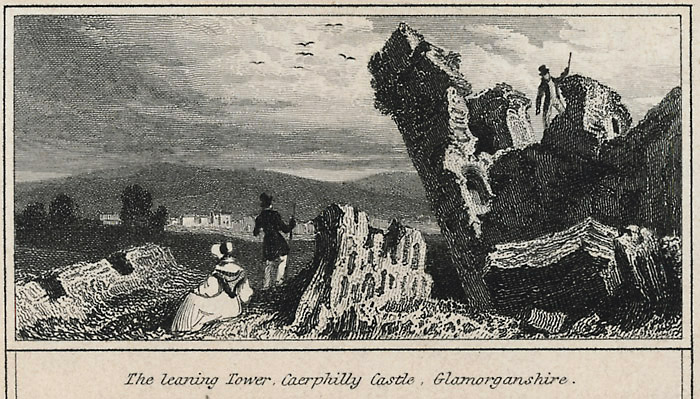
Caerphilly’s most beloved feature is also its most surprising: a spectacularly leaning tower. One of the great corner towers of the inner ward tilts dramatically outwards, leaning far further from the vertical than the celebrated Tower of Pisa, and yet somehow still standing after centuries. It has become the castle’s signature sight, and visitors love to photograph themselves appearing to prop it up.
Exactly how the tower came to lean is not entirely certain. The most likely explanation is that it was damaged when the castle was slighted, or partly destroyed, during the upheavals of the seventeenth century, perhaps by an attempt to blow it up that cracked and tilted the tower without bringing it fully down. Others have suggested subsidence in the soft, water-logged ground. Either way, the tower has clung on at its crazy angle ever since.
Rather than straighten or demolish it, those who care for the castle have wisely left the leaning tower exactly as it is, a happy accident that has become a genuine landmark. It is a charming reminder that castles are not frozen in time but living, shifting structures, and that even a fortress built to overwhelming strength can end up with a delightful, gravity-defying quirk.
The comparison with Pisa is not just a tourist gimmick. The Caerphilly tower really does lean further out of true than the Italian one, and the fact that it has stayed up at such an angle for so long is a small marvel in itself. Where Pisa leans because of soft foundations, Caerphilly’s tower most likely leans because someone tried, and failed, to blow it up, which gives it a rather more dramatic origin story than mere subsidence.
A Royal Favourite’s Last Refuge
Caerphilly saw one genuine and dramatic siege, and it came in the turbulent reign of King Edward II. The castle had passed into the hands of the king’s notorious favourite, Hugh Despenser, one of the most hated men in England, who used it to store a vast treasure. When Edward II was overthrown in 1326 by his own queen, Isabella, and her ally Roger Mortimer, Despenser’s supporters shut themselves up in Caerphilly with the young Despenser heir and the treasure, and refused to yield.
The great water-defended fortress proved its worth once again. Isabella’s forces laid siege to it, but Caerphilly’s formidable defences held out for months, long after the king himself had been captured and Despenser executed. Only after a lengthy blockade did the garrison finally come to terms, having demonstrated just how difficult it was to take a castle guarded by such elaborate water works.
The episode is a vivid glimpse of Caerphilly at the centre of national events, caught up in the fall of a king. It also confirmed, in the most practical way, that Gilbert de Clare’s revolutionary design really worked, keeping a garrison safe through a serious siege in one of the most dramatic political crises of the age.
Decline and a Long Neglect
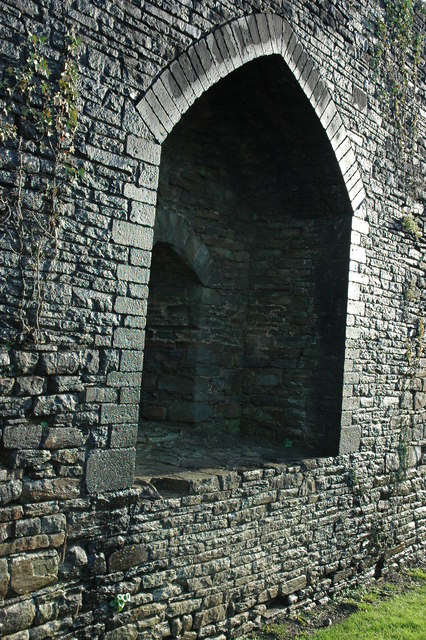
After the age of the Marcher lords, and once the Welsh threat had faded following Edward I’s conquest, Caerphilly gradually lost its military importance. The great fortress was too far from the centres of power and too expensive to maintain as a working stronghold, and over the later Middle Ages it slid slowly into decline, its buildings decaying and its once-vital lakes silting up.
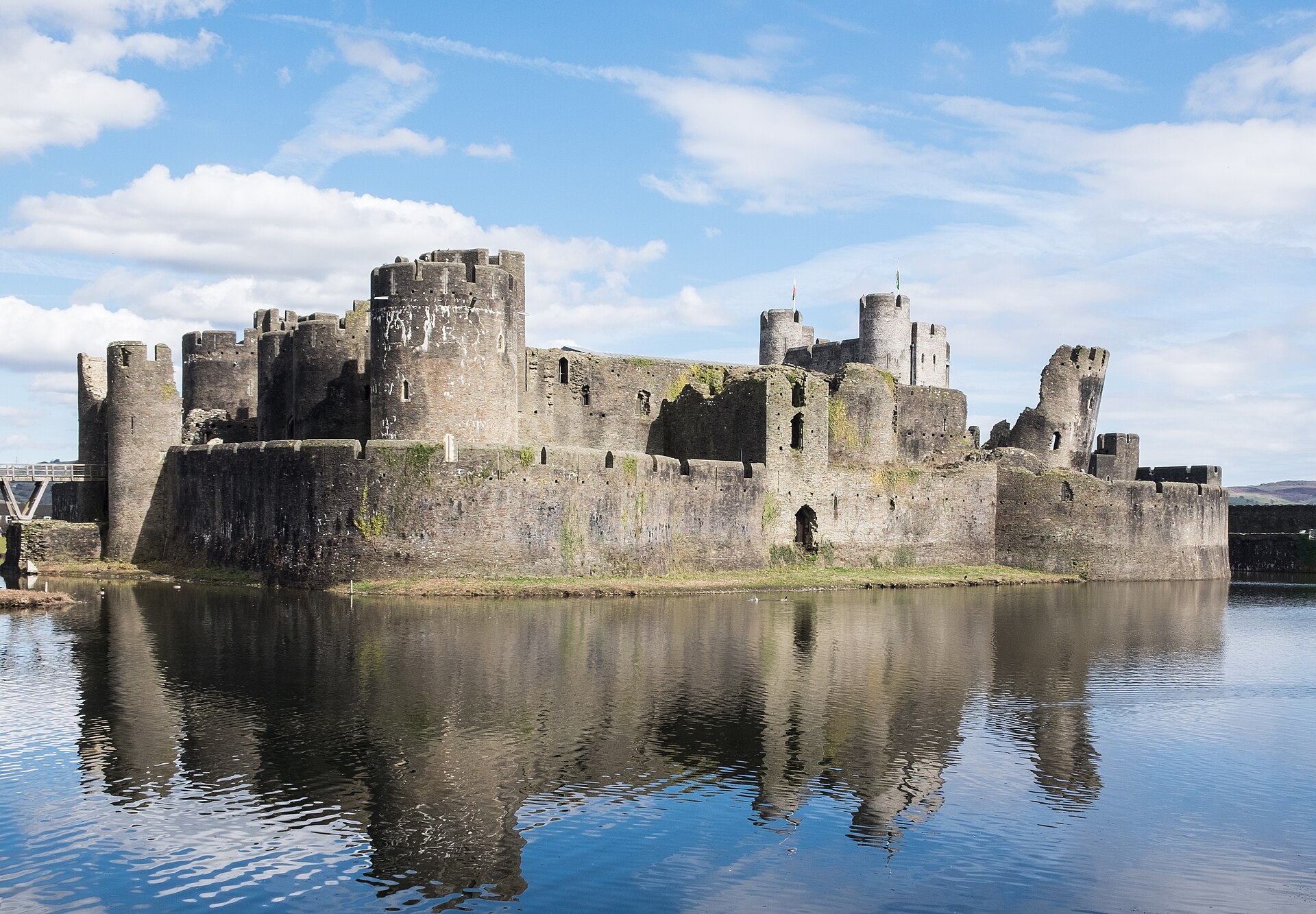
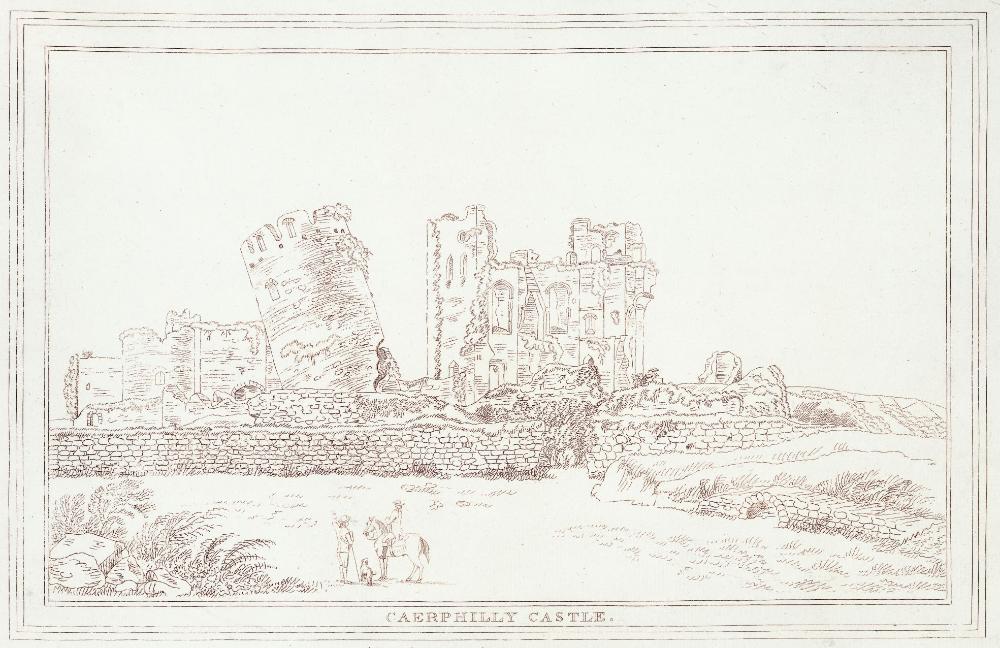
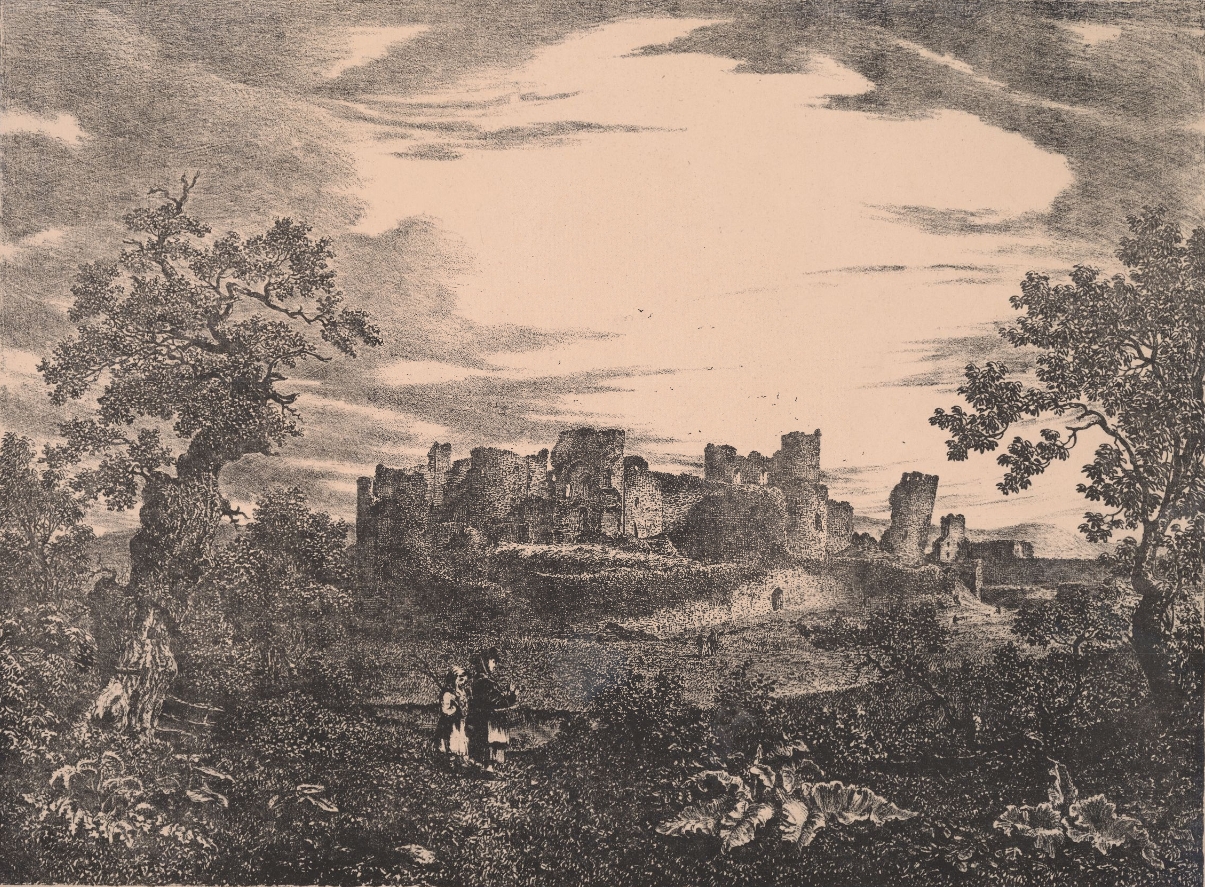
By the time of the English Civil War in the seventeenth century, the castle was already old and neglected, and it was during this troubled period that it seems to have suffered the damage that left its famous tower leaning. Afterwards it was left largely abandoned, its walls robbed for stone, its lakes drained away, and its grandeur reduced to a romantic but crumbling ruin standing amid marshy ground.
For a long time this greatest of Welsh castles was in a sorry state, its remarkable water defences dry and forgotten and its towers slowly falling. It might easily have decayed further and been half lost, as so many castles were, had it not found, in the nineteenth and twentieth centuries, a family with the wealth and the will to bring it dramatically back to life.
Rescued by the Marquesses of Bute
Caerphilly’s salvation came through the Marquesses of Bute, one of the richest families in Britain, whose fortune was built on the coal and docks of South Wales. Deeply interested in the medieval past, successive marquesses undertook a huge programme of restoration at Caerphilly over many decades, repairing the walls and towers, rebuilding lost features, and, most spectacularly, re-flooding the lakes so that the castle’s water defences could be seen once again as they had been in the Middle Ages.
This restoration transformed Caerphilly from a dry, decaying ruin back into the water-guarded giant it had once been. The reflooding in particular was an inspired decision, restoring the essential character of the castle and allowing modern visitors to understand, as generations before could not, just how the great lakes and dams had worked to make it so nearly impregnable.
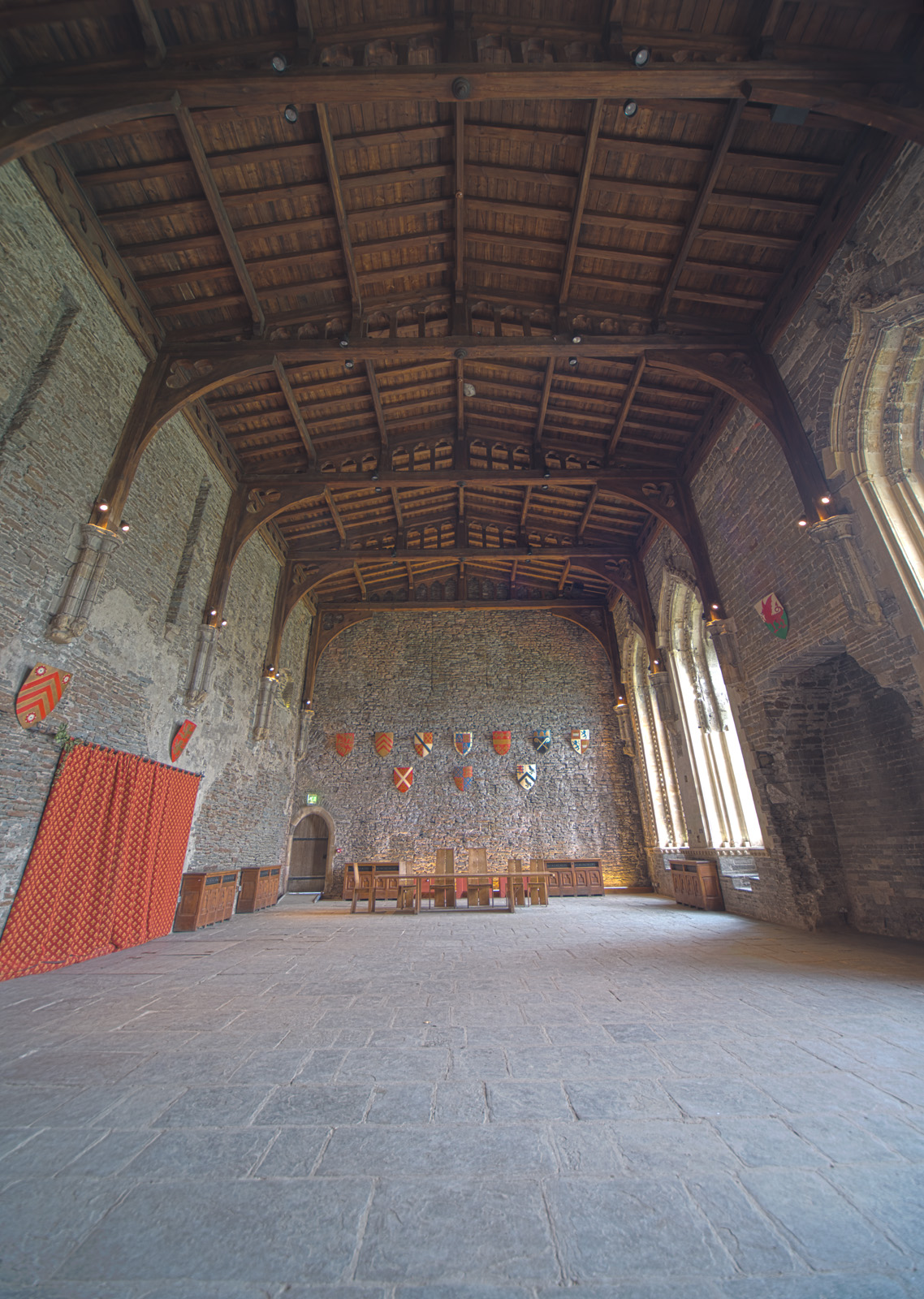
The Great Hall, too, was restored, giving a sense of the castle’s grander domestic life. Thanks to the Butes’ vision and money, Caerphilly today is not a sad fragment but a magnificent, largely coherent fortress, its towers reflected in its lakes, one of the most rewarding castles in Britain to visit and to understand.
The Butes’ work at Caerphilly was part of a wider passion, for the same family also transformed nearby Cardiff Castle and built the fantastical Castell Coch, employing brilliant designers to bring their medieval dreams to life. Their coal-and-docks fortune, made in the industrial boom of South Wales, was poured back into rescuing and reimagining the castles of the region, and without them Caerphilly might well be a shapeless ruin today instead of the magnificent sight it is.
Life Behind the Walls
For all its military might, Caerphilly was also a residence, and the restored Great Hall gives a taste of its grander domestic side. This was where the lord and his household dined, held court, and entertained, a space designed for display as much as for comfort, and its restoration helps visitors picture the feasting and ceremony that went on within the fortress.
A great castle like this was a small community as much as a stronghold, home not just to soldiers but to servants, craftsmen, clerks, and their families, all going about the daily business of running a vast estate. The kitchens, chambers, and courtyards that survive, in ruin or restored, hint at this busy inner life, easy to forget when we think of castles only as machines of war.
Understanding that human dimension makes Caerphilly richer. It was not merely a barrier of stone and water thrown across a frontier but a living centre of lordship, where the power of the Marcher lords was exercised and enjoyed. The Great Hall, warm with imagined firelight, is a good place to remember the people who actually lived behind these tremendous defences.
Caerphilly Today
Now in the care of the Welsh heritage body, Caerphilly is a thriving and popular attraction, and it wears its long history lightly. Its vast, water-ringed site makes it a wonderful place to explore, with walls to walk, towers to climb, dams to cross, and, of course, the leaning tower to admire. Full-size replica siege engines stand within the grounds, hinting at the warfare the castle was built to withstand.
The town of Caerphilly that grew up beside the castle is famous for another reason too: it gave its name to Caerphilly cheese, the crumbly white cheese first made in this area, so that the castle’s name is known far beyond Wales to anyone who has ever eaten a good Welsh cheese. Castle and cheese together have made Caerphilly a name recognised well beyond its valley.
For visitors, the castle offers a rare chance to grasp the full sweep and ambition of medieval military engineering. Standing on the great dam, with the lakes stretching away and the towers rising beyond, you can appreciate exactly what Gilbert de Clare set out to build: not just a castle, but a statement of power so vast and so cleverly defended that it changed the way castles were built ever afterwards.
Getting to Caerphilly
Caerphilly lies just north of the Welsh capital, Cardiff, in the valleys of South Wales, and it could hardly be easier to reach. It is a short train or road journey from Cardiff, with the station close to the castle, making it one of the most accessible of all the great Welsh fortresses and an easy half-day trip from the city. The castle sits right in the middle of the town, impossible to miss.
Allow a good couple of hours to do it justice, because there is a great deal to see across its huge site. Walk the dams, cross into the wards, climb the towers for views over the water, seek out the famous leaning tower, and take time to appreciate the sheer scale of the water defences that make Caerphilly so special. It combines beautifully with a visit to nearby Cardiff and its own grand castle, for a full taste of the castles of South Wales.
The castle sits at roughly 51.5760, -3.2200. Punch that into Google Maps and it will take you straight to Caerphilly Castle in South Wales.
Nearby Castles
A Giant Guarded by Water
Caerphilly is a castle of superlatives: the biggest in Wales, the second biggest in Britain, the first great concentric fortress in the land, and the owner of a leaning tower that outdoes Pisa. But its real importance lies in what it represents, a bold leap forward in the art of fortification, dreamed up not by a king but by a ruthless border baron fighting for his life against a Welsh prince, and then copied by the greatest castle-builders of the age.
Cross its dams today, with the lakes shining on either side and the towers rising ahead, and you are walking through a piece of living military history. Gilbert de Clare’s great gamble paid off far beyond his lifetime, for the ideas he tried out here helped shape castles across Britain and beyond. And through all the centuries of neglect and rescue, Caerphilly has kept the thing that made it great: the quiet, patient power of water, holding a giant fortress safe in its embrace.
You May Like

Mafra, the Palace a King Built From a Vow


One thought on “Caerphilly Castle: The Water-Guarded Giant of Wales and Its Leaning Tower”