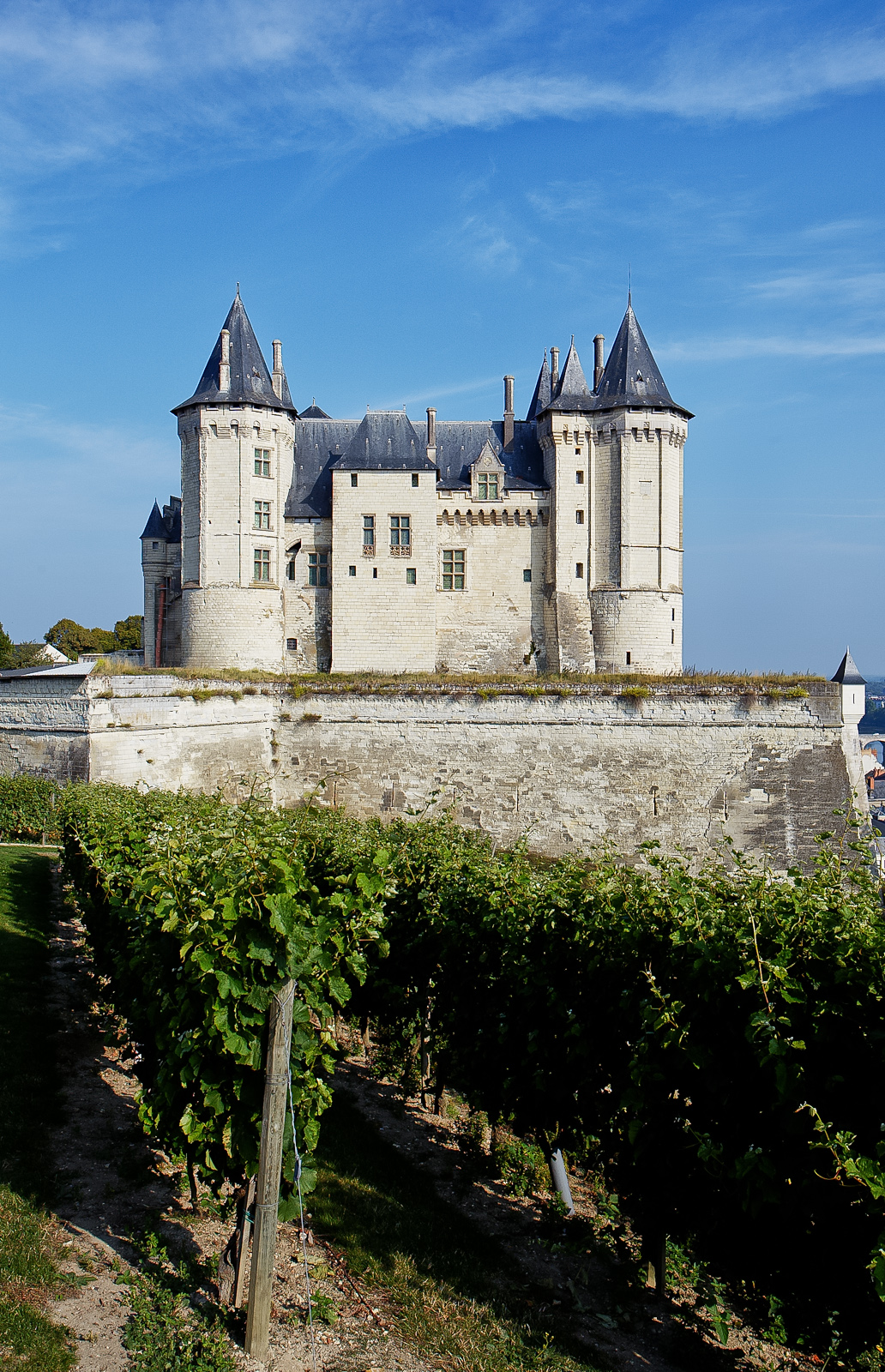
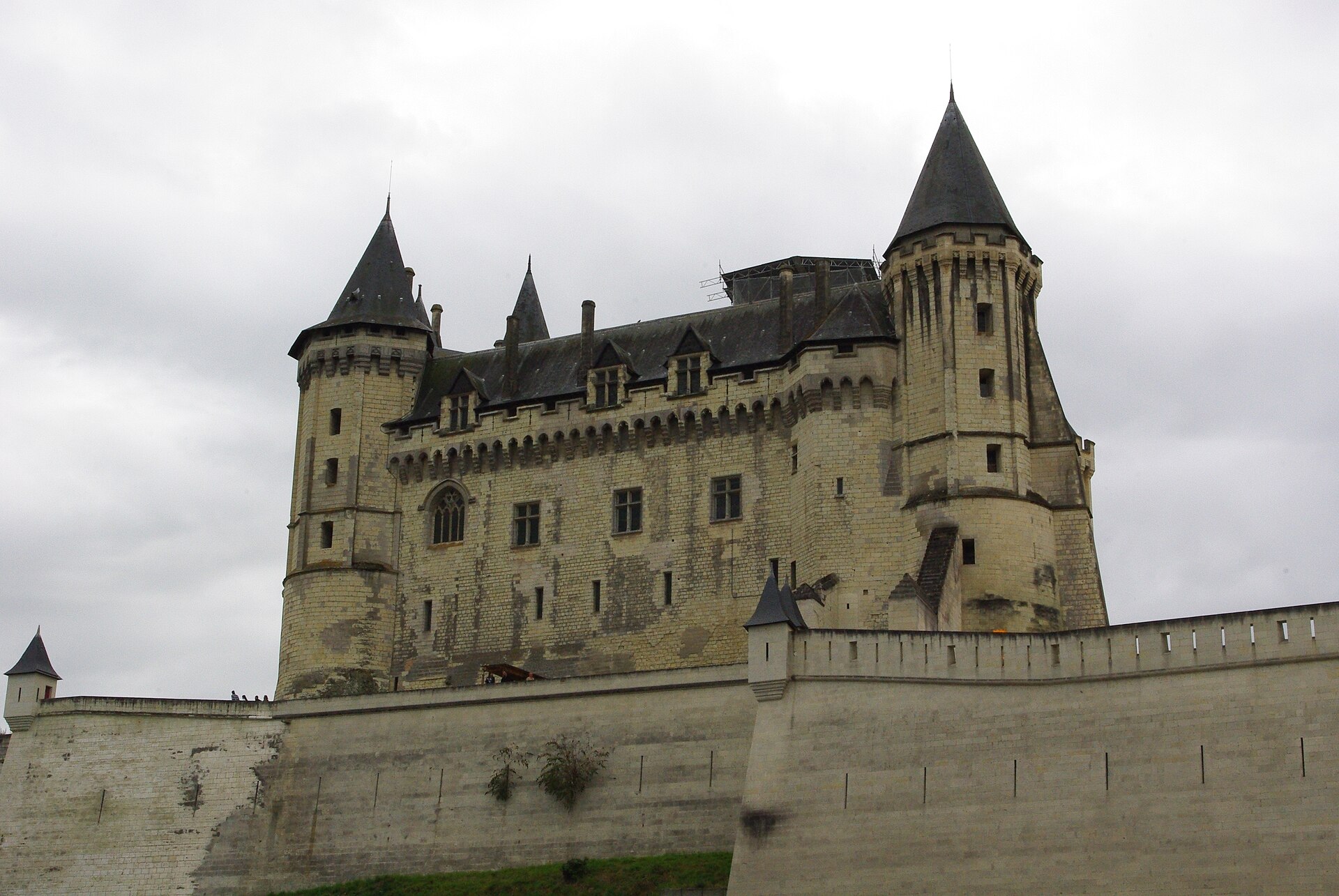
There is a picture, painted more than six hundred years ago, that shows a castle so beautiful it hardly seems real: a vision of white towers and golden weathervanes and fluttering banners, rising above a busy scene of the grape harvest. That castle was Saumur, and the painting, in the famous medieval book of hours known as the Tres Riches Heures, made it one of the most celebrated images of the whole Middle Ages. Astonishingly, the real castle still stands, gleaming white above the Loire, looking very much as it did in that ancient picture.
The Chateau de Saumur is one of the most graceful of all the castles of the Loire, a fortress that grew into an elegant princely palace and became a symbol of the refined, art-loving court of the dukes of Anjou. Perched on its hill above the river and the old town, its pale stone and pointed towers catching the light, it looks like a castle from a fairy tale, and in a sense that is exactly what it is.
Yet behind the beauty lies a long and eventful history: a fortress fought over by counts and kings, a stronghold of French Protestants, a prison, an arsenal and a barracks, and finally a much-loved museum. Let’s climb the hill to Saumur and discover the many lives of the white castle that a medieval painter made immortal.
In This Article
- The White Castle Above the Loire
- From Fortress to Fairy-Tale Palace
- The Most Famous Picture of a Castle
- The Court of the Dukes of Anjou
- A Stronghold of the Protestants
- Guarding the Gate
- Inside the Courtyard
- Windows Onto a Vanished World
- Prison, Arsenal and Barracks
- Collapse and Rescue
- A Castle of Museums
- The Town and the Vineyards
- Visiting Château de Saumur
The White Castle Above the Loire
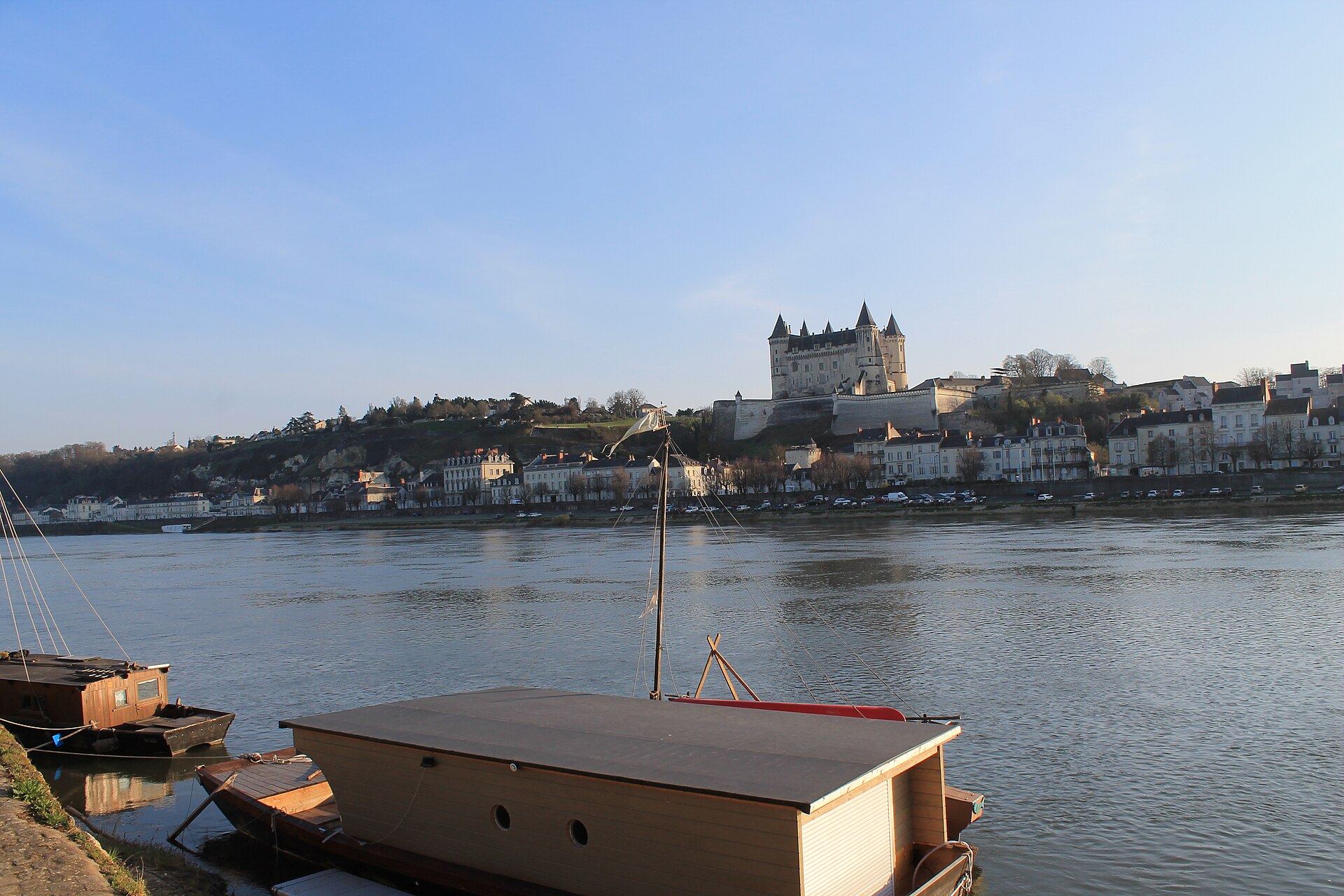
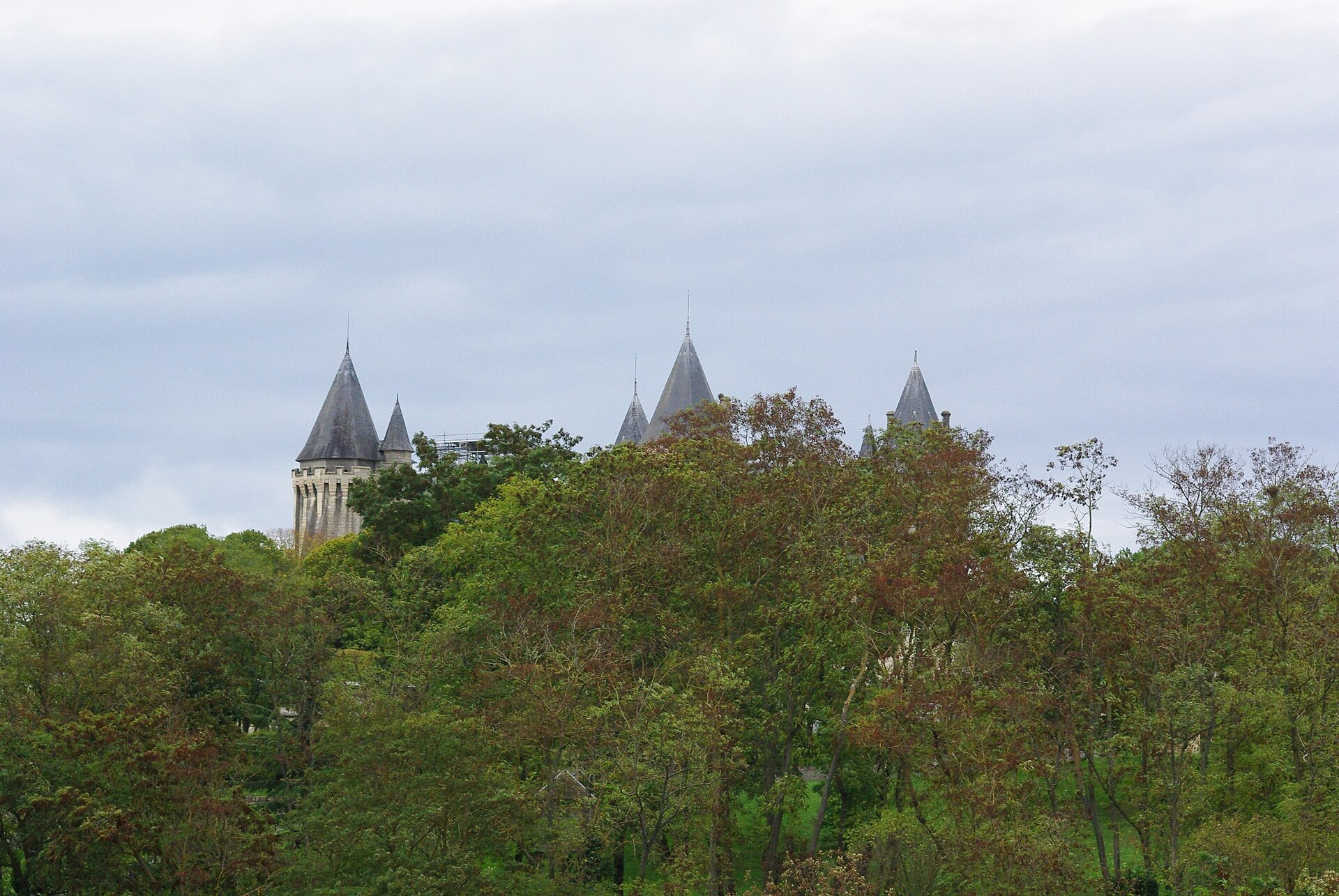
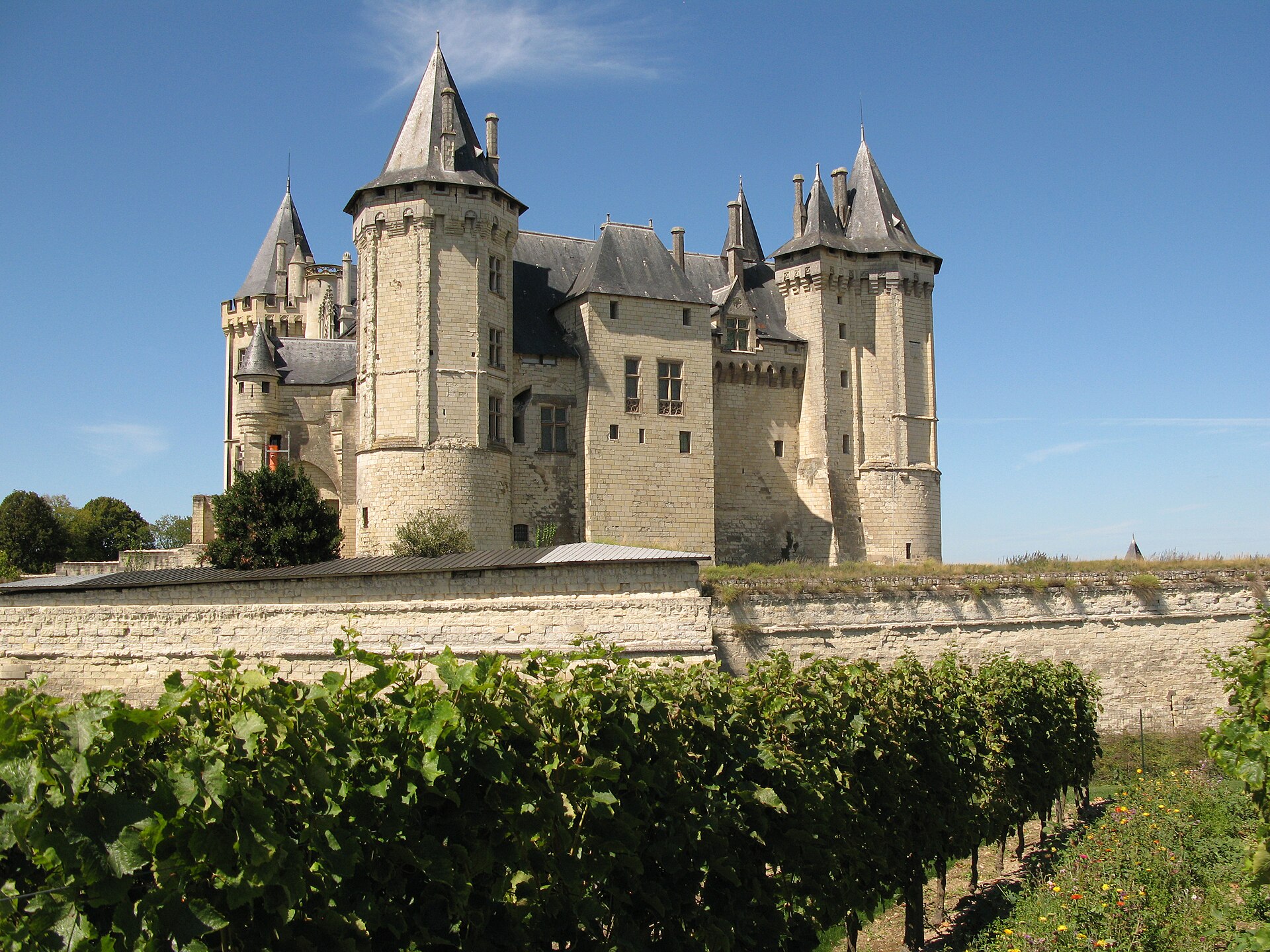
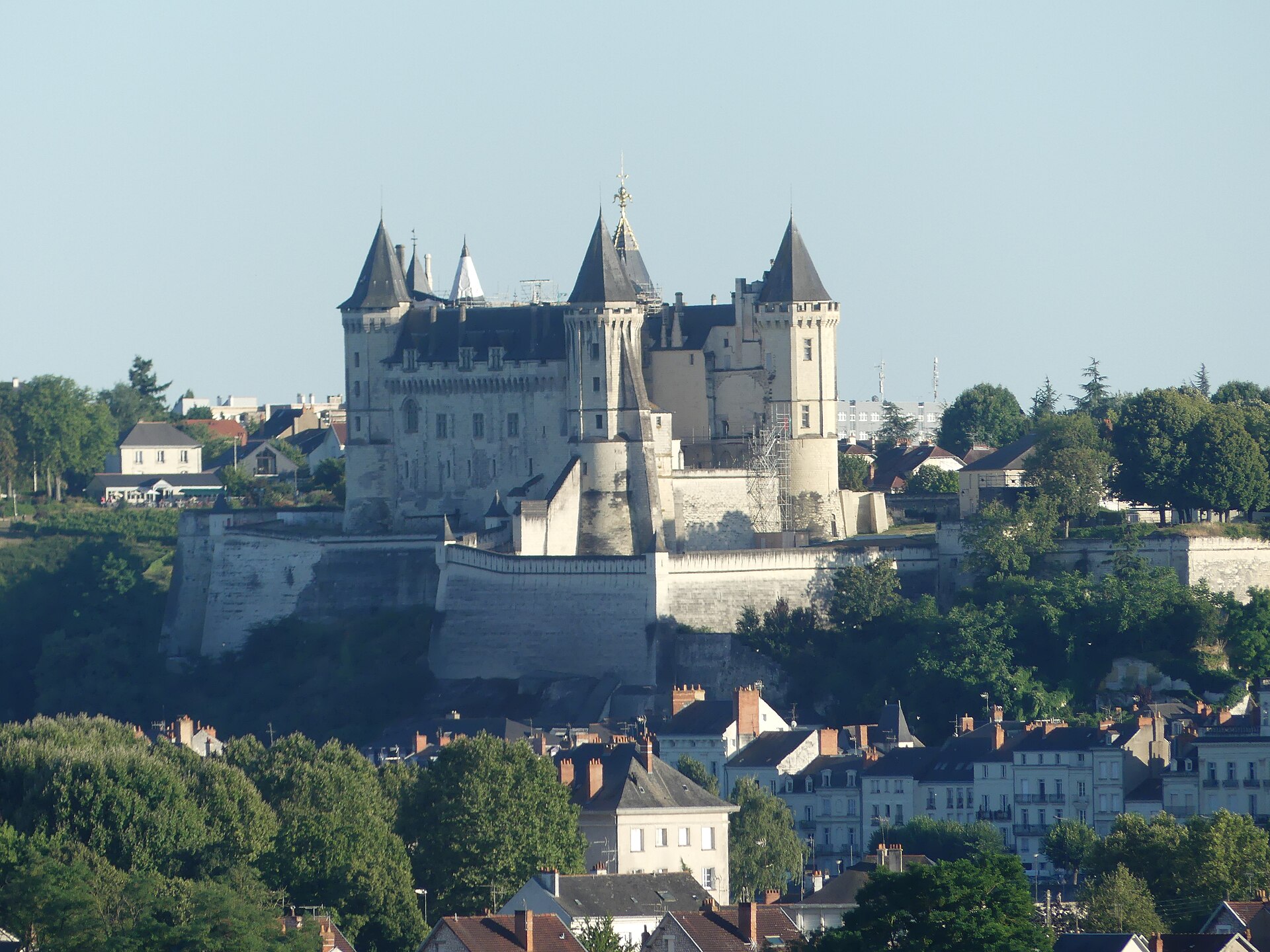
Saumur sits on a hill on the south bank of the Loire, in the heart of a landscape of vineyards and pale stone villages. The castle rises from the highest point of the town, its white walls and pointed towers visible for miles, a landmark that dominates the whole scene. Built largely of the soft, creamy local tufa stone, it seems almost to glow in the sunlight, an effect that has enchanted visitors and artists for centuries.
The setting could hardly be more perfect. Below the castle spread the roofs of the old town, and beyond them the broad, gleaming waters of the Loire, the greatest of French rivers. All around lie the famous vineyards of Saumur, whose sparkling wines are known throughout France. Fortress, town, river and vineyard together make a picture of harmony that has changed remarkably little since the Middle Ages.
It is this combination of beauty and setting that has made Saumur one of the most beloved of all the Loire castles. Where some fortresses overwhelm by their grimness and others by their extravagance, Saumur charms by its elegance and its perfect placement in the landscape. To see it rising white above the river is to understand at once why a medieval painter chose it as the very image of what a castle should be.
The Loire that flows below Saumur is the longest river in France and one of the last great wild rivers of Europe, its broad channel shifting with sandbanks and islands, its valley a UNESCO World Heritage landscape studded with castles. Saumur is one of the jewels in that long chain of chateaux, and its position on a hill above the river gives it one of the most commanding and beautiful settings of them all, a natural stage on which the white castle plays its starring role.
Approaching Saumur for the first time, most visitors are struck by how the castle seems to preside over its whole domain, drawing the eye from every direction. It is the kind of building that gives a place its identity, so that the very name of Saumur calls to mind the image of the white towers above the river. Few castles are so completely at one with their setting, or so perfectly express the character of the town and country around them.
From Fortress to Fairy-Tale Palace
Like so many great castles, Saumur began as a hard-headed fortress. There had been a stronghold on or near this hill since the early Middle Ages, when the counts of Anjou, among them the famously energetic Fulk Nerra, fortified the site to control the river and the surrounding lands. For centuries it was a place of war, changing hands between rival lords and, later, between the Plantagenet kings of England and the kings of France.
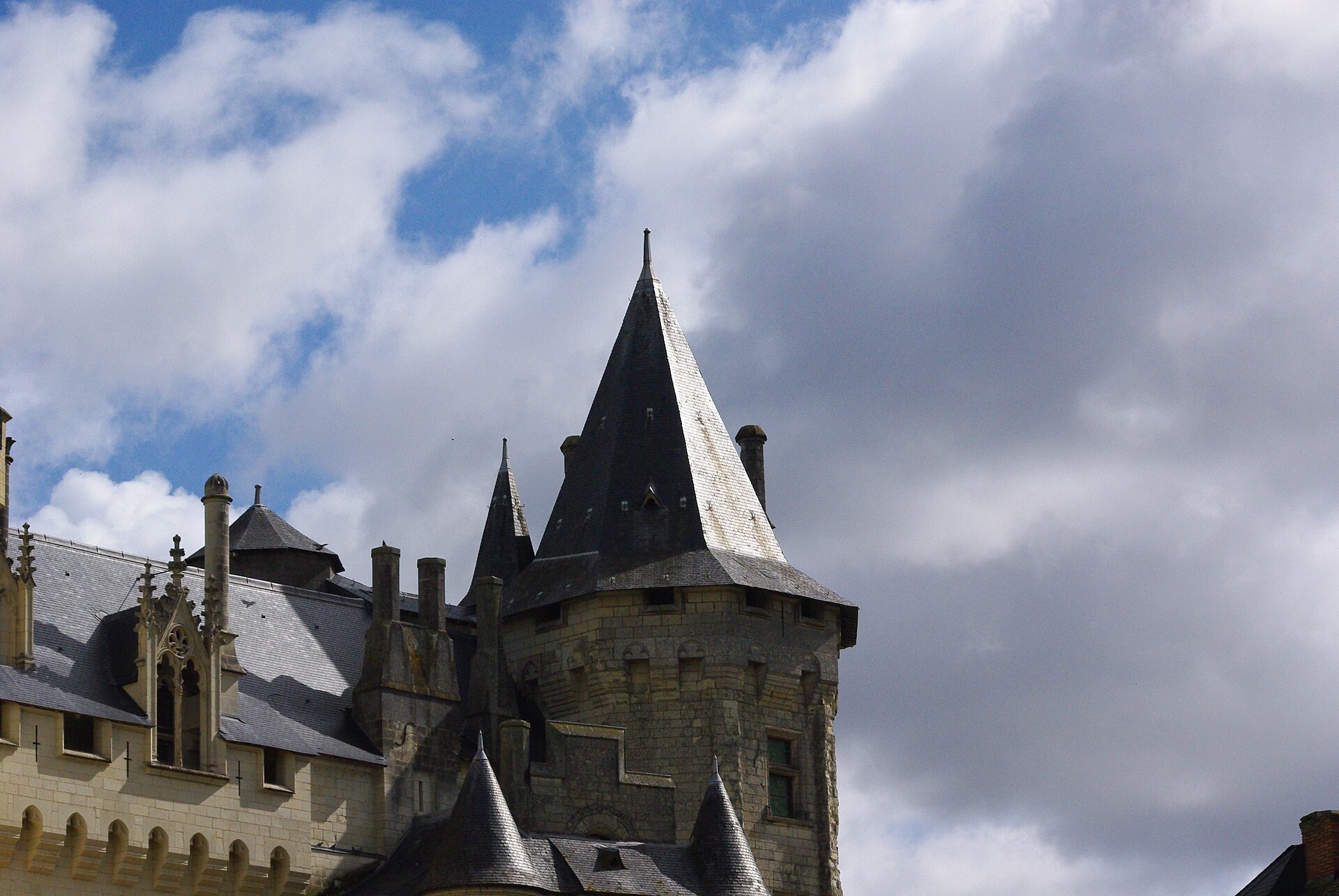
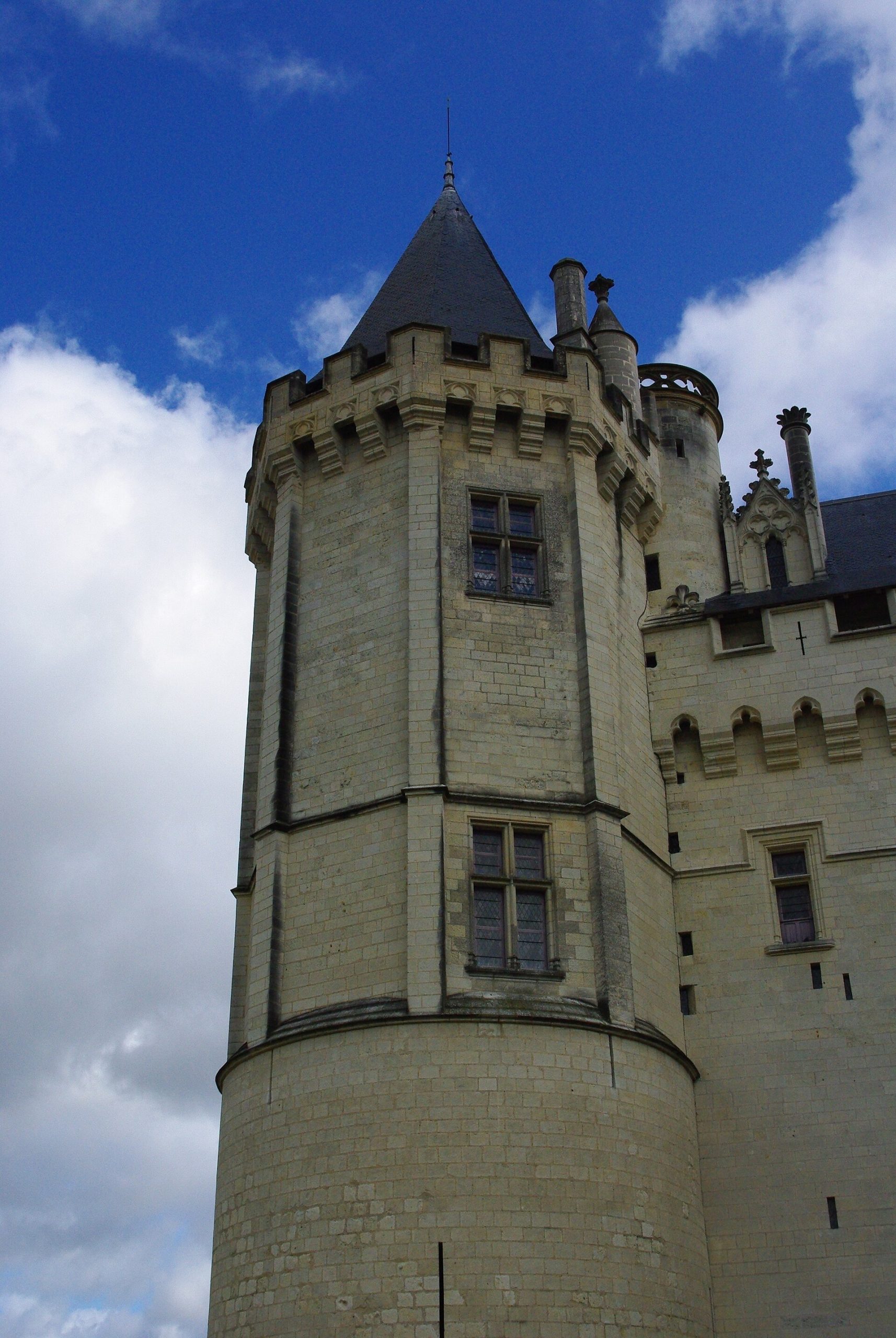
After the French crown took firm control, the castle was rebuilt and strengthened, but its transformation into the elegant building we see today came later, at the hands of the dukes of Anjou in the fourteenth and fifteenth centuries. These immensely wealthy and cultured princes remodelled the old fortress into a graceful residence, adding the tall octagonal towers with their pointed pepper-pot roofs that give Saumur its distinctive silhouette.
The result was a building that managed to be both a serious fortress and a beautiful palace at the same time, its defensive strength softened by elegant detail and fine proportion. This was exactly the kind of castle the great princes of the late Middle Ages loved, a place that proclaimed their power through beauty as much as through sheer military might. Saumur became a jewel of the ducal domains, a fitting seat for one of the most refined courts in France.
Fulk Nerra, the Black Falcon of Anjou, was one of the most formidable castle-builders of the early Middle Ages, a ruthless and tireless warrior who studded his lands with strongholds to hold down his conquests. Saumur was part of this network of Angevin power, a link in the chain of fortresses from which the counts of Anjou built one of the mightiest principalities in France. The elegant castle of later centuries grew from these hard military roots.
The rebuilding of Saumur as a palace reflected a wider change in the way the great nobles of France lived. As the worst of the medieval wars gave way to periods of relative peace and rising prosperity, princes increasingly wanted their castles to be comfortable and beautiful as well as strong, places to display their wealth and culture. Saumur, remade by the dukes of Anjou, is one of the finest expressions of this new ideal of the castle as a work of art.
The Most Famous Picture of a Castle
Saumur owes much of its fame to a single work of art. In the early fifteenth century, the fabulously wealthy Duke of Berry commissioned a book of hours, a richly illustrated prayer book, that became one of the greatest masterpieces of medieval painting: the Tres Riches Heures. Among its most celebrated pages is a scene for the month of September, showing the grape harvest taking place before a magnificent white castle.
That castle is Saumur, rendered in loving detail by the painters, its white towers topped with golden weathervanes and fleurs-de-lis, its banners flying, every pinnacle and window picked out with jewel-like precision. It is one of the most famous images in all of medieval art, and it captures the castle at the very height of its glory, a vision of aristocratic splendour rising above the humble labour of the harvest.
What makes the picture so remarkable is how closely the real castle still matches it. Many buildings shown in medieval art have vanished or been transformed beyond recognition, but Saumur, for all its later changes, still presents essentially the same white, many-towered silhouette that the painters recorded six hundred years ago. To stand before the castle with that famous image in mind is to feel an extraordinary connection across the centuries.
The Tres Riches Heures was the work of the Limbourg brothers, a trio of gifted Netherlandish painters who brought an astonishing new realism and delicacy to the art of manuscript illumination. Their calendar scenes, showing the labours and pleasures of the months against the backdrop of the Duke of Berry’s castles, are among the most treasured images of the entire Middle Ages, and their depiction of Saumur is one of the jewels of the whole book.
It is worth remembering how rare and precious such a book was. A richly illuminated book of hours like this represented an enormous investment of time, skill and costly materials, from gold leaf to pigments ground from semiprecious stones, and only the very wealthiest could afford one. That Saumur was chosen to appear in so exalted a work is itself a measure of the castle’s fame and beauty in its own day.
Comparing the painting with the castle today is a game that never loses its charm. Some of the golden weathervanes and airy pinnacles of the illumination have gone, and the star ramparts and later alterations have changed the setting, yet the essential form remains unmistakable. It is one of the very few cases where we can stand before a real building and hold in our minds an image of exactly how it looked to people six centuries ago, painted by some of the greatest artists of their day.
The Court of the Dukes of Anjou
The Saumur of the Tres Riches Heures was the castle of the dukes of Anjou, one of the greatest and most cultured princely houses of late medieval France. These dukes, related to the royal family and holders of grand titles, presided over a court famous for its love of art, music, literature and spectacle, and Saumur was among the jewels of their domains, a place of festivals, tournaments and courtly display.
The most celebrated of these princes was Good King Rene, duke of Anjou, who also held the crowns of Naples, Sicily and Jerusalem, at least in name. A poet, painter and lover of beauty, Rene did much to make his castles, Saumur among them, into places of elegance and refinement, filling them with art and treasures and hosting the kind of cultured court life for which the age is remembered. Under him Saumur enjoyed a golden age.
This was the world captured in the famous painting: a world of aristocratic magnificence, of white towers and golden banners, of harvests gathered beneath the walls of a fairy-tale castle. It was a high point not just for Saumur but for the whole civilisation of the late Middle Ages, a moment of beauty and confidence before the wars and upheavals that would soon transform France and Europe forever.
The dukes of Anjou moved between several great residences, and Saumur was one of the finest in their collection. Life at such a court followed the rhythms of the seasons and the demands of politics, with the duke and his household travelling from castle to castle, hunting, holding councils, and staging the great festivals that bound their followers to them. Saumur, with its beauty and its position on the Loire, was a favoured setting for the more pleasurable side of this princely life.
Good King Rene’s long life spanned the end of one age and the beginning of another, and something of his gentle, cultivated spirit still seems to cling to the castles associated with him. He is remembered not for conquests but for his love of beauty, learning and the good things of life, and Saumur, elegant and serene above its river, feels like a fitting monument to such a prince, a castle shaped as much by taste as by power.
A Stronghold of the Protestants
Saumur’s history took a dramatic new turn during the Wars of Religion that convulsed France in the sixteenth century. The town became an important centre of French Protestantism, and under the leadership of the great Protestant statesman Duplessis-Mornay, sometimes called the Protestant Pope, Saumur flourished as a stronghold of the reformed faith, home to a famous Protestant academy that drew scholars from across Europe.
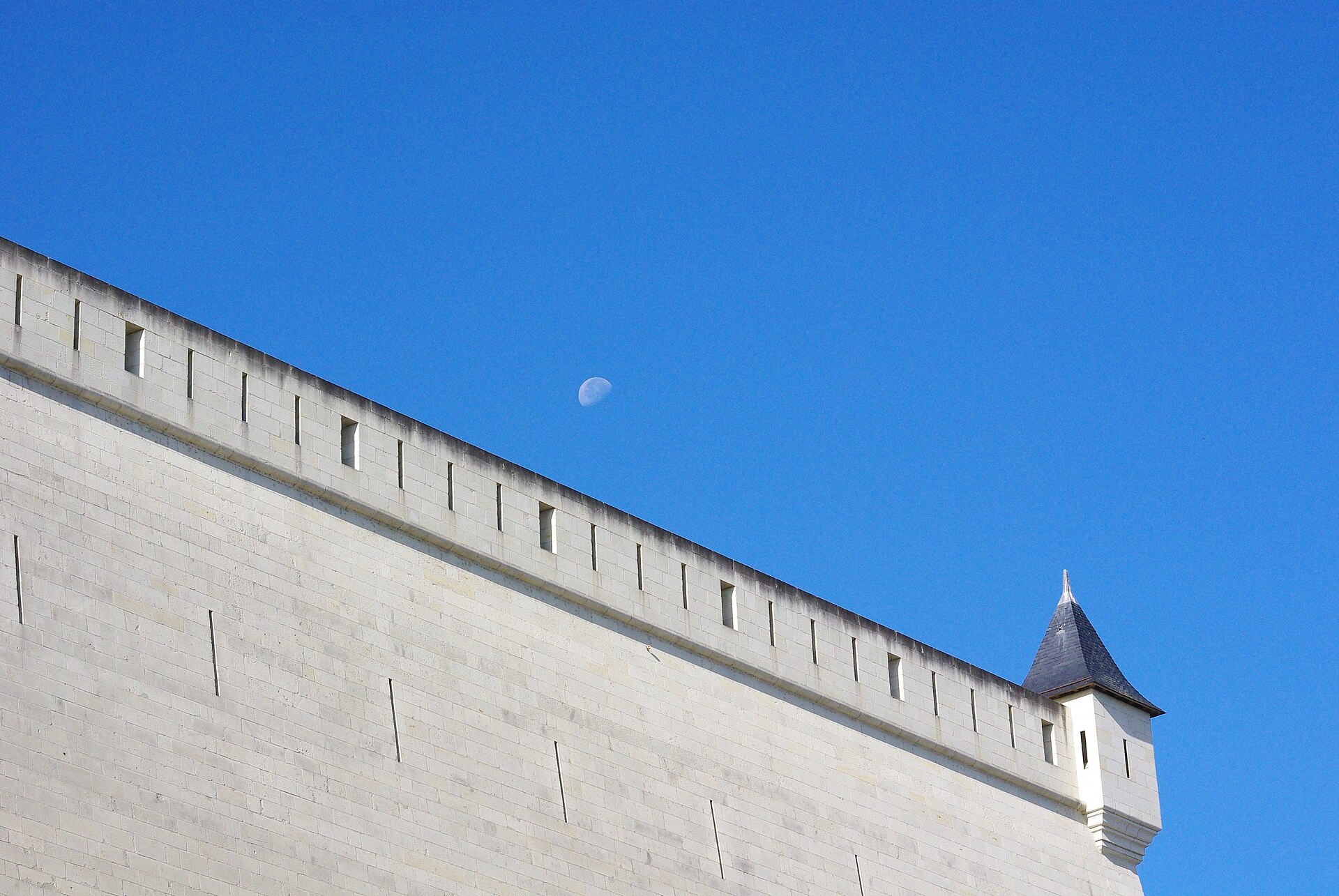
To defend the town and castle in this dangerous age, powerful new fortifications were added. Star-shaped ramparts, designed to resist the cannon of early modern warfare, were built around the castle in the late sixteenth century, transforming the elegant ducal palace into a serious modern fortress once again. The castle had to be able to defend itself in an age when religious hatred could turn neighbour against neighbour and town against town.
For a time Saumur was one of the great centres of Protestant learning and culture in France, a place of books and ideas as well as of arms. But the tolerance that had allowed it to flourish did not last. When the French crown moved to crush Protestant power in the seventeenth century, the academy was closed and the town’s Protestant golden age came to an end, opening yet another chapter in the castle’s long and changing story.
Duplessis-Mornay, the great figure of Protestant Saumur, was one of the most learned and influential men of his age, a trusted adviser to the Protestant king Henri IV and a tireless champion of the reformed faith. The academy he founded at Saumur became one of the leading centres of Protestant scholarship in Europe, attracting students and teachers from many countries and giving the town an intellectual prominence out of all proportion to its size.
The building of the star-shaped ramparts marked a return to Saumur’s military role after its centuries as a princely palace. These angular, low-lying earthworks and walls were a world away from the tall medieval towers, designed specifically to absorb and deflect cannon fire rather than to soar impressively into the sky. Their addition shows how the whole art of fortification had been transformed by the coming of gunpowder.
Guarding the Gate
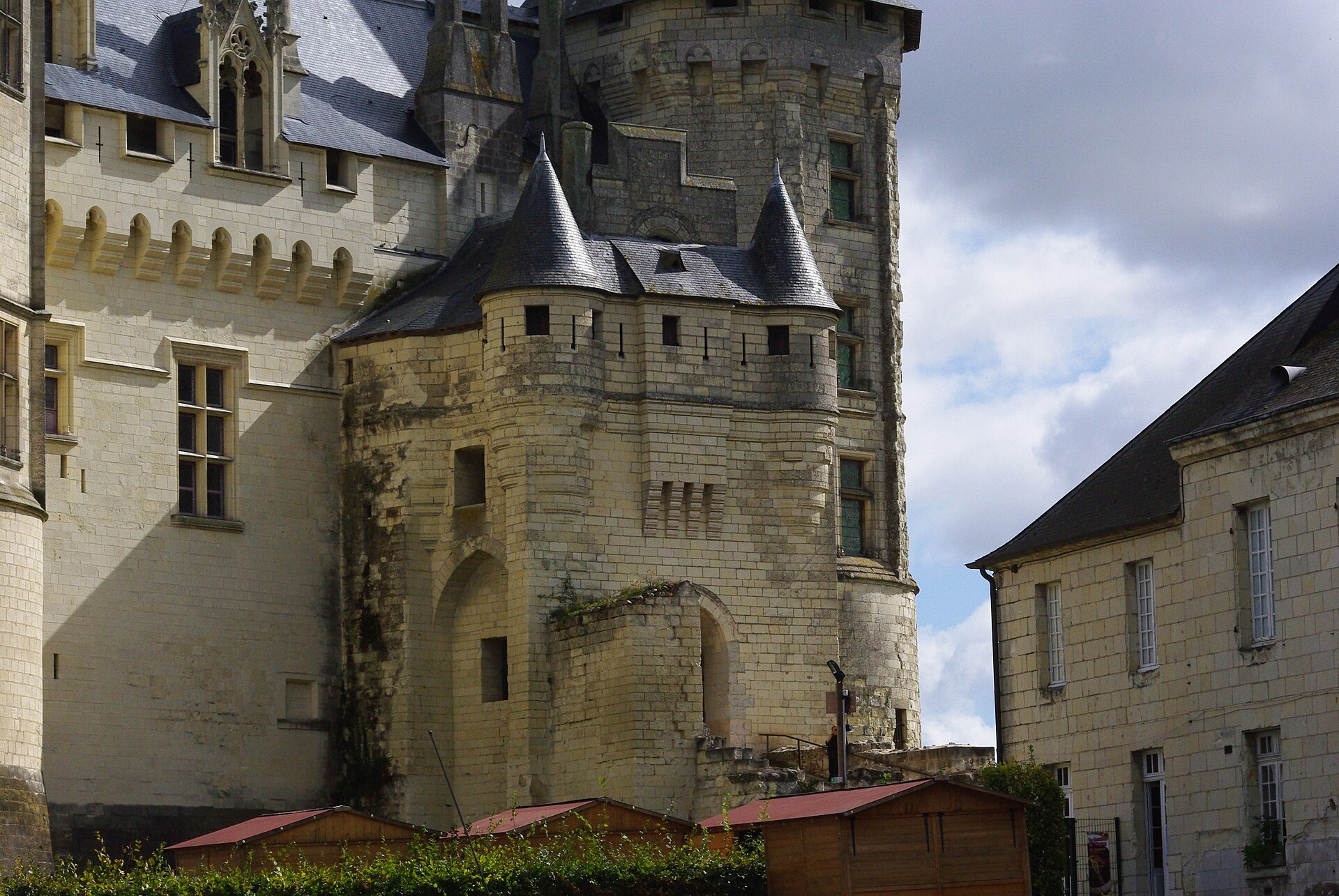
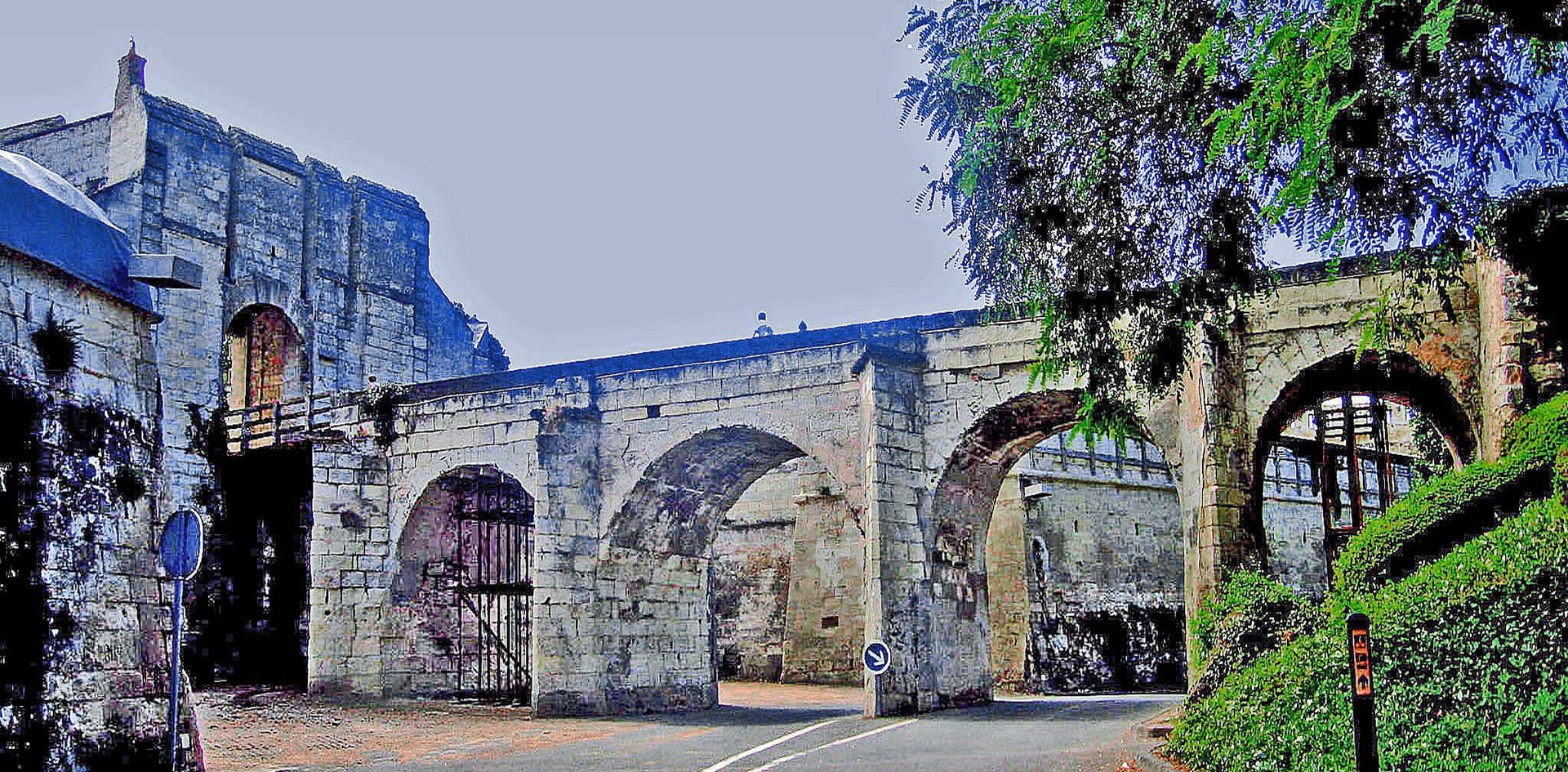
For all its elegance, Saumur never entirely lost its character as a fortress, and its defences repay close attention. The approach to the castle leads across a bridge and through a well-guarded gateway, overlooked by towers and walls from which defenders could command the entrance. Even as the building became more palatial, the essential business of keeping enemies out was never forgotten.
The gateway and the great towers that flank it show the blend of strength and beauty that defines Saumur. The tall octagonal towers, with their steep conical roofs, are both formidable defensive structures and elegant architectural ornaments, proof that in the hands of a wealthy and cultured builder, even the machinery of war could be made beautiful. Passing beneath them, you feel both the power and the grace of the place.
To enter the castle today, across the bridge and through the gate, is to follow the path taken by dukes and kings, soldiers and prisoners, scholars and, in more recent times, countless visitors. The defences that once kept out enemies now simply frame the entrance to one of the most delightful castles in France, their old menace softened into picturesque charm.
The blend of the medieval and the early modern is one of the fascinations of Saumur’s defences. The tall towers of the ducal age speak of one era of warfare, when height and thick walls were the keys to safety, while the low star-shaped ramparts added later speak of another, when the cannon had changed everything. To read these different layers of fortification is to trace the whole evolution of military architecture across several centuries in a single site.
Inside the Courtyard
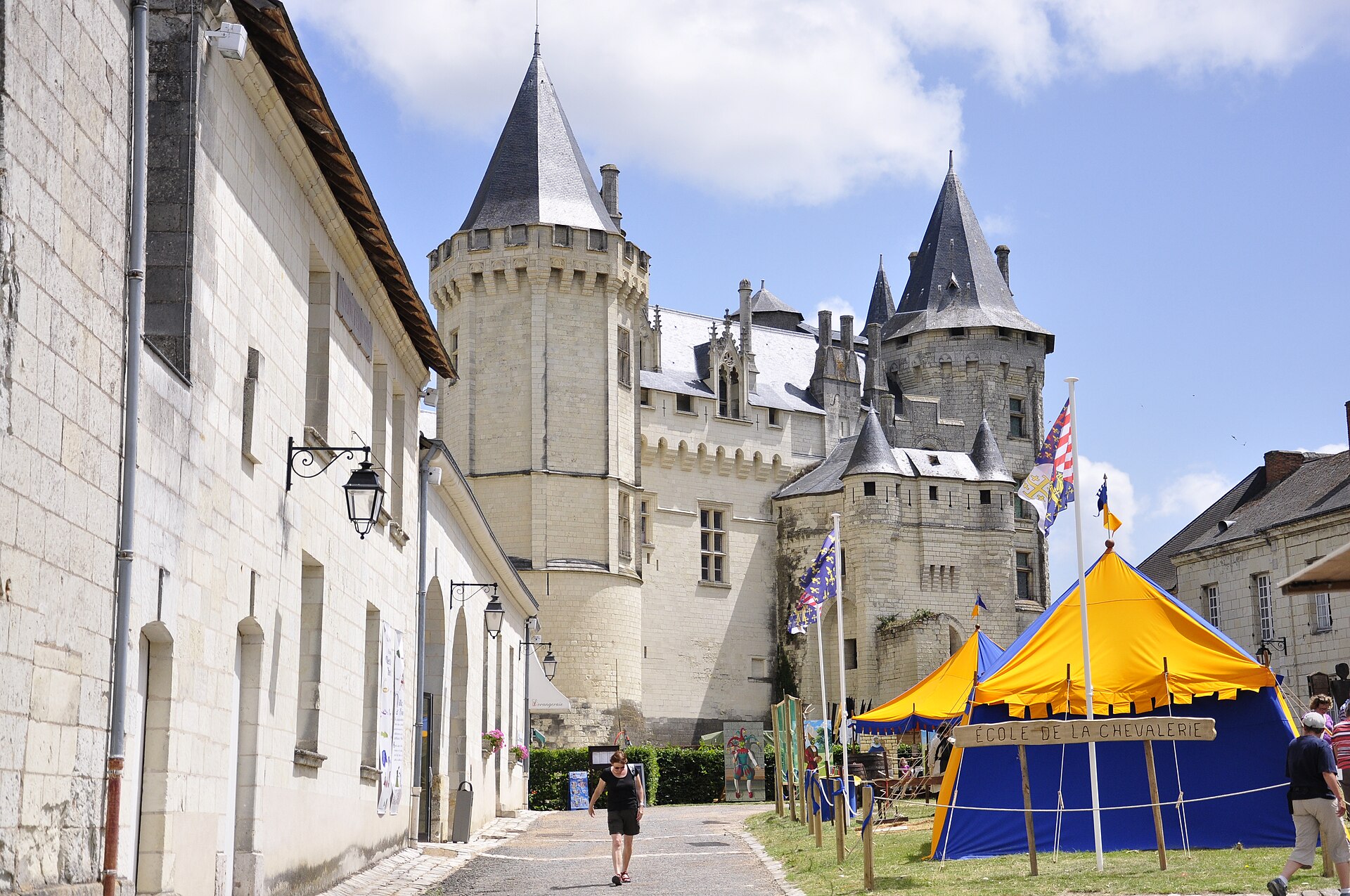
Pass through the gate and you enter the courtyard, the heart of the castle, enclosed by the ranges of buildings and overlooked by the great towers. In the days of the dukes of Anjou this was the setting for the daily life of a princely court, a space that would have bustled with servants and soldiers, courtiers and craftsmen, and on great occasions blazed with the colour and noise of feasts and festivities.
The buildings around the courtyard show the elegant, residential side of Saumur, with fine windows and carved detail that speak of comfort and cultivation rather than war. It was in these ranges that the dukes and their households lived, surrounded by the art and luxury for which their court was famous. Even now, quieter than in its heyday, the courtyard retains an air of refined grandeur.
From the courtyard, too, you can appreciate the height and elegance of the towers, rising above the surrounding buildings toward their pointed roofs. Seen from within, the castle reveals itself as a place designed for living as much as for defence, its inner face turned toward comfort and beauty while its outer walls presented a sterner aspect to the world beyond.
Over the centuries the ranges around the courtyard were altered many times to suit the castle’s changing uses, from ducal palace to prison and barracks, and the buildings we see today bear the marks of this long and varied history. Yet enough of the original elegance survives, in the proportions of the courtyard and the details of its architecture, to conjure up the world of the dukes of Anjou and the golden age of Saumur as a princely residence.
Windows Onto a Vanished World
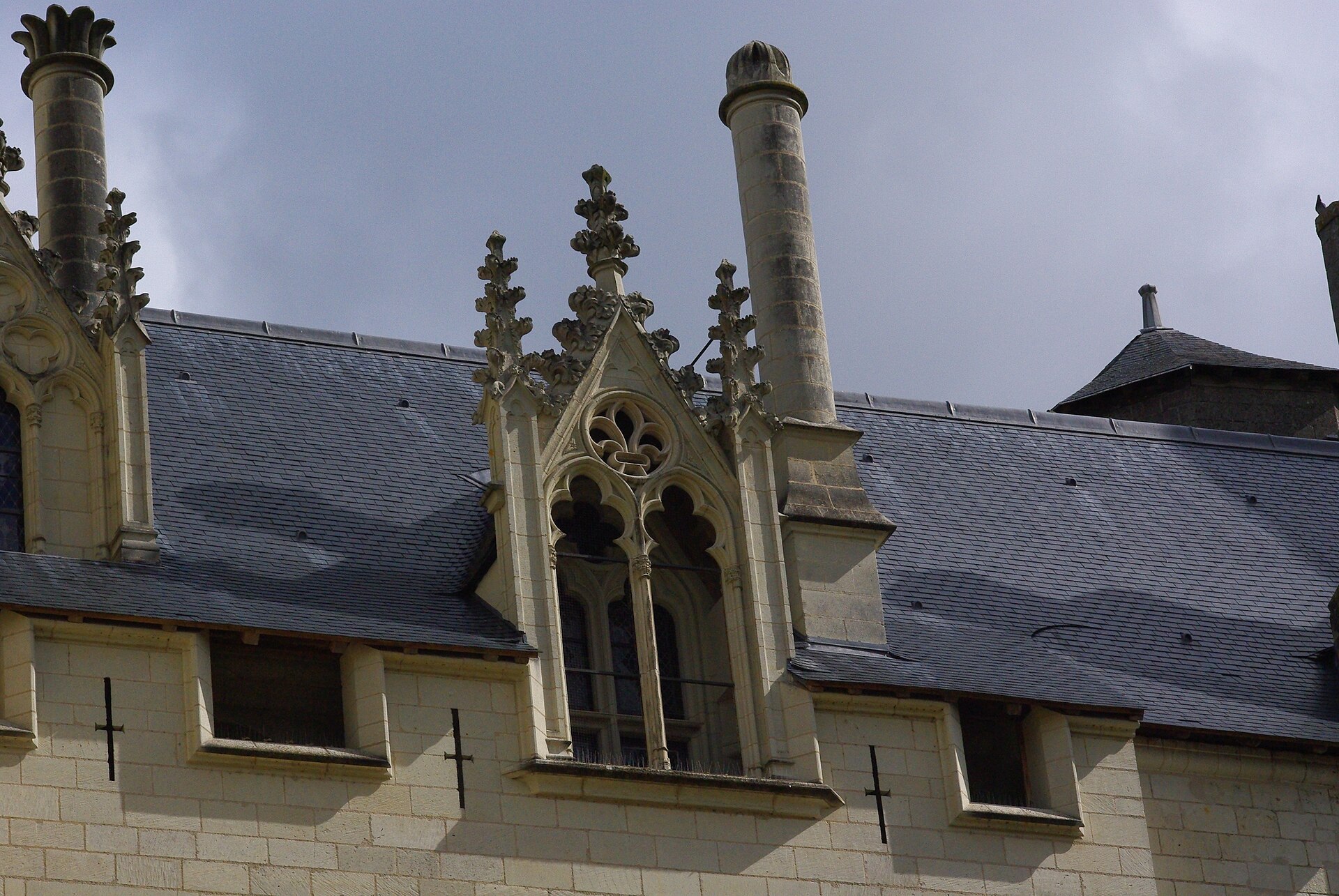
Among the details worth seeking out at Saumur are the fine windows and carved decorations that survive from the castle’s great days. These are the touches that transformed a fortress into a palace, the elegant flourishes that announced the wealth and taste of the dukes of Anjou. A carved window frame or a delicately worked doorway can tell you as much about the spirit of the place as any tower or wall.
Such details were expensive luxuries, and their presence marked Saumur out as a residence of the very highest rank. In an age when most people lived in rough and simple dwellings, the refined stonework of a ducal castle was a statement of almost unimaginable privilege, a way of showing that its owners belonged to a different and more exalted world. Every carved leaf and moulding was a small assertion of power.
These fragments of elegance also connect us directly to the world of the Tres Riches Heures, the world of golden weathervanes and fluttering banners captured in the famous painting. To notice them is to glimpse, behind the later history of prison and barracks and museum, the original vision of Saumur as a jewel of courtly refinement, a place built to be as beautiful as it was strong.
The soft tufa stone of the Loire was a gift to the carvers who worked it, allowing them to cut crisp, intricate detail that would have been far harder to achieve in a tougher material. This is one reason the chateaux of the Loire are so rich in delicate ornament, and Saumur is no exception. The same quality that makes the stone vulnerable to weathering also made it a perfect medium for the flowering of late Gothic and early Renaissance decoration.
Prison, Arsenal and Barracks
After the great days of the dukes and the Protestant academy, Saumur entered a long and often grim period as a working military and state building. Its strong walls and secure position made it useful as a prison, and over the years it held a variety of captives, including, in the time of Napoleon, prisoners of the state confined within its once-elegant chambers.
The castle also served as an arsenal and a barracks, its rooms filled not with the treasures of a princely court but with weapons, powder and soldiers. Saumur has long been associated with the French cavalry and its famous riding school, and the castle’s military role fitted naturally with the town’s identity as a centre of horsemanship. For a long time the fairy-tale palace of the painting was, in reality, a hard-working military establishment.
These centuries of practical use took their toll on the fabric of the building, and by the modern era Saumur was in need of serious attention. Yet its very usefulness had also ensured its survival, for a castle that continued to serve a purpose was less likely to be abandoned to ruin. When the time finally came to rescue and restore it, enough remained to bring the white castle of the painting back to something like its former glory.
The town of Saumur has been home to the French cavalry school for more than two centuries, and the famous riding display known as the Cadre Noir still keeps alive here the traditions of classical horsemanship. This deep connection between Saumur and the horse gives the town a special character, and it explains why the castle should now house one of the finest collections of equestrian art and equipment anywhere in the world. Fortress and stable, in a sense, belong together here.
Collapse and Rescue
The long history of hard use left its mark on Saumur, and the castle’s survival has not been without alarms. In the early twenty-first century, part of one of the castle’s ramparts suddenly collapsed, a dramatic reminder of the constant work needed to keep so old and complex a building standing. The collapse caused great concern, but it also prompted a major campaign of restoration and study.
The city of Saumur had taken ownership of the castle in the early twentieth century, rescuing it from decay and beginning the long process of turning it back from a military relic into a cherished monument. The collapse of the rampart, alarming as it was, became an opportunity to investigate the castle’s fabric more deeply than ever before and to carry out repairs that would secure it for the future.
Today, thanks to these efforts, the castle stands secure once more, its walls repaired, its towers gleaming white above the town. The story of its rescue is a reminder that great historic buildings are never truly finished, but require the constant care and attention of each generation if they are to survive. Saumur has been fortunate in the devotion of those who have worked to preserve it.
Working with soft tufa stone, so easily carved and so beautiful, has always carried a cost, for it weathers and decays more readily than harder stone. The very material that gives Saumur its luminous white beauty also makes it vulnerable to the passage of time, and keeping the castle standing has always demanded constant vigilance. The dramatic collapse of the rampart was, in a sense, the price of that beauty, and its repair a renewal of the age-old bargain between the builders and their fragile, lovely stone.
The care of a monument like Saumur is a task without end, passed from one generation to the next like a sacred trust. Each age must decide anew what it values in the buildings it has inherited, and how much effort and expense it is willing to devote to their survival. That Saumur still stands, white and lovely above the Loire, is proof that generation after generation has judged it worth saving, and a challenge to those who come after to do the same.
A Castle of Museums
In its modern life, the Chateau de Saumur has become a place of museums, its elegant rooms now home to fine collections that reflect both the refinement of its past and the special character of the town. The castle houses a museum of decorative arts, with a splendid collection of furniture, tapestries, ceramics and other treasures that recall the luxurious world of the dukes of Anjou.
Fittingly for a town so closely linked to horsemanship and the French cavalry, the castle is also home to a museum of the horse, tracing the long history of the relationship between people and horses through saddles, harnesses and other equestrian treasures from around the world. It is a reminder that Saumur remains, to this day, one of the great centres of the equestrian tradition in France.
These collections give visitors a reason to explore the interior of the castle as well as to admire it from outside, and they connect the building’s present life to its long and varied past. From ducal palace to Protestant stronghold to prison and barracks and now to museum, Saumur has continually found new uses, and in its role as a treasure house it has come, in a sense, full circle, once more a place of beauty and refinement.
The decorative arts collection at Saumur is particularly rich in medieval and Renaissance treasures, including fine tapestries, enamels and ceramics that recall the luxurious tastes of the castle’s greatest owners. To wander among these objects within the very walls that once housed such a court is to feel the continuity between the castle’s past and its present, and to appreciate how fitting it is that a palace built to display beauty should now be a treasure house once again.
The Town and the Vineyards
A visit to Saumur is not complete without exploring the town and countryside that surround the castle. The old town, with its handsome pale-stone buildings and lively streets, spreads below the castle hill along the bank of the Loire, a charming place to wander, and the great river itself, broad and gleaming, adds its own beauty to the scene. Fortress, town and river together make a landscape of rare harmony.
All around lie the vineyards that have made the name of Saumur famous far beyond France. The region is celebrated above all for its sparkling wines, made by the traditional method in the cool tufa cellars cut into the local hillsides, and a visit to the area offers the chance to taste these wines where they are made. The same soft white stone that built the castle also, in a sense, gives the wine its home.
This close relationship between the castle, the town and the vineyards is part of what makes Saumur so appealing. It is not an isolated monument but the crowning feature of a whole living landscape, a place where history, architecture, river and wine come together. To visit is to experience not just a beautiful castle but the whole rich character of one of the loveliest corners of the Loire.
The tufa hillsides around Saumur are honeycombed with cellars and even entire dwellings cut into the rock, a whole troglodyte world that has been inhabited and used for centuries. These cool, stable caves are ideal for aging the sparkling wines of the region, and many can be visited today. It is a striking thought that the same soft white stone that was quarried to build the gleaming castle also left behind the underground galleries in which the local wine now matures.
Visiting Château de Saumur
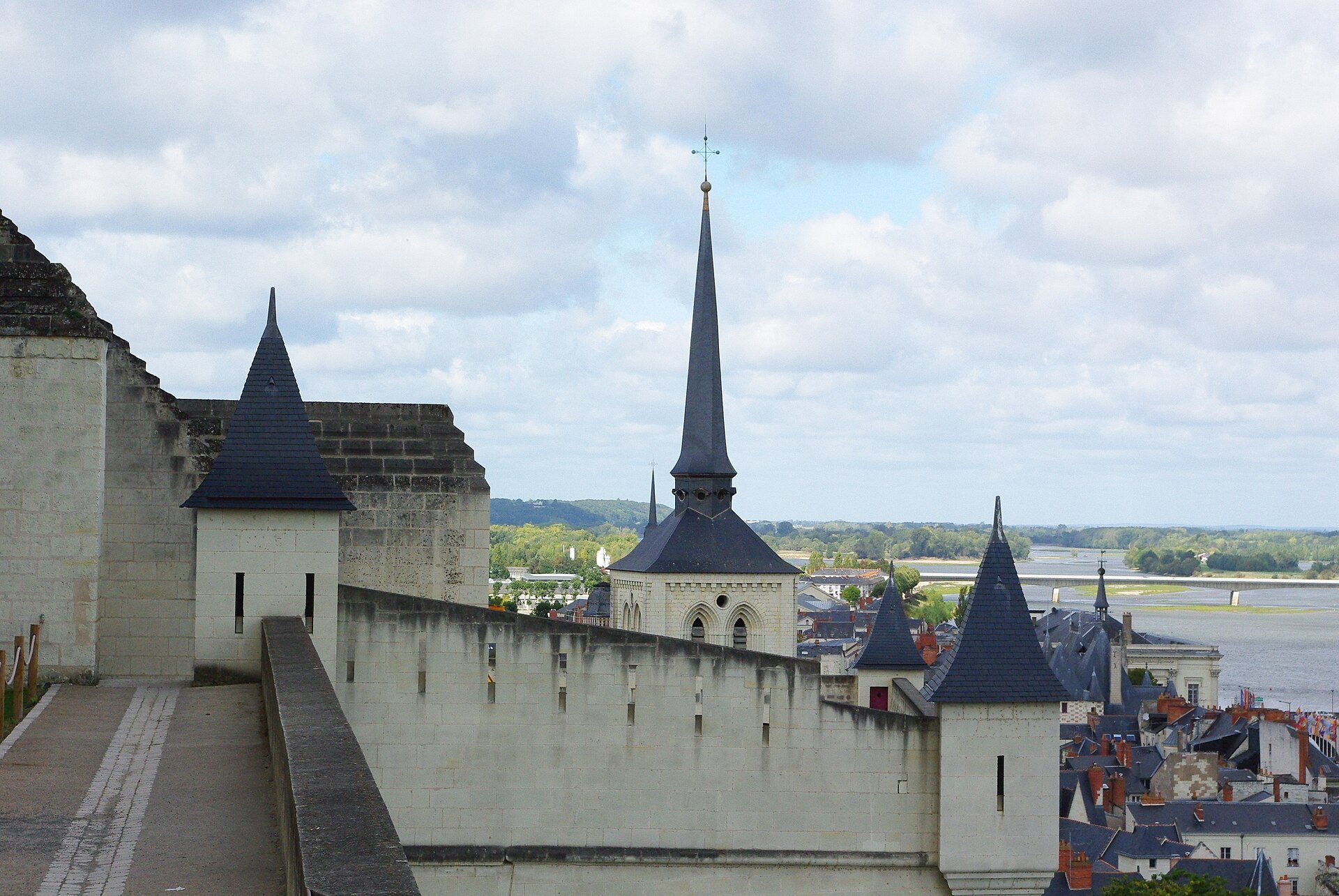
Today the Chateau de Saumur is open to visitors throughout much of the year, and it makes a delightful stop on any tour of the Loire valley. You can climb the hill to the castle, explore its courtyard and towers, visit the museums of decorative arts and of the horse, and enjoy from the ramparts some of the finest views anywhere along the river, out over the old town, the Loire and the surrounding vineyards.
The castle is at its most beautiful in the changing light of morning and evening, when its white walls glow against the sky, and it is worth timing a visit to catch it at its best. The town below rewards exploration too, with its historic streets and its famous cavalry connections, and the surrounding wine country offers the perfect way to round off a day, tasting the sparkling wines of Saumur in the cellars where they are made.
You will find Saumur in the Maine-et-Loire department, in the western Loire valley, easily reached by train and road and a natural companion to the castles of Angers, Chinon and the chateaux further east. For exact directions, here is a map link to guide you there: 47.2569, -0.0781. Look up at the white towers rising above the river, and you will be seeing, almost unchanged, the fairy-tale castle that a medieval painter made famous forever.
Castles Nearby
The Castle the Painter Loved
The Chateau de Saumur is a castle that has worn many faces: a fortress of the counts of Anjou, an elegant palace of cultured dukes, a stronghold of the Protestants, a prison and barracks, and at last a museum and a cherished monument. Through all these changes, it has kept the essential beauty that made a medieval painter choose it as the very image of what a castle should be, and it stands today, white and graceful above the Loire, very much as he saw it.
To visit Saumur is to step into that famous painting, to stand beneath the white towers and golden weathervanes and to feel the harmony of castle, town, river and vineyard that has endured for so many centuries. Of all the castles of the Loire, few are so perfectly placed or so lovely to behold, and none has been so beautifully immortalised in art. Saumur is, quite simply, a castle from a picture, made real and still standing after six hundred years.
You May Like

Mafra, the Palace a King Built From a Vow