Some castles tell one story. The Chateau Royal de Blois tells four at once. Stand in its courtyard and turn slowly around, and you will see the whole history of French architecture unfold before your eyes: a medieval hall, a late Gothic wing of brick and stone, a dazzling Renaissance facade with its famous spiral staircase, and a cool classical wing from the age of Louis XIV. No other castle in France gathers so many centuries of style into a single courtyard.
But Blois is not just an architectural museum. For a long stretch of French history this was one of the most important royal residences in the kingdom, a favourite home of the Valois kings, a place that hosted seven kings and ten queens. Within these walls the great and terrible dramas of the French monarchy were played out, including one of the most notorious political murders in the nation’s history, and here, too, the formidable Catherine de’ Medici breathed her last.
To walk through Blois is to walk through five hundred years of French history, from the Middle Ages to the classical age, past the very rooms where kings plotted and queens died. Let’s step into the courtyard of Blois and read, wing by wing, the extraordinary story written in its stones.
In This Article
- Four Castles in One
- The Counts of Blois and the Estates Hall
- The Wing of Louis XII
- François I and the Renaissance
- The Staircase of François I
- A Palace of the Valois Court
- The Murder of the Duke of Guise
- The Death of a Queen
- The Chapel and the Emblems
- The Classical Wing of Gaston d’Orléans
- A Lesson in Stone
- Blois and Its Town
- Visiting the Château of Blois
Four Castles in One
The great fascination of Blois is that it is really four buildings in one, arranged around a single courtyard, each raised in a different age and a different style. Together they form a kind of textbook of French architecture, allowing the visitor to trace the evolution of taste across some four hundred years simply by turning from one wing to the next. There is nowhere quite like it in all of France.
Around the courtyard you will find, in turn, the surviving medieval hall of the counts of Blois, the late Gothic wing built for King Louis XII in warm brick and pale stone, the glittering Renaissance wing of King François I with its celebrated staircase, and the severe, elegant classical wing designed for Gaston d’Orléans in the seventeenth century. Each was the height of fashion in its own day, and each sits beside the others in fascinating contrast.
This layering happened because Blois was, for so long, a favoured royal residence. Successive kings and princes wanted to leave their own mark, to build in the newest style, and rather than sweep away what had gone before they added to it, wing by wing. The result is a building that grew like a living thing across the centuries, and that now offers an unrivalled lesson in the changing face of French architecture.
The way the wings were added over time, rather than replacing one another, was partly a matter of chance and partly of choice. Each king wished to build in the newest fashion, but demolishing the work of a revered predecessor was not lightly undertaken, and so the older wings survived alongside the new. The incomplete rebuilding by Gaston d’Orléans in the seventeenth century, which might have swept much of this away, only added a further layer instead, preserving the whole remarkable ensemble for us to enjoy.
It is worth pausing, on first entering the courtyard, simply to take in the astonishing variety of what surrounds you before examining any single wing in detail. The eye moves from warm brick to carved Renaissance stone to cool classical facade, and the mind struggles at first to grasp that all of this belongs to one building. That initial sense of wonder, of centuries crowded into a single space, is the essence of Blois, and it never quite fades however often one returns.
The Counts of Blois and the Estates Hall
Long before it became a royal château, Blois was the seat of the powerful counts of Blois, one of the great noble families of medieval France. Their stronghold on the hill above the Loire controlled an important region between the domains of rival lords, and for centuries the counts played a significant part in the affairs of the kingdom from this commanding position.
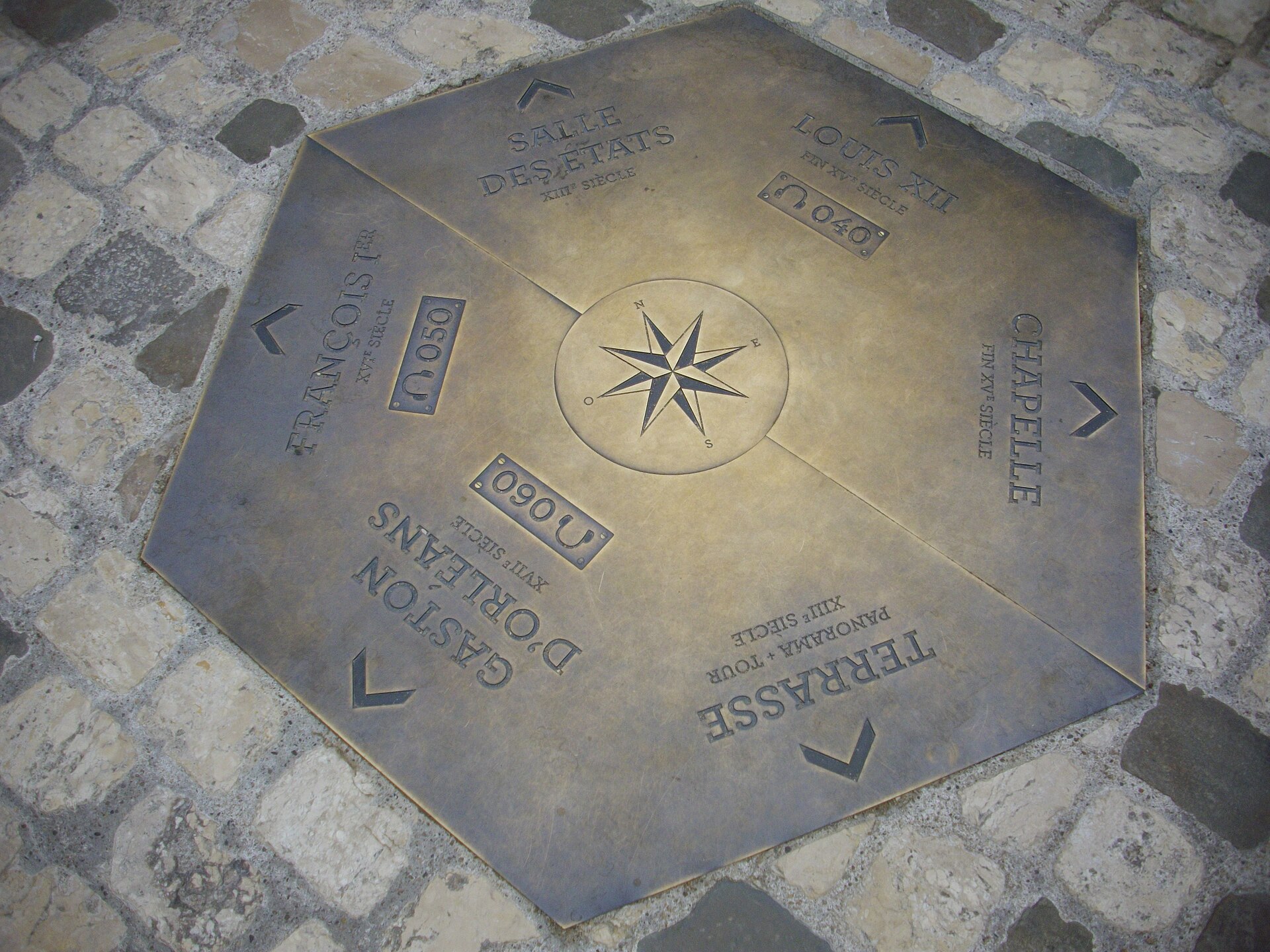
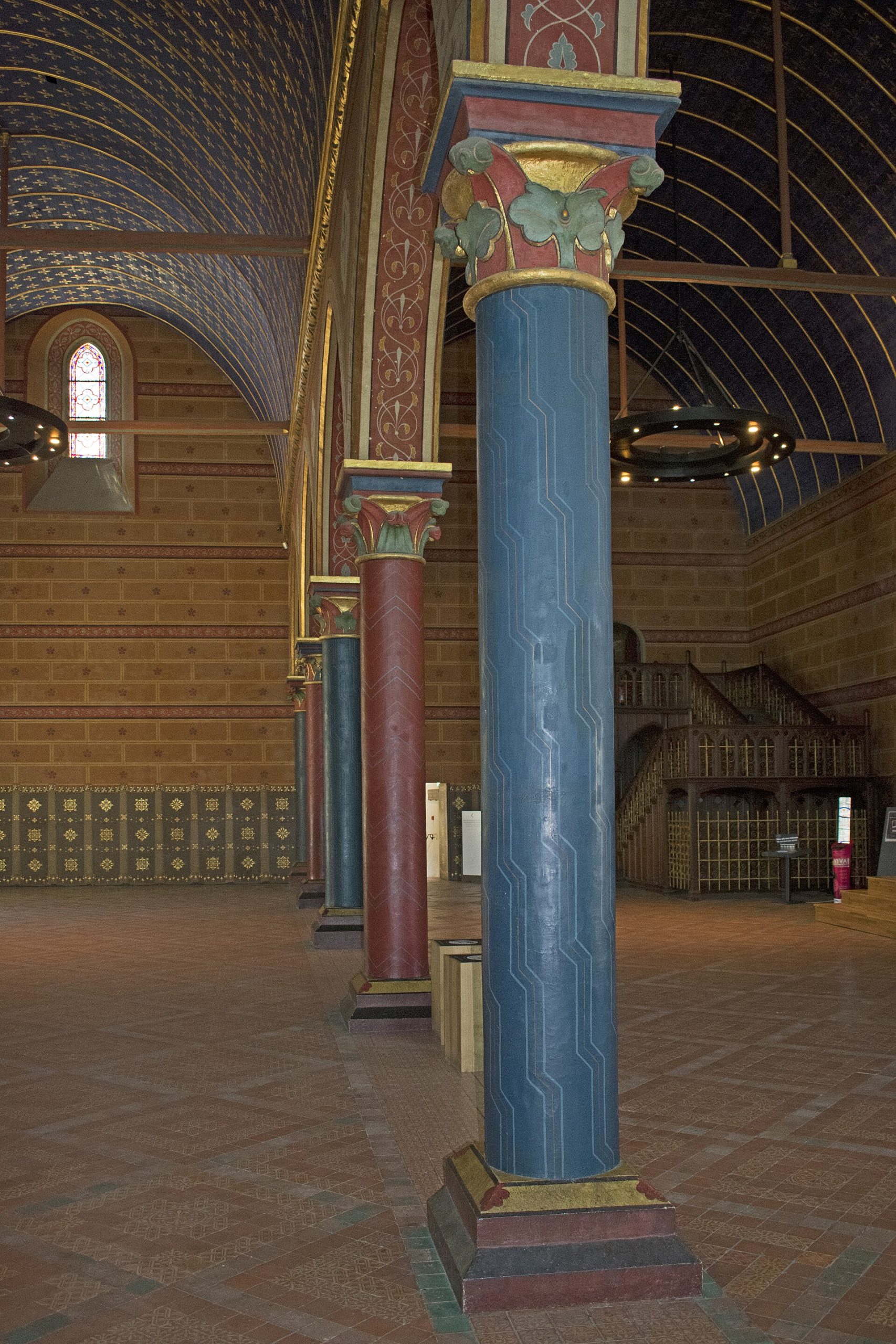
The most important survival from this medieval period is the great hall known as the Salle des États, the Hall of the Estates. This vast, aisled chamber, one of the finest surviving secular Gothic halls in France, was built by the counts as their main hall of state, a place for assemblies, feasts and the business of government. Its great timber roof and rows of columns speak of the wealth and power of its builders.
The hall takes its name from the meetings of the Estates-General, the great representative assemblies of the French realm, which were held here on more than one dramatic occasion. To stand in this ancient hall, so much older than the glittering Renaissance wings nearby, is to reach back to the medieval roots of Blois, to the age of the counts, before the château became a home of kings.
The counts of Blois were, in their heyday, among the most important lords of France, and at times their house rivalled even the kings in wealth and influence. Their line eventually became entangled with the great families of the realm, and the county passed in time toward the royal domain, setting the stage for Blois to become a favoured home of kings. The medieval hall is the great surviving monument of this earlier, comital age.
Built on a grand scale, the Salle des États was designed to impress, its double range of columns dividing the vast space into aisles beneath a soaring timber roof. Such halls were the setting for the most important public functions of medieval lordship, from the administration of justice to the great feasts that bound a lord to his followers. Its survival, amid the later royal wings, gives Blois a depth of history that reaches back well before the age of kings.
The Wing of Louis XII
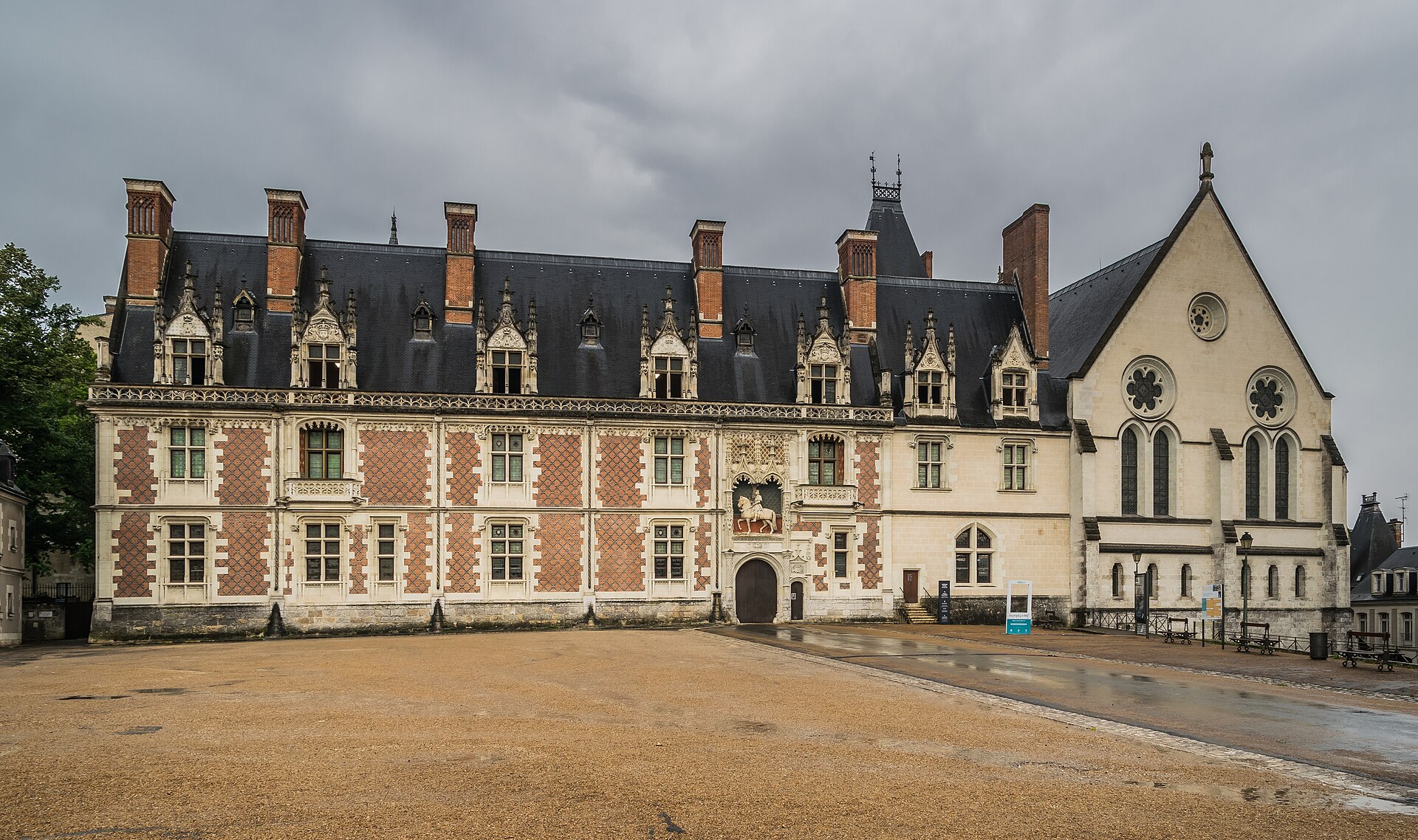
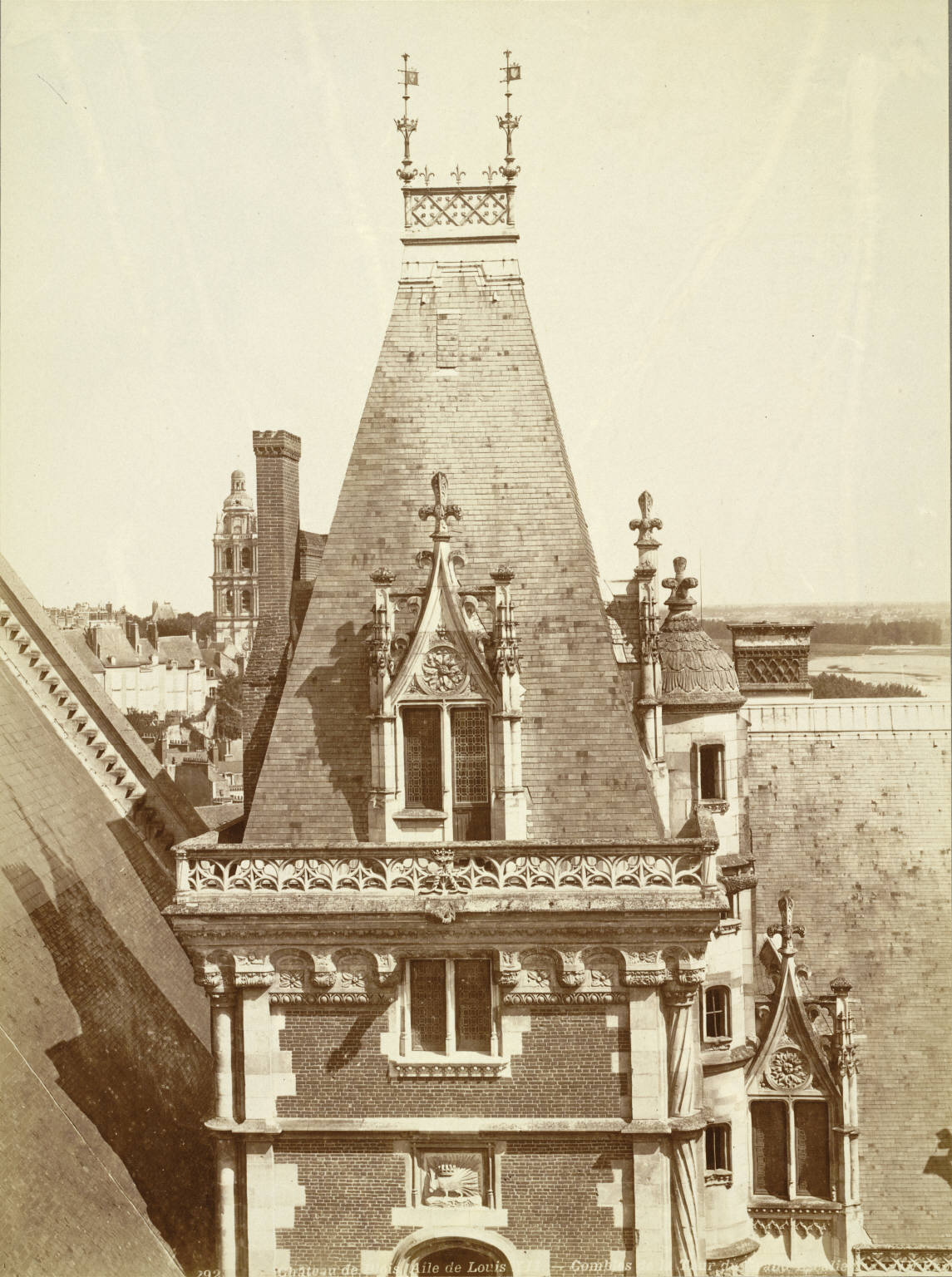
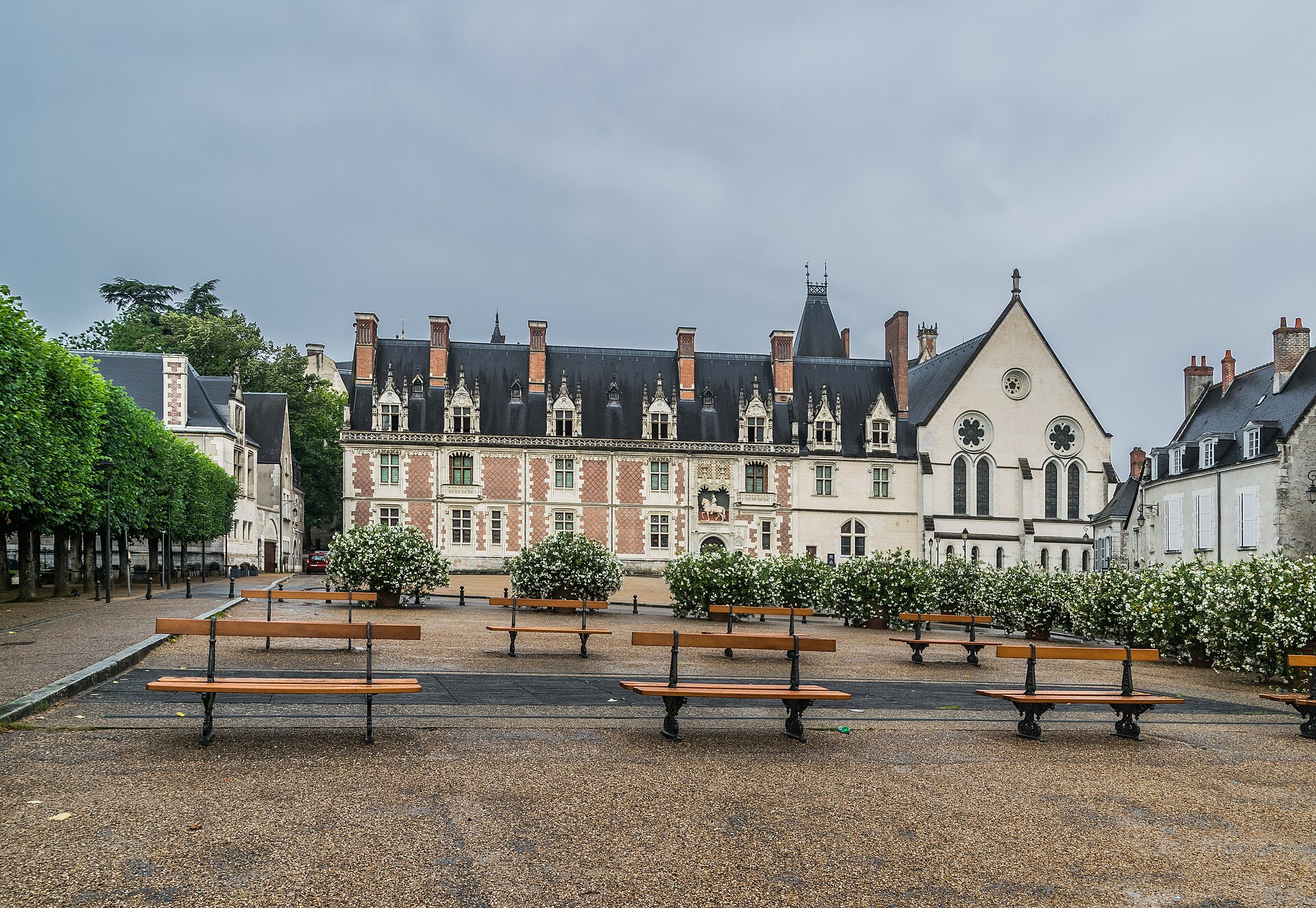
Blois became a true royal residence at the very end of the fifteenth century, when Louis of Orléans, who had grown up at the château, became King Louis XII. He made Blois his principal home and set about rebuilding it in the latest style, raising the handsome wing that still bears his name and that greets visitors as they approach the château from the town.
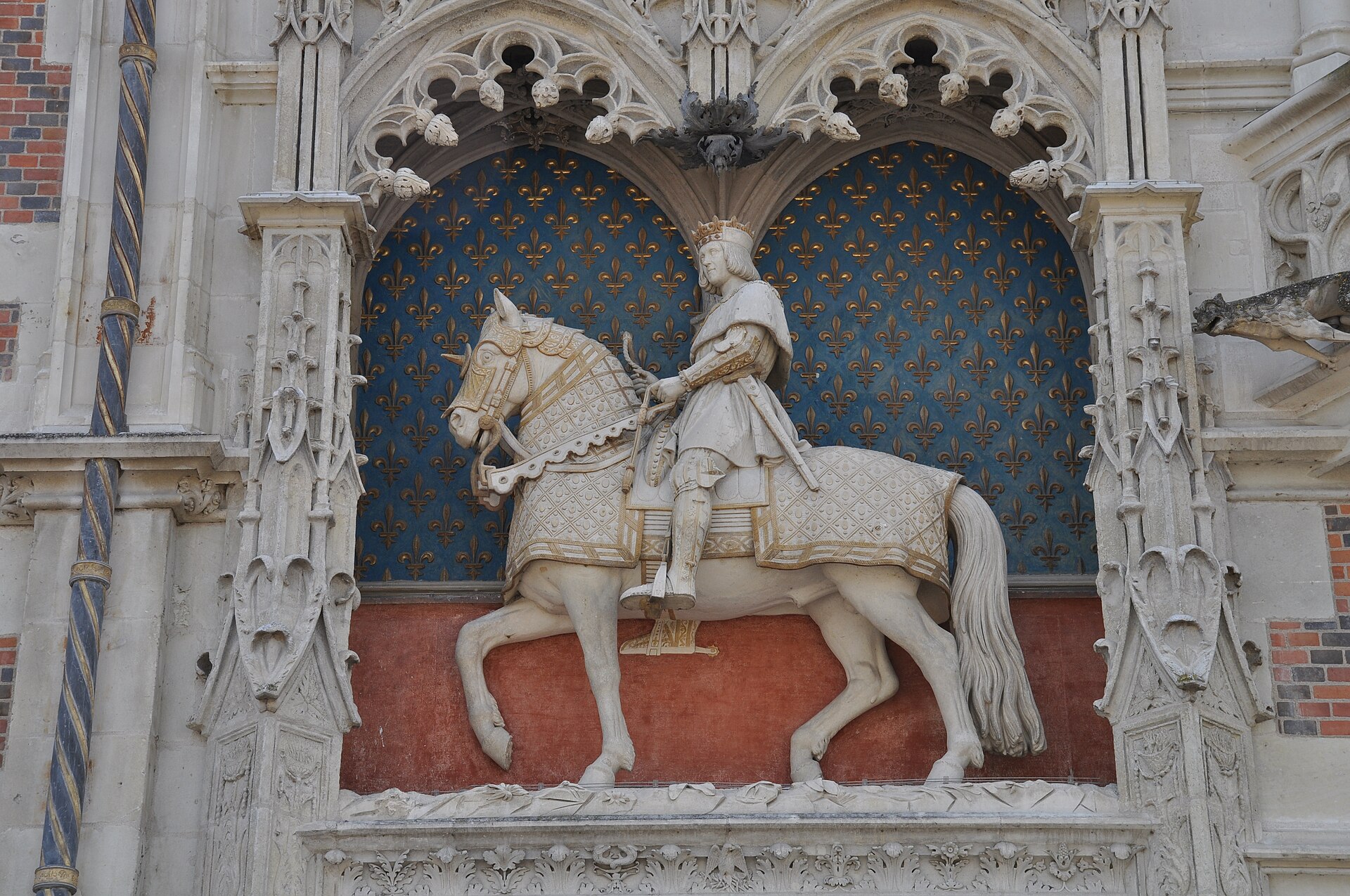
The Louis XII wing is built in a charming combination of warm red brick and pale stone, in a style that stands at the crossroads between the late Gothic and the early Renaissance. Its most famous feature is the equestrian statue of the king himself, set above the main gateway, showing Louis XII on horseback in full royal majesty, a proud declaration of ownership over the château he loved.
Louis XII was remembered fondly by his people as the Father of the People, a king who lightened taxes and cared for his subjects, and his wing at Blois has something of the same warmth and approachability. Less grand and formal than the wings that came later, it is a delightful example of French building at a moment of transition, when the elegance of the coming Renaissance was beginning to soften the sterner lines of the medieval world.
The blend of brick and stone that characterises the Louis XII wing was both practical and fashionable, the warm red of the brick set off by pale stone dressings around the windows and doors. This colourful, textured style was popular in France around the turn of the sixteenth century, and it gives the wing a cheerful, welcoming character quite different from the cool grandeur of the later Renaissance and classical work. It is the face that the château presents to the arriving visitor, and a charming introduction to the riches within.
The reign of Louis XII was a time of relative peace and prosperity after the turmoil of earlier decades, and this settled confidence is reflected in his building at Blois. Here was a king secure enough to build for comfort and beauty rather than pure defence, and the wing he raised, with its generous windows and cheerful colours, speaks of a monarchy at ease with itself. It set the tone for the even greater splendours that his successors would add.
François I and the Renaissance
The most spectacular of the four wings is the one built by King François I, the great royal patron of the French Renaissance. Coming to the throne in the early sixteenth century, François was determined to bring the art and elegance of Italy to France, and at Blois he raised a wing that announced the arrival of the full Renaissance in French architecture, a glittering display of the new style at its most confident.
The François I wing is richly decorated with classical detail, its facades covered in carved pilasters, mouldings and the king’s personal emblem, the salamander, repeated again and again across the stone. Where the Louis XII wing had hinted at the Renaissance, this wing embraced it wholeheartedly, its ordered, ornamented surfaces a world away from the medieval hall that stood nearby. It was, in its day, the last word in royal magnificence.
This was the wing where François held his brilliant court in the early years of his reign, before his attention turned to the building of Chambord and other palaces. For a time Blois stood at the very centre of French cultural life, a showcase of the new Renaissance taste that the king did so much to promote. And at the heart of this wing rose the single most famous feature of the whole château.
François I is one of the towering figures of French history, a king whose reign saw France transformed into a leading centre of Renaissance art and culture. His patronage brought Italian masters to France, including Leonardo da Vinci, and his building projects, from Blois to Chambord to Fontainebleau, reshaped the architecture of the kingdom. The Blois wing was among his earliest great works, a first full statement of the Renaissance ideals he would pursue throughout his reign.
The salamander that François scattered so liberally across his wing was more than decoration; it was a personal badge charged with meaning, a creature of legend said to live in fire, paired with a motto about nourishing good and quenching evil. To see it repeated across the facades is to be reminded, at every turn, whose vision and whose power shaped this most brilliant of the four wings of Blois.
The Staircase of François I
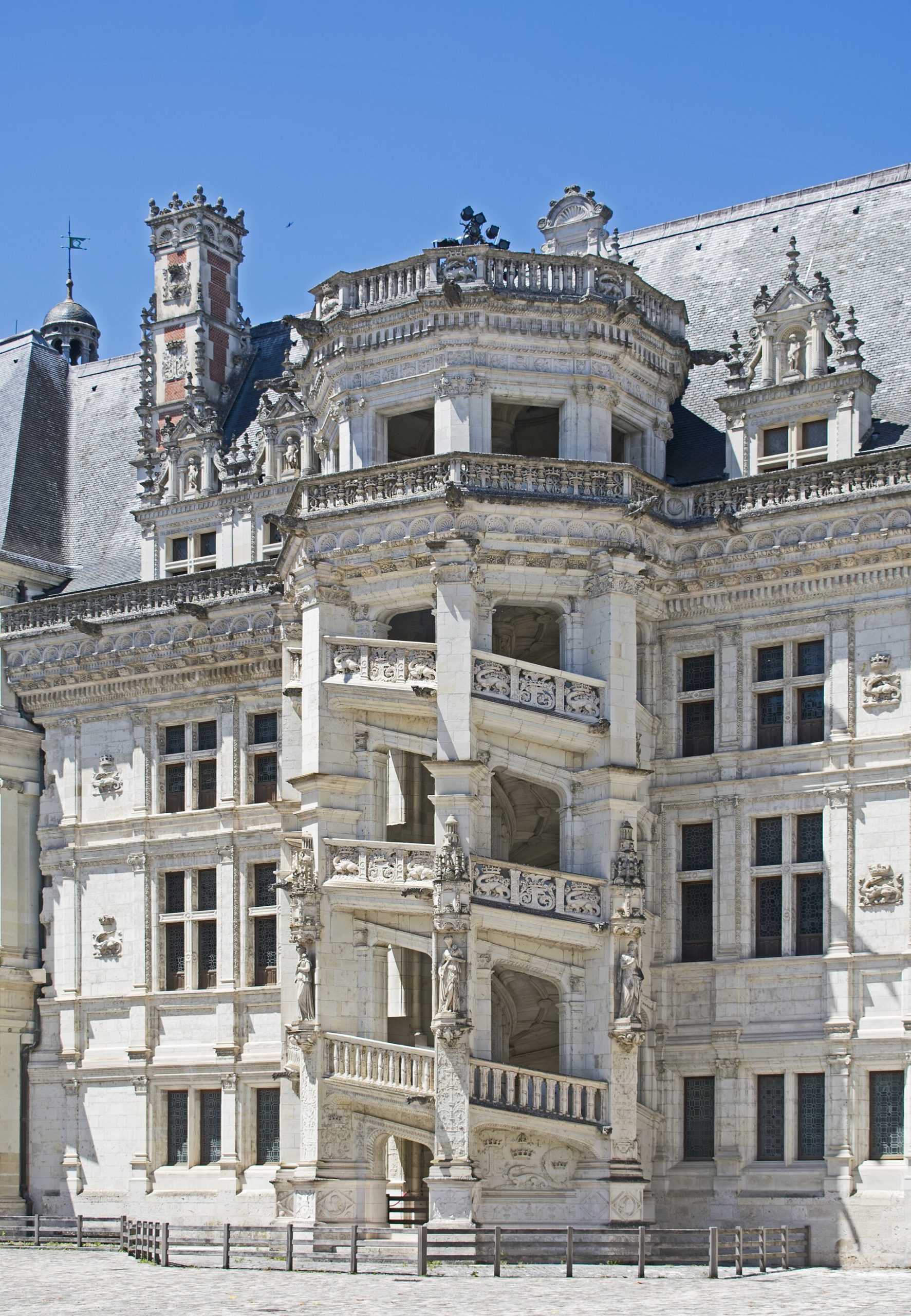
The glory of the François I wing, and one of the most famous features of any château in France, is its great spiral staircase. Rising in an octagonal tower that projects boldly from the facade into the courtyard, the staircase is open to the air, its spiralling flights visible through a screen of richly carved stone, so that those climbing it could be seen, and could see out, as they ascended.
It was a piece of pure theatre. On great occasions, the staircase became a kind of vertical stage, its open galleries filled with courtiers watching the spectacle in the courtyard below, or displaying themselves to the crowd. The whole design turned the simple act of climbing stairs into a courtly performance, a brilliant expression of the Renaissance love of display and of the human figure in motion.
Every surface of the staircase is covered in exquisite carving, including, once again, the salamander of François I and the ermine of his queen. It is a masterpiece of the French Renaissance, admired for centuries and imitated in countless other buildings, and it remains the defining image of Blois, the feature that visitors picture when they think of the château. To see it is to understand at once why this wing was considered the height of royal splendour.
Architectural historians have long debated exactly how the staircase originally looked and how much it was altered in later restorations, but none dispute its brilliance. The idea of an open, external spiral, projecting from the facade and visible to all, was a bold and original conception, and it perfectly expressed the Renaissance delight in movement, display and the theatrical possibilities of architecture. It turned a functional necessity into a work of sculpture.
The carved decoration of the staircase repays the closest attention, for it is among the finest of its kind in France. Salamanders wreathed in flames, the initials of the king and queen, and a wealth of Renaissance ornament cover every surface, executed with a delicacy and confidence that mark the high point of early French Renaissance carving. It is a place to linger and to look closely, for new details reveal themselves the longer one gazes.
A Palace of the Valois Court
Throughout the sixteenth century, Blois was one of the principal residences of the Valois kings and their court, a centre of power, politics and culture. The château’s grand apartments housed the royal family and their households, and its halls and galleries witnessed the ceremonies, intrigues and entertainments that made up the life of a Renaissance court at the very summit of the kingdom.
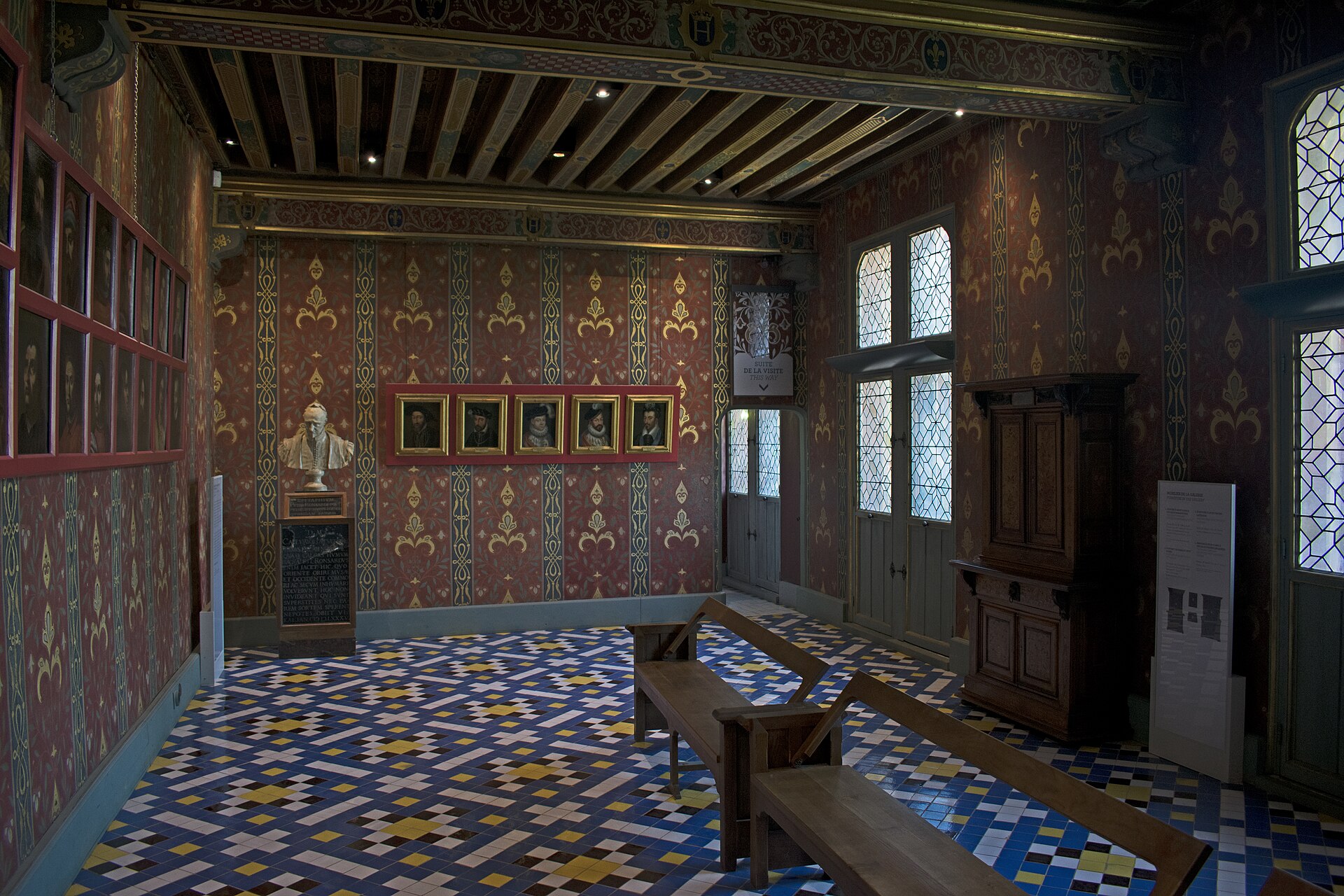
The interiors of the royal wings, richly decorated and furnished, provided a fitting setting for this exalted life. Painted ceilings, carved chimneypieces, tapestries and fine furniture filled the rooms where kings and queens lived, received ambassadors, and conducted the business of government. Even today, restored to something of their former richness, these rooms convey the splendour of the court that once filled them.
But the life of the court was not all elegance and display. Behind the beautiful facades, Blois was also a place of ruthless politics, where the fate of the kingdom was decided and where rivalries could turn deadly. In the troubled decades of the Wars of Religion, the château would become the setting for one of the most shocking acts of political violence in the whole of French history.
Life at Blois in the sixteenth century would have been a constant round of ceremony and display, of hunts and banquets, of councils and audiences, all conducted according to the elaborate etiquette of the French court. Hundreds of people, from great nobles to humble servants, made up the royal household, and the château would have been a bustling little world of its own, at once a family home, a seat of government and a stage for the theatre of monarchy.
The Murder of the Duke of Guise
In December 1588, Blois was the scene of a political assassination that shocked all of France. The kingdom was torn apart by the Wars of Religion, and King Henri III found himself dangerously overshadowed by Henri, Duke of Guise, the immensely popular and powerful leader of the Catholic League, who many believed had designs on the throne itself. The king decided to remove his rival by the most direct and brutal means.
On the morning of the twenty-third of December, the Duke of Guise was summoned to the king’s apartments in the François I wing. As he made his way through the rooms, he was set upon by a group of the king’s most trusted guards, the men known as the Forty-Five, who struck him down with their swords and daggers. The mighty duke, one of the most powerful men in France, was murdered on the very threshold of the king’s chamber.
The killing did not end there. The following day the duke’s brother, the Cardinal of Guise, was also put to death, and the bodies were secretly disposed of so that they could not become the focus of a rising. It was a desperate, bloody act by a cornered king, and far from securing his position it helped to unleash even greater chaos. The murder at Blois became one of the most notorious events of the age, a byword for royal treachery and the violence of the religious wars.
The Duke of Guise had been warned that his life was in danger at Blois, but he is said to have dismissed the threats, confident that the king would never dare to move against so powerful a man. That confidence proved fatal. The very boldness of the killing, carried out in the heart of the royal apartments by the king’s own guards, was part of its shock, a violation of every expectation of how such matters were conducted.
The consequences of the murder were enormous. Far from crushing the Catholic League, the killing of its beloved leader turned Guise into a martyr and inflamed his followers to fury. Paris rose against the king, much of the kingdom slipped from his control, and within months Henri III was himself dead, the last of the Valois kings, his throne passing to the Protestant Henri of Navarre and opening a new and different chapter in the history of France.
The Death of a Queen
The drama of Blois did not end with the murder of the Guises. Watching over the whole terrible affair was one of the most formidable figures of the age, Catherine de’ Medici, the king’s mother, who had dominated French politics for decades as the power behind a succession of her sons on the throne. Old and ailing, she is said to have been horrified by her son’s rash act and to have foreseen the disaster it would bring.
Just a few weeks after the assassination, in January 1589, Catherine de’ Medici died at Blois. Her death marked the end of an era, for she had been at the centre of French power since the days of her husband, Henri II, steering the kingdom through the storms of the Wars of Religion with a mixture of cunning, ruthlessness and desperate pragmatism. That she should die here, in the château where her son had just committed so fateful a murder, gives Blois a peculiarly tragic place in the story of the Valois dynasty.
Within months, Henri III himself would be assassinated in his turn, struck down by a fanatical monk, and the Valois line would come to an end. Blois, which had witnessed the height of Valois splendour, thus also witnessed the beginning of the dynasty’s bloody collapse. Few castles have been so closely bound up with the fall of a royal house.
Catherine de’ Medici had spent her life fighting to preserve the throne for her sons, and she died just as the dynasty she had struggled for was collapsing around her. It was a bleak end for a woman who had wielded such power for so long, and there is a grim appropriateness in her dying at Blois, the scene of her son’s desperate crime. Her passing removed the last restraining hand from Henri III, and the kingdom plunged deeper into chaos.
The Chapel and the Emblems
Among the buildings around the courtyard is the chapel of Saint-Calais, once part of a larger royal chapel, of which this graceful Gothic choir survives. Here the royal family worshipped, and its fine architecture reminds us that religion was woven through every part of court life, even in an age when religious division was tearing the kingdom apart. It is a quiet, beautiful space amid the grandeur of the wings.
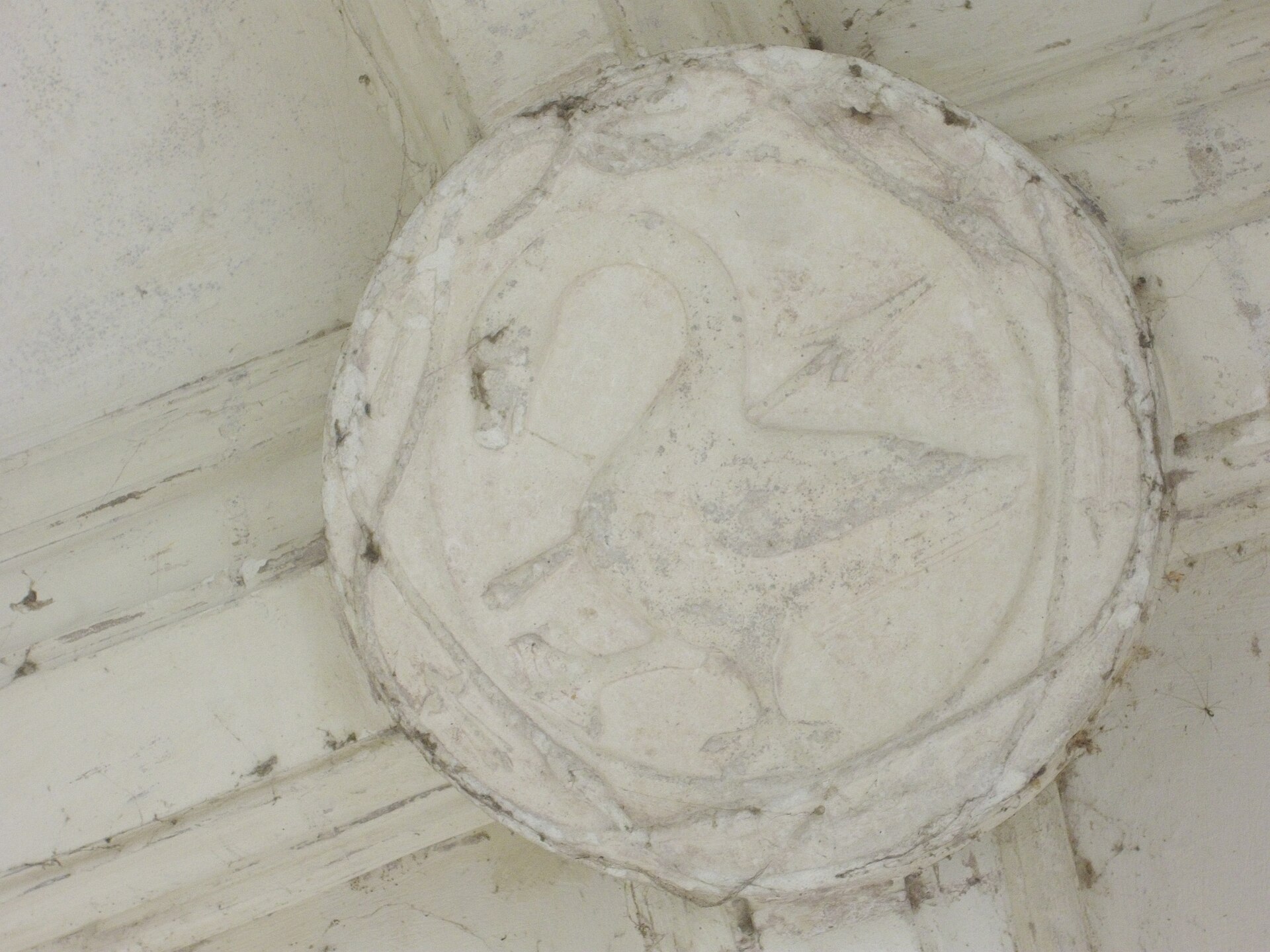
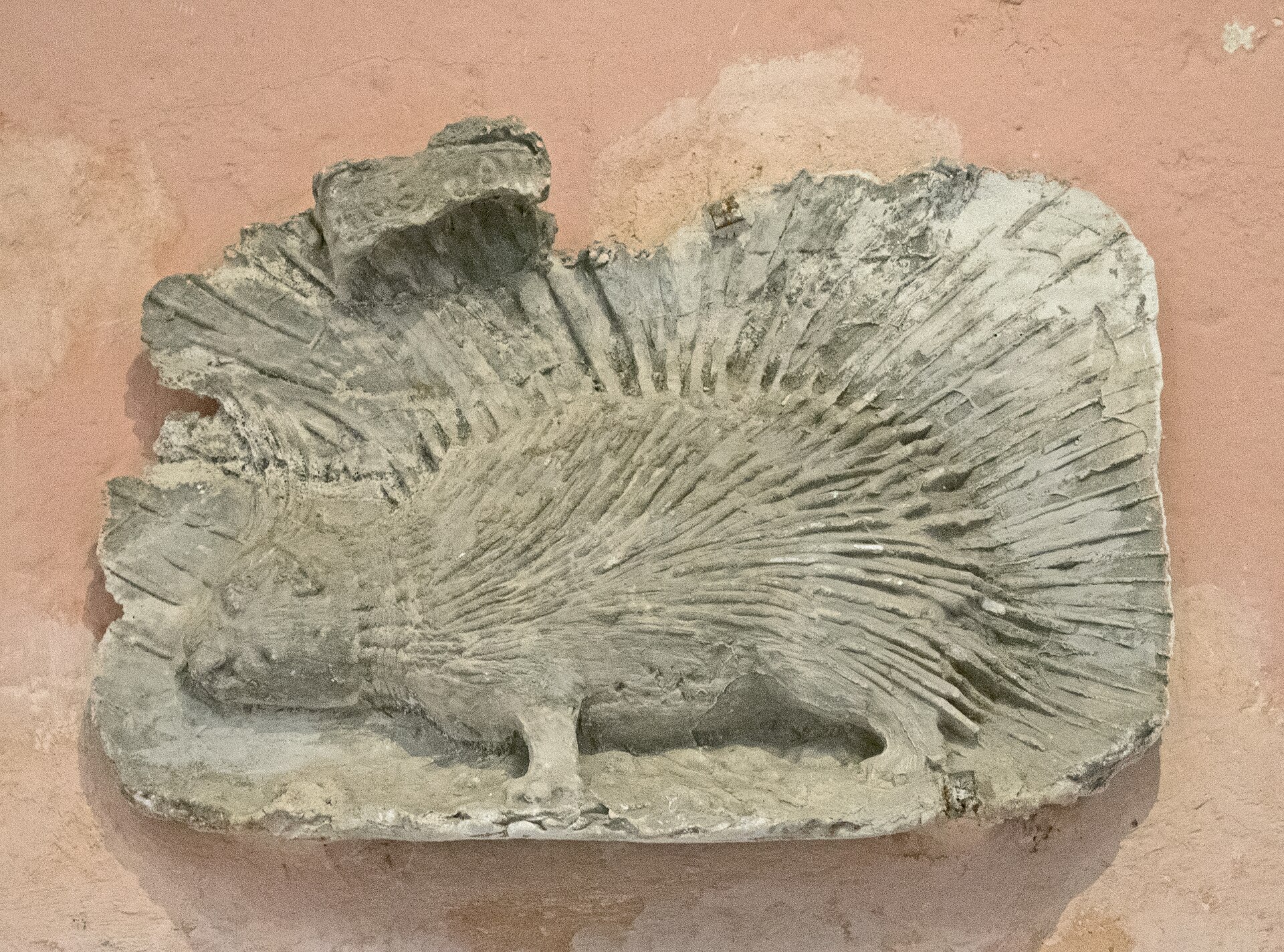
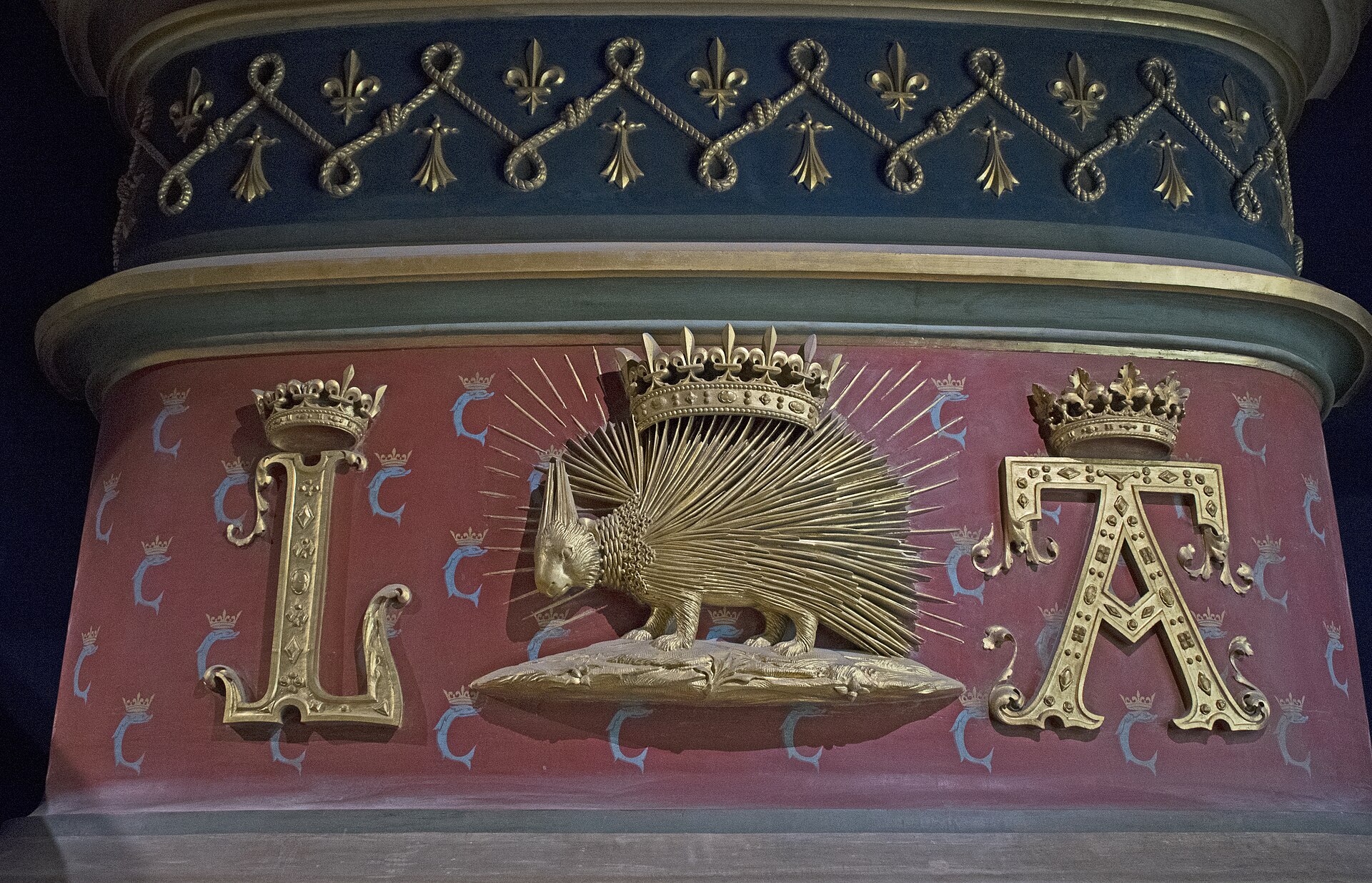
Throughout the château, keen-eyed visitors will spot the personal emblems of its royal builders, carved and repeated across walls, ceilings and fireplaces. The salamander of François I appears again and again in his wing, while elsewhere the porcupine of Louis XII, another royal emblem, bristles from the stonework. These devices were a form of signature, a way for each king to stamp his identity onto the fabric of the building.
Reading these emblems is one of the pleasures of a visit to Blois, a kind of treasure hunt that reveals which king built which part of the château. The salamander in the flames, the porcupine, the intertwined initials of kings and queens: each tells a small story of ownership and pride, and together they turn the very stones of Blois into a record of the royal personalities who shaped it.
The intertwining of religion and royal power was a defining feature of the age, and nowhere more so than at Blois in the years of the Wars of Religion. That a château so rich in chapels and religious imagery should also have been the scene of a murder driven by religious politics is one of the bitter ironies of the period. The emblems and the altars, the salamanders and the saints, all belonged to a world in which faith and power were inseparably, and often violently, entangled.
The Classical Wing of Gaston d’Orléans
The fourth and final wing of Blois belongs to a completely different age and taste. In the seventeenth century, the château came into the hands of Gaston d’Orléans, the ambitious and troublesome brother of King Louis XIII, who was exiled to Blois after one too many plots against the crown. With time on his hands and grand ideas, Gaston set about rebuilding the château in the severe new classical style then coming into fashion.
He employed the great architect François Mansart, one of the founders of French classical architecture, to design a magnificent new wing. Mansart produced a design of cool, restrained elegance, all balanced proportions and classical order, utterly different from the exuberant Renaissance of François I next door. Had it been completed, it would have swept away much of the older château in favour of a vast new classical palace.
But Gaston’s grand scheme was never finished. His fortunes changed, the money ran out, and only part of the new wing was ever built, leaving the rest of the older château standing. In a sense this was a lucky accident, for it means that all four ages of Blois survive side by side. Gaston’s elegant, incomplete wing is the final chapter in the château’s long architectural story, the classical age set beside the Renaissance, the Gothic and the medieval.
François Mansart, the architect Gaston employed, was one of the great masters of French classicism, and even the fragment of his work that was built at Blois is considered a masterpiece of restraint and proportion. The very name of the mansard roof, the high, double-pitched roof so characteristic of French architecture, derives from his family. His unfinished wing at Blois offers a tantalising glimpse of the grand classical palace that might have been, had Gaston’s fortunes not failed him.
A Lesson in Stone
Because its four wings survive together, Blois offers something no other château can quite match: the chance to see the whole sweep of French architecture in a single glance. From the medieval hall to the classical wing, the styles of four centuries stand side by side, and moving among them you can trace how taste, technology and ideas about beauty changed across the ages.
The contrast is at its most striking in the courtyard, where the Renaissance wing of François I, with its ornate staircase and carved detail, faces the severe classical wing of Gaston d’Orléans across the open space. In the difference between them you can read a whole shift in the European mind, from the exuberant, human-centred spirit of the Renaissance to the ordered, rational elegance of the classical age.
For students of architecture, and for anyone with an eye for beauty, this makes Blois endlessly rewarding. It is a place to linger, to look closely, to compare and contrast, and to feel the passage of time made visible in stone. Few buildings anywhere teach the history of style so vividly, or so beautifully, as the courtyard of Blois.
Generations of architects, artists and travellers have come to Blois precisely to study this remarkable sequence of styles, and it has influenced the way the history of French architecture is understood and taught. To walk from wing to wing is to receive an education in stone, a direct encounter with the changing ideals of beauty across four centuries, and it is an experience that no book or photograph can quite replace.
Blois and Its Town
The château stands at the heart of the historic town of Blois, which tumbles down the hillside toward the Loire in a delightful tangle of old streets, stairways and handsome buildings. The town grew up in the shadow of the counts’ and kings’ great residence, and its fortunes were long bound up with those of the château above. Exploring it is a natural complement to a visit to the castle.
From the terraces and windows of the château, there are fine views out over the roofs of the town and the broad valley of the Loire beyond. Blois sits in the very heart of the château country of the Loire, within easy reach of Chambord, Chenonceau and the other great houses of the region, and it makes an excellent base from which to explore them, as well as a magnificent destination in its own right.
The town itself has its own long history and its own attractions, from ancient churches to elegant townhouses, and it retains much of its historic character. Together, the château on its hill and the old town spilling down toward the river form one of the most attractive urban scenes in the whole Loire valley, a place where centuries of history are written into the very streets.
The town of Blois has its own literary and historical associations, and it played its part in the wider history of France across the centuries. Its position on the Loire made it a place of trade and travel, and its long connection with the royal court gave it a prominence far beyond its size. Today it is a lively provincial town that wears its rich history lightly, the great château on its hill a constant reminder of the days when kings ruled France from this very spot.
Visiting the Château of Blois
Today the Chateau Royal de Blois is one of the great museums and monuments of the Loire valley, and it richly rewards a visit. You can explore all four wings around the famous courtyard, climb the great spiral staircase of François I, stand in the medieval Hall of the Estates, and walk through the royal apartments where the Duke of Guise was murdered and Catherine de’ Medici died. Few castles offer so much history in so compact a space.
The château houses a fine museum of art, with thousands of works spread through its historic rooms, and modern displays and digital guides help bring its many stories to life. In the evenings during the season, a spectacular sound-and-light show is projected onto the four facades of the courtyard, animating the whole history of the château in a memorable display that should not be missed if your visit allows.
You will find Blois in the very heart of the château country, in the Loir-et-Cher department, midway along the Loire between Orléans and Tours and an excellent base for exploring Chambord, Chenonceau and the other great houses of the region. For exact directions, here is a map link to guide you there: 47.586, 1.3308. Step into its courtyard, and you step into five hundred years of French history, all gathered around a single, unforgettable space.
The château is open throughout the year, and each season shows it in a different light, from the fresh greenery of spring to the golden stone glowing under a summer sky. Whenever you come, allow plenty of time, for Blois is a place to be savoured slowly rather than rushed through, its four wings and many rooms offering far more than can be taken in at a glance. It is, quite simply, one of the richest and most rewarding castles to visit in all of France.
Castles Nearby
The Castle of Four Ages
The Chateau Royal de Blois is a place where French history and French architecture come together as nowhere else. In its single courtyard, the medieval, the late Gothic, the Renaissance and the classical stand side by side, four ages of building gathered around one open space, telling the whole story of French style in stone. To turn slowly in that courtyard is to travel through five hundred years.
But Blois is more than a lesson in architecture. It was a home of kings and queens, a stage for the highest drama of the French monarchy, the scene of a notorious murder and the deathbed of a formidable queen. Beautiful, various and haunted by history, it is one of the essential châteaux of the Loire, and a place where the past feels closer, and richer, than almost anywhere else in France.
You May Like
Mafra, the Palace a King Built From a Vow